
Free Higher Ed Resume Templates & Examples
Higher education careers span teaching, research, and administration. These free higher-ed resume and CV examples help you organize your academic credentials and institutional contributions.
Real-World Resumes That Get Results
 Free
Free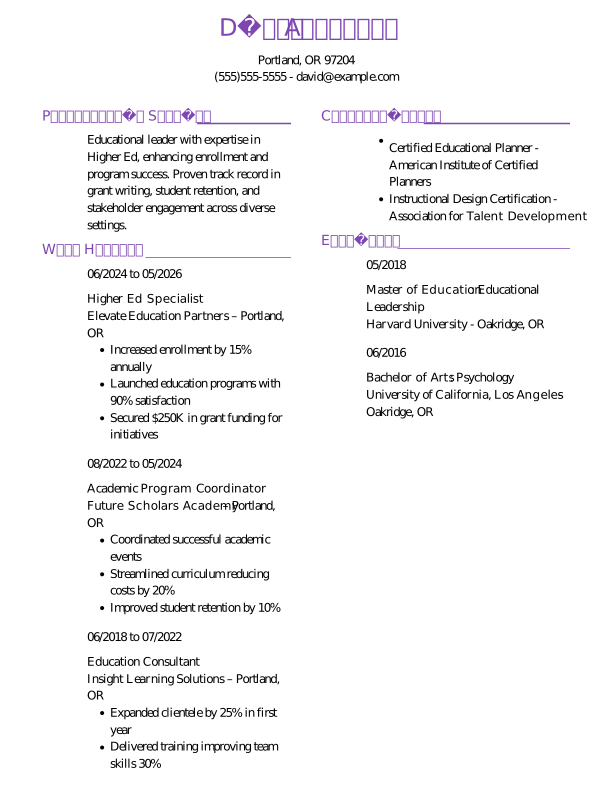

Browse Free Resume Templates
- Accounts Payable
- Adjunct Professor
- Artist
- Auto Mechanic
- Baker
- Business Development Manager
- Business
- Certified Nursing Assistant
- Classic & Traditional
- Cleaner
- College Student
- Concierge
- Construction Worker
- Corporate
- Creative & Unique
- Custodian
- Customer Service
- Dental Assistant
- Direct Support Professional
- Entry-Level
- Flight Attendant
- Hospitality & Food Service
- Front Desk Receptionist
- Healthcare
- High School
- Housekeeping
- Hvac Technician
- Hybrid
- Inventory Manager
- Logistics
- Maintenance
- Management
- Modern
- Mortgage Loan Processor
- Pet Sitter
- Phlebotomist
- Production
- Rbt
- Sales
- Security Services
- Restaurant Server
- Simple & Basic
- Social Work
- Teacher
- Technology
Resume Examples for Higher Ed
Resumes and CVs in higher ed vary widely depending on the applicant’s experience level, from entry-level positions to seasoned faculty roles. Discover our tailored templates for each stage and make use of our Resume Builder to craft your ideal application.
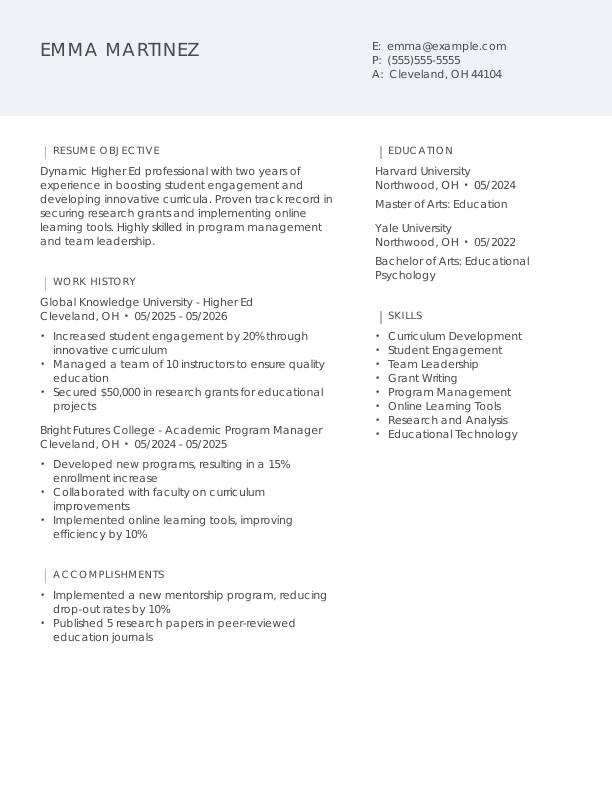
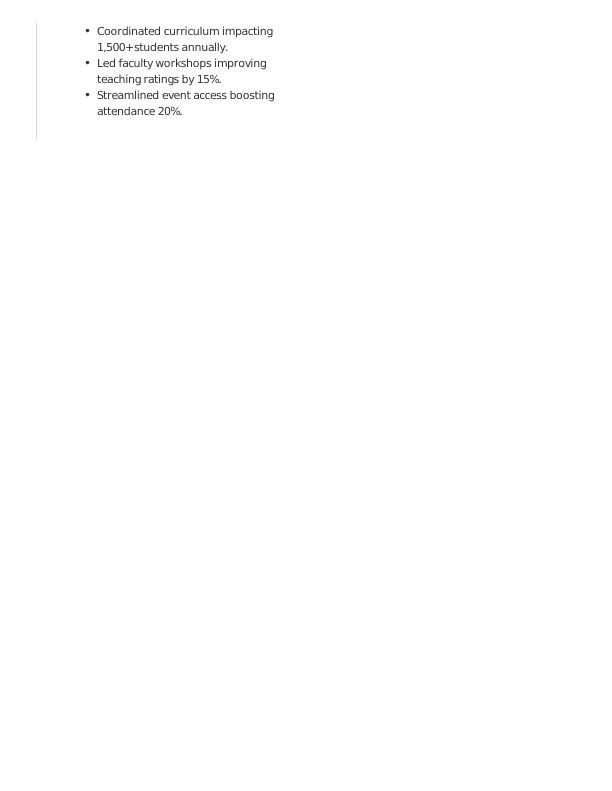
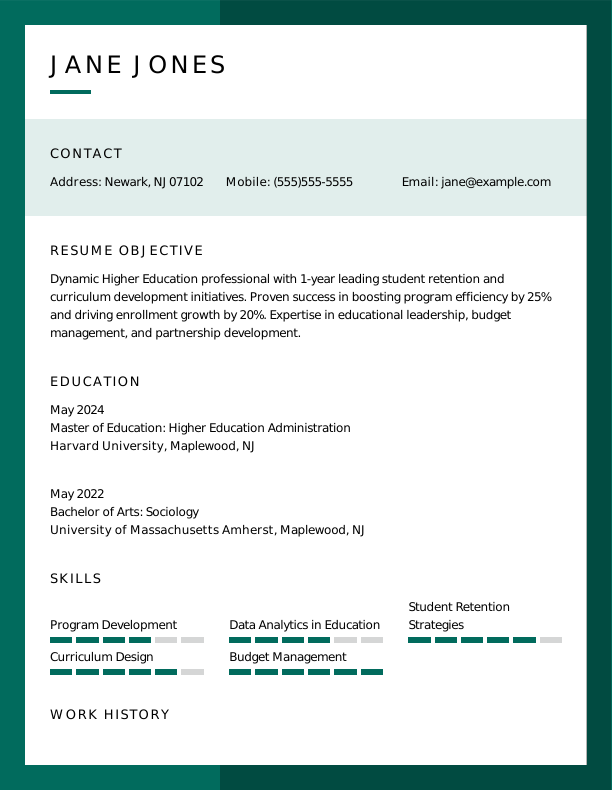
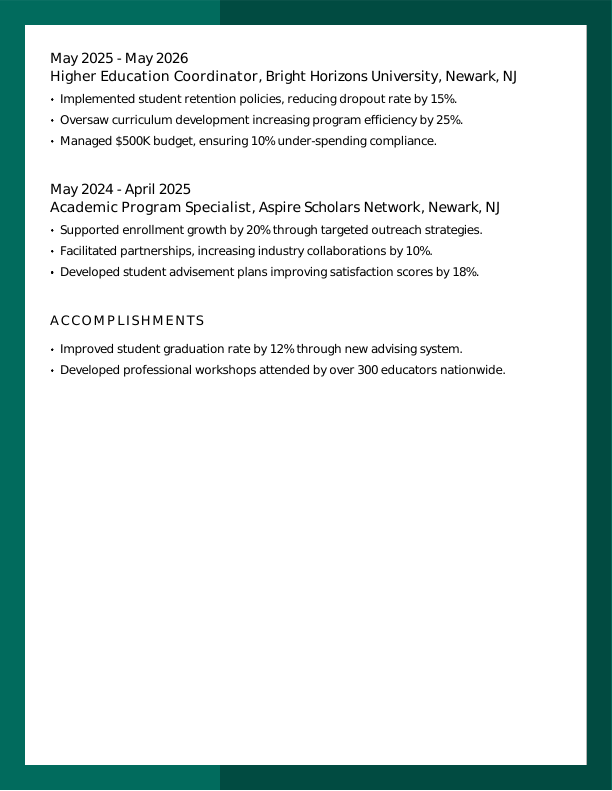
Entry-Level Higher Ed Resume
Ideal for recent graduates and career changers entering the higher education field, this template is designed to assist those crafting a resume with no experience while highlighting their transferable skills and academic achievements.

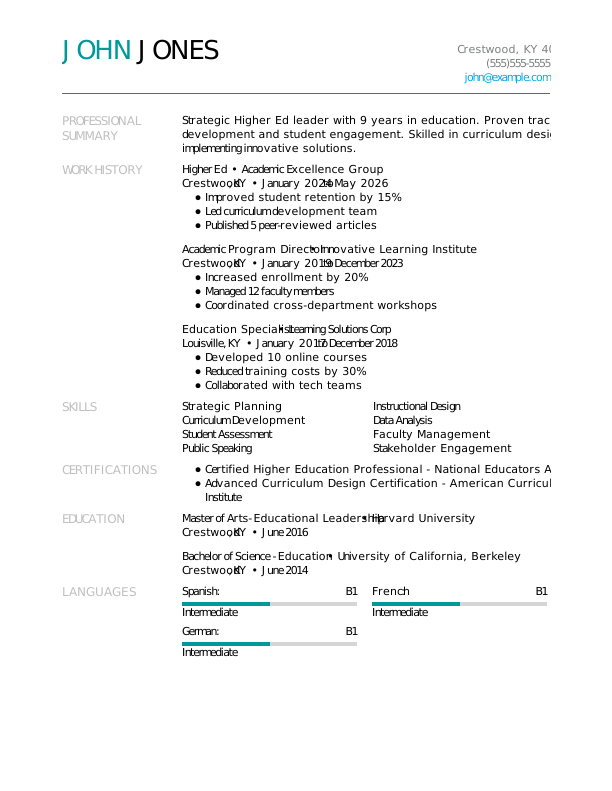
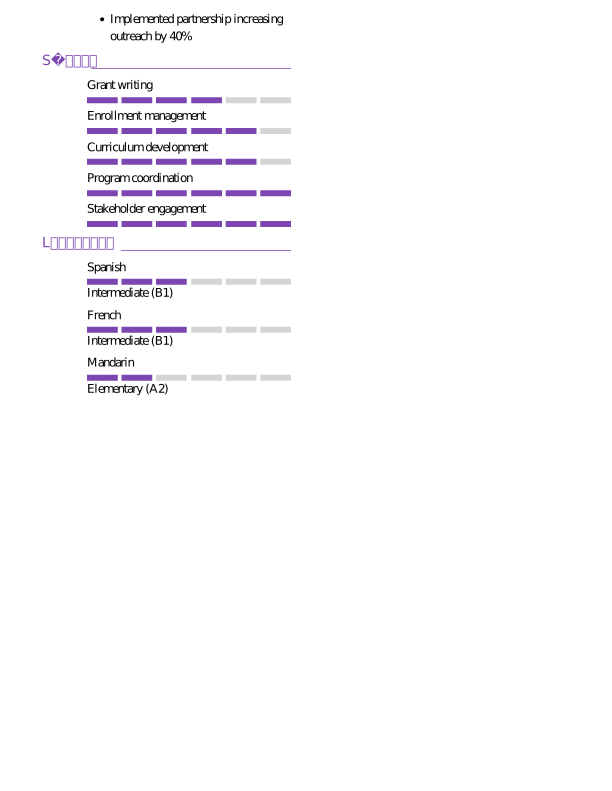
Mid-Career Higher Ed Resume
A smart choice for mid-level education professionals, this template effectively showcases recent achievements and positions job seekers for advancement into specialized leadership roles within higher education.

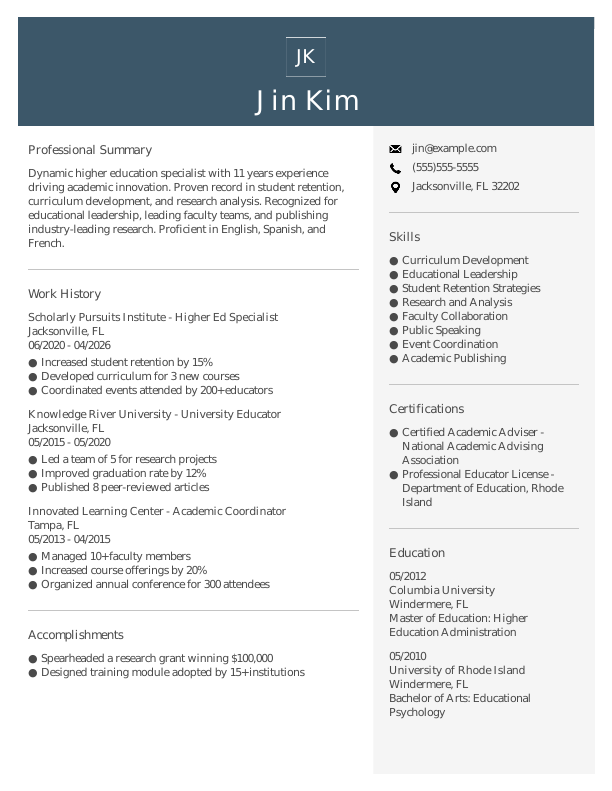
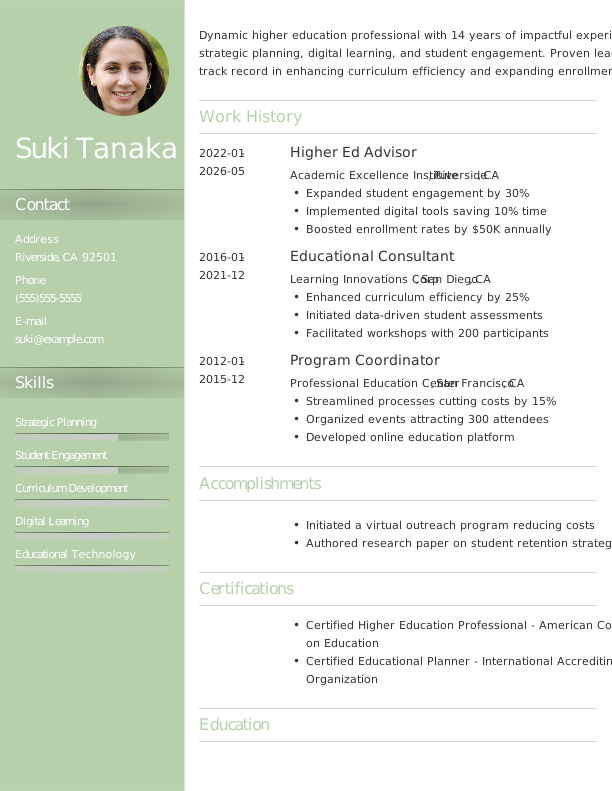
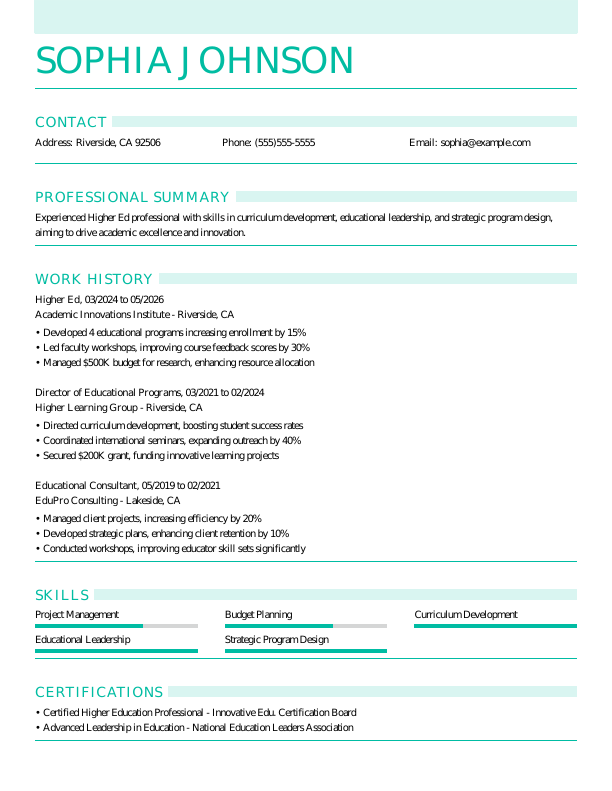
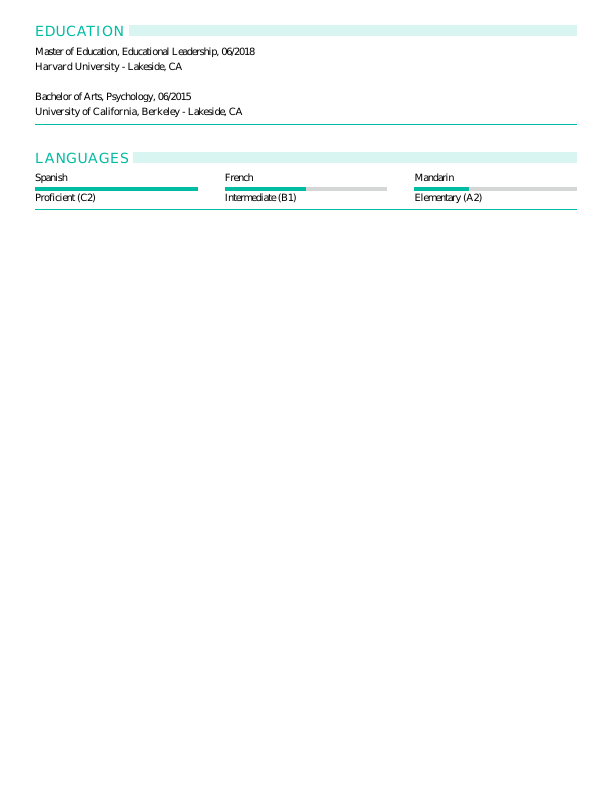
Experienced Higher Ed Resume
An ideal choice for professionals with 10+ years in higher education, this template showcases applicants pursuing senior leadership roles or advanced academic positions.

Higher Ed Resume Template (Text)
Use this customizable text format of a higher education resume to copy, edit, and personalize directly in your document or file.
John Brown
Parkview, MO 64165
Professional Summary
Proven Higher Ed professional with leadership skills, strategic planning expertise, and a record of enhancing educational outcomes. Excels in curriculum development and program management to foster academic success.
Work Experience
January 2024 – January 2026
Global Education Initiatives – Parkview, MO
Higher Ed Coordinator
- Increased student enrollment by 30%
- Developed new curricula, improving retention by 20%
- Managed $1M funding for educational programs
January 2022 – December 2023
Future Leaders Academy – Parkview, MO
Academic Programs Manager
- Launched 5 new courses in two years
- Reduced dropout rates by 15%
- Facilitated partnerships with 10 institutions
January 2020 – December 2021
Bright Horizons Learning Center – Parkview, MO
Education Specialist
- Improved standardized test scores by 25%
- Trained 50+ teachers on new technologies
- Organized regional educational seminars
Education
June 2018
University of Illinois Champaign, IL
Master’s Educational Leadership
June 2016
Illinois State University Normal, IL
Bachelor’s Education
Certifications
- Certified Education Planner – National Education Association
- Project Management Professional – PMI
Skills
- Curriculum Development
- Higher Education Administration
- Program Management
- Data Analysis
- Strategic Planning
- Leadership
- Budget Management
- Educational Technology
How to Write a Higher Ed Resume
As a higher education professional, knowing how to write a resume means mixing your academic credentials and relevant experience with a format that showcases your unique contributions. Use the guidance below to emphasize your strengths and tailor your resume for the positions you’re pursuing.
1. Contact Info
Your contact information should be prominently displayed at the top of your resume, ensuring clarity and professionalism.
Be sure to include:
- Full name
- Phone number
- Professional email address
- City and state (ZIP code is optional)
- LinkedIn profile or personal portfolio (if relevant)
 PRO TIP
Avoid including personal information such as age, gender, or social media profiles on your resume unless explicitly requested by the employer.
2. Resume Profile
A resume profile is a concise introduction, typically composed of two to four sentences, that highlights your key qualifications and unique attributes. This section serves as an engaging pitch aimed at hiring managers, encouraging them to delve deeper into your resume and learn more about what you can offer.
Typically positioned at the top of your resume, the profile can take the form of either a summary or an objective. Each option has its own distinct purpose and focus:
- A resume summary showcases essential qualifications, relevant skills, and significant accomplishments within the realm of higher education. This format is particularly beneficial for those with transferable abilities or relevant experience who aim to highlight their influence as an educator or administrator in the academic landscape.
- A resume objective highlights your aspirations and career goals, offering a clear picture of what you aim to accomplish. It’s ideal for recent graduates, professionals transitioning into new fields, or individuals with limited experience who want to showcase their potential.
Let’s explore examples of a resume summary and a resume objective to understand their distinct purposes:
Higher ed resume summary example:
Dynamic higher education professional with over 6 years of experience in developing and implementing innovative curriculum solutions in diverse academic environments. Proficient in student engagement, assessment strategies, and academic advising. Acknowledged for improving learning outcomes and fostering an inclusive educational atmosphere that promotes student success.
Higher ed resume objective example:
Recent graduate with a master’s in higher education administration eager to launch a career in student affairs at a dynamic university setting. Committed to fostering inclusive learning environments and ready to contribute strong leadership abilities and effective communication skills to improve student engagement and success.
3. Work Experience
The work experience on your resume is an important foundation for showcasing your qualifications. Employers analyze not only job titles and responsibilities but also the tangible impact you have made in previous roles.
This section illustrates how your unique experiences align with the demands of the target position, demonstrating your suitability for the role.
The work experience section should contain:
- Job title
- Employer name and location
- Dates of employment (month/year)
- 3–5 bullet points describing your teaching, research, and student engagement achievements
Customize your work experience bullet points to reflect the requirements of the job you seek. Begin each statement with a strong action verb (such as “Developed,” “Implemented,” or “Analyzed”) that resonates with your field.
Incorporate quantifiable data to highlight your achievements. Specific numbers or metrics can showcase your contributions and set you apart from other applicants, making your resume more compelling and memorable.
In general, consider following the format of:
[action verb] + [responsibility] = [result/achievement]
For example:
Facilitated academic advising for over 200 students annually, improving graduation rates by 15% through personalized educational plans and mentoring sessions.
Note that you can also flip the result/achievement with the responsibility:
Increased student retention rates by 12% through implementation of proactive engagement strategies and comprehensive support services.
With these techniques in mind, your resume bullets may look something like:
- Developed and implemented a new student orientation program, improving participant engagement by 25%.
- Conducted assessments for over 150 students annually, identifying academic support needs and improving retention rates by 12%.
- Collaborated with faculty to integrate technology into course curricula, increasing student satisfaction scores by 18%.
- Mentored junior staff in academic advising best practices, fostering professional growth within the team.
- Used data analytics tools to track student performance trends, informing targeted intervention strategies.
4. Skills
The skills section offers a concise overview of your professional abilities in higher education, enabling hiring managers to promptly assess your qualifications. It’s crafted for an ATS-friendly resume, ensuring that recruiters can easily identify relevant skills.
These skills can be grouped into three categories:
- Soft skills are personal qualities that influence how well individuals interact and collaborate in higher education.
- Hard skills are specific, quantifiable abilities that can be gained through education, training, or direct experience.
- Technical skills encompass the specific capabilities needed to use tools and technologies relevant to a profession.
5 Soft Skills for Your Resume or CV
- Effective communication
- Team leadership skills
- Strategic planning expertise
- Conflict resolution abilities
- Cultural competency
5 Hard Skills for Your Resume or CV
- Curriculum development and assessment
- Learning management systems (Blackboard, Canvas)
- Data analysis and reporting
- Online course design (Articulate 360, Captivate)
- Student engagement strategies
In general, aim to showcase a balanced mix of relevant skills that align with the job requirements.
PRO TIP
If you’re a newer higher education professional, consider placing your skills section near the top of your resume after the summary. For those with more experience, it’s better to position this section lower and weave your skills throughout your work history for a cohesive presentation.
5. Education
Understanding how to list education on your resume is important for presenting your qualifications. Start with your most recent or relevant degree, clearly outlining the type of degree and the institution’s name.
For recent graduates, adding details like graduation year, GPA (if it’s 3.5 or higher), honors received, and relevant coursework can help strengthen your profile.
Higher ed resume education section example:
Master of Education (M.Ed.) in Higher Education Leadership
University of Texas at Austin, Austin, TX
Graduated: 2024 | Summa Cum Laude
PRO TIP
To effectively showcase your academic achievements, list your degrees in reverse-chronological order, beginning with the highest degree, like Doctor of Education (Ed.D.) in Higher Education Leadership and followed by any previous qualifications such as a Master of Arts in Student Affairs Administration.
6. Certifications
Certifications highlight your qualifications and ensure you possess the latest skills that employers seek. While this section may not be standard on every resume, it holds significant value for many professionals in higher education. Institutions often require specific credentials for roles such as academic advisors or program coordinators, making it essential to include them.
List certifications on your resume that bolster your application. Keep these credentials current and format them clearly for easy reference.
Higher ed certification examples:
- Certified Student Affairs Educator (CSA-Ed) | Higher Education Consortium | Expires: 04/2029
- Certified Title IX Coordinator | Association of Title IX Administrators (ATIXA) | Expires: 03/2028
- Global Career Development Facilitator (GCDF) | Center for Credentialing & Education | Expires: 11/2029
- Project Management Professional (PMP) | Project Management Institute | Expires: 12/2028
Start Building Your Job-Winning Resume
Use Your Existing Resume
Import your current resume to transfer your information to one of our professional templates.
Create a New Resume
Start fresh with a template that catches your eye and follow the prompts to add your details.
Tailor Your Work History to Beat the ATS
Your work experience is not just a collection of job titles. It’s an opportunity to showcase the tangible results you have achieved in your field, highlighting specific accomplishments and contributions. This method not only amplifies your professional narrative but also helps create a more ATS-friendly resume that can be easily scanned by applicant tracking systems (ATS).
To optimize your work history for the position you desire, tailor your descriptions with keywords relevant to the role. Begin by carefully reviewing the job description to pinpoint recurring skills or qualifications. Make sure to incorporate those key elements into your experience entries for maximum impact.
Key Takeaways
- Customize your resume for each application. Use terms from the job posting to resonate with both ATS and hiring committees.
- Highlight quantifiable accomplishments to demonstrate your value. Include specific metrics (e.g., enrollment numbers, retention rates, program development) to improve your profile.
- Select an appropriate format based on your career stage. Recent graduates may prefer a functional format, while seasoned professionals should use a reverse-chronological layout.
More Resume & CV Examples
- Academic
- Admissions Counselor
- Instructional Designer
- Lab Assistant
- Marine Biologist
- Mentor
- Professor
- Research
- Research Scientist
Cover Letters for Your Resume
Browse our library of cover letter examples to complete your application. A resume will have a better chance of getting noticed.
Frequently Asked Questions
Last Update:
What resume format should I use for my higher ed resume?
There are three main resume formats to choose from when applying for higher education positions. Your selection should reflect your experience level and highlight the aspects of your background you want to showcase:
- Chronological: The chronological resume is the most widely used format, emphasizing your work history by outlining your responsibilities and achievements. This format is particularly suitable for showcasing a clear progression in your career path if your relevant job experiences reinforce your qualifications.
- Functional: The functional resume, often referred to as a skills-based resume, highlights your qualifications and features an extensive skills section. This format minimizes focus on work history, making it ideal for job seekers who lack relevant experience or have gaps in employment. It allows you to showcase your strengths.
- Combination: The combination resume format mixes chronological and functional elements, showcasing skills alongside work history. This approach benefits professionals by allowing them to highlight their relevant abilities and demonstrate career advancement, making it ideal for those transitioning to new fields or with diverse experiences.
Should I include a cover letter with my resume?
Yes, you should include a cover letter with your higher ed job application. A well-crafted cover letter allows you to articulate your enthusiasm for the role and the institution while highlighting relevant experiences that may not be fully captured in your resume. It demonstrates that you’ve invested time in personalizing your application, which can differentiate you from job seekers who submit generic materials.
If you’re apprehensive about writing a cover letter, there are numerous resources available to guide you. You can find detailed articles on how to write a cover letter, as well as examples tailored specifically for higher education roles. Exploring various formats will help you choose one that best showcases your qualifications and aligns with the expectations of academic hiring committees.
To make the process easier, consider using a cover letter generator, which can assist in crafting a polished document by providing templates and suggestions suited for positions in higher education.
How long should a higher ed resume be?
For professionals with less than 10 years of experience, a one-page resume is typically adequate to showcase qualifications and relevant accomplishments. Highlight your education, key skills, and any certifications that demonstrate your expertise in higher education.
Conversely, those in senior or specialized roles may extend their resumes to two pages if the content remains focused and relevant. Ensure that each section adds value, emphasizing leadership experiences and advanced degrees while avoiding unnecessary filler language to maintain clarity and engagement throughout.
What keywords should I include to pass applicant tracking systems (ATS)?
To improve your resume for ATS, focus on integrating keywords from the job posting. Terms like “student engagement,” “curriculum development,” or “higher education administration” can significantly boost your visibility. Make sure to mirror the language used in the description.
In addition, highlight any relevant certifications, such as Teaching Credential or Educational Leadership, and mention specific tools you’re familiar with, like Blackboard or Canvas. This will demonstrate that you have the qualifications and technical skills needed for the role, increasing your chances of making it through ATS filtering.
Is it helpful to add volunteer work or internships to my CV?
Absolutely. Including volunteer work or internships highlights your commitment and practical skills in education settings. This experience can be particularly valuable for those entering the field, as it demonstrates your dedication to higher education and may set you apart from other applicants.

Vicki Salemi is a nationally recognized career expert who helps professionals navigate the hiring landscape and find the right fit on Monster. With over 15 years of experience in corporate recruiting and HR, she offers expert guidance on job search strategies, interview preparation, and career development to help candidates land their next role.
See More From Vicki SalemiExplore Related Career Advice


How to Put Transferable Skills on Your Resume: 120 Skills, Examples, & Tips

Updated:
Aug 27, 2026
|
16 min read


How to Write a Functional Resume (Formatting Tips, Template, & Examples)
Updated:
Aug 7, 2026
|
17 min read


Functional vs Chronological Resume: Which Format Is Right for You?
Updated:
Aug 3, 2026
|
16 min read
100+ Resume Adjectives to Help You Write a Stronger Resume in 2026 (With Examples)
Updated:
Jul 30, 2026
|
12 min read