
Free Lab Assistant Resume Templates & Examples
These free lab assistant resume and CV examples help you convey your technical procedures and safety protocol compliance. Supporting researchers with sample preparation and data recording is essential work worth presenting well.
Real-World Resumes That Get Results
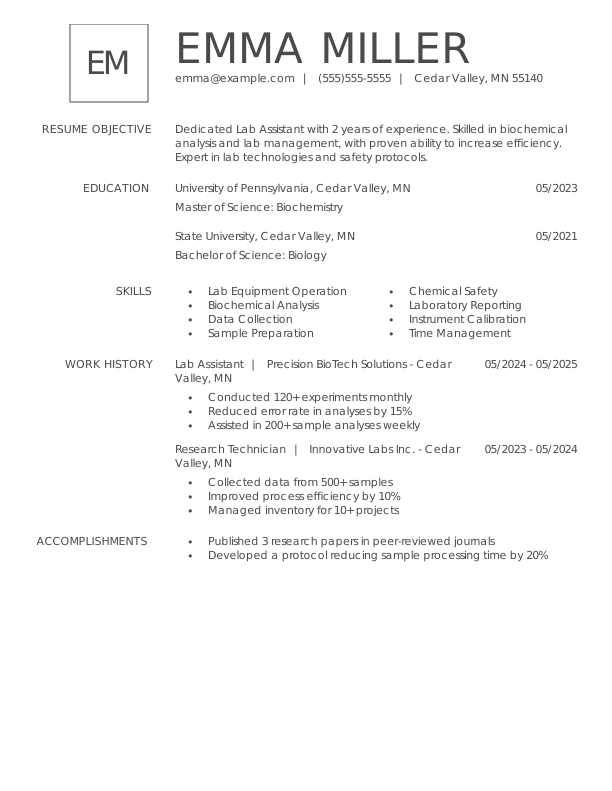
Lab Assistant Entry-Level Resume
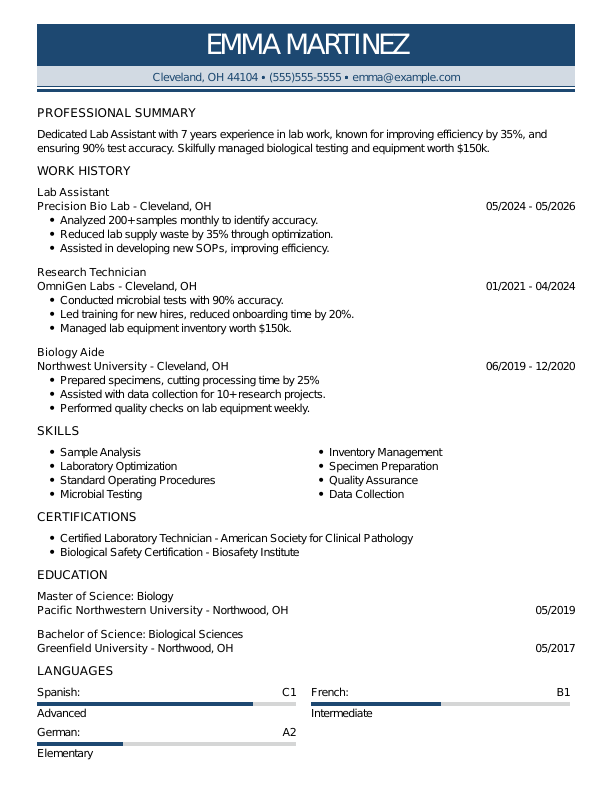
Lab Assistant Mid-Level Resume
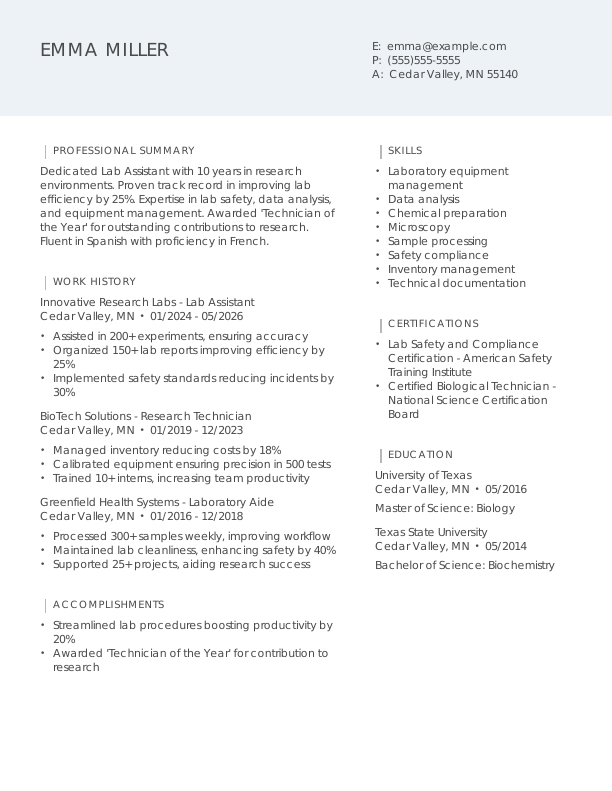
Lab Assistant Experienced Resume
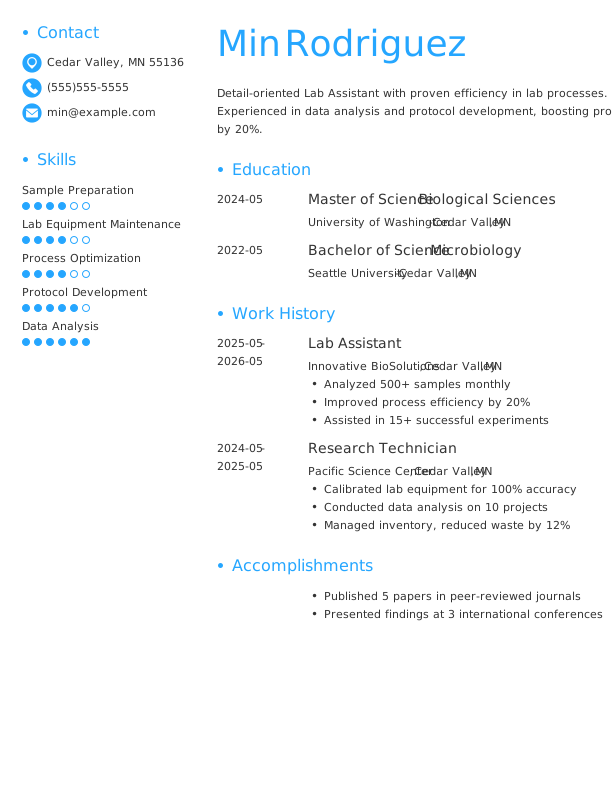
 Free
FreeLab Assistant Modern Resume
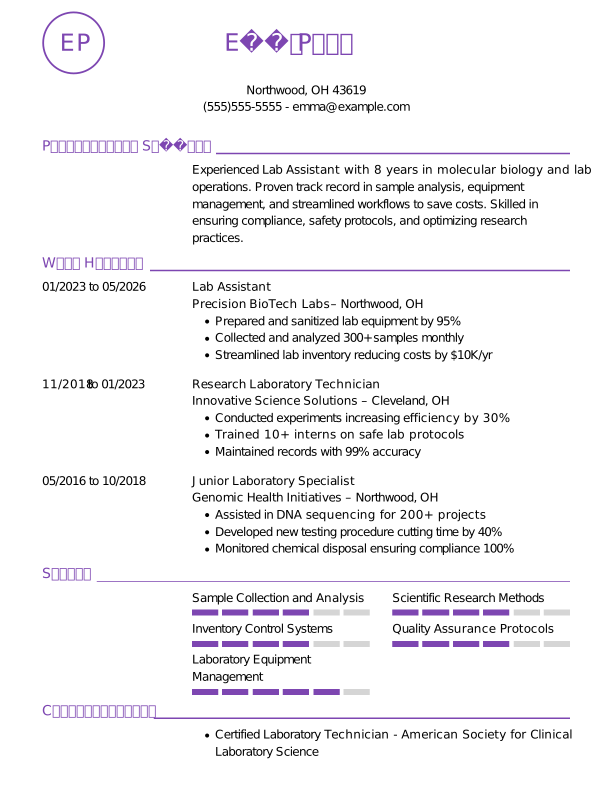
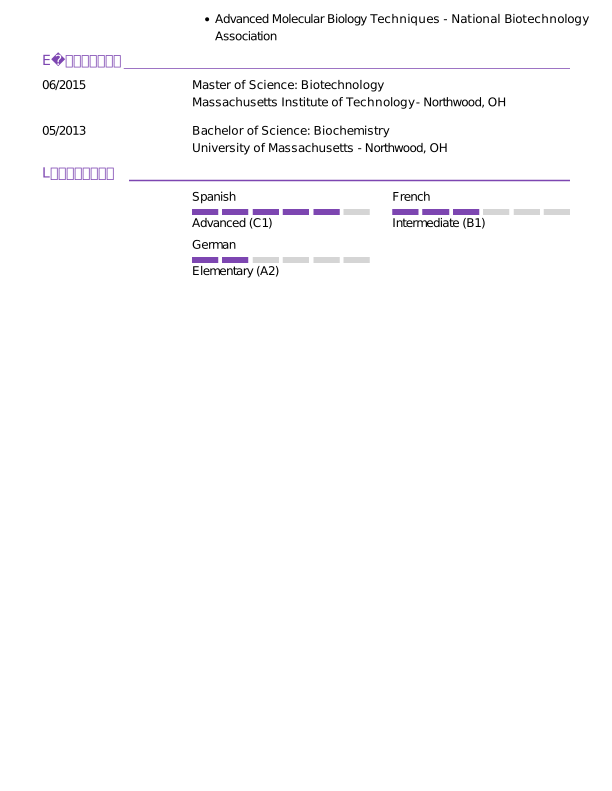
Lab Assistant Creative Resume
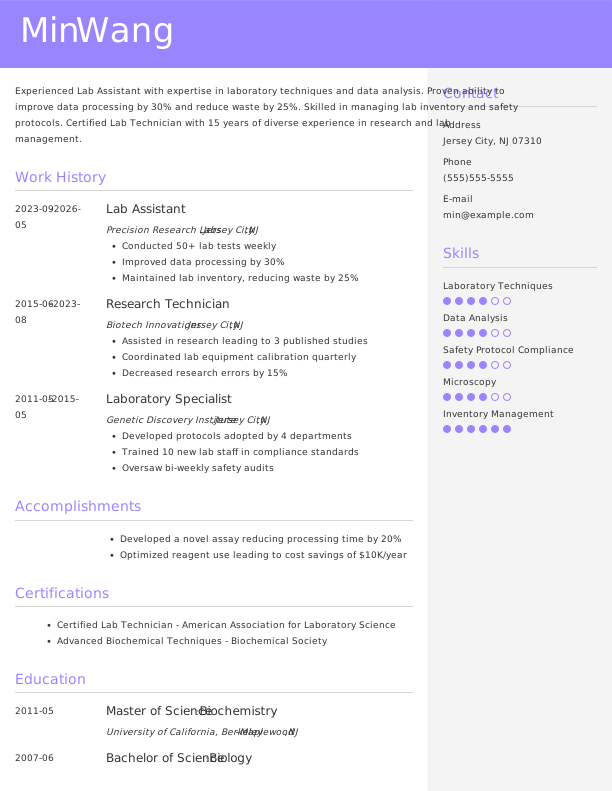
Lab Assistant Traditional Resume
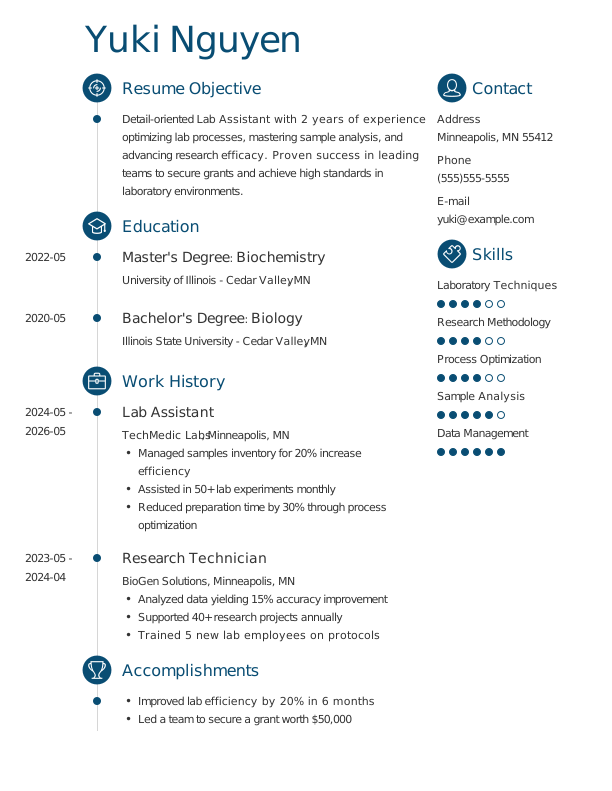
Lab Assistant Simple CV Example
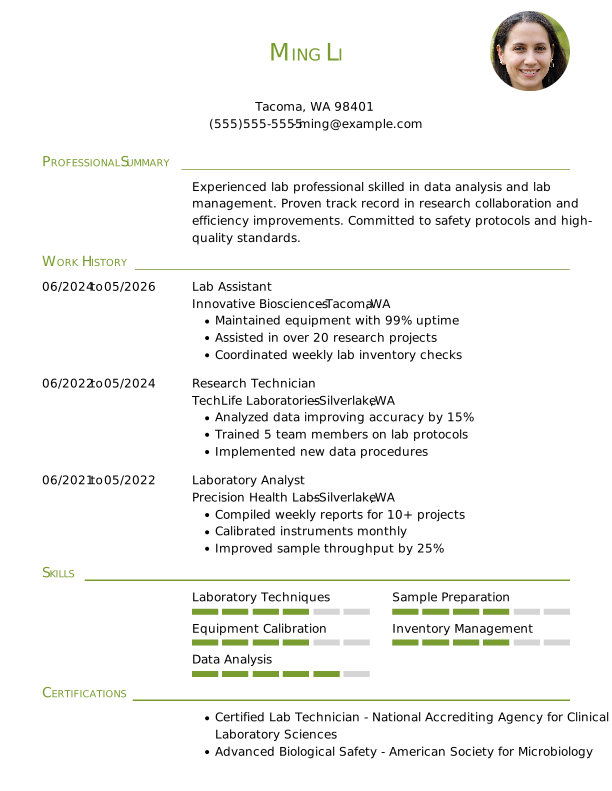
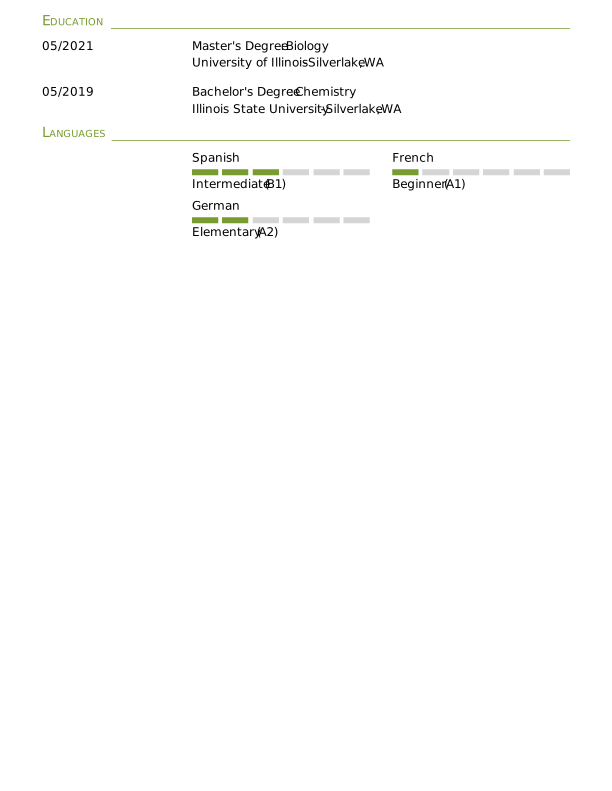
Lab Assistant CV Format
Browse Free Resume Templates
- Accounts Payable
- Adjunct Professor
- Artist
- Auto Mechanic
- Baker
- Business Development Manager
- Business
- Certified Nursing Assistant
- Classic & Traditional
- Cleaner
- College Student
- Concierge
- Construction Worker
- Corporate
- Creative & Unique
- Custodian
- Customer Service
- Dental Assistant
- Direct Support Professional
- Entry-Level
- Flight Attendant
- Hospitality & Food Service
- Front Desk Receptionist
- Healthcare
- High School
- Housekeeping
- Hvac Technician
- Hybrid
- Inventory Manager
- Logistics
- Maintenance
- Management
- Modern
- Mortgage Loan Processor
- Pet Sitter
- Phlebotomist
- Production
- Rbt
- Sales
- Security Services
- Restaurant Server
- Simple & Basic
- Social Work
- Teacher
- Technology
Resume Examples for Lab Assistants
A lab assistant resume or CV varies significantly based on your level of experience. Explore what to include at each career stage and use our Resume Builder to create a tailored version that highlights your qualifications.
Entry-Level Lab Assistant Resume
Ideal for recent graduates, this resume with no experience template also benefits those transitioning into lab assistant roles from different fields.

Mid-Career Lab Assistant Resume
A good fit for lab professionals with several years of experience, this template highlights recent contributions and supports growth into specialized or supervisory roles.

Experienced Lab Assistant Resume
An ideal choice for lab professionals with 10+ years of experience, this template supports applicants seeking advanced roles in research or laboratory management.

Lab Assistant Resume Template (Text)
Use this customizable text format of a lab assistant resume to copy, edit, and personalize directly in your document or file. You can also browse our resume templates page for additional options that match your experience.
Chris Park
Los Angeles, CA 90001
Professional Summary
Detail-oriented lab assistant skilled in sample processing, equipment maintenance, and data documentation. Proven record of improving lab operations by 30% and ensuring safety compliance. Expertise in biological sciences, analytical techniques, and team collaboration.
Work Experience
January 2023 – May 2026
Precision Biotech Labs – Los Angeles, CA
Lab Assistant
- Organized and processed over 200 lab samples daily.
- Maintained lab equipment to ensure <95% operational accuracy.
- Collaborated with a 5-person team to improve analysis speed by 30%.
January 2020 – December 2022
Innovative Research Corp – San Francisco, CA
Research Laboratory Technician
- Prepared chemical reagents and solutions for over 50 weekly tests.
- Conducted routine testing with a 96% accuracy rate on analysis.
- Streamlined sample tracking system, reducing errors by 15%.
January 2017 – December 2019
Midwest Bio Labs – San Diego, CA
Biology Laboratory Intern
- Assisted in experiments, supporting a team of 10 researchers.
- Maintained safety protocols, resulting in zero lab incidents.
- Cataloged over 5,000 biological samples using database systems.
Education
May 2017
University of Illinois Urbana-Champaign, IL
Master of Science Biological Sciences
May 2015
Illinois State University Normal, IL
Bachelor of Science Biochemistry
Certifications
- Certified Laboratory Technician – American Society for Clinical Laboratory Science
- Advanced Microscopy Techniques – National Institute of Biological Sciences
Skills
- Laboratory Equipment Management
- Chemical Solution Preparation
- Sample Analysis Techniques
- Data Recording & Documentation
- Safety Protocols Compliance
- Collaborative Teamwork
- Inventory Control
- Technical Troubleshooting
How to Write a Lab Assistant Resume
As a lab assistant, knowing how to write a resume involves combining your laboratory skills and relevant experience with a clear format that showcases your qualifications. Use the guidance below to highlight your strengths and customize your resume for the positions you’re aiming for.
1. Contact Info
Your contact information should be clear, professional, and easy to find at the top of your resume.
Make sure to include:
- Full name
- Phone number
- Professional email address
- City and state (ZIP code is optional)
- LinkedIn profile or personal portfolio (if relevant)
- Relevant certifications or licenses, if applicable
 PRO TIP
Skip including sensitive personal details such as Social Security numbers, religion, or photos unless explicitly requested by the hiring manager.
2. Resume Profile
A resume profile is a concise introduction (two to four sentences) that highlights your qualifications and serves as a compelling pitch to hiring managers. Its purpose is to capture their attention and motivate them to explore your resume further, showcasing what makes you an ideal applicant.
Typically located at the top of your resume, this section can take the form of either a summary or an objective, each serving distinct functions. Understanding these differences can help you choose the best format for your career goals:
- A resume summary highlights key qualifications, technical skills, and significant achievements relevant to laboratory work. This format is particularly beneficial for individuals with practical experience or transferable skills who want to highlight their contributions as a lab assistant, showcasing their value in the field.
- A resume objective highlights your future aspirations and outlines the specific goals you aim to achieve in your career. It’s particularly beneficial for recent graduates, individuals shifting careers, or those with limited experience, such as lab assistants entering the workforce after relevant training.
Let’s take a look at an example of each to see how a resume summary and a resume objective differ:
Lab assistant resume summary example:
Detail-oriented lab assistant with over 6 years of experience in clinical and research laboratories. Proficient in specimen processing, quality control, and laboratory safety protocols. Acknowledged for consistently maintaining high standards of accuracy and contributing to effective team collaborations that improve overall lab efficiency.
Lab assistant resume objective example:
Recent graduate with a bachelor’s in biology seeking to launch a career as a lab assistant within a research-focused environment. Committed to scientific integrity and eager to contribute strong analytical skills and attention to detail in an academic or clinical laboratory setting.
3. Work Experience
The work experience on your resume is an important asset. Employers examine your job history to understand not only where you’ve worked but also the contributions you’ve made in the lab environment.
Your background as a lab assistant showcases your technical skills and familiarity with laboratory protocols, making you well-suited for the desired role.
The work experience section should contain:
- Job title
- Employer name and location
- Dates of employment (month/year)
- 3–5 bullet points describing your relevant responsibilities and achievements
Tailor your content to reflect the specific lab assistant role you are targeting. Start each bullet point with an action verb (like “Assisted,” “Conducted,” “Analyzed”) to create a strong and relevant statement about your contributions.
Incorporate quantifiable data or metrics whenever possible. Specific numbers and results help illustrate your accomplishments and demonstrate your value, making it easier for you to stand out among other applicants.
In general, consider following the format of:
[action verb] + [responsibility] = [result/achievement]
For example:
Assisted in conducting over 100 experiments weekly, ensuring accuracy in data collection and maintaining a clean laboratory environment to support team efficiency.
Note that you can also flip the result/achievement with the responsibility:
Increased lab productivity by 30% through streamlined sample processing procedures and improved inventory management.
With these techniques in mind, your resume bullets may look something like:
- Assisted in preparing and analyzing samples for over 50 experiments weekly, ensuring accuracy and reliability of results.
- Maintained laboratory equipment and inventory, reducing downtime by 20% through proactive management.
- Collaborated with senior researchers on data collection methods, improving the quality of published findings.
- Used LabArchives to document experimental procedures and results, improving team accessibility to data.
- Provided training for new lab interns on safety protocols and equipment use, fostering a culture of compliance.
4. Skills
The skills section provides a concise overview of abilities relevant to the lab assistant role. This allows hiring managers to quickly evaluate qualifications and find the right fit for their team.
Skills can be categorized into three distinct groups:
- Soft skills are personal qualities that influence how well lab assistants collaborate with colleagues and manage tasks.
- Hard skills are specific, quantifiable abilities acquired through education, training, or direct experience.
- Technical skills refer to the specific knowledge and expertise required to perform specialized tasks.
5 Soft Skills for Your Resume or CV
- Attention to detail
- Effective communication
- Teamwork and collaboration
- Time management skills
- Critical thinking
5 Hard Skills for Your Resume or CV
- Sample preparation and analysis
- Laboratory equipment operation (microscopes, centrifuges)
- Quality control procedures
- Technical documentation and reporting
- Chemical safety protocols
In general, aim to include a diverse range of relevant skills that align with the job description to demonstrate your professional capabilities.
PRO TIP
If you’re a newer lab assistant, consider placing your skills section higher on your resume, right after your summary. If you have more experience, integrate your skills into your work history and position the skills section toward the bottom for a cohesive presentation.
5. Education
Understanding how to list education on your resume is important for showcasing your qualifications. Begin by listing your most recent or relevant degree, clearly stating the type of degree and the institution’s name.
If you’re a recent graduate, consider including details such as your graduation year, GPA (if it’s 3.5 or higher), any honors earned, and relevant coursework to improve your profile.
Lab assistant resume education section example:
Associate of Science in Laboratory Technology
Community College of Philadelphia, Philadelphia, PA
Graduated: 2023 | Graduated with Honors
PRO TIP
If you’re advancing from an associate degree in laboratory science to a Bachelor of Science in Clinical Laboratory Science, or have earned another relevant degree, list both in reverse-chronological order.
6. Certifications
Listing certifications on your resume can help bridge the gap when you have limited hands-on experience. While this section is not always standard, it holds significant value for most professionals in the lab field. Employers often seek specific credentials for specialized positions, such as those in molecular biology or clinical research.
Include only relevant certifications that improve your candidacy for the role you desire. Keep these credentials current and list them clearly to ensure they stand out to potential employers.
Lab assistant certification examples:
- Laboratory Technician Certification (CLT) | National Credentialing Agency | Expires: 03/2028
- Basic Life Support (BLS) | American Heart Association | Expires: 05/2027
- Certified Phlebotomy Technician (CPT) | National Healthcareer Association | Expires: 07/2028
- Quality Control in Laboratories Certification | American Society for Clinical Laboratory Science | Expires: 10/2027
Start Building Your Job-Winning Resume
Use Your Existing Resume
Import your current resume to transfer your information to one of our professional templates.
Create a New Resume
Start fresh with a template that catches your eye and follow the prompts to add your details.
Tailor Your Work History to Beat the ATS
Your work experience is more than a list of job titles. It’s a chance to show the measurable impact you’ve had in laboratory settings, such as improving processes or assisting with research projects. Including this information can also lead to a more ATS-friendly resume that applicant tracking systems (ATS) can easily scan.
A strong work history should be tailored to the lab assistant position you’re applying for, using keywords and terminology that align with the employer’s expectations. Start by analyzing the job description thoroughly. Identify recurring skills, techniques, or laboratory equipment mentioned, and incorporate those elements into your experience descriptions where applicable.
Key Takeaways
- Tailor your resume to the job description. Use specific terms from the listing when detailing your skills and experience—it aids both ATS and human reviewers.
- Highlight quantifiable achievements to demonstrate your contributions. Include relevant metrics (e.g., sample throughput rates, accuracy percentages, or project timelines) for greater impact.
- Select a format that suits your experience level. Entry-level applicants may find a functional layout beneficial, while seasoned professionals often prefer a reverse-chronological format.
More Resume & CV Examples
- Academic
- Admissions Counselor
- Art Teacher
- Dance Instructor
- Dance Teacher
- Education
- Elementary School Teacher
- English Teacher
- Esl Teacher
- Flight Instructor
- Grad School
- Harvard
- Higher Ed
- History
- Instructional Designer
- Internship
- Kindergarten Teacher
- Marine Biologist
- Math Teacher
- MBA
- Mentor
- Music Teacher
- Nursing Student
- Physical Education Teacher
- Preschool Teacher
- Professor
- Research Associate
- Research
- Research Scientist
- Scholarship
- Science Teacher
- Social Studies Teacher
- Spanish Teacher
- Special Education Teacher
- Student Athlete
- Substitute Teacher
- Summer Job
- Teacher Assistant
- Teen
Cover Letters for Your Resume
Browse our library of cover letter examples to complete your application. A resume will have a better chance of getting noticed.
Frequently Asked Questions
Last Update:
What resume format should I use for my lab assistant resume?
There are three primary resume formats to consider when applying for a lab assistant position. Your choice will depend on your experience level and the aspects of your background you want to highlight:
- Chronological: The most popular format, a chronological resume focuses on your work experience, outlining responsibilities and achievements in reverse order. This format is ideal for job seekers with a consistent job history that reinforces their qualifications and highlights their contributions in the lab assistant role.
- Functional: Also known as a skills-based resume, the functional resume emphasizes a summary of qualifications and an expanded skills section to highlight your relevant abilities. This format places less emphasis on work history, making it beneficial for applicants without relevant experience or those with gaps in their employment history.
- Combination: A combination resume integrates elements from both chronological and functional formats, showcasing skills alongside work experience. Lab assistants benefit from this format as it allows them to emphasize their technical abilities and laboratory experience, highlighting both their competencies and career progression concisely.
Should I include a cover letter with my resume?
Yes, including a cover letter with your lab assistant job application is important. A strong cover letter improves your resume by letting you express enthusiasm for the role and providing context for your skills and experiences that might not be immediately obvious on your resume. This personal touch can distinguish you from other job seekers who skip this step, showcasing your genuine interest in the position.
If you’re unsure about crafting a compelling cover letter, there are many resources available to guide you. You can find helpful articles on how to write a cover letter, along with examples tailored for various roles in laboratory settings. Exploring different formats can also help you choose one that best presents your qualifications and fits the lab environment.
To make the process easier, consider using a cover letter generator, which can quickly help create an effective document by offering templates and tailored suggestions based on the specific job you’re applying for.
How long should a lab assistant resume be?
For professionals with less than 10 years of experience, a one-page resume is ideal to showcase your education, skills, and relevant work history. This concise format helps emphasize your qualifications without overwhelming hiring managers.
In cases where you have more than 10 years of experience or hold specialized roles, a two-page resume can be appropriate. Ensure that every detail included highlights your expertise and contributions in previous positions to maintain focus and relevance throughout the document.
What keywords should I include to pass applicant tracking systems (ATS)?
To ensure your resume gets past ATS filters for a lab assistant role, incorporate keywords and phrases from the job posting like “sample preparation,” “data analysis,” or “laboratory safety.” Highlight your relevant certifications such as CPR or OSHA, and mention technical tools you’re adept in such as MS Excel or LabWare. Tailoring your resume to include these specifics can demonstrate your suitability for the position. Remember, using precise terminology from the job listing is important in making sure your qualifications stand out and increase the likelihood of landing an interview.

Kirsten Chorpenning is a career advice writer who empowers job seekers to take control of their career paths using Monster’s comprehensive job search and resume tools. She specializes in helping job seekers find rewarding jobs in today’s dynamic work environment.
See More From Kirsten ChorpenningExplore Related Career Advice


How to Put Transferable Skills on Your Resume: 120 Skills, Examples, & Tips
Updated:
Aug 27, 2026
|
16 min read


How to Write a Functional Resume (Formatting Tips, Template, & Examples)
Updated:
Aug 7, 2026
|
17 min read

Functional vs Chronological Resume: Which Format Is Right for You?
Updated:
Aug 3, 2026
|
16 min read
100+ Resume Adjectives to Help You Write a Stronger Resume in 2026 (With Examples)
Updated:
Jul 30, 2026
|
12 min read