
Free Detective Resume Templates & Examples
Investigative instincts and meticulous case documentation set great detectives apart. These free detective resume and CV examples help you organize your caseload experience and clearance rates.
Real-World Resumes That Get Results

 Free
Free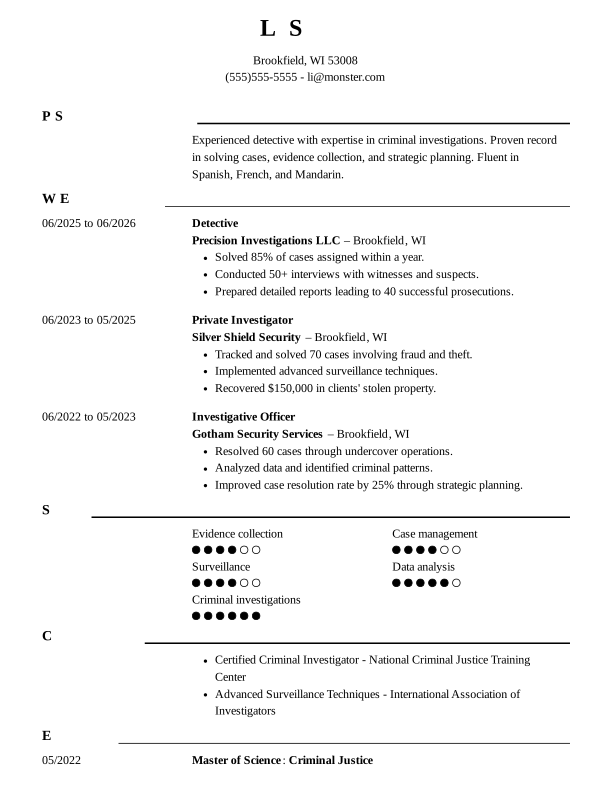
 Popular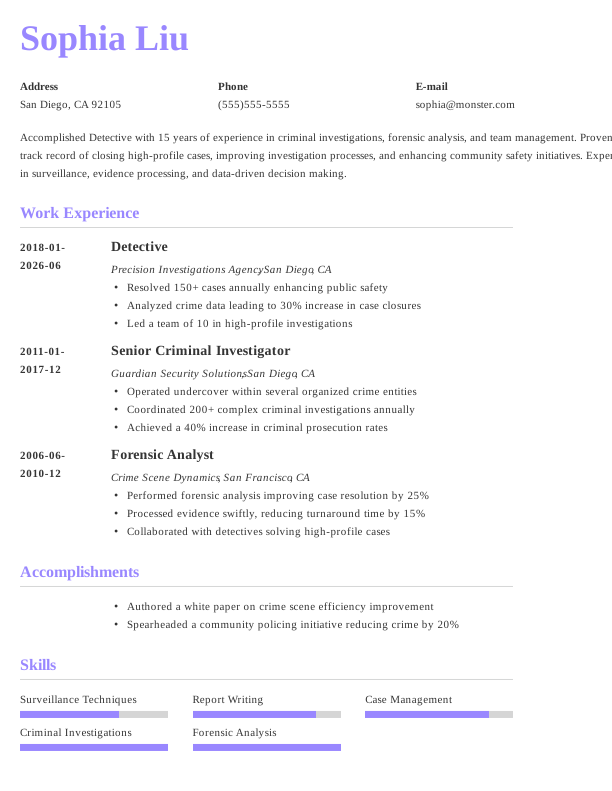
Browse Free Resume Templates
- Accounts Payable
- Adjunct Professor
- Artist
- Auto Mechanic
- Baker
- Business Development Manager
- Business
- Certified Nursing Assistant
- Classic & Traditional
- Cleaner
- College Student
- Concierge
- Construction Worker
- Corporate
- Creative & Unique
- Custodian
- Customer Service
- Dental Assistant
- Direct Support Professional
- Entry-Level
- Flight Attendant
- Hospitality & Food Service
- Front Desk Receptionist
- Healthcare
- High School
- Housekeeping
- Hvac Technician
- Hybrid
- Inventory Manager
- Logistics
- Maintenance
- Management
- Modern
- Mortgage Loan Processor
- Pet Sitter
- Phlebotomist
- Production
- Rbt
- Sales
- Security Services
- Restaurant Server
- Simple & Basic
- Social Work
- Teacher
- Technology
Resume Examples for Detectives
Detective resumes and CVs should reflect the varying skills and experiences at different career stages. Explore what to highlight for entry-level, mid-career, and experienced detectives, along with templates available through our Resume Builder to create your own.
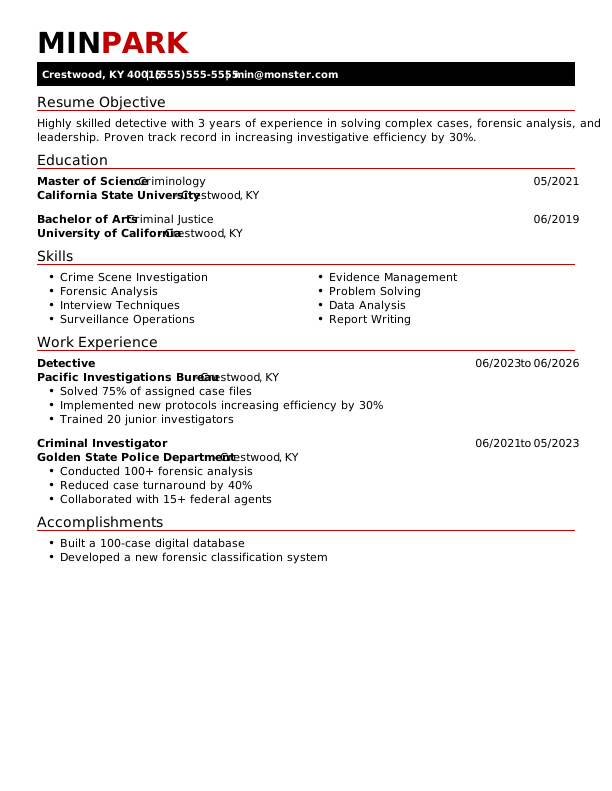
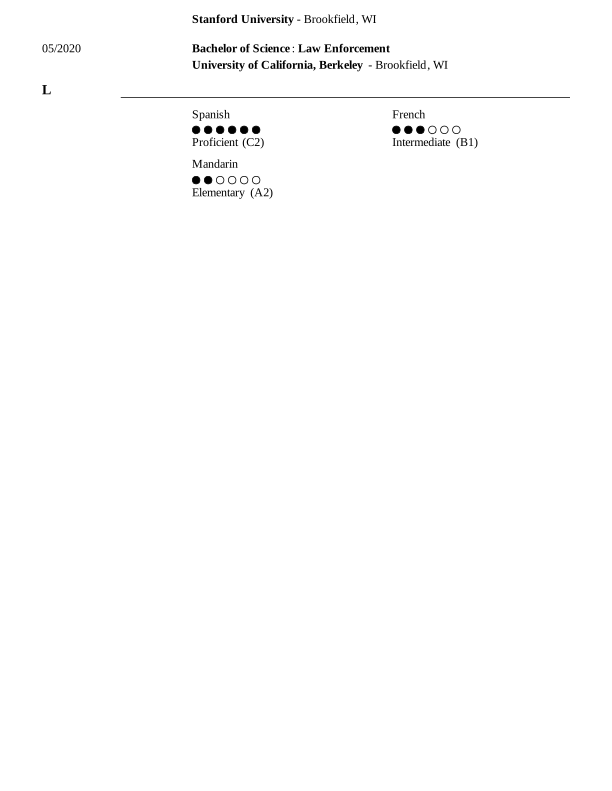
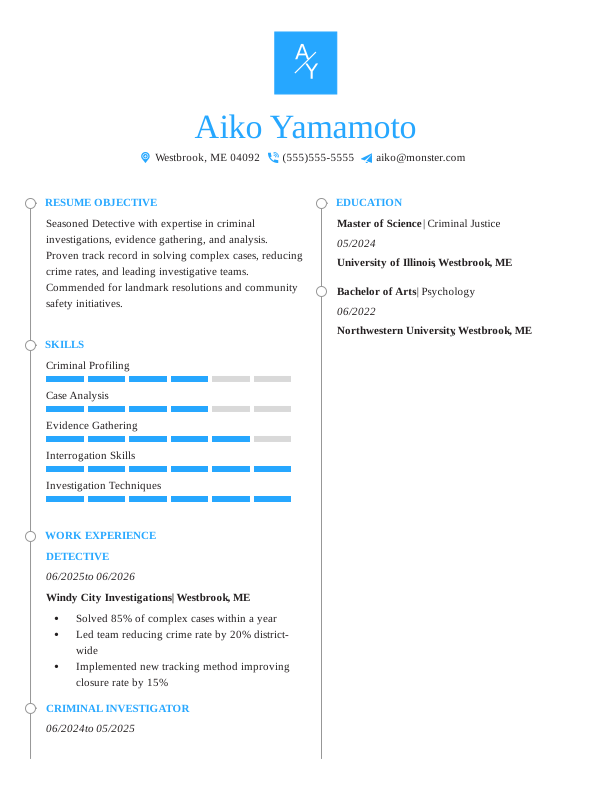
Entry-Level Detective Resume
Ideal for recent graduates aiming to create a resume with no experience, this template also benefits career changers transitioning into detective roles from different fields.
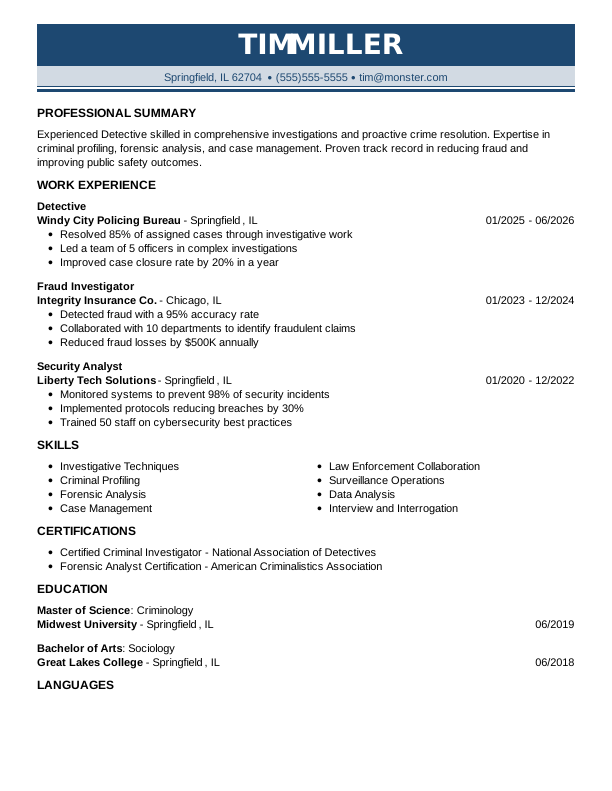
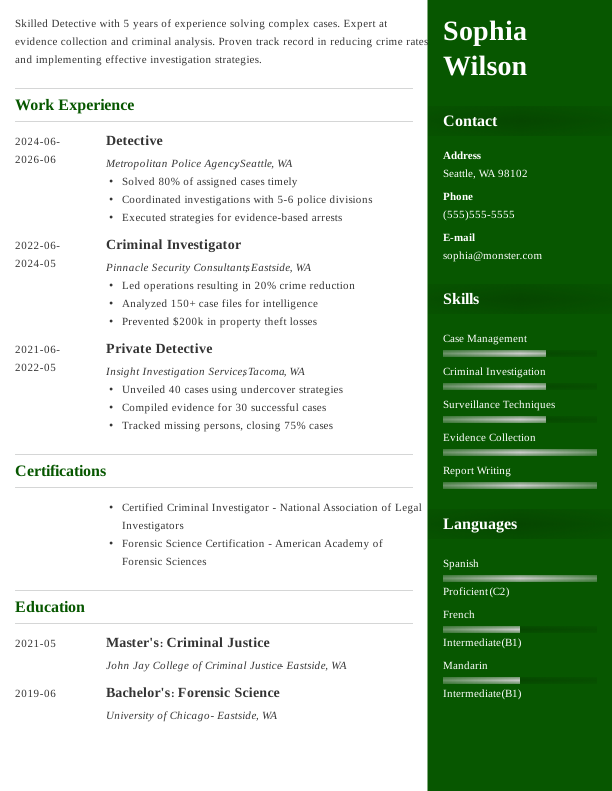
Mid-Career Detective Resume
A good fit for detectives with several years of experience, this template emphasizes recent investigative successes and supports advancement into specialized or leadership roles.
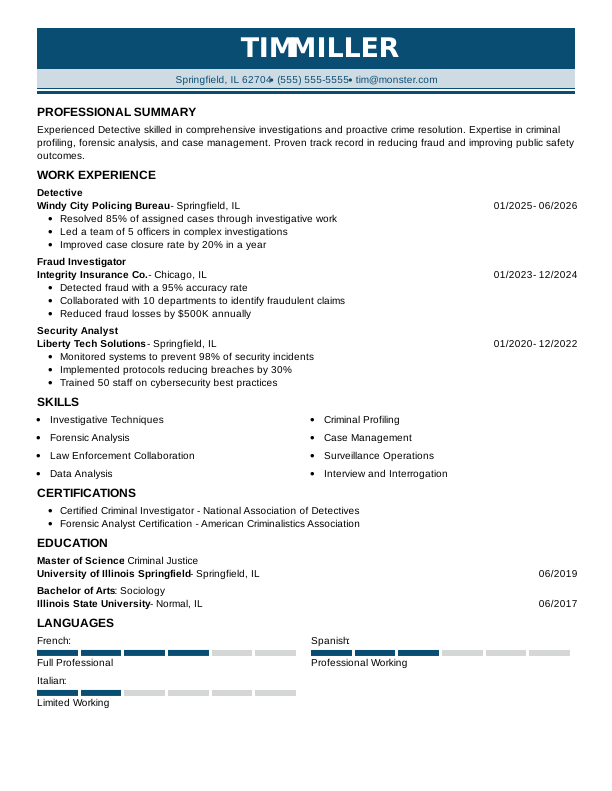
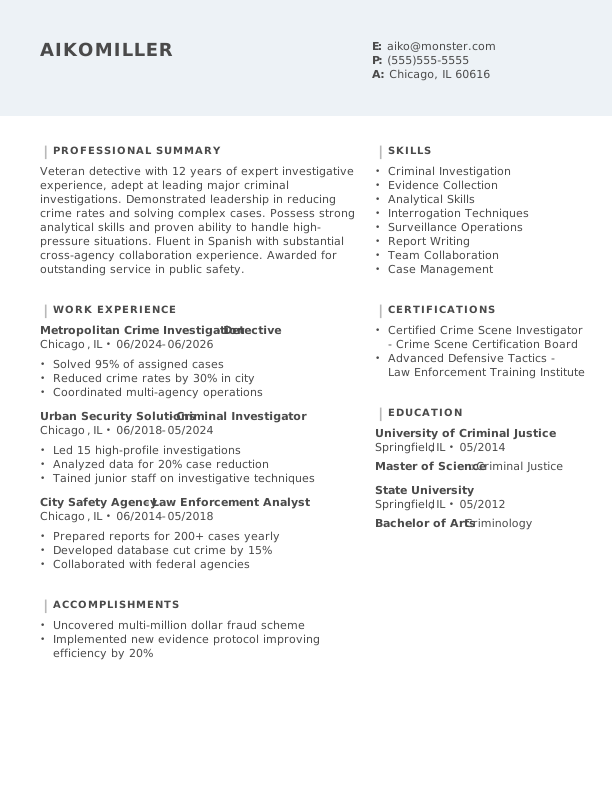
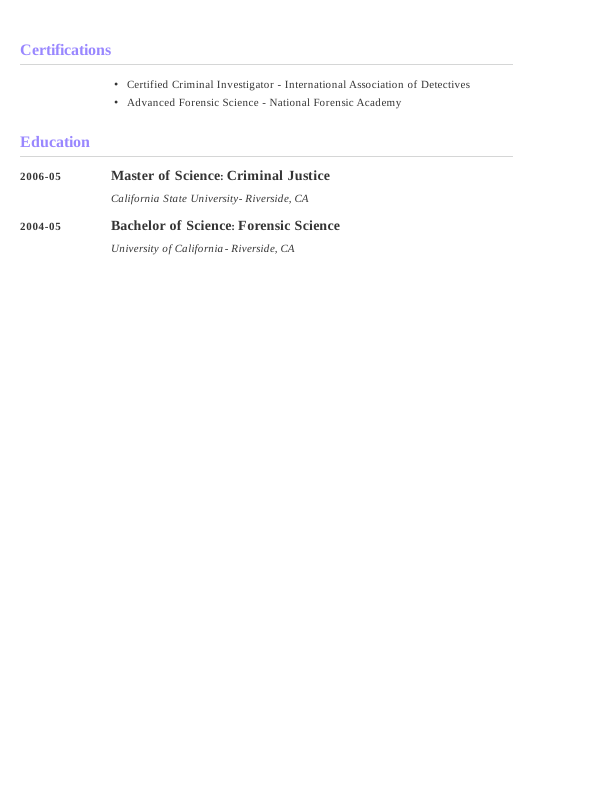
Experienced Detective Resume
An ideal choice for seasoned detectives with over 10 years of experience, this template supports professionals seeking senior roles in law enforcement or investigative leadership.
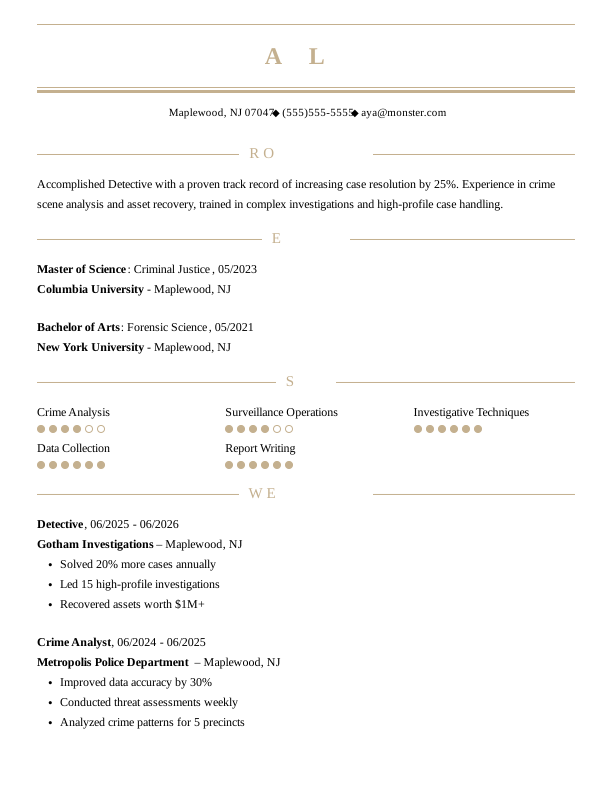
Detective Resume Template (Text)
Use this customizable text format of a detective resume to copy, edit, and adapt directly in your preferred document.
Emily Huang
Los Angeles, CA 90013
Professional Summary
Accomplished Detective with expertise in criminal investigation and community safety. Proven track record in reducing crime rates and optimizing investigative processes. Dedicated to serving with integrity and fostering community relations.
Work Experience
June 2024 – June 2026
Metro Crime Task Force – Los Angeles, CA
Detective
- Solved 50+ complex cases in 2 years
- Reduced crime rate by 30% through targeted operations
- Led a team of 10 detectives for major investigations
June 2020 – May 2024
River Valley Enforcement Agency – Los Angeles, CA
Criminal Investigator
- Recovered stolen assets totaling $1.2M
- Conducted 200+ interviews with witnesses and suspects
- Increased clearance rates by 25% in assigned precinct
June 2018 – May 2020
Springfield Police Department – Lakeside, CA
Police Officer
- Responded to 500+ emergency calls
- Decreased local traffic violations by 15%
- Developed community engagement programs
Education
May 2018
University of Illinois Champaign, IL
Master’s Criminal Justice
June 2016
Springfield College Springfield, IL
Bachelor’s Sociology
Certifications
- Certified Criminal Investigator – National Criminal Justice Training
- Forensic Specialist – Institute of Forensic Science
Skills
- Investigation Techniques
- Analytical Thinking
- Criminal Profiling
- Crisis Management
- Evidence Collection
- Forensic Analysis
- Negotiation Skills
- Community Policing
How to Write a Detective Resume
As a detective, understanding how to write a resume involves showcasing your investigative skills and relevant experience in a clear format that emphasizes your qualifications. Use the guidance below to highlight your strengths and tailor your resume for the specific roles you’re aiming for.
1. Contact Info
Your contact information should be clear, professional, and easy to find at the top of your resume.
Make sure to include:
- Full name
- Phone number
- Professional email address
- City and state (ZIP code is optional)
- LinkedIn profile or personal portfolio (if relevant)
 PRO TIP
Skip including unnecessary personal details like age, gender, or photos on your resume unless specifically requested by the employer.
2. Resume Profile
A resume profile is a concise paragraph of two to four sentences summarizing your identity and key qualifications. This section serves as a compelling pitch to hiring managers, capturing their interest and motivating them to explore your resume further.
Positioned at the top of your resume, the profile can be either a summary or an objective. Each option has distinct purposes, with summaries providing an overview and objectives highlighting specific goals:
- A resume summary showcases your relevant skills, experiences, and achievements using terminology that reflects investigative expertise. This format is particularly effective for those with prior work experience or transferable skills who wish to highlight their contributions as a detective in the field.
- A resume objective highlights your aspirations and focuses on what you aim to achieve in your career. It’s particularly helpful for recent graduates, individuals shifting careers, or those with limited experience, such as aspiring detectives or professionals moving into investigative roles.
Let’s take a look at an example of each to see how a resume summary and a resume objective differ:
Detective resume summary example:
Analytical detective with over 6 years of experience in law enforcement and investigative units. Proficient in evidence collection, criminal profiling, and case management. Acknowledged for solving complex cases and improving community safety through thorough investigations and strong collaboration with local agencies.
Detective resume objective example:
Recent criminal justice graduate with a strong foundation in investigative techniques and eager to launch a career as a detective in a dynamic law enforcement agency. Committed to upholding justice and using keen analytical skills along with effective problem-solving abilities to serve the community.
3. Work Experience
The work experience on your resume is an important element in showcasing your investigative skills. Employers assess your job history to understand not only where you’ve worked but also the significant impact you’ve made in solving cases.
Your background as a detective illustrates how your expertise in evidence gathering and analysis qualifies you for advanced roles within law enforcement.
The work experience section should contain:
- Job title
- Employer name and location
- Dates of employment (month/year)
- 3–5 bullet points describing your relevant responsibilities and achievements
Tailor your content to reflect the specific detective role you’re pursuing. Start each bullet point with an action verb (like “Investigated,” “Analyzed,” “Resolved”) to create a compelling statement that highlights your work.
Incorporate quantifiable information and metrics whenever possible. Specific numbers related to case resolutions or crime rates provide strong evidence of your effectiveness and help distinguish you from other job seekers in the field.
In general, consider following the format of:
[action verb] + [responsibility] = [result/achievement]
For example:
Conducted thorough investigations on 150+ cases annually, leading to a 90% case closure rate while maintaining careful documentation and evidence chain.
Note that you can also flip the result/achievement with the responsibility:
Achieved a 30% increase in conviction rates through strategic collaboration with forensic teams and improved interrogation techniques.
With these techniques in mind, your resume bullets may look something like:
- Conducted investigations into 50+ cases annually, leading to a 30% increase in case closures.
- Interviewed witnesses and suspects, gathering critical information that improved evidence collection by 25%.
- Collaborated with forensic teams and law enforcement agencies to ensure thorough analysis of crime scenes.
- Trained new detectives on investigative techniques and report writing, improving department efficiency.
- Used advanced surveillance technology to monitor high-risk areas, reducing crime rates by 15%.
4. Skills
The skills section offers a concise overview of the detective’s professional abilities, highlighting investigative techniques and analytical skills. This summary allows hiring managers to quickly evaluate job seekers’ qualifications for law enforcement roles.
Skills can be categorized into three groups:
- Soft skills are interpersonal abilities that influence how detectives collaborate with others.
- Hard skills are specific, quantifiable abilities that individuals acquire through education, training, or direct experience.
- Technical skills refer to the specialized knowledge and abilities required to perform specific tasks.
5 Soft Skills for Your Resume or CV
- Analytical thinking
- Attention to detail
- Effective communication
- Team leadership skills
- Emotional intelligence
5 Hard Skills for Your Resume or CV
- Crime scene investigation
- Evidence collection and preservation
- Surveillance techniques (CCTV, undercover)
- Interviewing witnesses and suspects
- Report writing and case documentation
Overall, highlight a diverse set of skills that align with the job requirements to showcase your investigative capabilities.
PRO TIP
If you’re a newer detective, consider placing the skills section higher on your resume, right after your summary. For those with more experience, it’s better to move this section lower and weave most skills into your work history for a seamless presentation of your expertise.
5. Education
Understanding how to list education on your resume is important for showcasing your qualifications. Begin with your most recent or relevant degree, ensuring to include the degree type and institution name.
If you’re a new graduate, consider adding your graduation year, GPA (if it’s 3.5 or higher), any honors received, or relevant coursework to strengthen your profile.
Detective resume education section example:
Bachelor of Arts in Criminal Justice
California State University, Long Beach, Long Beach, CA
Graduated: 2024 | Summa Cum Laude
PRO TIP
If you’re advancing from an Associate Degree in Criminal Justice to a Bachelor of Science in Criminal Investigation, or have obtained another relevant degree, list both in reverse-chronological order.
6. Certifications
Listing certifications on your resume showcases your commitment and expertise, especially when you have limited investigative experience. Although this section is not typically included in a standard resume, it’s important for many detectives seeking specialized roles. Law enforcement agencies often require specific certifications, like those in cybercrime or forensic analysis, to ensure applicants meet the demands of their positions.
It’s best to include only relevant certifications that improve your application for the role you desire. Always keep your credentials up to date and present them in a clear, organized manner for easy review by potential employers.
Detective certification examples:
- Certified Criminal Investigator (CCI) | National Association of Legal Investigators | Expires: 01/2028
- Advanced Criminal Investigation Techniques | International Association of Detectives and Investigators | Expires: 11/2027
- Forensic Science Certification | American Academy of Forensic Sciences | Expires: 05/2028
- Digital Forensics Certification (DFCP) | EC-Council | Expires: 09/2027
Start Building Your Job-Winning Resume
Use Your Existing Resume
Import your current resume to transfer your information to one of our professional templates.
Create a New Resume
Start fresh with a template that catches your eye and follow the prompts to add your details.
Tailor Your Work History to Beat the ATS
Your work experience is more than a list of job titles. It’s an opportunity to illustrate the measurable impact you’ve had on investigations, case resolutions, and community safety. This approach also creates an ATS-friendly resume that applicant tracking systems (ATS) can easily scan.
To improve your work history for the detective role you’re applying for, use relevant keywords and phrases that match the job description. Begin by thoroughly analyzing the job posting. Identify frequently mentioned skills, techniques, or types of cases handled, and reflect those elements in your experience descriptions when possible.
What’s a Fair Detective Salary?
Understanding detective salaries nationwide helps you assess job opportunities, negotiate fair pay, and make informed career decisions. The data below comes from the U.S. Bureau of Labor Statistics (BLS) and reflects the most recent nationwide averages for detectives.
Keep in mind that factors such as geographic region, years of experience, certifications, and specialization can significantly influence your actual salary. Detectives working in urban areas often earn more than those in rural settings, and specialized roles in cybercrime or homicide investigations typically command higher compensation packages.
| Alabama | $81,590 |
| Alaska | $129,720 |
| Arizona | $113,780 |
| Arkansas | $69,030 |
| California | $162,570 |
| Connecticut | $115,310 |
| Delaware | $122,560 |
| District of Columbia | $146,810 |
| Florida | $108,190 |
| Georgia | $82,180 |
| Hawaii | $131,410 |
| Idaho | $93,400 |
| Illinois | $123,850 |
| Indiana | $96,220 |
| Iowa | $101,240 |
| Kansas | $86,220 |
| Kentucky | $88,950 |
| Louisiana | $71,300 |
| Maine | $93,150 |
| Maryland | $127,850 |
| Massachusetts | $118,660 |
| Michigan | $104,170 |
| Minnesota | $96,210 |
| Mississippi | $67,560 |
| Missouri | $89,940 |
| Montana | $94,470 |
| Nebraska | $103,930 |
| Nevada | $126,750 |
| New Hampshire | $102,610 |
| New Jersey | $146,900 |
| New Mexico | $93,050 |
| New York | $127,950 |
| North Carolina | $88,660 |
| North Dakota | $103,970 |
| Ohio | $97,880 |
| Oklahoma | $86,280 |
| Oregon | $122,730 |
| Pennsylvania | $106,590 |
| Rhode Island | $101,480 |
| South Carolina | $85,010 |
| South Dakota | $91,690 |
| Tennessee | $83,560 |
| Texas | $108,680 |
| Utah | $110,770 |
| Vermont | $107,490 |
| Virginia | $117,280 |
| Washington | $137,900 |
| West Virginia | $101,920 |
| Wisconsin | $101,540 |
| Wyoming | $91,300 |
| Puerto Rico | $85,370 |
Key Takeaways
- Tailor your resume to the job description. Incorporate terminology from the listing to resonate with both ATS and hiring managers.
- Highlight quantifiable results. Illustrate your impact through specific metrics (e.g., cases solved, evidence collected, arrests made) to differentiate yourself.
- Select the appropriate format based on your experience. New detectives may opt for a functional layout, while seasoned professionals often use a reverse-chronological format.
More Resume & CV Examples
- Armed Security Guard
- Asset Protection Specialist
- Border Patrol
- Correctional Officer
- Fbi Agent
- Investigator
- Law Enforcement
- Loss Prevention
- Probation Officer
- Protective Services
- Safety Coordinator
- Security Guard
- Security Officer
- Security Supervisor
- Unarmed Security Guard
Cover Letters for Your Resume
Browse our library of cover letter examples to complete your application. A resume will have a better chance of getting noticed.
Frequently Asked Questions
Last Update:
What resume format should I use for my detective resume?
There are three primary resume formats to consider when applying for a detective position. Your choice should reflect your experience level and the specific skills or achievements you wish to highlight:
- Chronological: The most popular format, a chronological resume emphasizes your work experience by detailing responsibilities and achievements in reverse order. This makes it ideal for job seekers with a relevant job history that reinforces their qualifications and demonstrates their consistent track record in the field of investigation.
- Functional: Also referred to as a skills-based resume, the functional resume places emphasis on a qualifications summary and an expanded skills section to showcase your investigative abilities. This format minimizes work history focus, making it ideal for aspiring detectives lacking relevant field experience or those shifting careers.
- Combination: A combination resume integrates both chronological and functional formats, featuring a prominent skills section alongside detailed work experience. This structure benefits detectives by allowing them to showcase investigative skills while demonstrating their career advancement and specialized expertise in solving cases.
Should I include a cover letter with my resume?
Yes, you should include a cover letter with your detective job application. A well-crafted cover letter allows you to discuss your passion for investigative work and detail specific experiences that improve what’s on your resume. This personalized touch helps employers see the unique skills you bring to their team, giving you an advantage over other job seekers who may overlook this important aspect of their application.
If you’re concerned about writing a cover letter, don’t hesitate to seek help. Numerous resources are available, including guides on how to write a cover letter, examples tailored for various fields, and different formats that can suit your personal style and experience level. These tools can make the task feel less daunting and more manageable.
For those looking to simplify the process, using a cover letter generator can be a great option. These tools provide structure and suggestions tailored to your specific detective role application, allowing you to create a polished cover letter in no time.
What keywords should I include to pass applicant tracking systems (ATS)?
To get past ATS filters, focus on incorporating keywords and phrases directly from the job posting. Look for terms that highlight specific skills you possess, such as “investigative techniques,” “forensic analysis,” or “interviewing witnesses.” Using these exact phrases increases your visibility to hiring managers.
Additionally, include relevant certifications like Certified Criminal Investigator or any specialized training in evidence collection. Mention tools you’re familiar with, such as case management software or public records databases. This will demonstrate your qualifications and make your resume stand out in a competitive field.
Should I include volunteer work or community investigations?
Yes, you should include volunteer work and community investigations, especially if you’re new to the field. Highlighting these experiences demonstrates your investigative skills and commitment to public safety, making you a more attractive job seeker when formal law enforcement experience is limited.

Kirsten Chorpenning is a career advice writer who empowers job seekers to take control of their career paths using Monster’s comprehensive job search and resume tools. She specializes in helping job seekers find rewarding jobs in today’s dynamic work environment.
See More From Kirsten ChorpenningExplore Related Career Advice


How to Put Transferable Skills on Your Resume: 120 Skills, Examples, & Tips
Updated:
Aug 27, 2026
|
16 min read


How to Write a Functional Resume (Formatting Tips, Template, & Examples)
Updated:
Aug 7, 2026
|
17 min read


Functional vs Chronological Resume: Which Format Is Right for You?
Updated:
Aug 3, 2026
|
16 min read

100+ Resume Adjectives to Help You Write a Stronger Resume in 2026 (With Examples)
Updated:
Jul 30, 2026
|
12 min read