
Free Protective Services Resume Templates & Examples
A protective services resume should demonstrate your security training, risk assessment skills, and ability to maintain safe environments. Pick a template below suited to protection and security roles.
Real-World Resumes That Get Results
 Free
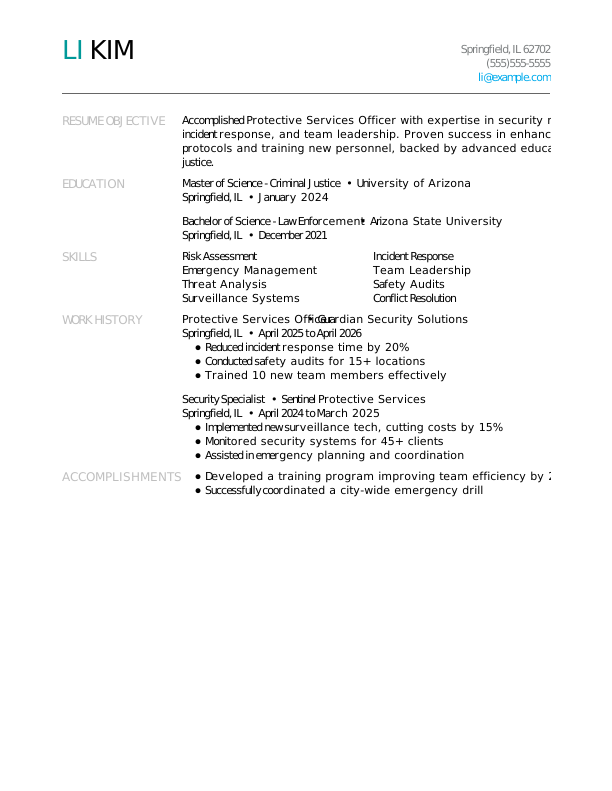
FreeProtective Services Entry-Level Resume
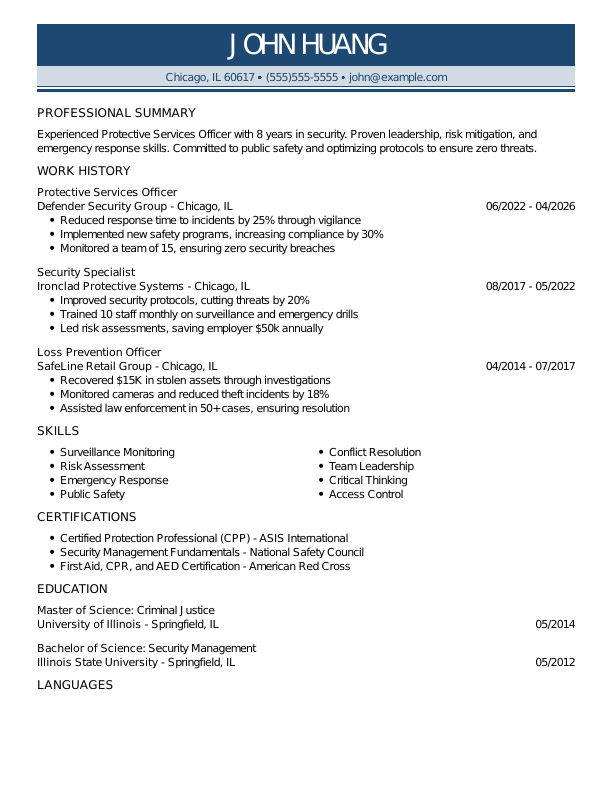
Protective Services Mid-Level Resume
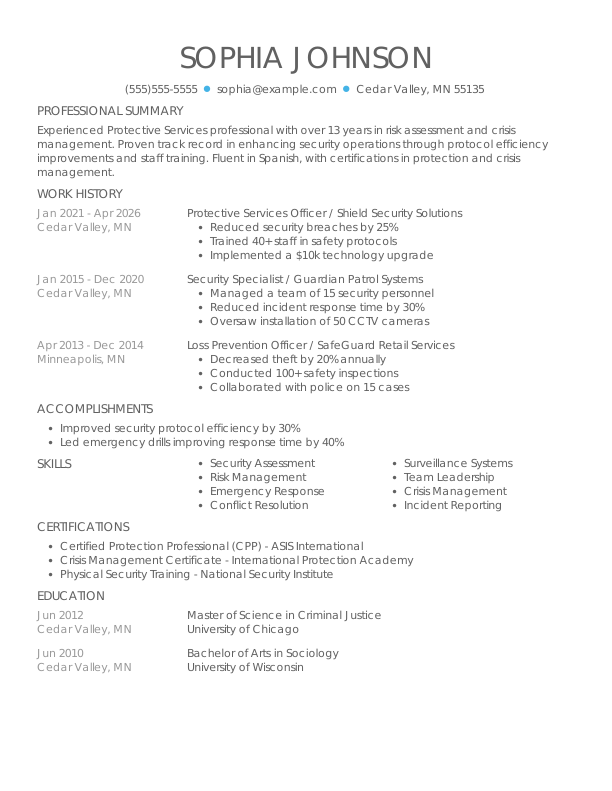
Protective Services Experienced Resume
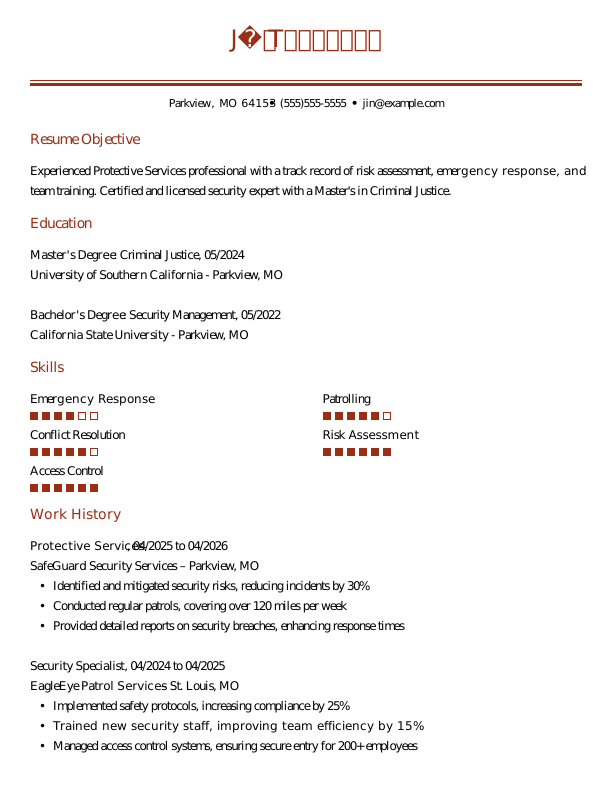

Protective Services Entry-Level Resume 1
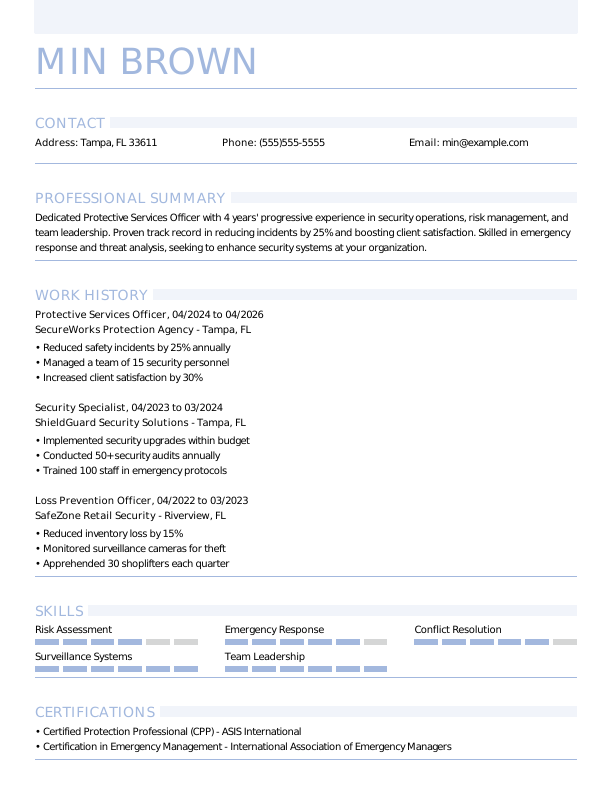

Protective Services Mid-Level Resume 1
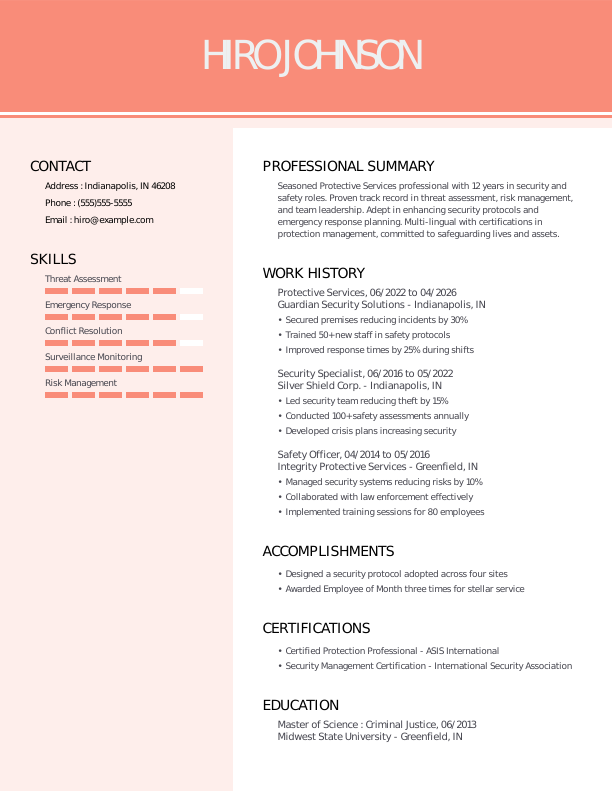

Protective Services Experienced Resume 1
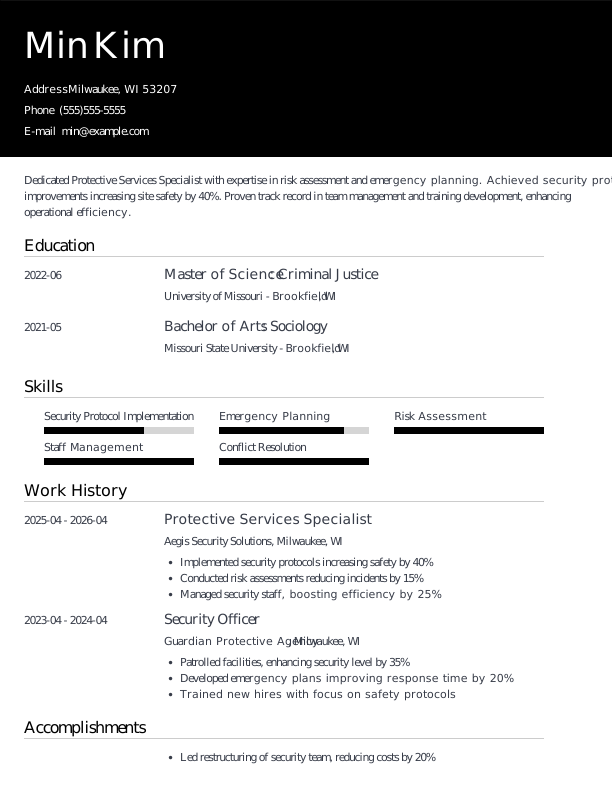

Protective Services Entry-Level Resume 2
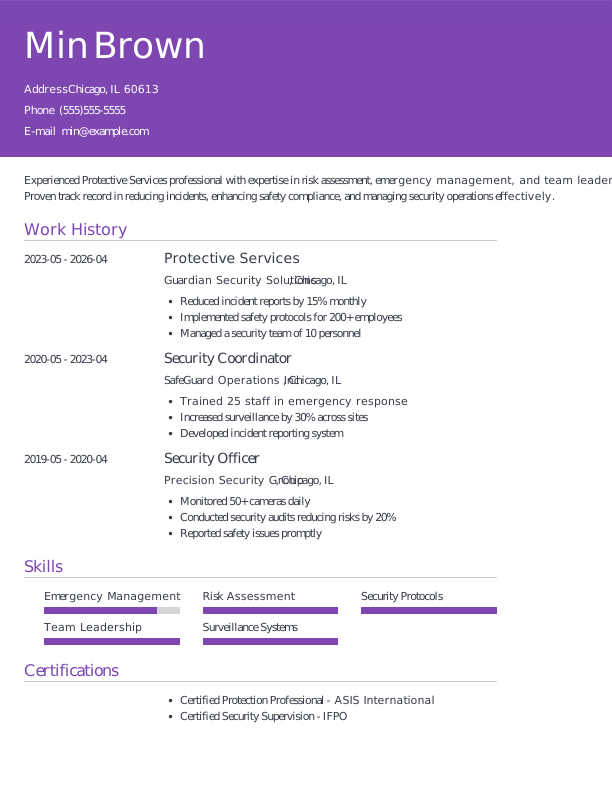

Protective Services Mid-Level Resume 2
Browse Free Resume Templates
- Accounts Payable
- Adjunct Professor
- Artist
- Auto Mechanic
- Baker
- Business Development Manager
- Business
- Certified Nursing Assistant
- Classic & Traditional
- Cleaner
- College Student
- Concierge
- Construction Worker
- Corporate
- Creative & Unique
- Custodian
- Customer Service
- Dental Assistant
- Direct Support Professional
- Entry-Level
- Flight Attendant
- Hospitality & Food Service
- Front Desk Receptionist
- Healthcare
- High School
- Housekeeping
- Hvac Technician
- Hybrid
- Inventory Manager
- Logistics
- Maintenance
- Management
- Modern
- Mortgage Loan Processor
- Pet Sitter
- Phlebotomist
- Production
- Rbt
- Sales
- Security Services
- Restaurant Server
- Simple & Basic
- Social Work
- Teacher
- Technology
Resume Examples for Protective Services
Protective services resumes should reflect your security training, risk assessment skills, and the types of environments you have worked in. Explore our templates to find one suited to protection and security roles.
Entry-Level Protective Services Resume
If you are entering protective services after completing your security training, this template helps you write a protective services resume by leading with your certifications, physical fitness standards, and any observation or patrol experience.

Mid-Career Protective Services Resume
A smart choice for mid-level protective services professionals, this template showcases relevant experience and emphasizes qualifications for advancing into specialized or leadership roles.
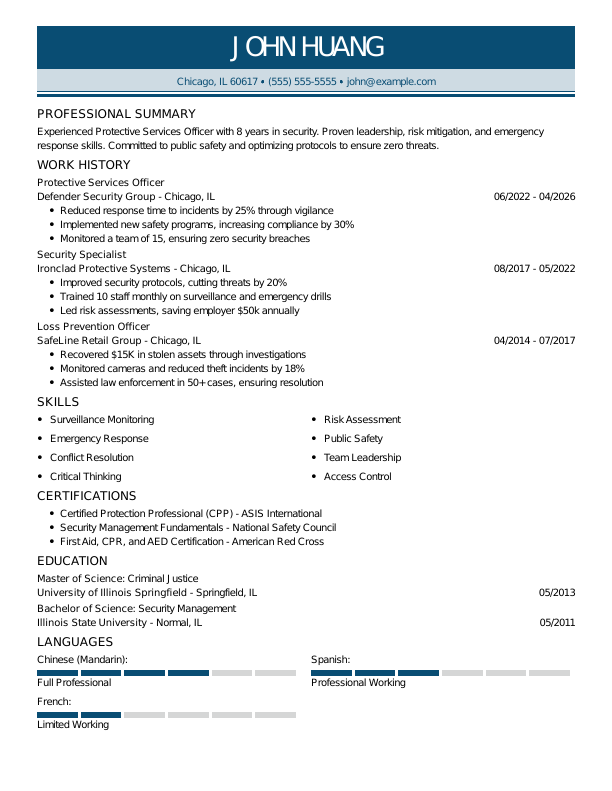
Experienced Protective Services Resume
An ideal choice for protective services professionals with over 10 years of experience, this template supports applicants seeking senior-level positions in security management and operational leadership.

Protective Services Resume Template (Text)
Below is a protective services resume in plain text that you can copy and personalize. For more security and safety layouts, browse our free resume templates.
Emma Davis
Westbrook, ME 04099
Professional Summary
Experienced Protective Services professional with expertise in security protocol implementation and risk assessment. Successfully led teams to enhance safety measures, reducing incidents by significant margins. Adept at implementing advanced surveillance systems and leading strategic security initiatives.
Work Experience
May 2022 – April 2026
Safeguard Solutions, Inc. – Westbrook, ME
Protective Services
- Enhanced security measures by 30%
- Led team reducing incidents by 15%
- Implemented advanced surveillance systems
May 2017 – April 2022
Guardian Secure Corp. – Westbrook, ME
Security Officer
- Conducted safety audits biweekly
- Secured premises with 24/7 patrol
- Trained staff on emergency protocols
May 2015 – April 2017
RetailGuard Systems – Westbrook, ME
Loss Prevention Specialist
- Reduced theft cases by 25% annually
- Analyzed security footage biweekly
- Collaborated with law enforcement agencies
Education
May 2015
University of Illinois Chicago, IL
Master’s Degree Criminal Justice
May 2013
University of Iowa Iowa City, IA
Bachelor’s Degree Sociology
Certifications
- Certified Security Professional – National Security Association
- Advanced Threat Detection – Security Training Institute
Skills
- Security Protocol Implementation
- Risk Assessment
- Incident Response
- Team Leadership
- Surveillance Systems
- Emergency Analysis
- Threat Detection
- Safety Audit
How to Write a Protective Services Resume
As a professional in protective services, understanding how to write a resume begins with demonstrating your relevant skills and experience in a format that stands out. Use the guidance below to emphasize your strengths and tailor your resume for the positions you’re targeting.
1. Contact Info
Your contact information should be prominently displayed at the top of your resume to ensure clarity and professionalism.
Be sure to include:
- Full name
- Phone number
- Professional email address
- City and state (ZIP code is optional)
- LinkedIn profile or relevant portfolio (if applicable)
 PRO TIP
Avoid including sensitive personal details, such as your Social Security number, religious affiliation, or financial information on your resume unless specifically requested by the employer.
2. Resume Profile
A resume profile is a brief introductory section comprising two to four sentences that highlights your key qualifications. It serves as a compelling pitch to hiring managers, prompting them to delve deeper into your resume and learn more about your skills and experience.
Typically located at the top of your resume, the profile can be formatted as either a summary or an objective statement, each serving distinct purposes. Understanding these differences will help you choose the right approach for your job application:
- A resume summary showcases essential qualifications, skills, and significant achievements relevant to protective services. This format is particularly beneficial for job seekers with related experience or transferable skills who want to highlight their contributions as a reliable professional in the field.
- A resume objective highlights your career aspirations and what you aim to contribute in your next role. It’s particularly beneficial for recent graduates, those shifting careers, or individuals with limited experience, including coding bootcamp graduates or professionals transitioning into protective services.
Let’s explore the distinctions between a resume summary and a resume objective to understand their unique purposes:
Protective services resume summary example:
Dedicated protective services professional with over 6 years of experience in high-stakes environments, including corporate security and event management. Proficient in threat assessment, crisis intervention, and team leadership. Acknowledged for improving safety protocols and fostering a secure atmosphere for clients and staff alike.
Protective services resume objective example:
Recent graduate with a degree in Criminal Justice, eager to launch a career in protective services within a dynamic security organization. Committed to upholding safety and integrity while contributing strong analytical skills and a proactive approach to risk management in both corporate and community settings.
3. Work Experience
The work experience on your resume serves as an important foundation for establishing the credibility of your qualifications. Employers assess not only your job titles and responsibilities but also the impact you’ve made in previous roles.
This information illustrates how your background aligns with the requirements of the protective services role and highlights your ability to contribute from day one.
The work experience section should contain:
- Job title
- Employer name and location
- Dates of employment (month/year)
- 3–5 bullet points detailing your security duties and accomplishments
Tailor your bullet points to align with the job description, using language that resonates with the protective services sector. Begin each point with a strong action verb (such as “Secured,” “Assessed,” or “Investigated”) to enhance impact.
Incorporate measurable outcomes wherever possible. Specific figures and accomplishments highlight your contributions and set you apart from other applicants, demonstrating the tangible value you bring to the role.
In general, consider following the format of:
[action verb] + [responsibility] = [result/achievement]
For example:
Conduct security assessments for over 50 facilities annually, successfully identifying vulnerabilities and implementing corrective measures that resulted in a 30% decrease in security incidents.
Note that you can also flip the result/achievement with the responsibility:
Reduced unauthorized access by 40% through the implementation of advanced surveillance technology and rigorous staff training protocols.
With these techniques in mind, your resume bullets may look something like:
- Conducted security assessments and implemented protocols in a 50,000 sq. ft. facility, reducing incidents by 20%.
- Coordinated emergency response drills for over 100 staff members quarterly, improving preparedness and response times by 30%.
- Mentored junior security personnel, fostering a collaborative environment that improved team efficiency.
- Used surveillance technology to monitor premises and compile reports, supporting timely interventions.
- Collaborated with local law enforcement on safety initiatives, strengthening community relations and trust.
4. Skills
The skills section offers a concise overview of your professional abilities in protective services, helping hiring managers quickly assess your qualifications. This ATS-friendly resume format emphasizes essential skills and experiences relevant to the role. Skills can be categorized into three key areas:
- Soft skills are personal qualities that influence how individuals interact and collaborate in protective services.
- Hard skills are specific, quantifiable abilities gained through education, training, or direct experience.
- Technical skills refer to the specialized abilities required to operate specific equipment and technologies.
5 Soft Skills for Your Resume or CV
- Effective communication
- Team leadership skills
- Crisis management abilities
- Attention to detail
- Conflict resolution techniques
5 Hard Skills for Your Resume or CV
- Risk assessment and management
- Surveillance system operation (CCTV, alarm systems)
- Emergency response planning
- Physical security measures implementation
- Incident reporting and documentation
In general, aim to showcase a well-rounded selection of skills that directly relate to the position’s requirements.
PRO TIP
If you’re a newer protective services professional, consider placing your skills section higher on your resume, right after the summary. If you have more experience, it’s better to position this section lower and integrate those skills throughout your work history for a more cohesive presentation.
5. Education
Understanding how to list education on your resume helps strengthen your qualifications. Begin with your most recent or relevant protective services degree, clearly listing the degree type and school name. If you’re a recent graduate, consider including optional details such as your graduation year, GPA (if 3.5 or higher), honors, and any relevant coursework that relates to the field.
Protective services resume education section example:
Associate of Applied Science in Protective Services
Northwestern Community College, Springfield, IL
Graduated: 2024 | Graduated with Distinction
PRO TIP
When listing multiple degrees on your resume, ensure they are in reverse-chronological order, starting with the highest qualification first, such as Bachelor of Science in Protective Services (BSPS) followed by Associate Degree in Protective Services (ADPS).
6. Certifications
While not mandatory on every resume, listing certifications on your resume, such as Certified Protection Professional, can help compensate for limited experience, because employers often seek specific credentials in protective services, such as security management or loss prevention.
Highlight relevant certifications that improve your application and support your qualifications. Ensure these credentials are up to date and presented clearly for easy reference.
Protective services certification examples:
- Protective Services License, New Jersey | New Jersey Division of Consumer Affairs | Expires: 12/2028
- CPR/AED Certification | American Red Cross | Expires: 11/2027
- First Aid Certification | National Safety Council | Expires: 03/2028
- Crisis Intervention Training (CIT) | Crisis Prevention Institute | Expires: 06/2028
Start Building Your Job-Winning Resume
Use Your Existing Resume
Import your current resume to transfer your information to one of our professional templates.
Create a New Resume
Start fresh with a template that catches your eye and follow the prompts to add your details.
Tailor Your Work History to Beat the ATS
Your work experience is not just a collection of job titles. It is a valuable opportunity to demonstrate your measurable contributions with specific examples relevant to protective services. This approach also improves the chances of creating an ATS-friendly resume that can be easily scanned by applicant tracking systems (ATS).
To solidify your work history, tailor it to the position you’re targeting by incorporating relevant keywords. Begin by thoroughly reviewing the job description. Identify frequently mentioned skills or qualifications and ensure those elements are reflected in your experience narratives.
Key Takeaways
- Tailor your resume to the job description. Use specific terms from the posting to resonate with both ATS and hiring managers.
- Highlight quantifiable achievements that demonstrate your impact. Include metrics (e.g., incident response times, training completion rates, safety audits) to showcase your contributions.
- Select a resume format that suits your experience level. Entry-level job seekers may prefer a functional format, while seasoned professionals often benefit from a chronological layout.
More Resume & CV Examples
- Armed Security Guard
- Asset Protection Specialist
- Loss Prevention
- Safety Coordinator
- Security Guard
- Security Officer
- Security Supervisor
- Unarmed Security Guard
Cover Letters for Your Resume
Browse our library of cover letter examples to complete your application. A resume will have a better chance of getting noticed.
Frequently Asked Questions
Last Update:
What resume format should I use for my protective services resume?
There are three main resume formats to consider when applying for positions in protective services. Your choice should reflect your experience level and what aspects of your background you wish to highlight:
- Chronological: The chronological resume format is the most widely used option, centering on your work history by detailing your responsibilities and achievements. This approach is particularly beneficial for job seekers with a consistent, relevant work background that reinforces their qualifications and lends credibility to their applications.
- Functional: A functional resume, often called a skills-based resume, emphasizes your qualifications and skills over work history. This format is particularly beneficial for those who may lack direct experience in protective services or have gaps in their employment history. Highlight what you can bring to the role with this approach.
- Combination: The combination resume format merges the chronological and functional styles, showcasing both work history and skill sets. This approach benefits professionals seeking to demonstrate their growth while emphasizing relevant abilities, making it ideal for career changers or those with diverse experiences.
Should I include a cover letter with my resume?
Yes, you should include a cover letter with your protective services job application. A well-crafted cover letter improves your resume by allowing you to elaborate on your relevant skills and experiences, particularly those that align with the specific demands of the role. It also demonstrates to employers that you’re genuinely interested in their organization and have taken the effort to personalize your application, which can set you apart from other job seekers.
If you’re hesitant about writing a cover letter, there are many resources available to assist you. You can find comprehensive guides on how to write a cover letter tailored for protective services roles, as well as examples that illustrate effective approaches. Exploring various cover letter formats will help you choose one that best highlights your qualifications and aligns with industry expectations.
To make the process easier, consider using a cover letter generator that provides structured templates and suggestions tailored specifically for protective services positions.
How long should a protective services resume be?
For professionals in protective services with fewer than 10 years of experience, a one-page resume is ideal for highlighting relevant skills and certifications. Focus on key experiences, training, and any specialized knowledge that sets you apart from other applicants.
Those in senior or specialized roles may use a two-page format if the content remains targeted and relevant. Ensure that all information included demonstrates expertise and adds value to your application while avoiding unnecessary filler language that does not improve your qualifications.
What keywords should I include to pass applicant tracking systems (ATS)?
To improve your resume’s chances of passing ATS, focus on incorporating keywords and phrases directly from the job posting. For a position in protective services, terms like “surveillance,” “emergency response,” and “risk assessment” are important. Adjust your content to reflect these specific skills.
Additionally, include any relevant certifications such as CPR, First Aid, or specialized training in security protocols. Mention technical tools you’re familiar with that are relevant to the role, like incident management software or communication systems. This approach demonstrates your qualifications and aligns your experience with what employers are seeking.
Is it important to include volunteer work related to protective services on my resume?
Yes, including volunteer work is beneficial, especially for those new to the field. It demonstrates your commitment and relevant skills gained through real-world experiences, which can improve your application in a competitive job market.

Elizabeth Muenzen is a Certified Professional Resume Writer (CPRW) and member of the Professional Association of Resume Writers & Career Coaches who empowers job seekers to take control of their career paths using Monster’s comprehensive job search and resume tools.
See More From Elizabeth MuenzenExplore Related Career Advice


How to Put Transferable Skills on Your Resume: 120 Skills, Examples, & Tips

Updated:
Aug 27, 2026
|
16 min read


How to Write a Functional Resume (Formatting Tips, Template, & Examples)
Updated:
Aug 7, 2026
|
17 min read


Functional vs Chronological Resume: Which Format Is Right for You?
Updated:
Aug 3, 2026
|
16 min read

100+ Resume Adjectives to Help You Write a Stronger Resume in 2026 (With Examples)
Updated:
Jul 30, 2026
|
12 min read