Free Remote Resume Templates & Examples
Improve your chances of landing interviews with our expertly crafted remote job resume templates. You can find free resume templates that come with valuable writing tips to ensure your resume or CV showcases your qualifications and captures the attention of hiring managers.
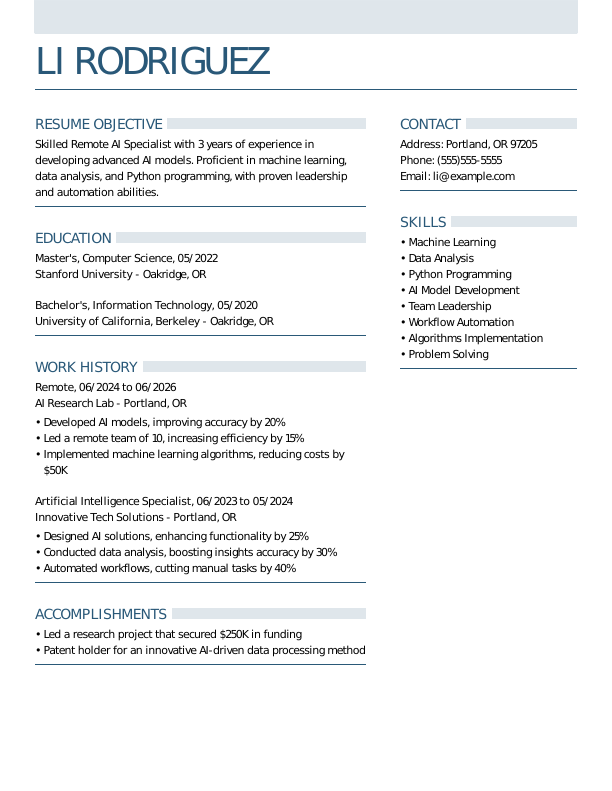
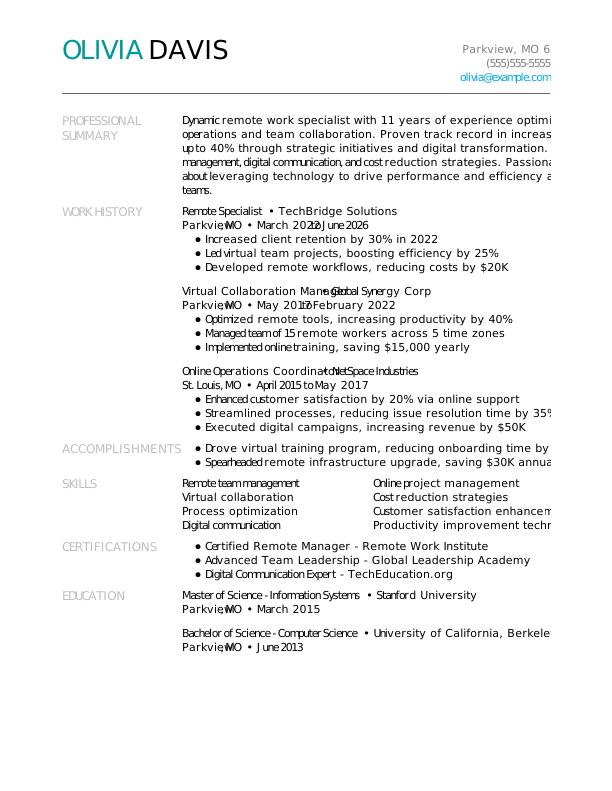
Real-World Resumes That Get Results
 Free
Free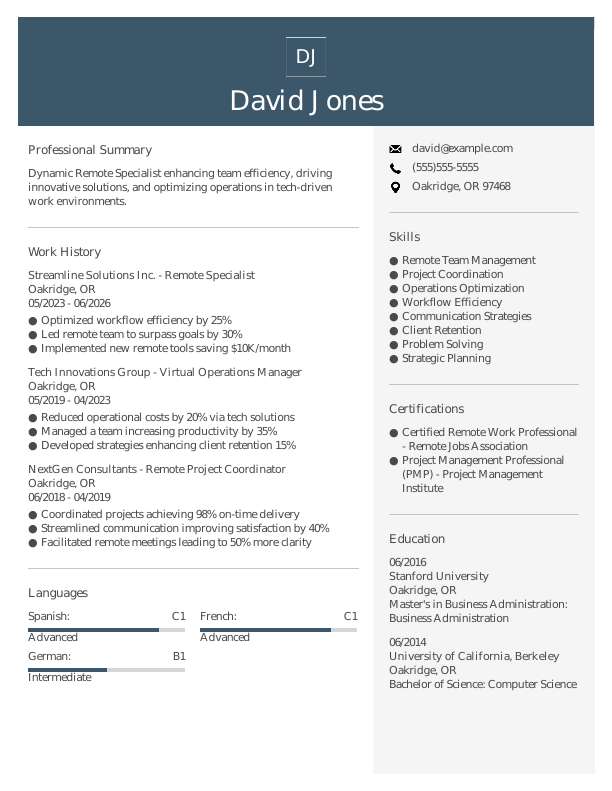
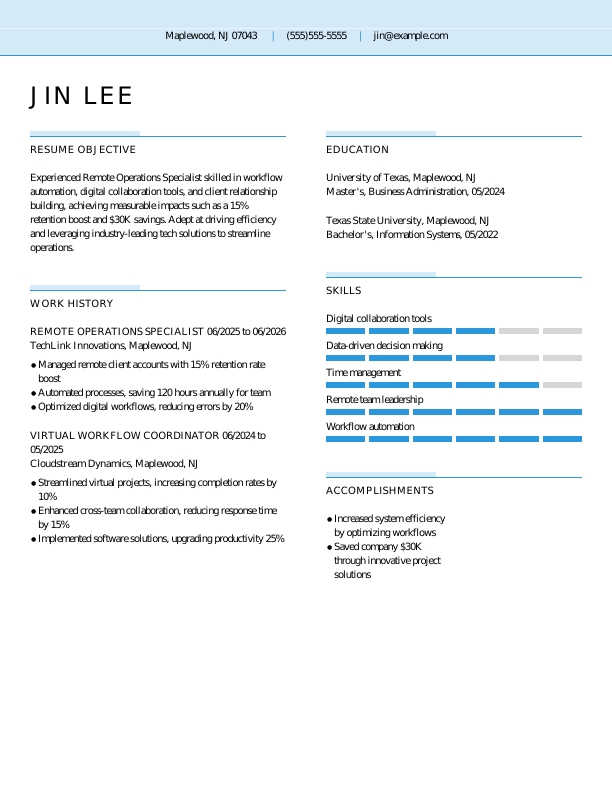
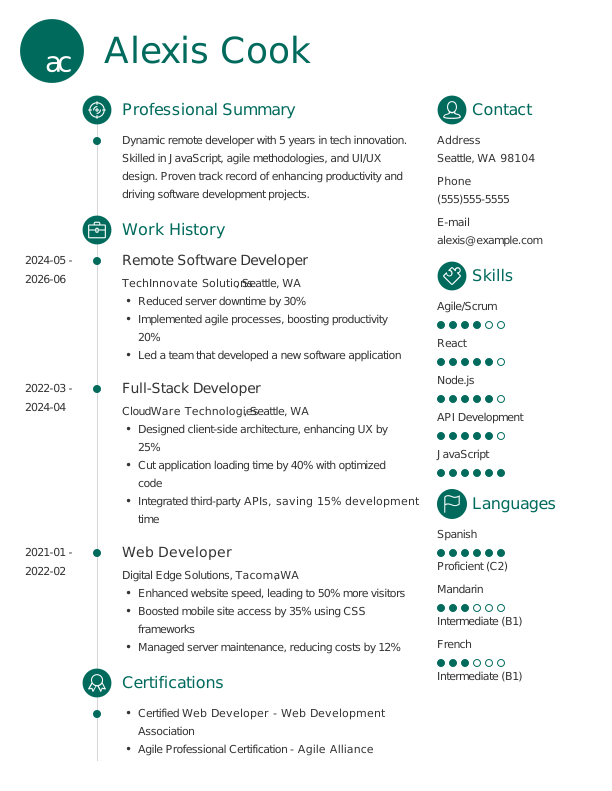

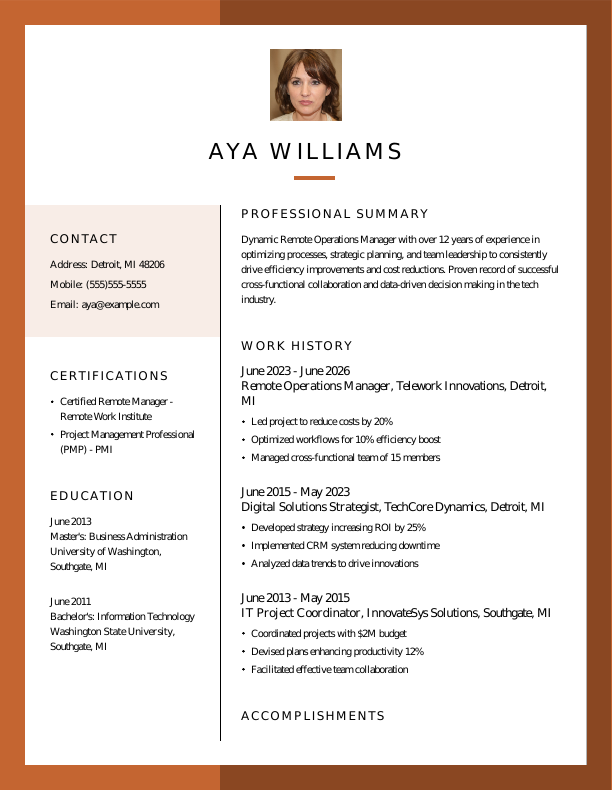

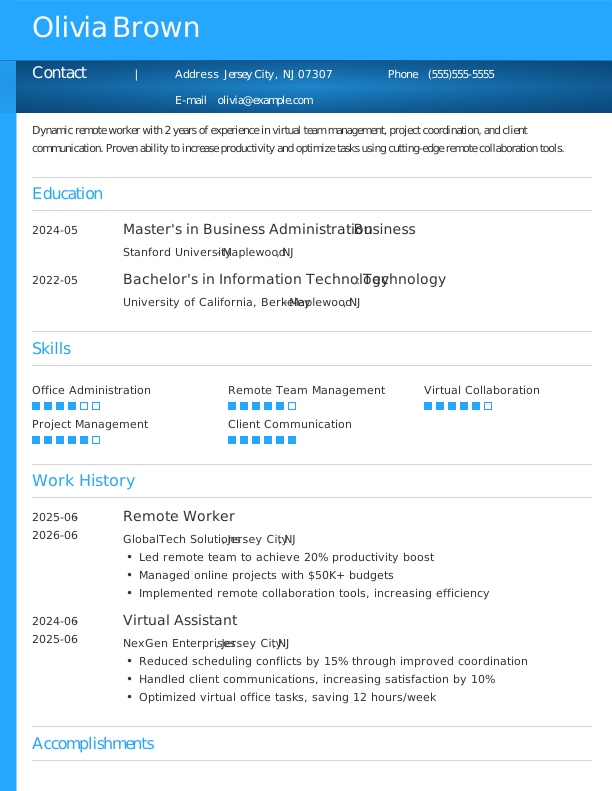

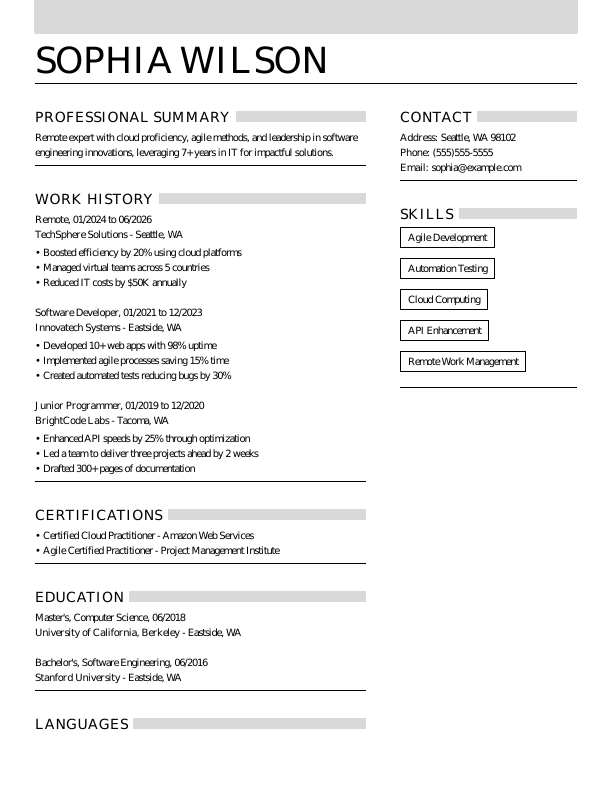

Browse Free Resume Templates
- Accounts Payable
- Adjunct Professor
- Artist
- Auto Mechanic
- Baker
- Business Development Manager
- Business
- Certified Nursing Assistant
- Classic & Traditional
- Cleaner
- College Student
- Concierge
- Construction Worker
- Corporate
- Creative & Unique
- Custodian
- Customer Service
- Dental Assistant
- Direct Support Professional
- Entry-Level
- Flight Attendant
- Hospitality & Food Service
- Front Desk Receptionist
- Healthcare
- High School
- Housekeeping
- Hvac Technician
- Hybrid
- Inventory Manager
- Logistics
- Maintenance
- Management
- Modern
- Mortgage Loan Processor
- Pet Sitter
- Phlebotomist
- Production
- Rbt
- Sales
- Security Services
- Restaurant Server
- Simple & Basic
- Social Work
- Teacher
- Technology
Resume Examples for Remote Jobs
Resume requirements for remote jobs vary by role, industry, and employer. Explore examples tailored to different remote positions to see how to highlight job-specific skills, remote work experience, and accomplishments, then build a polished resume tailored to the position you want.
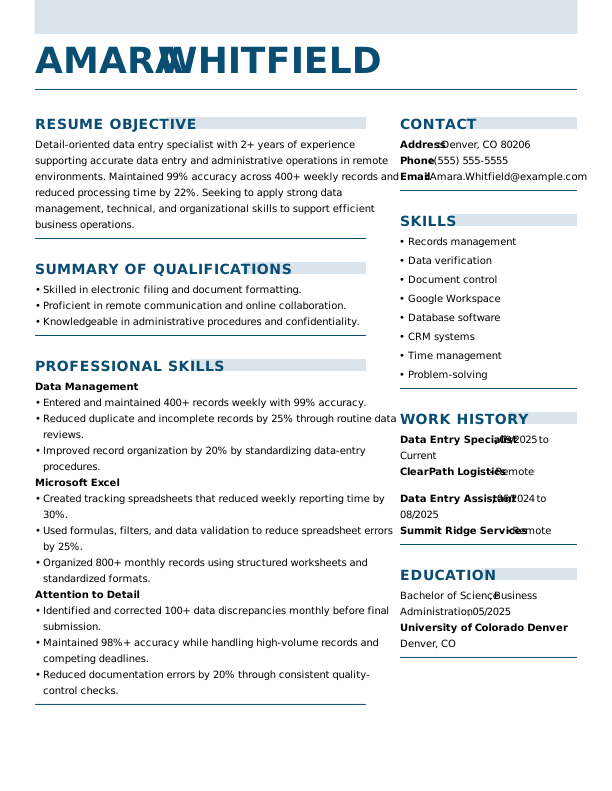
Remote Data Entry Specialist Resume
This template is designed for data entry specialists seeking remote positions. It emphasizes accuracy, attention to detail, data management, and proficiency with digital tools while highlighting the ability to work independently, manage repetitive tasks efficiently, and meet deadlines in a remote environment.
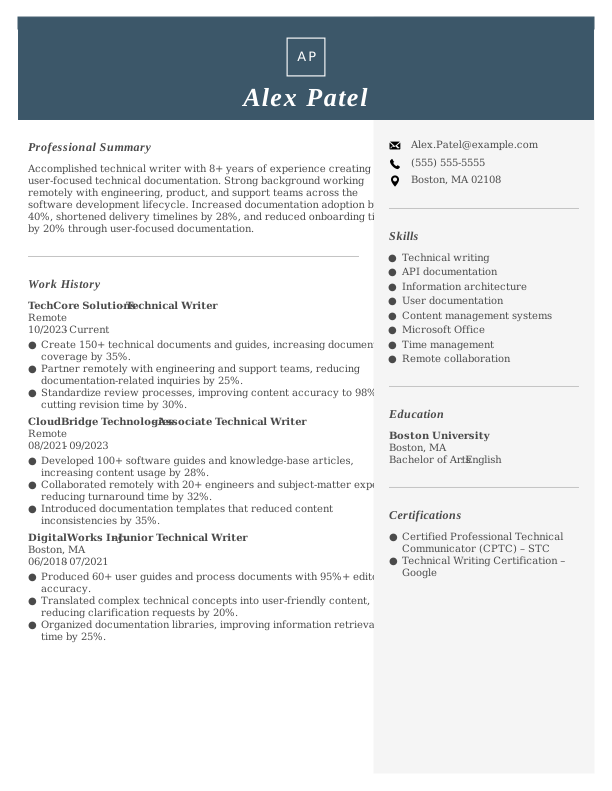
Remote Technical Writer Resume
This template is ideal for technical writers seeking remote positions. It highlights writing and documentation expertise, attention to detail, and the ability to communicate complex information clearly while working independently and collaborating with remote teams.
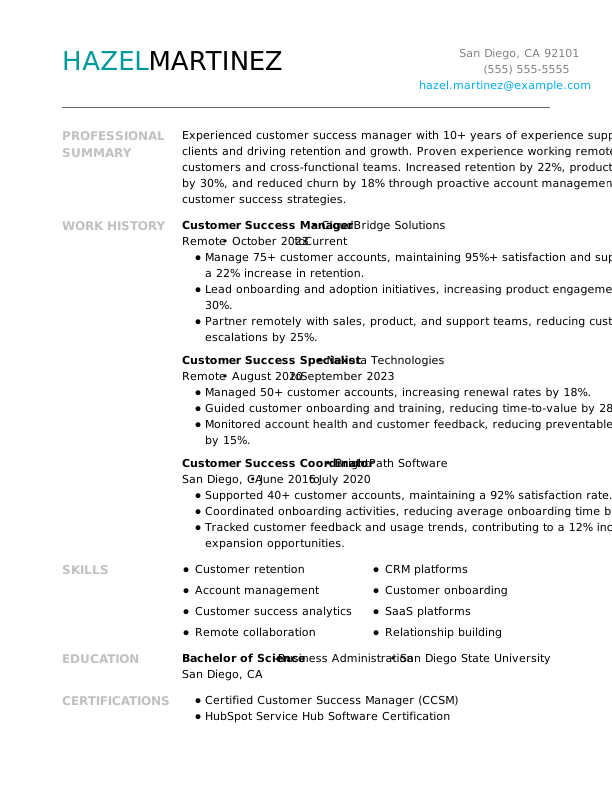
Remote Customer Success Manager Resume
This template is perfect for customer success managers seeking remote positions. It highlights client relationship management, communication, problem-solving, and retention strategies while showcasing the ability to manage customer relationships independently and collaborate effectively with distributed teams.
Remote Resume Template (Text)
Use this customizable text format of a remote job resume to copy, edit, and personalize directly in your document.
JORDAN MARTINEZ
Client Relationship Manager
Denver, CO | (555) 123-4567 | jordan.martinez@email.com | LinkedIn
PROFESSIONAL SUMMARY
Client Relationship Manager with 8+ years of experience managing customer accounts and building long-term relationships in remote and hybrid environments. Skilled in client communication, account strategy, problem-solving, and cross-functional collaboration. Proven track record of improving client satisfaction, strengthening retention, and managing competing priorities while working independently with distributed teams.
CORE SKILLS
- Client Relationship Management
- Account Management
- Customer Retention
- Client Onboarding
- Communication
- Conflict Resolution
- Cross-Functional Collaboration
- Remote Communication
- CRM Software
- Data Analysis
- Project Coordination
PROFESSIONAL EXPERIENCE
Client Relationship Manager
BrightPath Solutions | Remote | 2021–Present
- Manage a portfolio of 60+ client accounts, serving as the primary point of contact and building relationships throughout the customer lifecycle.
- Increased client retention by 18% by developing proactive communication strategies and identifying accounts at risk of disengagement.
- Conduct virtual client meetings, provide account updates, and coordinate follow-up activities to ensure client needs are addressed.
Account Manager
Northstar Services | Denver, CO | 2018–2021
- Managed more than 40 client accounts in a hybrid environment, balancing independent account responsibilities with in-person team collaboration.
- Improved client satisfaction scores by 15% by establishing regular check-ins and streamlining communication processes.
- Coordinated with remote and in-office colleagues to resolve client concerns and ensure timely delivery of services.
- Created client reports, presentations, and documentation to communicate performance and project updates.
Client Services Coordinator
Summit Group | Denver, CO | 2016–2018
- Supported account managers with client communications, scheduling, reporting, and account documentation.
- Coordinated meetings and follow-up activities between clients and internal teams to keep projects and deliverables on schedule.
- Maintained customer records and prepared reports to help identify client needs and track account activity.
EDUCATION
Bachelor of Business Administration
University of Colorado Denver | Denver, CO
How to Write a Remote Resume
When applying for remote jobs, knowing how to write a resume can help you present your qualifications while showing employers that you can work effectively outside a traditional office. Use the guidance below to highlight remote work experience, independent work, digital communication, and collaboration skills, and tailor your resume to the specific role and requirements listed in the job description.
1. Contact Info
Your contact information should be clear, professional, and easy to find at the top of your resume.
Make sure to include:
- Full name
- Phone number
- Professional email address
- City and state (ZIP code is optional)
- LinkedIn profile or personal portfolio (if relevant)
- RN license number and state (if applicable)
 PRO TIP
Avoid including personal information such as your Social Security number, religion, or photographs unless specifically requested by the employer.
2. Resume Profile
A resume profile is a brief introductory paragraph, typically two to four sentences long, that highlights your key qualifications and presents you as an appealing applicant. It serves as a quick pitch to hiring managers, designed to capture their interest and motivate them to explore your resume further.
This profile is positioned at the top of your resume and can take the form of either a summary or an objective, each serving distinct purposes. Understanding these differences can help you choose the right approach for your job application:
- A resume summary highlights your most relevant skills, achievements, and experience to craft a compelling narrative for potential employers. This format is particularly helpful for individuals with a solid work history or transferable skills eager to illustrate their contributions in the field.
- A resume objective is a statement that outlines your career goals and highlights what you aim to achieve in your next position. It’s particularly useful for new graduates, individuals switching fields, or those with less experience, such as coding bootcamp attendees or professionals moving into marketing.
Let’s take a look at an example of each to see how a resume summary and a resume objective differ:
Remote resume summary example:
Adaptable remote worker with 6+ years of experience in dynamic digital environments, specializing in virtual communication, project management, and cloud-based collaboration tools. Proven track record of improving team productivity and streamlining workflows. Awarded for exceptional problem-solving abilities and consistently meeting project deadlines.
Remote resume objective example:
Recent graduate with a Bachelor’s degree in Business Administration excited to launch a career in a dynamic corporate environment. Committed to fostering teamwork and innovation while bringing strong analytical skills and adaptability to a forward-thinking organization or startup.
3. Work Experience
The work experience on your resume is one of the strongest ways to show employers what you can accomplish and how well you can work remotely.
Go beyond listing job duties by highlighting relevant achievements, responsibilities, and examples of how you managed work independently, communicated virtually, and collaborated with colleagues across locations.
If you have previous remote experience, make it clear by identifying remote roles or mentioning responsibilities that involved working with distributed teams. If your experience was primarily in-office, highlight transferable skills such as self-management, time management, and digital communication.
The work experience section should contain:
- Job title
- Employer name and location
- Dates of employment (month/year)
- Three to five bullet points describing your relevant responsibilities and achievements
Tailor your work experience bullet points to the specific remote job you’re targeting. Prioritize accomplishments that demonstrate skills employers value in remote employees, such as independent work, time management, virtual communication, digital collaboration, and meeting deadlines.
Start each bullet point with a strong action verb, such as “Collaborated,” “Managed,” “Coordinated,” or “Organized,” and focus on the results you achieved.
Include quantifiable metrics whenever possible. Numbers such as projects completed, deadlines met, productivity gains, customer satisfaction scores, response times, or team size provide concrete evidence of your impact and show employers that you can deliver results while working remotely.
In general, consider following the format of:
[action verb] + [responsibility] = [result/achievement]
For example:
Collaborated with cross-functional teams to deliver 15+ projects remotely, achieving a 95% on-time completion rate while maintaining high communication standards.
Note that you can also flip the result/achievement with the responsibility:
Increased team productivity by 30% through effective use of remote collaboration tools and streamlined workflows.
With these techniques in mind, your resume bullets may look something like:
- Administered medications and monitored for adverse reactions across a 30-bed med-surg unit, reducing medication errors by 15%.
- Coordinated discharge planning and follow-up care for 20+ patients per week, improving patient satisfaction scores by 10%.
- Served as preceptor for new graduate nurses, facilitating onboarding and improving retention within the department.
- Used Epic EMR system to document patient progress and support interdisciplinary communication.
- Led daily rounds with physicians and care teams to ensure continuity of care for post-operative patients.
4. Skills
The skills section gives employers a quick overview of the abilities you bring to a remote role. Highlight a combination of job-specific expertise and skills that demonstrate you can communicate effectively, manage your time, stay organized, and work independently while collaborating with a distributed team.
Skills can be categorized into three groups:
- Soft skills are interpersonal abilities that support effective communication, collaboration, adaptability, time management, and problem-solving in remote work environments.
- Hard skills are specific, measurable abilities gained through education, training, or hands-on experience, such as project management, writing, customer service, or data analysis.
- Technical skills are specialized abilities and knowledge needed to perform tasks in your field, including relevant software, platforms, programming languages, or industry-specific tools.
5 Soft Skills for Your Resume or CV
- Effective communication
- Time management skills
- Teamwork and collaboration
- Remote work adaptability
- Conflict resolution techniques
5 Hard Skills for Your Resume or CV
- Remote collaboration tools (Zoom, Slack)
- Cloud storage management (Google Drive, Dropbox)
- Project management methodologies (Agile, Scrum)
- Data analysis software (Tableau, Excel)
- Cybersecurity protocols (VPNs, firewalls)
In general, aim to showcase a diverse mix of relevant skills that align with the remote job requirements to demonstrate your full professional value.
PRO TIP
If you have limited remote work experience, place your skills section near the top of your resume, directly after your summary, to quickly show employers that you have the abilities needed to succeed in a remote environment. If you have substantial experience, you can place it lower on the page and demonstrate those skills through specific accomplishments in your work history.
5. Education
Understanding how to list education on your resume is important for showcasing your qualifications. Begin with your most recent or relevant degree, making sure to include both the degree type and institution name.
If you’re a recent graduate, consider adding your graduation year, GPA (if it’s 3.5 or higher), any honors received, or relevant coursework to improve your profile.
Remote resume education section example:
Bachelor of Arts in Psychology
University of California, Los Angeles, Los Angeles, CA
Graduated: 2024 | Cum Laude
PRO TIP
If you have multiple degrees, list them in reverse-chronological order, starting with your most recent. Prioritize degrees that are most relevant to the remote job you’re targeting, and consider leaving off older or unrelated education if space is limited.
6. Certifications
Listing certifications on your resume can strengthen your application when a credential is relevant to the specific remote job you’re targeting. The certifications that employers value vary by role and industry, so focus on credentials that demonstrate the knowledge or technical expertise required.
Include certifications that appear in the job description or directly support your qualifications. List the certification name and issuing organization, and include an expiration date when applicable.
Keep your credentials current and use the official certification name so employers and applicant tracking systems can easily recognize them.
For example, a remote project manager might benefit from a PMP or CAPM, while a remote IT professional could highlight an AWS or CompTIA certification. Choose credentials based on the requirements of the job you’re applying for, not simply because the position is remote.
Remote certification examples:
- Project Management Professional (PMP) | Project Management Institute
- Certified Associate in Project Management (CAPM) | Project Management Institute
- AWS Certified Cloud Practitioner | Amazon Web Services
- CompTIA Security+ | CompTIA
- Google Analytics Certification | Google
Start Building Your Job-Winning Resume
Use Your Existing Resume
Import your current resume to transfer your information to one of our professional templates.
Create a New Resume
Start fresh with a template that catches your eye and follow the prompts to add your details.
Tailor Your Work History to Beat the ATS
Your work experience is more than a list of job titles. It’s an opportunity to demonstrate the measurable impact you’ve had on projects, teams, and overall success in your roles. Taking this approach not only highlights your contributions but also helps create an ATS-friendly resume that applicant tracking systems (ATS) can easily scan.
To craft an effective work history, tailor it specifically to the role you’re applying for by using relevant keywords and phrases.
Begin by thoroughly analyzing the job description provided. Identify frequently mentioned skills, tools, or responsibilities and ensure you reflect those elements within your experience descriptions whenever applicable.
Key Takeaways
- Tailor your resume to each remote job. Use keywords from the job description and emphasize the skills, tools, and experience that match the position. This helps your resume align with ATS requirements and makes your qualifications easier for hiring managers to evaluate.
- Show that you can succeed remotely. Highlight experience working independently, managing your time, communicating virtually, collaborating with distributed teams, and using digital tools to stay organized and productive.
- Quantify your accomplishments. Include specific results, such as projects completed, productivity gains, response times, customer satisfaction scores, revenue growth, or team size, to demonstrate your impact.
- Prioritize relevant digital skills. Include remote collaboration and communication tools, such as Slack, Microsoft Teams, Zoom, or project management platforms, when they’re relevant to the position, and you have meaningful experience using them.
More Resume & CV Examples
- Apple
- Call Center Representative
- Customer Experience Manager
- Customer Service Coordinator
- Customer Service Manager
- Customer Service Representative
- Customer Service Specialist
- Customer Service Supervisor
- Customer Support
- Government
- Part Time
- Personal Shopper
- Remote Customer Service
- Retail Customer Service
- Retail Manager
- Retail
- Retail Sales Associate
- Salon Receptionist
- Service Advisor
- Service Manager
- Store Manager
- Travel Agent
- Travel Consultant
- Work From Home
Cover Letters for Your Resume
Browse our library of cover letter examples to complete your application. A resume will have a better chance of getting noticed.
- Academic
- Account Manager
- Accountant
- Accounts Payable
- Administrative Assistant
- Admissions Counselor
- Architecture
- Artist
- Assistant Principal
- Babysitter
- Barista
- Bartender
- Bookkeeper
- Brand Ambassador
- Business Analyst
- Business
- Caregiver
- Chef
- Civil Engineering
- Computer Science
- Construction
- Consulting
- Cosmetology
- Custodian
- Customer Service
- Data Analyst
- Dental Assistant
- Dental Hygienist
- Electrical Engineering
- Emt
- Engineering
- Esthetician
- Event Coordinator
- Executive Assistant
- Finance
- Financial Analyst
- Firefighter
- Flight Attendant
- Graphic Designer
- Hair Stylist
- Healthcare
- Hr Generalist
- Investment Banking
- It
- Janitor
- Journalism
- Lab Technician
- Law Clerk
- Lawyer
- Librarian
- Logistics
- Makeup Artist
- Manager
- Marketing
- Marketing Manager
- Massage Therapist
- Mechanic
- Mechanical Engineer
- Medical Assistant
- Non Profit
- Nursing
- Occupational Therapy
- Office Manager
- Paralegal
- Personal Trainer
- Pharmacist
- Pharmacy Technician
- Photographer
- Physician Assistant
- Pilot
- Police Officer
- Project Manager
- Property Manager
- Psychology
- Receptionist
- Research Assistant
- Restaurant Manager
- Retail
- Sales
- Sales Manager
- School Counselor
- Security Officer
- Social Work
- Software Engineer
- Substitute Teacher
- Teacher
- Teaching Assistant
- Truck Driver
- Vet Tech
- Veterinary Assistant
- Web Developer
- Welder
Frequently Asked Questions
Last Update:
What resume format should I use for my remote resume?
There are three primary resume formats to choose from when applying for a job. Your selection should reflect your level of experience and the aspects you want to highlight in your application:
- Chronological: The most popular format, a chronological resume focuses on your work experience, detailing your responsibilities and achievements in reverse order. This makes it an excellent choice for applicants with a relevant job history that reinforces their qualifications and showcases their professional growth over time.
- Functional: Also known as a skills-based resume, the functional resume emphasizes a summary of qualifications and an expanded skills section to showcase your relevant abilities. Consequently, it focuses less on work history, which makes it beneficial for applicants without direct experience or those with gaps in their employment.
- Combination: A combination resume integrates elements from both chronological and functional formats, featuring a comprehensive skills section alongside detailed work experience. This structure benefits remote professionals by allowing them to highlight their relevant abilities while showcasing career progression in a flexible work environment.
Should I include a cover letter with my resume?
Including a cover letter with your job application can significantly improve your chances of standing out. A well-crafted cover letter provides an opportunity to showcase your enthusiasm for the position and highlight experiences that may not shine through in your resume. It allows you to connect personally with the employer, demonstrating genuine interest and effort in your application process.
How long should a remote resume be?
For professionals with less than 10 years of experience, a one-page resume is typically sufficient. This format allows you to present your skills, education, and relevant work history clearly and concisely. Focus on key achievements and competencies that align with the job you’re applying for.
In contrast, applicants with more extensive backgrounds or specialized skills may opt for a two-page resume. Ensure every detail adds value by staying focused on relevant experiences and qualifications that highlight your expertise without unnecessary embellishments.
Should I include freelance or volunteer remote work?
Yes, especially if you’re new to the field. Including freelance projects or volunteer roles demonstrates your practical skills and ability to work independently, which is important for remote positions. This helps differentiate you when formal experience in traditional settings is limited.
Vicki Salemi is a nationally recognized career expert who helps professionals navigate the hiring landscape and find the right fit on Monster. With over 15 years of experience in corporate recruiting and HR, she offers expert guidance on job search strategies, interview preparation, and career development to help candidates land their next role.
See More From Vicki SalemiExplore Related Career Advice


How to Put Transferable Skills on Your Resume: 120 Skills, Examples, & Tips

Updated:
Aug 27, 2026
|

16 min read


How to Write a Functional Resume (Formatting Tips, Template, & Examples)
Updated:
Aug 7, 2026
|
17 min read

Functional vs Chronological Resume: Which Format Is Right for You?
Updated:
Aug 3, 2026
|
16 min read
100+ Resume Adjectives to Help You Write a Stronger Resume in 2026 (With Examples)
Updated:
Jul 30, 2026
|
12 min read