
Free Sign Language Interpreter Resume Templates & Examples
Bridging communication between deaf and hearing communities is skilled, deeply personal work. Free sign language interpreter resume and CV examples help you document your certification credentials and interpreting experience.
Real-World Resumes That Get Results
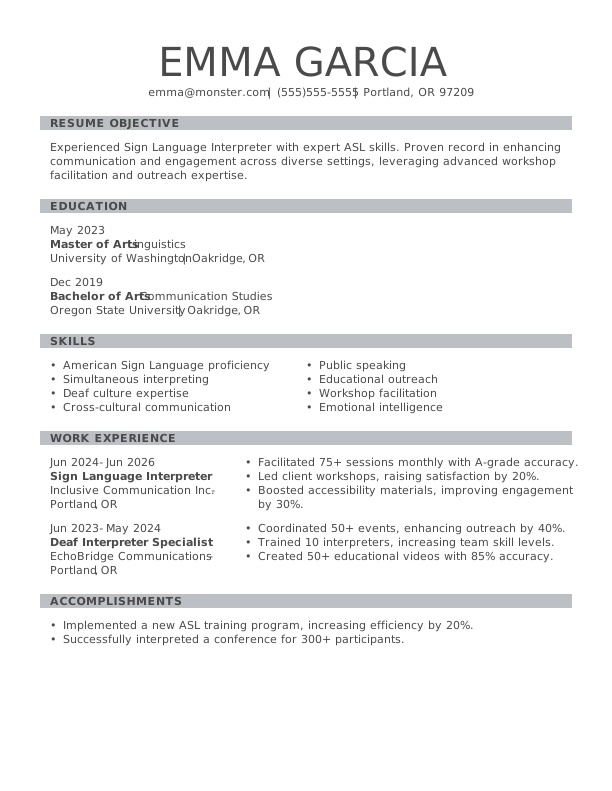
Sign Language Interpreter Entry-Level Resume
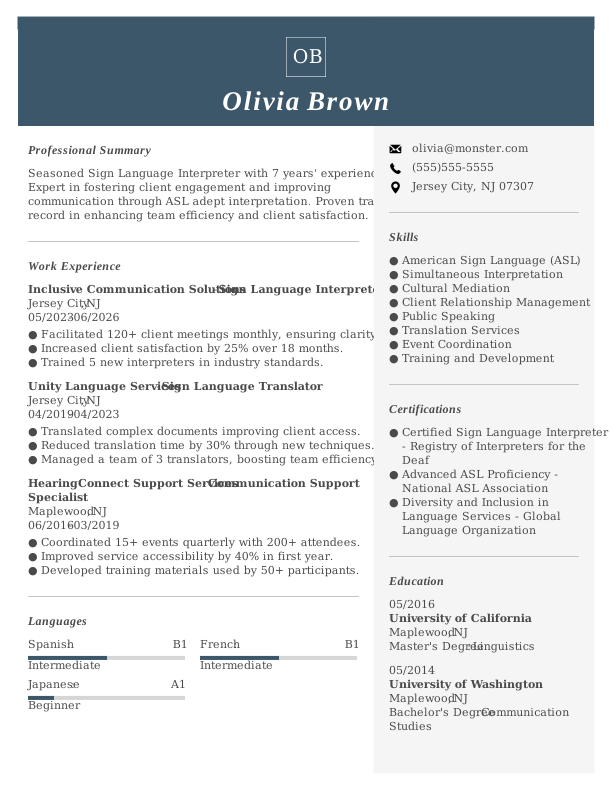
Sign Language Interpreter Mid-Level Resume
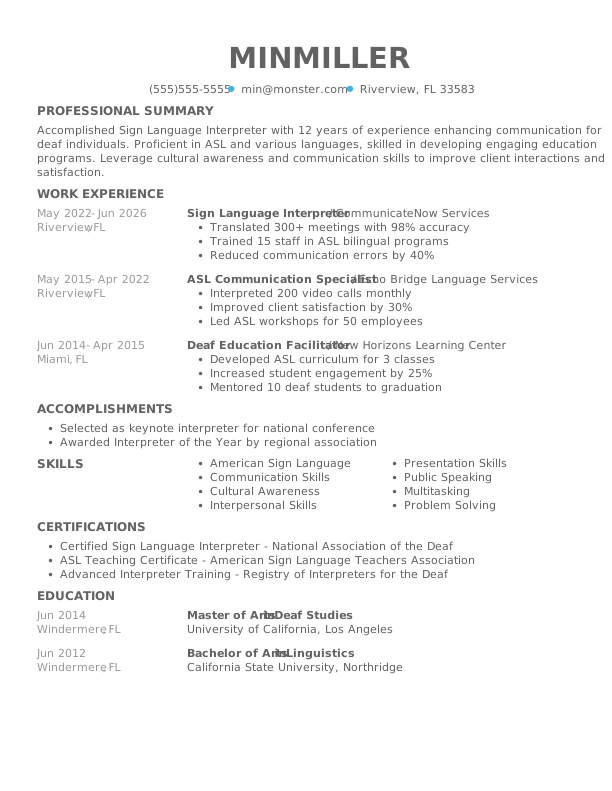
Sign Language Interpreter Experienced Resume
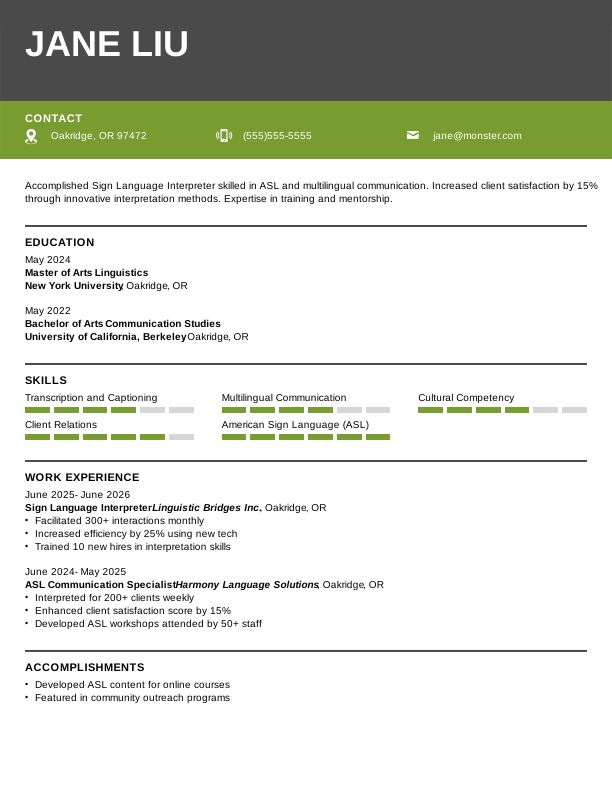
 Free
FreeSign Language Interpreter Modern Resume
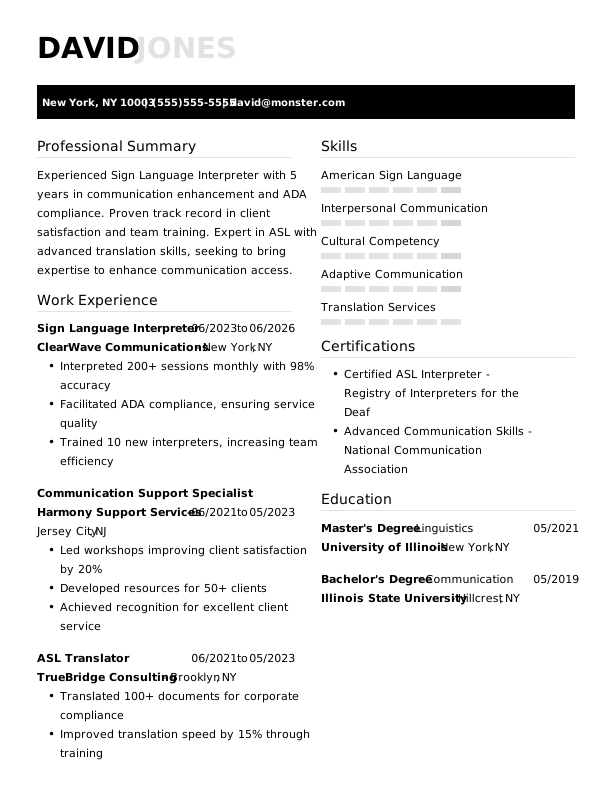
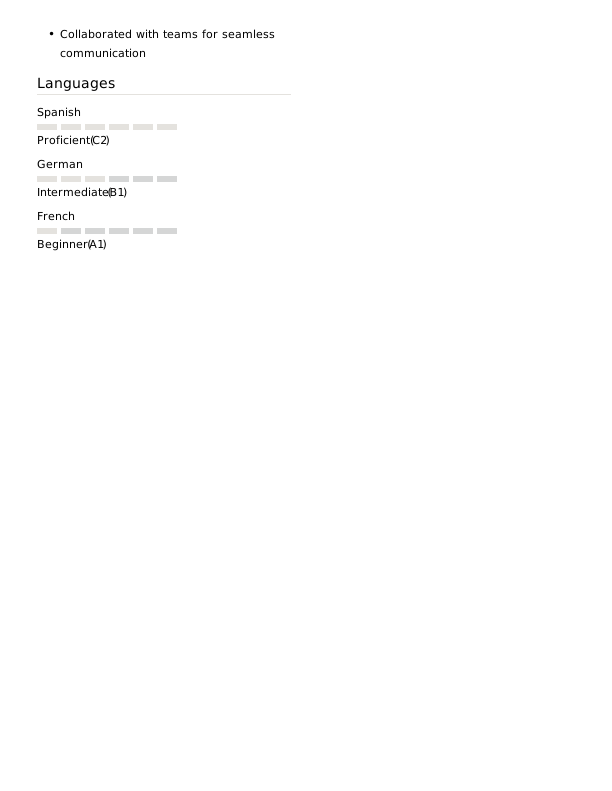
Sign Language Interpreter Creative Resume
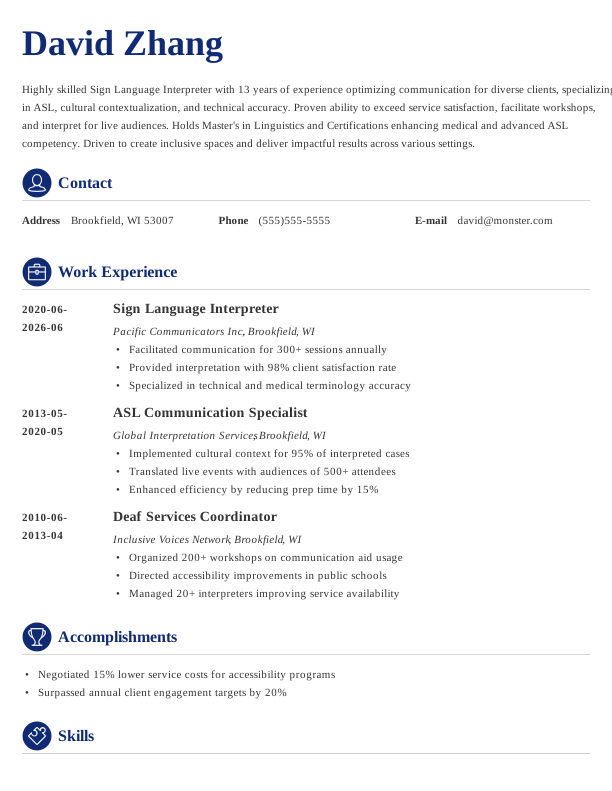
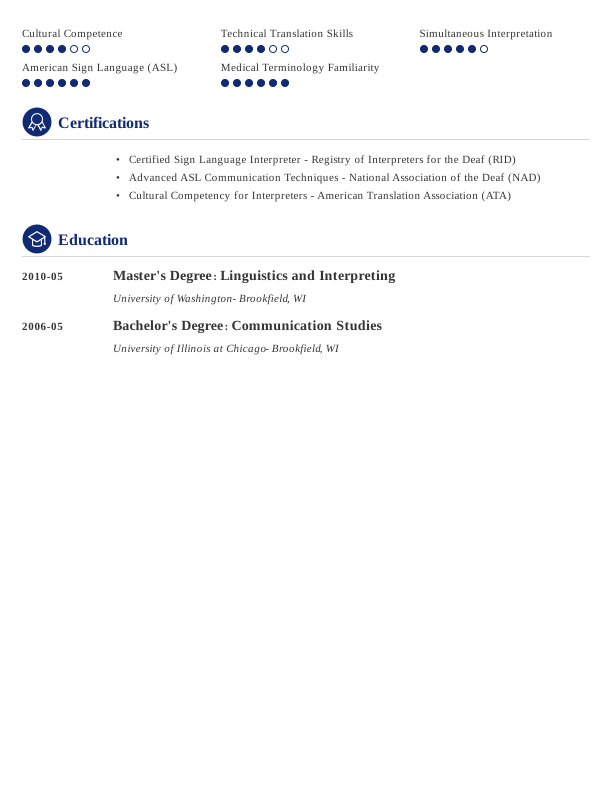
Sign Language Interpreter Traditional Resume
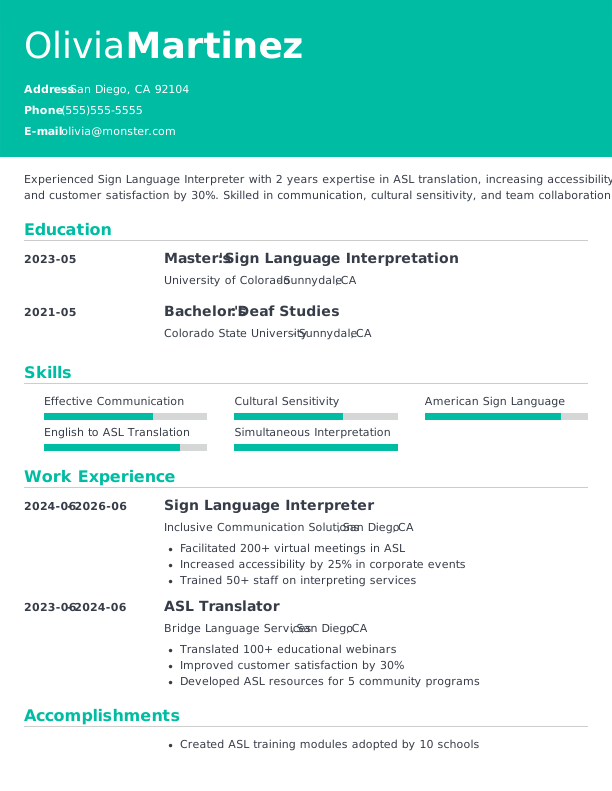

Sign Language Interpreter Simple CV Example
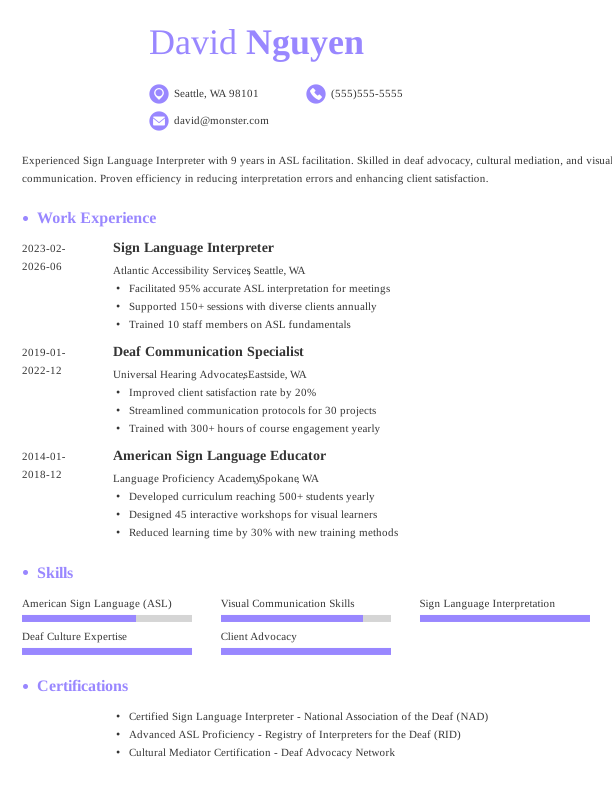
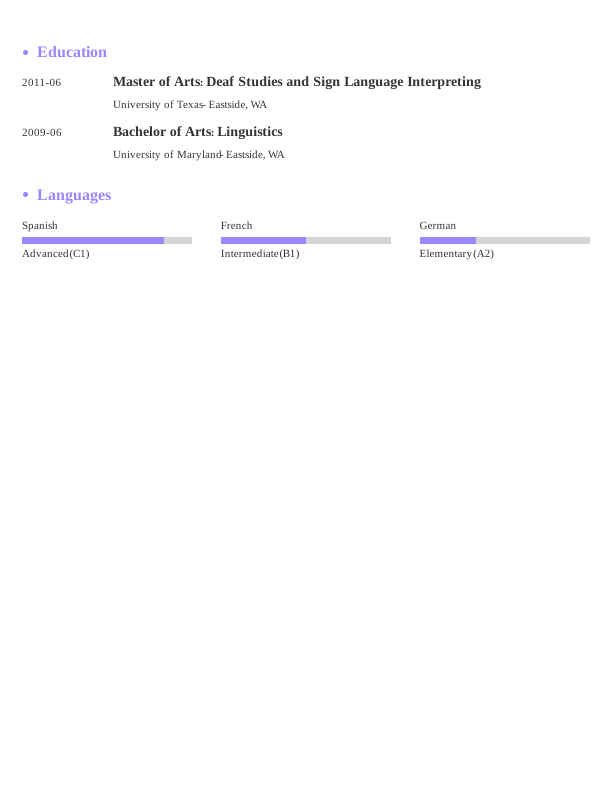
Sign Language Interpreter CV Format
Browse Free Resume Templates
- Accounts Payable
- Adjunct Professor
- Artist
- Auto Mechanic
- Baker
- Business Development Manager
- Business
- Certified Nursing Assistant
- Classic & Traditional
- Cleaner
- College Student
- Concierge
- Construction Worker
- Corporate
- Creative & Unique
- Custodian
- Customer Service
- Dental Assistant
- Direct Support Professional
- Entry-Level
- Flight Attendant
- Hospitality & Food Service
- Front Desk Receptionist
- Healthcare
- High School
- Housekeeping
- Hvac Technician
- Hybrid
- Inventory Manager
- Logistics
- Maintenance
- Management
- Modern
- Mortgage Loan Processor
- Pet Sitter
- Phlebotomist
- Production
- Rbt
- Sales
- Security Services
- Restaurant Server
- Simple & Basic
- Social Work
- Teacher
- Technology
Resume Examples for Sign Language Interpreters
A sign language interpreter resume or CV varies significantly between entry-level and experienced roles. Explore the distinct elements for each career stage and use our Resume Builder to craft your own.
Entry-Level Sign Language Interpreter Resume
Ideal for recent graduates looking to create a resume with no experience, this template is also suitable for those transitioning into sign language interpreting from other professions.
Mid-Career Sign Language Interpreter Resume
A good fit for sign language interpreters with several years of experience, this template highlights recent client engagements and supports advancement into more specialized or leadership roles.
Experienced Sign Language Interpreter Resume
An ideal choice for experienced sign language interpreters with over 10 years in the field, this template supports professionals pursuing advanced interpreting roles or leadership opportunities.
Sign Language Interpreter Resume Template (Text)
Use this customizable text template for a sign language interpreter position to copy, edit, and personalize directly in your document.
Olivia Rodriguez
Riverside, CA 92514
Professional Summary
Dynamic Sign Language Interpreter with over six years optimizing communication for the deaf. Proven track record in enhancing client engagement by 40% and delivering 200+ successful sessions per year. Advanced expertise in ASL education and deaf culture awareness.
Work Experience
June 2024 – June 2026
Harmony Hearing Services – Riverside, CA
Sign Language Interpreter
- Facilitated 200+ client meetings annually
- Improved communication by 30% via tailored sessions
- Delivered sign language workshops to over 50 attendees
February 2022 – May 2024
CrossBridge Communication Solutions – Riverside, CA
Deaf Community Liaison
- Organized 10+ deaf awareness events annually
- Increased engagement by 40% through new initiatives
- Translated 100+ documents for organizational use
June 2020 – January 2022
SignConnect Educators – San Francisco, CA
American Sign Language Specialist
- Conducted 300+ hours of ASL training
- Enhanced student proficiency by 20%
- Designed curriculum for 5 specialized courses
Education
May 2020
University of Michigan Ann Arbor, MI
Master of Arts Sign Language Studies
May 2018
Illinois State University Normal, IL
Bachelor of Arts Linguistics
Certifications
- Certified Sign Language Interpreter – National Association of the Deaf
- ASL Instructor Certification – American Sign Language Teachers Association
Skills
- American Sign Language
- Interpreting Services
- Deaf Culture Awareness
- ASL Education
- Event Coordination
- Translation Services
- Document Translation
- Workshop Facilitation
How to Write a Sign Language Interpreter Resume
As a sign language interpreter, knowing how to write a resume is essential for showcasing your interpreting skills and relevant experience in a clear format. Use the guidance below to highlight your strengths and customize your resume to fit the specific job you’re applying for.
1. Contact Info
Your contact information should be clear, professional, and easy to find at the top of your resume.
Make sure to include:
- Full name
- Phone number
- Professional email address
- City and state (ZIP code is optional)
- LinkedIn profile or personal portfolio (if relevant)
 PRO TIP
Avoid including sensitive personal details such as your Social Security number, birth date, or marital status on your resume unless specifically requested by the employer.
2. Resume Profile
A resume profile is a brief introductory section that typically spans two to four sentences. It serves as an engaging pitch to hiring managers, highlighting your key qualifications and encouraging them to explore your resume further. This summary showcases your unique value and sets the tone for the rest of your application.
Positioned at the top of your resume, the profile can take the form of either a summary or an objective, each serving different functions. A summary focuses on your background and skills, while an objective outlines specific career goals:
- A resume summary highlights your essential skills, experiences, and achievements relevant to communication accessibility. This format is particularly beneficial for individuals with a background in the field who aim to demonstrate their contributions as sign language interpreters.
- A resume objective emphasizes your future ambitions and outlines what you aim to accomplish in your career. It’s particularly useful for recent graduates, individuals switching careers, or those with limited experience, such as entry-level sign language interpreters or professionals moving into this field.
Let’s take a look at an example of each to see how a resume summary and a resume objective differ:
Sign language interpreter resume summary example:
Dedicated sign language interpreter with over 6 years of experience facilitating communication in diverse settings, including educational institutions and community events. Proficient in American Sign Language (ASL), cultural mediation, and real-time interpretation. Acknowledged for improving accessibility and fostering inclusive environments for the deaf and hard-of-hearing community.
Sign language interpreter resume objective example:
Recent graduate with a degree in American Sign Language interpretation excited to launch a career in inclusive educational settings. Committed to fostering effective communication and cultural awareness, eager to bring strong interpersonal skills and adaptability to schools or community organizations that prioritize accessibility for all students.
3. Work Experience
The work experience on your resume is an important asset. Employers assess your job history to understand not just where you’ve worked but also the meaningful contributions you’ve made in facilitating communication.
Your interpreting experience showcases how your skills and knowledge of sign language qualify you for the position, ensuring effective interactions between hearing and deaf communities.
The work experience section should contain:
- Job title
- Employer name and location
- Dates of employment (month/year)
- 3–5 bullet points describing your relevant responsibilities and achievements
Tailor your content to reflect the specific sign language interpreting role you’re targeting. Start each bullet point with an action verb (like “Facilitated,” “Translated,” “Collaborated”) to create a strong and compelling statement.
Incorporate quantifiable information or metrics when possible. Specific numbers, such as the number of successful interpretations or clients served, help illustrate your value and set you apart from other applicants in the field.
In general, consider following the format of:
[action verb] + [responsibility] = [result/achievement]
For example:
Facilitated communication for 50+ deaf and hard-of-hearing individuals during medical appointments, ensuring 100% clarity in critical information exchange.
Note that you can also flip the result/achievement with the responsibility:
Achieved a 95% satisfaction rating from clients by delivering precise interpretations in high-pressure environments.
With these techniques in mind, your resume bullets may look something like:
- Facilitated communication for 100+ clients in various settings, improving access to services and information.
- Interpreted conversations for deaf and hard-of-hearing individuals during medical appointments, improving patient understanding by 20%.
- Trained new interpreters on best practices and ethical standards, fostering a collaborative work environment.
- Used video relay service technology to provide remote interpretation for clients across multiple locations.
- Collaborated with healthcare professionals to ensure accurate communication and understanding of patient needs.
4. Skills
This skills section provides a concise overview of the abilities relevant to a sign language interpreter. It allows hiring managers to evaluate qualifications rapidly.
Skills can be categorized into three distinct groups:
- Soft skills are interpersonal abilities that shape how well sign language interpreters collaborate with others.
- Hard skills are specific, quantifiable abilities that individuals gain through education, training, or experience.
- Technical skills are the specific abilities required to perform tasks in a particular field.
5 Soft Skills for Your Resume or CV
- Effective communication skills
- Empathy and understanding
- Cultural sensitivity
- Team collaboration
- Attention to detail
5 Hard Skills for Your Resume or CV
- American Sign Language (ASL)
- Real-time captioning (CART)
- Video relay services (VRS)
- Interpreting for legal settings
- Medical interpreting techniques
In general, aim to showcase a diverse range of relevant skills that align with the job requirements to demonstrate your full professional value.
PRO TIP
If you’re a newer sign language interpreter, consider placing your skills section higher on the resume right after your summary. If you have more experience, it’s advisable to position this section lower and weave your skills into your work history for a more cohesive narrative.
5. Education
Understanding how to list education on your resume is important for showcasing your qualifications as a sign language interpreter. Begin with your most recent or relevant degree, clearly including the type of degree and the institution’s name.
If you’re a recent graduate, consider adding your graduation year, GPA (if it’s 3.5 or above), any honors received, or relevant coursework to strengthen your application.
Sign language interpreter resume education section example:
Bachelor of Arts in Sign Language Interpretation
Gallaudet University, Washington, DC
Graduated: 2024 | Graduated with Distinction
PRO TIP
If you’re progressing from an Associate Degree in American Sign Language to a Bachelor of Arts in Sign Language Interpretation, or have earned another relevant degree, list both in reverse-chronological order.
6. Certifications
Listing certifications on your resume highlights your commitment to the field and helps counterbalance limited practical experience. Although not always included in traditional resumes, this section provides significant value for many professionals. Employers often seek specific credentials for specialized roles, such as those required in educational settings or mental health services.
Focus on including only relevant certifications that improve your candidacy for the position you desire. Always ensure your certifications are current and presented clearly to make a strong impression.
Sign language interpreter certification examples:
- Sign Language Interpreter Certification (NIC) | National Association of the Deaf | Expires: 03/2028
- Certification in American Sign Language (CASL) | Registry of Interpreters for the Deaf | Expires: 07/2027
- Educational Interpreter Performance Assessment (EIPA) | Bureau of Educational Services for the Deaf and Hard of Hearing | Expires: 09/2028
- Specialized Skills Certificate in ASL | American Sign Language Teachers Association | Expires: 11/2027
Start Building Your Job-Winning Resume
Use Your Existing Resume
Import your current resume to transfer your information to one of our professional templates.
Create a New Resume
Start fresh with a template that catches your eye and follow the prompts to add your details.
Tailor Your Work History to Beat the ATS
Your work experience is more than a list of job titles. It’s an opportunity to highlight the measurable impact you’ve had in facilitating communication and understanding between deaf and hearing individuals. This approach also results in an ATS-friendly resume that applicant tracking systems (ATS) can easily scan.
To create an effective work history, tailor it to the specific sign language interpreter position you’re targeting by incorporating relevant keywords and phrases. Start by analyzing the job description closely. Identify frequently mentioned skills, certifications, or interpreting contexts, and aim to reflect those elements in your experience descriptions whenever possible.
Key Takeaways
- Tailor your resume to the job description. Use the specific terminology requested by employers to resonate with ATS and hiring managers.
- Showcase quantifiable achievements to demonstrate your impact. Include metrics relevant to interpreting (e.g., number of events interpreted, client satisfaction rates) to stand out.
- Select a resume format that aligns with your experience level. New interpreters might prefer a functional layout, while seasoned professionals often use reverse-chronological resumes.
More Resume & CV Examples
- Call Center Representative
- Community Health Worker
- Customer Experience Manager
- Customer Service Coordinator
- Customer Service Manager
- Customer Service Representative
- Customer Service Specialist
- Customer Service Supervisor
- Customer Support
- Health Coach
- Health Educator
- Mental Health Counselor
- Nutritionist
- Personal Shopper
- Public Health
- Registered Dietitian
- Remote Customer Service
- Retail Customer Service
- Retail Manager
- Retail
- Retail Sales Associate
- Salon Receptionist
- Service Advisor
- Service Manager
- Store Manager
- Travel Agent
- Travel Consultant
- Work From Home
Cover Letters for Your Resume
Browse our library of cover letter examples to complete your application. A resume will have a better chance of getting noticed.
- Academic
- Account Manager
- Accountant
- Accounts Payable
- Administrative Assistant
- Admissions Counselor
- Architecture
- Artist
- Assistant Principal
- Babysitter
- Barista
- Bartender
- Bookkeeper
- Brand Ambassador
- Business Analyst
- Business
- Caregiver
- Chef
- Civil Engineering
- Computer Science
- Construction
- Consulting
- Copywriter
- Cosmetology
- Custodian
- Customer Service
- Customer Service Representative
- Data Analyst
- Data Entry
- Dental Assistant
- Dental Hygienist
- Digital Marketing
- Electrical Engineering
- Emt
- Engineering
- Esthetician
- Event Coordinator
- Executive Assistant
- Finance
- Financial Analyst
- Firefighter
- Flight Attendant
- Graphic Designer
- Hair Stylist
- Healthcare
- Hr Generalist
- Investment Banking
- It
- Janitor
- Journalism
- Lab Technician
- Law Clerk
- Lawyer
- Librarian
- Logistics
- Makeup Artist
- Manager
- Marketing Coordinator
- Marketing
- Marketing Manager
- Massage Therapist
- Mechanic
- Mechanical Engineer
- Medical Assistant
- Non Profit
- Nursing
- Occupational Therapy
- Office Assistant
- Office Manager
- Operations Manager
- Paralegal
- Personal Trainer
- Pharmacist
- Pharmacy Technician
- Photographer
- Physician Assistant
- Pilot
- Police Officer
- Program Manager
- Project Manager
- Property Manager
- Psychology
- Receptionist
- Research Assistant
- Restaurant Manager
- Retail
- Sales
- Sales Manager
- School Counselor
- Security Officer
- Social Work
- Software Engineer
- Special Education Teacher
- Substitute Teacher
- Teacher
- Teaching Assistant
- Truck Driver
- Vet Tech
- Veterinary Assistant
- Web Developer
Frequently Asked Questions
Last Update:
What resume format should I use for my sign language interpreter resume?
There are three main resume formats to consider when applying for a sign language interpreter role. Your selection should be based on your experience level and the specific skills or attributes you wish to highlight:
- Chronological: The most popular format, a chronological resume emphasizes your work experience by detailing responsibilities and achievements in reverse order. This approach is particularly effective for applicants with a relevant job history that reinforces their qualifications and demonstrates their consistent growth in the field of sign language interpretation.
- Functional: Also known as a skills-based resume, this format focuses on a qualifications summary and an expanded skills section to showcase your interpreting abilities. By minimizing emphasis on work history, it’s beneficial for applicants lacking relevant experience or facing employment gaps.
- Combination: A combination resume integrates elements from both chronological and functional formats, featuring a skills section alongside work experience. This format benefits sign language interpreters by allowing them to emphasize their interpreting abilities while highlighting their career development and relevant experiences in various settings.
Should I include a cover letter with my resume?
Yes, you should include a cover letter with your sign language interpreter job application. A well-crafted cover letter allows you to express your passion for the role and the organization while showcasing relevant experiences that may not be visible on your resume. It demonstrates to employers that you’re genuinely interested in the position and have put thought into your application, which can set you apart from other applicants who might overlook this essential step.
If you’re feeling uncertain about how to write a cover letter, there are many resources available to assist you. Look for guides on writing effective cover letters, as well as examples tailored specifically for interpreting roles. Exploring various formats can help you find one that best reflects your style and complements your experience.
To make things easier, consider using a cover letter generator that can provide templates and suggestions based on the specific demands of your job application.
How long should a sign language interpreter resume be?
For sign language interpreters with under 10 years of experience, a one-page resume is ideal. This allows you to highlight relevant skills, certifications, and any hands-on experience without overwhelming the reader. Focus on keeping your content concise and directly related to the interpreting field.
Interpreters with extensive experience or specialized skills may extend their resumes to two pages. Ensure that every detail adds value and represents your qualifications clearly. Prioritize clarity over length, emphasizing key accomplishments and competencies that set you apart in this important role.
What keywords should I include to pass applicant tracking systems (ATS)?
To improve your resume for ATS, focus on integrating keywords and phrases directly from the job posting. Look for terms like “ASL skill,” “interpreting services,” or “deaf community engagement” that reflect the specific requirements of the sign language interpreter role.
Additionally, include any relevant certifications, such as RID certification or NIC credentials, along with technical tools you may be familiar with, like Zoom or video relay service platforms. This will help demonstrate your qualifications and increase your chances of passing ATS screenings to land that interview.

Kirsten Chorpenning is a career advice writer who empowers job seekers to take control of their career paths using Monster’s comprehensive job search and resume tools. She specializes in helping job seekers find rewarding jobs in today’s dynamic work environment.
See More From Kirsten ChorpenningExplore Related Career Advice


How to Put Transferable Skills on Your Resume: 120 Skills, Examples, & Tips
Updated:
Aug 27, 2026
|
16 min read


How to Write a Functional Resume (Formatting Tips, Template, & Examples)
Updated:
Aug 7, 2026
|
17 min read


Functional vs Chronological Resume: Which Format Is Right for You?
Updated:
Aug 3, 2026
|
16 min read

100+ Resume Adjectives to Help You Write a Stronger Resume in 2026 (With Examples)
Updated:
Jul 30, 2026
|
12 min read