
Free Music Teacher Resume Templates & Examples
Inspiring students to develop musical skill and appreciation takes patience, creativity, and strong classroom management. These free music teacher resume and CV examples help you feature your ensemble direction and lesson planning.
Real-World Resumes That Get Results
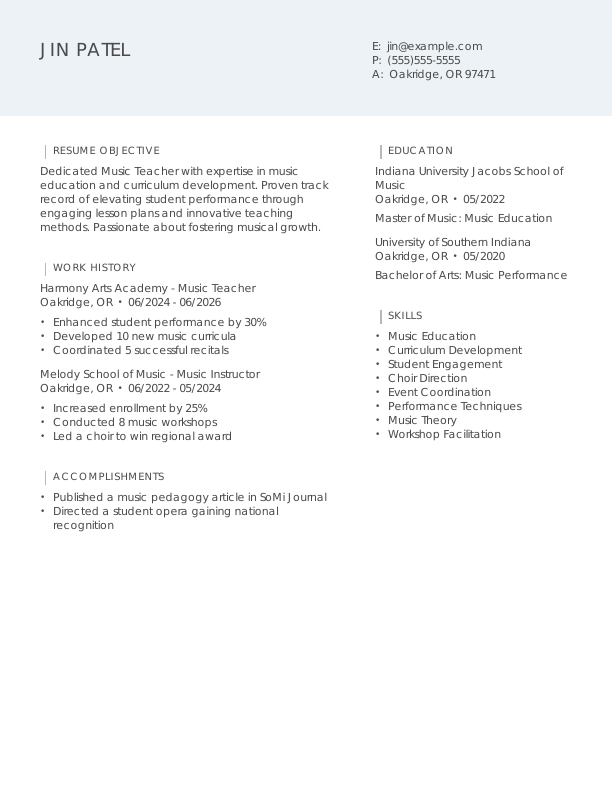
Music Teacher Entry-Level Resume
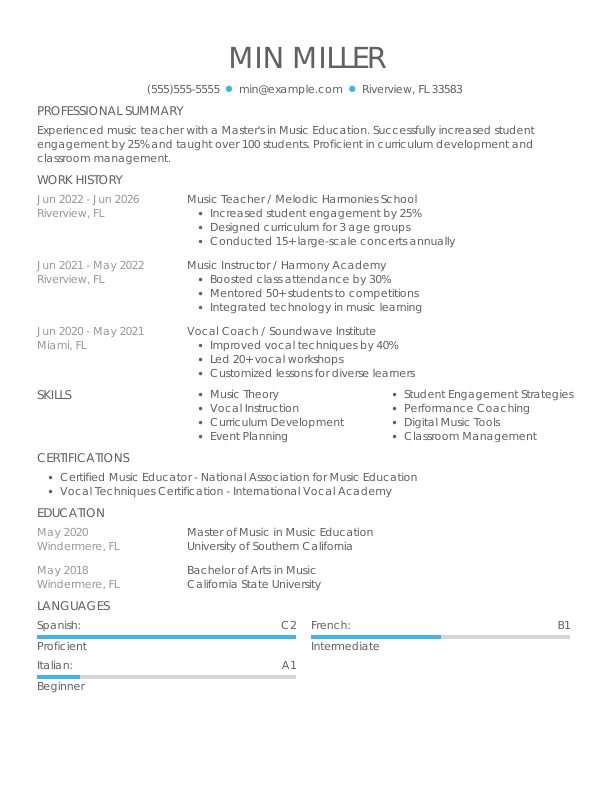
Music Teacher Mid-Level Resume
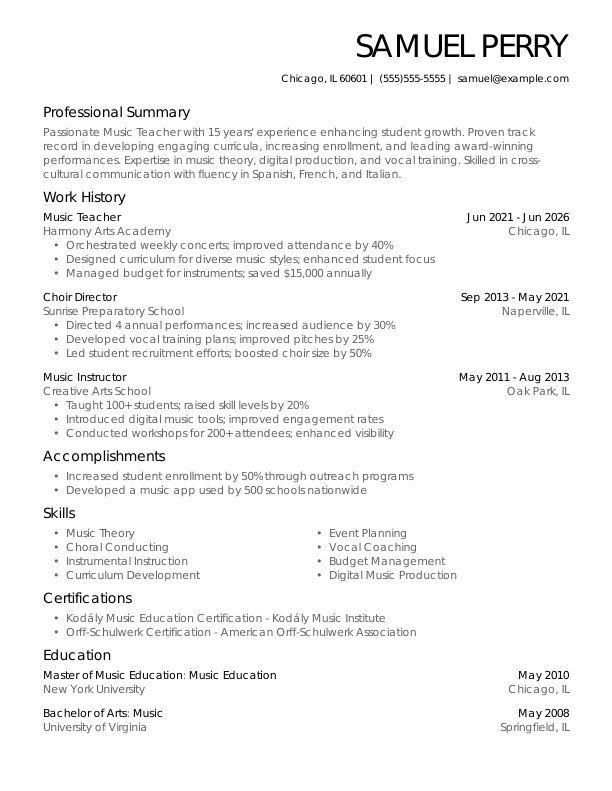
Music Teacher Experienced Resume
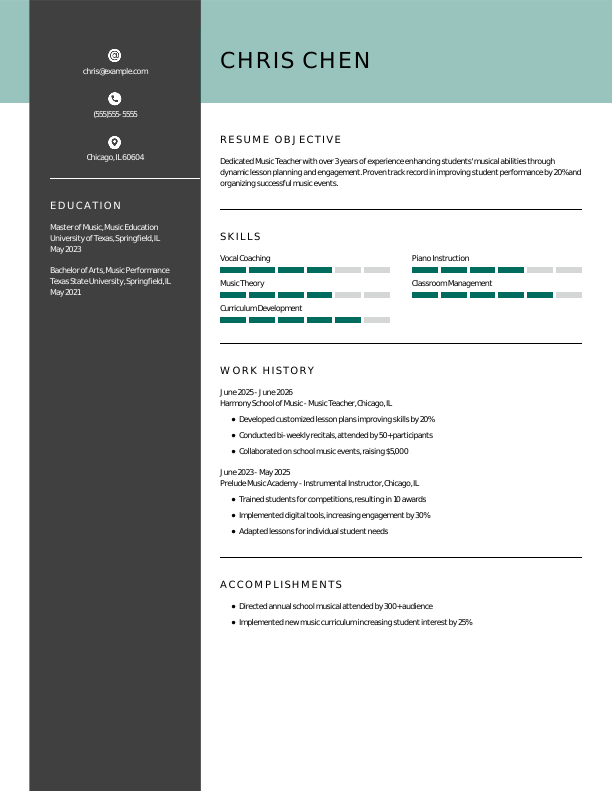
 Free
FreeMusic Teacher Modern Resume
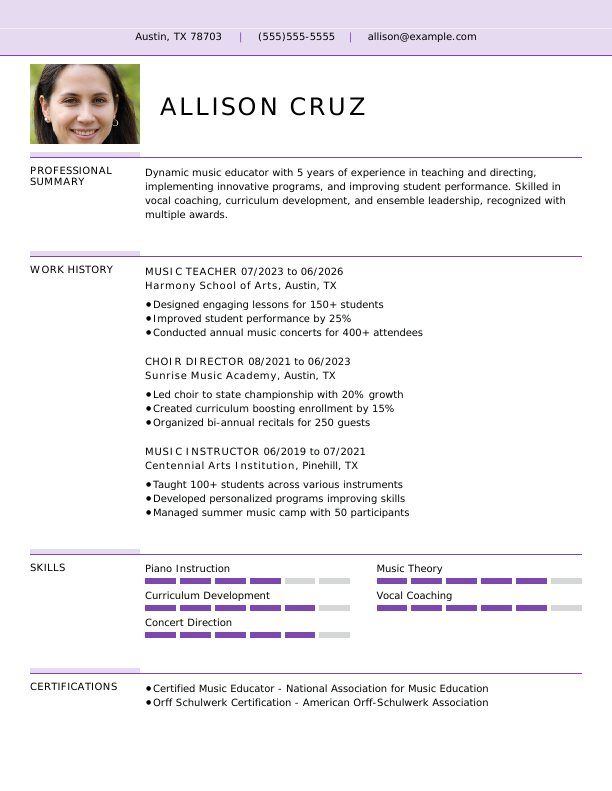
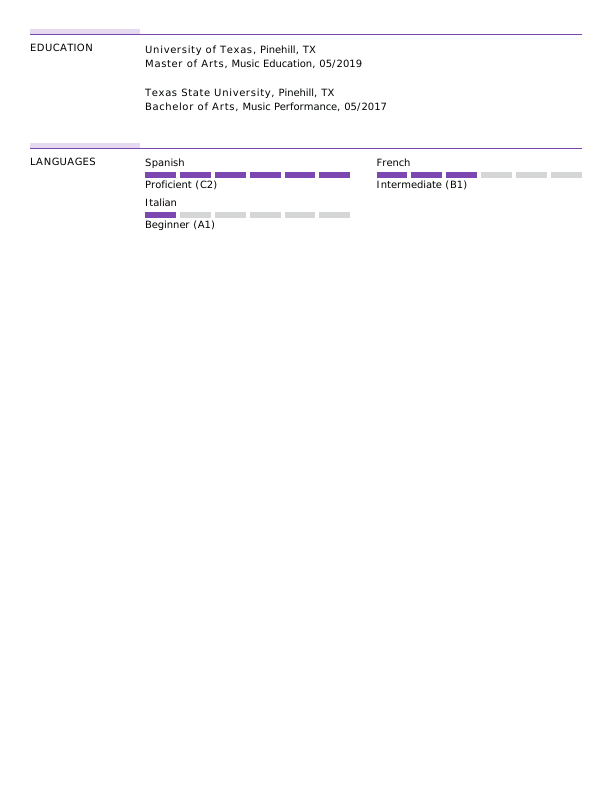
Music Teacher Creative Resume
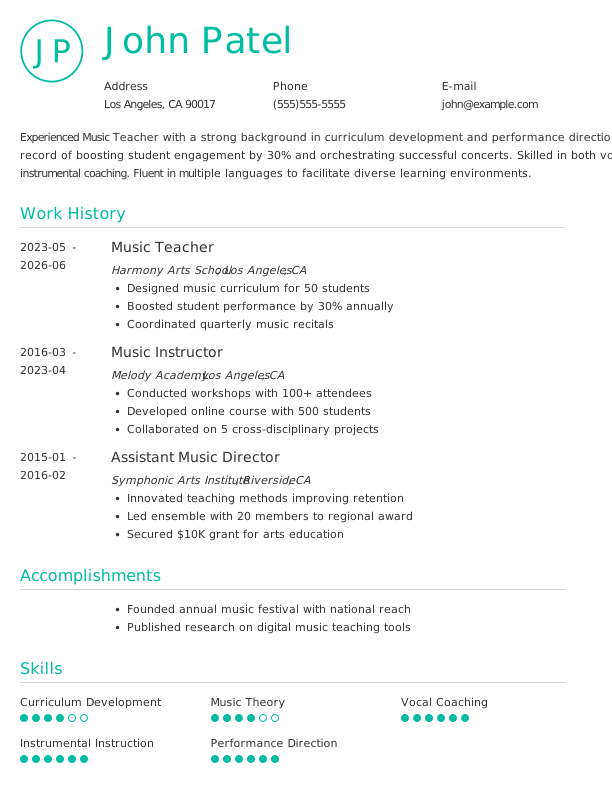
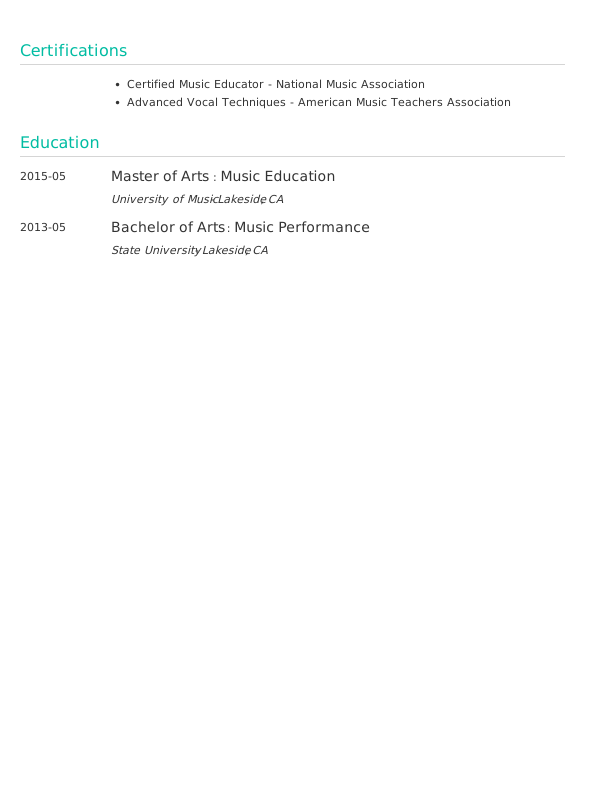
Music Teacher Traditional Resume
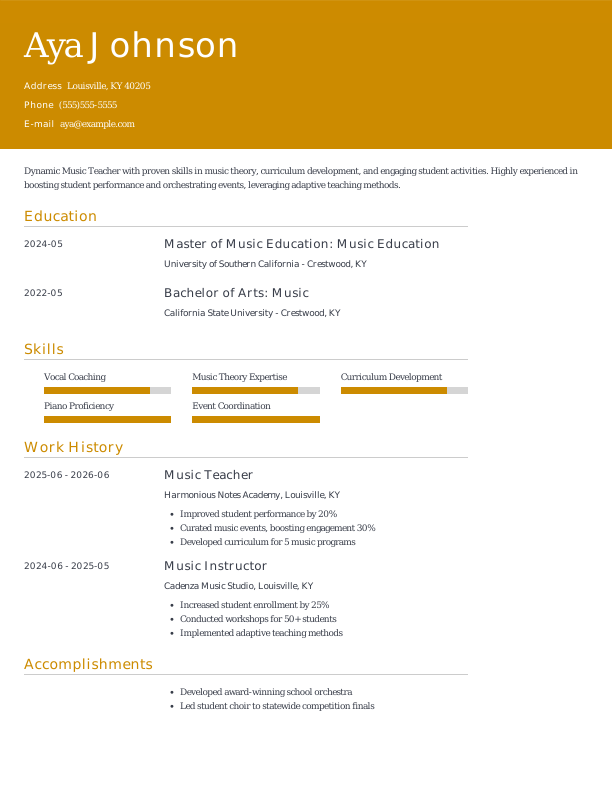
Music Teacher Simple CV Example
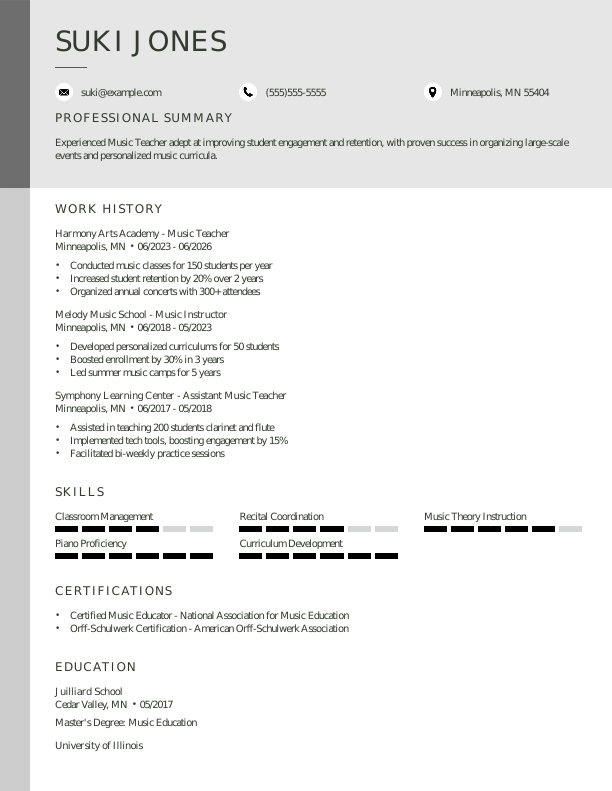

Music Teacher CV Format
Browse Free Resume Templates
- Accounts Payable
- Adjunct Professor
- Artist
- Auto Mechanic
- Baker
- Business Development Manager
- Business
- Certified Nursing Assistant
- Classic & Traditional
- Cleaner
- College Student
- Concierge
- Construction Worker
- Corporate
- Creative & Unique
- Custodian
- Customer Service
- Dental Assistant
- Direct Support Professional
- Entry-Level
- Flight Attendant
- Hospitality & Food Service
- Front Desk Receptionist
- Healthcare
- High School
- Housekeeping
- Hvac Technician
- Hybrid
- Inventory Manager
- Logistics
- Maintenance
- Management
- Modern
- Mortgage Loan Processor
- Pet Sitter
- Phlebotomist
- Production
- Rbt
- Sales
- Security Services
- Restaurant Server
- Simple & Basic
- Social Work
- Teacher
- Technology
Resume Examples for Music Teachers
A music teacher’s resume or CV will vary significantly based on experience level, from novice educators to seasoned professionals. Explore effective templates for each stage and use our Resume Builder to create your own tailored document.
Entry-Level Music Teacher Resume
Ideal for recent graduates needing assistance in writing a resume for the first time, this template is also suitable for those making a career change into music education from different fields.

Mid-Career Music Teacher Resume
A good fit for music teachers with several years of experience, this template highlights recent achievements and supports advancement into more specialized or leadership roles.

Experienced Music Teacher Resume
An ideal choice for music educators with 10+ years of experience, this template supports professionals seeking advanced teaching roles or leadership positions in educational settings.

Music Teacher Resume Template (Text)
Use this customizable text format of a music teacher resume to copy, edit, and personalize directly in your document.
Hiro Davis
Los Angeles, CA 90006
Professional Summary
Dynamic Music Teacher with 6 years of experience boosting student engagement by 40%, enhancing curriculum, and leading choirs to success. Expert in classroom management and digital music production.
Work Experience
June 2023 – June 2026
Harmony Academy – Los Angeles, CA
Music Teacher
- Increased student participation by 40%
- Led choirs to state-level competitions
- Designed engaging music curriculum
June 2020 – May 2023
Crescendo Arts School – Los Angeles, CA
Performing Arts Instructor
- Improved performance ratings by 30%
- Organized annual student showcases
- Mentored students for art scholarships
June 2018 – May 2020
Symphony Learning Center – San Diego, CA
Music Coordinator
- Developed programs boosting attendance by 25%
- Coordinated regional music workshops
- Managed music department projects
Education
June 2018
Northwestern University Evanston, IL
Master of Music Music Education
June 2016
University of Illinois Champaign, IL
Bachelor of Music Music Performance
Certifications
- Certified Music Teacher – National Board for Professional Teaching Standards
- Orff Schulwerk Certification – American Orff-Schulwerk Association
Skills
- Music Theory
- Choral Conducting
- Classroom Management
- Curriculum Development
- Student Performance Assessment
- Instrumental Instruction
- Digital Music Production
- Public Speaking
How to Write a Music Teacher Resume
As a music teacher, understanding how to write a resume involves showcasing your musical expertise, teaching experience, and formatting that captures attention. Use the guidance below to emphasize your strengths and customize your resume for the positions you’re aiming for.
1. Contact Info
Your contact information should be clear, professional, and easy to find at the top of your resume.
Make sure to include:
- Full name
- Phone number
- Professional email address
- City and state (ZIP code is optional)
- LinkedIn profile or personal portfolio (if relevant)
 PRO TIP
Avoid including personal details such as your Social Security number, religious affiliation, or marital status on your resume unless the employer specifically requests this information.
2. Resume Profile
A resume profile is a brief introduction (two to four sentences) that highlights your key skills and experience. It serves as an engaging pitch to hiring managers, aiming to spark interest and prompt them to read more about your qualifications.
Typically located at the top of your resume, the profile can take the form of either a summary or an objective, each serving distinct functions. This positioning is important as it provides immediate insight into your professional identity:
- A resume summary highlights your most relevant experience, skills, and achievements in a manner that resonates with hiring managers. This format is particularly useful for individuals with established work histories or transferable skills, enabling music educators to showcase their significant contributions to student learning and engagement.
- A resume objective highlights your aspirations and centers on your career goals. This approach is especially helpful for recent graduates, people transitioning careers, or those with limited experience, including aspiring music educators or individuals moving into teaching roles.
Let’s take a look at an example of each to see how a resume summary and a resume objective differ:
Music teacher resume summary example:
Dedicated music teacher with 6+ years of experience in diverse educational settings, including public schools and community programs. Proficient in curriculum development, student engagement, and performance assessment. Celebrated for fostering a love of music in students and improving their creative expression through innovative teaching methods.
Music teacher resume objective example:
Recent music education graduate excited to launch a teaching career in an engaging classroom environment. Dedicated to fostering creativity and a love for music while contributing strong interpersonal skills and adaptability to a school or community program focused on musical development.
3. Work Experience
The work experience on your resume is an important foundation for your teaching credentials. Employers examine your job history to understand not only where you’ve taught, but also how you’ve inspired and impacted students’ musical journeys.
Your background highlights how your previous roles and pedagogical strategies qualify you for the music teacher position.
The work experience section should contain:
- Job title
- Employer name and location
- Dates of employment (month/year)
- 3–5 bullet points describing your relevant responsibilities and achievements
Tailor your content to reflect the specific music teaching role you’re targeting. Start each bullet point with an action verb (like “Taught,” “Conducted,” “Developed”) to create a strong statement that highlights your contributions.
Incorporate quantifiable information whenever possible. Specific numbers, such as student performance improvements or attendance rates, illustrate your impact and help differentiate you from other applicants in the job market.
In general, consider following the format of:
[action verb] + [responsibility] = [result/achievement]
For example:
Instructed 30+ students in music theory and performance, resulting in a 95% pass rate on state assessments.
Note that you can also flip the result/achievement with the responsibility:
Achieved a 40% increase in student participation in school concerts through innovative curriculum design and engaging teaching methods.
With these techniques in mind, your resume bullets may look something like:
- Developed and implemented lesson plans for 100+ students, increasing student engagement in music theory by 30%.
- Coordinated annual school concerts featuring over 50 performers, improving community involvement by 40%.
- Mentored student musicians in individual practices, improving overall performance scores by 15% in competitions.
- Used digital tools for remote learning sessions during the pandemic, ensuring continuity of education for all students.
- Collaborated with colleagues to integrate music across the curriculum, fostering interdisciplinary learning opportunities.
4. Skills
The skills section provides a concise overview of your abilities as a music teacher, highlighting your expertise in various musical disciplines. This allows hiring managers to quickly evaluate your qualifications and suitability for the role.
Skills can be categorized into three distinct groups:
- Soft skills are interpersonal abilities that influence how well music teachers interact with students, parents, and colleagues.
- Hard skills are specific, quantifiable abilities gained through education, training, or experience.
- Technical skills are the specific abilities required to perform tasks in a given field.
5 Soft Skills for Your Resume or CV
- Effective communication
- Student engagement strategies
- Collaborative teaching methods
- Creative lesson planning
- Conflict resolution skills
5 Hard Skills for Your Resume or CV
- Curriculum development
- Music theory instruction
- Instrument skill (piano, guitar)
- Performance assessment
- Classroom management strategies
In general, include a diverse range of relevant skills that align with the job requirements to showcase your full potential as a music teacher.
PRO TIP
If you’re a newer music teacher, consider placing your skills section higher on your resume, right after your summary. If you have more experience, it’s beneficial to position this section lower and weave your skills into the descriptions of your work history.
5. Education
Understanding how to list education on your resume is important for showcasing your qualifications clearly and professionally. Start with your most recent or relevant music degree, detailing the type of degree and institution name.
Recent graduates can improve their resume by including graduation year, GPA if it’s above 3.5, academic honors, or relevant coursework that aligns with the music teaching profession.
Music teacher resume education section example:
Bachelor of Music Education (BME)
Berklee College of Music, Boston, MA
Graduated: 2024 | Summa Cum Laude
PRO TIP
If you’re advancing from an Associate Degree in Music Education to a Bachelor of Music, or have earned another relevant degree, include both in reverse-chronological order.
6. Certifications
Including certifications on your resume demonstrates your commitment to the field and can help compensate for limited teaching experience. While it’s not always a standard section, it is particularly valuable for music educators seeking roles in schools or private studios. Employers often look for specific credentials such as state-issued teaching licenses or specialized training in music education methods.
Be sure to include only those certifications that improve your qualifications for the position you seek. Keeping them current and clearly formatted will make your resume more appealing and relevant to potential employers.
Music teacher certification examples:
- Music Teacher Certification | National Board for Professional Teaching Standards | Expires: 04/2028
- Orff Schulwerk Level I Certification | American Orff-Schulwerk Association | Expires: 06/2027
- Kodály Method Certification Level II | Organization of American Kodály Educators | Expires: 03/2028
- Music Education Certificate, State of California | California Commission on Teacher Credentialing | Expires: 12/2027
Start Building Your Job-Winning Resume
Use Your Existing Resume
Import your current resume to transfer your information to one of our professional templates.
Create a New Resume
Start fresh with a template that catches your eye and follow the prompts to add your details.
Tailor Your Work History to Beat the ATS
Your work experience is more than a list of job titles. It’s a chance to demonstrate the measurable impact you’ve had on students, music programs, and performance outcomes. This approach can also help create a more ATS-friendly resume that can be easily scanned by applicant tracking systems (ATS).
To craft an effective work history, tailor it to the specific teaching position you’re applying for by using relevant keywords and educational terminology. Start by carefully analyzing the job description to identify frequently mentioned skills, teaching methods, or musical genres, and incorporate those elements into your experience descriptions where appropriate.
What’s a Fair Music Teacher Salary?
Understanding music teacher salaries across the United States helps you evaluate job offers, negotiate competitive pay, and make informed career choices. The data below comes from the U.S. Bureau of Labor Statistics (BLS) and reflects the most recent nationwide averages for music educators.
Keep in mind that factors like location, years of experience, certifications, and teaching environment can significantly influence your actual salary. Music teachers in urban areas or those with advanced degrees may earn higher salaries compared to their counterparts in rural schools, while specialized roles such as instrument instructors or choir directors often command premium compensation packages.
| Alabama | $67,900 |
| Alaska | $92,300 |
| Arizona | $77,170 |
| Arkansas | $76,660 |
| California | $126,870 |
| Connecticut | $110,060 |
| Delaware | $71,310 |
| District of Columbia | $107,910 |
| Florida | $87,690 |
| Georgia | $85,940 |
| Hawaii | $106,510 |
| Idaho | $68,480 |
| Illinois | $85,370 |
| Indiana | $85,820 |
| Iowa | $91,000 |
| Kansas | $69,650 |
| Kentucky | $74,650 |
| Louisiana | $102,360 |
| Maine | $112,140 |
| Maryland | $111,940 |
| Massachusetts | $102,090 |
| Michigan | $83,800 |
| Minnesota | $84,320 |
| Mississippi | $61,650 |
| Missouri | $103,120 |
| Montana | $78,140 |
| Nebraska | $101,770 |
| Nevada | $62,520 |
| New Hampshire | $93,330 |
| New Jersey | $122,340 |
| New Mexico | $78,750 |
| New York | $144,520 |
| North Carolina | $71,290 |
| North Dakota | $70,210 |
| Ohio | $84,070 |
| Oklahoma | $58,250 |
| Oregon | $92,530 |
| Pennsylvania | $97,550 |
| Rhode Island | $105,010 |
| South Carolina | $71,710 |
| South Dakota | $64,700 |
| Tennessee | $78,850 |
| Texas | $87,970 |
| Utah | $70,480 |
| Vermont | $104,970 |
| Virginia | $86,560 |
| Washington | $77,850 |
| West Virginia | $74,190 |
| Wisconsin | $72,920 |
| Wyoming | $62,760 |
| Puerto Rico | $92,050 |
Key Takeaways
- Tailor your resume to the job description. Use keywords from the posting when describing your experience and skills to assist both ATS and human reviewers.
- Highlight quantifiable achievements that demonstrate your impact. Consider metrics such as student performance improvements or event participation rates (e.g., 20% increase in recital attendees).
- Select the right format based on your experience level. New teachers may find a functional layout useful, while those with experience often prefer a reverse-chronological structure.
More Resume & CV Examples
- Acting For Beginners
- Acting
- Actor
- Art Director
- Art Teacher
- Band Director
- Choreographer
- Concept Artist
- Dance Instructor
- Dance
- Dance Teacher
- Education
- Elementary School Teacher
- English Teacher
- Esl Teacher
- Fashion
- Flight Instructor
- Kindergarten Teacher
- Math Teacher
- Musician
- Physical Education Teacher
- Playwright
- Preschool Teacher
- Science Teacher
- Singer
- Social Studies Teacher
- Spanish Teacher
- Special Education Teacher
- Substitute Teacher
- Teacher Assistant
- Theater
- Two-column
- Wedding Photographer
Cover Letters for Your Resume
Browse our library of cover letter examples to complete your application. A resume will have a better chance of getting noticed.
Frequently Asked Questions
Last Update:
What resume format should I use for my music teacher resume?
There are three main resume formats to consider when applying for a music teacher role. Your choice should reflect your experience level and the aspects of your background you wish to highlight:
- Chronological: The most popular format, a chronological resume highlights your work experience, outlining your responsibilities and achievements in sequential order. This format is especially beneficial for applicants with a relevant job history that reinforces their qualifications and demonstrates their growth as a music teacher.
- Functional: Also known as a skills-based resume, the functional resume emphasizes a summary of qualifications and an expanded skills section to showcase your musical abilities. This format places less focus on work history, making it particularly beneficial for applicants without relevant experience or those transitioning into teaching music.
- Combination: A combination resume integrates elements from chronological and functional formats, emphasizing both skills and work experience. This approach allows music teachers to highlight their teaching abilities while demonstrating career growth, making it an ideal choice for those advancing in their profession or exploring new opportunities.
Should I include a cover letter with my resume?
Yes, you should include a cover letter with your music teacher application. A strong cover letter complements your resume by allowing you to express your passion for teaching and highlight specific experiences that showcase your skills in fostering musical talent. It shows potential employers that you’re genuinely interested in the role and have taken the time to personalize your application.
If you’re feeling unsure about writing a cover letter, there are plenty of resources available to assist you. You can find guides on how to write a cover letter tailored for education roles, along with examples that illustrate different styles and formats. This way, you can choose one that aligns well with your own voice and experience.
For those looking to make the process easier, using a cover letter generator can help craft a polished document quickly by offering templates and suggestions based on the specifics of your teaching application.
How long should a music teacher resume be?
For music teachers with less than 10 years of experience, a one-page resume is ideal. This document should highlight relevant teaching experiences, educational qualifications, and any special skills, such as the ability to play multiple instruments or music theory knowledge. Keeping it concise helps ensure that your most impressive qualifications stand out.
For those with more extensive backgrounds or specialization, a two-page resume can be acceptable. Just make sure to maintain focus on relevant achievements and responsibilities to avoid overwhelming the reader with unnecessary details. Prioritize clarity and relevance throughout your content.
What keywords should I include to pass applicant tracking systems (ATS)?
To improve your resume for an ATS, focus on incorporating keywords and phrases from the job description of a music teacher. Terms like “music education,” “curriculum development,” and “classroom management” should be highlighted to demonstrate your alignment with the role.
Additionally, make sure to include relevant certifications such as Music Teaching Certification or National Board Certification in Music. Mention any specific tools you’re familiar with, like SmartMusic or Noteflight, to showcase your technical skills. This targeted approach can significantly improve your chances of passing the ATS screening and landing an interview.

Toni Frana is a Certified Professional Resume Writer (CPRW), member of the Professional Association of Resume Writers & Career Coaches, and career expert who empowers job seekers to take control of their career paths using Monster’s comprehensive job search and resume tools.
See More From Toni FranaExplore Related Career Advice


How to Put Transferable Skills on Your Resume: 120 Skills, Examples, & Tips

Updated:
Aug 27, 2026
|
16 min read


How to Write a Functional Resume (Formatting Tips, Template, & Examples)
Updated:
Aug 7, 2026
|
17 min read


Functional vs Chronological Resume: Which Format Is Right for You?
Updated:
Aug 3, 2026
|
16 min read

100+ Resume Adjectives to Help You Write a Stronger Resume in 2026 (With Examples)
Updated:
Jul 30, 2026
|
12 min read