
Free Safety Professional Resume Templates & Examples
Create a professional safety resume with customizable templates, practical writing tips, and examples. Highlight your safety experience, certifications, regulatory knowledge, risk assessment skills, and accomplishments to clearly show employers how you help maintain safe, compliant workplaces.
Real-World Resumes That Get Results
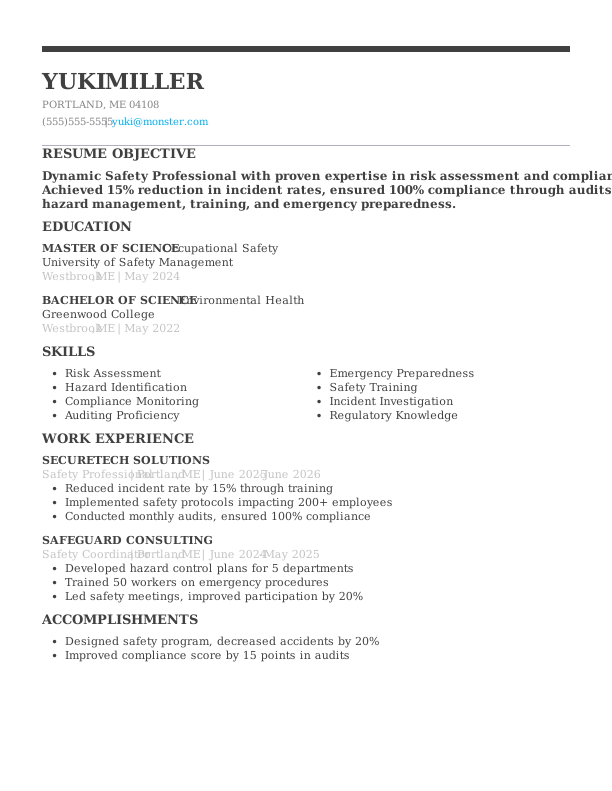
 Free
FreeSafety Professional Entry-Level Resume
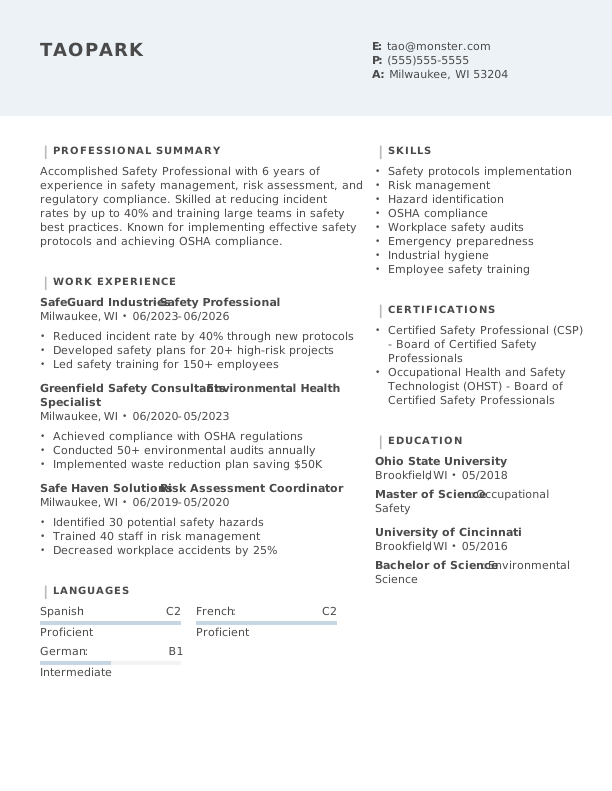
Safety Professional Mid-Level Resume
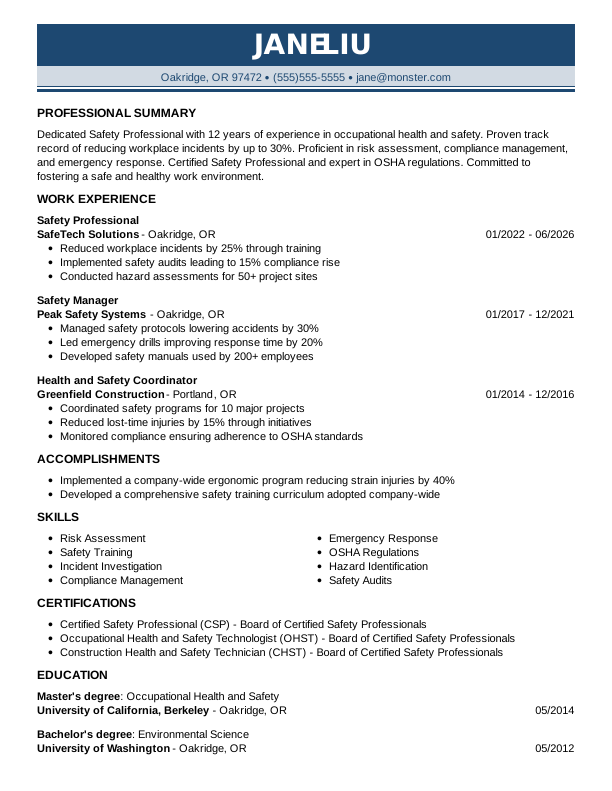
Safety Professional Experienced Resume
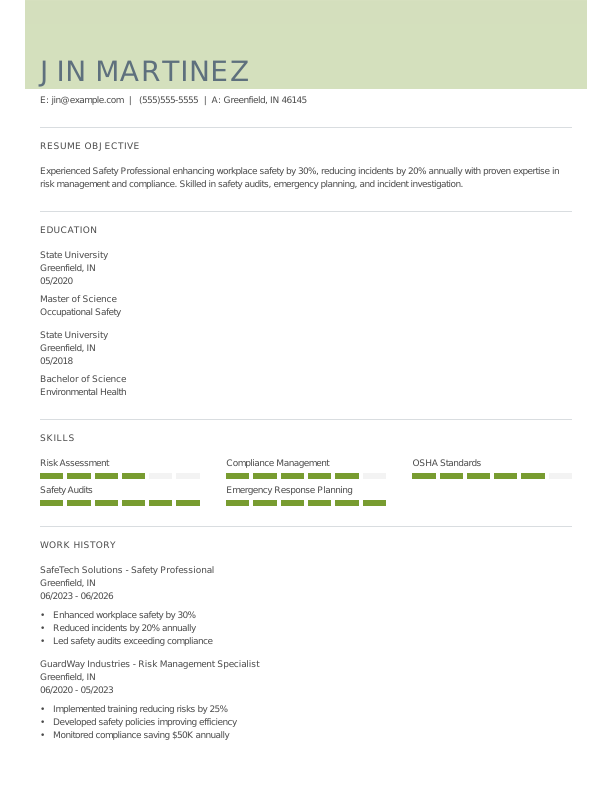

Safety Professional Modern Resume
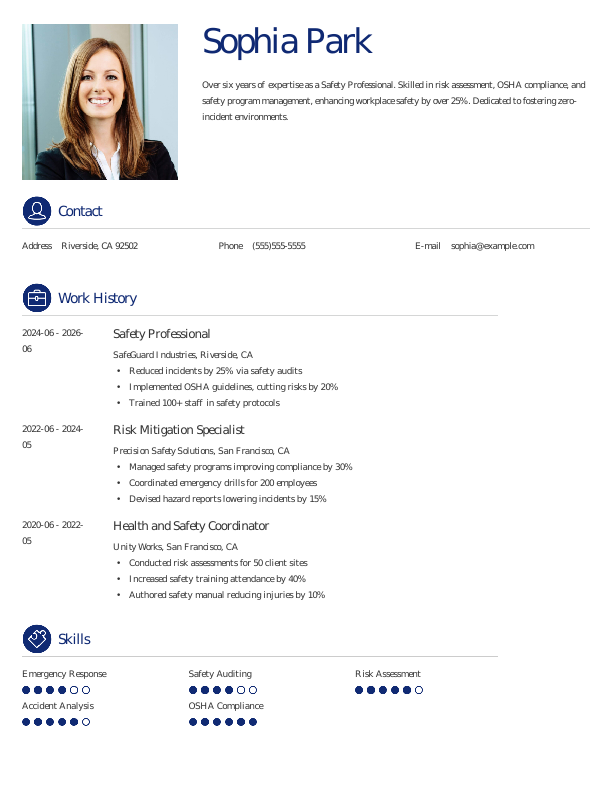

Safety Professional Creative Resume
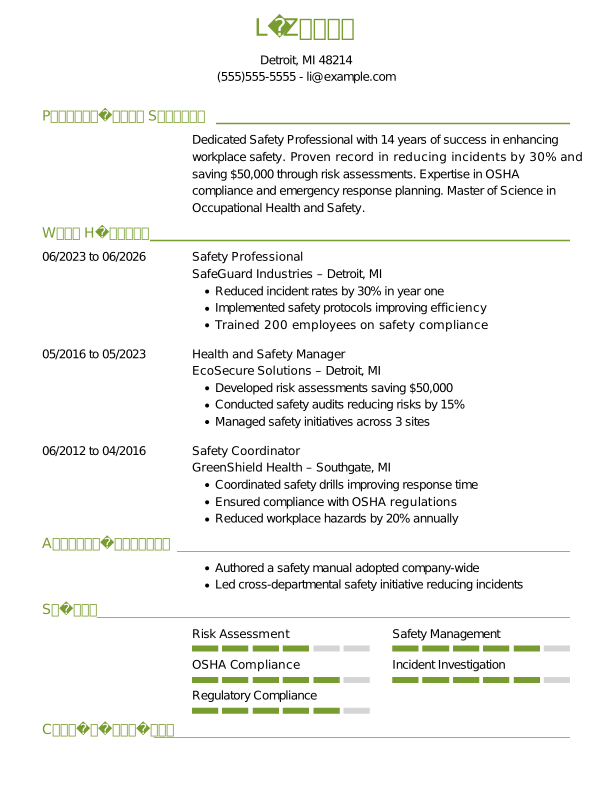

Safety Professional Traditional Resume
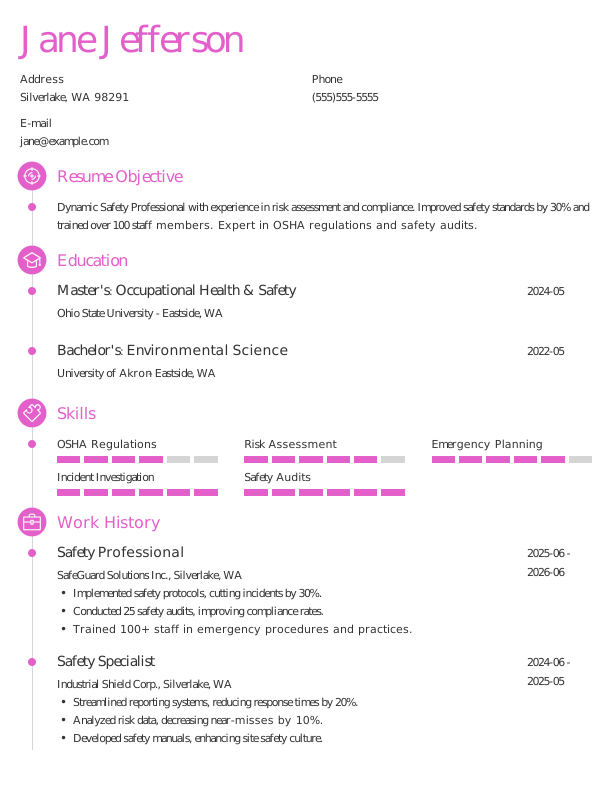

Safety Professional Simple CV Example
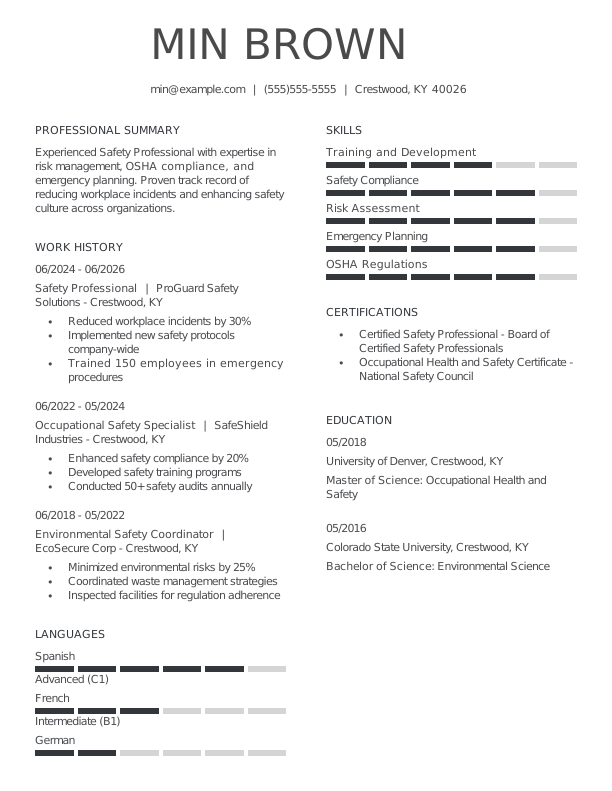

Safety Professional CV Format
Browse Free Resume Templates
- Accounts Payable
- Adjunct Professor
- Artist
- Auto Mechanic
- Baker
- Business Development Manager
- Business
- Certified Nursing Assistant
- Classic & Traditional
- Cleaner
- College Student
- Concierge
- Construction Worker
- Corporate
- Creative & Unique
- Custodian
- Customer Service
- Dental Assistant
- Direct Support Professional
- Entry-Level
- Flight Attendant
- Hospitality & Food Service
- Front Desk Receptionist
- Healthcare
- High School
- Housekeeping
- Hvac Technician
- Hybrid
- Inventory Manager
- Logistics
- Maintenance
- Management
- Modern
- Mortgage Loan Processor
- Pet Sitter
- Phlebotomist
- Production
- Rbt
- Sales
- Security Services
- Restaurant Server
- Simple & Basic
- Social Work
- Teacher
- Technology
Resume Examples for Safety Professionals
Safety professional resumes can vary depending on the role, industry, and type of workplace you’re targeting. Explore templates and use our Resume Builder to create a professional resume that highlights your relevant experience, certifications, and skills.
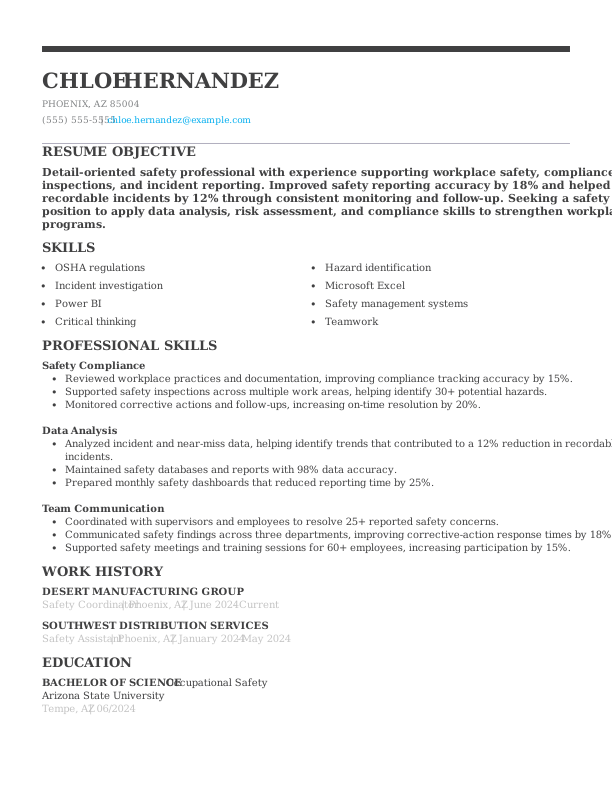
Safety Analyst Resume
A good fit for safety analysts with experience in workplace safety and risk management, this template highlights skills in data analysis, hazard identification, compliance, and safety reporting.
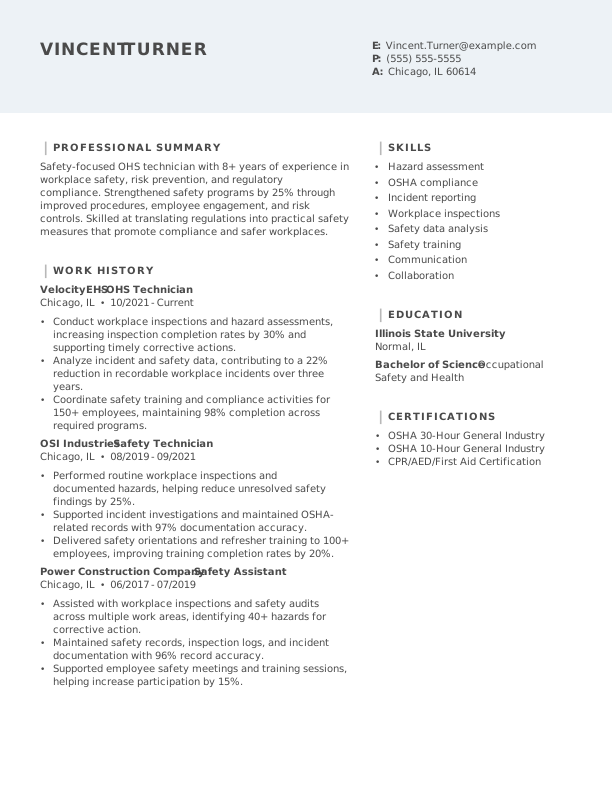
OHS Technician Resume
A good fit for occupational health and safety technicians, this template highlights experience with workplace inspections, hazard identification, safety documentation, and regulatory compliance.
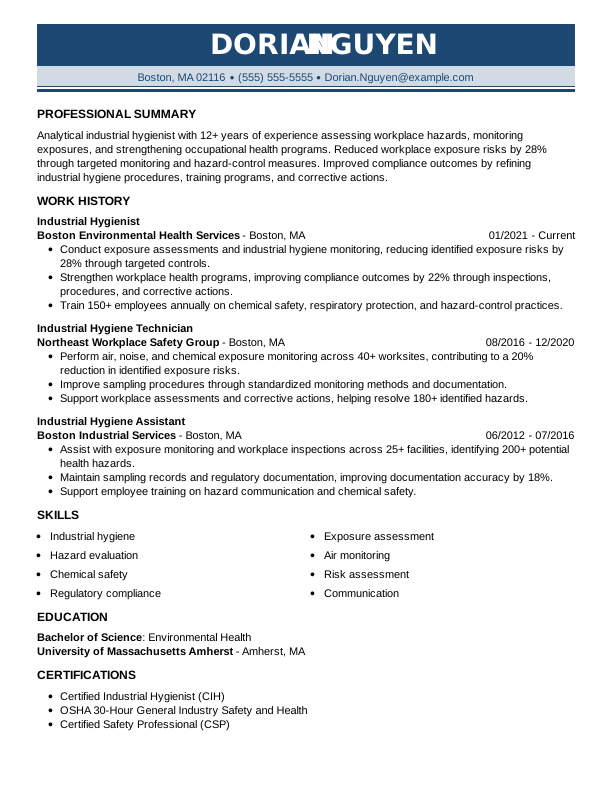
Industrial Hygienist Resume
A good fit for industrial hygienists, this template highlights experience in workplace exposure assessment, hazard identification, environmental monitoring, and regulatory compliance.
Safety Professional Resume Template (Text)
Use this customizable text format of a safety professional resume to copy, edit, and tailor in your document.
Justin Barnes
Minneapolis, MN 55402
Professional Summary
Safety professional with 10+ years of experience supporting workplace safety, regulatory compliance, hazard assessments, and employee training in industrial and manufacturing environments. Skilled in incident investigation, safety audits, risk assessment, and developing practical procedures that help reduce workplace hazards and improve compliance. Certified Safety Professional with a strong background in occupational safety and health.
Work Experience
May 2022 – June 2026
Pinnacle Manufacturing Services – Minneapolis, MN
Safety Manager
- Managed day-to-day safety programs for a manufacturing facility, including inspections, incident investigations, training, and compliance activities.
- Conducted routine workplace inspections and safety audits, identifying hazards and working with supervisors to implement corrective actions.
- Led safety training for 200+ employees on topics including hazard communication, personal protective equipment, emergency procedures, and workplace safety.
- Reviewed safety policies and procedures to align workplace practices with OSHA requirements and company standards.
April 2018 – April 2022
Fortress Industrial Services – Minneapolis, MN
Health and Safety Specialist
- Conducted job-site and facility inspections to identify hazards and verify compliance with company safety procedures and OSHA requirements.
- Coordinated safety training and maintained employee records for required certifications and workplace training.
- Worked with supervisors and employees to address unsafe conditions and improve compliance with established safety procedures.
March 2014 – March 2018
SafeTech Solutions – Minneapolis, MN
Environmental Health and Safety Coordinator
- Supported environmental health and safety programs across industrial work areas, including inspections, documentation, and employee training.
- Performed routine inspections of work areas, safety equipment, and personal protective equipment.
- Assisted with hazard assessments and recommended controls to reduce employee exposure to workplace risks.
Education
University of Minnesota – Minneapolis, MN
Master of Science in Occupational Safety and Health | 2013
Oregon State University – Corvallis, OR
Bachelor of Science in Environmental Science | 2011
Certifications
- Certified Safety Professional (CSP) | Board of Certified Safety Professionals
- Occupational Health and Safety Technologist (OHST) | Board of Canadian Registered Safety Professionals
Skills
- Workplace Safety
- Hazard Identification and Risk Assessment
- Incident Investigation
- OSHA Compliance
- Safety Audits and Inspections
- Employee Safety Training
- Corrective Action Management
- Emergency Response Planning
- Safety Program Development
How to Write a Safety Professional Resume
For safety professionals, knowing how to write a resume involves showcasing your expertise in hazard prevention and compliance through a format that highlights your skills and experience. Use the guidance below to emphasize your strengths and tailor your resume for the specific safety roles you’re pursuing.
1. Contact Info
Your contact information should be clear, professional, and easy to find at the top of your resume.
Make sure to include:
- Full name
- Phone number
- Professional email address
- City and state (ZIP code is optional)
- LinkedIn profile or personal portfolio (if relevant)
- Any relevant certifications or licenses
 PRO TIP
Avoid listing personal details such as your social security number, age, or photograph on your resume unless the employer explicitly requests this information.
2. Resume Profile
A resume profile is a brief introduction, typically consisting of two to four sentences. It serves as a compelling pitch to hiring managers, designed to grab their attention and motivate them to explore your qualifications further.
Positioned at the top of your resume, this section can be formatted as either a summary or an objective, each serving distinct purposes.
Understanding these differences can help you craft a more effective presentation of your skills and goals:
- A resume summary highlights your experience, expertise, and achievements in the field of safety. This approach works well for individuals with work history or transferable skills who want to showcase their impact as a safety professional.
- A resume objective highlights your career aspirations and what you aim to accomplish in your next role. This is particularly beneficial for recent graduates, individuals shifting careers, or those with limited experience in their desired field, such as new healthcare professionals or marketing interns.
Let’s take a look at an example of each to see how a resume summary and a resume objective differ:
Safety professional resume summary example:
Dedicated safety professional with over 6 years of experience in industrial and construction environments. Proficient in risk assessment, incident investigation, and safety training programs. Acknowledged for improving workplace safety standards and reducing accident rates through effective communication and proactive measures.
Safety professional resume objective example:
Recent graduate with a degree in Occupational Safety eager to launch a career in a dynamic workplace focused on health and safety. Committed to fostering a culture of safety awareness while bringing strong analytical skills and proactive problem-solving abilities to an industrial or corporate environment.
3. Work Experience
The work experience on your resume is your strongest asset. Employers assess your career history to understand not only the roles you’ve held but also the safety outcomes you’ve achieved.
Your background in implementing safety protocols and conducting risk assessments clearly illustrates how you’re qualified for the safety professional position.
The work experience section should contain:
- Job title
- Employer name and location
- Dates of employment (month/year)
- Three to five bullet points describing your relevant responsibilities and achievements
Tailor your content to highlight relevant safety experience for the position you seek. Begin each bullet point with an action verb (like “Assessed,” “Trained,” “Implemented”) to create a compelling statement that showcases your contributions.
Incorporate quantifiable metrics wherever possible. Specific numbers and achievements provide strong evidence of your impact in safety roles, helping you stand out among other applicants in the job market.
In general, consider following the format of:
[action verb] + [responsibility] = [result/achievement]
For example:
Conducted safety audits and inspections for 15+ sites quarterly, resulting in a 30% decrease in workplace incidents and compliance violations.
Note that you can also flip the result/achievement with the responsibility:
Achieved a 25% reduction in accident rates through implementation of targeted training programs and safety awareness campaigns.
With these techniques in mind, your resume bullets may look something like:
- Conducted safety audits and risk assessments across multiple sites, reducing workplace incidents by 20%.
- Implemented safety training programs for 150+ employees, resulting in a 25% improvement in compliance rates.
- Collaborated with management to develop emergency response plans, improving preparedness for potential hazards.
- Used incident reporting software to track and analyze safety data, improving response strategies.
- Mentored new safety officers on best practices and regulatory requirements, fostering a culture of safety awareness.
4. Skills
The skills section provides a concise overview of abilities relevant to safety professionals. This allows hiring managers to assess qualifications quickly. Skills can be categorized into three distinct groups:
- Soft skills are interpersonal abilities that shape how safety professionals collaborate and communicate with others.
- Hard skills are specific, quantifiable abilities gained through education, training, or experience.
- Technical skills encompass the specific abilities required to perform tasks within a profession.
5 Soft Skills for Your Resume
- Risk assessment skills
- Emergency response coordination
- Safety training facilitation
- Regulatory compliance knowledge
- Team leadership abilities
5 Hard Skills for Your Resume
- Risk assessment methodologies
- Safety audits and inspections
- Incident investigation techniques
- Emergency response planning
- Regulatory compliance (OSHA, EPA)
In general, aim to include a diverse range of relevant skills that correspond with job requirements to showcase your comprehensive expertise.
PRO TIP
If you’re a newer safety professional, place your skills section higher on your resume, right after your summary. For those with more experience, it’s better to position this section lower and weave your skills throughout your work history.
5. Education
Understanding how to present your education on a resume is important for showcasing your qualifications.
Begin with your latest or most applicable degree, ensuring you include the type of degree and the name of the institution. If you’re a recent graduate, consider adding your graduation year, GPA (if it’s 3.5 or above), any honors received, and relevant coursework to highlight your academic achievements.
Safety professional resume education section example:
Bachelor of Science in Safety Management (BSSM)
University of Central Florida, Orlando, FL
Graduated: 2024 | Summa Cum Laude
PRO TIP
If you’re advancing from an Associate Degree in Occupational Safety to a Bachelor of Science in Safety Management, or have earned another relevant degree, list both in reverse-chronological order.
6. Certifications
Listing certifications on your resume improves your profile, particularly when practical experience is limited. While not always a standard part of a resume, this section is beneficial for many safety professionals.
Employers frequently look for specific credentials for specialized roles, such as OSHA certifications for construction safety or CPR training for emergency response positions.
Concentrate on featuring only the certifications and credentials that directly bolster your application. Make sure they are current and presented clearly to be easily read and verified.
Safety professional certification examples:
- Certified Safety Professional (CSP) | Board of Certified Safety Professionals | Expires: 01/2028
- Occupational Health and Safety Technologist (OHST) | Board of Certified Safety Professionals | Expires: 11/2027
- Construction Health and Safety Technician (CHST) | Board of Certified Safety Professionals | Expires: 06/2027
- Safety Management Specialist (SMS) | National Association of Safety Professionals | Expires: 03/2028
Start Building Your Job-Winning Resume
Use Your Existing Resume
Import your current resume to transfer your information to one of our professional templates.
Create a New Resume
Start fresh with a template that catches your eye and follow the prompts to add your details.
Tailor Your Work History to Beat the ATS
Your work experience is more than a list of job titles. It’s a chance to demonstrate the measurable impact you’ve made on workplace safety, compliance, and risk management. This approach also contributes to crafting an ATS-friendly resume that applicant tracking systems (ATS) can easily scan.
To create an effective work history, tailor it to the specific safety role you’re targeting by using relevant keywords and language that align with the employer’s expectations. Begin by thoroughly analyzing the job description.
Identify frequently mentioned skills, certifications, or safety protocols and aim to reflect those elements in your experience descriptions whenever possible.
Key Takeaways
- Tailor your resume to the job description. Use terminology from the posting to align with both ATS and hiring managers.
- Highlight quantifiable achievements to demonstrate effectiveness. Include metrics such as incident reduction percentages or compliance audit scores (e.g., reduced incidents by 30%, achieved 95% compliance).
- Select a format that suits your experience level. Entry-level applicants might prefer a functional layout, while seasoned professionals often use reverse-chronological resumes.
More Resume & CV Examples
- Armed Security Guard
- Asset Protection Specialist
- Dispatcher
- EMT
- Firefighter
- Lifeguard
- Loss Prevention
- Paramedic
- Police Officer
- Protective Services
- Safety Coordinator
- Security Guard
- Security Officer
- Security Supervisor
- Unarmed Security Guard
- Wildland Firefighter
Cover Letters for Your Resume
Browse our library of cover letter examples to complete your application. A resume will have a better chance of getting noticed.
Frequently Asked Questions
Last Update:
What resume format should I use for my safety professional resume?
There are three main resume formats to consider when applying for a safety professional position. Your choice should reflect your experience level and the key skills you wish to highlight:
- Chronological: The most popular format, a chronological resume highlights your work experience by detailing responsibilities and achievements in reverse order. This approach is ideal for job seekers with relevant job history that reinforces their qualifications and demonstrates their consistent career growth in the safety profession.
- Functional: A functional resume emphasizes a summary of qualifications and an expanded skills section to highlight your relevant abilities. By minimizing focus on work history, it works especially well for applicants without relevant experience or those with significant employment gaps in the safety field.
- Combination: A combination resume integrates elements from chronological and functional formats, featuring a comprehensive skills section alongside detailed work experience. This format benefits safety professionals by allowing them to emphasize their expertise and certifications while also showcasing their career growth and contributions to workplace safety.
Should I include a cover letter with my resume?
A cover letter isn’t required for every safety professional position, but it can be useful when an employer requests one or when you want to provide more context about your qualifications. Use it to highlight relevant safety experience, certifications, regulatory knowledge, or accomplishments that may not be fully explained on your resume.
If you include a cover letter, tailor it to the specific safety position and focus on the qualifications that match the job description. You might highlight experience with safety audits, incident investigations, risk assessments, employee training, OSHA compliance, or safety program development rather than repeating your resume word for word.
If you’re unsure about how to write a cover letter, our guide can help you structure a concise, focused letter. You can also use a cover letter generator to create a starting draft, then customize it to reflect your experience and the requirements of each safety position.
How long should a safety professional resume be?
For safety professionals with less than 10 years of experience, a one-page resume is typically ideal. This format allows you to present your certifications, training, and relevant skills without overwhelming the reader. Focus on including the most relevant information that highlights your qualifications in safety practices.
For those in senior or specialized roles, a two-page resume can be appropriate if the content remains targeted and relevant. Use this space to detail leadership experiences, advanced certifications, and significant projects that showcase your expertise in safety management while maintaining clarity throughout the document.
Should I include safety training courses or volunteer safety audits?
Yes, especially if you’re new to the field. Including safety training and volunteer work highlights your commitment to workplace safety and demonstrates practical skills, making you more appealing to employers when formal experience is limited.

Toni Frana is a Certified Professional Resume Writer (CPRW), member of the Professional Association of Resume Writers & Career Coaches, and career expert who empowers job seekers to take control of their career paths using Monster’s comprehensive job search and resume tools.
See More From Toni FranaExplore Related Career Advice


How to Put Transferable Skills on Your Resume: 120 Skills, Examples, & Tips

Updated:
Aug 27, 2026
|

16 min read


How to Write a Functional Resume (Formatting Tips, Template, & Examples)
Updated:
Aug 7, 2026
|
17 min read


Functional vs Chronological Resume: Which Format Is Right for You?
Updated:
Aug 3, 2026
|
16 min read

100+ Resume Adjectives to Help You Write a Stronger Resume in 2026 (With Examples)
Updated:
Jul 30, 2026
|
12 min read