

Free Lifeguard Resume Templates & Examples
A lifeguard resume should emphasize your water safety certifications, emergency response training, and ability to monitor large groups. Pick an example below suited to aquatic safety roles.
Real-World Resumes That Get Results
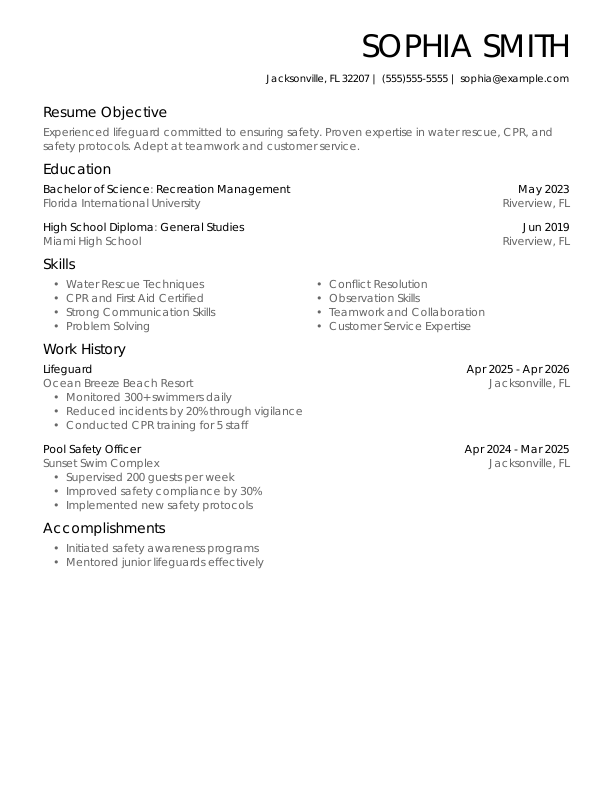
 Free
FreeLifeguard Entry-Level Resume
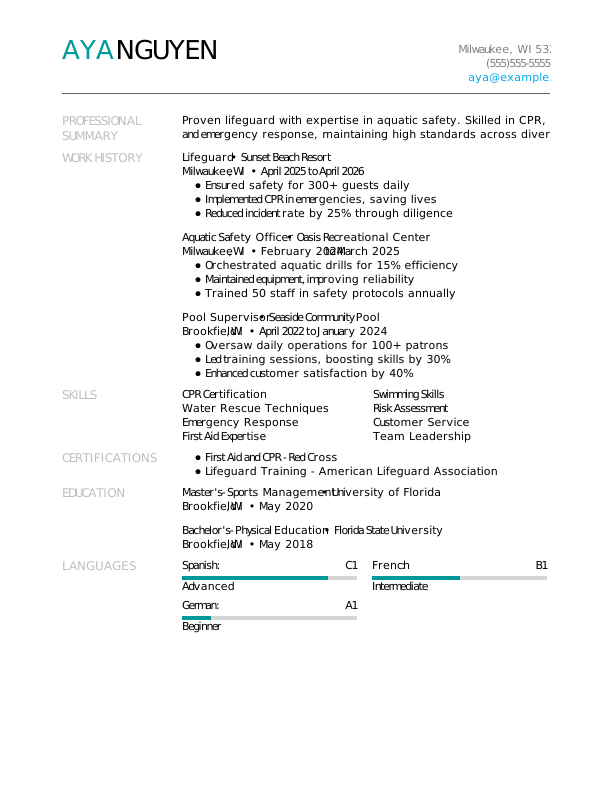
Lifeguard Mid-Level Resume
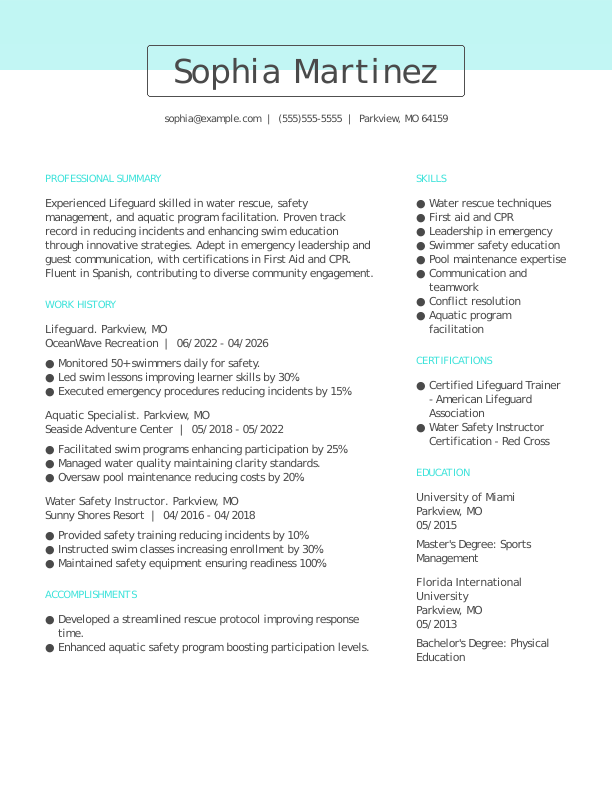
Lifeguard Experienced Resume
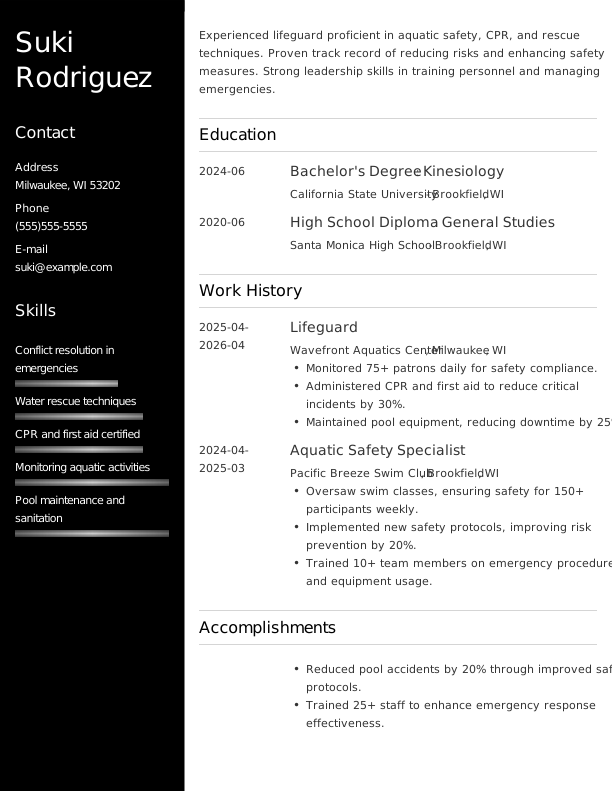
Lifeguard Entry-Level Resume 1
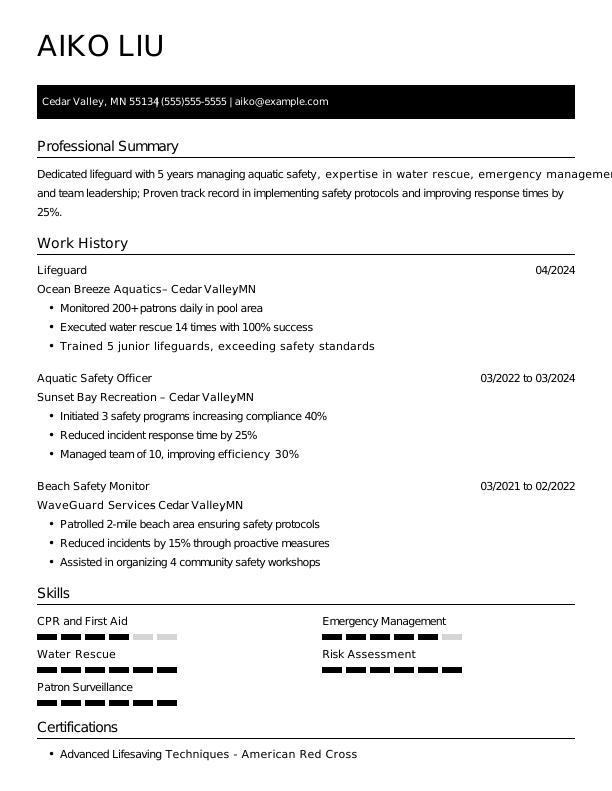
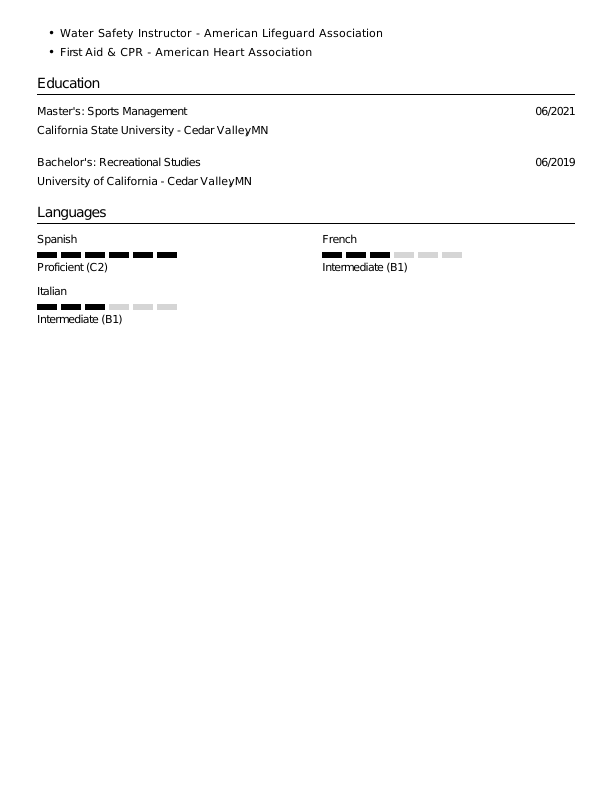
Lifeguard Mid-Level Resume 1
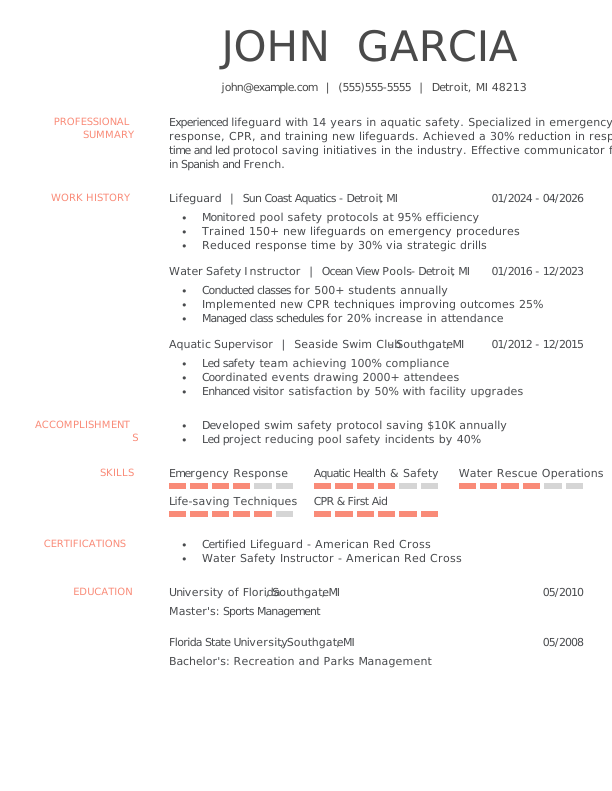
Lifeguard Experienced Resume 1
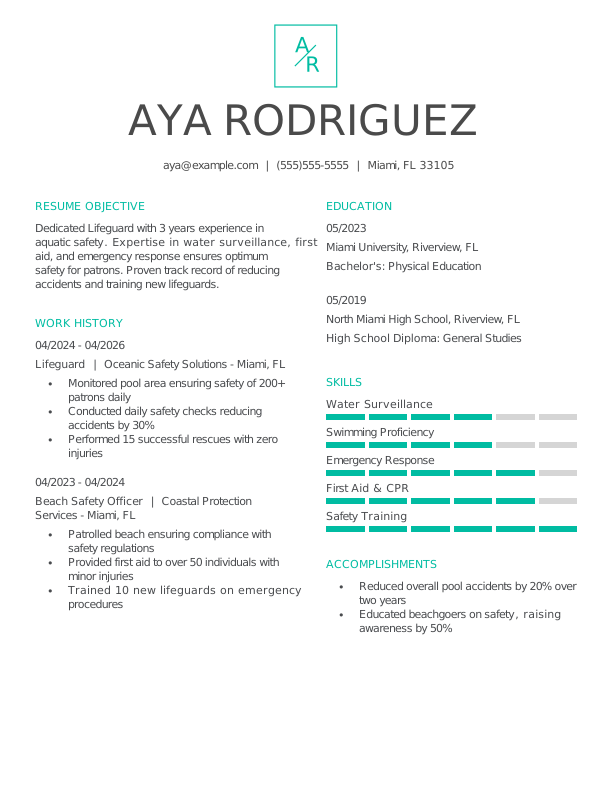
Lifeguard Entry-Level Resume 2
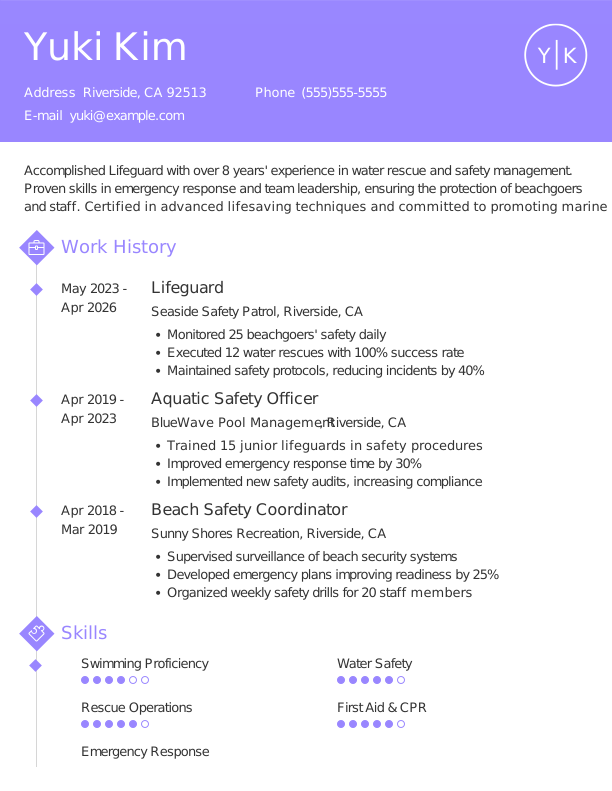
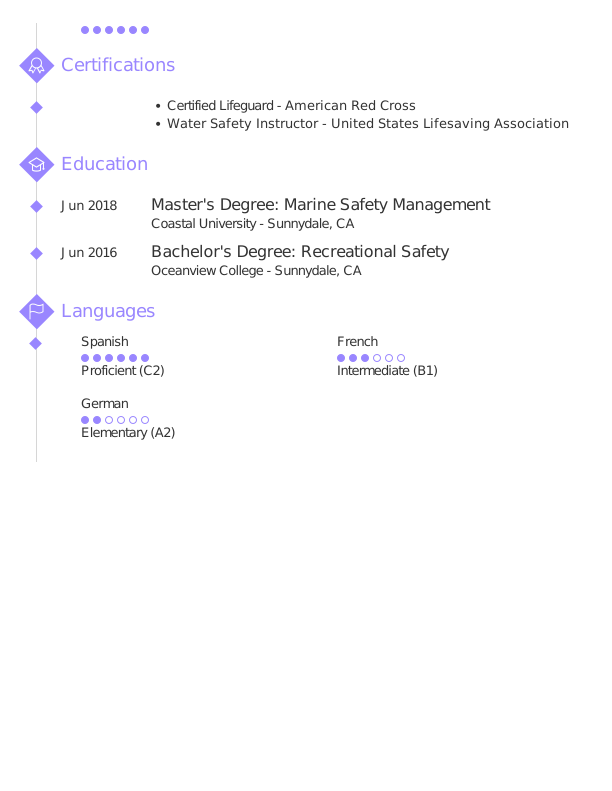
Lifeguard Mid-Level Resume 2
Browse Free Resume Templates
- Accounts Payable
- Adjunct Professor
- Artist
- Auto Mechanic
- Baker
- Business Development Manager
- Business
- Certified Nursing Assistant
- Classic & Traditional
- Cleaner
- College Student
- Concierge
- Construction Worker
- Corporate
- Creative & Unique
- Custodian
- Customer Service
- Dental Assistant
- Direct Support Professional
- Entry-Level
- Flight Attendant
- Hospitality & Food Service
- Front Desk Receptionist
- Healthcare
- High School
- Housekeeping
- Hvac Technician
- Hybrid
- Inventory Manager
- Logistics
- Maintenance
- Management
- Modern
- Mortgage Loan Processor
- Pet Sitter
- Phlebotomist
- Production
- Rbt
- Sales
- Security Services
- Restaurant Server
- Simple & Basic
- Social Work
- Teacher
- Technology
Resume Examples for Lifeguards
Lifeguard resumes should reflect your certifications and the type of facility you have worked at. Browse our templates to find one suited to aquatic safety roles.
Entry-Level Lifeguard Resume
Perfect for first-time applicants, this template simplifies creating a lifeguard resume with no experience by leading with your water safety certifications, CPR training, and swim instruction background.

Mid-Career Lifeguard Resume
A smart choice for lifeguards with experience seeking advancement, this template effectively showcases achievements and prepares job seekers for specialized roles in aquatic safety or leadership positions.

Experienced Lifeguard Resume
An ideal choice for seasoned lifeguards with over 10 years of experience, this template supports individuals seeking advanced roles in aquatic safety management or leadership within recreational facilities.

Lifeguard Resume Template (Text)
Below is a lifeguard resume in plain text format. Copy it into your document and adjust it to reflect your water safety certifications and emergency response training.
Emma Nguyen
Indianapolis, IN 46202
Professional Summary
Dedicated lifeguard with 9 years’ expertise in aquatic safety, enhancing emergency response by 15% and cutting beach accidents by 20%. Proficient in safety protocols and customer service.
Work Experience
June 2023 – April 2026
Pacific Beach Lifesaving Services – Indianapolis, IN
Lifeguard
- Supervised 50+ beach visitors daily
- Reduced accident rate by 20% annually
- Conducted weekly safety drills
January 2017 – May 2023
AquaGuard Pool Services – Indianapolis, IN
Pool Safety Officer
- Monitored 100+ guests during peak hours
- Improved rescue response time by 15%
- Provided CPR training to 30+ patrons
April 2014 – December 2016
Neptune Swim School – Greenfield, IN
Swim Instructor
- Taught swim techniques to 200 kids/year
- Increased class registration by 25%
- Developed a successful swim curriculum
Education
May 2013
University of Southern California Los Angeles, CA
Master’s Recreational Management
May 2011
University of California, Los Angeles Los Angeles, CA
Bachelor’s Sports Science
Certifications
- Certified Lifeguard – American Lifeguard Association
- CPR and First Aid – American Red Cross
Skills
- Water Rescue Techniques
- CPR and First Aid
- Safety Protocols
- Emergency Response
- Customer Service
- Fitness Training
- Supervision and Leadership
- Communication Skills
How to Write a Lifeguard Resume
As a lifeguard, understanding how to write a resume involves showcasing your lifesaving skills, relevant certifications, and experience in a clear format that stands out. Use the guidance below to emphasize your strengths and tailor your resume for the positions you’re interested in.
1. Contact Info
Your contact information should be clearly displayed, professionally formatted, and prominently positioned at the top of your resume.
Be sure to include:
- Full name
- Phone number
- Professional email address
- City and state (ZIP code is optional)
- LinkedIn profile or personal portfolio (if relevant)
 PRO TIP
Avoid including personal details such as your Social Security number, age, or marital status on your resume unless the employer specifically requests them.
2. Resume Profile
A resume profile is a concise section, typically two to four sentences long, that highlights your key qualifications and presents a compelling pitch to hiring managers. This brief introduction aims to capture attention and motivate employers to delve deeper into your resume.
Positioned at the top of your resume, this profile can take the form of either a summary or an objective. Each serves distinct purposes in showcasing your experience and career goals:
- A resume summary highlights essential skills, relevant experience, and key achievements related to aquatic safety and rescue operations. This format is particularly useful for individuals with previous lifeguard experience or transferable skills who want to emphasize their contributions to maintaining a safe environment at pools or beaches.
- A resume objective highlights your aspirations and emphasizes what you aim to achieve in your career. It’s particularly beneficial for recent high school graduates, those transitioning from different fields, or individuals with limited job experience, like college interns or summer camp staff.
Let’s compare a resume summary and a resume objective to better understand their distinct purposes:
Lifeguard resume summary example:
Dedicated lifeguard with over 6 years of experience in high-traffic aquatic environments, including community pools and beach settings. Proficient in water safety protocols, emergency response techniques, and customer service. Acknowledged for maintaining a safe environment and effectively preventing incidents through vigilant monitoring and proactive communication.
Lifeguard resume objective example:
Recent graduate with a Lifeguard Certification eager to launch a career in aquatic safety and recreation. Committed to promoting water safety and building strong relationships while contributing vigilance and teamwork to community pools or recreational centers.
3. Work Experience
The work experience on your resume serves as an important foundation for showcasing your qualifications. Employers assess not only job titles but also the meaningful contributions you’ve made in previous roles. This experience illustrates how your background makes you an ideal applicant for the lifeguard position, highlighting your ability to ensure safety and respond in emergencies.
The work experience section should contain:
- Job title
- Employer name and location
- Dates of employment (month/year)
- 3–5 bullet points detailing your lifeguard duties and emergency response successes
Tailor your bullet points to the lifeguard position by using specific terminology related to water safety and rescue. Begin each statement with an action verb like “Rescued,” “Supervised,” or “Educated” to create a dynamic impression.
Incorporate quantifiable metrics when possible, such as the number of patrons monitored or rescues performed. These concrete figures highlight your contributions and set you apart from other applicants by showcasing your direct impact on safety and team effectiveness.
In general, consider following the format of:
[action verb] + [responsibility] = [result/achievement]
For example:
Supervised pool safety protocols for a facility serving over 500 patrons daily, resulting in zero accidents reported during the summer season.
Note that you can also flip the result/achievement with the responsibility:
Achieved a 100% compliance rate in emergency response drills through consistent training and assessment of lifeguard staff.
With these techniques in mind, your resume bullets may look something like:
- Monitored pool activities and ensured safety protocols for over 200 swimmers during peak hours, reducing incidents by 30%.
- Administered first aid and CPR to distressed individuals, successfully reviving 5 swimmers in emergency situations.
- Conducted regular water quality tests, maintaining optimal chemical balance and ensuring compliance with health regulations.
- Collaborated with team members to develop engaging swim safety programs, fostering a community-focused environment.
- Trained new lifeguards on rescue techniques and emergency response procedures, improving team preparedness.
4. Skills
The skills section provides a concise overview of your abilities as a lifeguard. This summary is an ATS-friendly resume feature, enabling hiring managers to quickly assess your qualifications for the role.
Skills can be categorized into three key areas:
- Soft skills are personal qualities that influence how well lifeguards interact with others.
- Hard skills are specific, quantifiable abilities gained through education, training, or experience.
- Technical skills are the specific abilities required to operate essential equipment and respond to emergencies.
5 Soft Skills for Your Resume or CV
- Attention to detail
- Effective communication
- Team leadership
- Crisis management
- Conflict resolution
5 Hard Skills for Your Resume or CV
- Lifesaving techniques (CPR, AED)
- Water surveillance skills
- First aid administration
- Emergency response coordination
- Safety equipment operation (rescue tubes, flotation devices)
In general, aim to showcase a balanced mix of skills that correspond with the job requirements.
PRO TIP
If you’re a newer lifeguard, consider placing your skills section higher on your resume, right after your summary. For those with more experience, it’s better to position this section lower and weave your skills throughout your work history instead.
5. Education
Understanding how to list education on your resume is important for showcasing your qualifications. Begin with your most recent degree, clearly stating the type of degree and the institution’s name.
If you’re a recent graduate, consider including additional details such as your graduation year, GPA (if it’s 3.5 or above), any honors received, or relevant coursework to improve your profile.
Lifeguard resume education section example:
High School Diploma
Lincoln High School, Springfield, IL
Graduated: 2023 | National Honor Society Member
PRO TIP
When listing multiple degrees on your resume, ensure you present them in reverse-chronological order, starting with the highest degree first, such as Bachelor of Arts in Recreation Management, followed by an Associate Degree in Lifeguarding.
6. Certifications
Certifications highlight your qualifications and ensure you possess the most current skills. While this section may not be standard on every resume, it holds significant value for lifeguards. Employers often look for specific certifications in areas like CPR, first aid, and lifeguard training for roles that demand specialized knowledge.
List certifications on your resume that improve your application. Keep them up to date and clearly formatted to make a strong impression.
Lifeguard certification examples:
- Lifeguard Certification | American Red Cross | Expires: 06/2028
- First Aid/CPR/AED Certification | American Heart Association | Expires: 03/2028
- Water Safety Instructor (WSI) | American Red Cross | Expires: 11/2027
- Advanced Lifeguard Training | National Lifeguard Service | Expires: 09/2027
Start Building Your Job-Winning Resume
Use Your Existing Resume
Import your current resume to transfer your information to one of our professional templates.
Create a New Resume
Start fresh with a template that catches your eye and follow the prompts to add your details.
Tailor Your Work History to Beat the ATS
Your work experience extends beyond mere job titles. It’s an opportunity to highlight the tangible contributions you’ve made within your role, showcasing specific examples relevant to lifeguarding. This method also improves your resume’s compatibility with applicant tracking systems (ATS), making it easier for those systems to scan and recognize your qualifications.
To create an effective work history, tailor your descriptions to the lifeguarding position you’re pursuing by incorporating relevant keywords. Begin by analyzing the job description closely. Identify key skills or certifications that are frequently mentioned and ensure these elements are reflected in your experience descriptions, aligning them with what employers seek.
What’s a Fair Lifeguard Salary?
Researching salary information is important for evaluating job opportunities, negotiating pay, and making informed career decisions in the lifeguard profession. The data presented comes from the U.S. Bureau of Labor Statistics (BLS) and shows the most recent nationwide averages for lifeguards.
Factors such as location, experience, certifications, and type of facility can greatly affect actual salaries. For example, lifeguards working at water parks or resorts typically earn more than those stationed at public beaches or community pools due to higher demand and specialized skills required in those settings.
| Alabama | $26,840 |
| Alaska | $35,160 |
| Arizona | $35,110 |
| Arkansas | $26,870 |
| California | $45,010 |
| Connecticut | $36,170 |
| Delaware | $30,810 |
| District of Columbia | $60,130 |
| Florida | $36,530 |
| Georgia | $31,420 |
| Hawaii | $57,890 |
| Idaho | $28,510 |
| Illinois | $33,950 |
| Indiana | $28,610 |
| Iowa | $26,240 |
| Kansas | $25,300 |
| Kentucky | $29,380 |
| Louisiana | $24,600 |
| Maine | $35,740 |
| Maryland | $34,110 |
| Massachusetts | $37,910 |
| Michigan | $33,170 |
| Minnesota | $32,410 |
| Mississippi | $23,950 |
| Missouri | $29,800 |
| Montana | $31,080 |
| Nebraska | $28,200 |
| Nevada | $32,000 |
| New Hampshire | $36,940 |
| New Jersey | $35,850 |
| New Mexico | $30,260 |
| New York | $37,350 |
| North Carolina | $29,010 |
| North Dakota | $28,490 |
| Ohio | $28,920 |
| Oklahoma | $24,810 |
| Oregon | $35,360 |
| Pennsylvania | $30,320 |
| Rhode Island | $35,590 |
| South Carolina | $28,250 |
| South Dakota | $31,140 |
| Tennessee | $27,410 |
| Texas | $30,280 |
| Utah | $30,350 |
| Vermont | $34,840 |
| Virginia | $33,270 |
| Washington | $40,530 |
| West Virginia | $28,470 |
| Wisconsin | $29,900 |
| Wyoming | $30,620 |
| Guam | $26,330 |
| Puerto Rico | $23,050 |
Key Takeaways
- Tailor your resume to the job description. Use keywords from the posting to resonate with both ATS and human reviewers.
- Highlight quantifiable achievements to demonstrate your impact. Include specific metrics where possible (e.g., number of rescues, swim test pass rates, or training sessions conducted).
- Select a resume format that fits your experience level. New lifeguards might consider a functional layout, while those with more experience should opt for a reverse-chronological format.
More Resume & CV Examples
Cover Letters for Your Resume
Browse our library of cover letter examples to complete your application. A resume will have a better chance of getting noticed.
Frequently Asked Questions
Last Update:
What resume format should I use for my lifeguard resume?
When preparing a resume for a lifeguard position, it’s best to understand that there are three primary formats. Your choice should reflect your experience level and the specific skills you wish to highlight:
- Chronological: The chronological resume format is widely recognized as the most popular choice among job seekers. By detailing responsibilities and achievements, it emphasizes your work experience, making it especially suitable for those with a solid job history that reinforces their qualifications and adds credibility to their application.
- Functional: The functional resume, also known as a skills-based resume, centers on your qualifications and skills rather than your work history. This format is ideal for those entering the lifeguarding profession or who have gaps in their employment, allowing them to highlight relevant abilities.
- Combination: The combination resume mixes chronological and functional styles by showcasing skills along with work history. This format suits professionals who want to highlight both their competencies and career advancement, allowing them to present a well-rounded view of their qualifications and experiences.
Should I include a cover letter with my resume?
Yes, you should include a cover letter with your lifeguard application. A well-crafted cover letter allows you to express your enthusiasm for the position and highlight relevant certifications and experiences that may not be fully captured in your resume. It demonstrates to employers that you’ve made an effort to tailor your application, setting you apart from applicants who submit generic applications.
If you’re unsure about how to write a cover letter, there are many resources available to guide you through the process. You can find comprehensive guides specifically for lifeguarding roles, along with examples that illustrate effective approaches. Additionally, exploring various formats can help you choose one that best showcases your qualifications and personality.
For those looking to make the writing process easier, using a cover letter generator can provide valuable assistance by offering structured templates and tailored suggestions based on your job application.
How long should a lifeguard resume be?
For lifeguards with less than 10 years of experience, a one-page resume is generally adequate to showcase relevant qualifications and skills. Highlight certifications in areas such as CPR and first aid, along with any notable achievements in past roles.
Conversely, experienced lifeguards in specialized positions or those with leadership responsibilities may use a two-page format to provide a comprehensive overview of their expertise. Ensure that all information presented remains relevant and improves your professional narrative without unnecessary embellishments.
What keywords should I include to pass applicant tracking systems (ATS)?
To successfully navigate ATS, focus on including keywords and phrases directly from the job posting. For a lifeguard position, terms like “water safety,” “first aid,” and “CPR certification” are important. Make sure to highlight your experience in monitoring swimming areas and responding to emergencies.
Additionally, list any relevant certifications such as Lifeguard Training, First Aid, or CPR/AED. Mention technical skills you possess, like using rescue equipment or emergency communication devices. By tailoring your resume with these specifics, you improve your chances of being noticed by hiring managers.
Should I include volunteer lifeguard experience on my resume?
Yes, including volunteer lifeguard roles is valuable, especially for those new to the field. This experience demonstrates your commitment to water safety and shows you have practical skills that can make you a strong job seeker for paid positions.

Vicki Salemi is a nationally recognized career expert who helps professionals navigate the hiring landscape and find the right fit on Monster. With over 15 years of experience in corporate recruiting and HR, she offers expert guidance on job search strategies, interview preparation, and career development to help candidates land their next role.
See More From Vicki Salemi