
Free Scrum Master Resume Templates & Examples
A scrum master resume should highlight your agile facilitation skills, sprint planning experience, and ability to remove blockers for development teams. Pick a template below that presents your agile credentials clearly, then use our writing guide for tips on framing methodology experience.
Real-World Resumes That Get Results
 Free
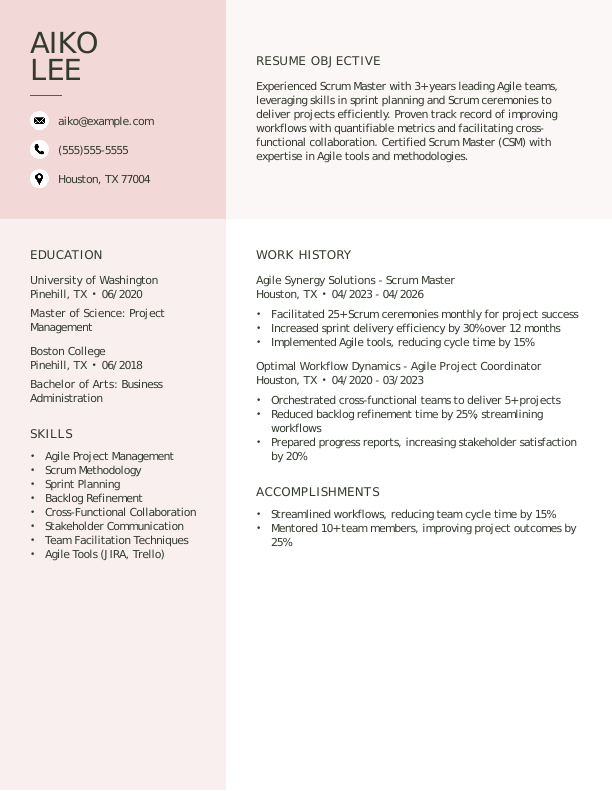
FreeScrum Master Entry-Level Resume
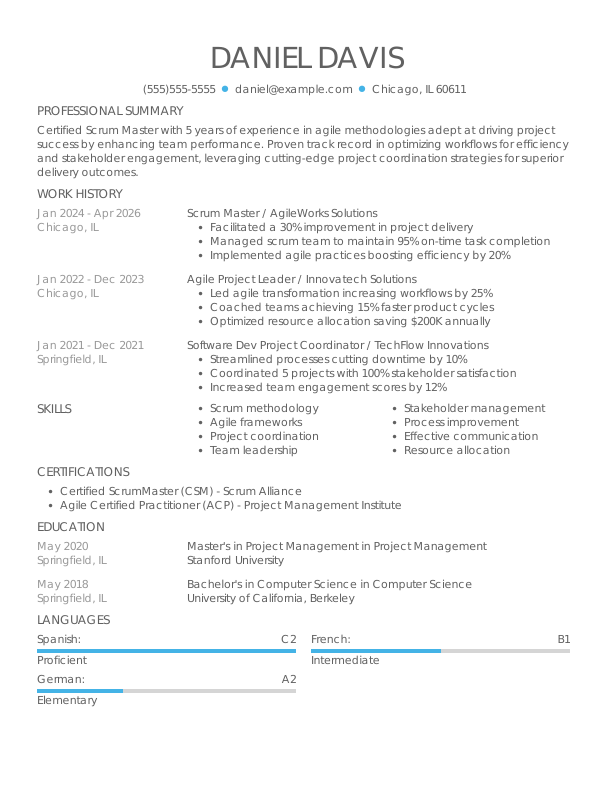
Scrum Master Mid-Level Resume
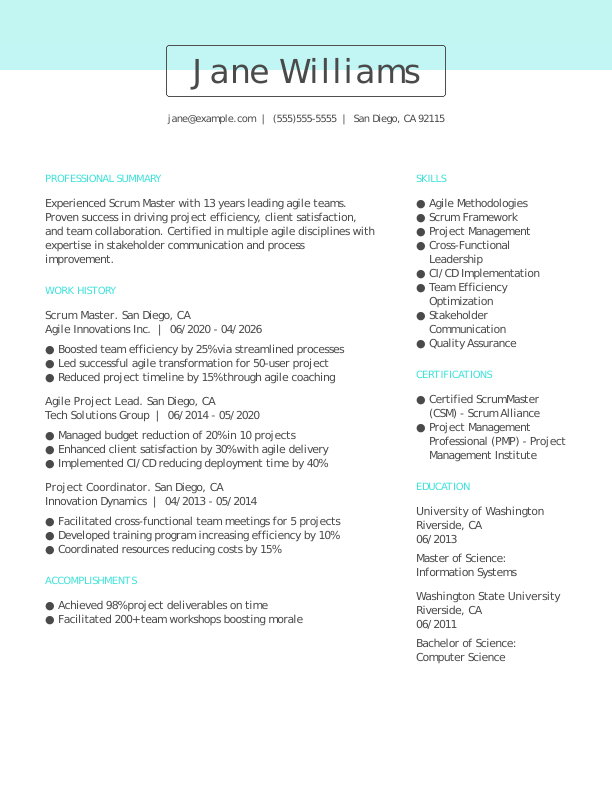
Scrum Master Experienced Resume
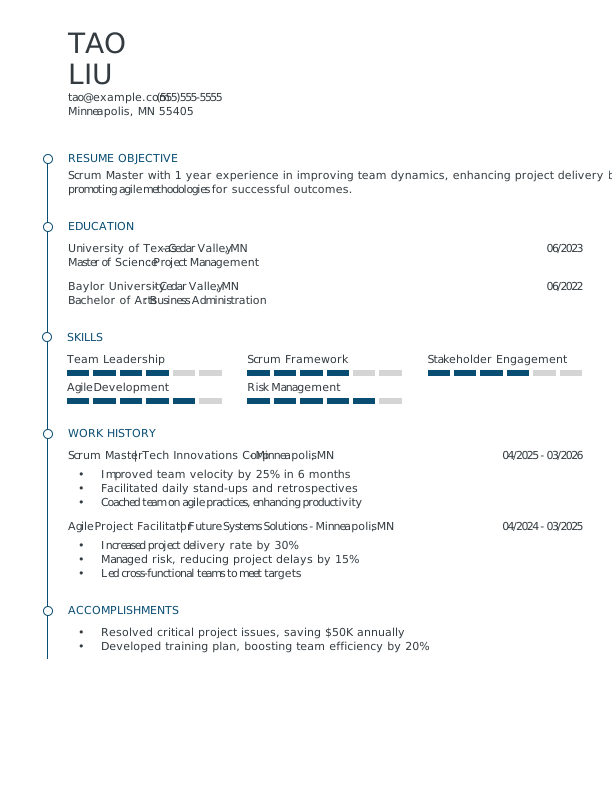
Scrum Master Entry-Level Resume 1
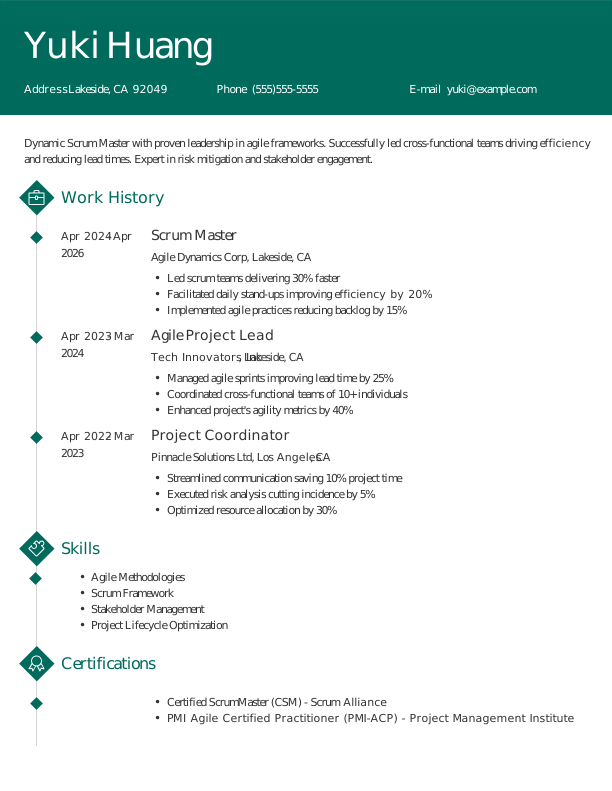

Scrum Master Mid-Level Resume 1
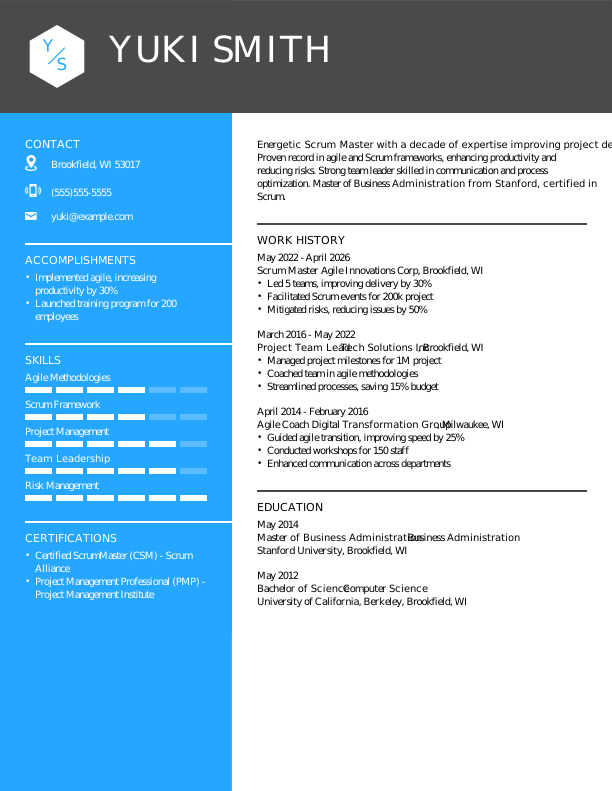
Scrum Master Experienced Resume 1
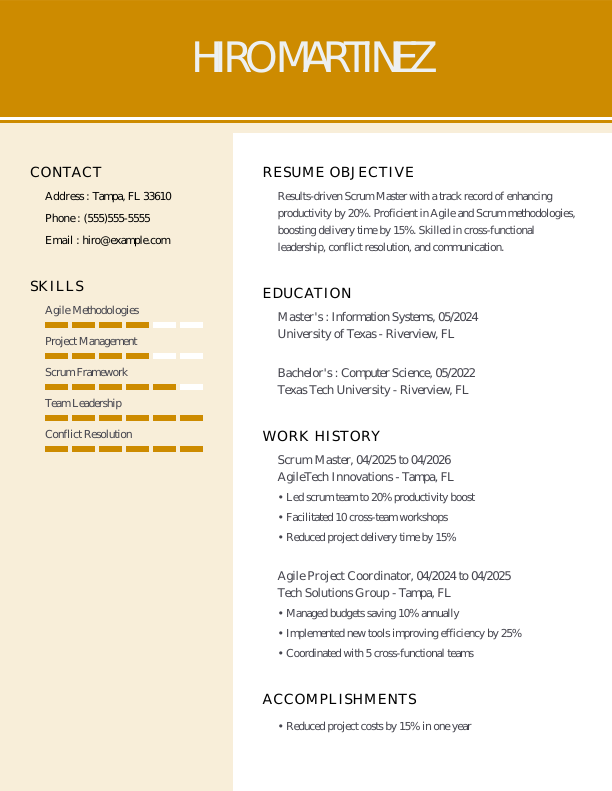

Scrum Master Entry-Level Resume 2
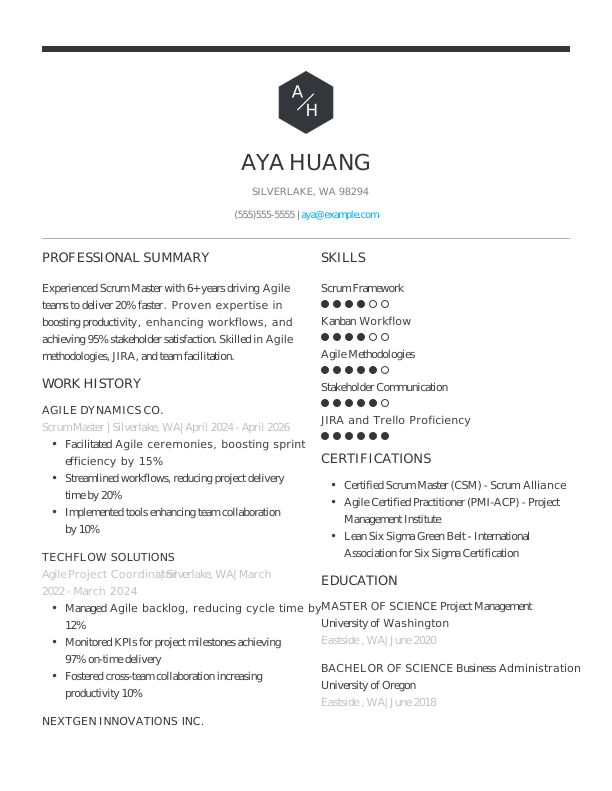

Scrum Master Mid-Level Resume 2
Browse Free Resume Templates
- Accounts Payable
- Adjunct Professor
- Artist
- Auto Mechanic
- Baker
- Business Development Manager
- Business
- Certified Nursing Assistant
- Classic & Traditional
- Cleaner
- College Student
- Concierge
- Construction Worker
- Corporate
- Creative & Unique
- Custodian
- Customer Service
- Dental Assistant
- Direct Support Professional
- Entry-Level
- Flight Attendant
- Hospitality & Food Service
- Front Desk Receptionist
- Healthcare
- High School
- Housekeeping
- Hvac Technician
- Hybrid
- Inventory Manager
- Logistics
- Maintenance
- Management
- Modern
- Mortgage Loan Processor
- Pet Sitter
- Phlebotomist
- Production
- Rbt
- Sales
- Security Services
- Restaurant Server
- Simple & Basic
- Social Work
- Teacher
- Technology
Resume Examples for Scrum Masters
Scrum master resumes should reflect your agile facilitation skills and sprint planning experience. Browse our templates, or build a resume organized around your agile certifications.
Entry-Level Scrum Master Resume
If you are transitioning into a scrum master role from a developer or project coordinator position, this template helps you write a scrum master resume by highlighting your agile team participation, any CSM certification progress, and sprint facilitation contributions.

Mid-Career Scrum Master Resume
A smart choice for mid-level professionals seeking career advancement, this template highlights relevant experience and positions applicants effectively for specialized roles in project management.

Experienced Scrum Master Resume
An ideal choice for seasoned professionals with over 10 years of experience, this template supports scrum masters looking to elevate their careers into senior leadership roles.

Scrum Master Resume Template (Text)
Below is a scrum master resume in plain text format. Paste it into your document and adjust it to reflect your agile facilitation skills and sprint delivery experience.
Emma Rodriguez
Buffalo, NY 14205
Professional Summary
Dynamic Scrum Master with 8 years of experience optimizing Agile workflows, enhancing team performance, and reducing delivery times by up to 35%. Skilled in sprint planning, team mentoring, and workflow optimization, delivering measurable results and driving project success.
Work Experience
March 2023 – April 2026
AgileSuccess Solutions – Buffalo, NY
Scrum Master
- Boosted sprint delivery rate by 35% in 12 months.
- Facilitated 200+ agile ceremonies to optimize workflows.
- Trained team, achieving 95% Agile adoption across teams.
October 2018 – February 2023
TechValue Systems – Buffalo, NY
Agile Project Coordinator
- Managed projects, reducing delivery delays by 28%.
- Implemented Kanban system, enhancing task tracking.
- Coordinated reports for stakeholders, boosting clarity.
October 2014 – September 2018
InnovateIT Solutions – Hillcrest, NY
Software Development Team Lead
- Led team, delivering 20+ applications under budget.
- Developed CI/CD systems, cut release time by 40%.
- Conducted code reviews, improving code quality by 15%.
Education
May 2014
University of Texas at Austin Hillcrest, NY
Master of Science Project Management
May 2012
Texas A&M University Hillcrest, NY
Bachelor of Science Computer Science
Certifications
- Certified ScrumMaster (CSM) – Scrum Alliance
- Agile Certified Practitioner (PMI-ACP) – Project Management Institute
- Kanban Management Professional – Kanban University
Skills
- Agile Methodologies
- Sprint Planning
- Project Management
- Leadership
- Conflict Resolution
- Scrum Framework
- Team Coaching
- Workflow Optimization
How to Write a Scrum Master Resume
As a scrum master, knowing how to write a resume means showcasing your leadership skills and experience in agile methodologies while using a clear format that stands out. Use the guidance below to emphasize your strengths and tailor your resume for the positions you’re aiming for.
1. Contact Info
Your contact information needs to be clear, professional, and prominently displayed at the top of your resume.
Be sure to include:
- Full name
- Phone number
- Professional email address
- City and state (ZIP code is optional)
- LinkedIn profile or relevant personal portfolio (if applicable)
- Relevant certifications or licenses
 PRO TIP
Avoid including sensitive personal information such as social security numbers, religious affiliations, or photos on your resume unless an employer specifically requests them.
2. Resume Profile
A resume profile is a brief introduction (2–4 sentences) that highlights your key skills and experiences. It serves as an effective pitch to hiring managers, designed to capture their interest and motivate them to explore your resume further.
Typically located at the top of your resume, the profile can be structured as either a summary or an objective, each with its specific focus. This distinction helps tailor your message based on the role you’re pursuing:
- A resume summary showcases your experience facilitating agile ceremonies, coaching teams, removing impediments, and improving delivery metrics like velocity and sprint predictability. This format works best for scrum masters with a track record of leading scrum teams, mentoring team members, and collaborating with product owners and stakeholders.
- A resume objective is a forward-looking statement that highlights your career aspirations and what you aim to achieve in your next scrum master role. It’s especially useful for recent graduates, professionals transitioning from related roles like project coordinator, business analyst, or developer, or newly certified scrum masters (CSM, PSM) entering the field for the first time.
Next, we’ll explore the differences between a resume summary and a resume objective in the following examples.
Scrum master resume summary example:
Dynamic scrum master with 6+ years of experience in leading agile teams within technology-driven environments. Proficient in sprint planning, stakeholder engagement, and team facilitation. Celebrated for improving team performance and driving successful project delivery through effective collaboration and continuous improvement.
Scrum master resume objective example:
Recent graduate with a certification in Scrum Master eager to launch a career in an innovative tech environment. Committed to fostering collaboration and agile principles while contributing strong leadership skills and a focus on continuous improvement to a dynamic software development team.
3. Work Experience
The work experience on your resume is a key part of demonstrating your qualifications. Employers explore your history to evaluate not only the roles you’ve held but also the tangible impact you’ve made in your career.
Your work experience highlights how your background provides you with the skills and insights needed for excelling as a scrum master.
The work experience section should contain:
- Job title
- Employer name and location
- Dates of employment (month/year)
- 3–5 bullet points outlining your agile project management responsibilities and team facilitation achievements
Customize your work experience bullet points to align with the job you’re pursuing by using terminology specific to the scrum master role. Begin each point with a strong action verb such as “Facilitated,” “Coordinated,” or “Guided” to improve impact.
Incorporate measurable outcomes wherever possible. Highlighting specific metrics or accomplishments not only showcases your contributions but also sets you apart from other job seekers by illustrating your proven effectiveness in previous roles.
In general, consider following the format of:
[action verb] + [responsibility] = [result/achievement]
For example:
Facilitated daily scrum meetings for three cross-functional teams, improving communication and collaboration, which led to a 20% increase in project delivery speed over six months.
Note that you can also flip the result/achievement with the responsibility:
Improved project delivery speed by 20% within six months through effective facilitation of daily scrum meetings across three teams.
With these techniques in mind, your resume bullets may look something like:
- Facilitated agile ceremonies for cross-functional teams, improving project delivery speed by 25%.
- Coached and mentored 5 junior team members, fostering skill development and improving team performance ratings by 15%.
- Tracked sprint progress using JIRA, ensuring 100% adherence to timelines and deliverables.
- Collaborated with product owners to prioritize backlog items, resulting in a 20% increase in stakeholder satisfaction.
- Implemented retrospective feedback processes that led to a continuous improvement culture within the team.
4. Skills
The skills section serves as a concise overview of your scrum master abilities, highlighting your expertise in agile methodologies. This ATS-friendly resume format allows recruiters to quickly assess your qualifications.
Skills can be categorized into three key areas:
- Soft skills are interpersonal abilities that greatly influence collaboration within agile teams.
- Hard skills are specific, measurable abilities gained through education, training, or experience.
- Technical skills are the specific tools required in a profession.
5 Soft Skills for Your Resume or CV
- Effective team facilitation
- Conflict resolution skills
- Agile project management
- Stakeholder engagement
- Continuous improvement mindset
5 Hard Skills for Your Resume or CV
- Agile methodologies (Scrum, Kanban)
- Sprint planning and review
- Backlog management
- Facilitation of daily stand-ups
- Use of project management tools (Jira, Trello)
In general, aim to showcase a diverse array of skills that directly correspond with the job criteria to demonstrate your qualifications.
PRO TIP
If you’re a newer scrum master, consider positioning your skills section higher on the resume, right after your summary. For those with more experience, it’s best to place this section lower, weaving skills throughout your work history for a cohesive presentation.
5. Education
Understanding how to list education on your resume is essential for showcasing your qualifications. Start with your most recent or relevant degree, clearly stating the degree type along with the institution’s name.
If you’re a recent graduate, consider including details such as your graduation year, GPA (if it’s 3.5 or higher), honors received, or coursework that relates to your desired position.
Scrum master resume education section example:
Master of Science in Project Management (MSPM)
University of Denver, Denver, CO
Graduated: 2023 | Graduated with Distinction
PRO TIP
When listing multiple degrees on your resume, ensure they are arranged in reverse-chronological order, starting with the highest qualification first, like Master of Science in Agile Project Management followed by Bachelor of Science in Information Technology.
6. Certifications
Certifications highlight your qualifications and ensure you’re equipped with the latest skills that employers look for. While not a standard part of every resume, this section is important for many professionals in their respective fields. Employers often seek specific credentials, especially in roles like healthcare or technology, where specialized knowledge is essential.
It’s important to showcase relevant certifications and licenses that improve your application. Always keep these credentials updated and formatted clearly to make them easy to find.
Scrum master certification examples:
- Scrum Master Certification | Scrum Alliance | Expires: 01/2028
- Certified ScrumMaster (CSM) | Scrum Alliance | Expires: 11/2027
- Agile Certified Practitioner (PMI-ACP) | Project Management Institute | Expires: 04/2028
- Professional Scrum Master (PSM) | Scrum.org | Expires: 09/2027
Start Building Your Job-Winning Resume
Use Your Existing Resume
Import your current resume to transfer your information to one of our professional templates.
Create a New Resume
Start fresh with a template that catches your eye and follow the prompts to add your details.
Tailor Your Work History to Beat the ATS
Your work experience section does more than list your previous roles. It provides an opportunity to highlight the tangible contributions you’ve made in your teams and projects, showcasing the value you bring. This not only improves your resume but also makes it more compatible with applicant tracking systems (ATS) that look for specific keywords.
To optimize this section, customize your work history according to the job description you’re targeting. Begin by carefully analyzing the requirements listed in the posting. Identify common skills or qualifications mentioned and ensure these elements are reflected in how you describe your past experiences.
Key Takeaways
- Tailor your resume to the job description. Incorporate specific terminology from the listing—it improves compatibility with ATS and appeals to hiring managers.
- Highlight quantifiable achievements that demonstrate your impact. Use metrics relevant to Scrum (e.g., sprint velocity, team engagement scores, project delivery timelines) to differentiate yourself.
- Select a resume format that aligns with your experience level. Those new to the field may opt for a functional or hybrid format, while seasoned scrum masters often prefer a reverse-chronological layout.
More Resume & CV Examples
- Ai Consultant
- Android Developer
- Blockchain Developer
- Cloud Engineer
- Computer Engineering
- Computer Programmer
- Computer Science Internship
- Devops Engineer
- Devops
- Embedded Software Engineer
- Front-end Developer
- Full Stack Developer
- Game Developer
- Ios Developer
- Java Developer
- Machine Learning
- Power Bi Developer
- Product Management
- Project Engineer
- Prompt Engineer
- Python Developer
- React Developer
- React Native Developer
- Release Manager
- Rpa Developer
- Salesforce Developer
- SDET
- Servicenow Developer
- Software Developer
- Software Engineer
- Software Tester
- Solution Architect
- Sql Developer
- Ux Designer
- Ux Researcher
- Web Developer
Cover Letters for Your Resume
Browse our library of cover letter examples to complete your application. A resume will have a better chance of getting noticed.
Frequently Asked Questions
Last Update:
What resume format should I use for my scrum master resume?
There are three main resume formats to consider when applying for a scrum master role. Your choice should depend on your experience level and the skills you want to highlight:
- Chronological: The chronological resume format is the most widely used, emphasizing a clear timeline of your work experience along with your responsibilities and achievements. This structure benefits job seekers with a consistent and relevant job history, as it reinforces their qualifications and adds credibility to their professional narrative.
- Functional: The functional resume, also known as a skills-based resume, highlights your qualifications and relevant skills rather than focusing on work history. This format is particularly beneficial for job seekers who lack direct experience in their desired field or have gaps in their employment history. It allows you to present your strengths confidently.
- Combination: The combination resume format merges the best of chronological and functional styles. It features a skills section alongside work experience, enabling professionals to showcase their abilities and career advancements. This approach is ideal for those transitioning careers or highlighting relevant competencies while detailing job history.
Should I include a cover letter with my resume?
Yes, you should include a cover letter with your scrum master job application. A well-crafted cover letter improves your resume by allowing you to articulate your understanding of agile methodologies and how your leadership style fosters team collaboration. It gives employers insight into your personality and commitment to the role, differentiating you from job seekers who may submit only a resume.
If you’re hesitant about writing a cover letter, numerous resources can assist you in the process. You can find guides on how to write a cover letter specifically for scrum master roles, along with examples that showcase successful approaches. Additionally, exploring various formats will help you select one that best highlights your experience and skills.
To make the writing process easier, consider using a cover letter generator, which provides templates and suggestions tailored for scrum master applications.
How long should a scrum master resume be?
For scrum masters with less than 10 years of experience, a one-page resume is typically ideal to showcase relevant skills, certifications (such as CSM or PSM), and key project contributions. Concentrate on clarity and directness to present your skill in agile methodologies and team facilitation.
Conversely, those in senior roles may extend their resumes to two pages if they include significant accomplishments and leadership experiences that illustrate their expertise. Ensure all information remains directly relevant, avoiding any content that does not improve the overall narrative of your qualifications.
What keywords should I include to pass applicant tracking systems (ATS)?
To improve your resume for ATS, focus on incorporating keywords and phrases from the job posting. For a scrum master role, this may include terms like “agile methodologies,” “sprint planning,” and “team facilitation.” Using specific language from the description shows that you understand the role and meet its requirements.
Additionally, highlight any relevant certifications such as Certified ScrumMaster or PMI-ACP. Mention technical tools you’re familiar with, like Jira or Trello, to further demonstrate your qualifications. Tailoring your application in this way can significantly improve your chances of getting noticed by hiring managers.
Is it beneficial to include volunteer work or side projects on my resume?
Yes, including volunteer work and side projects is valuable, especially for those new to the field. These experiences demonstrate your initiative and passion for agile practices, helping you stand out even if you lack extensive formal roles in scrum management.

Vicki Salemi is a nationally recognized career expert who helps professionals navigate the hiring landscape and find the right fit on Monster. With over 15 years of experience in corporate recruiting and HR, she offers expert guidance on job search strategies, interview preparation, and career development to help candidates land their next role.
See More From Vicki SalemiExplore Related Career Advice


How to Put Transferable Skills on Your Resume: 120 Skills, Examples, & Tips

Updated:
Aug 27, 2026
|

16 min read


How to Write a Functional Resume (Formatting Tips, Template, & Examples)
Updated:
Aug 7, 2026
|
17 min read


Functional vs Chronological Resume: Which Format Is Right for You?
Updated:
Aug 3, 2026
|
16 min read
100+ Resume Adjectives to Help You Write a Stronger Resume in 2026 (With Examples)
Updated:
Jul 30, 2026
|
12 min read