
Free Computer Science Internship Resume Templates & Examples
Boost your chances of landing interviews with our expertly designed free resume templates for computer science internships. These templates come with valuable writing tips to help you create a standout resume that showcases your skills and attracts employers’ attention.
Real-World Resumes That Get Results
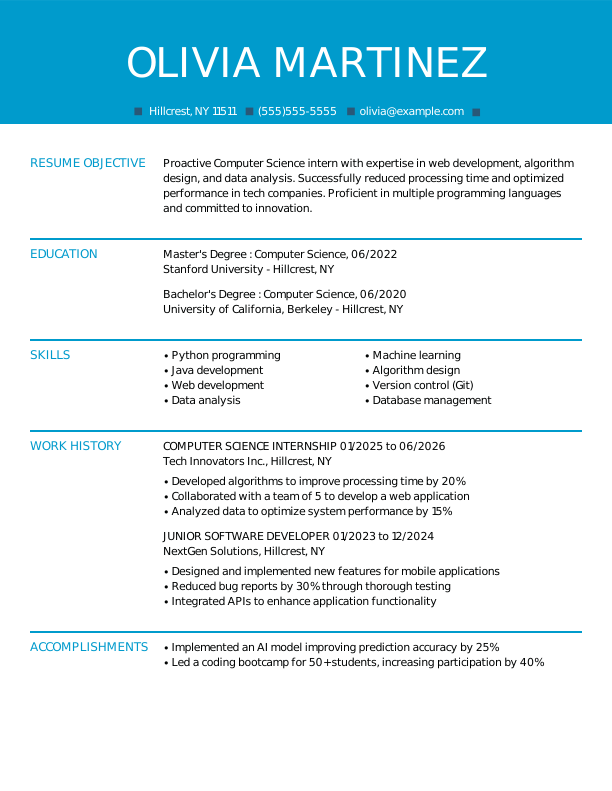
 Free
FreeComputer Science Internship Entry-Level Resume
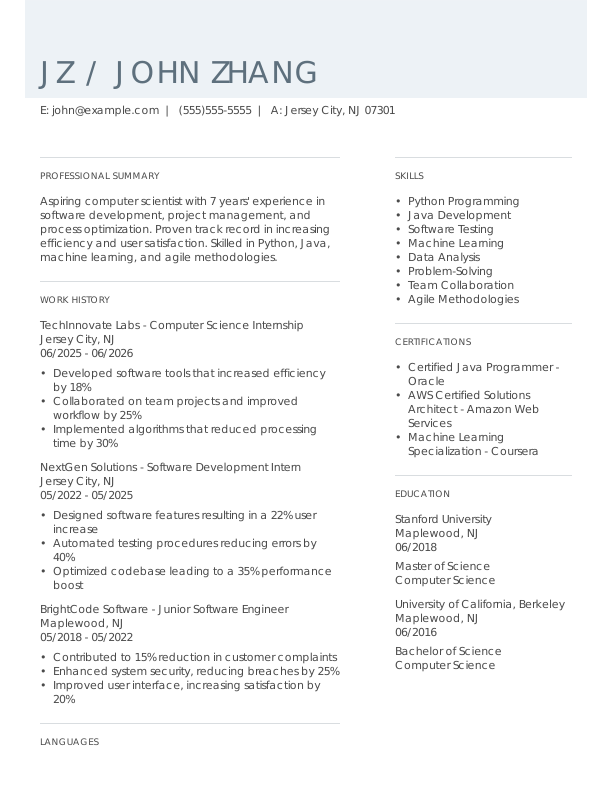
Computer Science Internship Mid-Level Resume
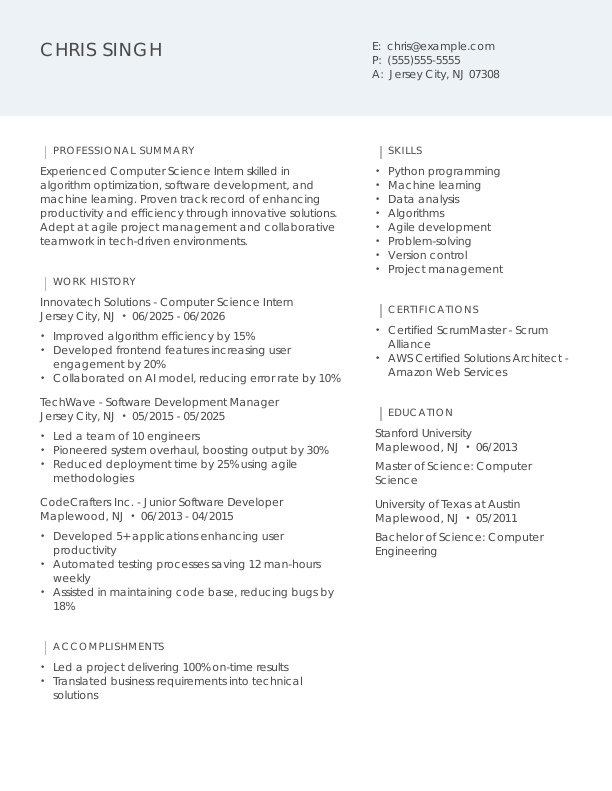
Computer Science Internship Experienced Resume
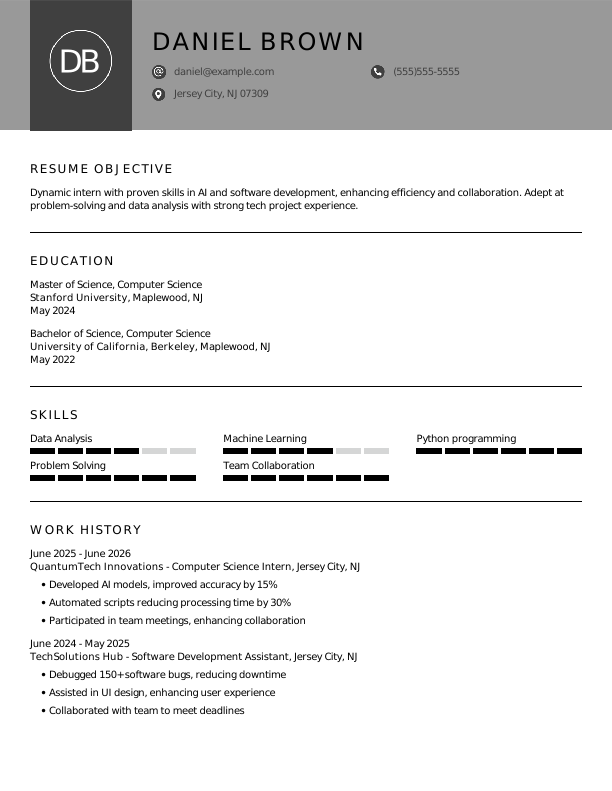
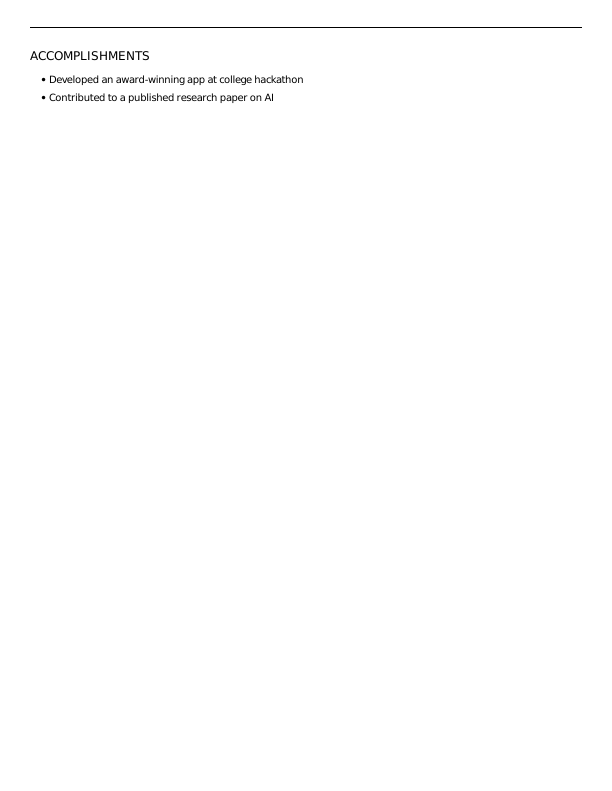
Computer Science Internship Modern Resume
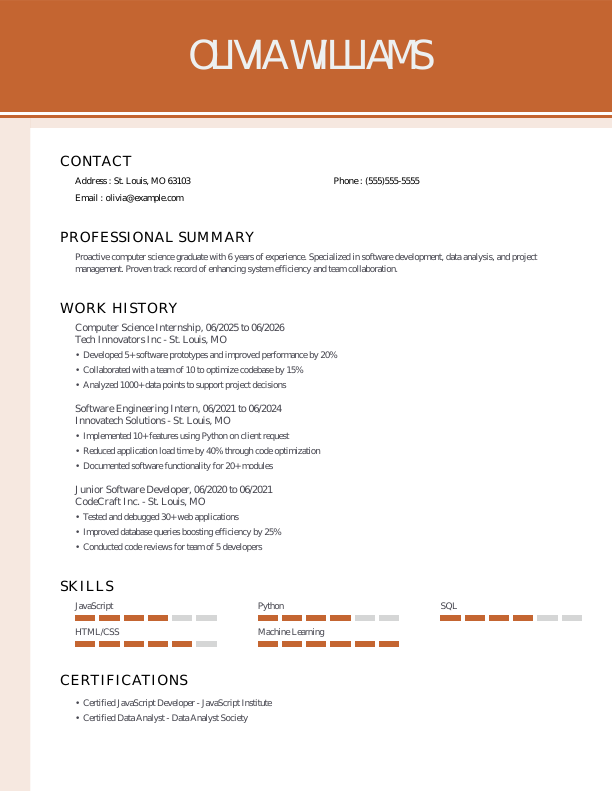

Computer Science Internship Creative Resume
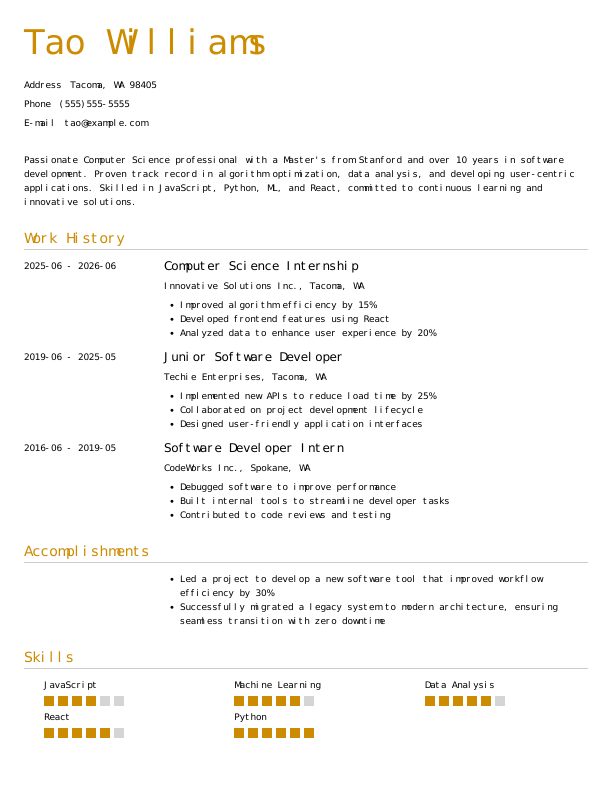

Computer Science Internship Traditional Resume
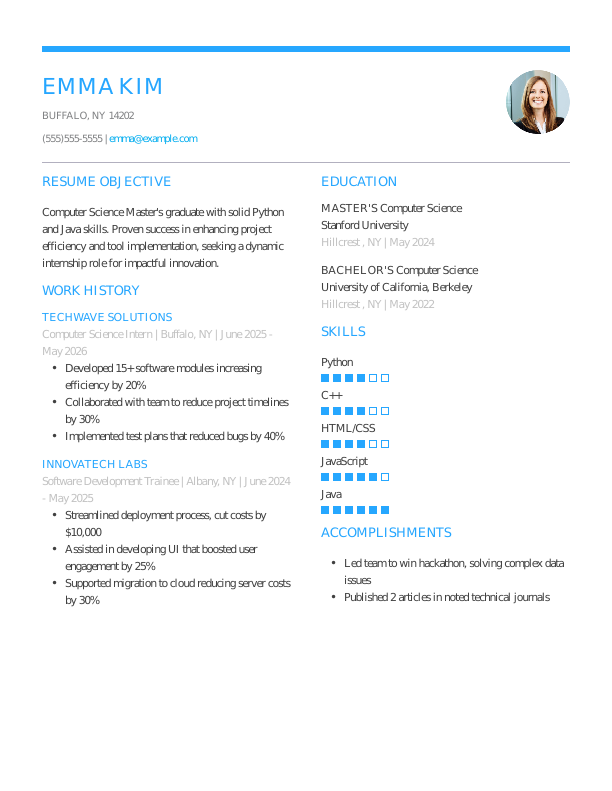
Computer Science Internship Simple CV Example
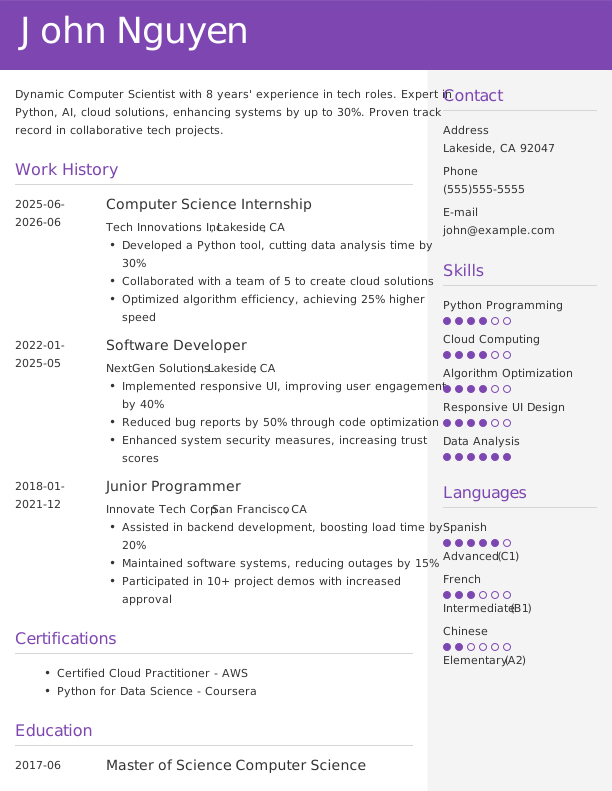

Computer Science Internship CV Format
Browse Free Resume Templates
- Accounts Payable
- Adjunct Professor
- Artist
- Auto Mechanic
- Baker
- Business Development Manager
- Business
- Certified Nursing Assistant
- Classic & Traditional
- Cleaner
- College Student
- Concierge
- Construction Worker
- Corporate
- Creative & Unique
- Custodian
- Customer Service
- Dental Assistant
- Direct Support Professional
- Entry-Level
- Flight Attendant
- Hospitality & Food Service
- Front Desk Receptionist
- Healthcare
- High School
- Housekeeping
- Hvac Technician
- Hybrid
- Inventory Manager
- Logistics
- Maintenance
- Management
- Modern
- Mortgage Loan Processor
- Pet Sitter
- Phlebotomist
- Production
- Rbt
- Sales
- Security Services
- Restaurant Server
- Simple & Basic
- Social Work
- Teacher
- Technology
Resume Examples for Computer Science Internships
A computer science internship resume should highlight your technical skills, relevant coursework, programming projects, and academic experience rather than years of professional experience. Explore resume examples designed for students and aspiring developers at different experience levels, then use our Resume Builder to create a resume that showcases your qualifications and potential.
Software Developer Internship Resume
Ideal for recent graduates, this no-experience resume template shows how to highlight programming skills, technical projects, coursework, and hands-on experience.
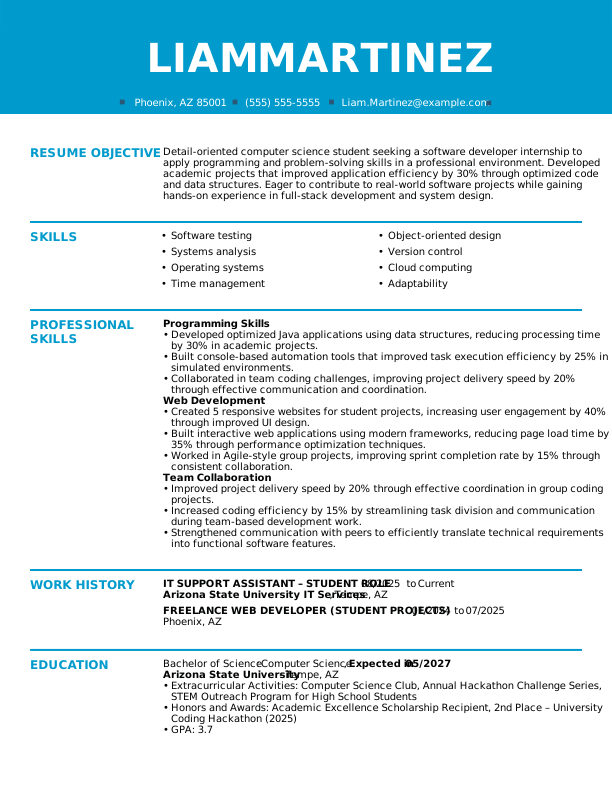
Full-Stack Developer Internship Resume
A good fit for aspiring full-stack developers, this template showcases programming skills, web development projects, technical coursework, and experience with front-end and back-end technologies to demonstrate readiness for an internship.
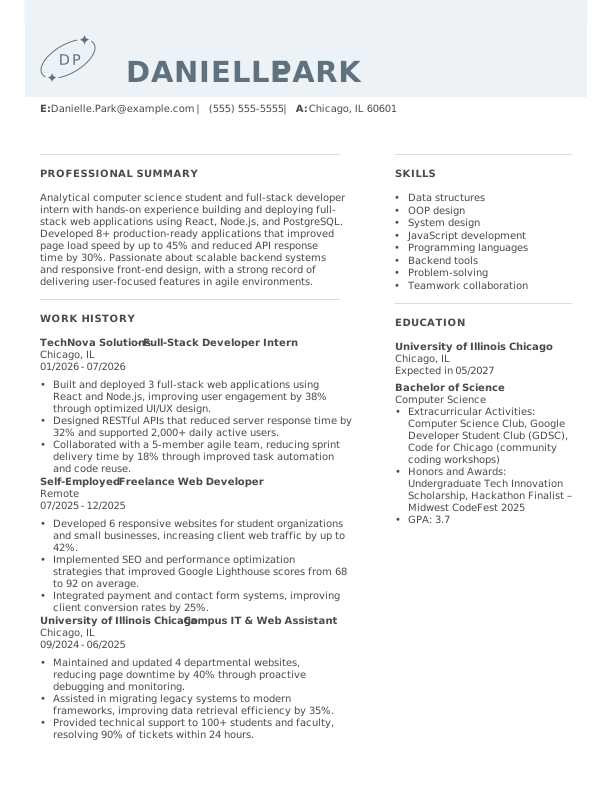
Cloud Engineering Internship Resume
An ideal choice for aspiring tech professionals, this internship resume example showcases cloud computing skills, technical projects, certifications, and relevant coursework.
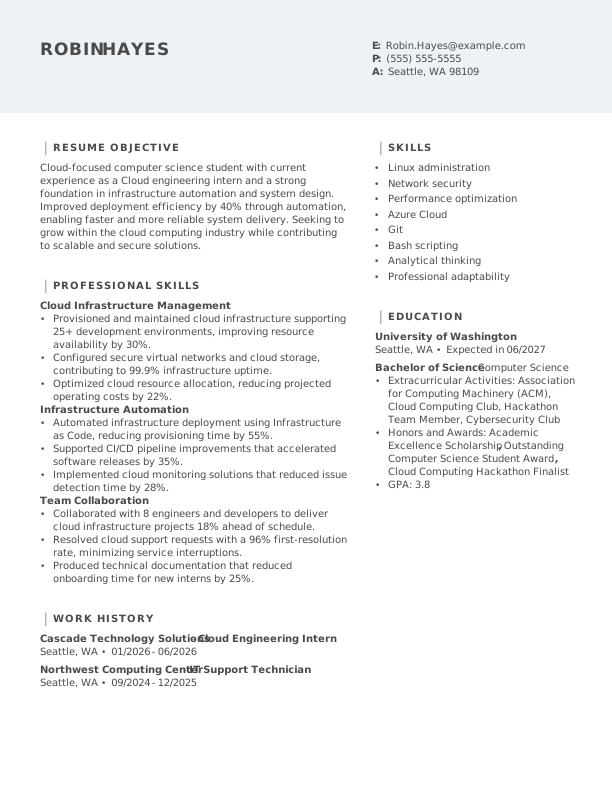
Computer Science Internship Resume Template (Text)
Use this customizable text format of a computer science internship resume to copy, edit, and personalize directly in your document. Explore our full selection of free resume templates for professionally formatted options.
Liam Martinez
Phoenix, AZ 85001
(555) 555-5555
Liam.Martinez@example.com
Resume Objective
Detail-oriented computer science student seeking a software developer internship to apply programming and problem-solving skills in a professional environment. Developed academic projects that improved application efficiency by 30% through optimized code and data structures. Eager to contribute to real-world software projects while gaining hands-on experience in full-stack development and system design.
Skills
- Software testing
- Object-oriented design
- Systems analysis
- Version control
- Operating systems
- Cloud computing
- Time management
- Adaptability
Professional Skills
Programming Skills
- Developed optimized Java applications using data structures, reducing processing time by 30% in academic projects.
- Built console-based automation tools that improved task execution efficiency by 25% in simulated environments.
- Collaborated in team coding challenges, improving project delivery speed by 20% through effective communication and coordination.
Web Development
- Created 5 responsive websites for student projects, increasing user engagement by 40% through improved UI design.
- Built interactive web applications using modern frameworks, reducing page load time by 35% through performance optimization techniques.
- Worked in Agile-style group projects, improving sprint completion rate by 15% through consistent collaboration.
Team Collaboration
- Improved project delivery speed by 20% through effective coordination in group coding projects.
- Increased coding efficiency by 15% by streamlining task division and communication during team-based development work.
- Strengthened communication with peers to efficiently translate technical requirements into functional software features.
Work History
August 2025 – Current
Arizona State University IT Services – Tempe, AZ
IT Support Assistant – Student Role
January 2024 – July 2025
Phoenix, AZ
Freelance Web Developer (Student Projects)
Education
Expected in May 2027
Arizona State University, Tempe, AZ
Bachelor of Science in Computer Science
- Extracurricular Activities: Computer Science Club, Annual Hackathon Challenge Series, STEM Outreach Program for High School Students
- Honors and Awards: Academic Excellence Scholarship Recipient, 2nd Place – University Coding Hackathon (2025)
- GPA: 3.7
How to Write a Computer Science Internship Resume
As a computer science intern, knowing how to write a resume involves showcasing your technical skills and relevant projects in a clear format that proves you’re the right fit for the role. Use the guidance below to emphasize your strengths and tailor your resume for the specific internships you’re pursuing.
1. Contact Info
Your contact information should be clear, professional, and easy to find at the top of your resume.
Make sure to include:
- Full name
- Phone number
- Professional email address
- City and state (ZIP code is optional)
- LinkedIn profile or personal portfolio (if relevant)
 PRO TIP
Skip including irrelevant personal details like age, gender, or social media profiles to maintain your professional presentation.
2. Resume Profile
A resume profile is a brief introduction at the top of your resume that provides hiring managers with a quick overview of your qualifications. In two to four sentences, it should highlight your technical skills, relevant experience, projects, and career focus while encouraging employers to continue reading.
Your resume profile can be written as either a resume summary or a resume objective, depending on your background and experience level:
- A resume summary highlights your most relevant technical skills, projects, accomplishments, and professional experience. This format is best for candidates with internships, work experience, or transferable skills who want to demonstrate how their background aligns with the internship.
- A resume objective focuses on your career goals while emphasizing the skills, education, coursework, certifications, and projects that demonstrate your potential. This format is especially useful for computer science students, recent graduates, coding bootcamp graduates, or career changers who have limited professional experience.
Let’s take a look at an example of each to see how a resume summary and a resume objective differ:
Computer science internship resume summary example:
Computer science student with experience developing software applications, completing programming projects, and applying problem-solving skills to technical challenges. Proficient in Python, Java, JavaScript, and SQL, with knowledge of data structures, algorithms, and version control systems. Demonstrated ability to collaborate on development projects, write efficient code, and create technology solutions through academic and hands-on experience.
Computer science internship resume objective example:
Motivated computer science student seeking a software development internship to apply programming knowledge, technical skills, and problem-solving abilities in a professional environment. Brings experience from coursework, coding projects, and collaborative assignments, with a strong interest in contributing to innovative technology solutions while continuing to develop software engineering skills.
3. Work Experience
The work experience section of your resume is an opportunity to showcase your technical abilities, problem-solving skills, and contributions to software projects or technology initiatives. Employers look beyond job titles to understand how you applied your programming knowledge, collaborated with teams, and created solutions in real-world or academic environments.
For computer science internship applicants, this section can include internships, part-time jobs, research experience, freelance projects, open-source contributions, or relevant academic projects.
Focus on experiences that demonstrate your ability to write code, troubleshoot issues, work with technology, and contribute to development teams.
The work experience section should contain:
- Job title or project role
- Employer, organization, or project name and location
- Dates of employment or project involvement (month/year)
- Three to five bullet points describing relevant responsibilities, technical contributions, and achievements
Tailor your experience descriptions to the specific computer science internship you’re applying for by incorporating relevant programming languages, tools, frameworks, and technologies from the job description.
Start each bullet point with a strong action verb, such as “Developed,” “Programmed,” “Debugged,” “Implemented,” or “Optimized,” to clearly highlight your contributions.
Whenever possible, include measurable results, such as improving application performance, completing projects, reducing errors, or supporting the development of features. Specific achievements help demonstrate your technical skills and show employers the value you can bring to their team.
In general, consider following the format of:
[action verb] + [responsibility] = [result/achievement]
For example:
Assisted in the development of a mobile application that increased user engagement by 25% over three months, collaborating with a team of 5 developers.
Note that you can also flip the result/achievement with the responsibility:
Contributed to a project that reduced software bugs by 30% through rigorous testing and debugging practices.
With these techniques in mind, your resume bullets may look something like:
- Developed and tested software applications for 3 academic projects, improving functionality by 25%.
- Assisted in debugging code and resolving technical issues, reducing error rates by 15% during testing phases.
- Collaborated with team members to design user-friendly interfaces, improving user experience for end-users.
- Used Python and Java to create scripts for data analysis, streamlining processing time by 20%.
- Participated in weekly code reviews, providing constructive feedback that improved overall code quality.
4. Skills
The skills section provides a quick overview of your technical abilities and professional strengths, helping hiring managers assess your qualifications for a computer science internship.
For students and aspiring developers, this section is especially valuable for highlighting skills gained through coursework, coding projects, internships, research, and personal projects.
Skills can be categorized into three groups:
- Soft skills are interpersonal qualities that influence how effectively you collaborate, communicate, and contribute to a development team.
- Hard skills are specific, measurable abilities developed through education, training, or hands-on experience.
- Technical skills are specialized abilities related to the tools, technologies, and platforms used in computer science roles.
5 Soft Skills for Your Resume
- Analytical thinking
- Team collaboration
- Effective communication
- Project management
- Technical curiosity
5 Hard Skills for Your Resume
- Programming languages (Python, Java)
- Database management (SQL, MongoDB)
- Version control (Git, GitHub)
- Web development frameworks (React, Angular)
- Software testing methodologies (JUnit, Selenium)
When creating your skills section, prioritize abilities that align with the internship description and accurately reflect your experience.
PRO TIP
A targeted skills section helps employers quickly identify your technical qualifications and understand how you can contribute to the team.
5. Education
The education section is an important part of a computer science internship resume because it highlights your academic foundation, technical knowledge, and preparation for a career in technology.
For many students and recent graduates, this section helps demonstrate qualifications when professional experience is limited.
Begin by listing your most recent or relevant degree, including the degree name, institution, location, and expected or completed graduation date.
Computer science students should consider including relevant coursework, technical projects, academic achievements, honors, and a GPA (if it’s 3.5 or higher) to showcase their skills and knowledge.
Computer science internship resume education section example:
Bachelor of Science in Computer Science (BSCS)
University of California, Berkeley, Berkeley, CA
Graduated: 2025 | Cum Laude
PRO TIP
If you’ve earned multiple degrees, list them in reverse chronological order, starting with your most recent degree.
6. Certifications
A certifications section can strengthen a computer science internship resume by showcasing additional technical skills, industry knowledge, and a commitment to professional development.
While certifications are not required for every internship, relevant credentials can help you stand out by showing hands-on knowledge in areas such as cloud computing, cybersecurity, programming, or data analysis.
Focus on certifications that align with the internship requirements and support the skills you want to highlight.
When listing certifications, include the certification name, issuing organization, and completion or expiration date (if applicable). Keep your certifications current and format them clearly so employers can identify your technical qualifications.
Computer science internship certification examples:
- AWS Certified Cloud Practitioner | Amazon Web Services | Expires: 11/2027
- Google IT Support Professional Certificate | Coursera | Expires: 05/2028
- CompTIA A+ Certification | CompTIA | Expires: 08/2027
- Microsoft Certified: Azure Fundamentals | Microsoft | Expires: 03/2028
Start Building Your Job-Winning Resume
Use Your Existing Resume
Import your current resume to transfer your information to one of our professional templates.
Create a New Resume
Start fresh with a template that catches your eye and follow the prompts to add your details.
Tailor Your Work History to Beat the ATS
Your work experience is more than a list of job titles. It’s an opportunity to demonstrate the measurable impact you’ve made on projects, software development, and team collaboration. This approach can also lead to an ATS-friendly resume that applicant tracking systems (ATS) can easily scan.
To create an effective work history for your internship application, tailor it to the specific role by using relevant keywords from the job description.
Begin with a thorough analysis of the posted requirements. Identify frequently mentioned skills, programming languages, or project types, and reflect those elements in your experience descriptions when possible.
Key Takeaways
- A strong computer science internship resume should showcase your technical skills, programming projects, coursework, certifications, and relevant experience to demonstrate your potential as an aspiring developer or technology professional.
- Use quantifiable achievements to showcase your contributions. Instead of just listing tasks, include metrics like project completion rates or coding competition placements (e.g., improved code efficiency by 20%).
- Tailor your resume to the job description. Use the specific language from the posting to highlight your relevant skills and experiences—it will resonate with both ATS and hiring managers.
More Resume & CV Examples
- Ai Consultant
- Android Developer
- Blockchain Developer
- Cloud Engineer
- Computer Engineering
- Computer Programmer
- Devops Engineer
- Devops
- Embedded Software Engineer
- Front-end Developer
- Full Stack Developer
- Game Developer
- Grad School
- Harvard
- History
- Internship
- Ios Developer
- Java Developer
- Machine Learning
- MBA
- Nursing Student
- Power Bi Developer
- Product Management
- Project Engineer
- Prompt Engineer
- Python Developer
- React Developer
- React Native Developer
- Release Manager
- Research Associate
- Rpa Developer
- Salesforce Developer
- Scholarship
- Scrum Master
- SDET
- Servicenow Developer
- Software Developer
- Software Engineer
- Software Tester
- Solution Architect
- Sql Developer
- Student Athlete
- Summer Job
- Teen
- Ux Designer
- Ux Researcher
- Web Developer
Cover Letters for Your Resume
Browse our library of cover letter examples to complete your application. A resume will have a better chance of getting noticed.
Frequently Asked Questions
Last Update:
What resume format should I use for my computer science internship resume?
A functional resume is a strong choice for computer science internship applicants because it highlights technical skills, programming projects, coursework, and academic experience rather than focusing on limited professional experience. This format is especially useful for students and recent graduates who have built their skills through coding projects, class assignments, research, or personal development work.
A combination resume can also work well if you have internships, part-time roles, or technical experience to showcase. It allows you to highlight both your skills and your experience in a structured way.
Should I include a cover letter with my resume?
Yes, including a cover letter with your computer science internship application is essential. It allows you to provide additional context about your skills and experiences that aren’t fully captured in your resume.
By thoughtfully crafting a cover letter, you demonstrate to potential employers that you’re genuinely interested in the role and the company, setting yourself apart from other applicants who may not take this extra step.
What keywords should I include to pass ATS?
When crafting your resume, focus on incorporating keywords and phrases directly from the job posting to pass ATS filtering. This means you should highlight specific skills such as coding languages like Python or Java, project management methodologies such as Agile or Scrum, and software tools relevant to the position.
Additionally, don’t forget to list any relevant certifications like Certified Information Systems Security Professional (CISSP) or Cisco Certified Network Associate (CCNA). Mentioning these will demonstrate your qualifications and make it clear that you’re a strong applicant for the computer science internship you’re targeting.
Should I include personal projects or hackathon participation?
Yes, especially if you’re new to the field. Listing personal coding projects and hackathon contributions demonstrates your technical skills and initiative, making you stand out when formal internship experience is limited on your resume.

Toni Frana is a Certified Professional Resume Writer (CPRW), member of the Professional Association of Resume Writers & Career Coaches, and career expert who empowers job seekers to take control of their career paths using Monster’s comprehensive job search and resume tools.
See More From Toni FranaExplore Related Career Advice


How to Put Transferable Skills on Your Resume: 120 Skills, Examples, & Tips

Updated:
Aug 27, 2026
|

16 min read


How to Write a Functional Resume (Formatting Tips, Template, & Examples)
Updated:
Aug 7, 2026
|
17 min read


Functional vs Chronological Resume: Which Format Is Right for You?
Updated:
Aug 3, 2026
|
16 min read

100+ Resume Adjectives to Help You Write a Stronger Resume in 2026 (With Examples)
Updated:
Jul 30, 2026
|
12 min read