

Free Product Manager Cover Letter Templates & Examples
A strong product manager cover letter shows how you turn customer needs into real results. Use our free examples and step-by-step guide to highlight your achievements, roadmap priorities, and problem-solving skills for hiring teams.
Real-World Cover Letters That Get Results
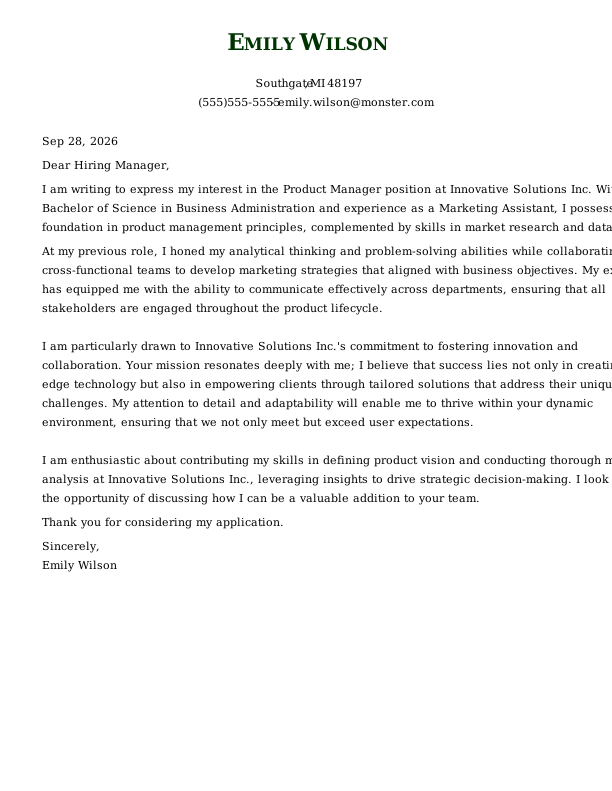
 Free
FreeProduct Manager Entry-Level Cover Letter
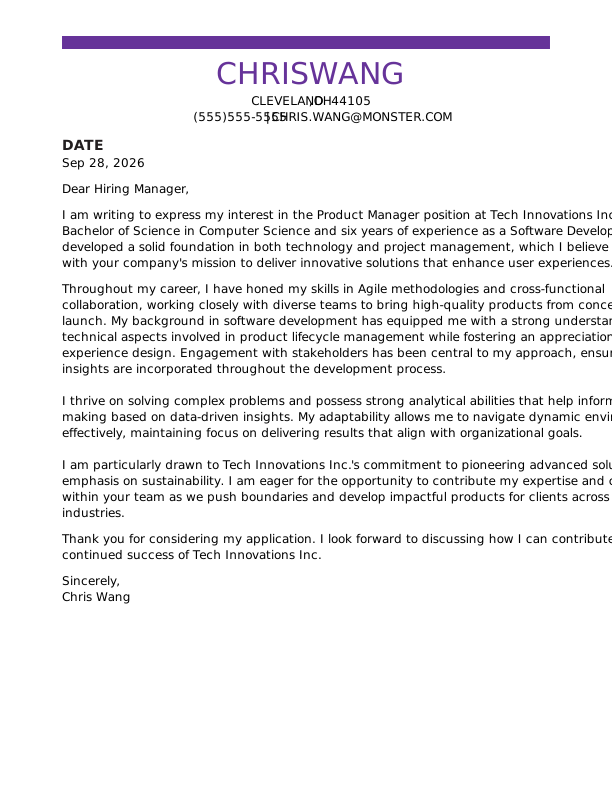
Product Manager Mid-Level Cover Letter
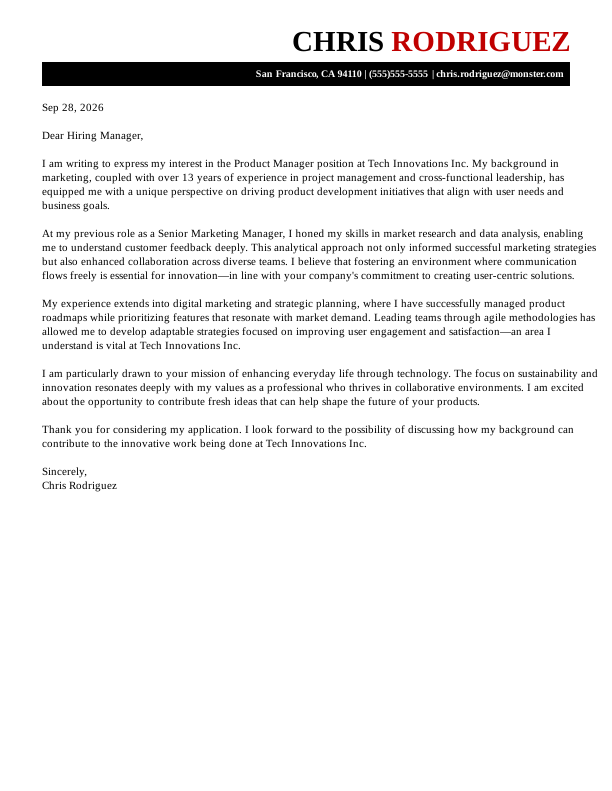
Product Manager Experienced Cover Letter
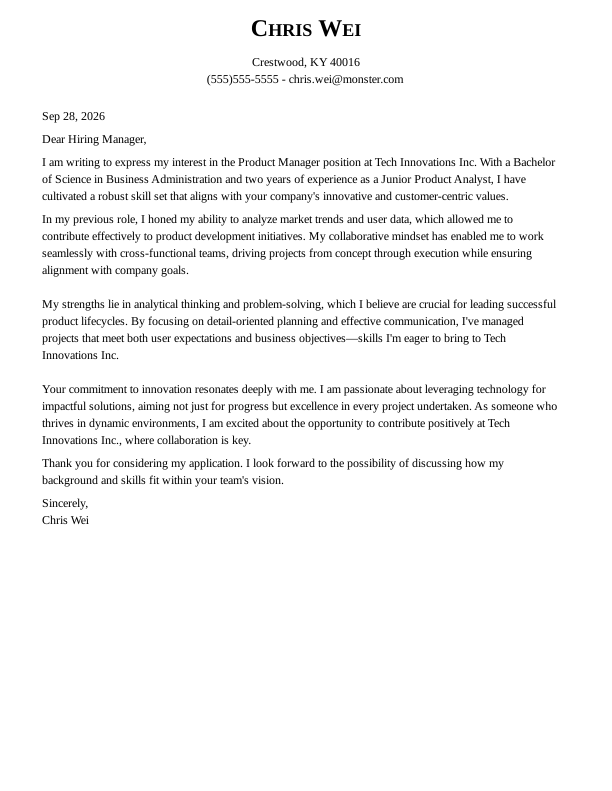
Product Manager Entry-Level Cover Letter
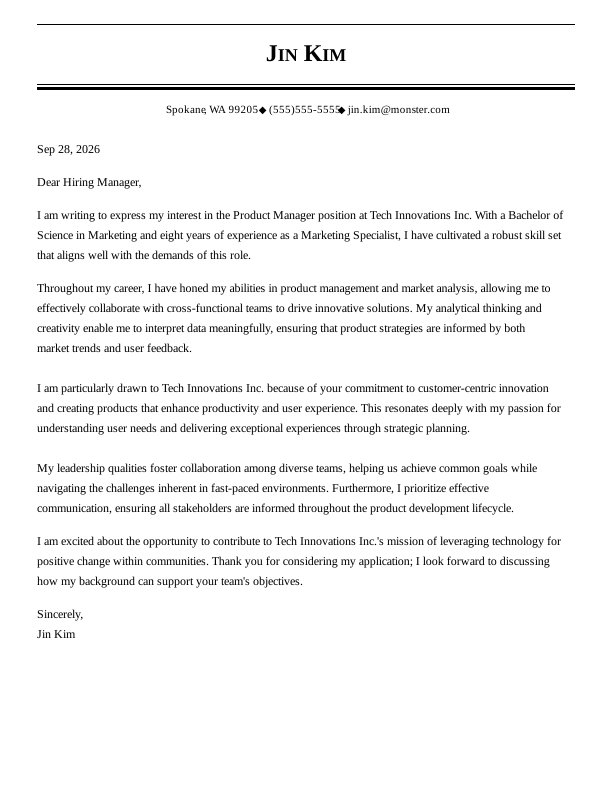
Product Manager Mid-Level Cover Letter
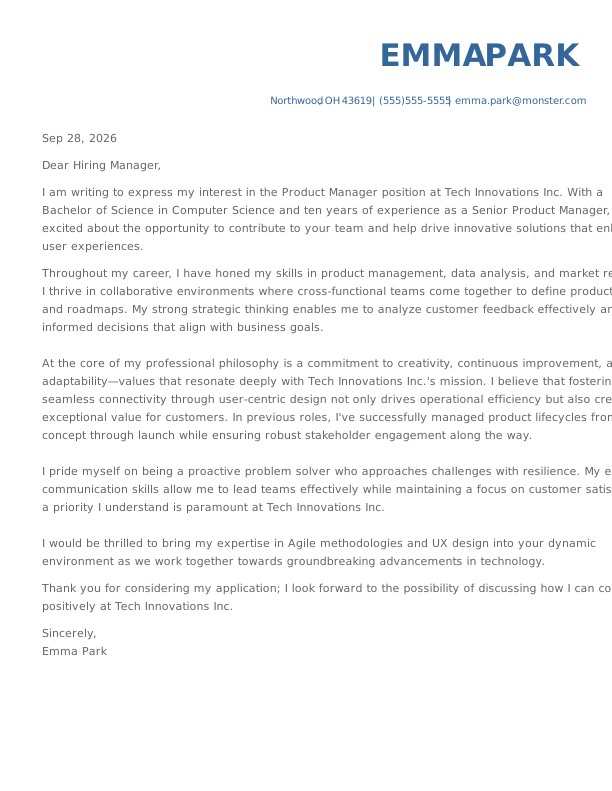
Product Manager Experienced Cover Letter
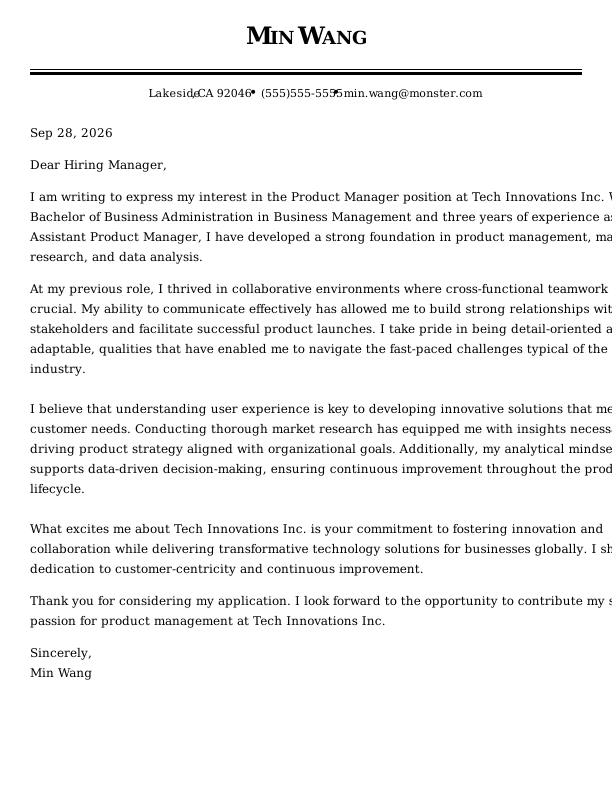
Product Manager Entry-Level Cover Letter
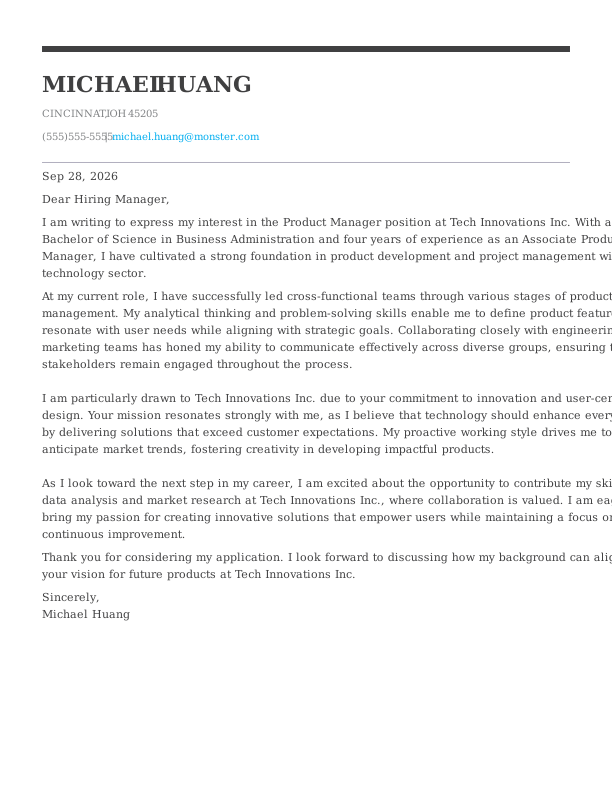
Product Manager Mid-Level Cover Letter
Browse Free Cover Letter Templates
- Academic
- Account Manager
- Accountant
- Accounts Payable
- Administrative Assistant
- Admissions Counselor
- Architecture
- Artist
- Assistant Principal
- Babysitter
- Barista
- Bartender
- Bookkeeper
- Brand Ambassador
- Business Analyst
- Business
- Caregiver
- Chef
- Civil Engineering
- Computer Science
- Construction
- Consulting
- Copywriter
- Cosmetology
- Custodian
- Customer Service
- Customer Service Representative
- Data Analyst
- Data Entry
- Dental Assistant
- Dental Hygienist
- Digital Marketing
- Electrical Engineering
- Emt
- Engineering
- Esthetician
- Event Coordinator
- Executive Assistant
- Finance
- Financial Analyst
- Firefighter
- Flight Attendant
- Graphic Designer
- Hair Stylist
- Healthcare
- Hr Generalist
- Investment Banking
- It
- Janitor
- Journalism
- Lab Technician
- Law Clerk
- Lawyer
- Librarian
- Logistics
- Makeup Artist
- Manager
- Marketing Coordinator
- Marketing
- Marketing Manager
- Massage Therapist
- Mechanic
- Mechanical Engineer
- Medical Assistant
- Non Profit
- Nursing
- Occupational Therapy
- Office Assistant
- Office Manager
- Operations Manager
- Paralegal
- Personal Trainer
- Pharmacist
- Pharmacy Technician
- Photographer
- Physician Assistant
- Pilot
- Police Officer
- Program Manager
- Project Manager
- Property Manager
- Psychology
- Receptionist
- Research Assistant
- Restaurant Manager
- Retail
- Sales
- Sales Manager
- School Counselor
- Security Officer
- Social Work
- Software Engineer
- Special Education Teacher
- Substitute Teacher
- Teacher
- Teaching Assistant
- Truck Driver
- Vet Tech
- Veterinary Assistant
- Web Developer
Cover Letter Examples for Product Managers
Cover letter expectations for a product manager shift as your career progresses, from learning how you gather customer input to owning strategy and cross-functional outcomes. Choose the template that matches your experience level so you can spotlight the right skills, training, and measurable work.
Entry-Level Product Manager Cover Letter
Perfect for recent grads and career changers, this entry-level template helps you highlight transferable skills like market research and cross-team communication to show you are ready for a product management role.
Mid-Career Product Manager Cover Letter
Designed for product managers with a few years of experience, this template shows how to highlight your ability to own feature roadmaps, partner with technical teams, and deliver reliable product updates.
Experienced Product Manager Cover Letter
Ideal for senior product leaders, this template focuses on driving long-term product strategy, guiding cross-functional teams through complex decisions, and delivering measurable business growth.
Product Manager Cover Letter Template (Text)
Copy this product manager cover letter text, paste it into your document, and swap in your roadmap wins and key metrics for the role you want.
Olivia Miller
Miami, FL 33103
(555)555-5555
olivia.miller@monster.com
Sep 28, 2026
Dear Hiring Manager,
I am writing to express my interest in the product manager position at Tech Innovators Inc. With a Bachelor of Science in Business Administration focused on Business Management and seven years of experience as an associate product manager, I have developed a strong foundation in product management that aligns with your company’s mission to drive innovation and enhance user experiences.
Throughout my career, I have honed my skills in product management, data analysis, and market research. My ability to collaborate effectively with cross-functional teams has allowed me to lead projects that resonate with both market needs and organizational goals. I thrive in dynamic environments where adaptability is key, ensuring that product roadmaps are not only strategic but also responsive to changing priorities.
I appreciate Tech Innovators Inc.’s commitment to sustainability and customer-centric solutions. My background includes gathering user feedback for continuous improvement, which resonates with your focus on creating meaningful impact within communities. Leveraging strong analytical skills alongside effective communication has enabled me to contribute positively to team collaborations while fostering innovative ideas.
The opportunity to join a forward-thinking organization like Tech Innovators Inc., where technology meets creativity for transformative outcomes, excites me greatly. I am eager to bring my problem-solving abilities and strategic mindset into this role while furthering the company’s objectives.
Thank you for considering my application. I look forward to the possibility of discussing how I can contribute positively as part of your team.
Sincerely,
Olivia Miller
How to Write a Product Manager Cover Letter
Writing a great cover letter means turning your past product work into clear proof of what you can achieve. You want to show how you handle real user feedback, work through design tradeoffs, and measure success. Follow these simple steps to build a cover letter that fits your experience and catches a recruiter’s eye.
1. Research & Prepare
Before typing a single word, take time to learn what the product team is trying to solve right now. Make note of the software, analytics tools, and team workflows mentioned in the job post so you can add this info to your letter.
Here are a few quick ways to gather useful details before you write:
- Check the job posting for specific analytics and planning software like Jira, GA4, or Amplitude.
- Read the company’s tech blog to see recent feature releases and how it solved user problems.
- Look over public company updates or investor slides to learn its main growth targets for the year.
2. Hook the Reader
Skip generic opening lines like “I am writing to apply for this job.” Instead, start with a quick snapshot that shows how you think like a product manager by focusing on a clear user problem you solved, a tool you used, or a positive result you delivered.
You can frame your opening line in a few different ways:
- Focus on results: “I reduced churn from 2.1x to 3.4x in one quarter by running weekly user reviews and testing new onboarding flows.”
- Focus on process: “On my last team, I turned feedback from 40 user interviews into a product prototype and launched it in six weeks.”
- Focus on tools: “I led a billing update that switched our app to usage-based pricing, cutting support tickets by 18% after we added automated checks.”
3. Tell Your Professional Story
Your resume lists your titles and dates, but your cover letter explains how you actually made decisions when faced with tough choices. Using specific numbers makes your story easy to visualize and proves your work made a real difference to the business.
Here are a few examples of how to highlight your impact with plain metrics:
- Cut customer drop-off by 9% in one quarter by fixing key onboarding issues and tracking user steps.
- Generated $1.2M in new yearly revenue after tweaking pricing pages based on simple A/B test results.
- Managed a team backlog of 120 tickets and reduced delivery time from 21 days down to 14 days.
4. Showcase Your Skills
Rather than simply listing skills, show how you used them to solve a problem. Take a key requirement from the job posting and describe a specific moment where you guided a project through confusion or brought people together to make a crucial call.
Consider these simple ways to explain core product skills in action:
- Writing requirements: “I wrote a clear project spec after customer support flagged user confusion, then walked the dev team through edge cases during planning.”
- Tracking data: “I set up tracking in GA4 to figure out why users left after an update, then helped the team agree on test goals before launching fixes.”
- Communicating with teams: “When support saw a surge in billing questions, I summarized the main issues for leadership and led a short meeting to map out fixes.”
5. Explain Any Special Circumstances
If you have an employment gap, a recent career shift, or a move to a new city, explain it simply in one or two clear sentences. Hiring teams want to know that your product skills are fresh and that you understand modern tools and methods.
These brief examples show how to address unique situations naturally:
- “After taking time off for caregiving, I kept my skills sharp by running user research and updating product templates in Jira for personal projects.”
- “I am moving from customer support into product management after leading successful internal experiments with A/B testing tools.”
- “Since relocating last fall, I have stayed active in product design by building Figma prototypes and running SQL checks for a contract team.”
6. End With a Professional Goodbye
Close your letter with a simple thank you and a polite suggestion for next steps. Keeping your sign-off brief ensures your message stays clear and professional without dragging on.
Wrap up your letter with a practical closing like this:
“I would welcome the opportunity to discuss how I can help prioritize your product roadmap using customer insights and clear metrics. Thank you for your time and consideration.”
Finish with a classic sign-off like “Sincerely” or “Best regards,” followed by your full name.
4 Tips for Formatting Your Cover Letter
A clean, easy-to-read layout is just as important as the words on the page. Hiring managers usually scan applications in just a few seconds, so clear formatting ensures they notice your best achievements right away. Good spacing, simple fonts, and consistent organization show that you value clear communication, which is a key trait for any product manager who needs to present ideas effectively to engineering, design, and executive teams.

Address the Hiring Manager Directly
Take a moment to search the job posting, team page, or LinkedIn to find the name of the product director or recruiter hiring for the role. Addressing them by name shows genuine effort. If you cannot find a specific name, use “Dear Hiring Manager” or “To the Product Hiring Team” instead of outdated options like “To Whom It May Concern.”

Match Your Header to Your Resume
Keep your contact details, header layout, and font style identical across both your cover letter and your resume. Using the same visual style helps the hiring manager quickly connect both documents and presents a clean, professional application package from top to bottom.

Use Bullet Points for Key Achievements
Break up dense paragraphs by using three or four bullet points to highlight your biggest product wins, like conversion boosts, retention growth, or on-time feature launches. Bullets make it easy for a reader to skim your top results and grasp your overall impact in seconds.

Save & Send as a PDF
Always export your completed cover letter as a PDF file before submitting it. A PDF keeps your fonts, margins, and spacing intact across different computers and applicant tracking systems. Save the file using a simple naming convention like Firstname_Lastname_Cover_Letter.pdf.
Key Takeaways
- Focus on how you use customer feedback and data to make smart product choices and guide feature roadmaps.
- Include clear, simple metrics like churn reduction or conversion gains to prove the actual impact of your work.
- Tailor your letter to match the specific product type, whether that means focusing on enterprise sales cycles, app engagement, or internal team tools.
More Cover Letter Examples
Browse Monster’s Resume Templates
Monster also has hundreds of ATS-friendly resume templates for all career levels and industries. Create a matching resume to help you land the interview.
- Ai Consultant
- Android Developer
- Blockchain Developer
- Cloud Engineer
- Computer Engineering
- Computer Programmer
- Computer Science Internship
- Devops Engineer
- Devops
- Embedded Software Engineer
- Front-End Developer
- Full Stack Developer
- Game Developer
- Ios Developer
- Java Developer
- Machine Learning
- Power Bi Developer
- Product Management
- Project Engineer
- Prompt Engineer
- Python Developer
- React Developer
- React Native Developer
- Release Manager
- Rpa Developer
- Salesforce Developer
- Scrum Master
- Sdet
- Servicenow Developer
- Software Developer
- Software Engineer
- Software Tester
- Solution Architect
- Sql Developer
- Ux Designer
- Ux Researcher
- Web Developer
Frequently Asked Questions
Last Update:
Do I really need a cover letter?
Yes, writing a cover letter is a great idea for product manager roles, even when listed as optional. It lets you explain how you make decisions, solve user problems, and learn from past launches in ways a standard resume cannot. It also gives you space to explain a career change, address an employment gap, or show personal interest in what the company is building.
How long should my cover letter be?
Keep your product manager cover letter to a single page, ideally between 250 and 400 words. Hiring teams review many applications quickly, so keeping your writing brief helps your main points stand out. Focus on three to four short paragraphs that highlight your most relevant projects and explain the clear value you bring to the team.
Should my cover letter match my resume?
Yes, your cover letter should match your resume’s visual design to create a cohesive application. Use the same font, header style, and colors on both documents. While the look should match, the content should complement your resume rather than repeat it, giving you space to dive deeper into one or two key achievements that fit the target job.
Can I use AI to write my cover letter?
You can use AI to outline your thoughts or fix writer’s block, but you should always rewrite the text in your own voice. Hiring managers can spot generic AI phrasing quickly. Make sure to add specific personal details, like a roadmap decision you made or a metric you improved, so your letter feels authentic and credible.
Should I mention salary expectations in my cover letter?
Only mention salary if the job posting explicitly asks for it. If required, provide a flexible, researched pay range based on local market rates and the scope of the role. Briefly state that you are open to discussing total compensation, including benefits and performance incentives, during the interview process.

Megan Dawkins is a career industry editor who empowers job seekers to take control of their career paths using Monster’s comprehensive job search and resume tools. She specializes in helping job seekers navigate the flexible job market.
See More From Megan DawkinsExplore Related Career Advice






How to Write a Cover Letter for Internal Positions or Promotions (Examples & Tips)

Updated:
Apr 23, 2026
|
19 min read


Cover Letter vs Resume: What’s the Difference & Do You Need Both?

Updated:
Apr 23, 2026
|
18 min read