
Free Agriculture Resume Templates & Examples
Boost your chances of landing interviews with expertly crafted agriculture resume templates. These free resume templates come with valuable writing tips that will help you create a standout resume or CV, showcasing your qualifications to potential employers.
Real-World Resumes That Get Results
 Free
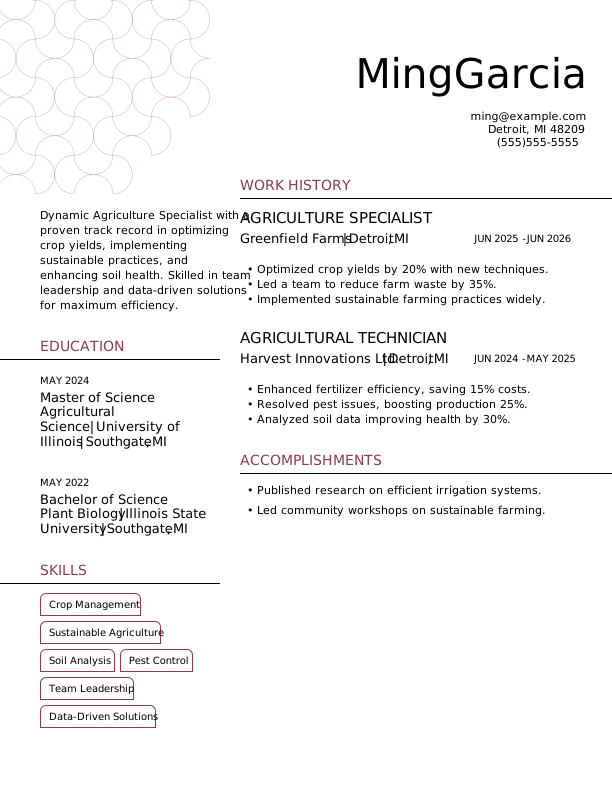
FreeAgriculture Entry-Level Resume
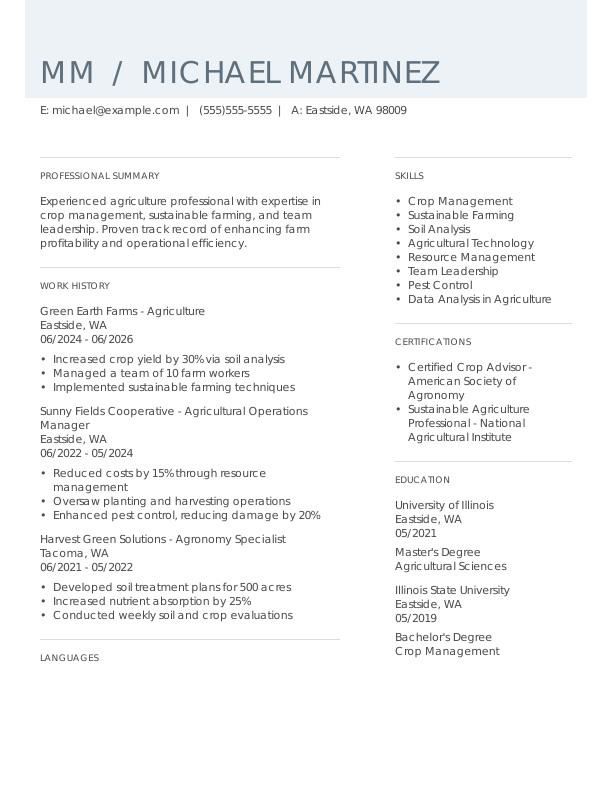
Agriculture Mid-Level Resume
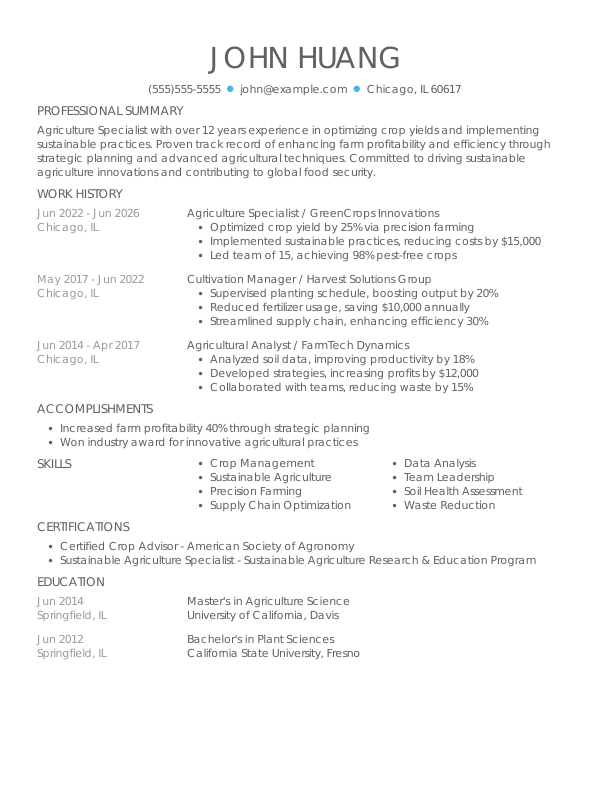
Agriculture Experienced Resume
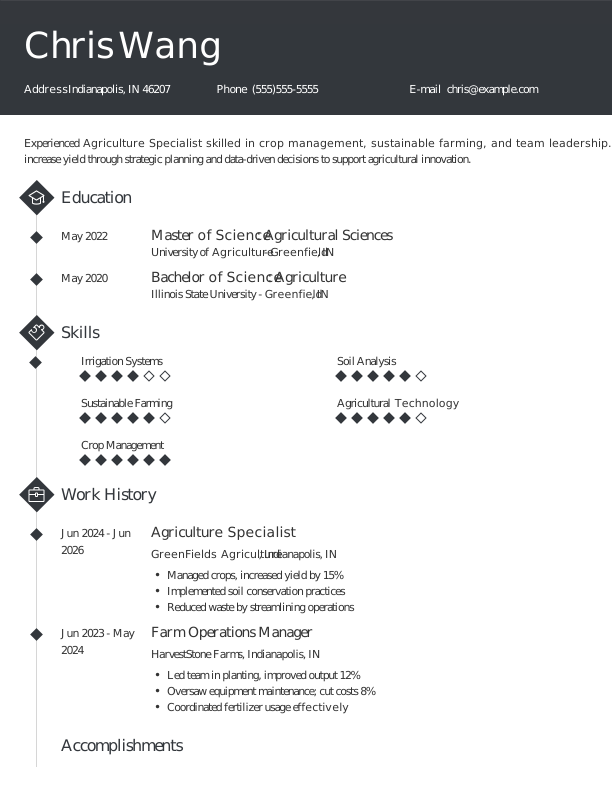

Agriculture Modern Resume
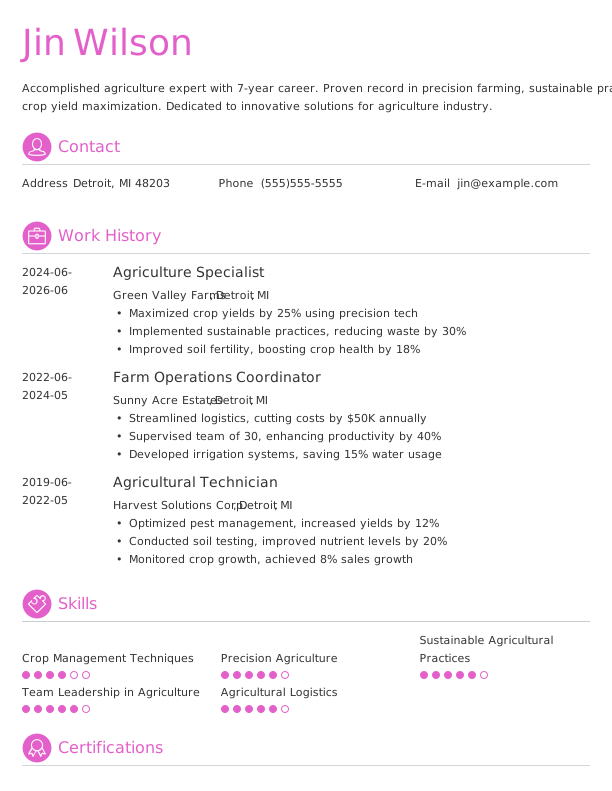

Agriculture Creative Resume
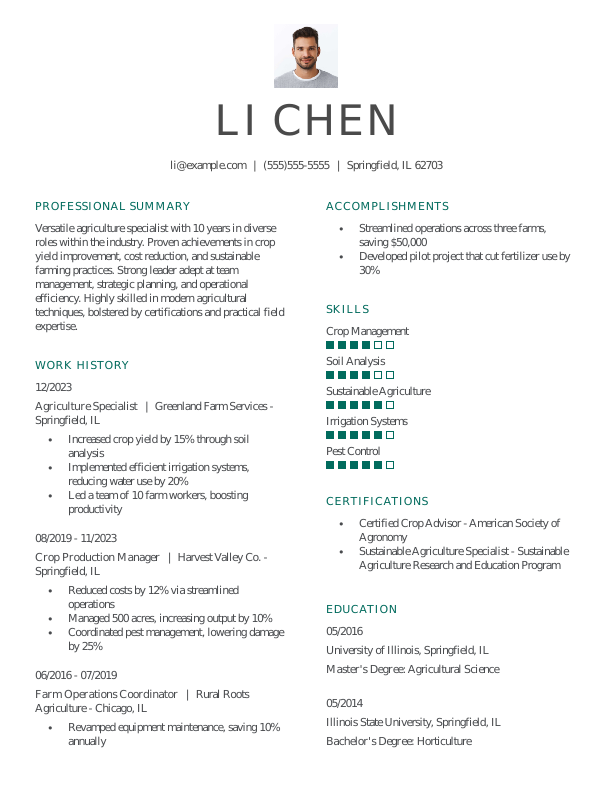

Agriculture Traditional Resume
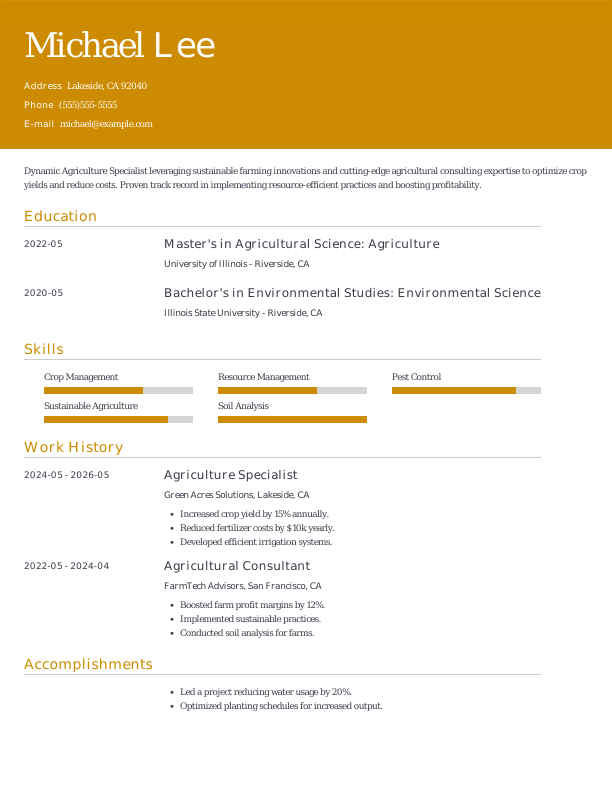
Agriculture Simple CV Example
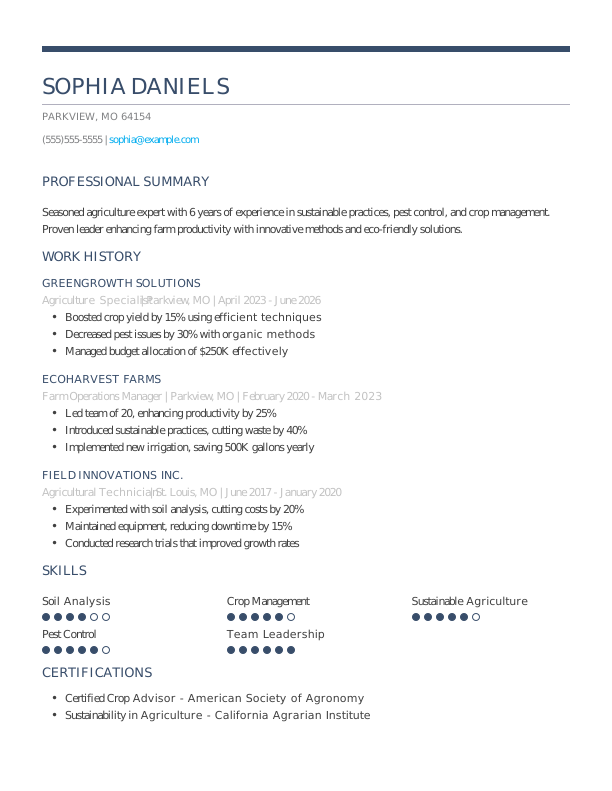

Agriculture CV Format
Browse Free Resume Templates
- Accounts Payable
- Adjunct Professor
- Artist
- Auto Mechanic
- Baker
- Business Development Manager
- Business
- Certified Nursing Assistant
- Classic & Traditional
- Cleaner
- College Student
- Concierge
- Construction Worker
- Corporate
- Creative & Unique
- Custodian
- Customer Service
- Dental Assistant
- Direct Support Professional
- Entry-Level
- Flight Attendant
- Hospitality & Food Service
- Front Desk Receptionist
- Healthcare
- High School
- Housekeeping
- Hvac Technician
- Hybrid
- Inventory Manager
- Logistics
- Maintenance
- Management
- Modern
- Mortgage Loan Processor
- Pet Sitter
- Phlebotomist
- Production
- Rbt
- Restaurant Server
- Sales
- Security Services
- Simple & Basic
- Social Work
- Teacher
- Technology
Resume Examples for Agriculture
Resumes and CVs in agriculture vary significantly based on experience level, from entry-level roles to seasoned professionals. Explore what to include at each stage and use our Resume Builder to create your own tailored document.
Entry-Level Agriculture Resume
Ideal for recent graduates, this resume with no experience template is also beneficial for individuals transitioning into agriculture from other sectors.

Mid-Career Agriculture Resume
A good fit for agriculture professionals with a few years of experience, this template highlights recent achievements and supports advancement into management or specialized agronomy roles.
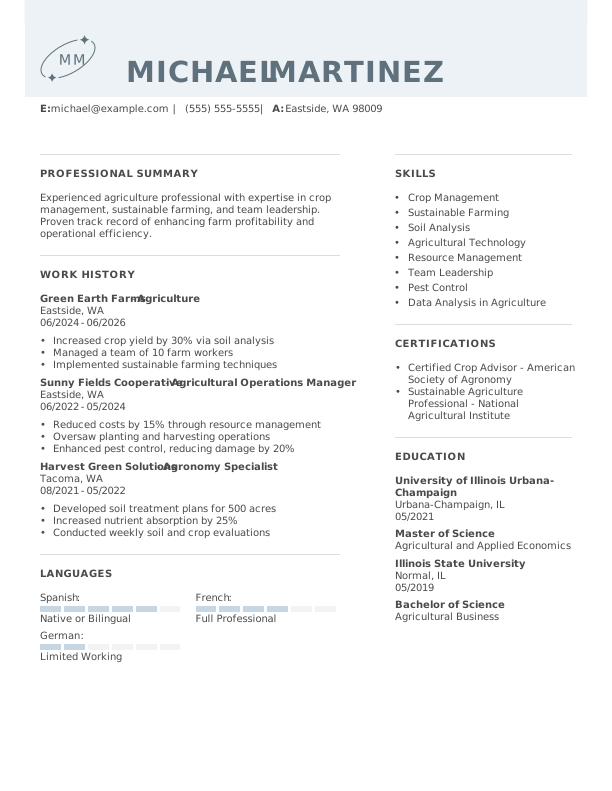
Experienced Agriculture Resume
A perfect fit for senior agricultural professionals, this template supports those with over 10 years of experience aiming for leadership and advanced positions in the sector.

Agriculture Resume Template (Text)
Take this customizable text format of an agriculture resume to copy, modify, and adjust directly in your document.
Hiro Park
Silverlake, WA 98292
Professional Summary
Experienced Agriculture Specialist with 8+ years of expertise in sustainable farming, crop management, and team leadership. Increased productivity by 35% using innovative techniques and data-driven decisions. Adept at optimizing resources and implementing cost-effective strategies, ensuring high ROI and environmental conservation.
Work Experience
June 2022 – June 2026
Harvest Horizon Co. – Silverlake, WA
Agriculture Specialist
- Boosted crop yield by 25% through advanced farming techniques.
- Streamlined irrigation, saving 10% on water consumption annually.
- Managed $1.5M annual budget for agricultural operations.
June 2018 – May 2022
Green Valley Farms – Silverlake, WA
Farm Operations Manager
- Increased crop rotation efficiency by 30% through planning.
- Supervised a team of 15 workers for daily farm activities.
- Reduced operating costs by $50,000 via sustainable practices.
June 2016 – May 2018
AgriLand Solutions – Eastside, WA
Agricultural Field Technician
- Conducted soil testing, improving nutrient profiles by 20%.
- Implemented pest control plans, reducing infestations by 15%.
- Maintained $500K worth of equipment for optimal operations.
Education
May 2016
University of Illinois Champaign, IL
Master’s Degree Agricultural Science
May 2014
Iowa State University Ames, IA
Bachelor’s Degree Agricultural Economics
Certifications
- Certified Crop Advisor – American Society of Agronomy
- Advanced Agricultural Irrigation – National Agriculture Institute
Skills
- Crop Management
- Sustainable Farming
- Soil Analysis
- Pest Control Optimization
- Budget Management
- Team Leadership
- Irrigation Systems
- Data-Driven Decision Making
How to Write an Agriculture Resume
In agriculture, knowing how to write a resume is essential for showcasing your skills and experience in farming, agronomy, or related fields with a clear format. Use the guidance below to emphasize your strengths and tailor your resume for the specific positions you’re aiming for.
1. Contact Info
Your contact information should be clear, professional, and easy to find at the top of your resume.
Make sure to include:
- Full name
- Phone number
- Professional email address
- City and state (ZIP code is optional)
- LinkedIn profile or personal portfolio (if relevant)
 PRO TIP
Skip including sensitive personal information such as your Social Security number, full address, or any details about your family unless the employer specifically requests it.
2. Resume Profile
A resume profile is a brief introductory section, typically consisting of two to four sentences. Its main purpose is to serve as an engaging pitch to hiring managers, highlighting your key qualifications and encouraging them to dig deeper into your application.
This profile is located at the top of your resume and can be formatted as either a summary or an objective. Each format serves distinct purposes, allowing you to tailor your approach based on what best represents your experience:
- A resume summary showcases your relevant skills, experience, and achievements, emphasizing how they align with agricultural practices and goals. This format is particularly beneficial for those with prior work experience or transferable skills who wish to demonstrate their contributions to the agriculture field.
- A resume objective highlights your future aspirations and details what you aim to achieve in your career. This approach is especially helpful for recent graduates, people transitioning into new fields, or those with limited experience, such as aspiring farm managers or new agricultural technology specialists.
Let’s take a look at an example of each to see how a resume summary and a resume objective differ:
Agriculture resume summary example:
Dedicated agricultural professional with over 6 years of experience in crop management and sustainable farming practices. Proficient in precision agriculture, soil health assessment, and pest management strategies. Acknowledged for improving yield efficiency and promoting environmentally-friendly practices that contribute to community sustainability.
Agriculture resume objective example:
Recent agriculture graduate excited to launch a career in sustainable farming practices. Committed to environmental stewardship and eager to contribute strong analytical skills and teamwork abilities to an innovative agricultural organization or community farm setting.
3. Work Experience
The work experience on your resume is a critical asset in showcasing your expertise in agriculture. Employers evaluate your job history to understand not just the roles you’ve held, but also the tangible contributions you’ve made to improve agricultural practices.
Your background illustrates how your hands-on experience and knowledge of sustainable farming techniques qualify you for the position.
The work experience section should contain:
- Job title
- Employer name and location
- Dates of employment (month/year)
- 3–5 bullet points describing your relevant responsibilities and achievements
Tailor your content to reflect the specific agriculture role you’re targeting. Begin each bullet point with an action verb (like “Cultivated,” “Harvested,” “Implemented”) to create a strong statement that highlights your contributions.
Incorporate measurable data and metrics whenever possible. Specific numbers and percentages provide compelling evidence of your agricultural achievements and help set you apart from other job seekers.
In general, consider following the format of:
[action verb] + [responsibility] = [result/achievement]
For example:
Managed a 100-acre farm producing 200 tons of organic vegetables annually while maintaining sustainable farming practices and reducing water usage by 30%.
Note that you can also flip the result/achievement with the responsibility:
Increased crop yield by 25% through the implementation of precision agriculture techniques and soil health monitoring.
With these techniques in mind, your resume bullets may look something like:
- Implemented crop rotation strategies across 150 acres, increasing yield by 20% over two seasons.
- Conducted soil health assessments for 50+ farms, improving nutrient management and reducing input costs by 15%.
- Collaborated with local farmers to develop sustainable practices, improving community engagement and resource sharing.
- Used precision agriculture tools to monitor field conditions, optimizing irrigation schedules and reducing water usage by 25%.
- Led workshops on organic farming techniques, educating over 100 participants and fostering knowledge exchange.
4. Skills
The skills section offers a concise overview of abilities relevant to agriculture. This allows hiring managers to quickly evaluate qualifications relevant to the field. Skills can be categorized into three distinct groups:
- Soft skills are personal qualities that shape how well individuals collaborate in agriculture.
- Hard skills are specific, measurable abilities developed through education, training, or hands-on experience.
- Technical skills are the practical abilities needed to perform specific tasks within a profession.
5 Soft Skills for Your Resume or CV
- Team leadership
- Effective communication
- Strategic planning
- Conflict resolution
- Time management
5 Hard Skills for Your Resume or CV
- Crop management techniques
- Precision agriculture tools (Drones, GPS)
- Irrigation system design
- Soil health assessment
- Pest control strategies (integrated pest management)
In general, aim to include a diverse range of relevant skills that align with the job requirements to demonstrate your overall expertise in the field.
PRO TIP
If you’re a newer agriculture professional, consider placing your skills section higher on your resume, right after your summary. For those with more experience, it’s better to position this section lower and weave relevant skills into your work history for a cohesive narrative.
5. Education
Understanding how to list education on your resume is important for showcasing your qualifications. Begin with your most recent or relevant agricultural degree, clearly stating the degree type and the institution’s name.
If you have recently graduated, consider including your graduation year, GPA (if it’s 3.5 or higher), any honors received, and relevant coursework to strengthen your profile.
Agriculture resume education section example:
Bachelor of Science in Agriculture (BSA)
University of California, Davis, Davis, CA
Graduated: 2024 | Cum Laude
PRO TIP
If you’re advancing from an Associate Degree in Agriculture to a Bachelor of Science in Agriculture, or have earned another relevant degree, list both in reverse-chronological order.
6. Certifications
Listing certifications on your resume can bridge the gap between your academic background and practical skills, especially when experience is limited. Although not always included in traditional resumes, this section is valuable for most agriculture professionals. Employers often require specific credentials for specialized roles such as sustainable farming or agribusiness management.
Include only relevant certifications that strengthen your application, ensuring they are current and clearly listed. Regularly updating and formatting them properly improves clarity for potential employers.
Agriculture certification examples:
- Certified Crop Advisor (CCA) | American Society of Agronomy | Expires: 01/2028
- Pesticide Applicator License | State Department of Agriculture | Expires: 06/2027
- Organic Farm Certification | USDA | Expires: 09/2028
- Farm Management Certificate | National Farm Bureau Federation | Expires: 03/2027
Start Building Your Job-Winning Resume
Use Your Existing Resume
Import your current resume to transfer your information to one of our professional templates.
Create a New Resume
Start fresh with a template that catches your eye and follow the prompts to add your details.
Tailor Your Work History to Beat the ATS
Your work experience is more than a list of job titles. It’s an opportunity to showcase the measurable impact you’ve made in agriculture, whether through crop yields, sustainable practices, or innovative farming techniques. By taking this approach, you create an ATS-friendly resume that applicant tracking systems (ATS) can easily scan.
To create an effective work history, tailor it to the specific agricultural role you’re seeking by using relevant keywords and terminology. Begin by analyzing the job description closely. Identify frequently mentioned skills, technologies, or agricultural practices and incorporate those elements into your experience descriptions when possible.
Key Takeaways
- Tailor your resume to the job description. Use specific terms from the industry to describe your experience and skills for both ATS and human reviewers.
- Highlight measurable achievements that demonstrate your contributions. Quantify your work (e.g., crop yields, sustainability projects, efficiency improvements) to make a strong impression.
- Select the appropriate format based on your experience level. Recent graduates might opt for a functional or hybrid format, while seasoned professionals often prefer reverse-chronological resumes.
More Resume & CV Examples
- Air Sealing Technician
- Aircraft Mechanic
- Automotive Technician
- Banquet Server
- Bar Manager
- Barback
- Barber
- Barista
- Bartender
- Boilermaker
- Budtender
- Busser
- Cable Technician
- Cake Decorator
- Carpenter
- Carpentry
- Catering
- Chef
- Cook
- Cosmetologist
- Crane Operator
- Diesel Mechanic
- Diesel Technician
- Dietary Aide
- Dishwasher
- Electrician
- Executive Chef
- Fast Food
- Fine Dining Server
- Food And Beverage Director
- Food And Beverage Manager
- Food Runner
- Glazier
- Hair Stylist
- Handyman
- Hostess
- Hvac Installer
- Industrial Electrician
- Ironworker
- Journeyman Electrician
- Kitchen Manager
- Landscaper
- Line Cook
- Lineman
- Machinist
- McDonald's
- Meat Cutter
- Millwright
- Painter
- Pastry Chef
- Pipe Fitter
- Plumber
- Prep Cook
- Private Chef
- Restaurant General Manager
- Restaurant Manager
- Restaurant
- Roofer
- Shift Leader
- Solar Installer
- Sommelier
- Sous Chef
- Starbucks
- Structural Welder
- Waiter
- Waitress
- Welder
- Equipment Operator
Frequently Asked Questions
Last Update:
What resume format should I use for my agriculture resume?
There are three main resume formats to consider when applying for positions in agriculture. Your choice should reflect your experience level and highlight the skills or achievements you wish to emphasize:
- Chronological: The most popular format, a chronological resume highlights your work experience in agriculture, detailing responsibilities and achievements. This makes it an excellent choice for applicants with a consistent job history that reinforces their qualifications and demonstrates their growth in the field.
- Functional: Also known as a skills-based resume, the functional format emphasizes a qualifications summary and an expanded skills section to showcase your agricultural expertise. By minimizing focus on work history, it’s particularly helpful for job seekers without relevant experience or those transitioning into agriculture from other fields.
- Combination: A combination resume integrates elements of chronological and functional formats, showcasing both skills and work experience. This approach benefits agriculture professionals by allowing them to highlight their relevant abilities alongside their career development, making it ideal for those advancing or specializing in the field.
Should I include a cover letter with my resume?
Yes, you should include a cover letter with your agriculture job application. A thoughtfully crafted cover letter not only highlights your passion for the field but also allows you to showcase relevant skills and experiences that might not be immediately visible in your resume. This personal touch can set you apart from other applicants who may choose to forgo this important aspect of the application process.
If you’re feeling hesitant about writing a cover letter, don’t worry—there are numerous resources available to assist you. You can find guides on how to write an effective cover letter, as well as examples tailored for agricultural roles. Exploring various formats can also help you identify which style best suits your background and the specific job you’re targeting.
To simplify the process, consider using a cover letter generator to quickly create a polished document that aligns with your job application needs by offering templates and suggestions based on your experience level and desired position.
How long should an agriculture resume be?
For professionals with less than 10 years of experience, it’s best to keep your resume to a single page. Focus on essential skills, relevant education, and any internships or entry-level roles that showcase your qualifications. This concise format allows you to present the most relevant information without overwhelming potential employers.
If you have over 10 years of experience or specialize in a niche area, a two-page resume is acceptable. Ensure every detail supports your candidacy by emphasizing leadership roles, certifications, and significant accomplishments. Keep the content targeted and strong for maximum effectiveness.
Should I include volunteer work or internships in agriculture?
Yes, especially if you’re new to the field. Including volunteer experiences and internships demonstrates your hands-on skills in agricultural practices and showcases your commitment to the industry, which can be important when formal employment opportunities are limited.

Vicki Salemi is a nationally recognized career expert who helps professionals navigate the hiring landscape and find the right fit on Monster. With over 15 years of experience in corporate recruiting and HR, she offers expert guidance on job search strategies, interview preparation, and career development to help candidates land their next role.
See More From Vicki SalemiExplore Related Career Advice


How to Put Transferable Skills on Your Resume: 120 Skills, Examples, & Tips

Updated:
Aug 27, 2026
|

16 min read


How to Write a Functional Resume (Formatting Tips, Template, & Examples)
Updated:
Aug 7, 2026
|
17 min read


Functional vs Chronological Resume: Which Format Is Right for You?
Updated:
Aug 3, 2026
|
16 min read

100+ Resume Adjectives to Help You Write a Stronger Resume in 2026 (With Examples)
Updated:
Jul 30, 2026
|
12 min read