
Free Restaurant Manager Resume Templates & Examples
A restaurant manager resume needs to balance operational skills like inventory and scheduling with leadership and guest satisfaction. Choose a template below that covers both the business and hospitality sides of the role.
Real-World Resumes That Get Results
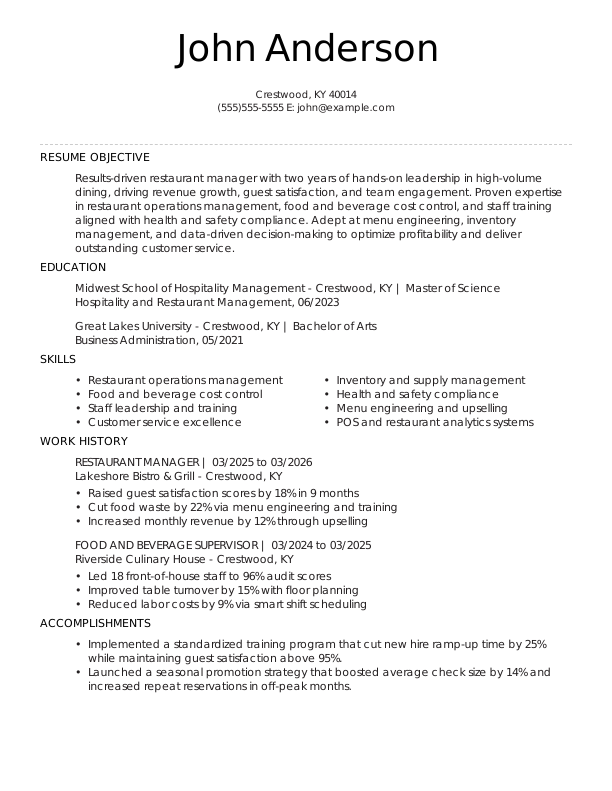
 Free
FreeRestaurant Manager Entry-Level Resume
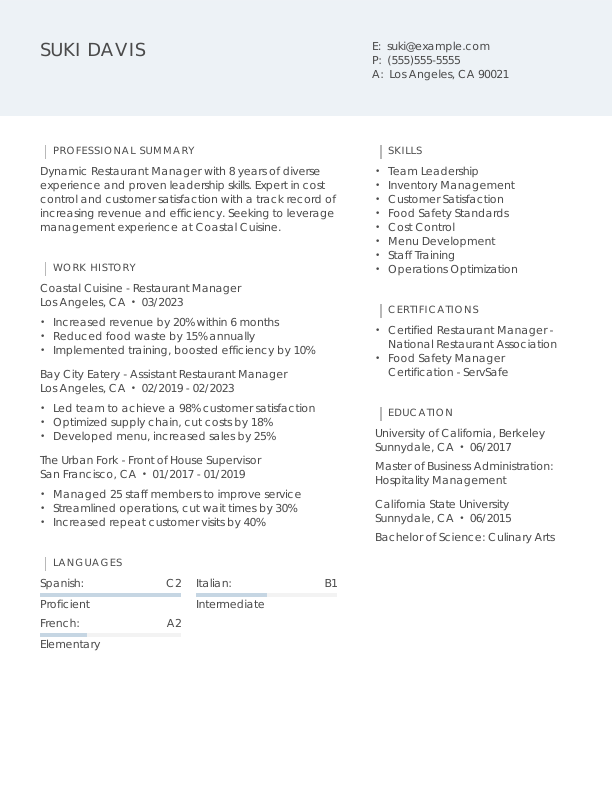
Restaurant Manager Mid-Level Resume
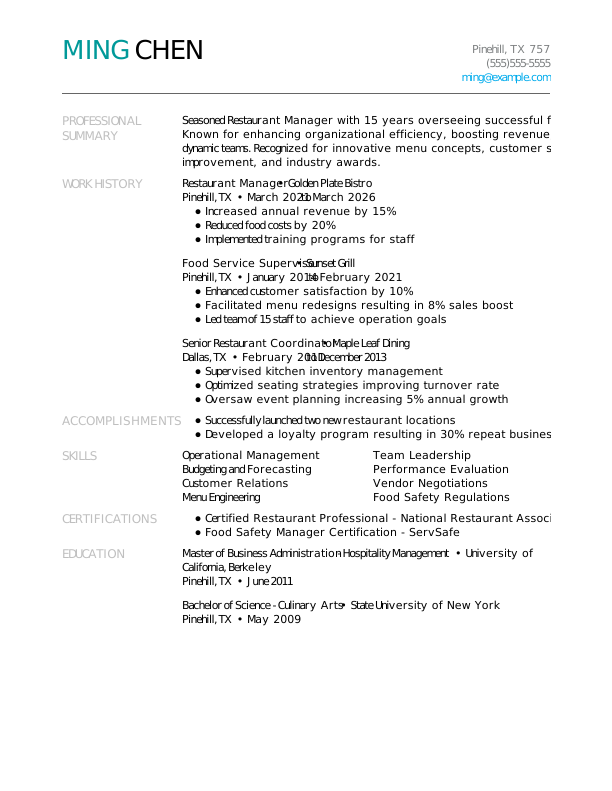
Restaurant Manager Experienced Resume
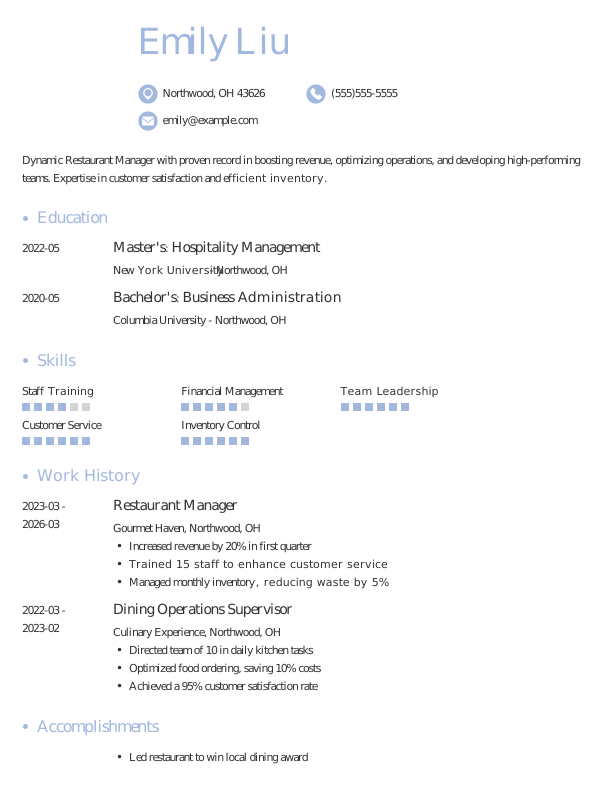

Restaurant Manager Entry-Level Resume 1
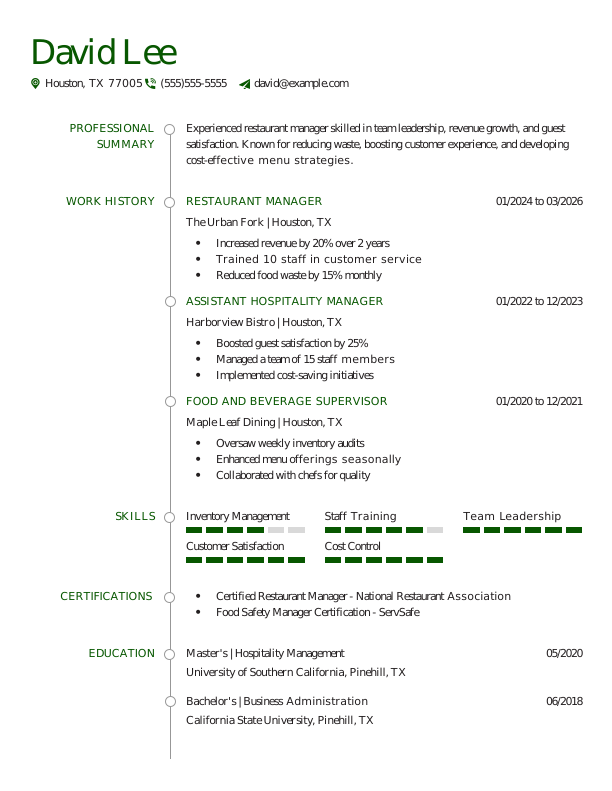

Restaurant Manager Mid-Level Resume 1
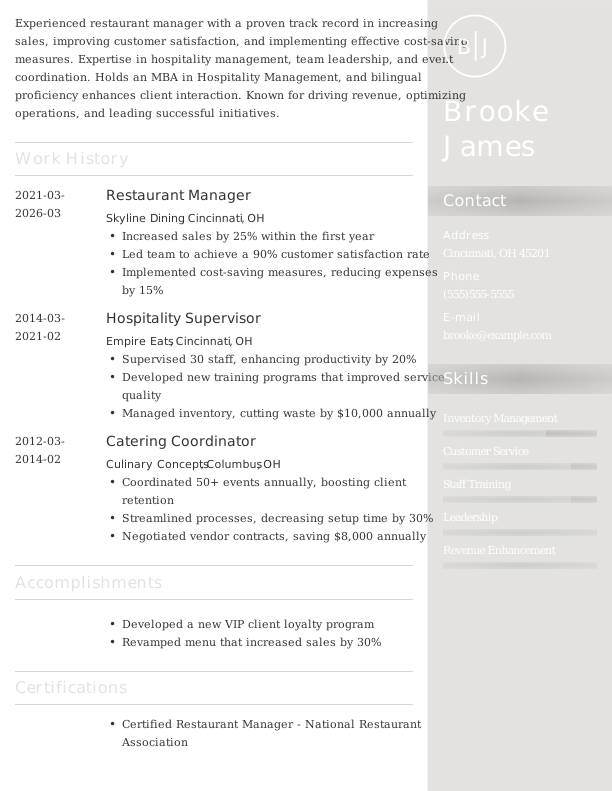

Restaurant Manager Experienced Resume 1
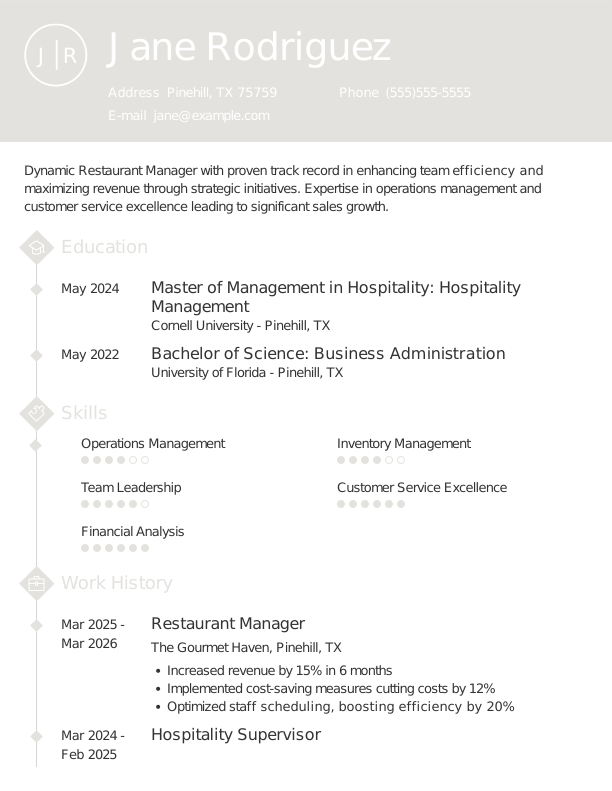

Restaurant Manager Entry-Level Resume 2
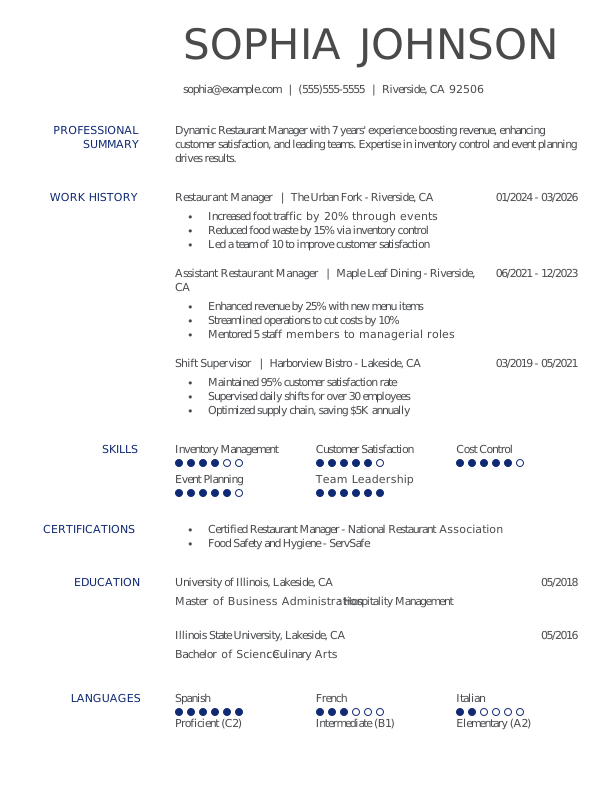
Restaurant Manager Mid-Level Resume 2
Browse Free Resume Templates
- Accounts Payable
- Adjunct Professor
- Artist
- Auto Mechanic
- Baker
- Business Development Manager
- Business
- Certified Nursing Assistant
- Classic & Traditional
- Cleaner
- College Student
- Concierge
- Construction Worker
- Corporate
- Creative & Unique
- Custodian
- Customer Service
- Dental Assistant
- Direct Support Professional
- Entry-Level
- Flight Attendant
- Hospitality & Food Service
- Front Desk Receptionist
- Healthcare
- High School
- Housekeeping
- Hvac Technician
- Hybrid
- Inventory Manager
- Logistics
- Maintenance
- Management
- Modern
- Mortgage Loan Processor
- Pet Sitter
- Phlebotomist
- Production
- Rbt
- Sales
- Security Services
- Restaurant Server
- Simple & Basic
- Social Work
- Teacher
- Technology
Resume Examples for Restaurant Managers
Restaurant manager resumes should reflect your ability to handle staffing, inventory, and guest satisfaction simultaneously. Explore our templates to find one that covers the full scope of your management experience.
Entry-Level Restaurant Manager Resume
Ideal for those promoted from a server or shift lead position, this template helps you create a restaurant manager resume by emphasizing your informal leadership, inventory involvement, and guest satisfaction contributions.

Mid-Career Restaurant Manager Resume
A smart choice for restaurant professionals aiming to elevate their careers, this template showcases relevant experience and achievements to attract potential employers in specialized management roles.

Experienced Restaurant Manager Resume
An ideal choice for restaurant professionals with over 10 years of experience, this template supports applicants pursuing senior management or leadership roles in the hospitality industry.

Restaurant Manager Resume Template (Text)
Here is a ready-to-use text version of a restaurant manager resume. Copy and customize it with your own management results. For more hospitality formats, explore our resume template library.
Jane Williams
San Diego, CA 92115
Professional Summary
Dynamic Restaurant Manager with 5 years in increasing sales and enhancing guest experiences in competitive metropolitan settings. Adept in team leadership, strategic planning, and customer relationship management.
Work Experience
April 2024 – March 2026
Urban Cuisine Co. – San Diego, CA
Restaurant Manager
- Increased revenue by 20% through strategic planning.
- Implemented cost-saving measures, reducing expenses by 15%.
- Enhanced customer satisfaction, raising review scores by 25%.
March 2022 – March 2024
Harborview Bistro – San Diego, CA
Hospitality Supervisor
- Reduced staff turnover by 30% via effective training.
- Boosted menu sales by 12% through targeted promotions.
- Streamlined operations, cutting order times by 10%.
March 2021 – February 2022
Maple Leaf Dining – San Diego, CA
Food Service Coordinator
- Expanded customer base by 15% in peak season.
- Optimized vendor contracts saving 5% on procurement.
- Developed seasonal promotions, increasing traffic by 8%.
Education
June 2020
University of California, Berkeley Berkeley, CA
Master’s Degree Hospitality Management
June 2018
University of California, Los Angeles Los Angeles, CA
Bachelor’s Degree Business Administration
Certifications
- Certified Restaurant Manager – National Restaurant Association
- Food Safety Manager Certification – ServSafe
Skills
- Leadership and Team Management
- Menu Planning and Design
- Budgeting and Financial Analysis
- Customer Relationship Management
- Operational Efficiency
- Staff Training and Development
- Inventory Control
- Sales and Marketing Strategies
How to Write a Restaurant Manager Resume
As a restaurant manager, writing a resume involves mixing your leadership skills and industry experience with a clear format that showcases your qualifications. Use the guidance below to emphasize your strengths and tailor your resume to align with the specific roles you’re targeting.
1. Contact Info
Your contact information should be clearly displayed and professionally formatted at the top of your resume.
Include the following essential information:
- Full name
- Phone number
- Professional email address
- City and state (ZIP code is optional)
- LinkedIn profile or relevant portfolio (if applicable)
 PRO TIP
Avoid including personal information such as your Social Security number, age, or unrelated hobbies on your resume unless an employer specifically requests it.
2. Resume Profile
A resume profile is a concise paragraph of two to four sentences designed to summarize your professional identity and key qualifications. It serves as a compelling pitch to hiring managers, capturing their interest and prompting them to explore your resume further.
Typically positioned at the top of your resume, the profile can be structured as either a summary or an objective. Each format has its own focus, catering to different job-seeking strategies:
- A resume summary highlights essential experience, skills, and accomplishments relevant to the restaurant industry. This approach works well for applicants with a background in leadership or transferable abilities looking to demonstrate their impact as a capable restaurant manager.
- A resume objective highlights your future aspirations and outlines what you aim to accomplish in your career. This approach is ideal for recent graduates, individuals shifting careers, or those with limited experience, such as hospitality interns or professionals moving into restaurant management.
Let’s explore examples of a resume summary and a resume objective to understand their distinct purposes:
Restaurant manager resume summary example:
Results-driven restaurant manager with 6+ years leading high-volume casual dining and fine dining establishments. Expertise in team leadership, inventory management, and customer service excellence. Known for boosting operational efficiency and consistently improving guest satisfaction scores.
Restaurant manager resume objective example:
Recent graduate with a degree in hospitality management excited to launch a career in the restaurant industry. Committed to delivering exceptional customer service and fostering team collaboration, aiming to contribute these skills to a vibrant dining establishment or upscale restaurant setting.
3. Work Experience
The work experience on your resume is important for showcasing your qualifications. Employers evaluate not only titles and responsibilities but also the tangible contributions you have made in previous roles. This part of your application illustrates how your unique background and achievements align perfectly with the demands of a restaurant manager position.
The work experience section should contain:
- Job title
- Employer name and location
- Dates of employment (month/year)
- 3–5 bullet points outlining your management duties and operational achievements
Customize your experience bullet points to match the job description by using industry-specific terms. Begin each point with a strong action verb such as “Oversaw,” “Trained,” or “Implemented” to create a more compelling statement.
Incorporate quantifiable achievements whenever possible, as numbers can illustrate your contributions clearly. Specific metrics and accomplishments not only highlight your skills but also set you apart from other job seekers.
In general, consider following the format of:
[action verb] + [responsibility] = [result/achievement]
For example:
Managed a team of 15 staff members in a high-volume restaurant, achieving a 95% customer satisfaction score through effective training and operational efficiency.
Note that you can also flip the result/achievement with the responsibility:
Increased annual revenue by 20% by implementing targeted marketing strategies and optimizing menu offerings.
With these techniques in mind, your resume bullets may look something like:
- Managed daily operations of a high-volume restaurant, achieving a 20% increase in customer satisfaction ratings over six months.
- Trained and mentored a team of 15 staff members, resulting in improved service efficiency and reduced turnover by 25%.
- Oversaw inventory management and cost control for food and beverage, reducing waste by 30% monthly through optimized ordering.
- Implemented new scheduling software that improved staff productivity, decreasing labor costs by 10% within the first quarter.
- Collaborated with local suppliers to source fresh ingredients, contributing to a 15% rise in menu popularity.
4. Skills
The skills section offers a concise overview of your abilities as a restaurant manager. An ATS-friendly resume includes this aspect, allowing hiring managers to quickly assess your qualifications.
Skills can be categorized into three key areas:
- Soft skills are personal qualities that influence how individuals interact and collaborate in the restaurant industry.
- Hard skills are specific, quantifiable abilities acquired through education, training, or direct experience.
- Technical skills refer to the specific competencies required to operate various tools and technologies in a job.
5 Soft Skills for Your Resume or CV
- Team leadership
- Conflict resolution
- Emotional intelligence (EQ)
- Time management
- Operational efficiency
5 Hard Skills for Your Resume or CV
- Staff scheduling and management
- Inventory control (POS systems)
- Food safety compliance
- Cost analysis and budgeting
- Customer service excellence
In general, aim to include a well-rounded selection of skills that match the job requirements to showcase your value.
PRO TIP
If you’re a newer restaurant manager, consider placing your skills section higher on your resume, right after your summary. For those with more experience, it’s best to position this section lower and weave your skills into the descriptions of your work history.
5. Education
Understanding how to list education on your resume is essential for showcasing your qualifications. Start with the most recent or relevant degree, clearly stating the type of degree and the institution’s name.
If you have graduated recently, consider adding your graduation year, any honors received, a GPA if it’s 3.5 or higher, and relevant coursework to improve your profile.
Restaurant manager resume education section example:
Bachelor of Science in Hospitality Management
Florida International University, Miami, FL
Graduated: 2023 | Summa Cum Laude
PRO TIP
When listing multiple degrees on your resume, always present them in reverse-chronological order, starting with the highest degree first, such as Bachelor of Science in Restaurant Management followed by Associate Degree in Culinary Arts.
6. Certifications
Certifications are essential as they validate your qualifications and ensure you’re up to date with industry standards. While this section may not always appear on a traditional resume, it’s important for most restaurant managers, especially when specific credentials are necessary for roles in fine dining or food safety management. Employers often seek applicants with recognized certifications in areas like ServSafe or management training.
Listing certifications on your resume can greatly improve your candidacy. Be sure to keep these credentials current and formatted clearly for easy reference.
Restaurant manager certification examples:
- Restaurant Management Certification | National Restaurant Association | Expires: 03/2028
- ServSafe Food Protection Manager | National Restaurant Association | Expires: 07/2028
- Certified Restaurant Professional (CRP) | Restaurant Association of America | Expires: 11/2028
- Alcohol Server Training Certificate | State Department of Alcoholic Beverages | Expires: 09/2027
Start Building Your Job-Winning Resume
Use Your Existing Resume
Import your current resume to transfer your information to one of our professional templates.
Create a New Resume
Start fresh with a template that catches your eye and follow the prompts to add your details.
Tailor Your Work History to Beat the ATS
Your work experience is not just a collection of job titles. It’s your chance to highlight the tangible contributions you’ve made in the restaurant industry, showcasing specific achievements that resonate with potential employers. This method not only improves your resume’s appeal but also ensures it remains ATS-friendly, allowing applicant tracking systems (ATS) to easily scan your qualifications.
To create a compelling work history, focus on tailoring it to align with the position you’re targeting. Begin by thoroughly reviewing the job description for essential keywords and phrases. Take note of frequently mentioned skills or qualifications and incorporate those elements into your descriptions of past roles, making sure they reflect your relevant experiences effectively.
Key Takeaways
- Tailor your resume to the job description. Use specific terms from the listing to align with ATS and impress hiring managers.
- Highlight quantifiable achievements to demonstrate your impact. Include metrics like sales growth percentages, customer satisfaction ratings, or staff turnover rates.
- Select a suitable format based on your experience level. New managers might opt for a functional layout, while seasoned professionals typically use reverse-chronological resumes.
More Resume & CV Examples
- Agriculture
- Banquet Server
- Bar Manager
- Barback
- Barista
- Bartender
- Busser
- Cake Decorator
- Catering
- Chef
- Cook
- Dietary Aide
- Dishwasher
- Executive Chef
- Fast Food
- Fine Dining Server
- Food And Beverage Director
- Food And Beverage Manager
- Food Runner
- Hostess
- Kitchen Manager
- Line Cook
- McDonald's
- Meat Cutter
- Pastry Chef
- Prep Cook
- Private Chef
- Restaurant General Manager
- Restaurant
- Shift Leader
- Sommelier
- Sous Chef
- Starbucks
- Waiter
- Waitress
Cover Letters for Your Resume
Browse our library of cover letter examples to complete your application. A resume will have a better chance of getting noticed.
Frequently Asked Questions
Last Update:
What resume format should I use for my restaurant manager resume?
There are three main resume formats suitable for a restaurant manager position. Your selection should be based on your experience level and the specific skills or achievements you want to highlight:
- Chronological: The chronological resume format is the most widely used option, emphasizing your work experience while showcasing your responsibilities and achievements. It’s particularly suitable for job seekers with a relevant job history that reinforces their qualifications, as it offers a clear timeline of career progression without focusing on skills.
- Functional: The functional resume, often referred to as a skills-based resume, highlights qualifications and an extensive skills section while de-emphasizing work history. This format is particularly beneficial for job seekers who may lack direct experience in the industry or have gaps in their employment history.
- Combination: The combination resume mixes chronological and functional formats, highlighting both skills and work history. This format allows professionals to emphasize their abilities alongside career advancement, making it ideal for those transitioning fields or mid-career individuals seeking to present a well-rounded profile.
Should I include a cover letter with my resume?
Yes, you should include a cover letter with your restaurant manager application. A tailored cover letter provides the opportunity to convey your enthusiasm for the position and highlight key experiences that demonstrate your leadership and operational skills, complementing the details outlined in your resume. This personalized approach shows hiring managers that you’ve invested time in crafting your application, which can help distinguish you from other applicants who may not take this extra step.
If you’re unsure about writing a cover letter, don’t let that deter you from submitting one. Numerous resources are available to guide you through the process, including articles on how to write a cover letter and examples specific to the restaurant industry. Additionally, exploring various cover letter formats can assist you in selecting one that best showcases your unique qualifications and experience level.
To make things easier, consider using a cover letter generator, which can provide templates and suggestions tailored specifically for restaurant management roles.
How long should a restaurant manager resume be?
For restaurant managers with less than 10 years of experience, a one-page resume is ideal to highlight relevant skills and accomplishments. Focus on key areas such as staff management, customer service excellence, and operational efficiencies. A concise format improves clarity and impact.
Conversely, seasoned managers can expand to two pages if their experience warrants it. This includes showcasing leadership roles, significant achievements, and specialized training that contribute to the overall narrative. Ensure each detail is purposeful and strengthens your qualifications without unnecessary embellishment.
What keywords should I include to pass applicant tracking systems (ATS)?
To get past ATS filters, include keywords from the restaurant manager job listing, such as “staff scheduling,” “inventory control,” and “customer service.” Use specific phrases that highlight your leadership skills and operational experience. This shows you meet the employer’s core requirements.
Add relevant certifications like ServSafe Manager or Food Handler alongside software tools like POS systems or scheduling software you know well. These details prove your expertise and help your resume stand out in automated screenings. Tailoring your resume with these terms increases your chances of being noticed quickly.
Is it valuable to include volunteer work in my restaurant management resume?
Yes, including volunteer work can demonstrate your commitment to the industry and leadership skills. For those with limited formal experience, showcasing relevant volunteer roles can highlight your ability to manage teams and handle customer interactions effectively.

Elizabeth Muenzen is a Certified Professional Resume Writer (CPRW) and member of the Professional Association of Resume Writers & Career Coaches who empowers job seekers to take control of their career paths using Monster’s comprehensive job search and resume tools.
See More From Elizabeth MuenzenExplore Related Career Advice


How to Put Transferable Skills on Your Resume: 120 Skills, Examples, & Tips

Updated:
Aug 27, 2026
|

16 min read


How to Write a Functional Resume (Formatting Tips, Template, & Examples)
Updated:
Aug 7, 2026
|
17 min read


Functional vs Chronological Resume: Which Format Is Right for You?
Updated:
Aug 3, 2026
|
16 min read
100+ Resume Adjectives to Help You Write a Stronger Resume in 2026 (With Examples)
Updated:
Jul 30, 2026
|
12 min read