
Free Carpenter Resume Templates & Examples
A carpenter resume needs to showcase your woodworking skills, blueprint reading ability, and experience across residential or commercial projects. Browse the templates below to find one that puts your trade credentials up front.
Real-World Resumes That Get Results
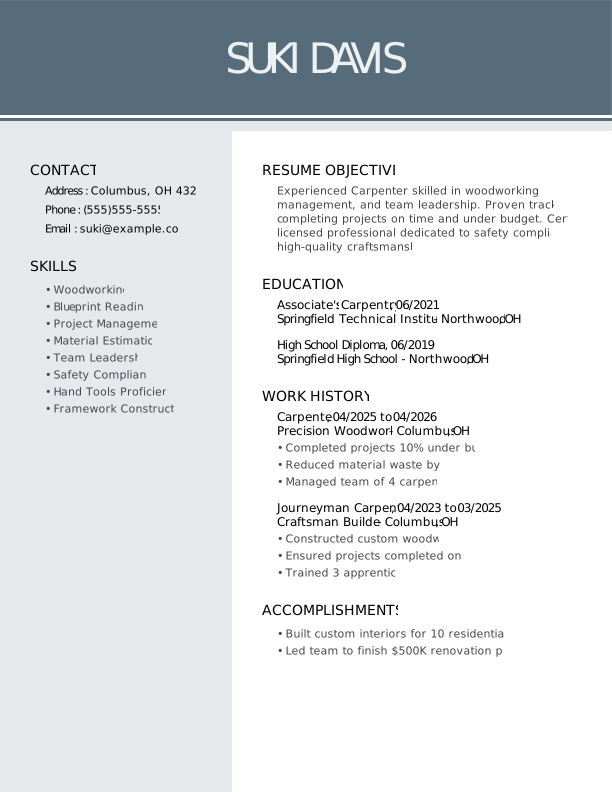
 Free
FreeCarpenter Entry-Level Resume
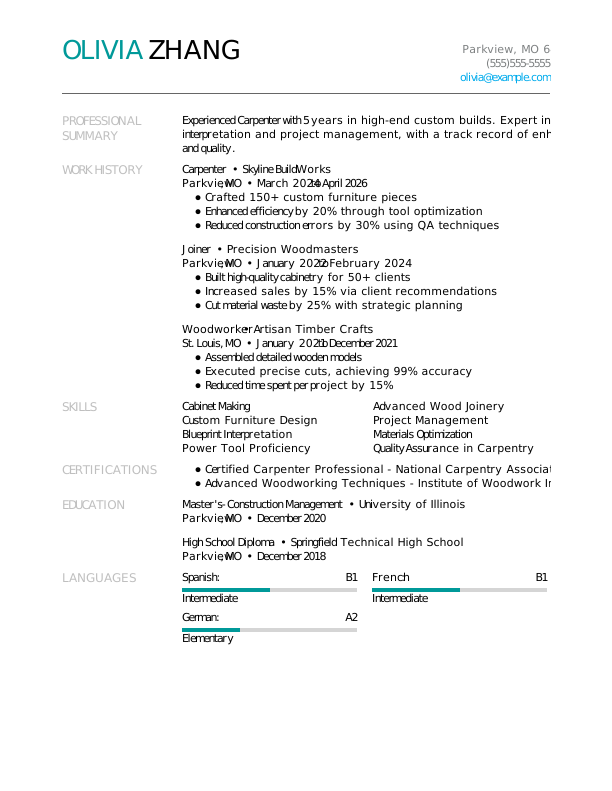
Carpenter Mid-Level Resume
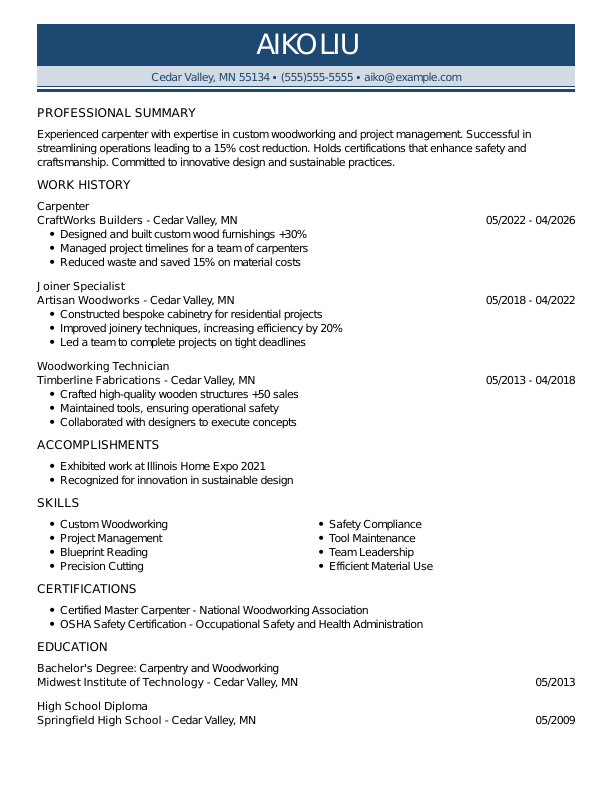
Carpenter Experienced Resume
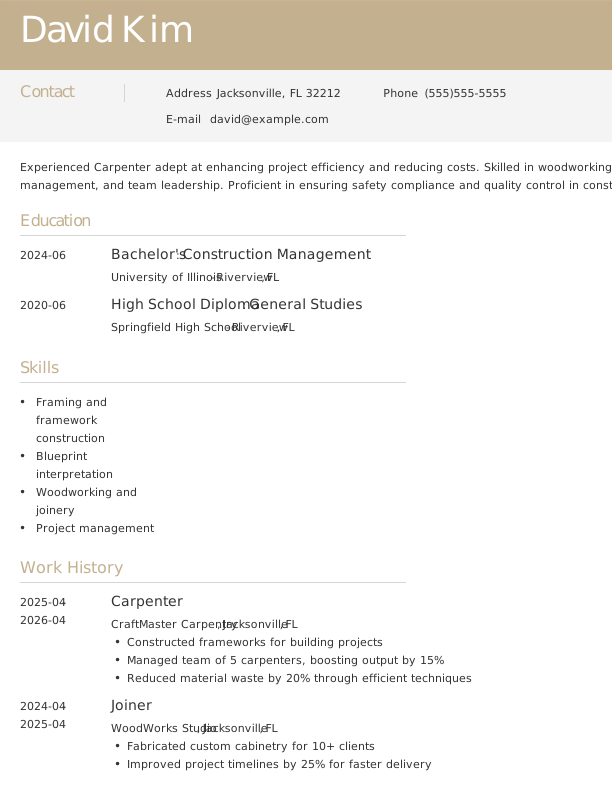
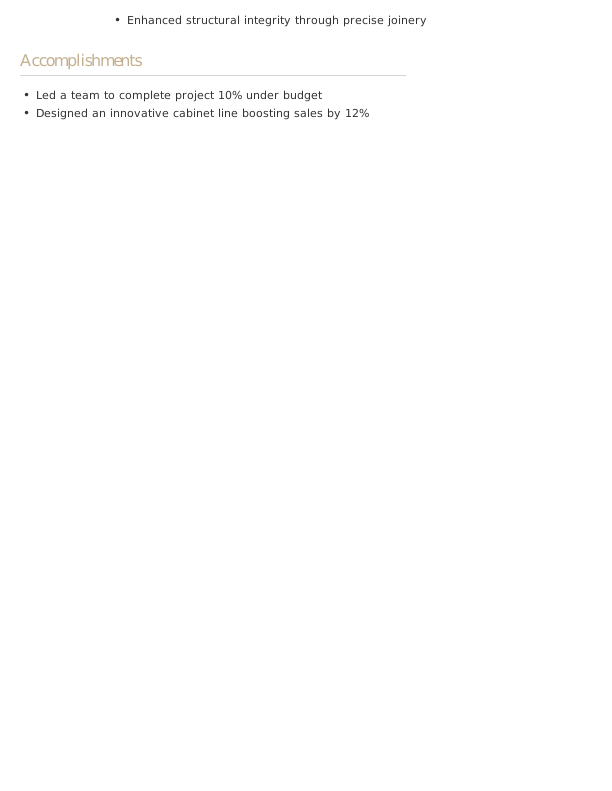
Carpenter Entry-Level Resume 1
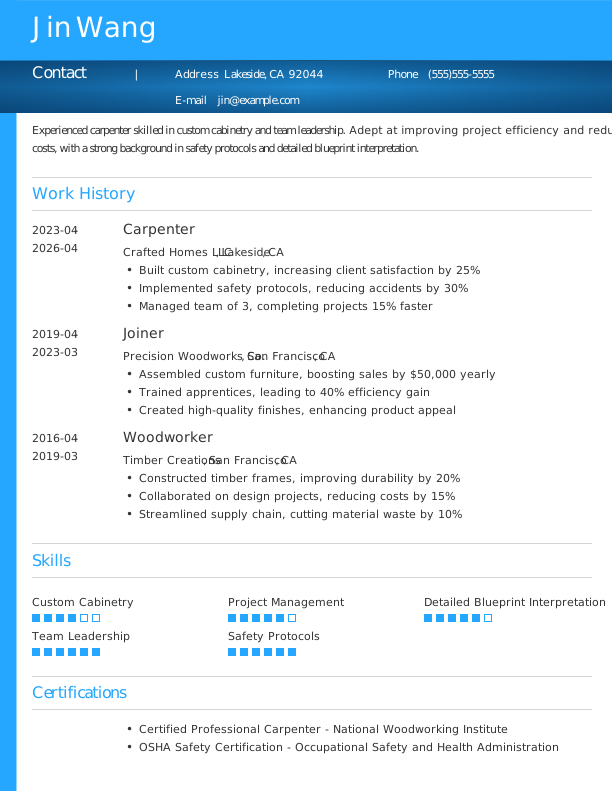
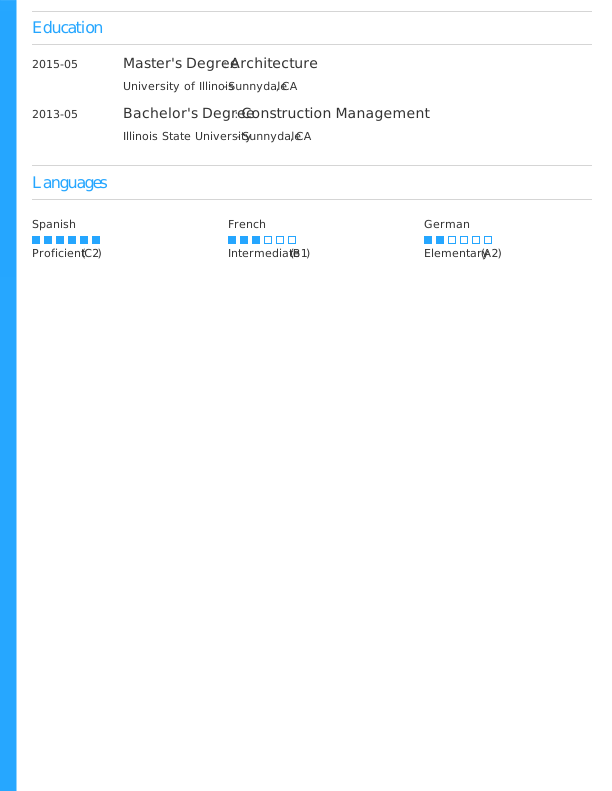
Carpenter Mid-Level Resume 1
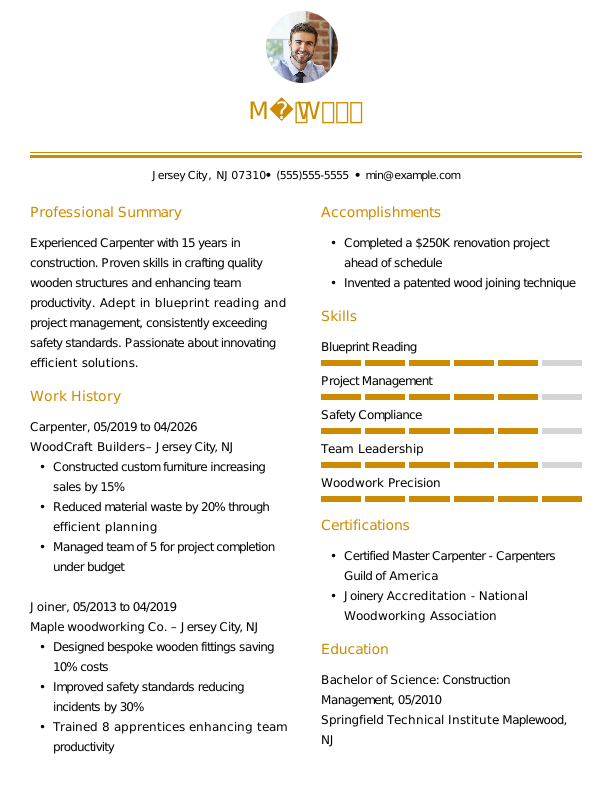
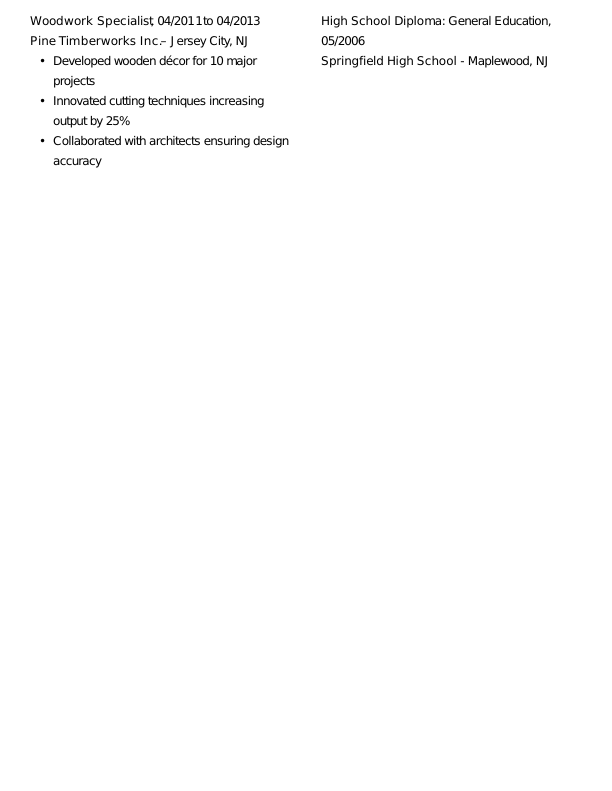
Carpenter Experienced Resume 1
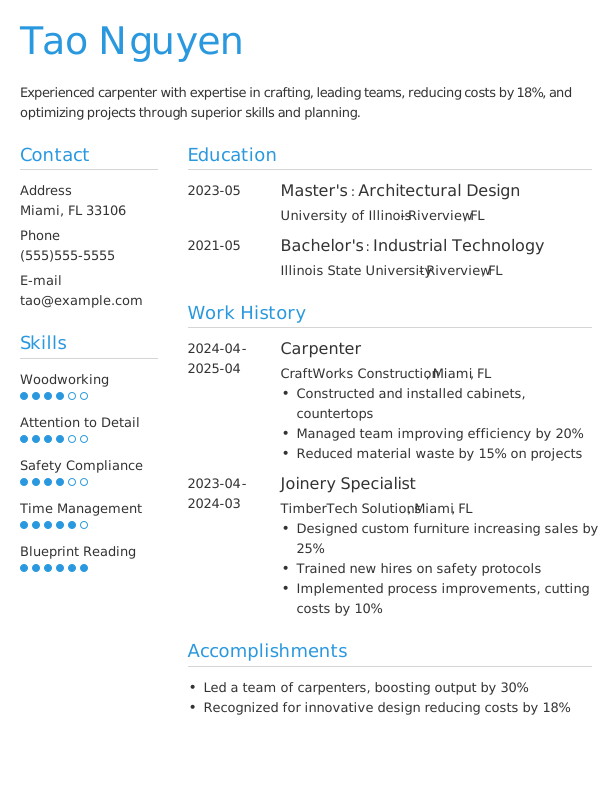
Carpenter Entry-Level Resume 2
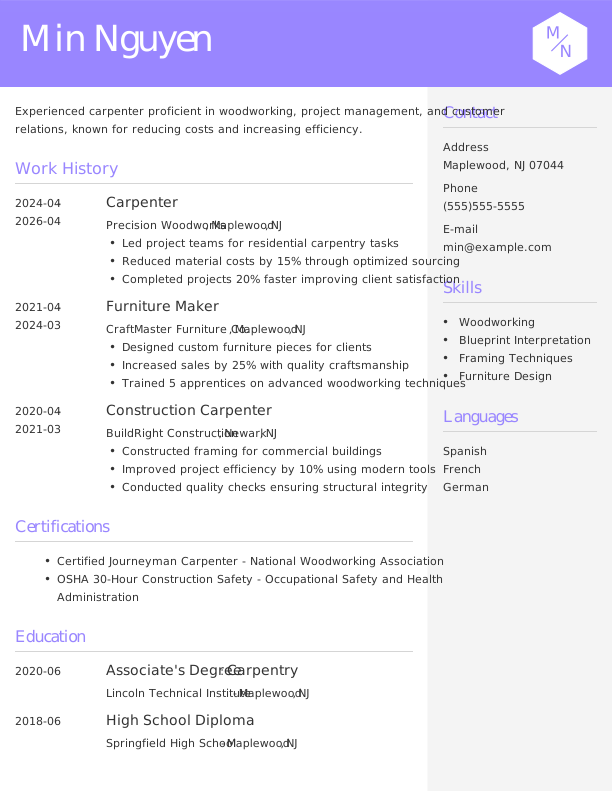
Carpenter Mid-Level Resume 2
Browse Free Resume Templates
- Accounts Payable
- Adjunct Professor
- Artist
- Auto Mechanic
- Baker
- Business Development Manager
- Business
- Certified Nursing Assistant
- Classic & Traditional
- Cleaner
- College Student
- Concierge
- Construction Worker
- Corporate
- Creative & Unique
- Custodian
- Customer Service
- Dental Assistant
- Direct Support Professional
- Entry-Level
- Flight Attendant
- Hospitality & Food Service
- Front Desk Receptionist
- Healthcare
- High School
- Housekeeping
- Hvac Technician
- Hybrid
- Inventory Manager
- Logistics
- Maintenance
- Management
- Modern
- Mortgage Loan Processor
- Pet Sitter
- Phlebotomist
- Production
- Rbt
- Sales
- Security Services
- Restaurant Server
- Simple & Basic
- Social Work
- Teacher
- Technology
Resume Examples for Carpenters
Carpenter resumes should reflect your skill range, from framing to finish work, and the types of projects you have completed. Explore our templates to find one that organizes your trade background well.
Entry-Level Carpenter Resume
This template is a strong fit for those entering carpentry from a trade school or apprenticeship. It helps you create a carpenter resume by leading with your woodworking training, blueprint reading skills, and any hands-on project hours.

Mid-Career Carpenter Resume
A smart choice for carpenters with several years of experience, this template showcases recent projects and supports advancement into specialized roles or leadership positions.

Experienced Carpenter Resume
An ideal choice for seasoned carpenters with over 10 years of experience, this template supports professionals seeking advanced roles in project management or specialized woodworking.

Carpenter Resume Template (Text)
The text resume below gives you a solid foundation for a carpenter application. Paste it into your document and replace the details with your own woodworking skills and project history.
David Wang
Los Angeles, CA 90014
Professional Summary
Experienced Carpenter skilled in custom cabinetry, project management, eco-friendly practices, and client communication. Achieved 20% improvement in client satisfaction and reduced material waste by 15%.
Work Experience
April 2022 – April 2026
Precision Woodworks – Los Angeles, CA
Carpenter
- Designed and built 20 custom kitchens.
- Reduced material waste by 15%, saving costs.
- Trained 5 apprentices in advanced techniques.
April 2018 – March 2022
Craft Creations Co. – Los Angeles, CA
Woodcraft Specialist
- Completed 35 residential projects on time.
- Enhanced product quality by 25% using new tools.
- Led team to boost production by 10% annually.
April 2016 – March 2018
Oak Elegance Furniture – Los Angeles, CA
Furniture Builder
- Produced 50+ artisan furniture pieces yearly.
- Implemented eco-friendly techniques in production.
- Improved client satisfaction rate by 20%.
Education
May 2015
Rochester Institute of Technology, Rochester, NY
Master of Fine Arts Furniture Design
May 2013
Savannah College of Art and Design, Savannah, GA
Bachelor of Fine Arts Interior Design
Certifications
- Advanced Carpentry Techniques – National Carpentry Guild
- Eco-Friendly Woodworking Practices – Green Building Council
Skills
- Custom cabinetry
- Blueprint reading
- Furniture design
- Material estimation
- Project management
- Safety compliance
- Tool maintenance
- Client communication
How to Write a Carpenter Resume
As a carpenter, knowing how to write a resume means showcasing your craftsmanship, relevant experience, and appropriate formatting to stand out in the industry. Use the guidance below to emphasize your skills and tailor your resume for the positions you’re aiming for.
1. Contact Info
Your contact information should be clear, professional, and prominently placed at the top of your resume.
Be sure to include:
- Full name
- Phone number
- Professional email address
- City and state (ZIP code is optional)
- LinkedIn profile or relevant portfolio
 PRO TIP
Skip including irrelevant personal information on your resume, such as age, gender, or social media links, unless a potential employer specifically requests it.
2. Resume Profile
A resume profile is a brief introduction, typically two to four sentences long, that highlights your key qualifications and skills. It serves as a compelling pitch to hiring managers, aiming to capture their interest and prompt them to explore your resume further.
Usually positioned at the top of your resume, this profile can take the form of either a summary or an objective. Each option has its own distinct purpose:
- A resume summary showcases essential skills, relevant experiences, and significant accomplishments within the construction industry. This format is particularly beneficial for individuals with a background or transferable skills who are seeking to highlight their contributions as a skilled carpenter.
- A resume objective emphasizes your career aspirations and outlines what you aim to accomplish in your next role. It’s especially beneficial for recent graduates, individuals shifting careers, or those with limited experience, like apprentices entering the carpentry field.
Let’s explore the differences between a resume summary and a resume objective with specific examples:
Carpenter resume summary example:
Dedicated carpenter with over 6 years of hands-on experience in residential and commercial construction projects. Proficient in framing, cabinetry, and finish work, consistently recognized for delivering high-quality craftsmanship and exceeding client expectations. Known for strong problem-solving abilities and effective communication within diverse teams.
Carpenter resume objective example:
Recent graduate with a diploma in carpentry eager to launch a career in residential construction. Committed to craftsmanship and quality work, aiming to bring strong problem-solving abilities and attention to detail to a building company or renovation firm.
3. Work Experience
The work experience on your resume is important for showcasing your qualifications. Employers review your history not only for job titles but also to understand the impact you had in each role.
This section highlights how your hands-on skills and achievements as a carpenter demonstrate that you’re a strong applicant for the position you’re pursuing.
The work experience section should contain:
- Job title
- Employer name and location
- Dates of employment (month/year)
- 3–5 bullet points detailing your carpentry projects and craftsmanship skills
When crafting your work experience bullet points, focus on tailoring your content to the carpentry field using relevant terminology. Start each statement with strong action verbs such as “Constructed,” “Assembled,” or “Renovated” to create impact.
Incorporate quantifiable metrics wherever possible. Providing specific numbers and achievements, like completing projects 20% under budget, showcases your value and helps you stand out from other applicants.
In general, consider following the format of:
[action verb] + [responsibility] = [result/achievement]
For example:
Constructed and installed custom cabinetry for over 50 residential projects, ensuring precision and quality that resulted in a 95% client satisfaction rate.
Note that you can also flip the result/achievement with the responsibility:
Increased project completion efficiency by 20% through the implementation of streamlined design processes.
With these techniques in mind, your resume bullets may look something like:
- Constructed custom cabinetry for 15 residential clients, improving design efficiency and client satisfaction scores by 20%.
- Collaborated with a team of 5 carpenters to complete a commercial renovation project ahead of schedule, reducing labor costs by 10%.
- Supervised apprentices in woodworking techniques, fostering skill development and improving team performance.
- Used advanced power tools and machinery to ensure precision in all projects, resulting in a 95% on-time delivery rate.
- Implemented quality control measures that decreased material waste by 25% over six months.
4. Skills
The skills section provides a concise overview of your specific carpentry abilities, showcasing your craftsmanship and technical knowledge. This ATS-friendly resume format allows hiring managers to quickly evaluate your qualifications.
Skills can be categorized into three key areas:
Result:
- Soft skills are interpersonal abilities that influence how carpenters collaborate on projects, ensuring smooth project execution and strong relationships with clients and coworkers.
- Hard skills are specific, quantifiable abilities developed through education, training, or experience.
- Technical skills refer to the practical abilities required to operate tools and machinery in a specific trade.
5 Soft Skills for Your Resume or CV
- Attention to detail
- Effective communication
- Teamwork and collaboration
- Time management skills
- Conflict resolution
5 Hard Skills for Your Resume or CV
- Blueprint reading
- Framing techniques (wood, metal)
- Finish carpentry (trim, cabinetry)
- Woodworking tools (saws, drills)
- Construction safety standards (OSHA)
In general, aim to include a variety of relevant skills that match the job requirements to showcase your qualifications.
PRO TIP
If you’re a newer carpenter, consider placing your skills section higher on your resume, right after your summary. If you have more experience, it’s better to position this section lower, weaving in your skills throughout your work history for better context.
5. Education
Understanding how to list education on your resume is important for showcasing your qualifications. Begin with your most recent degree, clearly stating the type of degree and the institution’s name.
If you’re a recent graduate, consider including additional details such as your graduation year, GPA (if it’s 3.5 or above), any honors received, or relevant coursework to improve your profile.
Carpenter resume education section example:
Associate of Applied Science in Carpentry and Construction Technology
Bridgeport Technical Institute, Bridgeport, CT
Graduated: 2023 | Excellence in Craftsmanship Award
PRO TIP
When listing multiple degrees on your resume, always present them in reverse-chronological order, starting with the highest degree first, such as Bachelor of Science in Carpentry, followed by Associate Degree in Carpentry.
6. Certifications
Certifications highlight your expertise and ensure you’re current with industry standards. While not always included in a traditional resume, this section is essential for most carpenters. Employers may require specific qualifications for specialized tasks, such as framing or cabinetry.
List certifications on your resume that improve your application. Keeping these credentials up to date and clearly formatted will strengthen your candidacy in a competitive job market.
Carpenter certification examples:
- Carpentry Certification | National Center for Construction Education and Research | Expires: 03/2028
- OSHA 10-Hour Construction Safety | Occupational Safety and Health Administration | Expires: 11/2027
- First Aid/CPR/AED Certification | American Red Cross | Expires: 02/2028
- Advanced Framing Techniques Certification | Home Builders Institute | Expires: 09/2027
Start Building Your Job-Winning Resume
Use Your Existing Resume
Import your current resume to transfer your information to one of our professional templates.
Create a New Resume
Start fresh with a template that catches your eye and follow the prompts to add your details.
Tailor Your Work History to Beat the ATS
Your work experience is a powerful tool beyond mere job titles. It’s an opportunity to highlight your tangible contributions and skills as a carpenter, showcasing specific projects or achievements that demonstrate your craftsmanship. This strategic approach not only improves the appeal of your resume but also ensures it remains ATS-friendly, allowing applicant tracking systems (ATS) to easily scan it for relevant qualifications.
To effectively present your work history, tailor it to align with the job you’re pursuing by incorporating relevant keywords. Begin by examining the job description in detail, noting any recurring skills or requirements mentioned. Reflect these elements in your experience descriptions to create a compelling narrative that resonates with potential employers.
What’s a Fair Carpenter Salary?
Researching salary information is key for assessing job offers, negotiating pay, and planning your career path. According to the U.S. Bureau of Labor Statistics (BLS), the following data presents the most recent nationwide averages for carpenters.
Several factors can impact actual earnings, such as geographic location, years of experience, certifications, and areas of specialization. For example, carpenters working in commercial construction or those with specialized skills in cabinetry often receive higher wages compared to residential contractors or those in general construction roles.
| Alabama | $48,270 |
| Alaska | $76,870 |
| Arizona | $58,340 |
| Arkansas | $59,390 |
| California | $77,680 |
| Connecticut | $66,010 |
| Delaware | $63,060 |
| District of Columbia | $67,460 |
| Florida | $50,200 |
| Georgia | $50,700 |
| Hawaii | $86,730 |
| Idaho | $53,010 |
| Illinois | $77,940 |
| Indiana | $61,220 |
| Iowa | $55,560 |
| Kansas | $55,920 |
| Kentucky | $52,970 |
| Louisiana | $51,150 |
| Maine | $59,360 |
| Maryland | $63,080 |
| Massachusetts | $77,360 |
| Michigan | $61,620 |
| Minnesota | $69,490 |
| Mississippi | $48,750 |
| Missouri | $64,620 |
| Montana | $58,130 |
| Nebraska | $52,840 |
| Nevada | $68,290 |
| New Hampshire | $61,380 |
| New Jersey | $73,130 |
| New Mexico | $53,560 |
| New York | $73,190 |
| North Carolina | $48,000 |
| North Dakota | $58,780 |
| Ohio | $58,610 |
| Oklahoma | $50,760 |
| Oregon | $67,280 |
| Pennsylvania | $62,660 |
| Rhode Island | $65,760 |
| South Carolina | $51,780 |
| South Dakota | $48,090 |
| Tennessee | $50,900 |
| Texas | $49,320 |
| Utah | $54,620 |
| Vermont | $61,910 |
| Virginia | $53,280 |
| Washington | $77,630 |
| West Virginia | $49,350 |
| Wisconsin | $64,190 |
| Wyoming | $59,570 |
| Guam | $38,380 |
| Puerto Rico | $28,780 |
| Virgin Islands | $53,480 |
Key Takeaways
- Tailor your resume to the job description. Use industry-specific terms that align with the employer’s needs for better chances with ATS and human reviewers.
- Highlight quantifiable achievements to demonstrate your skills. Include metrics like project completion times, budget adherence, or customer satisfaction ratings (e.g., completed projects on time by 95%).
- Select a resume format that suits your experience. Entry-level carpenters might prefer a functional layout, while seasoned professionals should opt for a reverse-chronological format.
More Resume & CV Examples
- Air Sealing Technician
- Aircraft Mechanic
- Automotive Technician
- Barber
- Blue Collar
- Boilermaker
- Budtender
- Cable Technician
- Carpentry
- Cosmetologist
- Crane Operator
- Diesel Mechanic
- Diesel Technician
- Electrician
- Glazier
- Hair Stylist
- Handyman
- Hvac Installer
- Industrial Electrician
- Ironworker
- Journeyman Electrician
- Landscaper
- Lineman
- Machinist
- Millwright
- Painter
- Pipe Fitter
- Plumber
- Roofer
- Solar Installer
- Structural Welder
- Welder
Cover Letters for Your Resume
Browse our library of cover letter examples to complete your application. A resume will have a better chance of getting noticed.
Frequently Asked Questions
Last Update:
What resume format should I use for my carpenter resume?
There are three main resume formats to consider when applying for a carpenter position. The format you choose should reflect your experience level and highlight the skills or projects you want to emphasize:
- Chronological: The chronological resume format is widely recognized as the most popular choice among job seekers. It emphasizes your work history, showcasing your responsibilities and achievements in a clear timeline. This structure is particularly beneficial for job seekers whose relevant experience reinforces their qualifications and adds credibility to their application.
- Functional: The functional resume, also known as a skills-based resume, highlights your qualifications by featuring an expanded skills section and minimizing the focus on work history. This format is particularly beneficial for applicants who lack direct experience in the industry or have gaps in their employment timeline.
- Combination: The combination resume format merges aspects of chronological and functional styles, showcasing both skills and work history. This approach allows professionals to emphasize their qualifications while also illustrating their career development. It’s particularly useful for those transitioning into new areas or advancing within their field.
Should I include a cover letter with my resume?
Yes, you should include a cover letter with your carpenter job application. A well-crafted cover letter allows you to express your enthusiasm for the trade and detail specific skills or projects that may not be fully captured in your resume. It demonstrates to employers that you’re genuinely interested in the position and have taken the time to personalize your application, which can set you apart from other applicants.
If you’re apprehensive about writing a cover letter, there are many resources available to assist you. You can find guides on how to write a cover letter and examples tailored specifically for carpentry roles. Additionally, exploring various cover letter formats will help you choose one that highlights your experience and qualifications well.
To make the process easier, consider using a cover letter generator that provides templates and suggestions designed for carpentry applications, helping you create a polished document quickly.
How long should a carpenter resume be?
For carpenters with less than 10 years of experience, a one-page resume is typically adequate to highlight essential skills and accomplishments. Focus on showcasing relevant work history, certifications, and specific projects that demonstrate your expertise in the trade.
Conversely, seasoned carpenters or those with specialized skills may extend their resumes to two pages. This length can be justified if it includes targeted information about advanced techniques, leadership roles, and notable projects while ensuring every detail serves a clear purpose without unnecessary filler language.
What keywords should I include to pass applicant tracking systems (ATS)?
To improve your resume for ATS, focus on incorporating keywords from the job posting, such as “framing,” “cabinetry,” or “woodworking.” These terms directly relate to the carpenter role and will help you stand out.
Don’t forget to highlight any relevant certifications like OSHA safety training or carpentry apprenticeships. Mentioning tools you’re skilled with, such as saws, drills, or CAD software, also shows you’re ready for the job. Tailoring your resume in this way increases your chances of moving forward in the hiring process.
Is it worth including volunteer projects or side jobs in carpentry on my resume?
Yes, especially if you’re starting out. Including volunteer projects demonstrates your practical skills and commitment to learning. These experiences can showcase your abilities and help you gain attention from potential employers when you have limited formal work history.

Vicki Salemi is a nationally recognized career expert who helps professionals navigate the hiring landscape and find the right fit on Monster. With over 15 years of experience in corporate recruiting and HR, she offers expert guidance on job search strategies, interview preparation, and career development to help candidates land their next role.
See More From Vicki SalemiExplore Related Career Advice


How to Put Transferable Skills on Your Resume: 120 Skills, Examples, & Tips

Updated:
Aug 27, 2026
|

16 min read


How to Write a Functional Resume (Formatting Tips, Template, & Examples)
Updated:
Aug 7, 2026
|
17 min read


Functional vs Chronological Resume: Which Format Is Right for You?
Updated:
Aug 3, 2026
|
16 min read

100+ Resume Adjectives to Help You Write a Stronger Resume in 2026 (With Examples)
Updated:
Jul 30, 2026
|
12 min read