
Free Crane Operator Resume Templates & Examples
Operating heavy rigging equipment safely at height is skilled, high-stakes work. These free crane operator resume and CV examples help you feature your NCCCO certifications and lift planning experience.
Real-World Resumes That Get Results
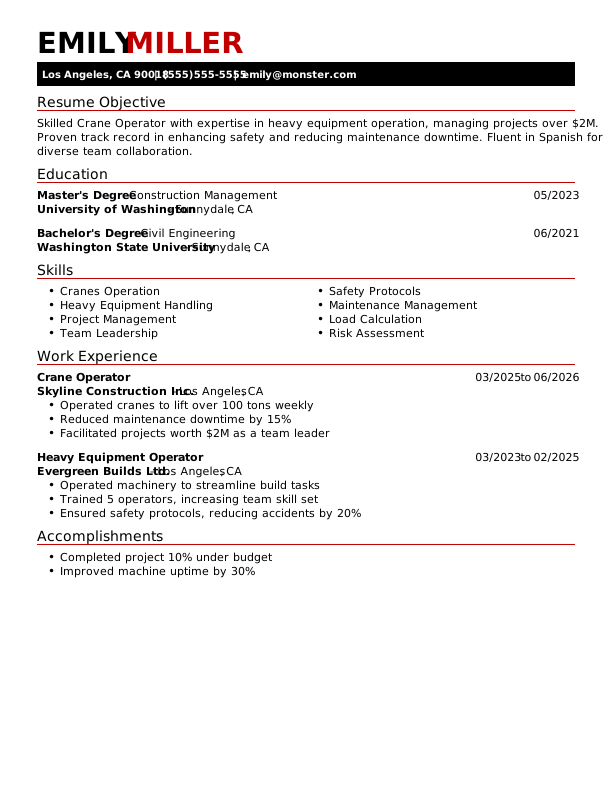
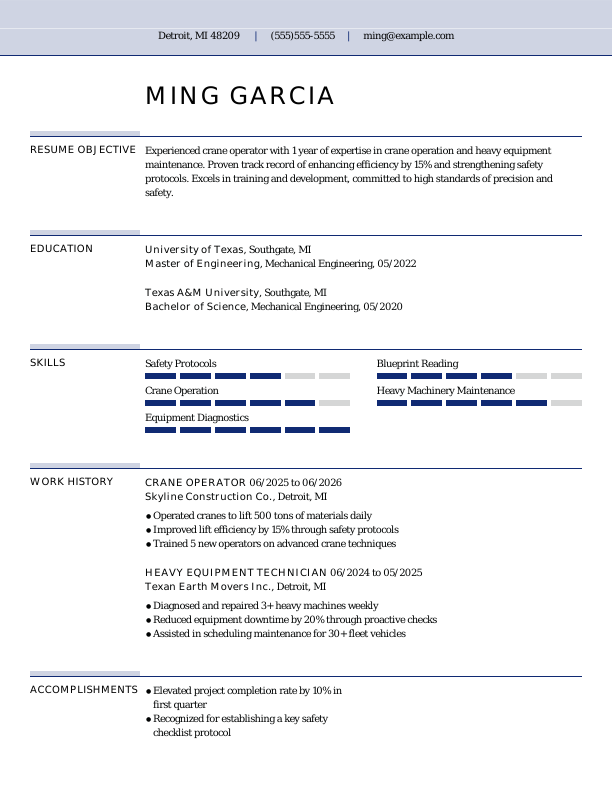
Crane Operator Entry-Level Resume
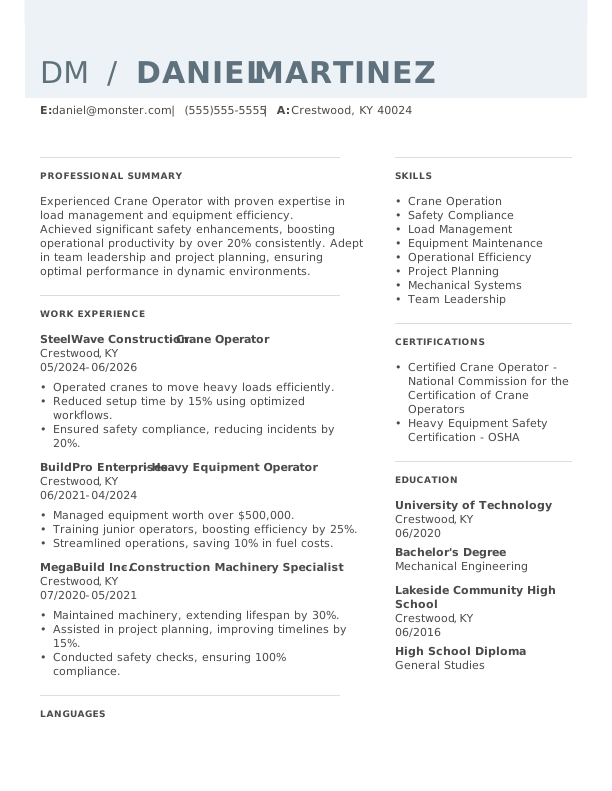
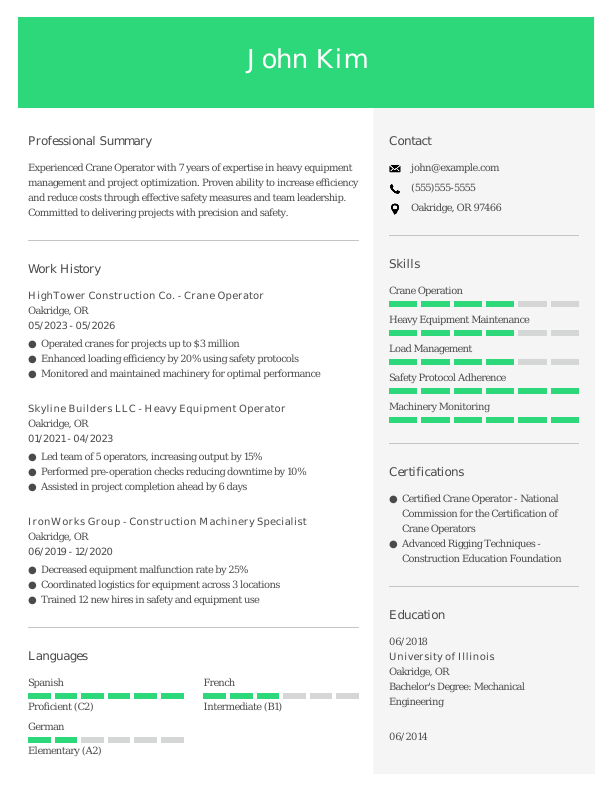
Crane Operator Mid-Level Resume
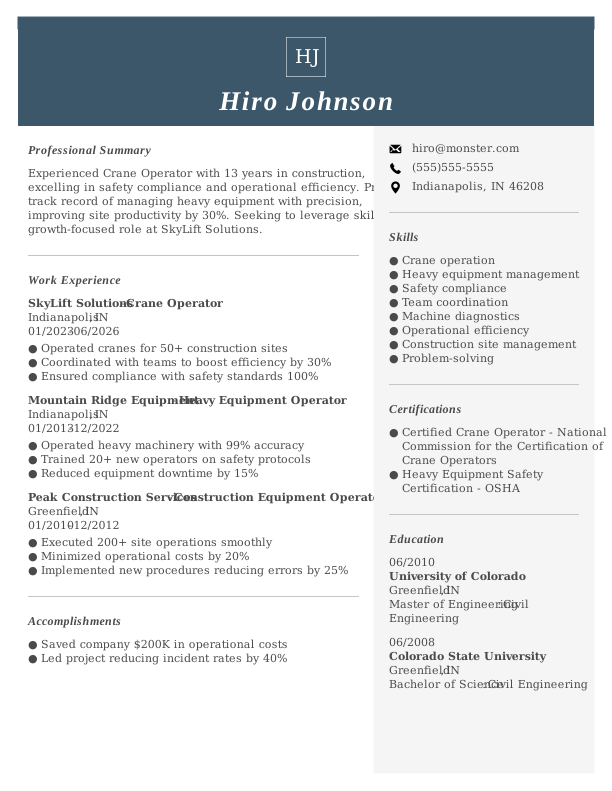
Crane Operator Experienced Resume
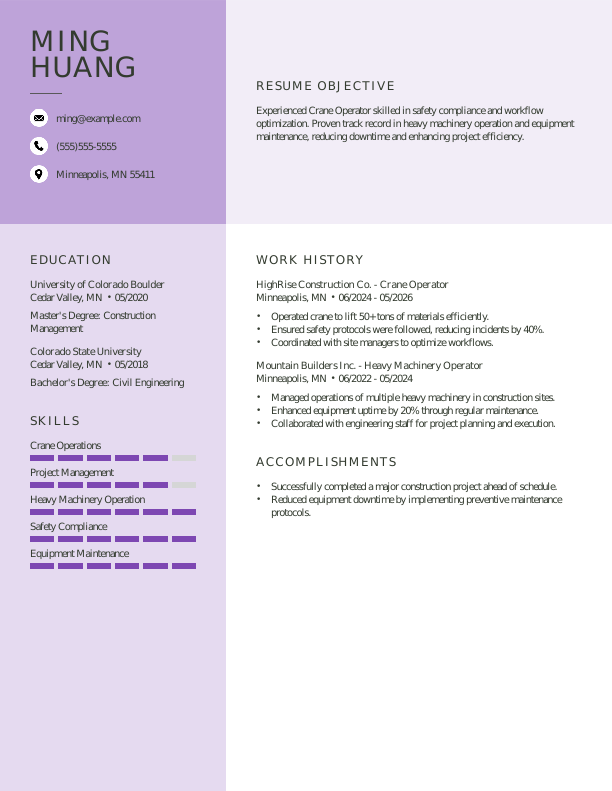

 Free
FreeCrane Operator Modern Resume
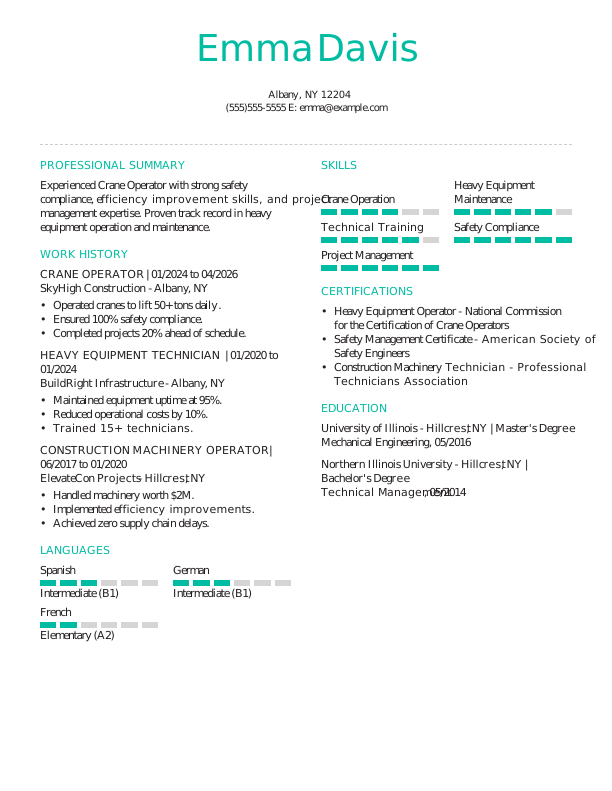
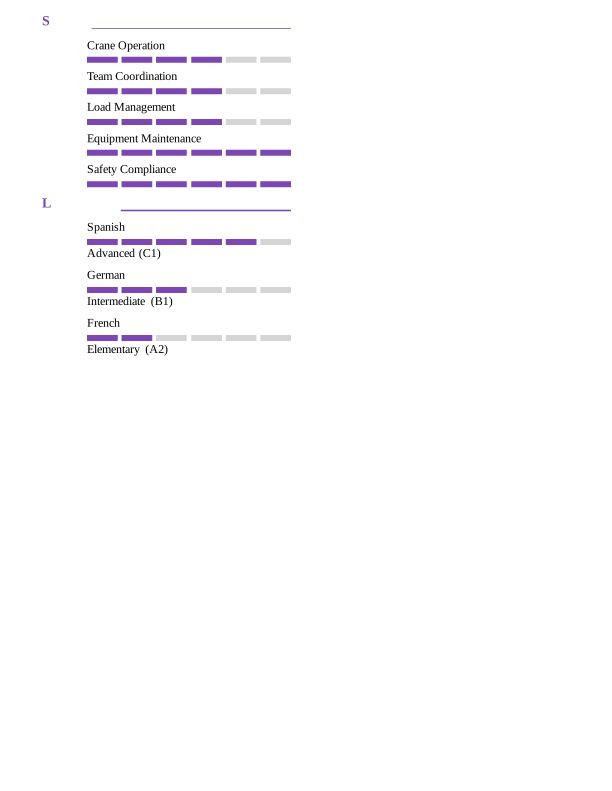
Crane Operator Creative Resume
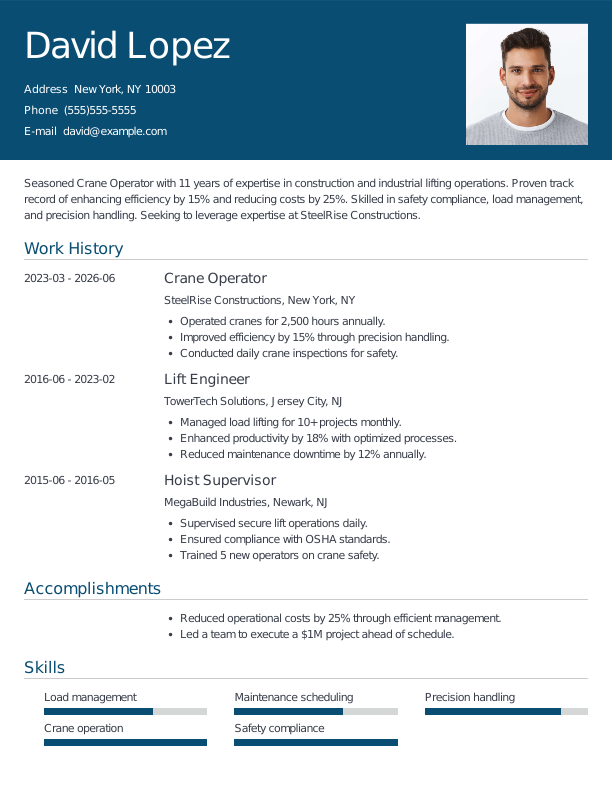
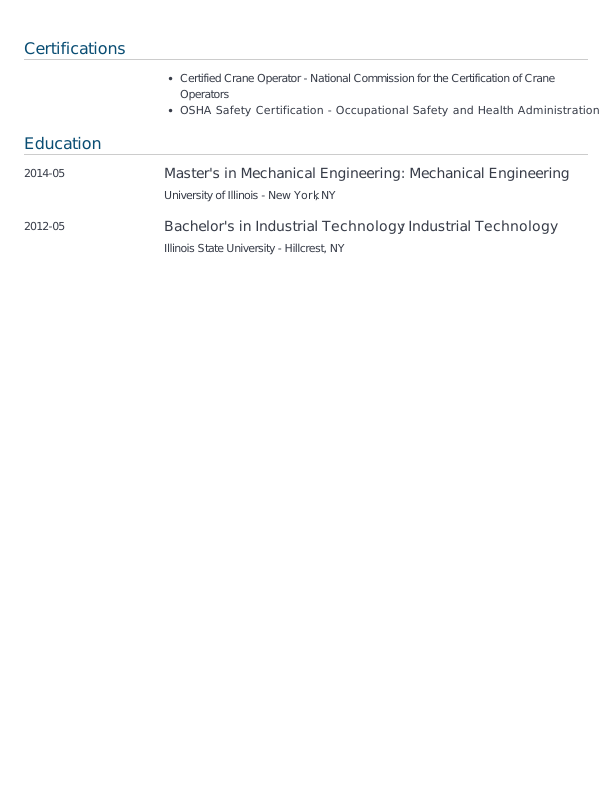
Crane Operator Traditional Resume

Crane Operator Simple CV Example

Crane Operator CV Format
Browse Free Resume Templates
- Accounts Payable
- Adjunct Professor
- Artist
- Auto Mechanic
- Baker
- Business Development Manager
- Business
- Certified Nursing Assistant
- Classic & Traditional
- Cleaner
- College Student
- Concierge
- Construction Worker
- Corporate
- Creative & Unique
- Custodian
- Customer Service
- Dental Assistant
- Direct Support Professional
- Entry-Level
- Flight Attendant
- Hospitality & Food Service
- Front Desk Receptionist
- Healthcare
- High School
- Housekeeping
- Hvac Technician
- Hybrid
- Inventory Manager
- Logistics
- Maintenance
- Management
- Modern
- Mortgage Loan Processor
- Pet Sitter
- Phlebotomist
- Production
- Rbt
- Sales
- Security Services
- Restaurant Server
- Simple & Basic
- Social Work
- Teacher
- Technology
Resume Examples for Crane Operators
Crane operator resumes and CVs differ significantly based on experience level. Explore targeted templates for entry-level, mid-career, and experienced operators, and use our Resume Builder to create a personalized document that highlights your qualifications.
Entry-Level Crane Operator Resume
Ideal for recent graduates looking to craft a resume with no experience, this template is also suitable for individuals transitioning into crane operation from other sectors in the construction industry.
Mid-Career Crane Operator Resume
A good fit for crane operators with several years of experience, this template highlights recent operational achievements and supports advancement into supervisory or specialized roles.
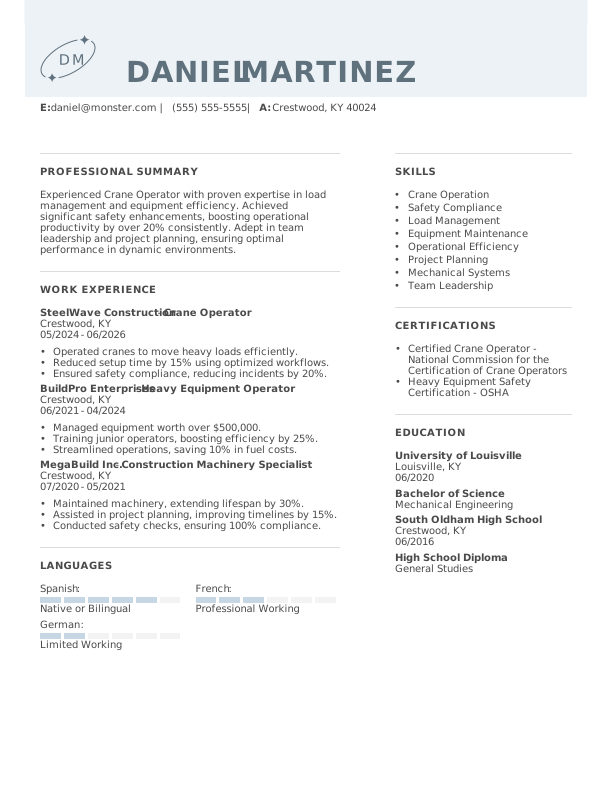
Experienced Crane Operator Resume
Best for seasoned crane operators with over 10 years of experience, this template supports professionals aiming for advanced roles in construction management or equipment operation.
Crane Operator Resume Template (Text)
Use this adaptable text template for a crane operator position to copy, edit, and personalize directly in your document.
Hiro Brown
Cedar Valley, MN 55138
Professional Summary
Experienced Crane Operator skilled in load handling and safety standards. Enhanced machinery efficiency by employing OSHA-compliant protocols. Expert in optimizing heavy equipment for productivity boosts.
Work Experience
June 2024 – June 2026
Skyline Construction – Cedar Valley, MN
Crane Operator
- Operated cranes to lift loads safely. Increased load efficiency by 20%.
- Ensured compliance with OSHA standards.
January 2022 – May 2024
Precision Machinery Services – Cedar Valley, MN
Heavy Equipment Technician
- Serviced machinery to improve output by 15%.
- Optimized maintenance processes, reducing downtime.
- Conducted safety checks for all machines.
June 2021 – December 2021
Edge Builders Inc. – Minneapolis, MN
Construction Machinery Operator
- Managed operations of heavy machinery.
- Increased site productivity by 10%.
- Conducted daily equipment inspections.
Education
May 2020
University of Nebraska Lincoln, NE
Master’s in Mechanical Engineering Engineering
May 2018
Nebraska State College Lincoln, NE
Bachelor of Science Industrial Technology
Certifications
- Crane Operation Certification – National Commission for the Certification of Crane Operators
- Advanced Equipment Maintenance – American Society of Mechanical Engineers
Skills
- Crane Operation
- Heavy Equipment Maintenance
- Safety Protocols
- Load Optimization
- Equipment Inspection
- OSHA Compliance
- Mechanical Troubleshooting
- Operational Efficiency
How to Write a Crane Operator Resume
As a crane operator, understanding how to write a resume involves showcasing your technical skills, relevant experience, and an organized format that captures the attention of employers. Use the guidance below to emphasize your strengths and tailor your resume for the positions you’re aiming for.
1. Contact Info
Your contact information should be prominently displayed at the top of your resume, ensuring clarity and professionalism.
Include the following essential information:
- Full name
- Phone number
- Professional email address
- City and state (ZIP code is optional)
- LinkedIn profile or relevant certifications
 PRO TIP
Avoid including personal information such as your age, gender, or Social Security number on your resume unless explicitly requested by the employer.
2. Resume Profile
A resume profile is a brief introduction (two to four sentences) that highlights your key qualifications, serving as an engaging pitch for hiring managers. It aims to capture their interest and motivate them to explore the rest of your resume.
Typically found at the top of your resume, this profile can be crafted as either a summary or an objective, each with distinct purposes. Both serve to highlight your strengths and career goals:
- A resume summary highlights a crane operator’s key skills, relevant experience, and notable achievements in the field. This format is particularly beneficial for those with a background in heavy machinery operation or related roles who aim to emphasize their contributions and impact as operators.
- A resume objective is a forward-looking statement that highlights your career aspirations and what you hope to achieve in your next role. This approach is particularly useful for crane operators who are recent graduates, transitioning professionals, or those with limited experience in the industry.
Let’s take a look at an example of each to see how a resume summary and a resume objective differ:
Crane operator resume summary example:
Safety-focused crane operator with over 6 years of experience in construction and industrial environments. Proficient in load management, equipment inspection, and team collaboration. Acknowledged for maintaining high safety standards and improving project efficiency through precise operations.
Crane operator resume objective example:
Recent graduate with a certification in crane operation, eager to launch a career in a dynamic construction environment. Committed to safety and efficiency while bringing strong problem-solving abilities and attention to detail to construction sites or heavy machinery operations.
3. Work Experience
The work experience on your resume is an important foundation for showcasing your skills. Employers assess your job history to understand not just where you’ve worked, but the tangible impact you’ve made in previous roles.
Your experience operating cranes illustrates how you’re qualified for the position, highlighting your technical expertise and safety awareness in demanding environments.
The work experience section should contain:
- Job title
- Employer name and location
- Dates of employment (month/year)
- 3–5 bullet points describing your relevant responsibilities and achievements
Tailor your content to highlight experiences relevant to the crane operator role. Start each bullet point with an action verb (like “Operated,” “Managed,” “Transported”) to strengthen the impact of your statements.
Incorporate quantifiable data whenever possible. Specific metrics, such as weight lifted or projects completed on time, help demonstrate your value and distinguish you from other job seekers in the field.
In general, consider following the format of:
[action verb] + [responsibility] = [result/achievement]
For example:
Operated cranes to lift and move heavy materials on construction sites, completing 150+ lifts daily while maintaining a 100% safety record.
Note that you can also flip the result/achievement with the responsibility:
Achieved a 30% increase in project efficiency by optimizing crane operations and reducing downtime through effective communication with site teams.
With these techniques in mind, your resume bullets may look something like:
- Operated crane equipment to lift and move materials on construction sites, improving project efficiency by 20%.
- Inspected and maintained crane machinery regularly, ensuring compliance with safety standards and reducing downtime by 15%.
- Collaborated with site supervisors to plan lifting operations, improving coordination among team members.
- Trained new operators on best practices for safe crane operation, fostering a culture of safety within the team.
- Used radio communication tools to execute precise movements during complex lifts, minimizing risk of accidents.
4. Skills
The skills section provides a concise overview of the abilities required for a crane operator, including expertise in equipment operation and safety protocols. This helps hiring managers quickly assess qualifications for the role.
Skills can be categorized into three groups:
- Soft skills are personal qualities that influence how crane operators collaborate with team members and manage their work environment.
- Hard skills are specific, measurable abilities gained through education, training, or experience.
- Technical skills are the specific competencies required to operate various machinery and technology.
5 Soft Skills for Your Resume or CV
- Safety awareness
- Team communication
- Time management
- Attention to detail
- Problem resolution
5 Hard Skills for Your Resume or CV
- Load calculations
- Rigging techniques (ASME standards)
- Signal communication
- Safety protocols (OSHA guidelines)
- Daily equipment inspections
In general, you should include a diverse array of relevant skills that correspond with the job requirements to showcase your full range of capabilities.
PRO TIP
If you’re a newer crane operator, consider placing your skills section higher on your resume, right after your summary. For seasoned operators, it’s best to position this section further down and weave key skills into your work history for a more integrated approach.
5. Education
Understanding how to list education on your resume is important for making a strong impression. Begin with your most relevant or recent degree, specifying both the degree type and the institution’s name.
If you’re a recent graduate, consider including your graduation year, GPA (if it’s 3.5 or above), any honors received, and relevant coursework that highlights your qualifications.
Crane operator resume education section example:
High School Diploma
Lincoln High School, Springfield, IL
Graduated: 2020 | National Honor Society Member
PRO TIP
If you’re progressing from an Associate Degree in Heavy Equipment Operations to a Bachelor of Science in Construction Management, or have earned another relevant degree, list both in reverse-chronological order.
6. Certifications
Listing certifications on your resume highlights your qualifications and helps balance limited direct experience in crane operation. While not a standard section for every resume, including certifications is beneficial for most professionals in the field. Employers often seek specific credentials, such as NCCCO certification or OSHA training, especially for specialized roles like tower crane operators or riggers.
Only list certifications that directly support your application to ensure relevance. It’s essential to maintain an updated record of these credentials and present them clearly on your resume.
Crane operator certification examples:
- Crane Operator Certification, National Commission for the Certification of Crane Operators | NCCCO | Expires: 01/2028
- OSHA 10-Hour Construction Safety Training | Occupational Safety and Health Administration | Expires: 06/2027
- Rigging and Signalperson Certification | NCCCO | Expires: 03/2028
- Forklift Operator Certification | American National Standards Institute | Expires: 09/2027
Start Building Your Job-Winning Resume
Use Your Existing Resume
Import your current resume to transfer your information to one of our professional templates.
Create a New Resume
Start fresh with a template that catches your eye and follow the prompts to add your details.
Tailor Your Work History to Beat the ATS
Your work experience is more than a list of job titles. It’s an opportunity to show the measurable impact you’ve had on projects, safety records, and team efficiency as a crane operator. This approach also contributes to creating an ATS-friendly resume, which applicant tracking systems (ATS) can easily scan.
To create an effective work history, tailor it to the specific crane operating position you’re pursuing by using relevant keywords and terminology. Begin with a thorough analysis of the job description. Identify commonly mentioned skills, safety certifications, or equipment types, and aim to include those elements in your experience descriptions wherever applicable.
Key Takeaways
- Tailor your resume to the job description. Use language that reflects the specific requirements and responsibilities outlined by the employer for better ATS and reviewer alignment.
- Highlight quantifiable achievements. Include metrics relevant to your role (e.g., load capacities handled, safety records, efficiency improvements) to demonstrate your impact.
- Select an appropriate format based on your experience level. Entry-level operators may find a functional layout helpful, while seasoned professionals should opt for a reverse-chronological format.
More Resume & CV Examples
- Air Sealing Technician
- Aircraft Mechanic
- Architecture
- Automotive Technician
- Barber
- Blue Collar
- Boilermaker
- Budtender
- Cable Technician
- Carpenter
- Carpentry
- Construction Assistant
- Construction Management
- Construction Manager
- Construction Project Manager
- Construction
- Construction Superintendent
- Contractor
- Cosmetologist
- Diesel Mechanic
- Diesel Technician
- Electrician
- Foreman
- General Labor
- Glazier
- Hair Stylist
- Handyman
- Heavy Equipment Operator
- Hvac Installer
- Industrial Electrician
- Ironworker
- Journeyman Electrician
- Laborer
- Landscaper
- Lineman
- Machinist
- Millwright
- Painter
- Pipe Fitter
- Plumber
- Roofer
- Solar Installer
- Structural Welder
- Superintendent
- Welder
Cover Letters for Your Resume
Browse our library of cover letter examples to complete your application. A resume will have a better chance of getting noticed.
Frequently Asked Questions
Last Update:
What resume format should I use for my crane operator resume?
There are three primary resume formats to consider when applying for a crane operator position. Your choice should reflect your experience level and the skills you wish to highlight:
- Chronological: The most popular format, a chronological resume highlights your work experience as a crane operator, detailing your responsibilities and achievements. This approach is ideal for job seekers with a relevant job history that reinforces their qualifications and demonstrates their consistent career progression in the field.
- Functional: Also known as a skills-based resume, the functional resume emphasizes a summary of qualifications and an expanded skills section to showcase your relevant abilities. This format minimizes focus on work history, making it beneficial for job seekers with limited experience in crane operation or those transitioning from other fields.
- Combination: A combination resume integrates aspects of chronological and functional formats, featuring a dedicated skills section alongside a detailed work history. This approach benefits crane operators by allowing them to showcase their technical competencies while illustrating their career growth and operational achievements.
Should I include a cover letter with my resume?
Yes, you should include a cover letter with your crane operator job application. A well-crafted cover letter improves your resume by providing context for your skills and experiences, allowing you to articulate why you’re the right fit for the role and company. It signals to employers that you’re serious about this opportunity and have taken the time to personalize your application.
If you’re feeling uncertain about writing a cover letter, there are plenty of resources at your disposal. You can find guides on how to write a cover letter, view various examples tailored to the construction industry, and explore different formats that suit your experience level. These tools can help simplify the writing process while ensuring that you present yourself in the best light possible.
To make things even easier, consider using a cover letter generator that can assist you in quickly creating a professional cover letter by offering structure and personalized content ideas based on your specific job application.
How long should a crane operator resume be?
For crane operators with less than 10 years of experience, a one-page resume is ideal. This format allows you to highlight your relevant skills, certifications, and work history clearly and concisely. Focus on showcasing your technical abilities and any specialized training you have received.
If you have over 10 years of experience or hold senior roles, a two-page resume can be appropriate. Just ensure the content remains focused on your qualifications and job-related achievements to maintain clarity and relevance throughout the document.
What keywords should I include to pass applicant tracking systems (ATS)?
To improve your chances of moving past ATS, focus on incorporating specific keywords from the job posting into your resume. Look for terms like “load capacity,” “safety protocols,” and “equipment maintenance” that match the role you’re applying for. This ensures that your application resonates with what employers are looking for.
Additionally, don’t forget to list relevant certifications such as NCCCO, OSHA 10-Hour, or rigging certifications, as well as any technical tools you’re familiar with, like crane control systems or safety management software. Highlighting these will demonstrate your qualifications and readiness for the position.

Megan Dawkins is a career industry editor who empowers job seekers to take control of their career paths using Monster’s comprehensive job search and resume tools. She specializes in helping job seekers navigate the flexible job market.
See More From Megan DawkinsExplore Related Career Advice


How to Put Transferable Skills on Your Resume: 120 Skills, Examples, & Tips

Updated:
Aug 27, 2026
|
16 min read


How to Write a Functional Resume (Formatting Tips, Template, & Examples)
Updated:
Aug 7, 2026
|
17 min read


Functional vs Chronological Resume: Which Format Is Right for You?
Updated:
Aug 3, 2026
|
16 min read

100+ Resume Adjectives to Help You Write a Stronger Resume in 2026 (With Examples)
Updated:
Jul 30, 2026
|
12 min read