
Free Electrician Resume Templates & Examples
An electrician resume needs to feature your licensing, code knowledge, and hands-on experience with residential, commercial, or industrial systems. Browse the templates below to find one that organizes your trade qualifications effectively.
Real-World Resumes That Get Results
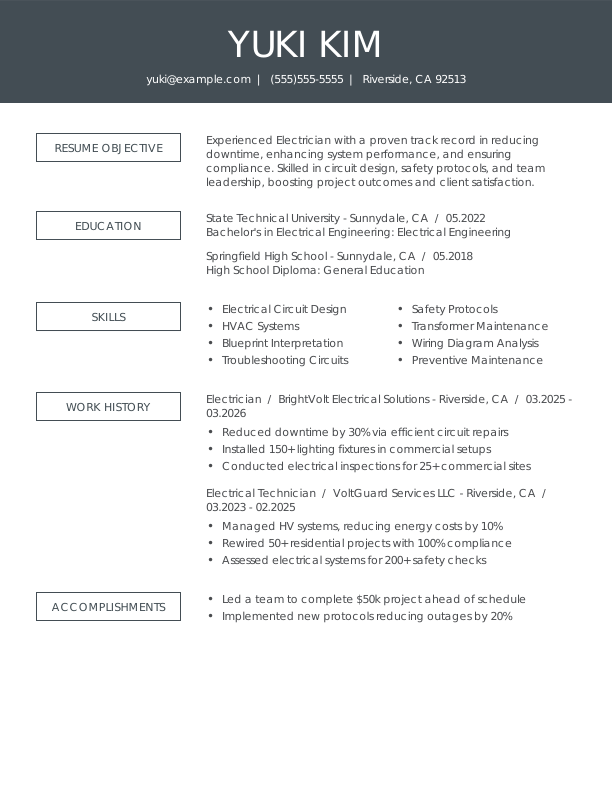
Electrician Entry-Level Resume
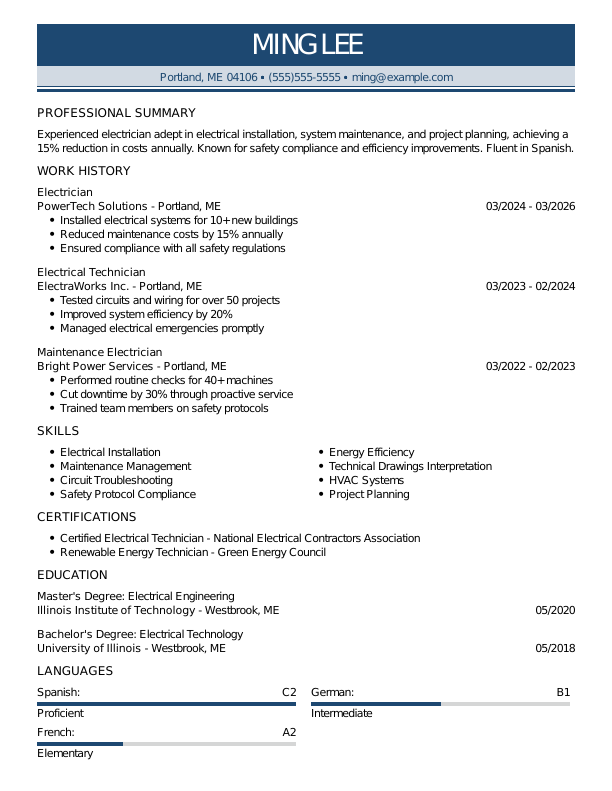
Electrician Mid-Level Resume
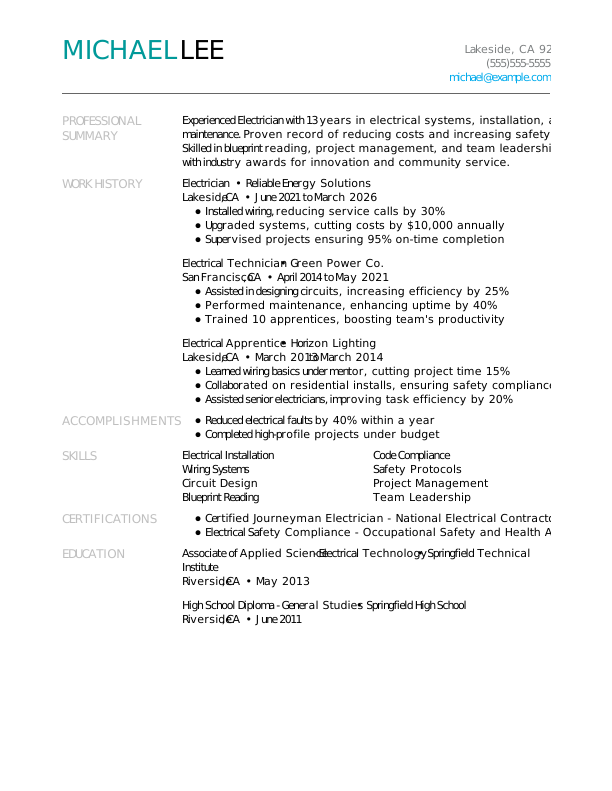
Electrician Experienced Resume
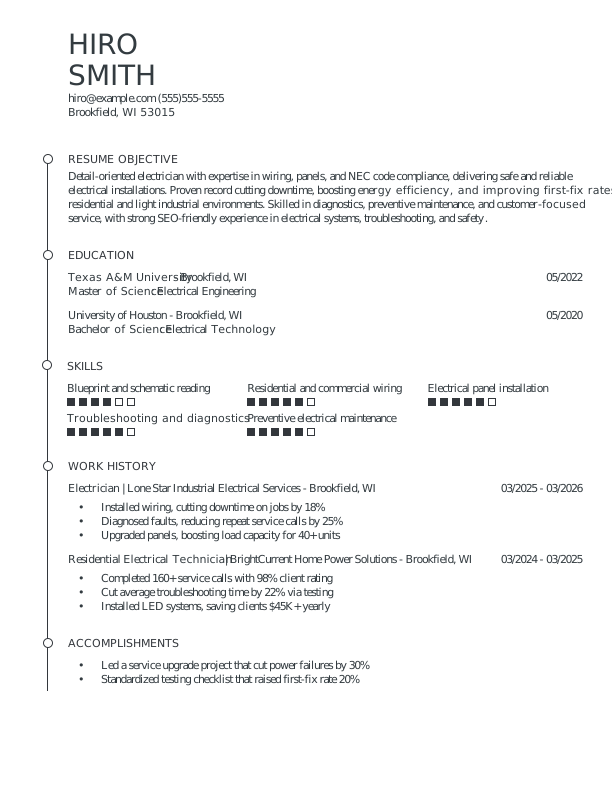
 Free
FreeElectrician Modern Resume
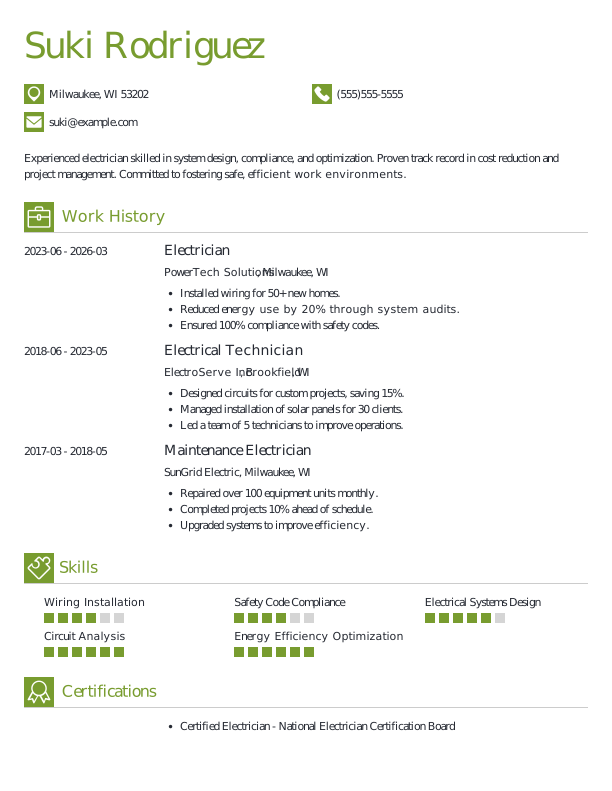
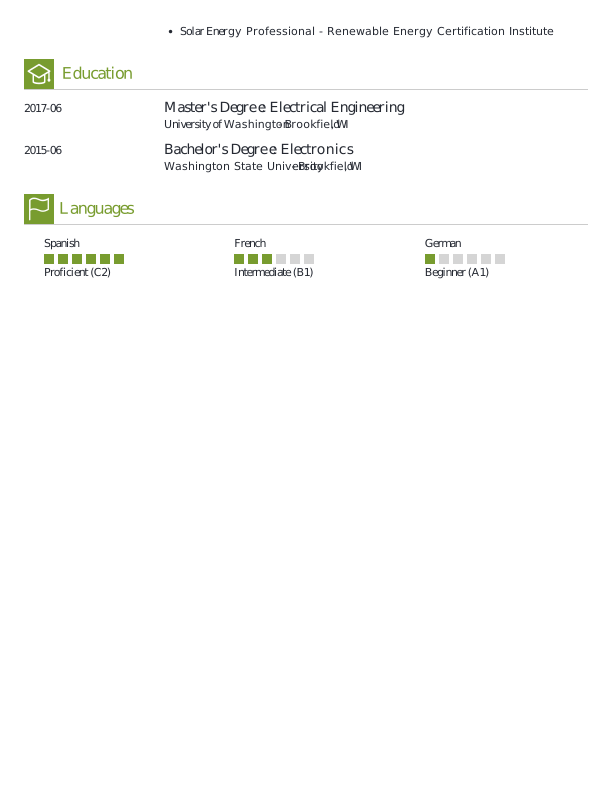
Electrician Creative Resume
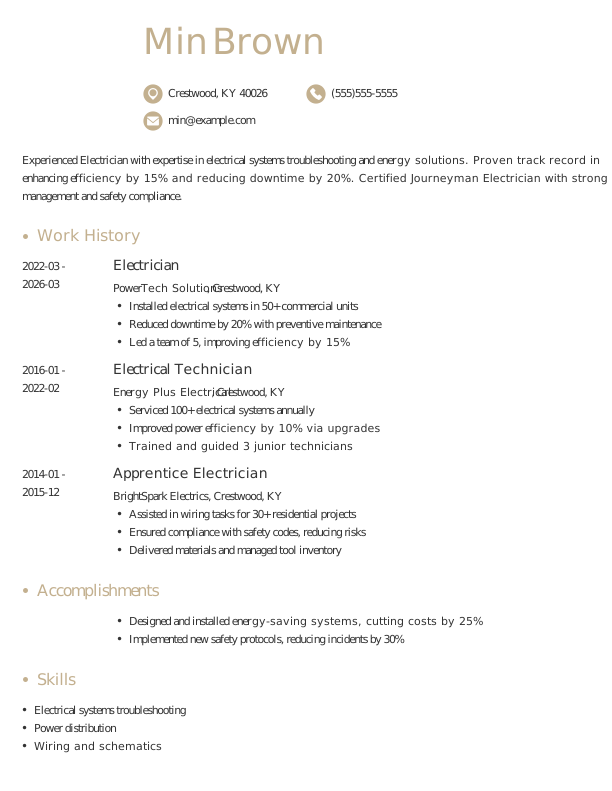
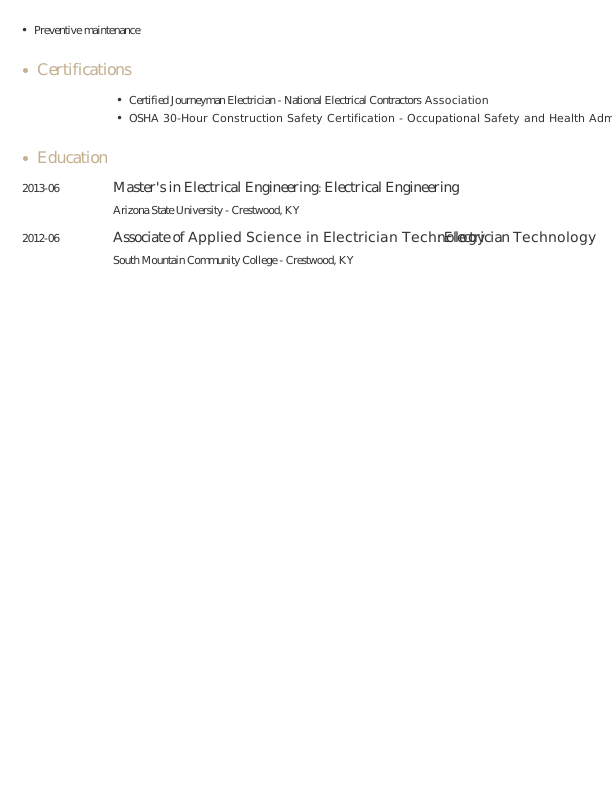
Electrician Traditional Resume
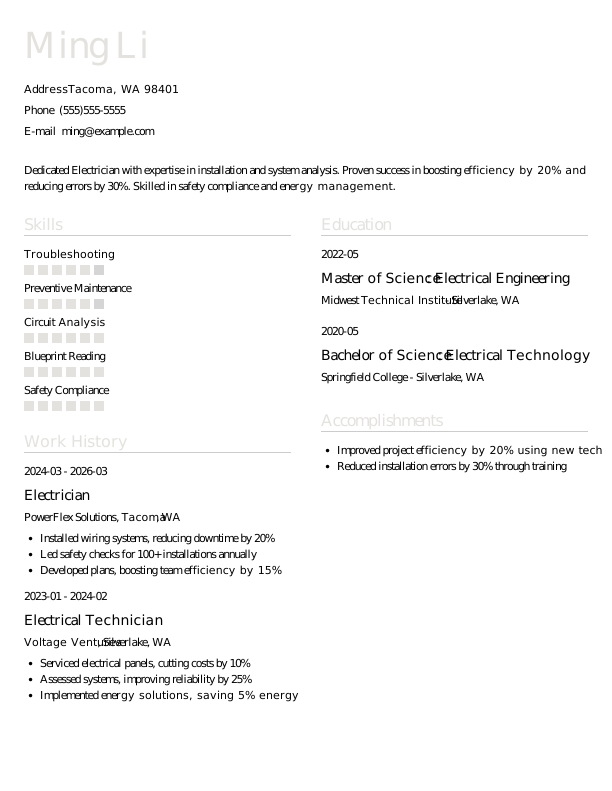
Electrician Simple CV Example
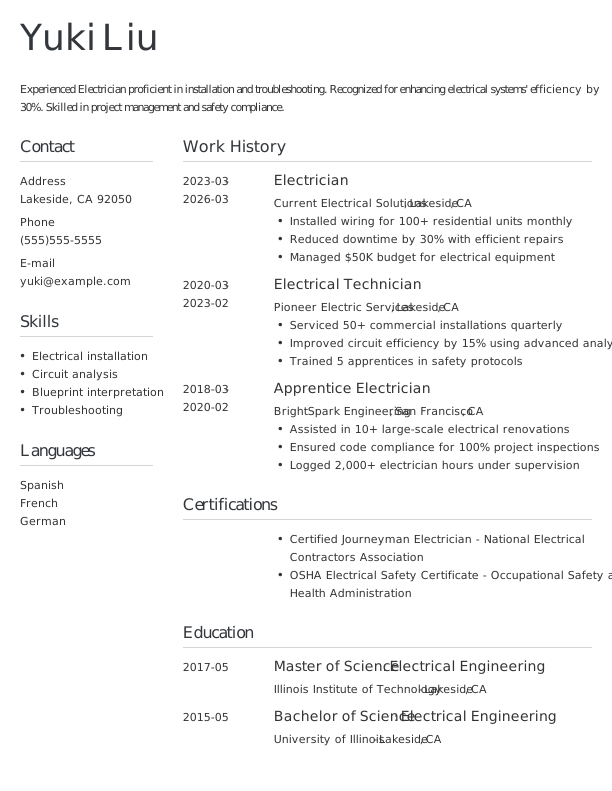
Electrician CV Format
Browse Free Resume Templates
- Accounts Payable
- Adjunct Professor
- Artist
- Auto Mechanic
- Baker
- Business Development Manager
- Business
- Certified Nursing Assistant
- Classic & Traditional
- Cleaner
- College Student
- Concierge
- Construction Worker
- Corporate
- Creative & Unique
- Custodian
- Customer Service
- Dental Assistant
- Direct Support Professional
- Entry-Level
- Flight Attendant
- Hospitality & Food Service
- Front Desk Receptionist
- Healthcare
- High School
- Housekeeping
- Hvac Technician
- Hybrid
- Inventory Manager
- Logistics
- Maintenance
- Management
- Modern
- Mortgage Loan Processor
- Pet Sitter
- Phlebotomist
- Production
- Rbt
- Sales
- Security Services
- Restaurant Server
- Simple & Basic
- Social Work
- Teacher
- Technology
Resume Examples for Electricians
Electrician resumes should be tailored to your license class and the types of work you specialize in. Browse our templates, or build a resume that highlights your electrical certifications.
Entry-Level Electrician Resume
If you are entering the electrical trade from a vocational program, this template helps you write an electrician resume by emphasizing your apprenticeship progress, code coursework, and any hands-on lab training.

Mid-Career Electrician Resume
An ideal choice for mid-level electricians with a strong background in installation and maintenance, this template highlights achievements in cost reduction and safety compliance to support growth into leadership or specialized roles.

Experienced Electrician Resume
An ideal choice for electricians with over 10 years of experience, this template supports professionals seeking senior-level roles or positions that emphasize leadership in electrical projects.

Electrician Resume Template (Text)
The text resume below gives you a starting point for an electrician application. Paste it into your document and update it with your license class, code knowledge, and specializations.
Tao Johnson
Eastside, WA 98005
Professional Summary
Licensed electrician with 8 years of experience in commercial, industrial, and plant electrical systems, specializing in troubleshooting and preventive maintenance. Proven record reducing downtime, improving energy efficiency, and delivering NEC-compliant installations on schedule. Skilled in diagnostics, PLC controls, safety compliance, and high-reliability power distribution for manufacturing and facility operations.
Work Experience
March 2022 – March 2026
Midwest Power Services – Eastside, WA
Electrician
- Installed and tested 250+ circuits to NEC code yearly
- Cut downtime 28% via fast fault isolation and repair
- Upgraded panels, boosting energy efficiency by 18%
March 2018 – February 2022
Riverside Manufacturing Electrical – Eastside, WA
Journeyman Maintenance Electrician
- Reduced unplanned outages by 32% via PM program
- Completed 400+ motor control repairs with 0 rework
- Lowered annual energy costs by $95K with retrofits
March 2016 – February 2018
Great Lakes Industrial Electrics – Silverlake, WA
Industrial Electrical Technician
- Assisted in wiring 120K sq ft plant on schedule
- Executed 300+ lockout-tagout jobs with zero incidents
- Improved troubleshooting time by 22% using PLC data
Education
June 2014
Ohio State University Columbus, OH
Master of Science Electrical Engineering Technology
June 2012
University of Toledo Toledo, OH
Bachelor of Science Electrical Engineering
Certifications
- Certified Industrial Electrician Specialist – National Electrical Training Council
- NFPA 70E Electrical Safety Certification – NFPA Training and Education
- Programmable Logic Controller (PLC) Technician – Institute of Industrial Automation
Skills
- Commercial and industrial wiring
- Electrical troubleshooting and diagnostics
- Preventive and predictive maintenance
- Blueprints and electrical schematics reading
- Circuit breakers, panels, and switchgear
- NEC, OSHA, and electrical safety compliance
- PLC and motor control systems
- Energy-efficient lighting and retrofits
How to Write an Electrician Resume
As an electrician, knowing how to write a resume involves showcasing your technical skills, relevant experience, and a clear format that captures the attention of hiring managers. Use the guidance below to emphasize your strengths and tailor your resume for the positions you’re aiming for.
1. Contact Info
Your contact information should be prominently displayed at the top of your resume, ensuring clarity and professionalism.
Be sure to include:
- Full name
- Phone number
- Professional email address
- City and state (ZIP code is optional)
- LinkedIn profile or relevant portfolio (if applicable)
 PRO TIP
Avoid including irrelevant personal details such as your Social Security number, age, or a photo unless the employer specifically requests them.
2. Resume Profile
A resume profile is a concise introductory section, typically consisting of two to four sentences. It serves as your elevator pitch to hiring managers by highlighting your key qualifications and motivating them to delve deeper into your application.
This profile usually appears at the top of your resume and can be formatted as either a summary or an objective, each serving distinct purposes. Understanding these differences will help you choose the right approach for your presentation:
- A resume summary highlights relevant qualifications, technical skills, and significant achievements related to electrical work. This format is particularly beneficial for individuals with a history of relevant experience or transferable skills who aim to showcase their contributions as skilled electricians.
- A resume objective outlines your career aspirations and highlights what you aim to accomplish in your next role. This section is particularly useful for recent graduates, individuals changing careers, or those starting out in the electrician field with limited experience.
Let’s examine the differences between a resume summary and a resume objective through the following examples:
Electrician resume summary example:
Dedicated electrician with 6+ years of experience in residential and commercial projects, including new constructions and renovations. Proficient in electrical installations, troubleshooting, and compliance with safety regulations. Recognized for delivering efficient service while ensuring high-quality workmanship and customer satisfaction.
Electrician resume objective example:
Recent graduate with an electrical engineering degree and a desire to launch a career as an electrician in a dynamic construction environment. Committed to safety and efficiency while bringing strong problem-solving abilities and adaptability to both residential and commercial projects.
3. Work Experience
The work experience on your resume is a key foundation for showcasing your qualifications. Employers review not only the roles you’ve held but also the impact you’ve made in those positions. Highlighting this shows how your background in electrical work equips you to handle the challenges of the electrician role.
The work experience section should contain:
- Job title
- Employer name and location
- Dates of employment (month/year)
- 3–5 bullet points detailing your electrical installations and safety compliance achievements
Tailor your work experience bullet points to the electrician role by using industry-specific terminology. Start each point with a strong action verb like “Installed,” “Maintained,” or “Upgraded” to grab attention.
Incorporate quantifiable metrics where possible, as they illustrate your impact. Specific achievements, such as reducing downtime by 20% or completing projects ahead of schedule, highlight your value and set you apart from other applicants.
In general, consider following the format of:
[action verb] + [responsibility] = [result/achievement]
For example:
Installed and maintained electrical systems for over 50 residential properties annually, ensuring compliance with local codes and improving customer safety by reducing outage incidents by 15%.
Note that you can also flip the result/achievement with the responsibility:
Achieved a 20% improvement in energy efficiency in commercial buildings through strategic upgrades to lighting and HVAC systems.
With these techniques in mind, your resume bullets may look something like:
- Installed and repaired electrical systems in over 50 residential and commercial properties, achieving a 20% reduction in energy costs for clients.
- Conducted routine maintenance checks on electrical equipment, decreasing downtime by 30% and improving operational efficiency.
- Collaborated with contractors to complete projects ahead of schedule by an average of two weeks, ensuring client satisfaction.
- Used advanced diagnostic tools to troubleshoot electrical issues, improving first-time fix rates by 25%.
- Mentored junior electricians, fostering skill development and promoting safety standards within the team.
4. Skills
The ATS-friendly resume skills section offers a concise overview of your electrical expertise, highlighting key abilities that position you as a strong job seeker. By improving ATS compatibility, this section allows recruiters to quickly assess your qualifications.
Skills can be categorized into three key areas:
- Soft skills are personal qualities that influence how electricians collaborate with clients and team members.
- Hard skills are specific, quantifiable abilities acquired through education, training, or experience.
- Technical skills are the specific competencies required to perform tasks using tools and equipment in various fields.
5 Soft Skills for Your Resume or CV
- Attention to detail
- Effective communication
- Teamwork and collaboration
- Time management skills
- Customer service orientation
5 Hard Skills for Your Resume or CV
- Electrical system installation
- Circuit troubleshooting (multimeters, oscilloscopes)
- Wiring methods (conduit bending, cable splicing)
- Safety standards compliance (OSHA, NEC)
- Blueprint reading and interpretation
In general, including a well-rounded selection of relevant skills that directly correspond to the job requirements will improve your resume.
PRO TIP
If you’re a newer electrician, consider placing your skills section higher on the resume right after your summary. If you have more experience, it’s better to position this section lower and weave your skills into your work history for a cohesive presentation.
5. Education
Understanding how to list education on your resume is important for clearly showcasing your qualifications. Begin by listing your most recent or relevant electrical engineering degree, ensuring you include both the degree type and the name of the school.
If you’re a recent graduate, consider adding optional details such as your graduation year, GPA (if it’s 3.5 or above), any honors received, or relevant coursework that highlights your expertise.
Electrician resume education section example:
Diploma in Electrical Technology
Technical Institute of New York, New York, NY
Graduated: 2023 | Top of Class (GPA 3.8)
PRO TIP
When listing multiple degrees on your resume, format them in reverse-chronological order, starting with the highest degree first, such as Bachelor of Science in Electrical Engineering (BSEE), followed by Associate Degree in Applied Science (AAS) in Electrical.
6. Certifications
Certifications highlight your qualifications and ensure you have the latest skills that employers seek. While not always included in a traditional resume, this section is important for many electricians, especially for roles requiring specialized expertise, such as industrial or residential wiring. Many companies look for specific credentials to meet safety standards and regulations.
Be sure to showcase relevant certifications that improve your application. Keeping these credentials current and clearly formatted will strengthen your professional profile.
Electrician certification examples:
- Licensed Electrician Certification | State of New York | Expires: 02/2028
- National Electrical Code (NEC) Certification | National Fire Protection Association | Expires: 03/2027
- OSHA 30-Hour Construction Safety | Occupational Safety and Health Administration | Expires: 04/2028
- Residential Wiring Certification | Home Builders Institute | Expires: 11/2027
Start Building Your Job-Winning Resume
Use Your Existing Resume
Import your current resume to transfer your information to one of our professional templates.
Create a New Resume
Start fresh with a template that catches your eye and follow the prompts to add your details.
Tailor Your Work History to Beat the ATS
Your work experience is more than just a summary of your positions. It’s an opportunity to showcase your contributions and the tangible results you’ve achieved in your field, such as completed projects or efficiency improvements. This approach not only highlights your skills but also makes your resume ATS-friendly, ensuring it can be effectively scanned by applicant tracking systems (ATS).
To create a compelling work history, tailor it specifically to the job you’re pursuing by incorporating relevant keywords. Begin by thoroughly reviewing the job description for key skills and qualifications that appear frequently. Make sure to mirror those terms in your experience descriptions where applicable to improve alignment with the employer’s expectations.
What’s a Fair Electrician Salary?
Researching salary data is essential for evaluating job offers, negotiating pay, and making informed career choices. The information below comes from the U.S. Bureau of Labor Statistics (BLS) and presents the latest nationwide averages for electricians.
Several factors can impact actual earnings, including geographic location, years of experience, certifications, and specific areas of expertise. For example, electricians specializing in industrial settings or those with advanced certifications often command higher wages compared to their counterparts working in residential or commercial sectors.
| Alabama | $56,340 |
| Alaska | $83,520 |
| Arizona | $61,520 |
| Arkansas | $52,860 |
| California | $85,780 |
| Connecticut | $74,170 |
| Delaware | $67,900 |
| District of Columbia | $90,800 |
| Florida | $55,490 |
| Georgia | $61,590 |
| Hawaii | $86,690 |
| Idaho | $62,180 |
| Illinois | $89,190 |
| Indiana | $67,890 |
| Iowa | $63,910 |
| Kansas | $65,470 |
| Kentucky | $60,660 |
| Louisiana | $59,530 |
| Maine | $71,460 |
| Maryland | $72,390 |
| Massachusetts | $82,140 |
| Michigan | $71,060 |
| Minnesota | $83,030 |
| Mississippi | $54,810 |
| Missouri | $71,230 |
| Montana | $68,080 |
| Nebraska | $61,890 |
| Nevada | $72,120 |
| New Hampshire | $63,440 |
| New Jersey | $80,090 |
| New Mexico | $59,420 |
| New York | $83,350 |
| North Carolina | $55,370 |
| North Dakota | $70,330 |
| Ohio | $65,970 |
| Oklahoma | $62,850 |
| Oregon | $91,950 |
| Pennsylvania | $73,510 |
| Rhode Island | $70,760 |
| South Carolina | $58,420 |
| South Dakota | $57,660 |
| Tennessee | $59,530 |
| Texas | $57,250 |
| Utah | $63,010 |
| Vermont | $61,220 |
| Virginia | $66,630 |
| Washington | $93,840 |
| West Virginia | $65,890 |
| Wisconsin | $72,760 |
| Wyoming | $72,260 |
| Guam | $43,040 |
| Puerto Rico | $39,320 |
| Virgin Islands | $72,950 |
Key Takeaways
- Tailor your resume to the job description. Use keywords from the posting to align your skills and experiences for both ATS and hiring managers.
- Highlight quantifiable achievements that demonstrate your expertise (e.g., completed projects under budget, reduced installation time by X%, improved safety compliance rates) to capture attention.
- Select a resume format based on your experience level. Entry-level electricians might prefer a functional layout, while seasoned professionals should opt for reverse-chronological resumes.
More Resume & CV Examples
- Air Sealing Technician
- Aircraft Mechanic
- Automotive Technician
- Barber
- Blue Collar
- Boilermaker
- Budtender
- Cable Technician
- Carpenter
- Carpentry
- Cosmetologist
- Crane Operator
- Diesel Mechanic
- Diesel Technician
- Glazier
- Hair Stylist
- Handyman
- Hvac Installer
- Industrial Electrician
- Ironworker
- Journeyman Electrician
- Landscaper
- Lineman
- Machinist
- Millwright
- Painter
- Pipe Fitter
- Plumber
- Roofer
- Solar Installer
- Structural Welder
- Welder
Cover Letters for Your Resume
Browse our library of cover letter examples to complete your application. A resume will have a better chance of getting noticed.
Frequently Asked Questions
Last Update:
What resume format should I use for my electrician resume?
There are three main resume formats to consider when applying for an electrician position. The format you choose should reflect your experience level and highlight the skills or accomplishments you want to showcase:
- Chronological: The chronological resume format is the most widely used among job seekers. By emphasizing your work history, it highlights roles and achievements in a clear sequence. This approach is particularly helpful for applicants with consistent experience, as it reinforces their qualifications and improves credibility with potential employers.
- Functional: The functional resume, or skills-based resume, highlights your qualifications and skills rather than focusing on work history. This format is particularly beneficial for applicants who lack direct experience in the field or have gaps in employment. By showcasing abilities, you can attract attention from potential employers more easily.
- Combination: A combination resume merges the chronological and functional formats, showcasing both skills and work experience. This format benefits professionals who want to emphasize their abilities while detailing their career trajectory, making it ideal for those transitioning into new fields or advancing in their careers.
Should I include a cover letter with my resume?
Yes, you should include a cover letter with your electrician job application. A well-crafted cover letter improves your resume by allowing you to express why you’re drawn to the position and how your skills align with the needs of the employer. It demonstrates that you’ve taken the time to tailor your application, which can set you apart from other applicants who may not put in this extra effort.
If you’re hesitant about writing a cover letter, there are many resources available to assist you. You can find guides on how to write a cover letter specifically for electricians, along with examples that illustrate effective approaches and various formats that can help showcase your expertise and experience.
For those looking for an efficient way to create their cover letters, using a cover letter generator can simplify the process by providing structured templates and tailored suggestions based on your specific job application.
How long should an electrician resume be?
For electricians with less than 10 years of experience, a one-page resume is generally adequate to highlight skills and relevant work history. Focus on key qualifications, certifications (such as OSHA safety training), and hands-on projects that showcase your expertise in the field.
Conversely, seasoned electricians or those in specialized roles may extend their resumes to two pages if they remain focused and relevant. Ensure that all information adds value, emphasizing unique skills and significant projects while maintaining clarity throughout the document.
What keywords should I include to pass applicant tracking systems (ATS)?
To improve your chances of getting noticed by ATS, focus on incorporating keywords and phrases from the job description. Look for terms like “circuit installation,” “safety protocols,” or “electrical code compliance” that relate specifically to the electrician role.
Don’t forget to list relevant certifications such as Journeyman License or Master Electrician Certification, along with technical skills in tools like multimeters or circuit analyzers. This approach will demonstrate your qualifications clearly and help you stand out during the screening process.
Should I include apprenticeship or side projects on my resume?
Yes, especially if you’re starting out. Including apprenticeships or personal projects demonstrates practical skills and initiative in the electrical field, making you more appealing to employers when formal work experience is limited.

Kirsten Chorpenning is a career advice writer who empowers job seekers to take control of their career paths using Monster’s comprehensive job search and resume tools. She specializes in helping job seekers find rewarding jobs in today’s dynamic work environment.
See More From Kirsten ChorpenningExplore Related Career Advice


How to Put Transferable Skills on Your Resume: 120 Skills, Examples, & Tips
Updated:
Aug 27, 2026
|
16 min read


How to Write a Functional Resume (Formatting Tips, Template, & Examples)
Updated:
Aug 7, 2026
|
17 min read


Functional vs Chronological Resume: Which Format Is Right for You?
Updated:
Aug 3, 2026
|
16 min read

100+ Resume Adjectives to Help You Write a Stronger Resume in 2026 (With Examples)
Updated:
Jul 30, 2026
|
12 min read