
Free Automotive Technician Resume Templates & Examples
Prove your diagnostic expertise and repair precision with free automotive technician resume and CV examples. These templates help you lead with your ASE certifications and service volume.
Real-World Resumes That Get Results
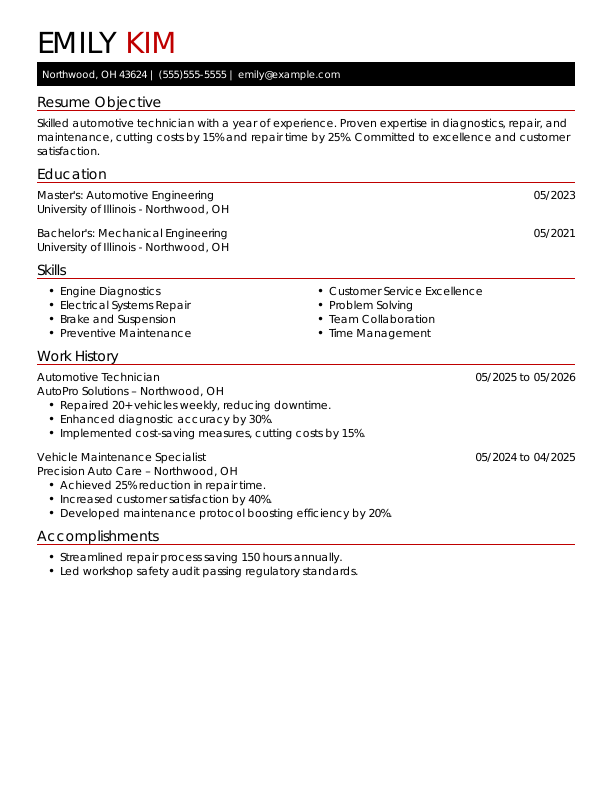
Automotive Technician Entry-Level Resume
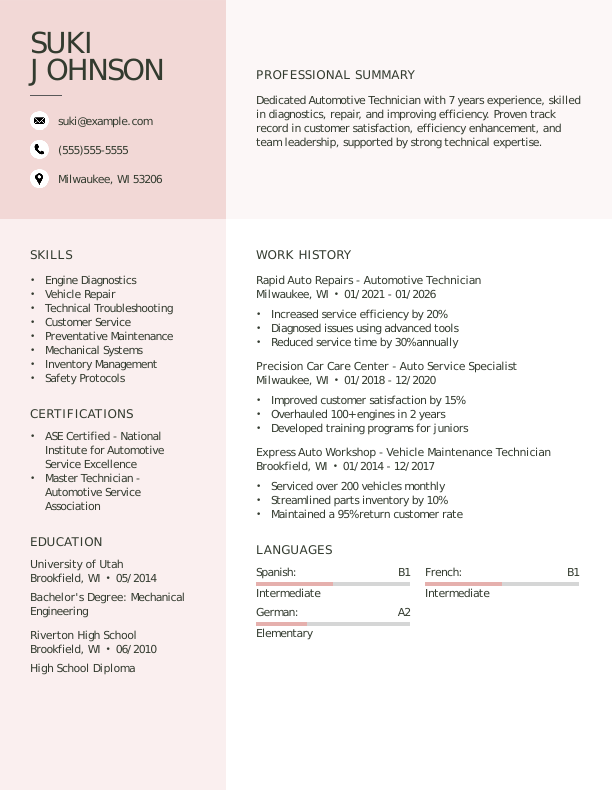
Automotive Technician Mid-Level Resume
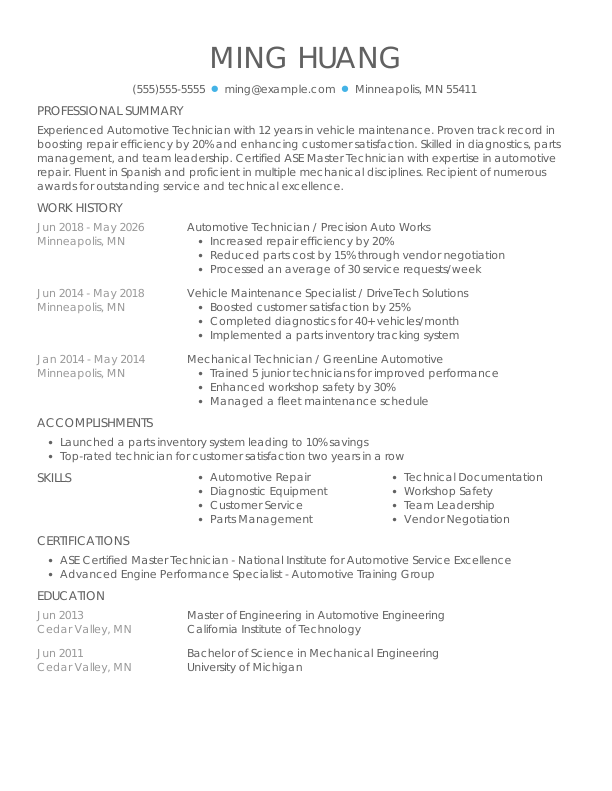
Automotive Technician Experienced Resume
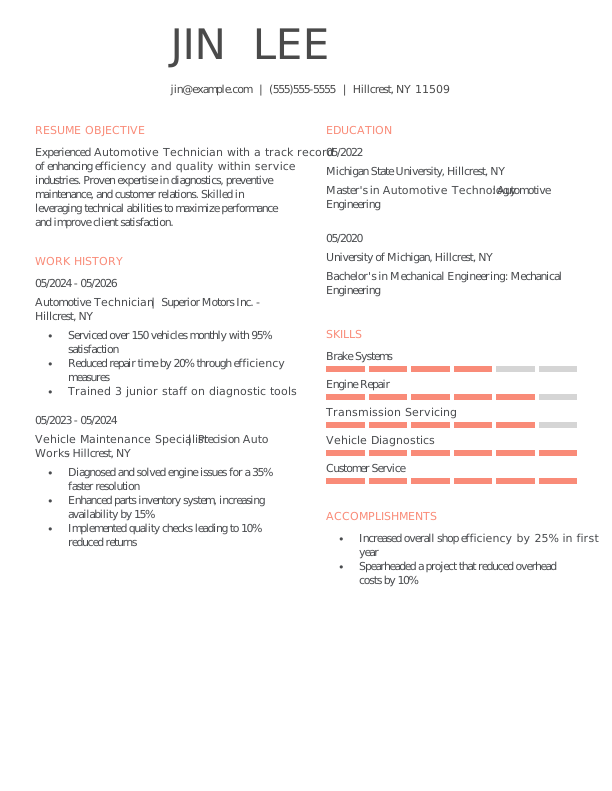
 Free
FreeAutomotive Technician Modern Resume
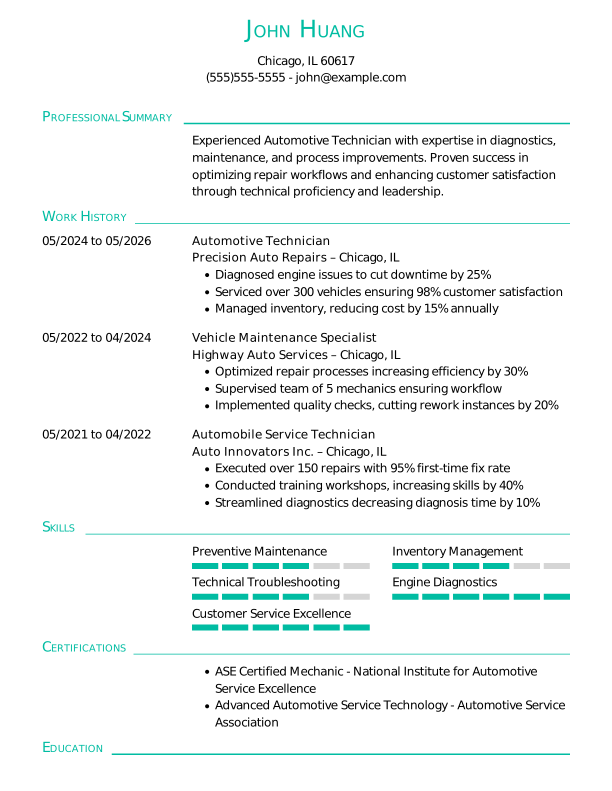
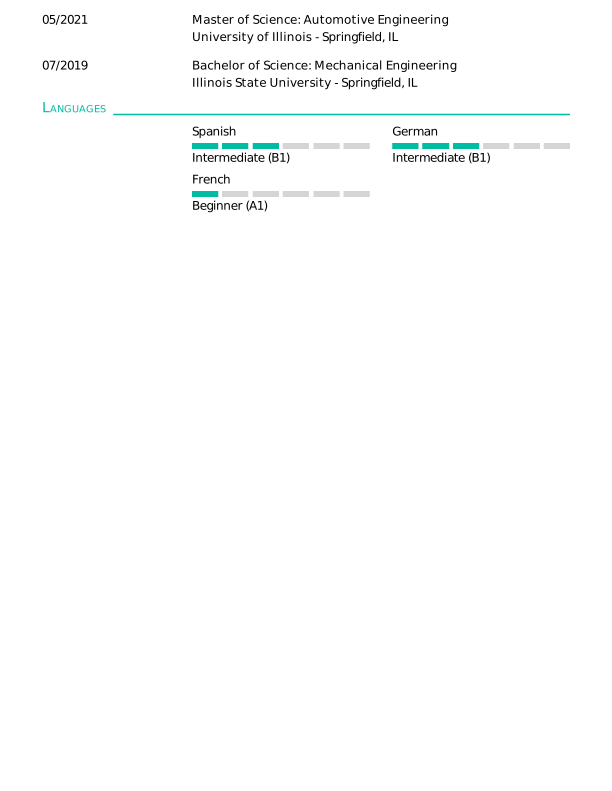
 Popular
Automotive Technician Creative Resume
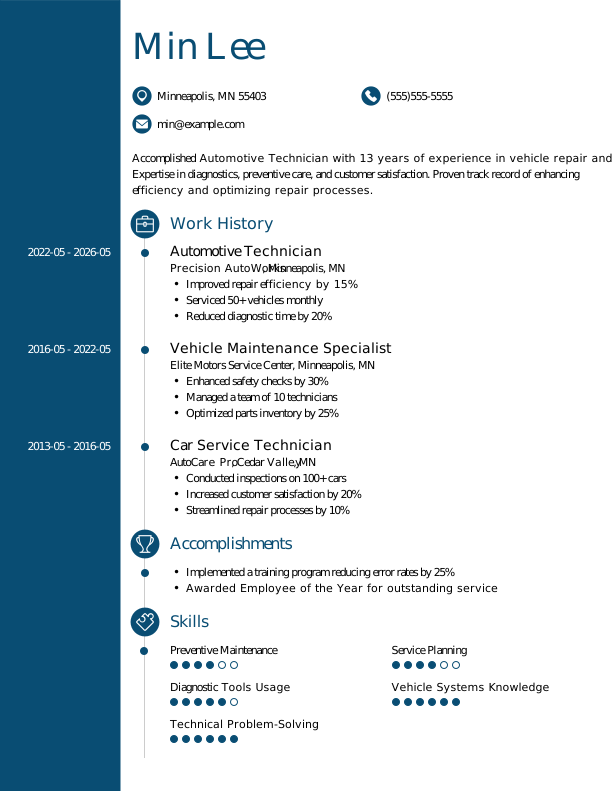
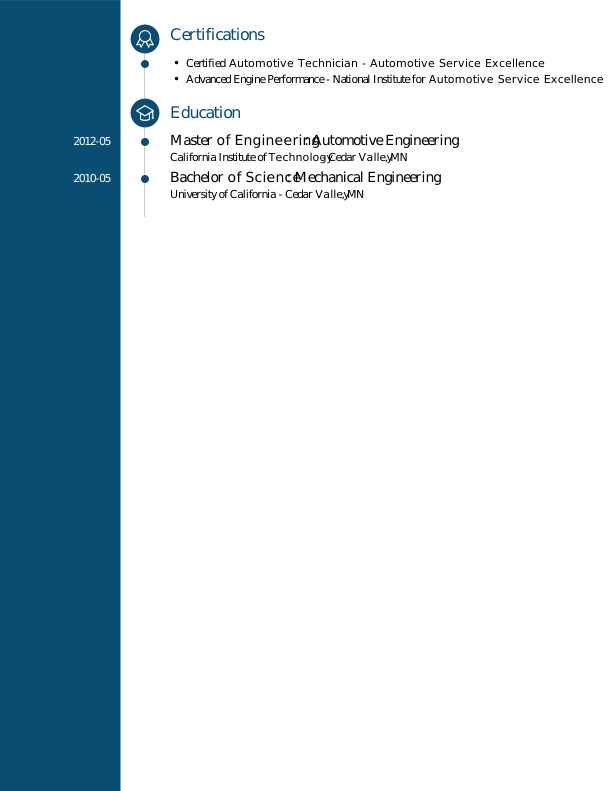
Automotive Technician Traditional Resume
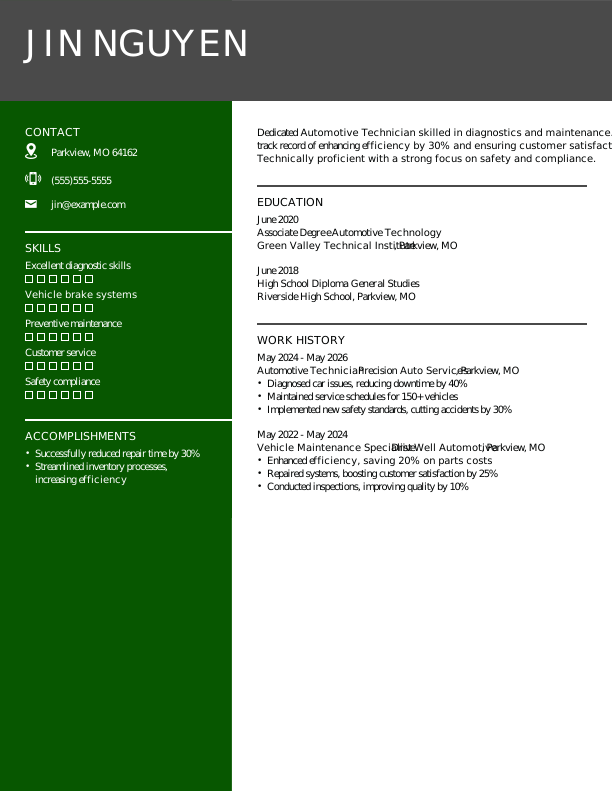
Automotive Technician Simple CV Example
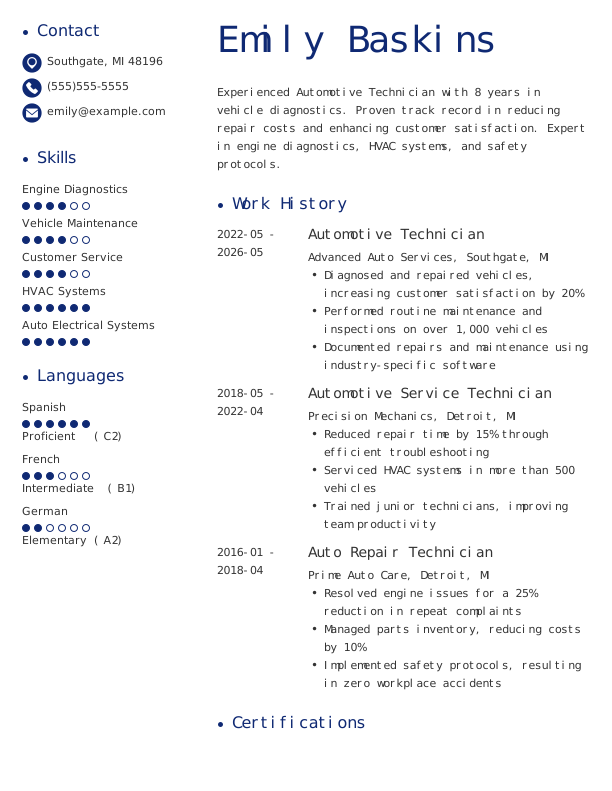
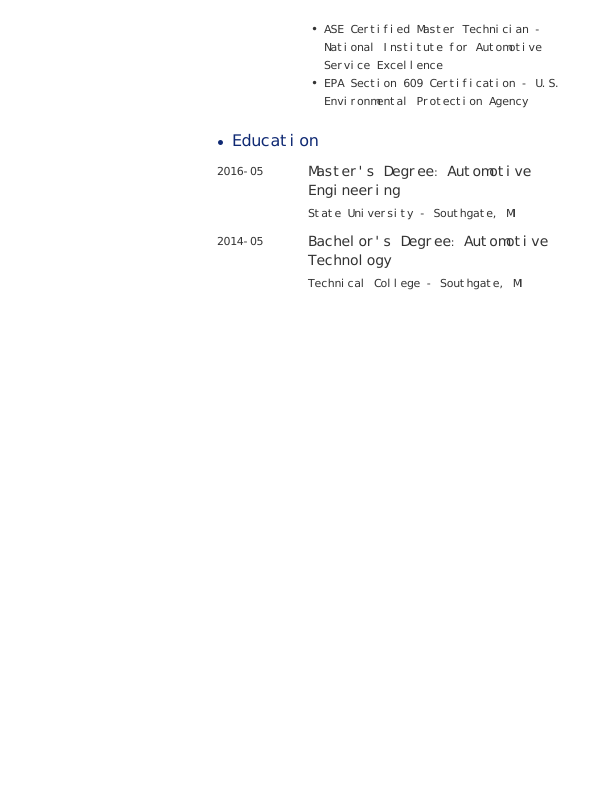
Automotive Technician CV Format
Browse Free Resume Templates
- Accounts Payable
- Adjunct Professor
- Artist
- Auto Mechanic
- Baker
- Business Development Manager
- Business
- Certified Nursing Assistant
- Classic & Traditional
- Cleaner
- College Student
- Concierge
- Construction Worker
- Corporate
- Creative & Unique
- Custodian
- Customer Service
- Dental Assistant
- Direct Support Professional
- Entry-Level
- Flight Attendant
- Hospitality & Food Service
- Front Desk Receptionist
- Healthcare
- High School
- Housekeeping
- Hvac Technician
- Hybrid
- Inventory Manager
- Logistics
- Maintenance
- Management
- Modern
- Mortgage Loan Processor
- Pet Sitter
- Phlebotomist
- Production
- Rbt
- Sales
- Security Services
- Restaurant Server
- Simple & Basic
- Social Work
- Teacher
- Technology
Resume Examples for Automotive Technicians
An automotive technician’s resume or CV should reflect the varying skills and experiences at different career stages. Explore tailored templates for entry-level, mid-career, and experienced technicians, and use our Resume Builder to create your own.
Entry-Level Automotive Technician Resume
Ideal for recent graduates, this resume with no experience template is also beneficial for career changers entering the automotive industry from different fields.

Mid-Career Automotive Technician Resume
A good fit for automotive technicians with several years of experience, this template emphasizes recent service achievements and supports progression into more specialized or leadership roles.

Experienced Automotive Technician Resume
An ideal choice for automotive professionals with over 10 years of experience, this template supports individuals pursuing advanced technical roles or leadership positions in the industry.

Automotive Technician Resume Template (Text)
Use this customizable text template for an automotive technician position to copy, paste, and modify it directly in your document. Check out our resume templates for more examples.
Li Zhang
Detroit, MI 48214
Professional Summary
Experienced automotive technician skilled in diagnostics, engine repair, and client relations. Proven track record improving service efficiency and satisfaction.
Work Experience
June 2023 – May 2026
Precision Auto Solutions – Detroit, MI
Automotive Technician
- Diagnosed and repaired 150+ vehicles monthly
- Improved efficiency by 20% in engine tune-ups
- Reduced part returns by 15% via accuracy checks
May 2017 – May 2023
Metro Motorworks – Detroit, MI
Automotive Mechanic
- Serviced 200+ vehicles per quarter
- Enhanced tire change speed by 25%
- Cut downtime by 30% through process overhaul
May 2014 – April 2017
Green Auto Repair Co. – Southgate, MI
Car Maintenance Specialist
- Performed 100+ routine inspections weekly
- Boosted service satisfaction rating by 40%
- Decreased repair time by 10% with new strategies
Education
May 2014
Illinois State University Normal, IL
Master of Science Automotive Technology
May 2012
University of Illinois Chicago, IL
Bachelor of Science Mechanical Engineering
Certifications
- Certified Automotive Technician – Automotive Service Excellence (ASE)
- Electric Vehicles Specialist – EV Tech Institute
Skills
- Vehicle Diagnostics
- Engine Troubleshooting
- Routine Maintenance
- Customer Service Excellence
- Parts Management
- Technical Documentation
- Electrical Systems
- Hydraulic System Analysis
How to Write an Automotive Technician Resume
As an automotive technician, knowing how to write a resume involves showcasing your technical skills, relevant experience, and an organized format that highlights your qualifications. Use the guidance below to emphasize your strengths and tailor your resume for the specific positions you’re interested in.
1. Contact Info
Your contact information should be clear, professional, and easy to find at the top of your resume.
Make sure to include:
- Full name
- Phone number
- Professional email address
- City and state (ZIP code is optional)
- LinkedIn profile or personal portfolio (if relevant)
 PRO TIP
Avoid including sensitive details such as your Social Security number, religious beliefs, or personal photos on your resume unless the employer specifically requests them.
2. Resume Profile
A resume profile is a brief introductory section, typically two to four sentences long, that highlights your key qualifications and skills. It serves as a compelling pitch to hiring managers, designed to grab their attention and motivate them to explore your full resume further.
This profile is located at the top of your resume and can be formatted as either a summary or an objective, each serving distinct purposes. Understanding these differences can help you choose the best approach for showcasing your strengths:
- A resume summary highlights essential experience, technical skills, and notable achievements relevant to the automotive field. This format is especially beneficial for individuals with prior work history or transferable skills who aim to demonstrate their contributions as an automotive technician.
- A resume objective highlights your future aspirations and outlines your career goals. It’s particularly beneficial for recent automotive technology graduates, those shifting from different trades, or individuals with limited hands-on experience in the automotive field.
Let’s take a look at an example of each to see how a resume summary and a resume objective differ:
Automotive technician resume summary example:
Dedicated automotive technician with over 6 years of experience in high-volume service centers and dealerships. Proficient in diagnostics, repair, and customer service, ensuring optimal vehicle performance and safety. Acknowledged for consistently exceeding service expectations and fostering strong client relationships through reliable and efficient work.
Automotive technician resume objective example:
Recent graduate with a diploma in automotive technology excited to launch a career in a dynamic repair shop environment. Committed to quality workmanship and customer satisfaction, ready to contribute strong problem-solving abilities and attention to detail to an automotive service team.
3. Work Experience
The work experience on your resume is a critical selling point. Employers evaluate your job history to understand not only where you’ve worked but also how you’ve contributed to the automotive industry.
Your hands-on experience highlights how your skills in diagnostics and repair strengthen your qualifications for the technician position.
The work experience section should contain:
- Job title
- Employer name and location
- Dates of employment (month/year)
- 3–5 bullet points describing your relevant responsibilities and achievements
Tailor your content to reflect the specific automotive technician role you’re pursuing. Start each bullet point with an action verb (like “Diagnosed,” “Repaired,” “Inspected”) to strengthen your statements and emphasize your contributions.
Incorporate quantifiable information or metrics whenever possible. Specific numbers, such as repair times or customer satisfaction scores, illustrate your effectiveness and help differentiate you from other applicants in the job market.
In general, consider following the format of:
[action verb] + [responsibility] = [result/achievement]
For example:
Performed diagnostics and repairs on 30+ vehicles per week, ensuring a 95% customer satisfaction rating through quality service and timely repairs.
Note that you can also flip the result/achievement with the responsibility:
Achieved a 20% increase in repeat customers by implementing a follow-up service program to improve client relationships.
With these techniques in mind, your resume bullets may look something like:
- Diagnosed and repaired over 200 vehicles annually, reducing average repair time by 20%.
- Performed routine maintenance on 50+ vehicles per week, ensuring a customer satisfaction rate of 95%.
- Trained and mentored junior technicians, improving team productivity and skill levels.
- Used diagnostic tools and software to identify issues accurately, leading to a 15% increase in first-time fixes.
- Collaborated with service advisors to streamline workflow processes and improve communication with customers.
4. Skills
The skills section offers a brief overview of your technical abilities as an automotive technician. It allows hiring personnel to assess your qualifications quickly.
Skills can be grouped into three main categories: technical expertise, diagnostic skill, and customer service aptitude:
- Soft skills are personal qualities that influence how automotive technicians interact with colleagues and clients.
- Hard skills are specific, quantifiable abilities acquired through education, training, or experience.
- Technical skills are the specific abilities required to operate tools and technologies in a profession.
5 Soft Skills for Your Resume or CV
- Attention to detail
- Effective communication
- Team collaboration
- Time management skills
- Customer service orientation
5 Hard Skills for Your Resume or CV
- Engine diagnostics (OBD-II scanners)
- Brake system repair
- Electrical system troubleshooting (multimeters)
- Transmission service and repair
- Suspension alignment (laser alignment tools)
In general, aim to showcase a diverse set of relevant skills that align with the job requirements to demonstrate your full potential as an automotive technician.
PRO TIP
If you’re a newer automotive technician, consider placing your skills section higher on your resume right after your summary. If you have more experience, it’s better to position this section lower, weaving your skills into the descriptions of your work history for greater impact.
5. Education
Understanding how to list education on your resume is essential for showcasing your qualifications. Start with your most recent or relevant automotive degree, clearly stating the degree type and the institution’s name.
If you’re a recent graduate, consider adding your graduation year, GPA (if it’s 3.5 or above), any honors received, or relevant coursework that highlights your skills in the automotive field.
Automotive technician resume education section example:
Associate of Applied Science in Automotive Technology
Lincoln Tech, Nashville, TN
Graduated: 2023 | Honor Roll (2 semesters)
PRO TIP
If you’re progressing from an Associate Degree in Automotive Technology to a Bachelor of Science in Automotive Engineering, or have completed another relevant degree, list both in reverse-chronological order.
6. Certifications
Listing certifications on your resume showcases your expertise and helps offset any limited experience you may have. While not always included in a traditional resume, this section is particularly valuable for automotive technicians seeking to highlight their qualifications. Employers frequently require specific credentials for specialized roles, such as ASE certifications or manufacturer-specific training.
Be sure to provide only relevant certifications that improve your candidacy for the position. Keeping all certifications current and clearly formatted is essential for making a strong impression on potential employers.
Automotive technician certification examples:
- Automotive Service Excellence (ASE) Certification, A1-A8 | National Institute for Automotive Service Excellence | Expires: 12/2028
- Certified Automotive Technician (CAT) | Automotive Training Institute | Expires: 06/2027
- EPA Section 609 Certification | U.S. Environmental Protection Agency | Expires: 09/2028
- Hybrid and Electric Vehicle Certification | National Institute for Automotive Service Excellence | Expires: 03/2027
Start Building Your Job-Winning Resume
Use Your Existing Resume
Import your current resume to transfer your information to one of our professional templates.
Create a New Resume
Start fresh with a template that catches your eye and follow the prompts to add your details.
Tailor Your Work History to Beat the ATS
Your work experience is more than a list of job titles. It’s an opportunity to demonstrate the measurable impact you’ve had on vehicle performance, customer satisfaction, and repair efficiency. This approach can also help create an ATS-friendly resume that applicant tracking systems (ATS) can easily scan.
To craft an effective work history, tailor it to the specific automotive technician role you’re pursuing by using relevant keywords and industry terminology. Begin with a thorough analysis of the job description. Identify frequently mentioned skills, tools, or types of repairs, and aim to reflect those elements in your experience descriptions when possible.
Key Takeaways
- Tailor your resume to the job description. Use the employer’s terminology when detailing your skills and experience for better results with both ATS and hiring managers.
- Highlight quantifiable achievements to showcase your impact. Include specific metrics (e.g., repair times, customer satisfaction ratings, certifications) to differentiate yourself.
- Select an appropriate format based on your experience level. Entry-level technicians might benefit from a functional layout, while seasoned professionals typically use a chronological format.
More Resume & CV Examples
- Aerospace Engineer
- Agricultural Engineer
- Ai Engineer
- Air Sealing Technician
- Aircraft Mechanic
- Architecture
- Automation Engineer
- Barber
- Bim Engineer
- Biomedical Engineering
- Blue Collar
- Boilermaker
- Budtender
- Cable Technician
- Carpenter
- Carpentry
- Chemical Engineering
- Civil Engineer
- Construction Assistant
- Construction Management
- Construction Manager
- Construction Project Manager
- Construction
- Construction Superintendent
- Contractor
- Controls Engineer
- Cosmetologist
- Crane Operator
- Design Engineer
- Diesel Mechanic
- Diesel Technician
- Electrical Engineer
- Electrician
- Embedded Systems Engineer
- Engineering Manager
- Engineering Project Manager
- Engineering
- Enterprise Architect
- Environmental Engineer
- Field Engineer
- Foreman
- General Labor
- Glazier
- Hair Stylist
- Handyman
- Heavy Equipment Operator
- Hvac Installer
- Industrial Electrician
- Industrial Engineer
- Ironworker
- Journeyman Electrician
- Laborer
- Landscaper
- Lineman
- Machinist
- Mechanical Engineer
- Millwright
- Painter
- Petroleum Engineer
- Pipe Fitter
- Plumber
- Robotics Engineer
- Roofer
- Solar Installer
- Structural Welder
- Superintendent
- System Engineer
- Test Engineer
- Welder
Cover Letters for Your Resume
Browse our library of cover letter examples to complete your application. A resume will have a better chance of getting noticed.
Frequently Asked Questions
Last Update:
What resume format should I use for my automotive technician resume?
There are three main resume formats to consider when applying for an automotive technician role. Your choice should reflect your experience level and the skills you want to highlight:
- Chronological: The most popular format, a chronological resume emphasizes your work experience by detailing your responsibilities and achievements. This makes it an excellent choice for applicants with a consistent job history in automotive technician roles that reinforces their qualifications and showcases their expertise in the field.
- Functional: Also referred to as a functional resume, this skills-based format emphasizes a summary of qualifications and an expanded skills section to highlight your automotive expertise. By minimizing focus on work history, it becomes helpful for job seekers with limited relevant experience or those transitioning into the field.
- Combination: A combination resume integrates chronological and functional formats, showcasing both skills and work experience. This approach benefits automotive technicians by allowing them to emphasize their technical expertise alongside their career development, making it ideal for those advancing or specializing in the field.
Should I include a cover letter with my resume?
Yes, you should include a cover letter with your automotive technician job application. A well-crafted cover letter improves your resume by allowing you to demonstrate your passion for the industry and highlight specific skills or experiences that set you apart from other job seekers. It gives employers insight into your personality and work ethic, which can be just as important as technical qualifications.
If you’re feeling overwhelmed by the thought of writing a cover letter, don’t worry—there are many resources available to guide you. You can find online tutorials on how to write a cover letter tailored for automotive roles. Additionally, reviewing examples specific to the automotive field can help spark ideas about how to present your unique qualifications. Various formats are also available, allowing you to choose one that best fits your style and experience.
For those looking for a quick solution, consider using a cover letter generator to simplify the process. These tools provide templates and suggestions tailored to automotive positions, making it easier for you to create a professional-looking document in no time.
What keywords should I include to pass applicant tracking systems (ATS)?
To get noticed by hiring managers, focus on using keywords from the job posting in your resume. Incorporate phrases like “engine diagnostics,” “preventive maintenance,” or “customer service” to match the requirements of the automotive technician role. This will help you pass ATS filters and ensure your application is reviewed.
Additionally, highlight any relevant certifications, such as ASE certification or EPA 609 certification. Mentioning technical tools you’re familiar with, like OBD-II scanners or diagnostic software, can further showcase your suitability for the position. These specific terms will strengthen your resume and increase your chances of landing an interview.
Should I include hands-on experience from personal projects or internships?
Yes, especially if you’re new to the field. Listing hands-on work from personal projects demonstrates your practical skills and problem-solving abilities, making you more appealing to employers when formal automotive technician experience is limited.

Megan Dawkins is a career industry editor who empowers job seekers to take control of their career paths using Monster’s comprehensive job search and resume tools. She specializes in helping job seekers navigate the flexible job market.
See More From Megan DawkinsExplore Related Career Advice


How to Put Transferable Skills on Your Resume: 120 Skills, Examples, & Tips

Updated:
Aug 27, 2026
|
16 min read


How to Write a Functional Resume (Formatting Tips, Template, & Examples)
Updated:
Aug 7, 2026
|
17 min read


Functional vs Chronological Resume: Which Format Is Right for You?
Updated:
Aug 3, 2026
|
16 min read

100+ Resume Adjectives to Help You Write a Stronger Resume in 2026 (With Examples)
Updated:
Jul 30, 2026
|
12 min read