
Free Landscaper Resume Templates & Examples
A landscaper resume should cover your knowledge of plants, irrigation systems, and hardscaping alongside your physical endurance and reliability. Browse the examples below to find one that organizes your outdoor experience clearly.
Real-World Resumes That Get Results
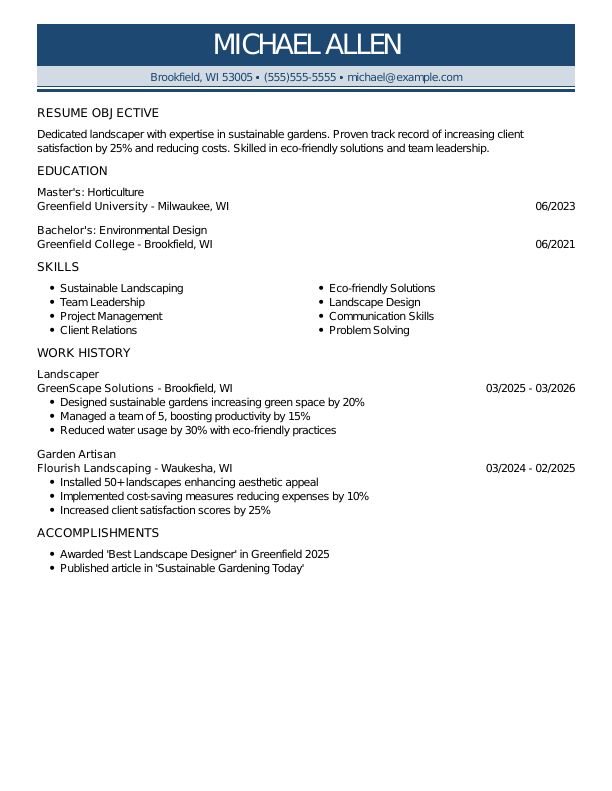
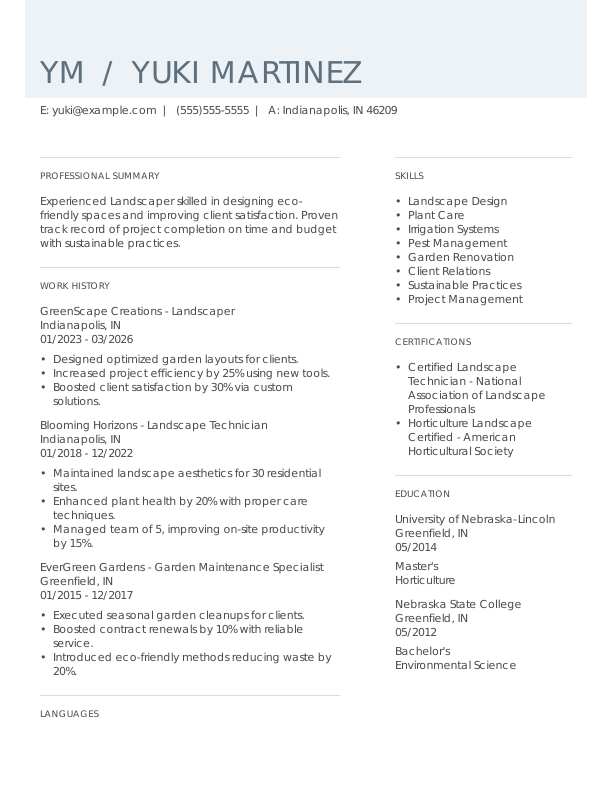
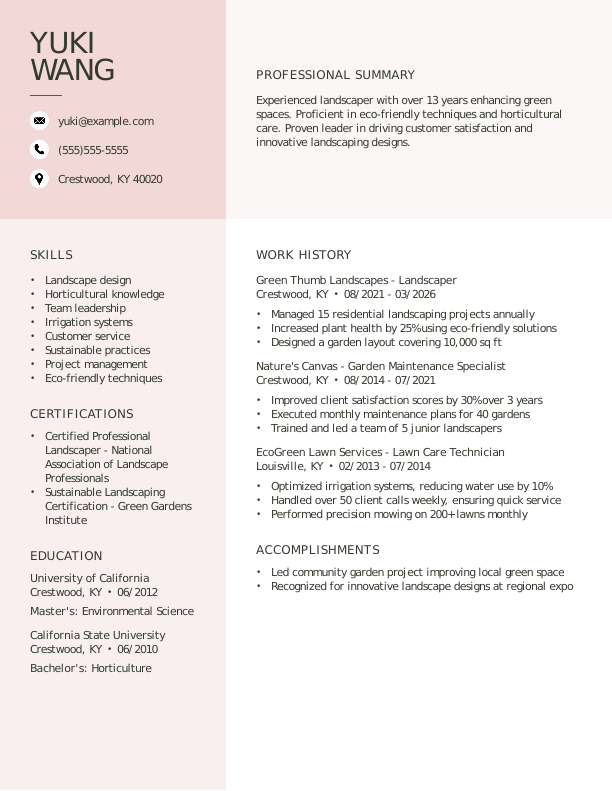
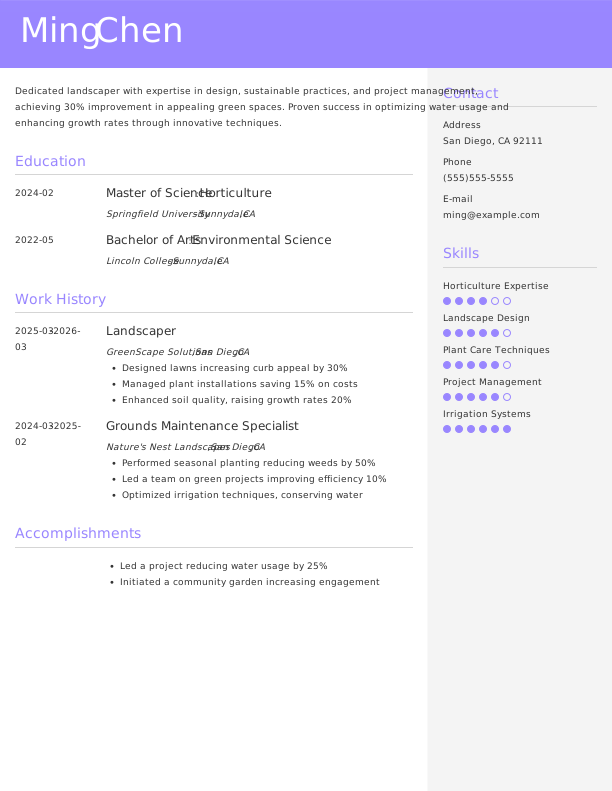
 Free
Free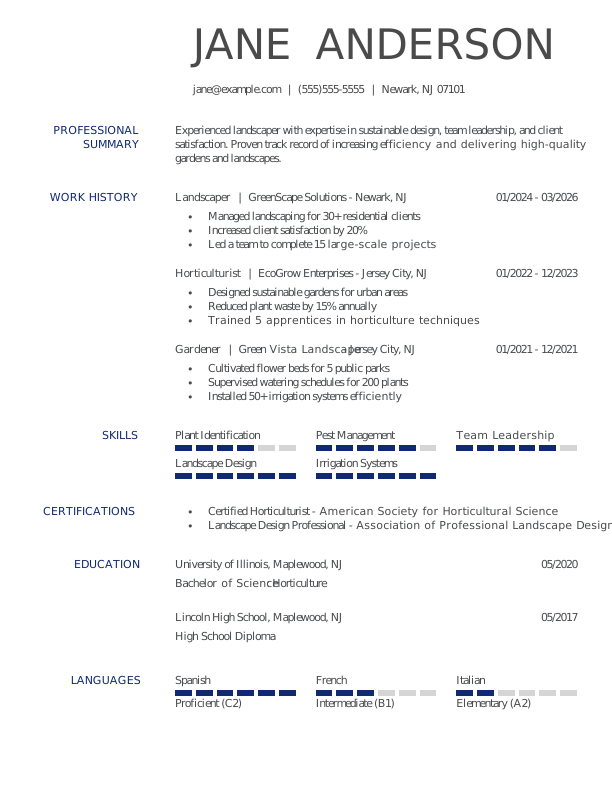



Browse Free Resume Templates
- Accounts Payable
- Adjunct Professor
- Artist
- Auto Mechanic
- Baker
- Business Development Manager
- Business
- Certified Nursing Assistant
- Classic & Traditional
- Cleaner
- College Student
- Concierge
- Construction Worker
- Corporate
- Creative & Unique
- Custodian
- Customer Service
- Dental Assistant
- Direct Support Professional
- Entry-Level
- Flight Attendant
- Hospitality & Food Service
- Front Desk Receptionist
- Healthcare
- High School
- Housekeeping
- Hvac Technician
- Hybrid
- Inventory Manager
- Logistics
- Maintenance
- Management
- Modern
- Mortgage Loan Processor
- Pet Sitter
- Phlebotomist
- Production
- Rbt
- Sales
- Security Services
- Restaurant Server
- Simple & Basic
- Social Work
- Teacher
- Technology
Resume Examples for Landscapers
Landscaper resumes should reflect the scope of your work, from residential maintenance to commercial design. Browse our templates to find a format that organizes your outdoor experience clearly.
Entry-Level Landscaper Resume
This template works well for those entering professional landscaping. It helps you put together a landscaper resume by highlighting your plant knowledge, any horticulture coursework, and physical endurance.

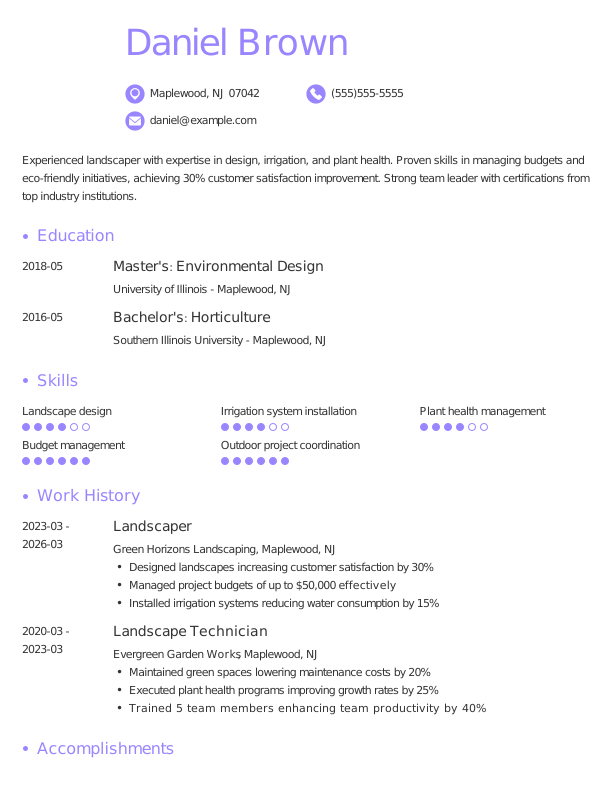
Mid-Career Landscaper Resume
A smart choice for mid-level landscapers looking to advance their careers, this template effectively showcases recent achievements and emphasizes specialized skills for competitive opportunities.
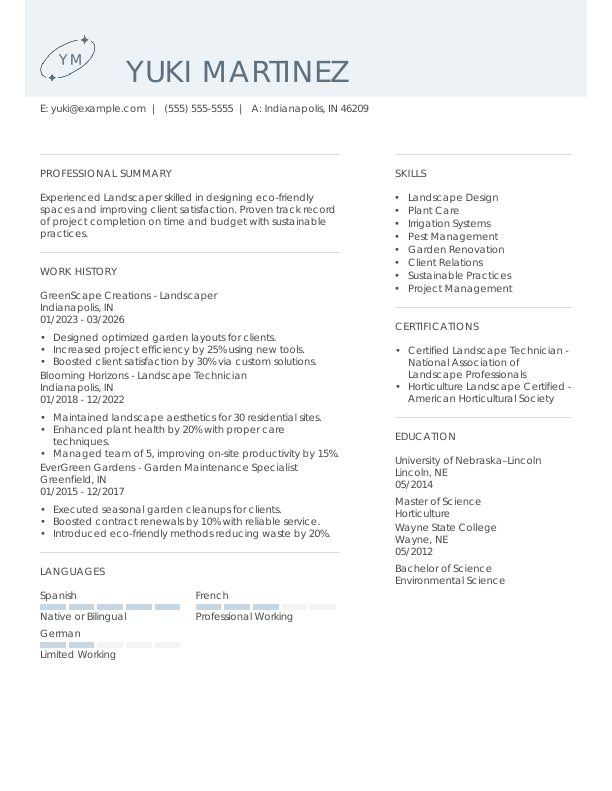
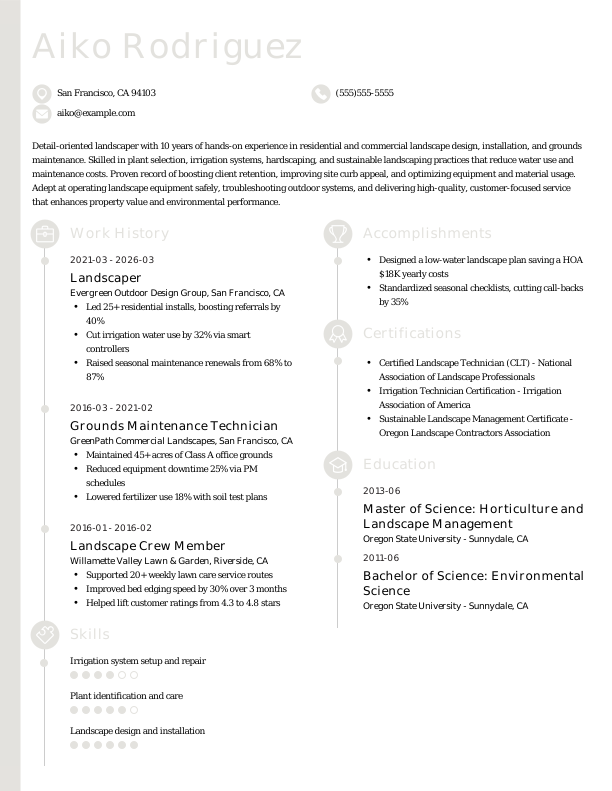
Experienced Landscaper Resume
An ideal choice for landscaping professionals with over 10 years of experience, this template highlights job seekers seeking advanced roles in sustainable design and project leadership.

Landscaper Resume Template (Text)
The text resume below provides a solid starting point for a landscaper application. Copy it into your document and update it with your plant knowledge, equipment skills, and project scope.
Aiko Kim
Chicago, IL 60610
Professional Summary
Experienced Landscaper with expertise in sustainable solutions. Proven team leader with a track record of enhancing green spaces and boosting client satisfaction through innovative horticultural practices.
Work Experience
January 2024 – March 2026
GreenScape Solutions – Chicago, IL
Landscaper
- Enhanced client gardens by 15% additional plant varieties
- Reduced water usage by 20% with advanced irrigation
- Boosted seasonal flower sales by $10K annually
January 2022 – December 2023
EcoLandscapes Innovations – Chicago, IL
Grounds Maintenance Technician
- Achieved 25% increase in lawn health scores
- Implemented eco-friendly pest control, reducing pests by 30%
- Managed team honored with ‘Best Local Green Spaces’ award
January 2019 – December 2021
NatureScape Crafts – Springfield, IL
Landscape Assistant
- Coordinated 8 major projects, increasing customer satisfaction
- Optimized plant placements, reducing maintenance by 18%
- Learned advanced tools boosting productivity by 10%
Education
June 2019
Oregon State University Corvallis, OR
Bachelor of Science Landscape Management
June 2015
Lincoln High School Portland, OR
High School Diploma
Certifications
- Certified Landscape Technician – National Association of Landscape Professionals
- Sustainable Landscape Certification – Green Landscape Institute
Skills
- Horticultural Expertise
- Sustainable Landscaping
- Irrigation Systems
- Landscape Design
- Team Leadership
- Project Management
- Eco-friendly Practices
- Time Management
How to Write a Landscaper Resume
As a landscaper, knowing how to write a resume means showcasing your skills in design, maintenance, and project management while using a clear format that highlights your relevant experience. Use the guidance below to emphasize your strengths and customize your resume for the specific landscaping positions you’re targeting.
1. Contact Info
Your contact information should be prominently displayed at the top of your resume, ensuring clarity and professionalism.
Be sure to include:
- Full name
- Phone number
- Professional email address
- City and state (ZIP code is optional)
- LinkedIn profile or relevant portfolio (if applicable)
 PRO TIP
Avoid including personal details such as your Social Security number, religious affiliation, or marital status on your resume unless an employer specifically requests them.
2. Resume Profile
A resume profile is a brief introductory section, typically consisting of two to four sentences. It acts as an engaging pitch to hiring managers, highlighting your key qualifications and encouraging them to delve deeper into your experience and skills.
This profile is positioned at the top of your resume and can be formatted as either a summary or an objective, each serving distinct purposes. Understanding these differences will help you tailor this section for maximum impact:
- A resume summary showcases your essential skills, relevant experience, and significant achievements in landscaping. This format is particularly beneficial for individuals with a history of employment or transferable skills who want to emphasize their contributions as skilled landscapers.
- A resume objective highlights your career aspirations and what you aim to achieve in your next role. It’s particularly useful for recent graduates, individuals shifting careers, or those with limited experience, such as landscaping students seeking their first position.
Let’s explore how a resume summary and a resume objective differ in their purpose and presentation:
Landscaper resume summary example:
Dedicated landscaper with over 6 years of experience in residential and commercial projects. Proficient in landscape design, irrigation systems, and sustainable gardening practices. Acknowledged for transforming outdoor spaces into vibrant environments while improving property value and client satisfaction.
Landscaper resume objective example:
Recent graduate with a degree in horticulture eager to start a landscaping career in an environmentally conscious firm. Committed to sustainable practices and looking to contribute strong design skills and attention to detail to residential or commercial landscaping projects.
3. Work Experience
The work experience on your resume serves as an important foundation for showcasing your qualifications. Employers evaluate not just the roles you’ve held, but also the tangible impact you’ve made in those positions. This demonstrates that your background aligns with the skills and expertise needed to excel as a landscaper.
The work experience section should contain:
- Job title
- Employer name and location
- Dates of employment (month/year)
- 3–5 bullet points detailing your landscaping tasks and project successes
When crafting your work experience bullet points, tailor your language to match the landscaping field. Start each statement with a strong action verb (like “Designed,” “Installed,” “Maintained”) to highlight your contributions.
Incorporate quantifiable data whenever possible. Specific numbers and achievements not only illustrate your impact but also set you apart from other applicants by showcasing your unique value proposition.
In general, consider following the format of:
[action verb] + [responsibility] = [result/achievement]
For example:
Successfully maintained over 100 residential and commercial landscapes by implementing sustainable practices, resulting in a 20% reduction in water usage and improved plant health across all properties.
Note that you can also flip the result/achievement with the responsibility:
Achieved a 30% increase in client retention through high-quality landscape design and maintenance services, leading to numerous positive referrals.
With these techniques in mind, your resume bullets may look something like:
- Executed landscape design projects for over 30 residential properties, improving curb appeal and property value by an average of 20%.
- Managed a team of 5 landscapers to complete weekly maintenance for 15 commercial accounts, improving customer satisfaction ratings by 25%.
- Collaborated with clients to develop tailored landscaping solutions that met specific needs and budgets.
- Used industry-standard tools and software to optimize project planning and resource allocation.
- Trained new staff on sustainable landscaping practices, fostering a culture of environmental awareness within the team.
4. Skills
The skills section provides a concise overview of your landscaping abilities, allowing hiring managers to quickly assess your qualifications in this competitive field. Using an ATS-friendly resume format helps your application stand out to recruiters and pass initial screening.
Skills can be categorized into three key areas:
- Soft skills are personal qualities that influence how well landscapers collaborate with clients and team members.
- Hard skills are specific, quantifiable abilities acquired through education, training, or experience.
- Technical skills are the practical abilities required to operate tools and machinery in a specific field.
5 Soft Skills for Your Resume or CV
- Attention to detail
- Teamwork and collaboration
- Project management skills
- Customer service focus
- Creative design approach
5 Hard Skills for Your Resume or CV
- Landscape design software (AutoCAD, SketchUp)
- Soil analysis and preparation
- Irrigation system installation
- Plant selection and maintenance
- Hardscape construction techniques
In general, include a diverse array of skills that match the job requirements to showcase your value.
PRO TIP
If you’re a newer landscaper, consider placing your skills section higher on the resume right after your summary. For those with more experience, it’s advisable to position this section lower, mixing your skills into your work history for a cohesive presentation.
5. Education
Understanding how to list education on your resume is important for making a strong impression. Begin with your most recent or relevant certification, including the certificate type and institution name.
If you’re a new graduate, consider adding your graduation date, GPA (if it’s 3.5 or higher), any honors received, or specific courses that relate to landscaping to strengthen your application.
Landscaper resume education section example:
Diploma in Landscape Design
Horticultural Institute of America, Atlanta, GA
Graduated: 2022 | Graduated with Distinction
PRO TIP
When listing multiple degrees on your resume, always arrange them in reverse-chronological order, starting with the highest degree first, such as Bachelor of Landscape Architecture (BLA) followed by Associate Degree in Horticulture.
6. Certifications
Certifications highlight your qualifications and demonstrate that you’re knowledgeable about the latest practices in landscaping. While not always included on traditional resumes, this section is important for many professionals in the field. Employers often look for specific credentials, especially for specialized roles such as landscape design or environmental restoration.
List certifications on your resume that bolster your application and reflect your expertise in landscaping. Ensure these credentials are current and presented clearly to make a strong impression.
Landscaper certification examples:
- Landscaper Certification | National Association of Landscape Professionals | Expires: 03/2028
- Pesticide Applicator License | State Department of Agriculture | Expires: 11/2027
- Landscape Design Certificate | Online Learning Institute | Expires: 01/2028
- Irrigation Technician Certification | Irrigation Association | Expires: 08/2027
Start Building Your Job-Winning Resume
Use Your Existing Resume
Import your current resume to transfer your information to one of our professional templates.
Create a New Resume
Start fresh with a template that catches your eye and follow the prompts to add your details.
Tailor Your Work History to Beat the ATS
Your work experience section is an opportunity to showcase more than just job titles. It allows you to highlight your tangible contributions and the difference you’ve made in landscaping projects, improving client satisfaction and property value. This approach not only enriches your resume but also makes it more compatible with applicant tracking systems (ATS) that can easily scan for relevant content.
To create a compelling work history, tailor your entries to align with the specific landscaping role you’re pursuing. Start by carefully analyzing the job description provided by the employer. Look for frequently mentioned skills or qualifications and ensure those are reflected in your experience descriptions to improve your chances of standing out.
Key Takeaways
- Tailor your resume to the job description. Use specific landscaping terms and phrases from the posting to resonate with both ATS and hiring managers.
- Highlight quantifiable achievements to demonstrate your impact. Include metrics like project completion times, customer satisfaction ratings, or area covered (e.g., 500 square feet landscaped).
- Select a resume format that fits your experience level. Entry-level job seekers might consider a functional layout, while seasoned landscapers often opt for a chronological format.
More Resume & CV Examples
- Air Sealing Technician
- Aircraft Mechanic
- Automotive Technician
- Barber
- Blue Collar
- Boilermaker
- Budtender
- Cable Technician
- Carpenter
- Carpentry
- Cosmetologist
- Crane Operator
- Diesel Mechanic
- Diesel Technician
- Electrician
- Glazier
- Hair Stylist
- Handyman
- Hvac Installer
- Industrial Electrician
- Ironworker
- Journeyman Electrician
- Lineman
- Machinist
- Millwright
- Painter
- Pipe Fitter
- Plumber
- Roofer
- Solar Installer
- Structural Welder
- Welder
Cover Letters for Your Resume
Browse our library of cover letter examples to complete your application. A resume will have a better chance of getting noticed.
Frequently Asked Questions
Last Update:
What resume format should I use for my landscaper resume?
There are three primary resume formats to consider when applying for a landscaper position. Your choice will depend on your level of experience and what aspects of your background you want to highlight:
- Chronological: The chronological resume is the most widely used format, as it emphasizes your work experience by outlining specific responsibilities and accomplishments. This structure suits applicants with a consistent job history that highlights their qualifications and adds credibility to their professional profile.
- Functional: The functional resume, often referred to as a skills-based resume, highlights your qualifications and expands on relevant skills rather than focusing on work history. This format is particularly helpful for individuals who lack direct experience in the field or have gaps in their employment history.
- Combination: The combination resume merges chronological and functional formats, showcasing both skills and work history. It’s ideal for professionals highlighting abilities and career growth, as it balances experience with expertise. This format is suitable for those advancing in their careers or transitioning into new roles.
Should I include a cover letter with my resume?
Yes, you should include a cover letter with your landscaper job application. A well-crafted cover letter improves your resume by allowing you to explain your passion for landscaping and any unique experiences that demonstrate your skills in creating beautiful outdoor spaces. It shows potential employers that you’ve tailored your application specifically for their company, which can help you stand out from other job seekers.
If you’re unsure about how to write a cover letter, don’t let that deter you from including one. There are many resources available, such as guides and examples that cater to the landscaping industry. Exploring different formats can also assist you in presenting your qualifications clearly.
For an efficient writing process, consider using a cover letter generator, which can simplify creating a professional document by providing structured templates and suggestions relevant to landscaping jobs.
How long should a landscaper resume be?
For landscapers with less than 10 years of experience, a one-page resume is typically adequate to highlight relevant skills and experiences. Focus on showcasing your work history, certifications (such as pesticide applicator licenses), and key projects that demonstrate your capabilities in landscape design and maintenance.
Conversely, those in senior or specialized landscaping roles may extend their resumes to two pages if the content remains targeted and informative. Ensure that each section adds value, emphasizing leadership qualities, advanced techniques, and significant accomplishments without unnecessary embellishments.
What keywords should I include to pass applicant tracking systems (ATS)?
To successfully navigate ATS and boost your chances of landing a landscaping position, incorporate keywords from the job listing. Look for terms like “landscape design,” “irrigation systems,” or “maintenance schedules” that reflect your experience and skills.
Additionally, highlight any relevant certifications, such as Landscape Industry Certified or pesticide applicator license. Mentioning tools you’re familiar with, such as AutoCAD for landscape design or equipment like lawn mowers and trimmers, will also demonstrate your qualifications for the role effectively. Tailor your resume with these specifics to ensure it stands out in ATS screenings.
Should I include volunteer landscaping projects on my resume?
Yes, especially if you’re just starting out. Including volunteer landscaping projects highlights your practical skills and dedication to the field, making you more appealing to potential employers when you lack formal work experience.

Vicki Salemi is a nationally recognized career expert who helps professionals navigate the hiring landscape and find the right fit on Monster. With over 15 years of experience in corporate recruiting and HR, she offers expert guidance on job search strategies, interview preparation, and career development to help candidates land their next role.
See More From Vicki SalemiExplore Related Career Advice


How to Put Transferable Skills on Your Resume: 120 Skills, Examples, & Tips

Updated:
Aug 27, 2026
|
16 min read


How to Write a Functional Resume (Formatting Tips, Template, & Examples)
Updated:
Aug 7, 2026
|
17 min read


Functional vs Chronological Resume: Which Format Is Right for You?
Updated:
Aug 3, 2026
|
16 min read

100+ Resume Adjectives to Help You Write a Stronger Resume in 2026 (With Examples)
Updated:
Jul 30, 2026
|
12 min read