
Free Laborer Resume Templates & Examples
Create a professional general labor resume with our customizable templates, practical writing tips, and examples. Highlight your hands-on experience, physical skills, equipment knowledge, safety training, and other qualifications to build a resume that clearly shows what you can bring to the job.
Real-World Resumes That Get Results
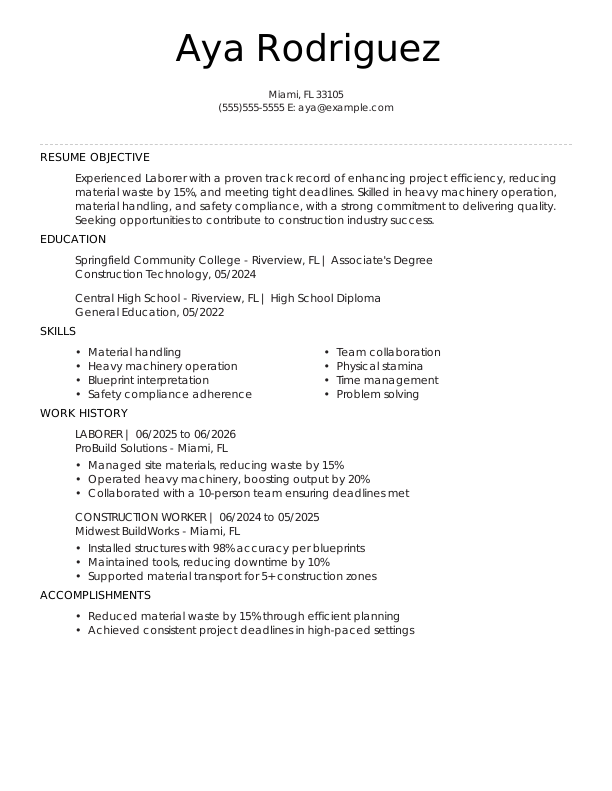
 Free
Free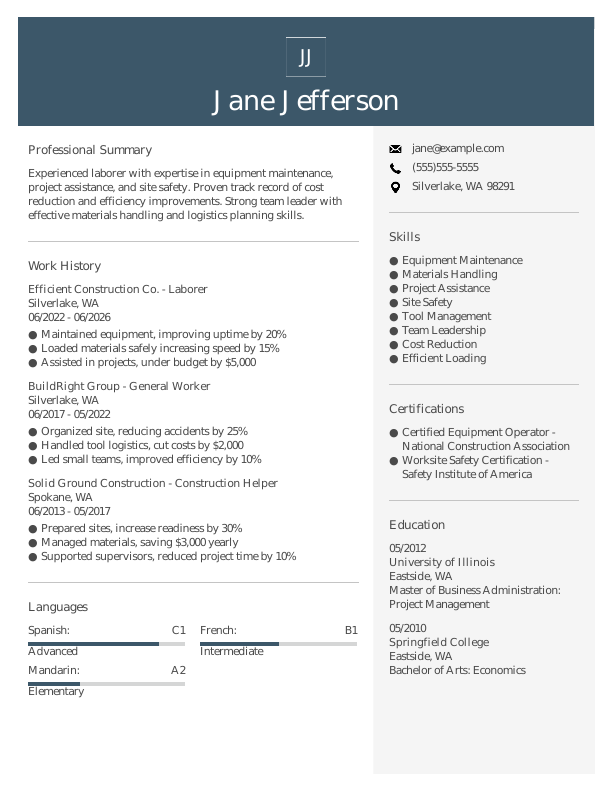
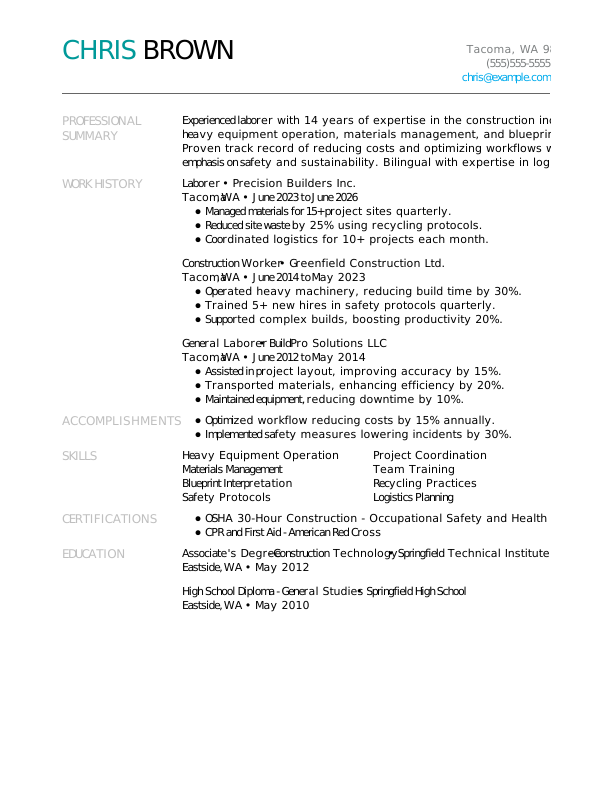
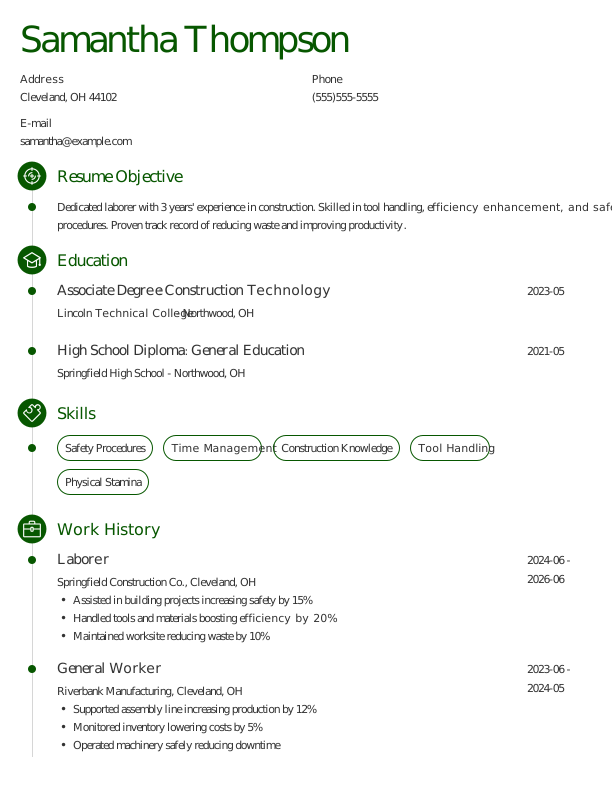
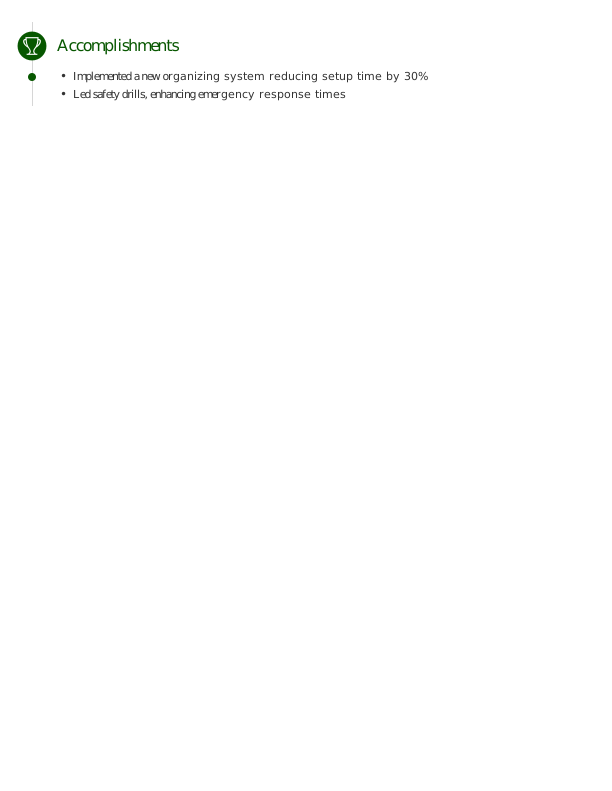
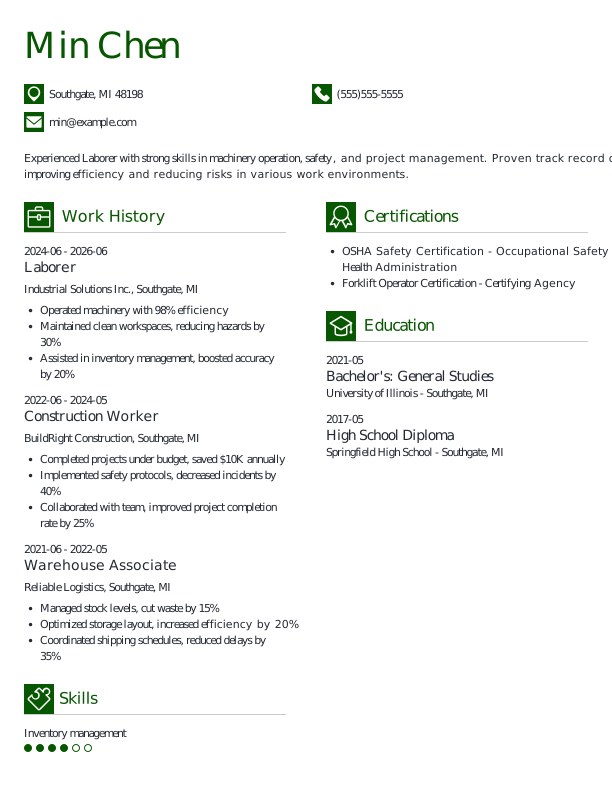

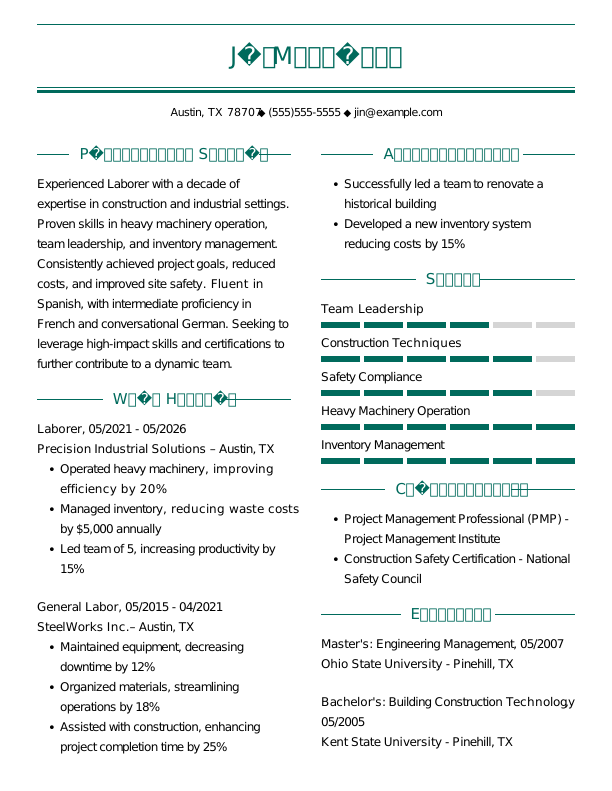

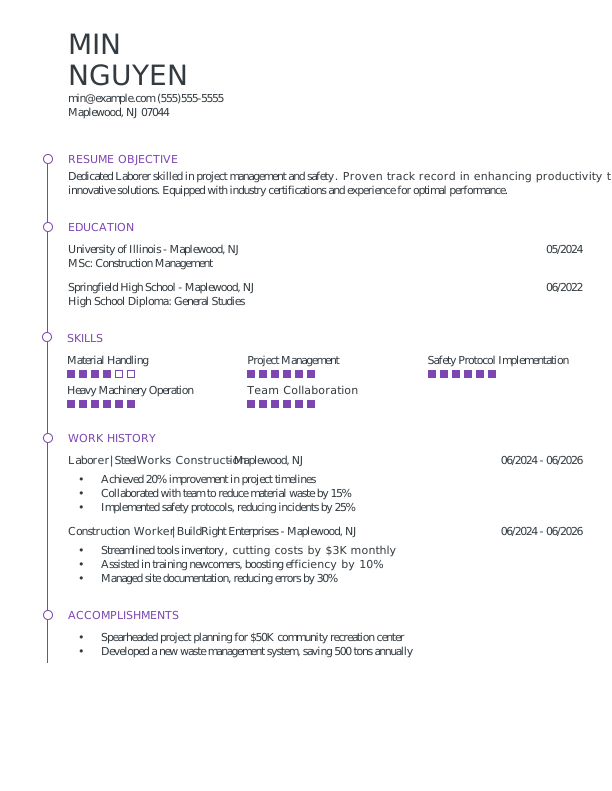
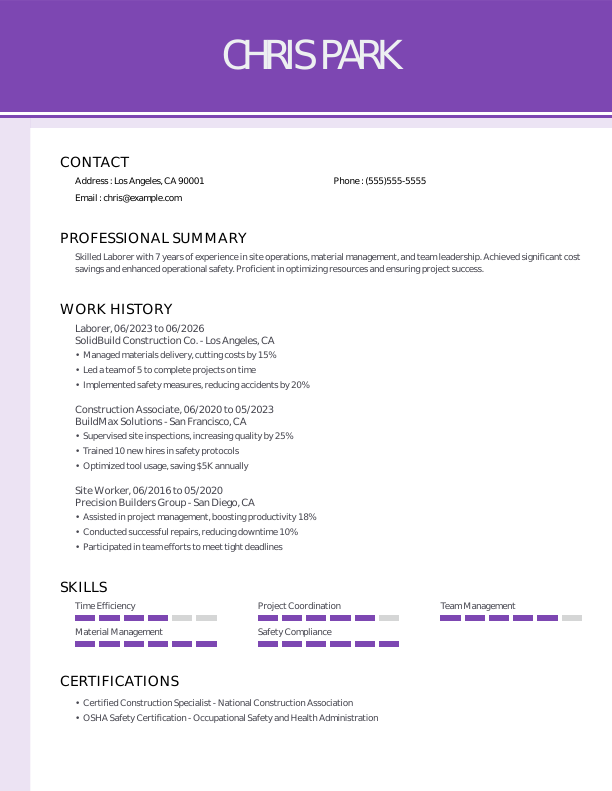

Browse Free Resume Templates
- Accounts Payable
- Adjunct Professor
- Artist
- Auto Mechanic
- Baker
- Business Development Manager
- Business
- Certified Nursing Assistant
- Classic & Traditional
- Cleaner
- College Student
- Concierge
- Construction Worker
- Corporate
- Creative & Unique
- Custodian
- Customer Service
- Dental Assistant
- Direct Support Professional
- Entry-Level
- Flight Attendant
- Hospitality & Food Service
- Front Desk Receptionist
- Healthcare
- High School
- Housekeeping
- Hvac Technician
- Hybrid
- Inventory Manager
- Logistics
- Maintenance
- Management
- Modern
- Mortgage Loan Processor
- Pet Sitter
- Phlebotomist
- Production
- Rbt
- Sales
- Security Services
- Restaurant Server
- Simple & Basic
- Social Work
- Teacher
- Technology
Resume Examples for Laborers
Laborer resumes vary based on experience level and the specific role. Explore what each stage and common laborer jobs require and use our Resume Builder to create a tailored document that fits your career path.
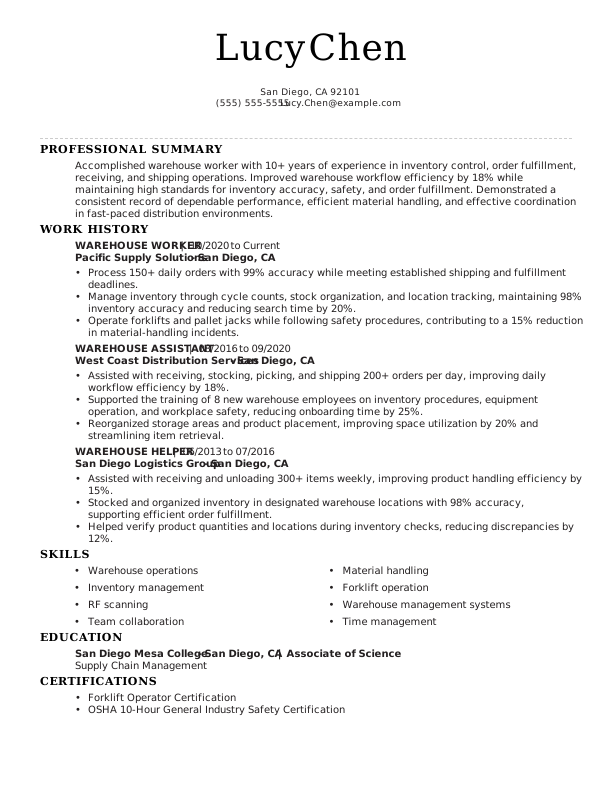
Warehouse Worker Resume
Ideal for experienced warehouse workers, this template helps highlight hands-on experience, inventory management, order fulfillment, material handling, and warehouse operations.
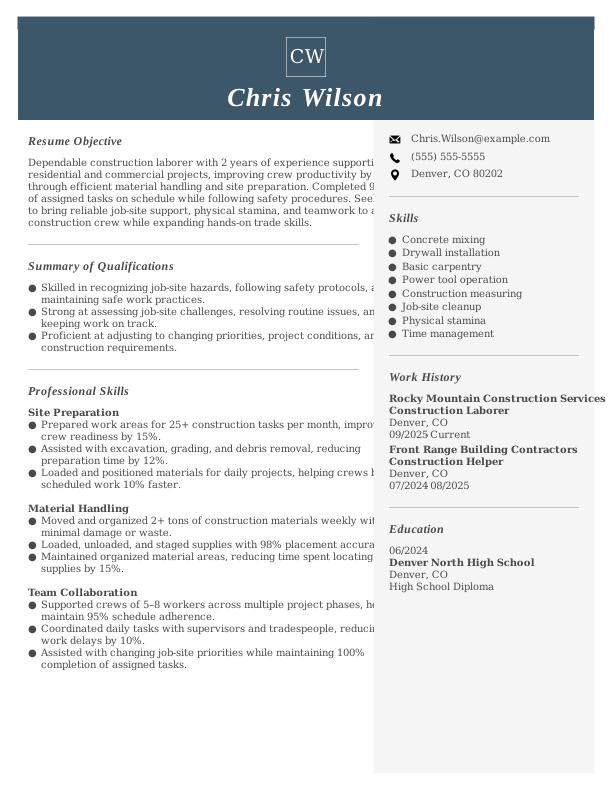
Construction Laborer Resume
A good fit for construction laborers with several years of experience, this template highlights hands-on skills, job-site responsibilities, safety knowledge, and recent accomplishments. It can also help experienced laborers showcase their qualifications when pursuing specialized construction work or lead laborer roles.
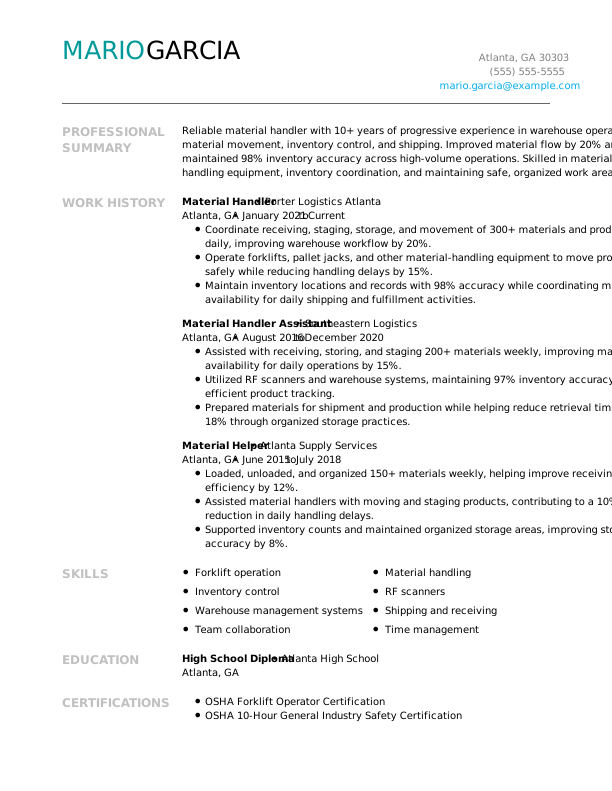
Material Handler Resume
An ideal choice for material handlers with over 10 years of experience, this template highlights expertise in material handling, inventory control, equipment operation, and warehouse safety.
Laborer Resume Template (Text)
Use this customizable text format of a laborer resume to copy, edit, and personalize directly in your document or file. Explore our professional resume templates for more designs to choose from when crafting your resume.
Daniel Smith
Los Angeles, CA 90015
Professional Summary
Reliable laborer with 9 years of experience supporting construction and field operations. Skilled in material handling, equipment operation, site preparation, basic equipment maintenance, and job-site cleanup. Known for following safety procedures, completing physically demanding tasks efficiently, and working effectively with crews to keep projects on schedule.
Work Experience
January 2023 – June 2026
GreenField Construction – Los Angeles, CA
Laborer
- Loaded, unloaded, and moved construction materials, tools, and equipment across job sites.
- Operated forklifts and other equipment to move materials safely and efficiently.
- Sorted and organized materials, helping reduce job-site waste by 20%.
- Followed OSHA and company safety procedures while working around heavy equipment and construction materials.
January 2018 – December 2022
BuildRight Inc. – Los Angeles, CA
Construction Worker
- Assisted skilled tradespeople with framing, concrete work, material preparation, and other construction tasks.
- Loaded and transported materials, tools, and debris to keep work areas organized and crews productive.
- Maintained tools and equipment, helping reduce equipment downtime by 15%.
- Kept job sites clean and free of hazards by removing debris and organizing materials throughout each shift.
January 2015 – December 2017
ProWork Services – Lakeside, CA
Field Technician
- Inspected equipment and work areas to identify basic mechanical and operational issues.
- Assisted with repairs and routine maintenance, reducing average repair times by 25%.
- Used hand and power tools to complete maintenance and field service tasks.
Education
University of Illinois – Chicago, IL
Bachelor of Engineering | 2015
Springfield High School – Springfield, IL
High School Diploma | 2011
Certifications
- OSHA Safety Certification | Occupational Safety and Health Administration
- Forklift Operator Certification
Skills
- Material Handling
- Heavy Equipment Operation
- Forklift Operation
- Construction Site Preparation
- Job-Site Cleanup
- Equipment Maintenance
- Hand and Power Tools
- Basic Blueprint Reading
- Workplace Safety
- Loading and Unloading
- Teamwork
- Physical Labor
How to Write a Laborer Resume
As a laborer, knowing how to write a resume involves showcasing your relevant skills and hands-on experience in a clear format that stands out. Use the guidance below to emphasize your strengths and tailor your resume for the specific jobs you’re pursuing.
1. Contact Info
Your contact information should be clear, professional, and easy to find at the top of your resume.
Make sure to include:
- Full name
- Phone number
- Professional email address
- City and state (ZIP code is optional)
- LinkedIn profile or personal portfolio (if relevant)
- Laborer certifications or licenses (if applicable)
 PRO TIP
Skip including sensitive personal information such as your Social Security number, marital status, or full address unless specifically requested by the employer.
2. Resume Profile
A resume profile is a brief introduction, typically two to four sentences long, designed to highlight your key qualifications and skills. It serves as an engaging pitch to hiring managers, capturing their interest and motivating them to explore your resume further.
Located at the top of your resume, the profile can be formatted as either a summary or an objective. Each format has distinct purposes that cater to different career situations:
- A resume summary showcases your most relevant skills, experiences, and achievements to demonstrate your value to potential employers. This format is particularly beneficial for those with established work histories or transferable skills looking to highlight their contributions as a laborer in various settings.
- A resume objective is a forward-looking statement that highlights your career aspirations and what you aim to accomplish in your next role. This approach is particularly beneficial for recent graduates, individuals shifting careers, or those with limited experience who want to emphasize their goals, such as service industry workers or entry-level technicians.
Let’s take a look at an example of each to see how a resume summary and a resume objective differ:
Laborer resume summary example:
Reliable laborer with 6+ years of experience in construction and landscaping projects, including residential and commercial sites. Proficient in operating heavy machinery, maintaining tools, and adhering to safety protocols. Commended for efficiency, attention to detail, and contributing to successful project completion while ensuring a safe work environment.
Laborer resume objective example:
Recent high school graduate eager to start a career in construction within a dynamic team setting. Enthusiastic about hands-on work and committed to safety standards, aims to contribute strong physical stamina and teamwork skills to a construction company or infrastructure project environment.
3. Work Experience
The work experience on your resume is an important foundation for showcasing your skills. Employers look at your job history to see not just the positions you’ve held, but also how you’ve contributed to projects and teams.
Your hands-on experience illustrates how you’re equipped for the laborer role, demonstrating reliability and a strong work ethic.
The work experience section should contain:
- Job title
- Employer name and location
- Dates of employment (month/year)
- Three to five bullet points describing your relevant responsibilities and achievements
Tailor your content to highlight the specific duties and responsibilities relevant to the laborer position you’re applying for. Start each bullet point with an action verb (like “Assisted,” “Constructed,” “Operated”) to create a strong impression of your contributions.
Incorporate quantifiable information wherever possible. Specific numbers, such as hours worked or tasks completed, provide concrete evidence of your abilities and help distinguish you from other job seekers in the job market.
In general, consider following the format of:
[action verb] + [responsibility] = [result/achievement]
For example:
Assisted in the construction of 5 residential buildings, ensuring adherence to safety standards and project timelines while managing materials for a 20% cost reduction.
Note that you can also flip the result/achievement with the responsibility:
Achieved a 15% increase in productivity by streamlining workflow processes and implementing team training sessions.
With these techniques in mind, your resume bullets may look something like:
- Assisted in the construction of 5 residential homes, ensuring adherence to safety protocols and timelines.
- Operated heavy machinery, increasing project efficiency by 20% through improved workflow management.
- Collaborated with team members to complete daily tasks on schedule, improving overall productivity.
- Maintained a clean and organized worksite, reducing accidents and improving safety compliance.
- Trained new laborers on equipment operation and safety procedures, fostering a culture of teamwork.
4. Skills
The skills section serves as a concise overview of laborer abilities relevant to construction and manual tasks. This format allows hiring managers to quickly evaluate qualifications for the position. Skills can be categorized into three distinct groups:
- Soft skills are personal traits that influence how well laborers collaborate with their teams.
- Hard skills are specific, measurable abilities gained through education, training, or experience.
- Technical skills refer to the specific abilities required to perform tasks using tools and technology.
5 Soft Skills for Your Resume or CV
- Team collaboration
- Time management
- Attention to detail
- Strong work ethic
- Safety awareness
5 Hard Skills for Your Resume or CV
- Heavy machinery operation (forklifts, backhoes)
- Blueprint interpretation
- Concrete mixing and pouring
- Safety compliance (OSHA standards)
- Material handling techniques
In general, aim to include a diverse range of skills that align with the job description to showcase your value.
PRO TIP
If you’re a newer laborer, consider placing your skills section prominently after your summary to highlight your capabilities. For those with more experience, it’s advisable to position this section lower on the resume and weave your skills throughout your work history for a cohesive presentation.
5. Education
Understanding how to list education on your resume is important for showcasing your qualifications clearly.
Begin with your most recent or relevant degree, including the type and name of the institution. If you’re a new graduate, consider adding optional details such as your graduation year, GPA (if it’s 3.5 or above), any honors received, or relevant coursework that highlights your expertise.
Laborer resume education section example:
High School Diploma
Lincoln High School, Springfield, IL
Graduated: 2020 | Honor Roll (3 years)
PRO TIP
If you’re progressing from an Associate Degree in Construction Technology to a Bachelor of Applied Science, or have earned another relevant degree, list both in reverse-chronological order.
6. Certifications
Listing certifications on your resume highlights key skills that can balance limited experience in the labor field. While this section isn’t always included in a traditional resume, it proves beneficial for many professionals seeking employment.
Employers frequently look for specific qualifications for specialized roles, such as safety certifications for construction workers or equipment operation licenses for heavy machinery operators.
Only relevant certifications and credentials that improve your suitability for the position. Keeping these certifications current and clearly formatted will make a strong impression on potential employers.
Laborer certification examples:
- OSHA 10-Hour General Industry Card | Occupational Safety and Health Administration | Expires: 05/2028
- Forklift Operator Certification | National Safety Council | Expires: 11/2027
- First Aid/CPR/AED Certification | American Red Cross | Expires: 01/2028
- Construction Safety Technician (CST) | National Center for Construction Education and Research | Expires: 09/2027
Start Building Your Job-Winning Resume
Use Your Existing Resume
Import your current resume to transfer your information to one of our professional templates.
Create a New Resume
Start fresh with a template that catches your eye and follow the prompts to add your details.
Tailor Your Work History to Beat the ATS
Your work experience is more than a list of job titles. It’s a chance to showcase the tangible contributions you’ve made on job sites, in teamwork, and towards project completion. By focusing on these aspects, you can create an ATS-friendly resume that applicant tracking systems (ATS) can easily scan.
To build a strong work history, tailor it to the specific laborer position you’re pursuing by incorporating relevant keywords and phrases. Begin by closely analyzing the job description, identifying recurring skills or tasks mentioned within it, and weaving those elements into your experience descriptions wherever applicable.
What’s a Fair Laborer Salary?
Understanding laborer salaries across the nation helps you evaluate job offers, negotiate fair wages, and make informed career decisions. You can explore the U.S. Bureau of Labor Statistics (BLS) for the most recent nationwide averages for laborers.
Remember that factors like location, years of experience, certifications, and specific job duties can influence your actual salary.
Those working in construction or manufacturing sectors often earn more than laborers in landscaping or general maintenance roles, while specialized positions such as heavy equipment operators typically command higher pay rates.
Key Takeaways
- Tailor your resume to the job description. Use specific terms from the listing that highlight your skills and experience for both ATS and hiring managers.
- Include quantifiable achievements to highlight your contributions. Use metrics relevant to the industry (e.g., projects completed on time, safety compliance rates) to catch attention.
- Select an appropriate resume format based on your experience level. Entry-level laborers might benefit from a functional format, while seasoned workers should consider reverse-chronological layouts.
More Resume & CV Examples
- Architecture
- Assembler
- Assembly Line Worker
- Assembly Technician
- Chemist
- Cnc Machinist
- Cnc Operator
- Construction Assistant
- Construction Management
- Construction Manager
- Construction Project Manager
- Construction
- Construction Superintendent
- Contractor
- Foreman
- General Labor
- Heavy Equipment Operator
- Machine Operator
- Manufacturing Engineer
- Manufacturing
- Manufacturing Technician
- Material Handler
- Mechanical Designer
- Operator
- Plant Manager
- Process Operator
- Superintendent
Cover Letters for Your Resume
Browse our library of cover letter examples to complete your application. A resume will have a better chance of getting noticed.
Frequently Asked Questions
Last Update:
What resume format should I use for my laborer resume?
When applying for a laborer position, there are three main resume formats to choose from. Your selection should be based on your experience level and the aspects you wish to highlight:
- Chronological: The most popular format, a chronological resume highlights your work experience by detailing responsibilities and achievements in reverse order. This format is particularly suitable for job seekers with a relevant job history that reinforces their qualifications and demonstrates their reliability in the labor field.
- Functional: A functional resume emphasizes a summary of qualifications and an expanded skills section to highlight your relevant abilities. By minimizing focus on work history, it becomes beneficial for applicants without relevant experience in the labor field or those with employment gaps.
- Combination: A combination resume integrates elements from both chronological and functional formats, showcasing a skills section alongside detailed work experience. This structure benefits laborers by allowing them to highlight their practical abilities and career development, making it suitable for those advancing or transitioning within the industry.
Should I include a cover letter with my resume?
A cover letter isn’t required for every laborer job, but it can be useful when an employer requests one or when you want to provide more context about your experience. Use it to highlight relevant skills, safety training, certifications, or hands-on experience that may not be immediately clear from your resume.
If you include a cover letter, tailor it to the specific laborer position and keep it concise. Focus on the work you can perform, the equipment or tools you know how to use, and the experience that matches the employer’s needs. Avoid repeating your resume word for word.
If you’re unsure how to structure your letter, explore our guide on how to write a cover letter for practical guidance and examples. You can also use a cover letter generator to help create a starting draft that you can customize for each laborer position.
How long should a laborer resume be?
For professionals with less than 10 years of experience, a one-page resume is typically sufficient. This format allows you to present your skills, education, and relevant work history clearly without overwhelming the reader. Focus on displaying your most relevant qualifications in a concise manner.
In contrast, senior professionals or those in specialized roles may consider a two-page resume if needed. It’s essential to ensure that every piece of information adds value and maintains relevance to the job you’re applying for. Prioritize clarity and organization over length to make a strong impression.
What keywords should I include to pass applicant tracking systems (ATS)?
To optimize your resume for ATS, focus on incorporating keywords and phrases found in the job posting. Look for specific terms related to labor roles, such as “construction safety,” “heavy machinery operation,” or “site management.” Including these precise words will help ensure your application makes it through the initial filtering process.
Additionally, highlight any relevant certifications like OSHA training or forklift operator certification, along with technical skills you possess such as skill in AutoCAD or knowledge of blueprint reading. This targeted approach not only showcases your qualifications but also increases your chances of getting noticed by hiring managers.

Kirsten Chorpenning is a career advice writer who empowers job seekers to take control of their career paths using Monster’s comprehensive job search and resume tools. She specializes in helping job seekers find rewarding jobs in today’s dynamic work environment.
See More From Kirsten ChorpenningExplore Related Career Advice


How to Put Transferable Skills on Your Resume: 120 Skills, Examples, & Tips
Updated:
Aug 27, 2026
|

16 min read


How to Write a Functional Resume (Formatting Tips, Template, & Examples)
Updated:
Aug 7, 2026
|
17 min read


Functional vs Chronological Resume: Which Format Is Right for You?
Updated:
Aug 3, 2026
|
16 min read

100+ Resume Adjectives to Help You Write a Stronger Resume in 2026 (With Examples)
Updated:
Jul 30, 2026
|
12 min read