

Free Construction Cover Letter Templates & Examples
Boost your interview odds with our professionally designed construction cover letter templates. These free cover letter templates include practical writing tips and guidance to help you highlight your qualifications, demonstrate jobsite skills, and stand out to hiring managers and contractors.
Real-World Cover Letters That Get Results
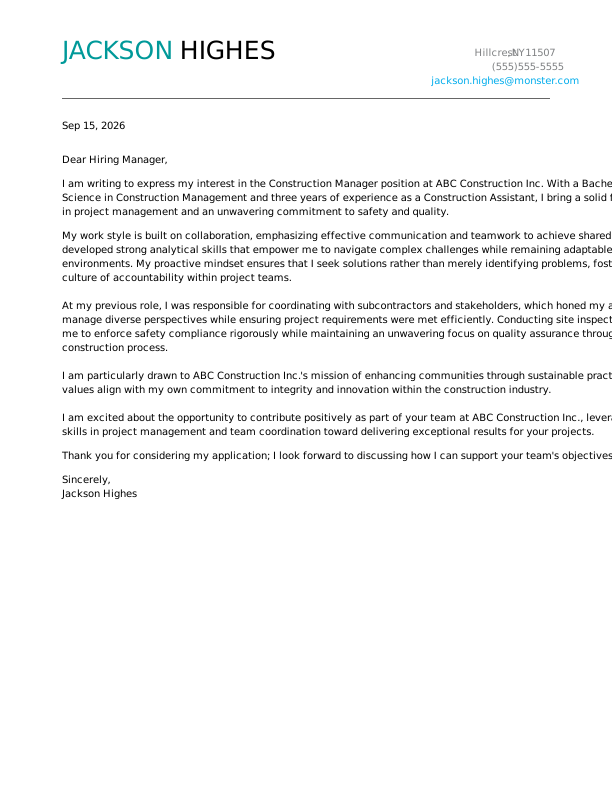
 Free
FreeConstruction Entry-Level Cover Letter
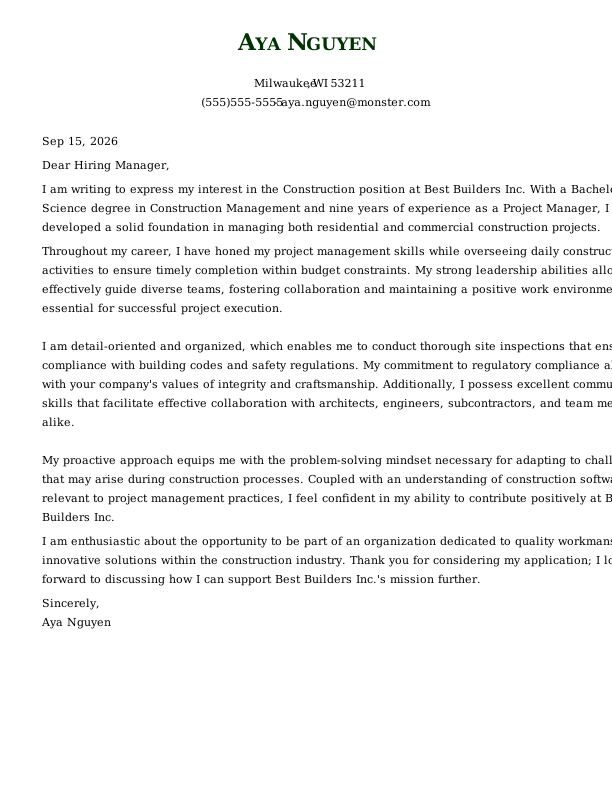
Construction Mid-Level Cover Letter
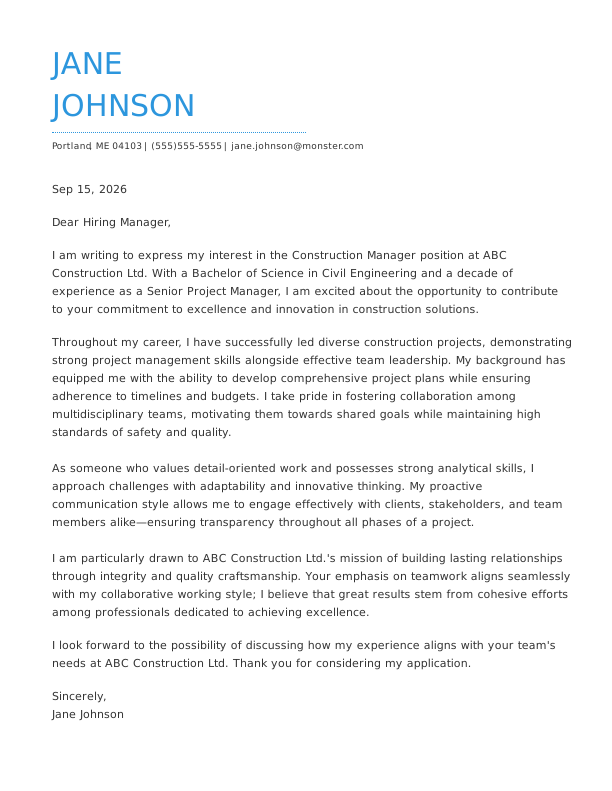
Construction Experienced Cover Letter
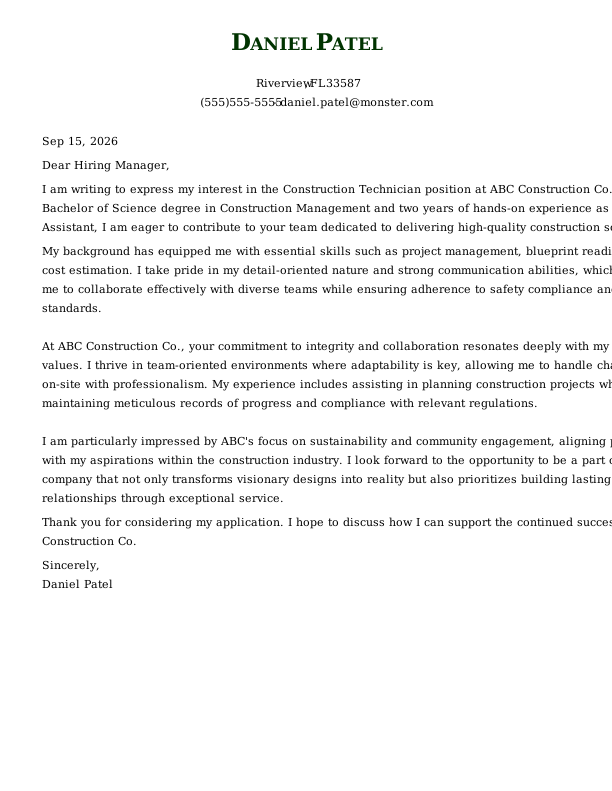
Construction Entry-Level Cover Letter
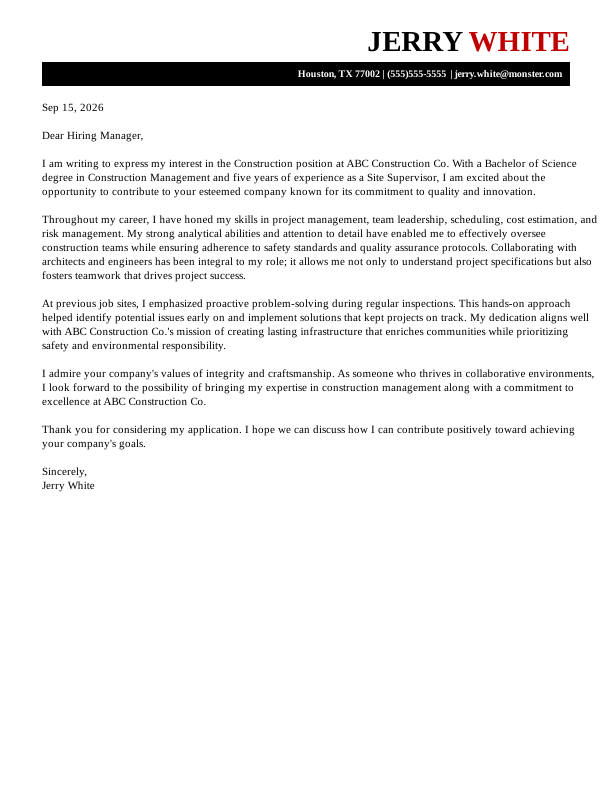
Construction Mid-Level Cover Letter
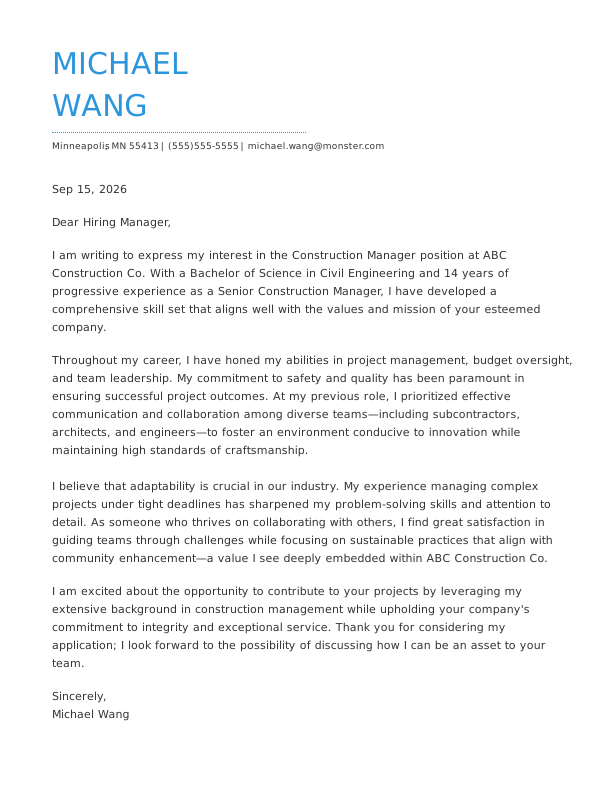
Construction Experienced Cover Letter
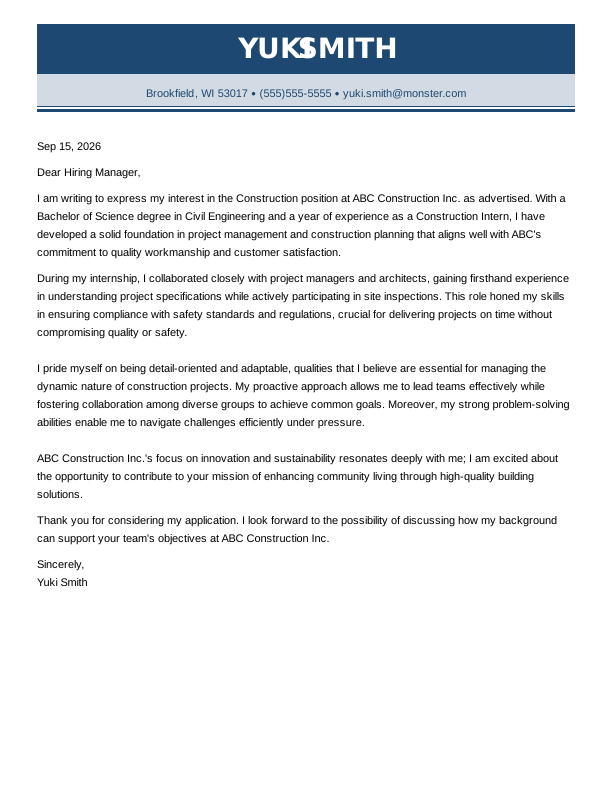
Construction Entry-Level Cover Letter
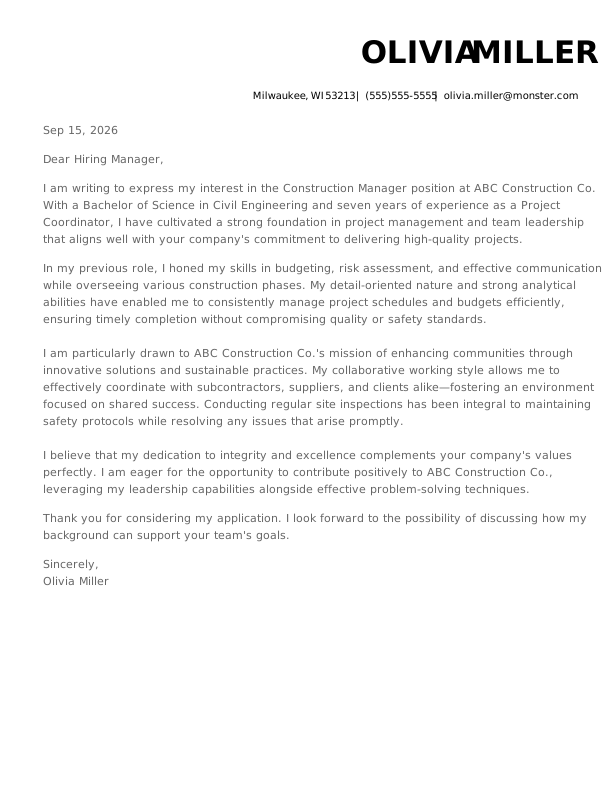
Construction Mid-Level Cover Letter
Browse Free Cover Letter Templates
- Academic
- Account Manager
- Accountant
- Accounts Payable
- Administrative Assistant
- Admissions Counselor
- Architecture
- Artist
- Assistant Principal
- Babysitter
- Barista
- Bartender
- Bookkeeper
- Brand Ambassador
- Business Analyst
- Business
- Caregiver
- Chef
- Civil Engineering
- Computer Science
- Consulting
- Cosmetology
- Custodian
- Customer Service
- Data Analyst
- Dental Assistant
- Dental Hygienist
- Electrical Engineering
- Emt
- Engineering
- Esthetician
- Event Coordinator
- Executive Assistant
- Finance
- Financial Analyst
- Firefighter
- Flight Attendant
- Graphic Designer
- Hair Stylist
- Healthcare
- Hr Generalist
- Investment Banking
- It
- Janitor
- Journalism
- Lab Technician
- Law Clerk
- Lawyer
- Librarian
- Logistics
- Makeup Artist
- Manager
- Marketing
- Marketing Manager
- Massage Therapist
- Mechanic
- Mechanical Engineer
- Medical Assistant
- Non Profit
- Nursing
- Occupational Therapy
- Office Manager
- Paralegal
- Personal Trainer
- Pharmacist
- Pharmacy Technician
- Photographer
- Physician Assistant
- Pilot
- Police Officer
- Project Manager
- Property Manager
- Psychology
- Receptionist
- Research Assistant
- Restaurant Manager
- Retail
- Sales
- Sales Manager
- School Counselor
- Security Officer
- Social Work
- Software Engineer
- Substitute Teacher
- Teacher
- Teaching Assistant
- Truck Driver
- Vet Tech
- Veterinary Assistant
- Web Developer
- Welder
Cover Letter Examples for Constructions
Construction cover letters change as you gain experience, highlighting different levels of responsibility, site safety awareness, and field execution. Use these templates to match your everyday jobsite skills and professional background with your current career stage.
Entry-Level Construction Cover Letter
Perfect for recent graduates starting a cover letter with no experience in construction, and career changers moving into the field from another industry, this template helps you present your readiness for entry-level jobsite work.
Mid-Career Construction Cover Letter
A good fit for mid-level construction professionals and project managers with on-site experience, this template helps highlight career growth and supports advancement into superintendent, lead estimator, or specialized roles.
Experienced Construction Cover Letter
Best for construction professionals with 10+ years of experience, this template helps you pursue construction leadership roles such as senior project manager, director-level oversight, or advanced management positions.
Construction Cover Letter Template (Text)
Use this adaptable text cover letter template for a construction position to copy, edit, and personalize in your document.
Sophia Singh
Spokane, WA 99206
(555)555-5555
sophia.singh@monster.com
Sep 15, 2026
Dear Hiring Manager,
I am writing to express my interest in the construction manager position at ABC Construction Corp. With a Bachelor of Science in Construction Management and four years of experience as a project coordinator, I have developed a comprehensive skill set that aligns well with your company’s commitment to delivering high-quality construction solutions.
Throughout my career, I have honed my abilities in construction planning, project management, and budgeting. My proactive approach allows me to effectively manage multiple projects while maintaining an unwavering attention to detail. I believe that collaboration is key to project success; thus, I take pride in fostering strong relationships with team members and stakeholders alike.
In previous roles, I have successfully overseen various phases of construction projects by coordinating with architects, engineers, and subcontractors to ensure compliance with specifications and quality standards. My strong analytical skills enable me to conduct thorough site inspections while adhering strictly to safety protocols.
Your company’s mission resonates deeply with me—building lasting structures that enhance communities reflects my own professional values. At ABC Construction Corp., where integrity and sustainability are paramount, I am eager to contribute through effective leadership and mentorship for project teams.
I am excited about the opportunity to bring my unique talents in risk management and communication into your esteemed organization. Thank you for considering my application; I look forward to the possibility of discussing how my background can complement the innovative work being done at ABC Construction Corp.
Sincerely,
Sophia Singh
How to Write a Construction Cover Letter
Writing a strong construction cover letter means pairing your field credentials with clear storytelling that demonstrates your ability to coordinate trades, maintain site safety, and keep builds on schedule and within budget. Follow the steps below to highlight your qualifications and customize your letter for each target contractor, engineering firm, or commercial construction group.
1. Research & Prepare
Before you write your cover letter, research the role, the hiring manager, and the target organization so you can align with the organization’s construction goals and project needs. Look for details about its primary build types, safety record, current project sites, and trade delivery methods.
Read the job posting carefully, then check the company website for project portfolios, sustainability initiatives, and client stories. Look at recent news for major contract awards or groundbreaking ceremonies, and view LinkedIn profiles to learn about the project executive’s or general superintendent’s background. Use what you find to highlight relevant achievements and show how your field leadership fits the organization’s priorities.
2. Hook the Reader
Your cover letter opening paragraph sets the tone for what follows. A strong opener grabs the project supervisor or hiring manager’s attention by demonstrating genuine knowledge of the company, your trade focus, and what you bring to the jobsite on day one.
Try referencing a recent company project, such as a major commercial build or infrastructure upgrade, and connecting it to your background. You can also open with a specific metric, such as how you reduced jobsite rework by 15% through daily pre-task planning, or highlight a direct recommendation from a foreman or superintendent who can vouch for your field reliability.
3. Tell Your Professional Story
Your cover letter should do more than restate your resume bullet points. Use the main body to share a concise example that illustrates how you coordinate subcontractors, inspect trade installations, and enforce site safety protocols.
Quantify your construction accomplishments wherever possible. Mention specific metrics such as finishing builds two weeks ahead of schedule, reducing jobsite recordable incidents from six to two through daily safety briefings, or cutting material waste by 10% through accurate estimation tracking. Highlight how your leadership kept projects moving forward smoothly.
4. Showcase Your Skills
Matching your technical construction skills to the exact requirements in a job posting helps hiring managers picture you working on their sites on day one. Connecting your blueprint reading habits, OSHA safety discipline, and trade scheduling methods to what the contractor needs shows your readiness to take on field responsibilities.
For example, if the role emphasizes site safety, describe how you ran daily pre-task safety checks and conducted weekly tool-box talks. If the posting stresses project documentation or cost control, share your experience managing submittals, tracking change orders, and maintaining daily site logs to ensure smooth inspections.
5. Explain Any Special Circumstances
If you have an employment gap, when attempting to transition into construction from another trade or industry, or if you recently relocated, address it early and briefly. Share the reason directly, then pivot to what you have gained or are building, such as completed OSHA 30-hour training, updated equipment operator licenses, or refreshed building code certifications.
For instance, you can mention how you spent a gap completing advanced trade modules or volunteering on renovation projects, which sharpened your technical capabilities. When attempting a career shift into construction, explain how your prior background—such as carpentry, electrical work, or logistics—strengthens your site safety awareness, trade coordination, and blueprint analysis. If you have relocated, mention your knowledge of local building codes, active subcontractor contacts, and immediate schedule availability.
6. End With a Professional Goodbye
Close your cover letter by reaffirming your interest in the position, thanking the selection team for its time, and inviting a conversation about how your field experience fits the company’s project goals. Keep the tone concise, confident, and focused on site safety, quality craftsmanship, and project delivery.
Wrap up with a clear statement, such as: “I welcome the opportunity to discuss how my hands-on field experience, trade coordination, and safety management can support your upcoming builds.” Then, end with a professional sign-off like “Sincerely” or “Best regards.”
4 Tips for Formatting Your Cover Letter
Use clear spacing, simple headings, and consistent fonts to format your cover letter. Proper formatting keeps your document professional and easy to read. These tips apply whether you are stepping into your first construction role or bringing years of jobsite experience.

Keep It to One Page
Contractors and hiring managers review many applications, so keep your cover letter to a single page. Target 250 to 400 words across three to four focused paragraphs to share your most relevant trade skills and project accomplishments.

Use a Professional Font & Layout
Choose a clear font such as Arial, Calibri, Times New Roman, or Helvetica in 10 to 12 pt with one-inch margins. Keeping formatting consistent with your resume creates a clean, cohesive application package that is easy to scan.

Address the Hiring Manager Directly
Try to find the name of the project executive, general superintendent, or hiring manager by reviewing the job posting, corporate directory, or LinkedIn. If you cannot find a specific name, address your letter to “Dear Hiring Manager” or “Dear Construction Recruiting Team,” avoiding outdated phrasing like “To Whom It May Concern.”

Save & Send as a PDF
Save your cover letter as a PDF to preserve formatting across devices and systems. Name the file with your name plus the words “cover letter,” such as “Alex_Taylor_cover letter.pdf.”
Top-Paying States for Construction Roles
Understanding construction pay across the country helps you compare job offers, negotiate fair wages, and plan career decisions with confidence. The salary data below comes from the U.S. Bureau of Labor Statistics (BLS) and reflects current nationwide averages for construction workers.
Your actual earnings can vary by location, years of experience, relevant certifications, and specialization in trades or project types. Workers on large commercial projects like data centers or industrial sites often earn more than those on smaller residential jobs, and roles such as electrical work, heavy equipment operation, or union apprenticeship pathways can bring higher pay.
| Alabama | $101,320 |
| Alaska | $148,270 |
| Arizona | $116,840 |
| Arkansas | $91,040 |
| California | $137,430 |
| Connecticut | $126,600 |
| Delaware | $142,480 |
| District of Columbia | $141,920 |
| Florida | $115,550 |
| Georgia | $111,140 |
| Hawaii | $116,730 |
| Idaho | $107,880 |
| Illinois | $115,250 |
| Indiana | $107,450 |
| Iowa | $99,990 |
| Kansas | $107,290 |
| Kentucky | $112,290 |
| Louisiana | $118,360 |
| Maine | $112,220 |
| Maryland | $135,390 |
| Massachusetts | $156,510 |
| Michigan | $110,520 |
| Minnesota | $125,930 |
| Mississippi | $103,850 |
| Missouri | $115,900 |
| Montana | $116,870 |
| Nebraska | $102,380 |
| Nevada | $115,480 |
| New Hampshire | $85,500 |
| New Jersey | $140,070 |
| New Mexico | $106,550 |
| New York | $155,760 |
| North Carolina | $117,320 |
| North Dakota | $111,780 |
| Ohio | $101,070 |
| Oklahoma | $110,750 |
| Oregon | $134,020 |
| Pennsylvania | $116,770 |
| Rhode Island | $115,460 |
| South Carolina | $119,180 |
| South Dakota | $121,860 |
| Tennessee | $110,480 |
| Texas | $109,570 |
| Utah | $107,830 |
| Vermont | $106,540 |
| Virginia | $122,480 |
| Washington | $144,960 |
| West Virginia | $86,860 |
| Wisconsin | $120,310 |
| Wyoming | $99,780 |
| Guam | $93,030 |
| Puerto Rico | $72,840 |
| Virgin Islands | $89,280 |
Key Takeaways
- Personalize each letter for the specific project and employer. Reference the site type, schedule pressures, safety expectations, and how your past work matches the employer’s needs.
- Lead with a strong hook and use measurable results. Mention milestones like percent schedule adherence, zero incidents, reduced rework hours, or completed square footage on time.
- Keep formatting clean and consistent with your resume. Use the same headings, dates, and spacing so hiring managers can scan your documents quickly.
Browse Monster’s Resume Templates
Monster also has hundreds of ATS-friendly resume templates for all career levels and industries. Create a matching resume to help you land the interview.
Frequently Asked Questions
Last Update:
Do I really need a cover letter?
Yes, including a cover letter adds valuable context that your resume cannot fully capture, demonstrating professional written communication, jobsite reliability, and genuine alignment with the company’s safety standards, even if it’s marked as optional.
A cover letter is especially valuable when explaining an employment gap, transitioning across trades, or applying to a new region. It provides space to convey your work ethic, safety discipline, and commitment to project quality.
How long should my cover letter be?
A construction cover letter should fit on a single page, ideally between 250 and 400 words. Hiring managers spend limited time reviewing each submission, making conciseness essential.
Focus on quality over length by selecting your most relevant trade wins, safety records, and project accomplishments. Organize your text into three to four well-structured paragraphs to keep your key qualifications scannable.
Should my cover letter match my resume?
Yes, your cover letter should match the design of your construction resume. Use the same fonts, colors, and header style so your application package looks cohesive and intentional.
Keep the formatting consistent while using the text to tell a deeper story. For a construction role, expand on your jobsite background by adding context your resume cannot show, such as managing challenging trade relationships, navigating supply chain delays, and why you want to build with this specific company.
How do I address my cover letter if I don’t know the hiring manager’s name?
Try to find a specific contact by reviewing the job posting, corporate directory, or LinkedIn. If you cannot locate a name, use a professional role-specific alternative like “Dear Hiring Manager” or “Dear Construction Recruiting Team.” Avoid “To Whom It May Concern” and skip overly casual greetings like “Hi.”
Can I use AI to write my cover letter?
AI tools like a cover letter generator can help you draft quickly, find a clear structure, and push past writer’s block. They can give you a strong starting point, but personalization matters if you want to stand out.
Use AI as your first draft, then edit heavily to add your voice, specific field results, and real enthusiasm for the build. Hiring managers often spot generic AI-generated content, so make every paragraph sound like you.

Megan Dawkins is a career industry editor who empowers job seekers to take control of their career paths using Monster’s comprehensive job search and resume tools. She specializes in helping job seekers navigate the flexible job market.
See More From Megan DawkinsExplore Related Career Advice







How to Write a Cover Letter for Internal Positions or Promotions (Examples & Tips)

Updated:
Apr 23, 2026
|

19 min read


Cover Letter vs Resume: What’s the Difference & Do You Need Both?

Updated:
Apr 23, 2026
|
18 min read