
Free Procurement Resume Templates & Examples
A procurement resume should showcase your vendor negotiation skills, cost reduction track record, and knowledge of sourcing strategies. Pick a template below that highlights your purchasing impact.
Real-World Resumes That Get Results
 Free
FreeProcurement Entry-Level Resume
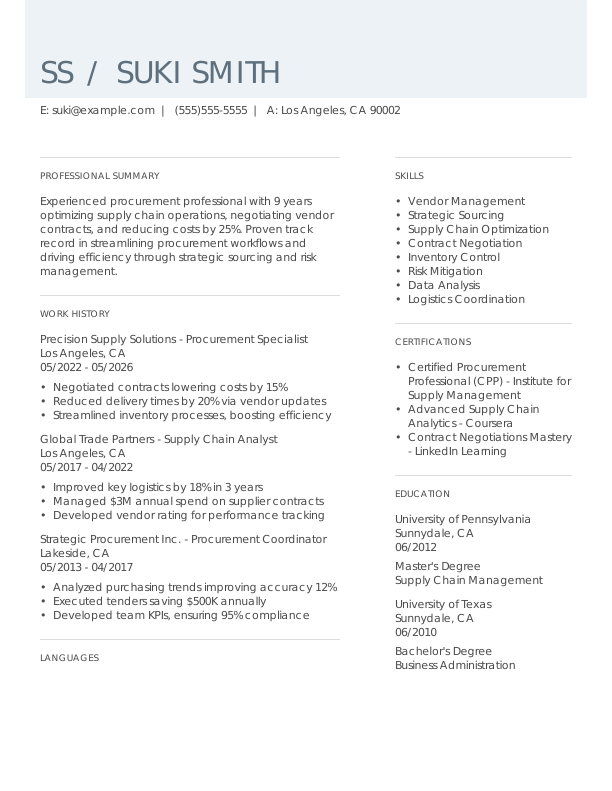
Procurement Mid-Level Resume
Procurement Experienced Resume
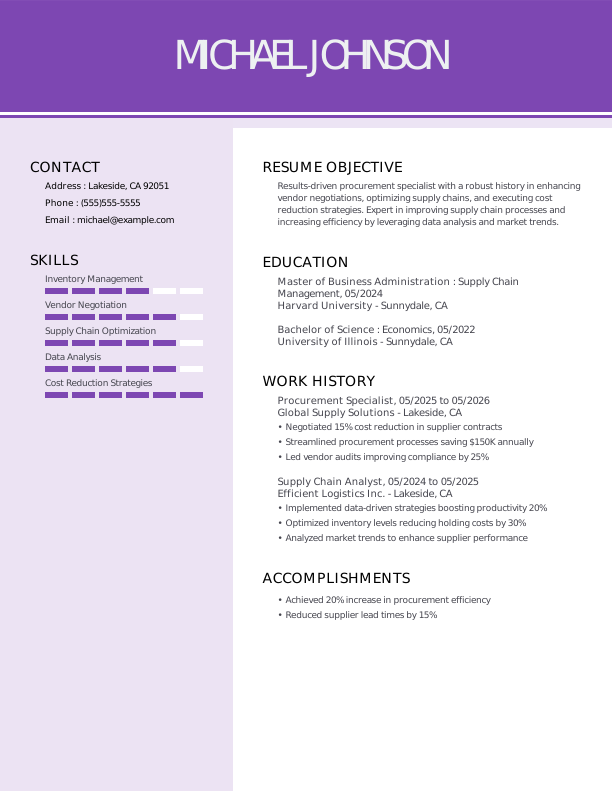
Procurement Entry-Level Resume 1
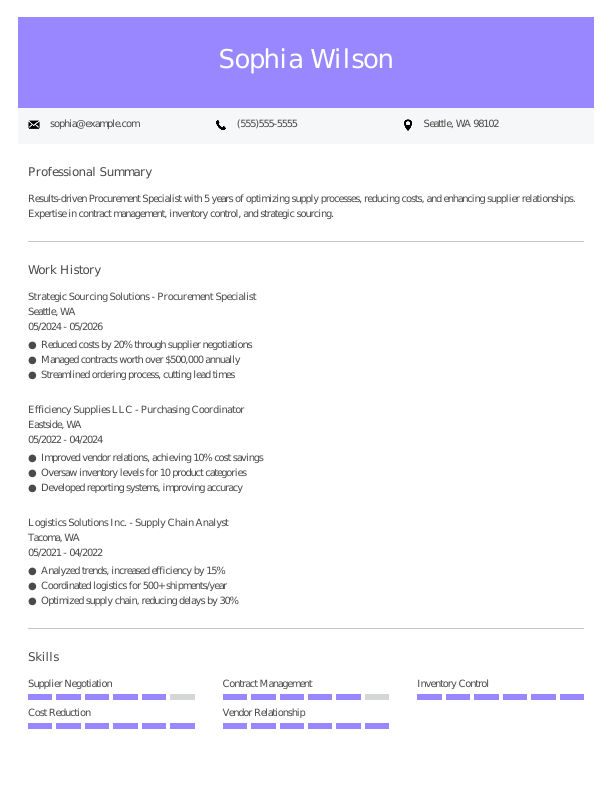

Procurement Mid-Level Resume 1
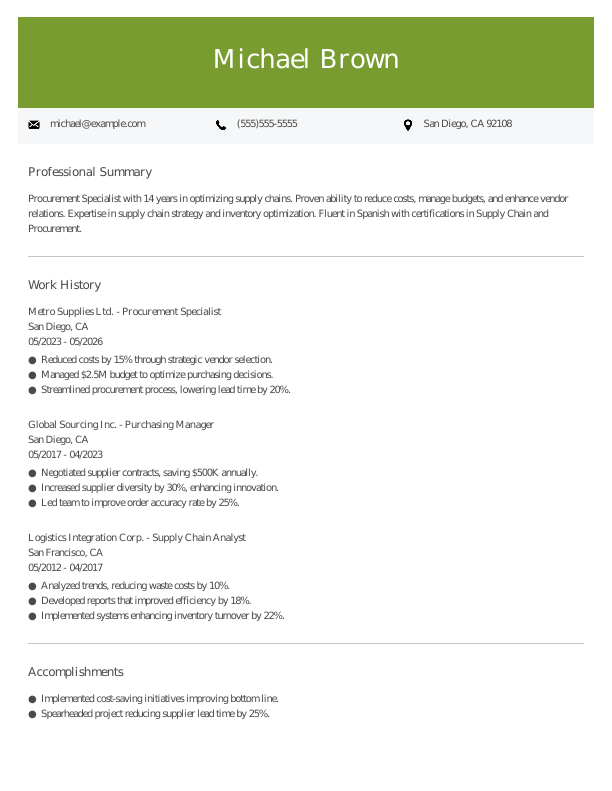

Procurement Experienced Resume 1
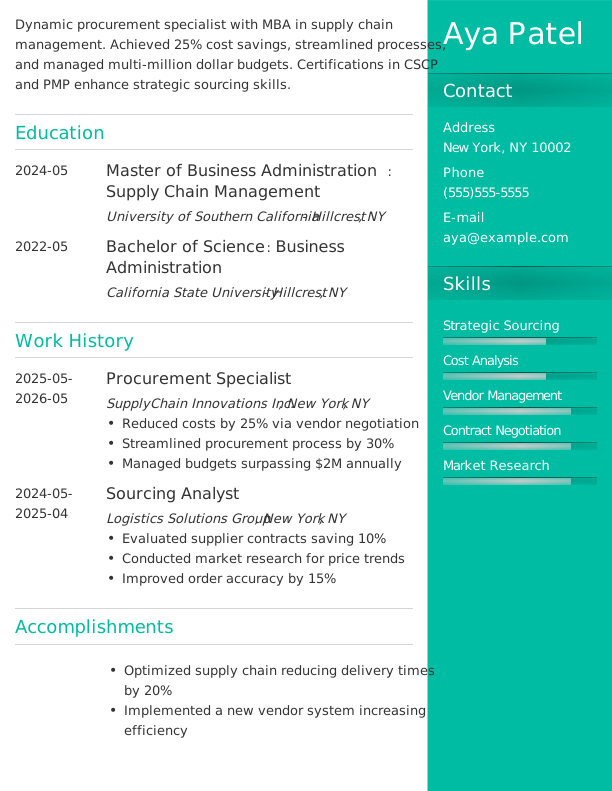
Procurement Entry-Level Resume 2
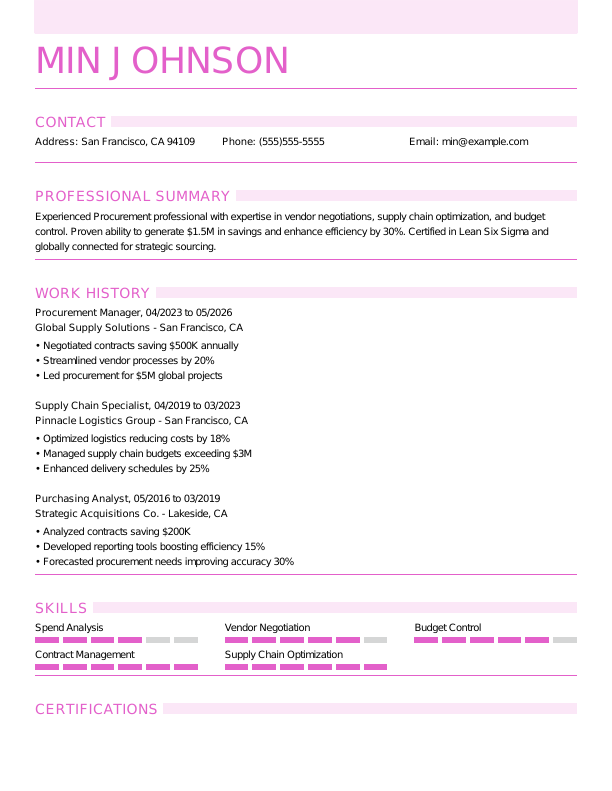

Procurement Mid-Level Resume 2
Browse Free Resume Templates
- Accounts Payable
- Adjunct Professor
- Artist
- ATS-Friendly
- Auto Mechanic
- Baker
- Business Development Manager
- Business
- Certified Nursing Assistant
- Classic & Traditional
- Cleaner
- College Student
- Concierge
- Construction Worker
- Corporate
- Creative & Unique
- Custodian
- Customer Service
- Dental Assistant
- Direct Support Professional
- Entry-Level
- Flight Attendant
- Hospitality & Food Service
- Front Desk Receptionist
- Healthcare
- High School
- Housekeeping
- Hvac Technician
- Inventory Manager
- Logistics
- Maintenance
- Management
- Modern
- Mortgage Loan Processor
- Pet Sitter
- Phlebotomist
- Production
- RBT
- Restaurant Server
- Sales
- Security Services
- Simple & Basic
- Social Work
- Teacher
- Technology
Resume Examples for Procurement
Procurement resumes should reflect your sourcing strategies and the cost savings you have delivered. Browse our templates to find one that highlights your purchasing impact.
Entry-Level Procurement Resume
If you are moving into procurement from a buyer or purchasing assistant role, this template helps you create a procurement resume by highlighting your vendor negotiation experience and cost analysis contributions.
Mid-Career Procurement Resume
A smart choice for procurement professionals with experience, this template emphasizes recent achievements and positions job seekers for advanced roles in supply chain management.
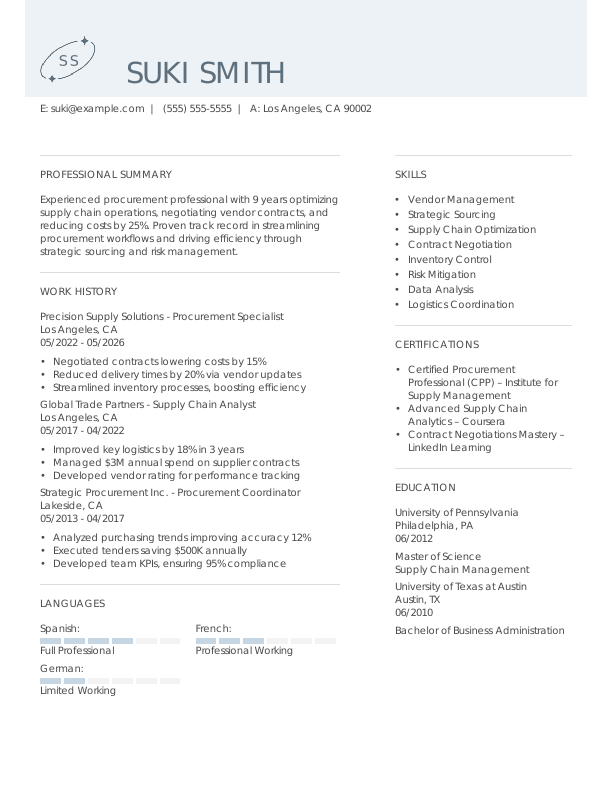
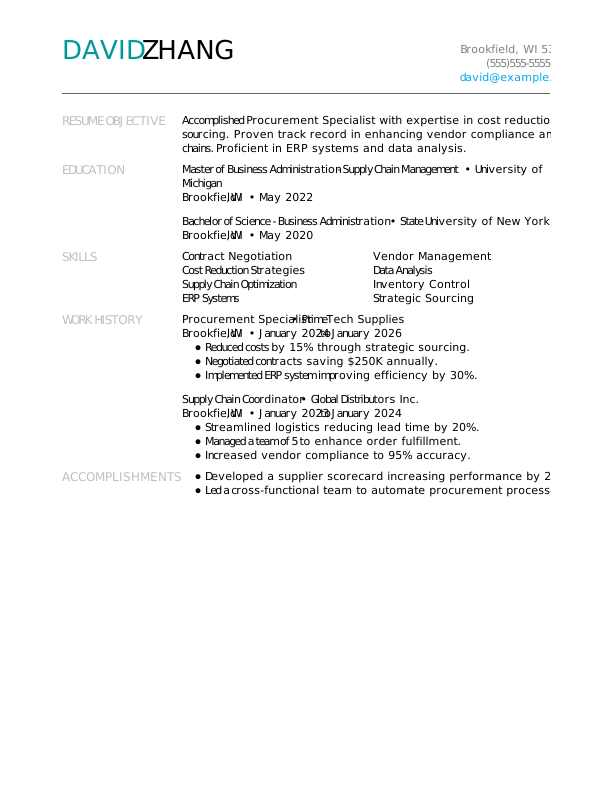
Experienced Procurement Resume
An ideal choice for procurement professionals with 10+ years of experience, this template supports job seekers pursuing senior-level roles in supply chain management and strategic sourcing.
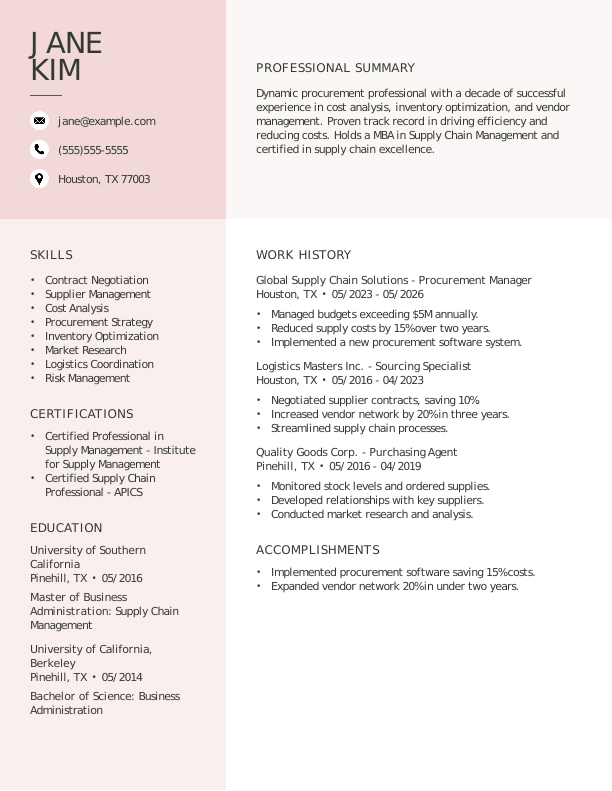
Procurement Resume Template (Text)
The text resume below provides a solid starting point for a procurement application. Copy it into your document and tailor it with your sourcing strategies. For more supply chain and purchasing layouts, browse our free resume templates.
Ming Li
Tacoma, WA 98401
Professional Summary
Accomplished procurement specialist with 7 years’ experience optimizing supply chains for Fortune 500 clients. Proven track record in achieving cost savings and streamlining logistics using strategic sourcing and effective negotiation.
Work Experience
May 2023 – May 2026
Global Trade Solutions – Tacoma, WA
Procurement Specialist
- Negotiated $1M contracts for cost savings
- Achieved 15% increase in vendor satisfaction
- Streamlined supply chain to improve efficiency
May 2019 – April 2023
Prime Logistics Group – Silverlake, WA
Supply Chain Coordinator
- Managed inventory worth $500K annually
- Implemented ERP system, cutting waste by 20%
- Reduced lead time by 25% through agile methods
May 2016 – April 2019
Eco Products Inc. – Silverlake, WA
Procurement Assistant
- Assisted in vendor selection for cost reduction
- Supported purchase order processing with 99% accuracy
- Enhanced supplier relationships, improving quality
Education
May 2016
University of Colorado Boulder Boulder, CO
Master of Business Administration Supply Chain Management
May 2014
Texas State University San Marcos, TX
Bachelor of Science Business Administration
Certifications
- Certified Supply Chain Professional (CSCP) – APICS
- Procurement Management Certification – Institute for Supply Management
Skills
- Strategic sourcing
- Supplier negotiation
- Cost analysis
- Contract management
- Inventory optimization
- ERP system implementation
- Vendor relationship management
- Supply chain logistics
How to Write a Procurement Resume
As a procurement professional, understanding how to write a resume involves combining your relevant skills and experience with a clear format that highlights why you’re the right fit for the role. Use the guidance below to emphasize your strengths and tailor your resume for specific job opportunities.
1. Contact Info
Your contact information should be prominently displayed, professional, and easy to locate at the top of your resume.
Be sure to include:
- Full name
- Phone number
- Professional email address
- City and state (ZIP code is optional)
- LinkedIn profile or relevant portfolio (if applicable)
 PRO TIP
Avoid including sensitive personal information such as your Social Security number, religious affiliation, or full home address unless the employer specifically requests it.
2. Resume Profile
A resume profile is a brief introductory section (two to four sentences) that encapsulates your identity and key qualifications. It serves as a compelling pitch to hiring managers, drawing them in and prompting them to explore your resume further.
Typically placed at the top of your resume, this profile can function as either a summary or an objective, each serving distinct roles. Understanding these nuances helps you tailor your approach effectively:
- A resume summary showcases relevant experience, skills, and achievements that highlight your contributions within the procurement sector. This format benefits applicants with established work histories or transferable experiences who aim to illustrate their impact as proficient procurement professionals.
- A resume objective highlights your career aspirations and what you aim to accomplish in your next role. It’s particularly useful for recent graduates, individuals shifting careers, or those with limited experience, such as professionals moving into procurement.
Let’s explore examples of a resume summary and a resume objective to understand their distinctions:
Procurement resume summary example:
Strategic procurement specialist with over 6 years of experience in diverse industries, including manufacturing and retail. Proficient in supplier negotiation, cost analysis, and inventory management. Acknowledged for optimizing supply chain processes and achieving significant cost savings while maintaining high standards of quality and service.
Procurement resume objective example:
Recent graduate with a degree in procurement management excited to launch a career in supply chain operations. Committed to ethical sourcing and eager to contribute strong analytical skills and attention to detail within a dynamic corporate environment or innovative startup.
3. Work Experience
The work experience on your resume serves as an important foundation for showcasing your qualifications. Employers examine not only job titles but also the contributions you made to understand your impact in previous roles. This part of your resume illustrates how your specific experiences align with the requirements of the position you’re pursuing.
The work experience section should contain:
- Job title
- Employer name and location
- Dates of employment (month/year)
- 3–5 bullet points detailing procurement responsibilities and achievements
To stand out, tailor your work experience bullet points to the specific procurement role by using industry-relevant terminology. Start each point with strong action verbs such as “Negotiated,” “Sourced,” or “Streamlined” to convey impact.
Incorporate quantifiable metrics when possible to showcase your achievements. Specific figures and results not only highlight your contributions but also differentiate you from other applicants, demonstrating your unique value in the procurement field.
In general, consider following the format of:
[action verb] + [responsibility] = [result/achievement]
For example:
Managed procurement operations for a healthcare facility, achieving a 15% cost reduction in medical supplies by negotiating contracts with vendors and optimizing inventory levels.
Note that you can also flip the result/achievement with the responsibility:
Realized a 20% increase in procurement efficiency through the implementation of an automated purchasing system.
Explore more work experience examples for procurement professionals further down the page.
4. Skills
The skills section provides a clear summary of your procurement abilities, emphasizing relevant expertise. Using an ATS-friendly resume format ensures recruiters can easily assess your qualifications.
Skills are often grouped into three main areas:
- Soft skills are personal qualities that influence collaboration in procurement roles. Essential soft skills include negotiation, communication, problem-solving, and attention to detail.
- Hard skills are specific, measurable abilities obtained through education, training, or experience. For procurement professionals, examples include contract negotiation, supplier evaluation, and inventory management.
- Technical skills refer to the specialized knowledge and abilities required to perform tasks using specific tools or systems. In procurement, this includes expertise in e-procurement platforms, supply chain management software, and contract management systems.
In general, aim to showcase a balanced mix of relevant skills that directly align with the job requirements. For additional examples tailored to procurement roles, please explore more specific skills listed further down the page.
PRO TIP
If you’re a newer procurement professional, consider placing your skills section higher on the resume right after your summary. If you have more experience, it’s better to position this section lower and weave your skills into your work history for a more integrated approach.
5. Education
Understanding how to list education on your resume is important for showcasing your qualifications. Begin with your most recent or relevant degree, clearly stating the degree type and the name of the institution.
If you have recently graduated, consider including details such as your graduation year, GPA (if it’s 3.5 or higher), any honors received, and relevant coursework to improve your profile.
Procurement resume education section example:
Bachelor of Science in Supply Chain Management
Arizona State University, Tempe, AZ
Graduated: 2024 | Summa Cum Laude
PRO TIP
When listing degrees on your resume, always prioritize the highest qualification first in reverse-chronological order, such as Master of Business Administration (MBA), followed by Bachelor of Science in Procurement Management.
6. Certifications
Certifications are important as they demonstrate your qualifications and keep you informed about the latest industry standards. Although not always included in a traditional resume, this section is valuable for many professionals, especially since employers often seek specific credentials for specialized roles such as project management or supply chain analysis. For procurement professionals, having certifications like Certified Purchasing Professional (CPP) can set you apart in competitive markets.
List certifications on your resume that bolster your application. Ensure these are kept current and presented clearly on your resume.
Procurement certification examples:
- Certified Procurement Professional (CPP) | Institute for Supply Management | Expires: 04/2028
- Certified Supply Chain Professional (CSCP) | APICS | Expires: 12/2027
- Project Management Professional (PMP) | Project Management Institute | Expires: 03/2028
- Lean Six Sigma Green Belt | American Society for Quality | Expires: 11/2027
Start Building Your Job-Winning Resume
Use Your Existing Resume
Import your current resume to transfer your information to one of our professional templates.
Create a New Resume
Start fresh with a template that catches your eye and follow the prompts to add your details.
Tailor Your Work History to Beat the ATS
Your work experience is more than just a series of job titles. It’s an opportunity to highlight the tangible contributions you’ve made in procurement, showcasing how your efforts have led to cost savings, efficiency improvements, or improved vendor relationships. This approach not only emphasizes your achievements but also helps create a resume that is easily scanned by applicant tracking systems (ATS).
To make your work history stand out, tailor it to align with the specific role you’re targeting. Begin by analyzing the job description for key skills and requirements that are frequently mentioned. Identify those recurring elements and ensure they are reflected in your experience descriptions to better meet employer expectations.
Popular Resume Bullets for Procurement
These examples are pulled from our most-used entries in the resume builder—based on what hiring managers respond to most.
- Negotiated contracts with suppliers, achieving a 20% cost reduction on materials over a 12-month period.
- Streamlined procurement processes for 50+ projects annually, improving efficiency by 30%.
- Collaborated with cross-functional teams to identify needs and develop sourcing strategies that improved product quality.
- Used SAP ERP software for inventory management, ensuring accurate tracking of over 1,000 items.
- Mentored junior procurement specialists, fostering skill development and knowledge transfer within the team.
Example of Skills for Procurement
Including the right skills for your resume signals to employers and ATS that you possess the necessary abilities to thrive in procurement roles. As resumes are often scanned quickly, it’s best to keep your skills focused, relevant, and closely aligned with the job description.
The skills listed below reflect what is currently valued in the procurement field. These capabilities are commonly found in successful resumes and resonate well with hiring managers looking for top talent.
5 Soft Skills for Your Resume or CV
- Strategic negotiation
- Ethical judgement
- Analytical problem-solving
- Adaptability
- Stakeholder influence and collaboration
5 Hard Skills for Your Resume or CV
- Supplier relationship management
- Contract negotiation techniques
- Procurement software (SAP Ariba, Coupa)
- Spend analysis methodologies
- Inventory optimization strategies
What’s a Fair Procurement Salary?
Researching salary data is important for assessing job offers, negotiating pay, and planning your career trajectory. The figures provided come from the U.S. Bureau of Labor Statistics (BLS) and represent the latest national averages for procurement professionals.
Factors such as location, years of experience, certifications, and specialization significantly affect actual salaries. For example, procurement managers in large corporations or those specializing in strategic sourcing tend to earn higher compensation compared to entry-level buyers or those in smaller firms.
| Alabama | $49,670 |
| Alaska | $56,150 |
| Arizona | $50,850 |
| Arkansas | $45,600 |
| California | $56,050 |
| Connecticut | $56,070 |
| Delaware | $45,670 |
| District of Columbia | $65,170 |
| Florida | $49,610 |
| Georgia | $48,260 |
| Hawaii | $52,350 |
| Idaho | $47,320 |
| Illinois | $48,570 |
| Indiana | $47,420 |
| Iowa | $48,260 |
| Kansas | $46,560 |
| Kentucky | $47,220 |
| Louisiana | $49,770 |
| Maine | $51,100 |
| Maryland | $54,900 |
| Massachusetts | $62,210 |
| Michigan | $48,200 |
| Minnesota | $53,840 |
| Mississippi | $45,850 |
| Missouri | $47,150 |
| Montana | $47,030 |
| Nebraska | $49,140 |
| Nevada | $47,400 |
| New Hampshire | $55,740 |
| New Jersey | $54,100 |
| New Mexico | $50,070 |
| New York | $52,970 |
| North Carolina | $49,220 |
| North Dakota | $51,000 |
| Ohio | $47,990 |
| Oklahoma | $51,090 |
| Oregon | $52,370 |
| Pennsylvania | $51,780 |
| Rhode Island | $51,440 |
| South Carolina | $48,720 |
| South Dakota | $45,810 |
| Tennessee | $42,120 |
| Texas | $48,120 |
| Utah | $49,840 |
| Vermont | $48,930 |
| Virginia | $52,360 |
| Washington | $52,960 |
| West Virginia | $44,800 |
| Wisconsin | $49,370 |
| Wyoming | $53,640 |
| Guam | $37,600 |
| Puerto Rico | $28,870 |
Key Takeaways
- Tailor your resume to the job description. Use the employer’s terminology when outlining your experience and skills—it aids both ATS and human reviewers.
- Highlight quantifiable achievements to demonstrate impact. Move beyond responsibilities, quantify your work (e.g., cost savings, supplier performance metrics, project delivery times) to differentiate yourself.
- Select an appropriate format based on your experience level. Entry-level applicants may find a functional or hybrid layout helpful, while seasoned professionals usually opt for reverse-chronological resumes.
More Resume & CV Examples
Frequently Asked Questions
Last Update:
What resume format should I use for my procurement resume?
There are three main resume formats to consider when applying for a procurement position. Your choice should reflect your experience level and the aspects of your background you wish to highlight:
- Chronological: The chronological resume format is the most widely used type, emphasizing your work history by outlining your responsibilities and achievements. This format is particularly suitable for applicants whose relevant job experiences reinforce their qualifications and add credibility to their professional profile.
- Functional: The functional resume, also referred to as a skills-based resume, highlights your qualifications and features an expanded skills section. This format shifts focus away from work history, which makes it ideal for job seekers lacking relevant experience or having notable gaps in their employment history.
- Combination: The combination resume format merges chronological and functional layouts, featuring sections for both skills and work history. By allowing professionals to showcase their abilities alongside their career growth, this approach is ideal for those transitioning into new roles or advancing in their careers.
Should I include a cover letter with my resume?
Yes, you should include a cover letter with your procurement job application. A thoughtfully composed cover letter allows you to express your interest in the position and organization while also highlighting key experiences and skills that may not be fully captured in your resume. It gives employers insight into your motivation and commitment, which can set you apart from other applicants who choose to omit this important component.
If you’re hesitant about writing a cover letter, there are plenty of resources available to assist you. You can access guides on how to write a cover letter and find examples specifically tailored for procurement roles. Additionally, exploring various formats can help you select one that showcases your qualifications in the best light.
To make the writing process easier, consider using a cover letter generator, which can provide templates and suggestions tailored to procurement positions for a professional finish.
How long should a procurement resume be?
For professionals in procurement with less than 10 years of experience, a one-page resume is generally sufficient to highlight relevant skills and accomplishments. Focus on quantifiable achievements, certifications, and specific procurement processes to demonstrate your expertise.
Conversely, those in senior or specialized roles may consider a two-page format if it effectively showcases their extensive background. Ensure that every detail is relevant to your qualifications, emphasizing leadership experiences and strategic initiatives while eliminating unnecessary filler language for clarity.
What keywords should I include to pass applicant tracking systems (ATS)?
To improve your resume and pass ATS screening, focus on incorporating keywords and phrases from the job posting. This could include terms like “procurement strategy,” “supplier negotiation,” or “contract management” that are specific to the role you’re targeting. By mirroring the language used in the listing, you increase your chances of making it past initial screenings.
Don’t forget to highlight relevant certifications, such as Certified Professional in Supply Management or Certified Purchasing Professional, along with any technical tools you’re skilled in, like SAP Ariba or Oracle Procurement Cloud. These additions make your qualifications clear and align with what hiring managers seek.
Should I include volunteer procurement projects or freelance work on my resume?
Yes, particularly if you’re early in your career. Highlighting volunteer projects demonstrates practical experience and showcases your ability to manage procurement tasks, even without a formal job history.

Elizabeth Muenzen is a Certified Professional Resume Writer (CPRW) and member of the Professional Association of Resume Writers & Career Coaches who empowers job seekers to take control of their career paths using Monster’s comprehensive job search and resume tools.
See More From Elizabeth MuenzenExplore Related Career Advice




Canadian Resume Format Guide: How to Write a Canadian Resume (With Examples)

Updated:
May 8, 2026
|

12 min read

How to List Multiple Positions at the Same Company on Resumes: 3 Methods
Updated:
May 7, 2026
|
12 min read

Extracurricular Activities for Resumes: 10+ Examples & How to Include Them
Updated:
May 7, 2026
|
14 min read