
Free Buyer Resume Templates & Examples
A buyer resume should showcase your vendor negotiation skills, procurement experience, and ability to manage costs effectively. Browse the examples below to find one that highlights your purchasing track record.
Real-World Resumes That Get Results
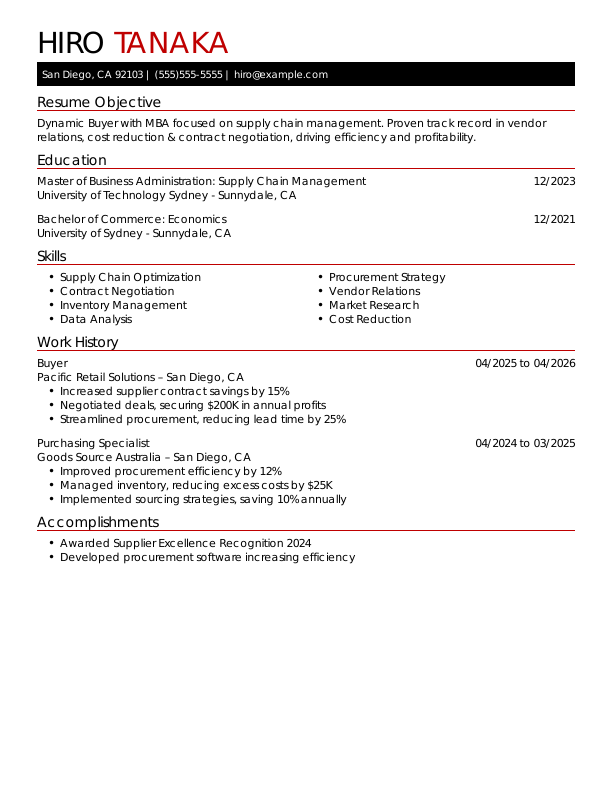
 Free
Free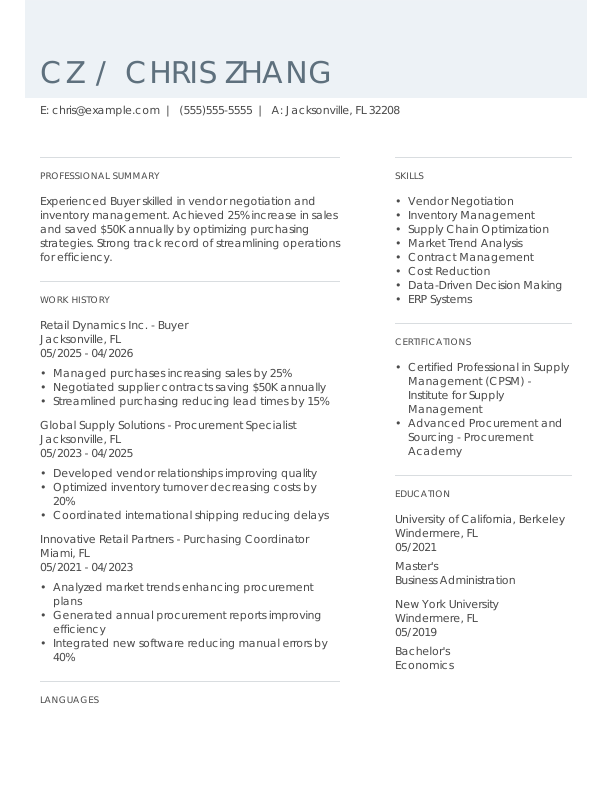
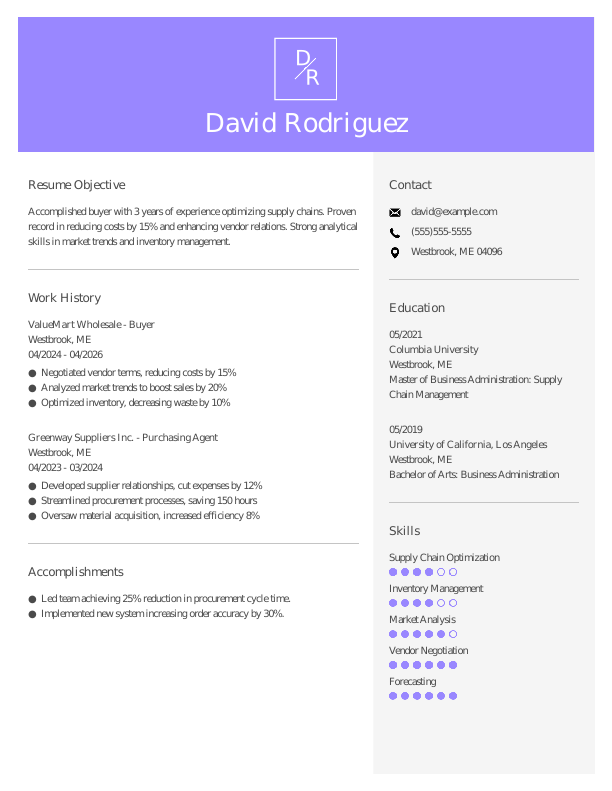
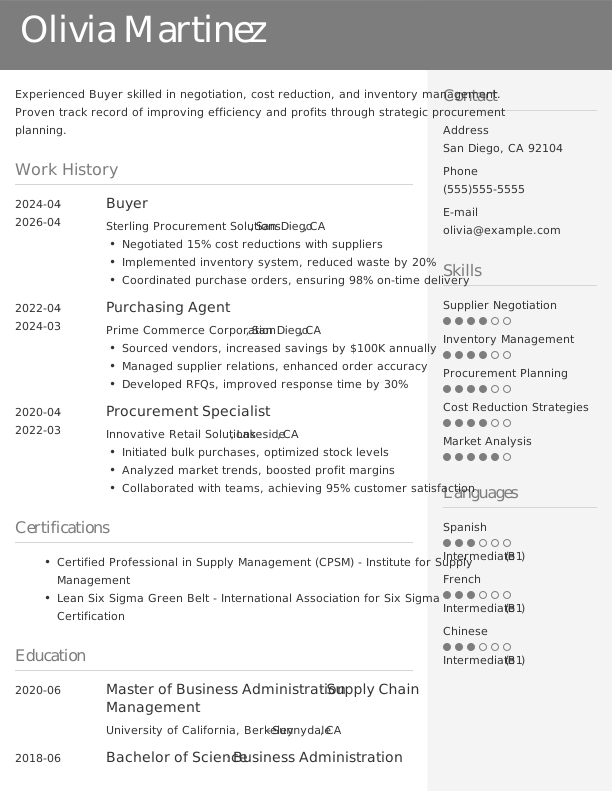

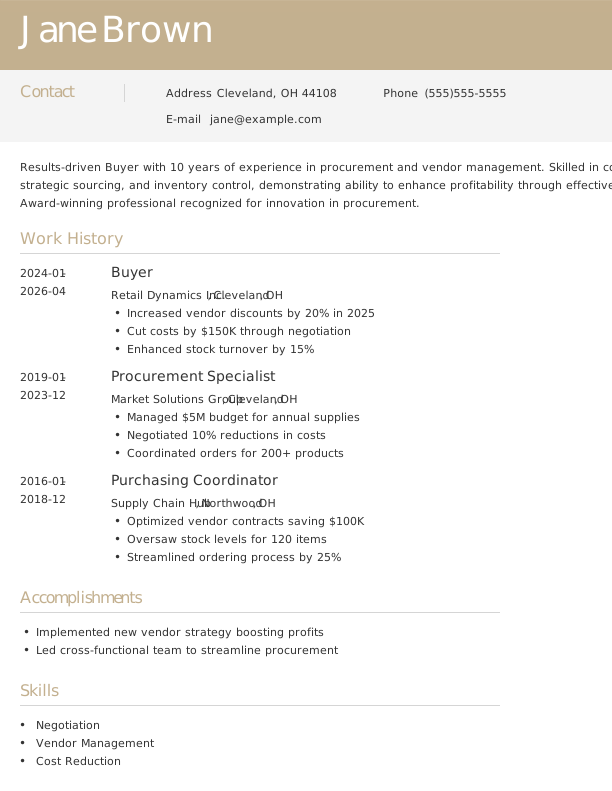

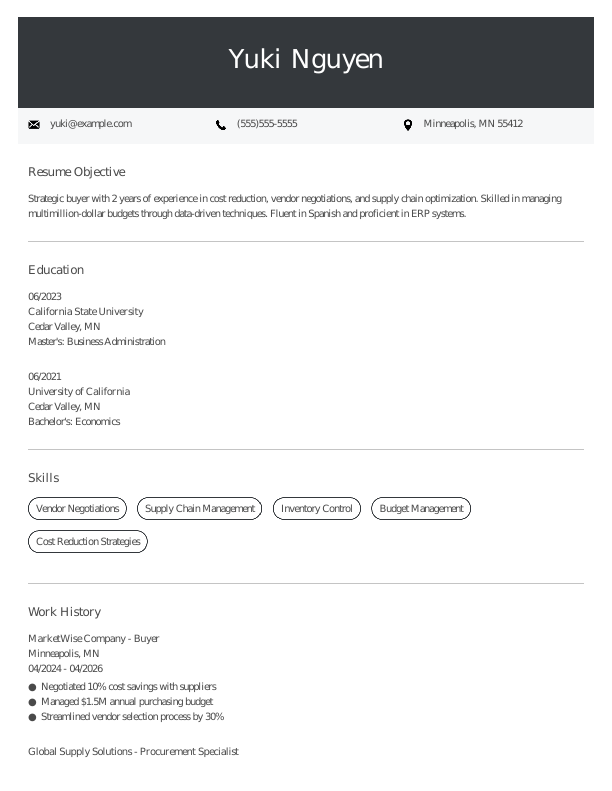

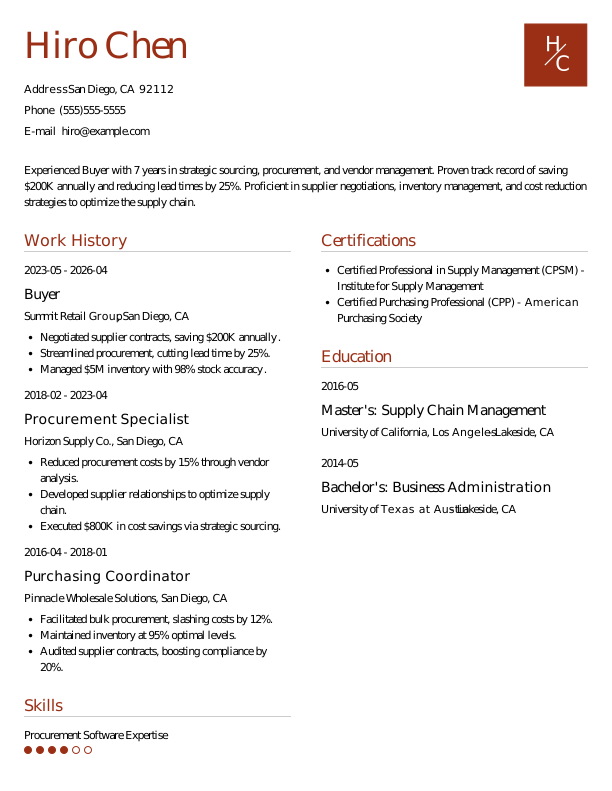

Browse Free Resume Templates
- Accounts Payable
- Adjunct Professor
- Artist
- Auto Mechanic
- Baker
- Business Development Manager
- Business
- Certified Nursing Assistant
- Classic & Traditional
- Cleaner
- College Student
- Concierge
- Construction Worker
- Corporate
- Creative & Unique
- Custodian
- Customer Service
- Dental Assistant
- Direct Support Professional
- Entry-Level
- Flight Attendant
- Hospitality & Food Service
- Front Desk Receptionist
- Healthcare
- High School
- Housekeeping
- Hvac Technician
- Hybrid
- Inventory Manager
- Logistics
- Maintenance
- Management
- Modern
- Mortgage Loan Processor
- Pet Sitter
- Phlebotomist
- Production
- Rbt
- Sales
- Security Services
- Restaurant Server
- Simple & Basic
- Social Work
- Teacher
- Technology
Resume Examples for Buyers
Buyer resumes should reflect your negotiation skills and procurement track record. Browse our templates, or create a resume organized around your purchasing experience.
Entry-Level Buyer Resume
If you are moving into procurement from a related role, this template helps you create a buyer resume by emphasizing your vendor communication, cost awareness, and any sourcing projects you have contributed to.

Mid-Career Buyer Resume
An ideal choice for mid-level buyers seeking to advance their careers, this template effectively showcases recent achievements and positions them for specialized or leadership opportunities in procurement.

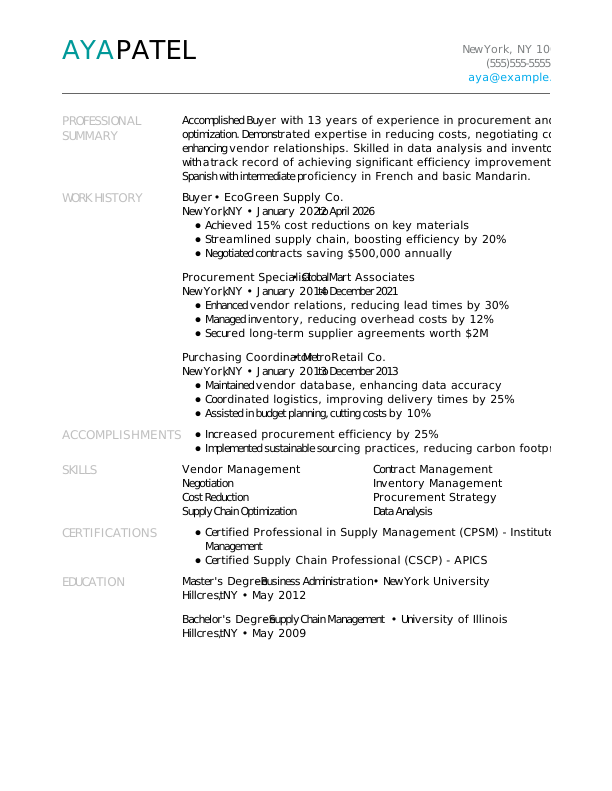
Experienced Buyer Resume
An ideal choice for buyers with over 10 years of experience, this template supports professionals seeking senior-level roles in procurement or supply chain management.

Buyer Resume Template (Text)
Below is a buyer resume in plain text format. Copy it into your document and adjust it with your vendor negotiation results and procurement experience.
Min Zhang
Brookfield, WI 53012
Professional Summary
Experienced Buyer adept at optimizing procurement, boosting efficiency, and reducing costs by leveraging data-driven strategies and sustainable sourcing. Expertise in vendor negotiation and inventory management.
Work Experience
June 2024 – April 2026
Market Giants Inc. – Brookfield, WI
Buyer
- Negotiated 25% cost reduction with vendors.
- Increased product availability by 30%.
- Implemented sustainable sourcing policy.
June 2022 – May 2024
Global Supplies Co. – Brookfield, WI
Procurement Specialist
- Reduced supplier lead times by 15 days.
- Boosted inventory turnover by 40%.
- Managed $10M in annual purchase orders.
June 2020 – May 2022
Logistics Hub Ltd. – Milwaukee, WI
Purchasing Agent
- Improved vendor relations, reducing costs by 10%.
- Streamlined process efficiencies by 20%.
- Optimized stock levels, saving $250K.
Education
May 2020
University of Chicago Brookfield, WI
Master of Business Administration Supply Chain Management
May 2018
University of Illinois at Urbana-Champaign Brookfield, WI
Bachelor of Science Business Administration
Certifications
- Certified Professional in Supply Management – Institute for Supply Management
- Lean Six Sigma Green Belt – American Society for Quality
Skills
- Vendor Negotiation
- Inventory Management
- Cost Reduction Strategies
- Supplier Relationship Management
- Data-Driven Decision Making
- Sustainable Sourcing
- Process Optimization
- Supply Chain Analytics
How to Write a Buyer Resume
As a buyer, learning how to write a resume means mixing your relevant skills and experience with a format that showcases your strengths. Use the guidance below to ensure you emphasize your qualifications and tailor your resume to fit the specific roles you’re aiming for.
1. Contact Info
Your contact information should be prominently placed at the top of your resume, ensuring clarity and professionalism.
Be sure to include:
- Full name
- Phone number
- Professional email address
- City and state (ZIP code is optional)
- LinkedIn profile or relevant portfolio (if applicable)
 PRO TIP
Avoid including personal details like age, gender, or social media profiles on your resume unless the employer specifically requests this information.
2. Resume Profile
A resume profile is a brief introduction (2–4 sentences) that highlights your skills and experience. It serves as an engaging pitch to hiring managers, aiming to spark their interest and motivate them to explore your qualifications further.
Typically placed at the top of your resume, this section can be crafted as either a summary or an objective, each with its own intent. Understanding these distinctions can help you choose the right format for your career goals:
- A resume summary highlights relevant experience, skills, and achievements that showcase your expertise in procurement and supply chain management. This format is especially beneficial for individuals with a background or transferable skills aiming to present their contributions as skilled buyers.
- A resume objective emphasizes your future aspirations and highlights what you aim to achieve in your career. It’s particularly beneficial for recent graduates, professionals shifting fields, or individuals with limited experience, such as coding bootcamp alumni or those moving into marketing roles.
Let’s examine examples of a resume summary and a resume objective to understand their distinct purposes:
Buyer resume summary example:
Detail-oriented buyer with over 6 years of experience in dynamic retail environments, including e-commerce and wholesale markets. Proficient in vendor negotiation, inventory management, and market analysis. Acknowledged for optimizing purchasing strategies that improve profit margins and streamline supply chain processes.
Buyer resume objective example:
Recent marketing graduate with a strong foundation in consumer behavior eager to launch a career in a dynamic retail environment. Committed to delivering exceptional customer experiences and looking to leverage analytical skills and creativity to contribute to a vibrant team at an innovative retail company.
3. Work Experience
The work experience on your resume serves as an important foundation for showcasing your qualifications. Employers review your job history to understand not only the positions you’ve held but also the tangible contributions you’ve made during that time. Highlighting this aspect of your background demonstrates how well you’re suited for the buyer role you seek.
The work experience section should contain:
- Job title
- Employer name and location
- Dates of employment (month/year)
- 3–5 bullet points detailing procurement strategies and supplier negotiations
Customize your work experience bullet points to align with the buyer position by using industry-specific terminology. Begin each point with a strong action verb, such as “Negotiated,” “Sourced,” or “Analyzed” to capture attention.
Incorporate quantifiable metrics to provide concrete evidence of your contributions. For instance, showcasing achievements like “increased vendor engagement by 30%” highlights your impact and sets you apart from other job seekers.
In general, consider following the format of:
[action verb] + [responsibility] = [result/achievement]
For example:
Managed procurement processes for a $2 million budget, successfully negotiating contracts that resulted in a 15% cost reduction across multiple product categories.
Note that you can also flip the result/achievement with the responsibility:
With these techniques in mind, your resume bullets may look something like:
- Negotiated contracts with 15+ vendors, achieving cost savings of 20% on procurement expenses.
- Analyzed purchasing trends to optimize inventory levels, reducing stockouts by 30% over six months.
- Collaborated with cross-functional teams to streamline the order process, improving fulfillment speed by 25%.
- Used SAP software for tracking purchases and supplier performance, ensuring compliance with company standards.
- Trained junior buyers on negotiation techniques and market analysis, fostering professional growth within the team.
4. Skills
The skills section provides a concise overview of your professional abilities as a buyer, highlighting expertise in procurement and vendor management. An ATS-friendly resume allows hiring managers to quickly assess your qualifications and suitability for the role.
Skills can be grouped into three categories:
- Soft skills are personal qualities that influence how well buyers collaborate with suppliers and colleagues.
- Hard skills are specific, quantifiable abilities that individuals can gain through education, training, or hands-on experience.
- Technical skills encompass the specific competencies required to use various tools and technologies in a profession.
5 Soft Skills for Your Resume or CV
- Negotiation skills
- Market analysis expertise
- Supplier relationship building
- Strategic sourcing acumen
- Cost management skill
5 Hard Skills for Your Resume or CV
- Vendor negotiation strategies
- Inventory management systems (SAP, Oracle)
- Market analysis techniques
- Cost-benefit analysis
- Supplier relationship management
Generally, aim to showcase a well-rounded selection of relevant skills that meet the job requirements.
PRO TIP
If you’re a newer buyer, consider placing your skills section higher on the resume, right after your summary. For those with more experience, it’s better to position this section lower and weave your skills into your work history for a more cohesive presentation.
5. Education
Understanding how to list education on your resume properly is essential for showcasing your qualifications. Begin with your most recent or relevant degree, making sure to include both the degree type and the name of the institution. If you’re a recent graduate, consider adding details like your graduation year, GPA (if above 3.5), any honors received, or relevant coursework that highlights your skills.
Buyer resume education section example:
Bachelor of Business Administration (BBA)
University of California, Berkeley, Berkeley, CA
Graduated: 2024 | Cum Laude
PRO TIP
When listing multiple degrees on your resume, always start with your highest qualification first in reverse-chronological order, such as Bachelor of Business Administration (BBA) followed by Associate Degree in Business (ADB).
6. Certifications
Certifications highlight your qualifications and demonstrate your commitment to staying current in your field. While not always included in a standard resume, this section is essential for many professionals, particularly those in specialized roles such as IT or healthcare. Employers often seek specific certifications to ensure applicants meet the required standards for technical positions or patient care.
Highlight relevant certifications that improve your candidacy and validate your expertise. Keeping these credentials updated and clearly formatted is important for making a strong impression.
Buyer certification examples:
- Buyer License, New Jersey | New Jersey | Expires: 12/2028
- Certified Supply Chain Professional (CSCP) | APICS | Expires: 05/2028
- Certified Purchasing Professional (CPP) | ISM | Expires: 11/2027
- Lean Six Sigma Green Belt | ASQ | Expires: 09/2027
Start Building Your Job-Winning Resume
Use Your Existing Resume
Import your current resume to transfer your information to one of our professional templates.
Create a New Resume
Start fresh with a template that catches your eye and follow the prompts to add your details.
Tailor Your Work History to Beat the ATS
Your work experience section is not just a compilation of job titles. It’s your opportunity to demonstrate the tangible contributions you’ve made in your field with specific examples that highlight your achievements. This approach not only improves the quality of your resume but also ensures it remains ATS-friendly, making it easier for applicant tracking systems (ATS) to interpret.
To create an effective work history, tailor it specifically to the position you’re targeting by incorporating relevant keywords from the job description. Begin by carefully reviewing the listing to identify key skills and qualifications that are frequently mentioned. By emphasizing these elements in your experience descriptions, you can effectively align your background with what employers are seeking.
What’s a Fair Buyer Salary?
Researching salary information is essential for evaluating job offers, negotiating compensation, and making informed career decisions. The data provided by the U.S. Bureau of Labor Statistics (BLS) includes the latest average salaries for buyers across the nation.
Several factors can significantly impact actual earnings, including geographic location, years of experience, certifications, and areas of specialization. For example, buyers in industries such as technology or pharmaceuticals may command higher salaries than those working in retail or other less specialized sectors.
| Alabama | $77,450 |
| Alaska | $86,310 |
| Arizona | $82,600 |
| Arkansas | $82,630 |
| California | $87,830 |
| Connecticut | $84,080 |
| Delaware | $87,770 |
| District of Columbia | $117,740 |
| Florida | $77,800 |
| Georgia | $77,310 |
| Hawaii | $77,500 |
| Idaho | $73,070 |
| Illinois | $79,200 |
| Indiana | $74,160 |
| Iowa | $73,120 |
| Kansas | $73,150 |
| Kentucky | $67,340 |
| Louisiana | $71,830 |
| Maine | $75,240 |
| Maryland | $94,420 |
| Massachusetts | $90,050 |
| Michigan | $77,430 |
| Minnesota | $87,670 |
| Mississippi | $71,480 |
| Missouri | $71,360 |
| Montana | $64,780 |
| Nebraska | $73,780 |
| Nevada | $72,400 |
| New Hampshire | $77,570 |
| New Jersey | $95,490 |
| New Mexico | $80,790 |
| New York | $86,270 |
| North Carolina | $78,890 |
| North Dakota | $72,440 |
| Ohio | $76,600 |
| Oklahoma | $73,950 |
| Oregon | $79,930 |
| Pennsylvania | $76,760 |
| Rhode Island | $84,690 |
| South Carolina | $81,490 |
| South Dakota | $74,220 |
| Tennessee | $70,630 |
| Texas | $81,120 |
| Utah | $77,770 |
| Vermont | $63,390 |
| Virginia | $92,180 |
| Washington | $89,950 |
| West Virginia | $74,250 |
| Wisconsin | $73,910 |
| Wyoming | $73,970 |
| Guam | $67,340 |
| Puerto Rico | $34,700 |
| Virgin Islands | $72,680 |
Key Takeaways
- Customize your resume for each job application. Reflect the employer’s language in your experience and skills descriptions to assist both ATS and hiring managers.
- Highlight quantifiable results to demonstrate value. Include specific metrics (e.g., cost savings, sales growth percentages, successful negotiations) that illustrate your impact.
- Select the appropriate format based on your experience level. Entry-level buyers can use a functional layout, while seasoned professionals typically prefer a reverse-chronological format.
More Resume & CV Examples
- Demand Planner
- Freight Broker
- Package Handler
- Procurement Manager
- Procurement
- Procurement Specialist
- Purchasing Manager
- Purchasing
- Supply Chain Analyst
- Supply Chain Manager
- Supply Chain
Cover Letters for Your Resume
Browse our library of cover letter examples to complete your application. A resume will have a better chance of getting noticed.
- Academic
- Account Manager
- Accountant
- Accounts Payable
- Administrative Assistant
- Admissions Counselor
- Architecture
- Artist
- Assistant Principal
- Babysitter
- Barista
- Bartender
- Bookkeeper
- Brand Ambassador
- Business Analyst
- Business
- Caregiver
- Chef
- Civil Engineering
- Computer Science
- Construction
- Consulting
- Cosmetology
- Custodian
- Customer Service
- Data Analyst
- Dental Assistant
- Dental Hygienist
- Electrical Engineering
- Emt
- Engineering
- Esthetician
- Event Coordinator
- Executive Assistant
- Finance
- Financial Analyst
- Firefighter
- Flight Attendant
- Graphic Designer
- Hair Stylist
- Healthcare
- Hr Generalist
- Investment Banking
- It
- Janitor
- Journalism
- Lab Technician
- Law Clerk
- Lawyer
- Librarian
- Logistics
- Makeup Artist
- Manager
- Marketing
- Marketing Manager
- Massage Therapist
- Mechanic
- Mechanical Engineer
- Medical Assistant
- Non Profit
- Nursing
- Occupational Therapy
- Office Manager
- Paralegal
- Personal Trainer
- Pharmacist
- Pharmacy Technician
- Photographer
- Physician Assistant
- Pilot
- Police Officer
- Project Manager
- Property Manager
- Psychology
- Receptionist
- Research Assistant
- Restaurant Manager
- Retail
- Sales
- Sales Manager
- School Counselor
- Security Officer
- Social Work
- Software Engineer
- Substitute Teacher
- Teacher
- Teaching Assistant
- Truck Driver
- Vet Tech
- Veterinary Assistant
- Web Developer
- Welder
Frequently Asked Questions
Last Update:
What resume format should I use for my buyer resume?
There are three main resume formats to consider when applying for a buyer position. Your choice should reflect your experience level and the aspects of your background you wish to highlight:
- Chronological: The chronological resume format is the most widely used option, showcasing your work experience by outlining your responsibilities and achievements. This structure is particularly beneficial for applicants with a steady job history as it reinforces their qualifications and adds credibility to their professional background.
- Functional: The functional resume, also known as a skills-based resume, emphasizes your qualifications and key skills rather than concentrating on work history. This format is particularly helpful for job seekers who lack relevant experience or have employment gaps, enabling them to highlight their abilities more prominently.
- Combination: The combination resume format merges chronological and functional styles, showcasing both skills and work experience. This structure benefits professionals by allowing them to emphasize their capabilities while also illustrating their career trajectory, making it ideal for those transitioning to new fields or advancing in their careers.
Should I include a cover letter with my resume?
Yes, you should include a cover letter with your buyer job application. A well-crafted cover letter improves your resume by allowing you to express your enthusiasm for the role and detail how your experience in procurement and negotiation aligns with the company’s goals. It shows hiring managers that you’ve tailored your submission specifically to their needs, which can give you an edge over those who may opt not to include one.
If you’re hesitant about writing a cover letter, there are many resources at your disposal. You can find guides on how to write a cover letter, along with examples suited for various fields, including purchasing and supply chain management. Additionally, different formats can help you structure your thoughts clearly.
To make the process easier, consider using a cover letter generator that offers templates and suggestions specific to buyer positions, helping you create a polished document quickly.
How long should a buyer resume be?
For buyers with less than 10 years of experience, a one-page resume is typically adequate to highlight relevant skills and achievements. Focus on key areas such as procurement strategies, vendor management, and negotiations that showcase your capabilities in the field.
Conversely, those in senior or specialized roles may extend their resumes to two pages if they maintain focus on relevant content. Emphasize strategic initiatives and measurable outcomes while ensuring clarity to present a comprehensive view of your professional journey without unnecessary filler.
What keywords should I include to pass applicant tracking systems (ATS)?
To improve your resume’s compatibility with ATS, carefully integrate keywords and phrases from the job posting. For a buyer position, look for terms like “sourcing,” “negotiation,” or “inventory management.” Including these specific words can significantly boost your chances of getting noticed.
Don’t forget to add relevant certifications such as Certified Purchasing Professional or Certified Supply Chain Professional. Additionally, highlight any technical tools you’re familiar with, like SAP or Oracle Procurement Cloud. Using these targeted keywords not only showcases your qualifications but also aligns your resume with what employers are actively seeking.
Should I include freelance projects or internships on my resume?
Yes, especially if you’re new to the industry. Including freelance projects demonstrates your practical skills and ability to manage real-world tasks, which can set you apart when you lack extensive formal job experience.

Megan Dawkins is a career industry editor who empowers job seekers to take control of their career paths using Monster’s comprehensive job search and resume tools. She specializes in helping job seekers navigate the flexible job market.
See More From Megan DawkinsExplore Related Career Advice


How to Put Transferable Skills on Your Resume: 120 Skills, Examples, & Tips

Updated:
Aug 27, 2026
|

16 min read


How to Write a Functional Resume (Formatting Tips, Template, & Examples)
Updated:
Aug 7, 2026
|
17 min read


Functional vs Chronological Resume: Which Format Is Right for You?
Updated:
Aug 3, 2026
|
16 min read
100+ Resume Adjectives to Help You Write a Stronger Resume in 2026 (With Examples)
Updated:
Jul 30, 2026
|
12 min read