
Free Agricultural Engineer Resume Templates & Examples
From irrigation systems to soil science, agricultural engineering spans a unique intersection of disciplines. These free agricultural engineer resume and CV examples help you present your design projects and sustainability initiatives.
Real-World Resumes That Get Results
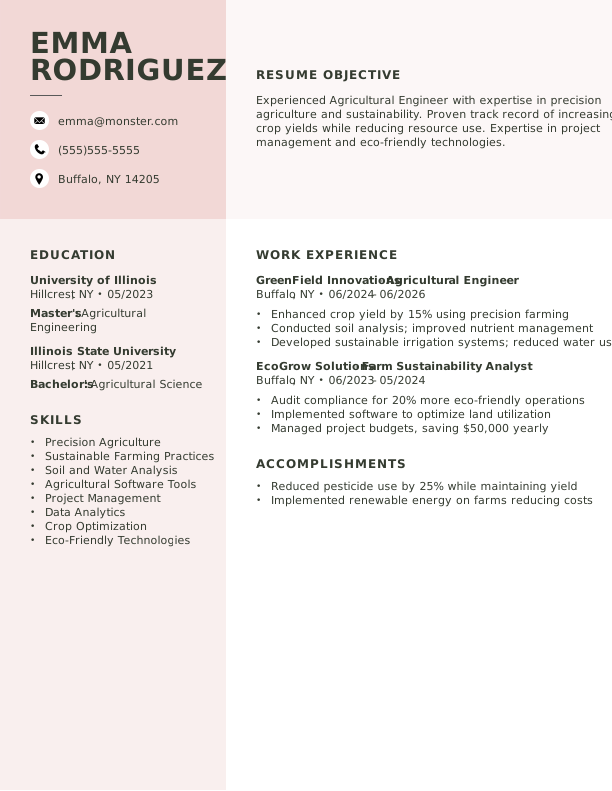
Agricultural Engineer Entry-Level Resume
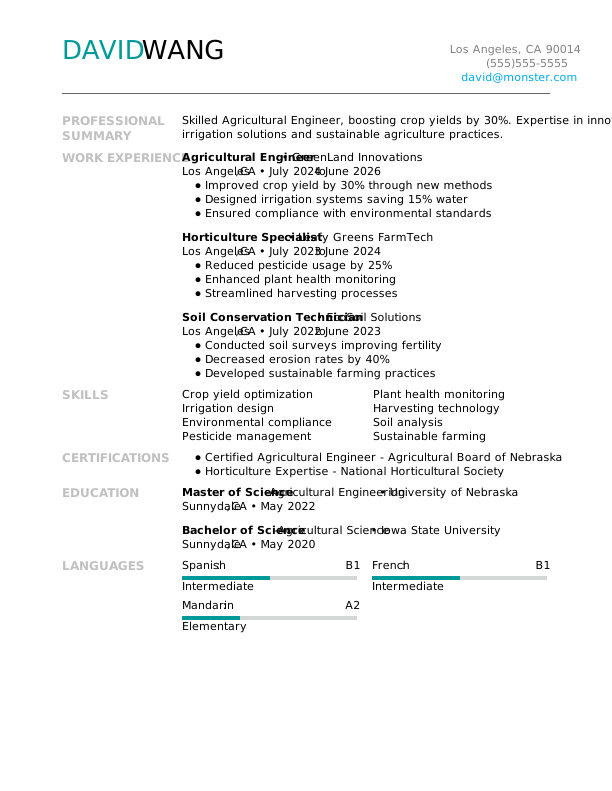
Agricultural Engineer Mid-Level Resume
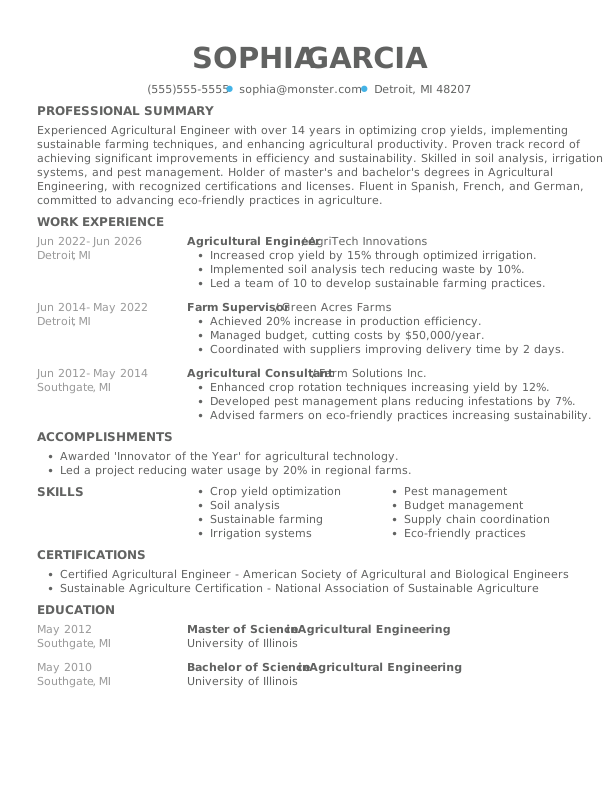
Agricultural Engineer Experienced Resume
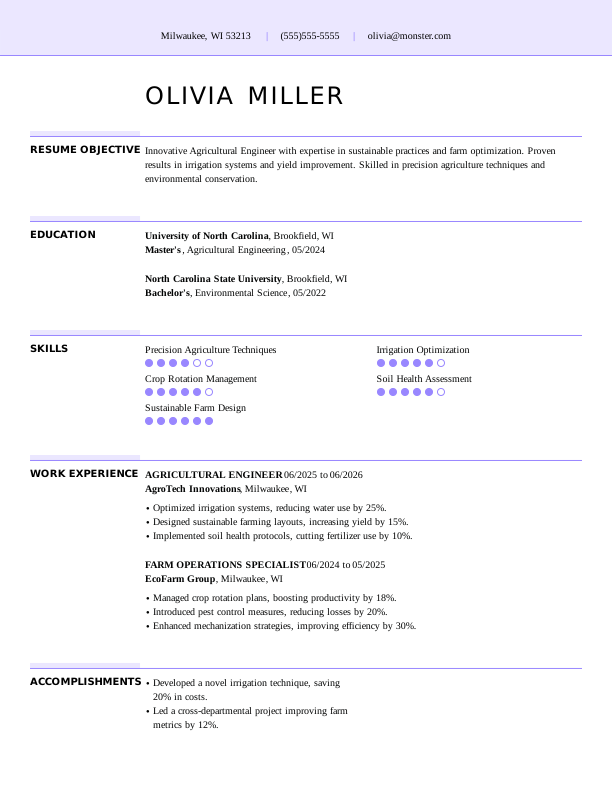
 Free
FreeAgricultural Engineer Modern Resume
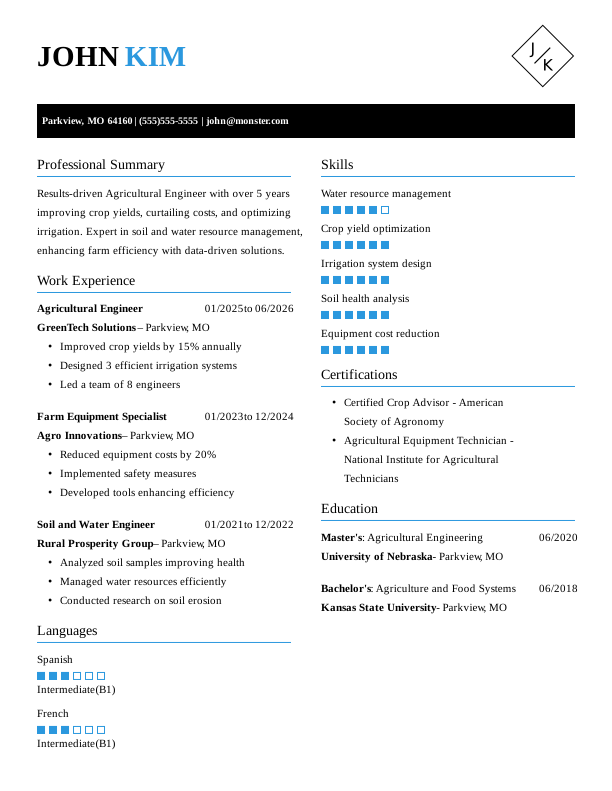

Agricultural Engineer Creative Resume
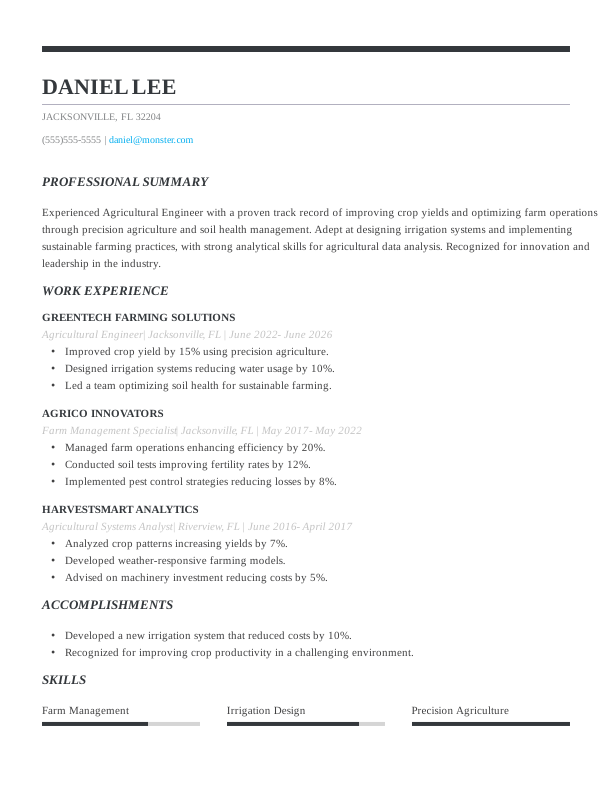
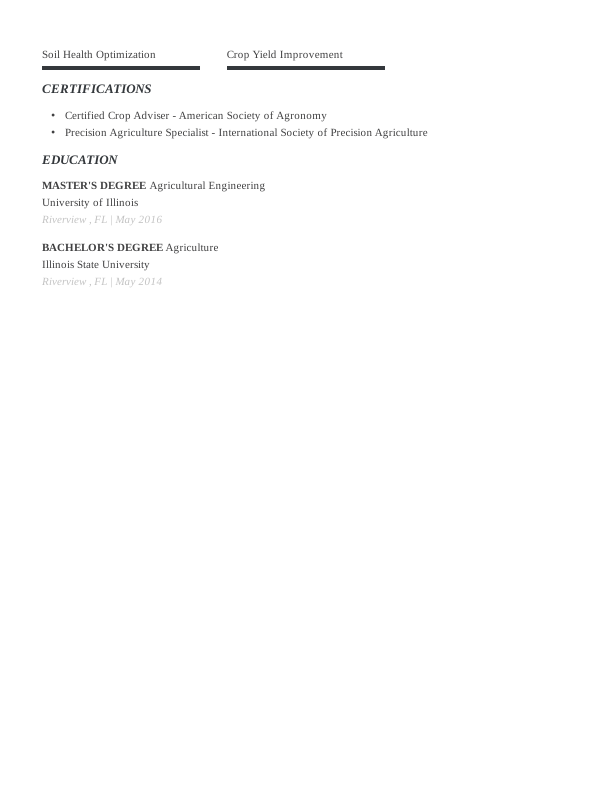
Agricultural Engineer Traditional Resume
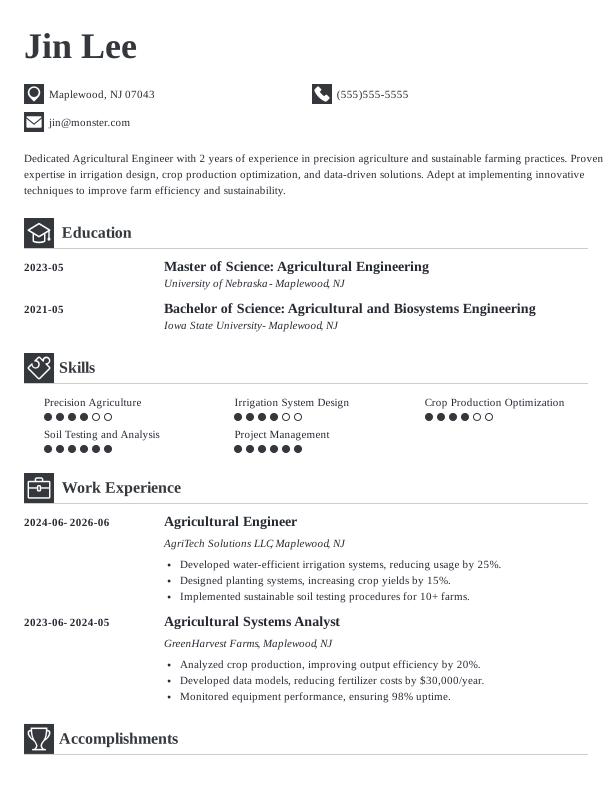

Agricultural Engineer Simple CV Example
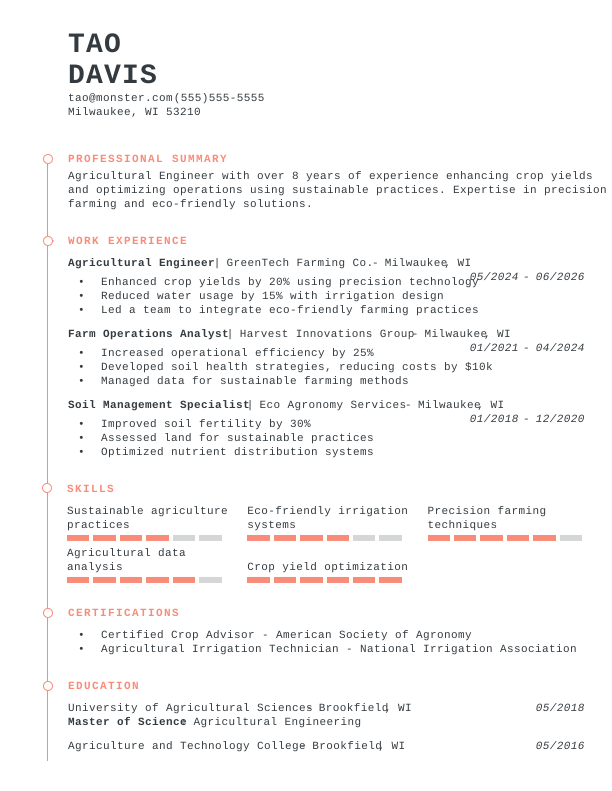

Agricultural Engineer CV Format
Browse Free Resume Templates
- Accounts Payable
- Adjunct Professor
- Artist
- Auto Mechanic
- Baker
- Business Development Manager
- Business
- Certified Nursing Assistant
- Classic & Traditional
- Cleaner
- College Student
- Concierge
- Construction Worker
- Corporate
- Creative & Unique
- Custodian
- Customer Service
- Dental Assistant
- Direct Support Professional
- Entry-Level
- Flight Attendant
- Hospitality & Food Service
- Front Desk Receptionist
- Healthcare
- High School
- Housekeeping
- Hvac Technician
- Hybrid
- Inventory Manager
- Logistics
- Maintenance
- Management
- Modern
- Mortgage Loan Processor
- Pet Sitter
- Phlebotomist
- Production
- Rbt
- Sales
- Security Services
- Restaurant Server
- Simple & Basic
- Social Work
- Teacher
- Technology
Resume Examples for Agricultural Engineers
Resumes and CVs for agricultural engineers vary based on experience, whether you’re starting out or have years in the field. Explore templates designed for each career stage to create your own.
Entry-Level Agricultural Engineer Resume
Ideal for recent graduates seeking guidance on how to write a resume with no experience, this template also suits professionals transitioning into agricultural engineering from other fields.
Mid-Career Agricultural Engineer Resume
A good fit for agricultural engineers with some experience, this template emphasizes recent project achievements and facilitates progression into more specialized or leadership roles.
Experienced Agricultural Engineer Resume
An ideal choice for agricultural engineers with 10+ years of experience, this template supports professionals seeking leadership roles in advancing sustainable practices and optimizing crop production.
Agricultural Engineer Resume Template (Text)
Take this adaptable text template for an agricultural engineer resume to copy, edit, and personalize directly in your document.
Yuki Huang
Lakeside, CA 92049
Professional Summary
Innovative Agricultural Engineer with expertise in sustainable practices, enhancing farm yields, and optimizing equipment performance. Proven leader in projects saving resources and improving soil health.
Work Experience
January 2024 – June 2026
EcoAg Solutions – Lakeside, CA
Agricultural Engineer
- Optimized irrigation systems, saving 25% water
- Enhanced crop yield by 18% using innovative techniques
- Led sustainability projects improving soil health
January 2021 – January 2024
GreenField Technologies – Lakeside, CA
Agricultural Systems Designer
- Designed soil fertility project increasing yields by 20%
- Developed cost-efficient farm machinery improving productivity
- Conducted soil tests improving crop rotation efficacy
January 2019 – January 2021
AgriInnovate Inc. – Los Angeles, CA
Farm Equipment Specialist
- Enhanced machine efficiency reducing downtime by 30%
- Implemented precision agriculture using AI tools
- Trained staff on new tech, raising skill levels
Education
May 2018
University of Illinois Lakeside, CA
Master of Science Agricultural Engineering
May 2016
Iowa State University Lakeside, CA
Bachelor of Science Agroecology
Certifications
- Certified Agricultural Engineer – Agriculture Professionals Institute
- Advanced Sustainable Practices – Green Agriculture Academy
Skills
- Precision agriculture
- Sustainable farming solutions
- Soil health management
- Farm equipment optimization
- Water conservation techniques
- Crop yield enhancement
- Use of AI in agriculture
- Project leadership
How to Write an Agricultural Engineer Resume
As an agricultural engineer, knowing how to write a resume means combining your technical skills and relevant experience with a clear format that highlights your qualifications. Use the guidance below to showcase your strengths and customize your resume for the positions you’re targeting.
1. Contact Info
Your contact information should be clear, professional, and easy to find at the top of your resume.
Make sure to include:
- Full name
- Phone number
- Professional email address
- City and state (ZIP code is optional)
- LinkedIn profile or personal portfolio (if relevant)
 PRO TIP
Skip including personal information such as your age, gender, or social media links unless the employer specifically requests these details.
2. Resume Profile
A resume profile is a concise introduction that highlights your qualifications and makes a compelling case to hiring managers. It serves as a pitch designed to capture their interest and prompt them to explore your resume further.
Typically located at the top of your resume, this section can be formatted as either a summary or an objective, each serving distinct purposes. Understanding these differences will help you choose the best option for your career goals:
- A resume summary highlights your most relevant achievements, skills, and experiences in the agricultural engineering field. This approach benefits those with a solid work background or transferable skills looking to showcase their value and contributions as an agricultural engineer.
- A resume objective highlights your career aspirations and what you aim to accomplish in your professional journey. It’s particularly beneficial for recent graduates, individuals shifting careers, or those with limited experience, such as agricultural technology students or professionals moving into agribusiness roles.
Let’s take a look at an example of each to see how a resume summary and a resume objective differ:
Agricultural engineer resume summary example:
Innovative agricultural engineer with over 6 years of experience in sustainable farming practices and precision agriculture. Proficient in crop management, soil analysis, and irrigation systems. Celebrated for improving farm efficiency and promoting environmental stewardship through effective design solutions.
Agricultural engineer resume objective example:
Recent graduate with a degree in Agricultural Engineering eager to launch a career in sustainable farming practices. Committed to environmental stewardship and looking to apply strong analytical skills and innovative problem-solving abilities in an agricultural research or development organization.
3. Work Experience
The work experience on your resume is an important foundation for showcasing your expertise. Employers look beyond job titles and responsibilities to assess the tangible impact you’ve made in previous roles.
Your background in agricultural engineering highlights your ability to apply innovative solutions and sustainable practices, making you well-suited for the position.
The work experience section should contain:
- Job title
- Employer name and location
- Dates of employment (month/year)
- 3–5 bullet points describing your relevant responsibilities and achievements
Tailor your content to reflect the specific agricultural engineering role you’re targeting. Start each bullet point with an action verb (like “Designed,” “Analyzed,” “Implemented”) to improve the impact and clarify your contributions.
Incorporate quantifiable metrics whenever possible. Specific numbers, such as yield improvements or cost reductions, provide compelling evidence of your engineering achievements and help distinguish you from other job seekers.
In general, consider following the format of:
[action verb] + [responsibility] = [result/achievement]
For example:
Designed and implemented irrigation systems for 50+ farms, improving water efficiency by 30% and increasing crop yields by 20%.
Note that you can also flip the result/achievement with the responsibility:
Increased sustainable farming practices adoption by 40% through comprehensive training programs and innovative technology solutions.
With these techniques in mind, your resume bullets may look something like:
- Developed irrigation systems for 15+ farms, increasing crop yields by 25% during drought seasons.
- Designed and implemented precision agriculture techniques that reduced water usage by 30% while maintaining productivity.
- Collaborated with agronomists to conduct soil health assessments, improving nutrient efficiency in crop production.
- Mentored interns on sustainable farming practices, improving their understanding of environmental impact and engineering solutions.
- Used CAD software to create detailed designs for agricultural machinery, ensuring compliance with safety standards.
4. Skills
This skills section provides a concise overview of professional abilities specific to agricultural engineering. It allows recruiters and hiring managers to quickly assess qualifications relevant to the field.
Skills can be categorized into three groups:
- Soft skills are personal attributes that influence how agricultural engineers collaborate with others in the field.
- Hard skills are specific, quantifiable abilities gained through education, training, or experience.
- Technical skills refer to the specialized knowledge and abilities required to perform specific tasks in a field.
5 Soft Skills for Your Resume or CV
- Innovative design thinking
- Team project management
- Effective communication skills
- Strategic resource allocation
- Sustainable practice advocacy
5 Hard Skills for Your Resume or CV
- Crop modeling and simulation (APSIM, DSSAT)
- Irrigation design and management
- Soil analysis and testing
- Precision agriculture technologies (GIS, GPS)
- Sustainable farming practices
In general, aim to include a diverse set of relevant skills that align with the job requirements to showcase your full professional capabilities.
PRO TIP
If you’re a newer agricultural engineer, consider placing your skills section higher on the resume right after your summary. For those with more experience, it’s best to position this section lower and weave your skills into your work history to highlight them within the context of your accomplishments.
5. Education
Understanding how to list education on your resume is essential for showcasing your qualifications. Begin with your most recent or relevant degree, clearly stating the degree type and institution name.
If you have recently graduated, consider adding your graduation year, GPA (if it’s 3.5 or above), any honors received, and related coursework to further strengthen your application.
Agricultural engineer resume education section example:
Bachelor of Science in Agricultural Engineering (BSAE)
University of California, Davis, Davis, CA
Graduated: 2024 | Cum Laude
PRO TIP
If you’re progressing from an Associate Degree in Agricultural Engineering to a Bachelor of Science in Agricultural Engineering, or have earned another relevant degree, list both in reverse-chronological order.
6. Certifications
Including certifications on your resume can help balance out limited practical experience in agricultural engineering.
While this section is not always part of a traditional format, it’s important for many professionals in the industry. Employers often look for specific credentials for roles such as crop management or soil conservation specialists.
Make sure to include only the certifications and credentials that are relevant to your application. Keeping these qualifications current and clearly formatted will improve your profile and demonstrate your commitment to the field.
Agricultural engineer certification examples:
- Certified Agricultural Engineer (CAE) | American Society of Agricultural and Biological Engineers | Expires: 04/2028
- Professional Engineer (PE) License, Agriculture | State Board of Professional Engineers | Expires: 12/2027
- Certified Irrigation Designer (CID) | Irrigation Association | Expires: 03/2028
- Precision Agriculture Certification | National Association of State Departments of Agriculture | Expires: 09/2027
Start Building Your Job-Winning Resume
Use Your Existing Resume
Import your current resume to transfer your information to one of our professional templates.
Create a New Resume
Start fresh with a template that catches your eye and follow the prompts to add your details.
Tailor Your Work History to Beat the ATS
Your work experience is more than a list of job titles. It’s a chance to showcase the measurable impact you’ve had on agricultural projects, sustainability initiatives, and farm productivity. This approach also ensures that you have an ATS-friendly resume that applicant tracking systems (ATS) can easily scan.
What’s a Fair Agricultural Engineer Salary?
Understanding agricultural engineer salaries across the country helps you evaluate job offers, negotiate fair compensation, and make informed career decisions. The data below comes from the U.S. Bureau of Labor Statistics (BLS) and reflects the most recent nationwide averages for agricultural engineers.
Keep in mind that factors like geographic location, years of experience, certifications, and areas of specialization can significantly influence your actual salary. Agricultural engineers working in research or development roles may earn more than those in consulting positions, while expertise in sustainable farming practices or precision agriculture often leads to higher pay rates.
| Arkansas | $76,420 |
| Florida | $101,800 |
| Indiana | $90,470 |
| Michigan | $90,340 |
| Nebraska | $95,090 |
| Ohio | $107,640 |
| Oklahoma | $92,010 |
| Pennsylvania | $79,930 |
| Texas | $117,540 |
| Wisconsin | $104,120 |
| Puerto Rico | $50,530 |
Key Takeaways
- Tailor your resume to the job description. Use specific terms from the listing to resonate with both ATS and hiring managers.
- Highlight quantifiable achievements. Showcase results with metrics relevant to agriculture (e.g., crop yield improvements, project budgets managed, efficiency gains) to differentiate yourself.
- Select a format that suits your experience level. Entry-level job seekers might consider a functional layout, while seasoned professionals often opt for reverse-chronological resumes.
More Resume & CV Examples
- Aerospace Engineer
- Ai Engineer
- Automation Engineer
- Bim Engineer
- Biomedical Engineering
- Chemical Engineering
- Civil Engineer
- Controls Engineer
- Design Engineer
- Electrical Engineer
- Embedded Systems Engineer
- Engineering Manager
- Engineering Project Manager
- Engineering
- Enterprise Architect
- Environmental Engineer
- Field Engineer
- Industrial Engineer
- Mechanical Engineer
- Petroleum Engineer
- Process Engineer
- Product Management
- Production Coordinator
- Production Line Operator
- Production Manager
- Production Planner
- Production Supervisor
- Production Worker
- Robotics Engineer
- System Engineer
- Test Engineer
Cover Letters for Your Resume
Browse our library of cover letter examples to complete your application. A resume will have a better chance of getting noticed.
Frequently Asked Questions
Last Update:
What resume format should I use for my agricultural engineer resume?
There are three main resume formats to consider when applying for an agricultural engineer role. Your choice should reflect your experience level and highlight the skills or achievements most relevant to the position:
- Chronological: The most popular format, a chronological resume highlights your work experience, detailing your responsibilities and achievements in reverse order. This format is particularly suited for applicants with a relevant job history that reinforces their qualifications and demonstrates their growth as an agricultural engineer.
- Functional: Also known as a skills-based resume, the functional resume emphasizes a summary of qualifications and an expanded skills section to showcase your relevant abilities. This format minimizes attention on work history, making it beneficial for job seekers who lack relevant experience in agricultural engineering or have significant employment gaps.
- Combination: A combination resume integrates chronological and functional formats, featuring both a skills section and detailed work experience. This approach benefits agricultural engineers by allowing them to showcase their technical expertise alongside career achievements, making it suitable for those advancing or transitioning within the field.
Should I include a cover letter with my resume?
Yes, you should include a cover letter with your agricultural engineering job application. A cover letter provides an opportunity to expand on your resume by detailing your passion for sustainable practices and innovative solutions in the agriculture sector. This document allows you to connect your unique experiences with the employer’s specific needs, showing that you’ve invested time in tailoring your application.
If you’re feeling unsure about how to write a cover letter, there are numerous resources available to assist you. You can find guides on crafting effective cover letters, review examples tailored for agricultural engineers, and explore various formats that can help highlight your qualifications clearly and concisely.
For those looking to simplify their application process, tools like a cover letter generator can quickly help you create a polished and personalized document based on the job you’re applying for.
How long should an agricultural engineer resume be?
For agricultural engineers with less than 10 years of experience, a one-page resume is typically sufficient. This allows you to highlight your education, relevant internships, and key skills without overwhelming potential employers. Focus on showcasing your hands-on experience and technical expertise.
If you’re a senior professional or specialize in a niche area, two pages can be appropriate. Ensure that every detail included adds value and remains relevant to the job you’re applying for. Clarity should always take precedence over length in your resume presentation.
Should I include internships or research projects?
Yes, especially if you’re a recent graduate. Listing internships and research projects demonstrates practical experience in agricultural systems and technology, making your resume more competitive when you lack full-time positions in the field.

Elizabeth Muenzen is a Certified Professional Resume Writer (CPRW) and member of the Professional Association of Resume Writers & Career Coaches who empowers job seekers to take control of their career paths using Monster’s comprehensive job search and resume tools.
See More From Elizabeth MuenzenExplore Related Career Advice


How to Put Transferable Skills on Your Resume: 120 Skills, Examples, & Tips

Updated:
Aug 27, 2026
|
16 min read


How to Write a Functional Resume (Formatting Tips, Template, & Examples)
Updated:
Aug 7, 2026
|
17 min read


Functional vs Chronological Resume: Which Format Is Right for You?
Updated:
Aug 3, 2026
|
16 min read

100+ Resume Adjectives to Help You Write a Stronger Resume in 2026 (With Examples)
Updated:
Jul 30, 2026
|
12 min read