

Free Civil Engineering Cover Letter Templates & Examples
Boost your interview chances with professionally designed civil engineering cover letter templates. These free cover letter templates include clear writing tips and guidance to help you highlight your qualifications, showcase key skills, and win over employers and hiring managers.
Real-World Cover Letters That Get Results
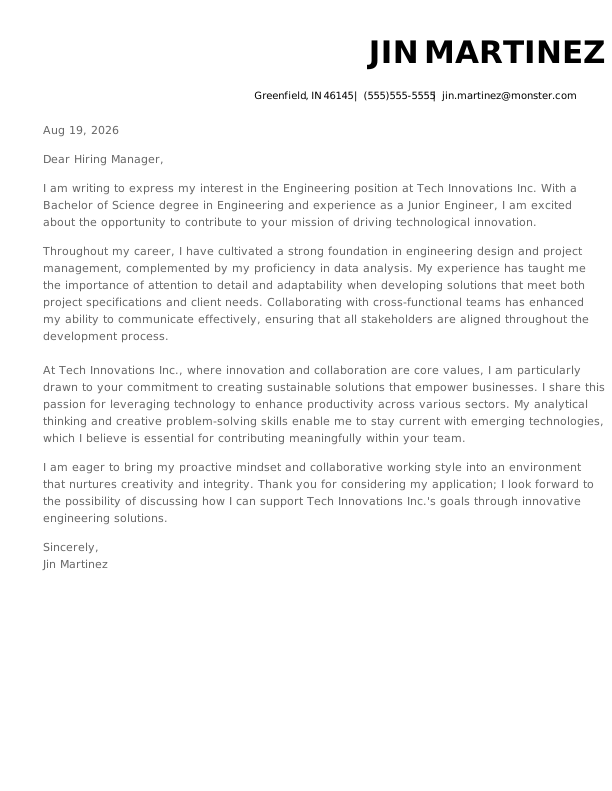
 Free
FreeEngineering Entry-Level Cover Letter
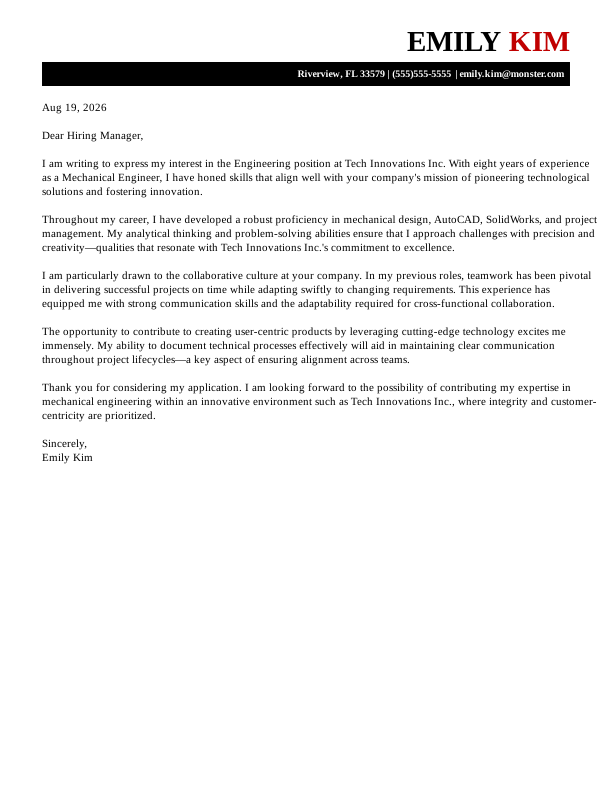
Engineering Mid-Level Cover Letter
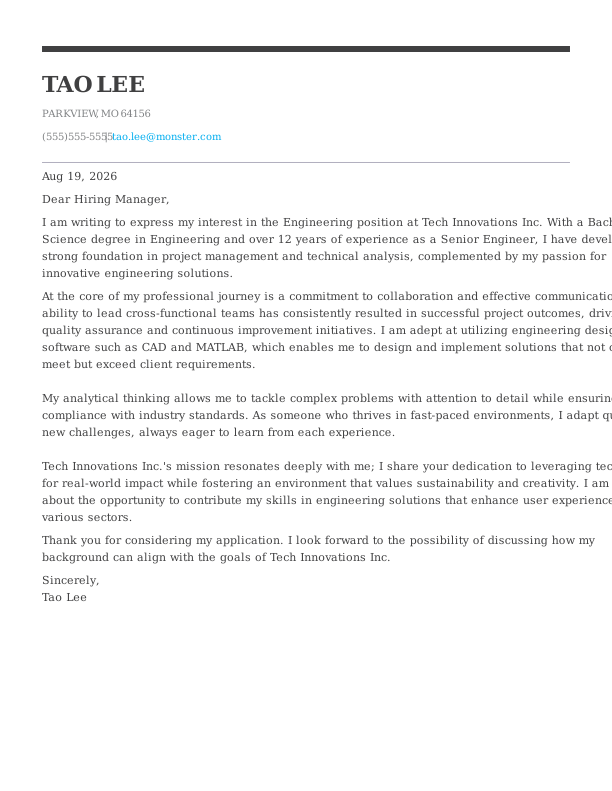
Engineering Experienced Cover Letter
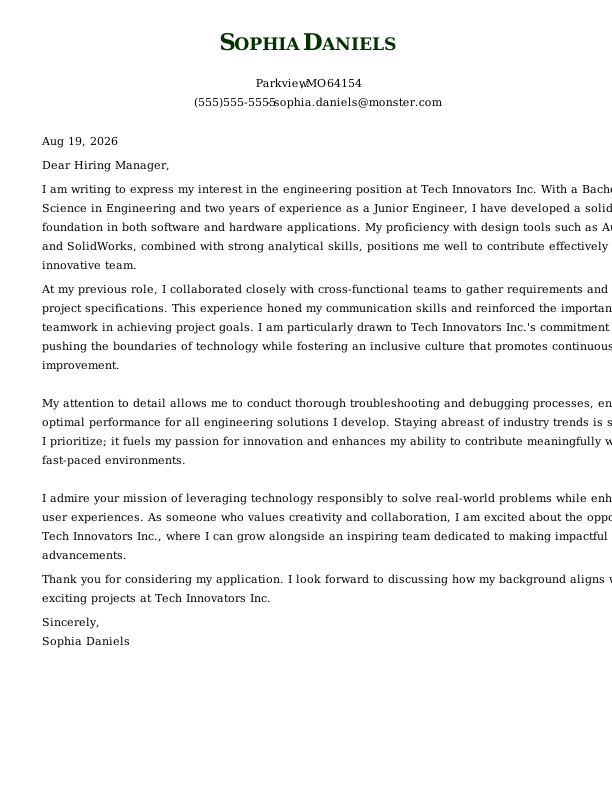
Engineering Entry-Level Cover Letter
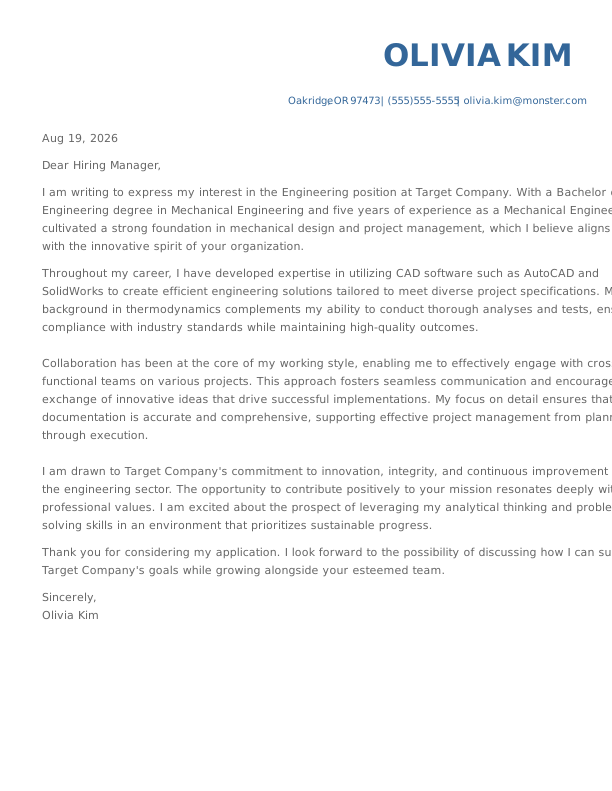
Engineering Mid-Level Cover Letter
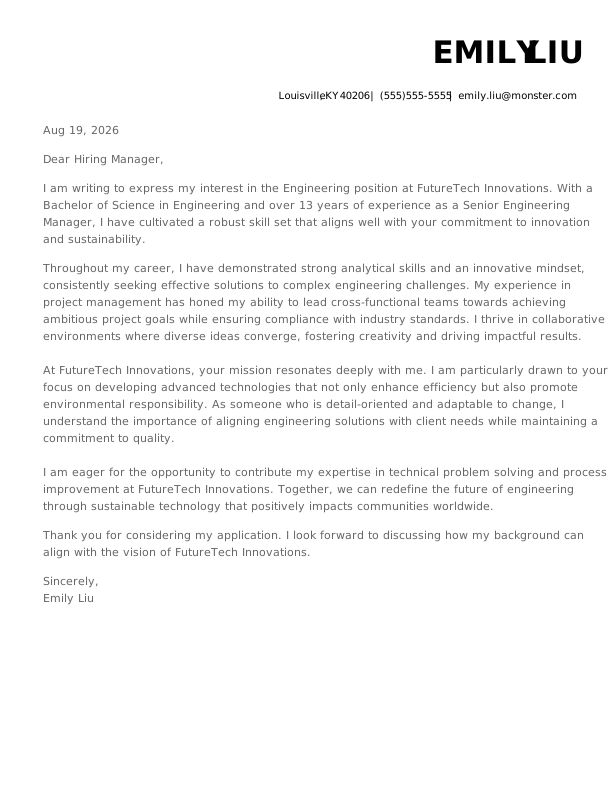
Engineering Experienced Cover Letter
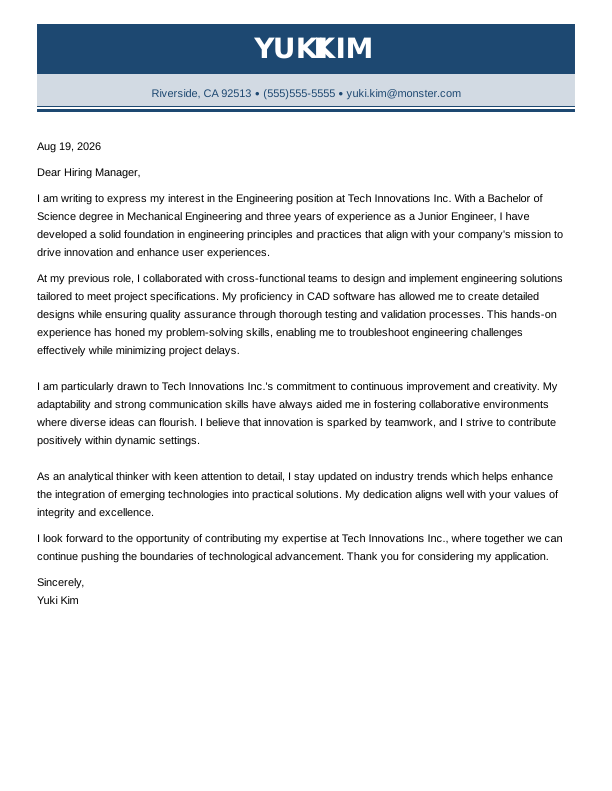
Engineering Entry-Level Cover Letter
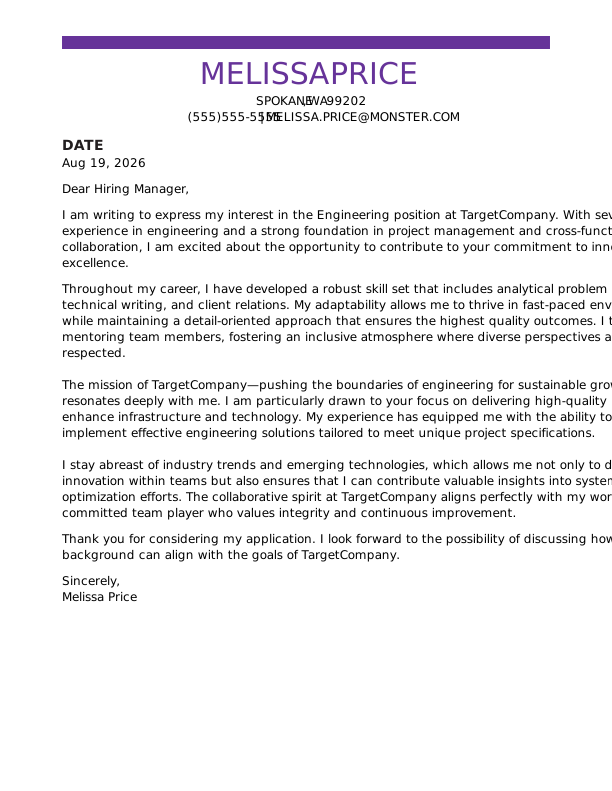
Engineering Mid-Level Cover Letter
Browse Free Cover Letter Templates
- Account Manager
- Accounts Payable
- Administrative Assistant
- Admissions Counselor
- Artist
- Babysitter
- Barista
- Bartender
- Bookkeeper
- Brand Ambassador
- Business Analyst
- Caregiver
- Chef
- Computer Science
- Custodian
- Customer Service
- Dental Assistant
- Electrical Engineering
- Emt
- Engineering
- Event Coordinator
- Executive Assistant
- Finance
- Financial Analyst
- Firefighter
- Flight Attendant
- Graphic Designer
- Hair Stylist
- Healthcare
- Investment Banking
- It
- Janitor
- Journalism
- Lab Technician
- Law Clerk
- Lawyer
- Librarian
- Logistics
- Manager
- Marketing Manager
- Massage Therapist
- Mechanic
- Mechanical Engineer
- Medical Assistant
- Non Profit
- Nursing
- Office Manager
- Paralegal
- Personal Trainer
- Pharmacy Technician
- Photographer
- Physician Assistant
- Pilot
- Police Officer
- Project Manager
- Property Manager
- Receptionist
- Research Assistant
- Retail
- Sales
- Security Officer
- Social Work
- Software Engineer
- Teacher
- Teaching Assistant
- Truck Driver
- Vet Tech
- Veterinary Assistant
- Web Developer
- Welder
Cover Letter Examples for Civil Engineers
Cover letters for civil engineering roles change by experience level, so the details you highlight should match your stage. Use templates for entry-level, mid-career, and experienced job seekers to focus on projects, technical skills, and outcomes that fit what hiring teams expect.
Entry-Level Civil Engineering Cover Letter
Perfect for recent graduates starting out with no experience, this template also supports career changers moving into civil engineering from other fields.
Mid-Career Civil Engineering Cover Letter
A good fit for civil engineering professionals with several years of experience, this template highlights career growth and helps position you for advancement into project leadership or specialized design work.
Experienced Civil Engineering Cover Letter
Best for civil engineering professionals with 10+ years of experience, this template helps you pursue senior project leadership or engineering manager roles by guiding your cover letter narrative.
Civil Engineering Cover Letter Template (Text)
Use this adaptable text template for a civil engineering cover letter to copy, paste, and customize in your document or file.
Chris Brown
Jersey City, NJ 07305
(555)555-5555
chris.brown@monster.com
Aug 19, 2026
Dear Hiring Manager,
I am writing to express my interest in the Civil Engineer position at ABC Engineering Inc., as advertised. With a Bachelor of Science in Civil Engineering and four years of experience as a Junior Civil Engineer, I have developed a solid foundation in civil engineering design and project management that aligns well with your company’s mission to enhance community living through responsible engineering practices.
At my previous role, I successfully collaborated with multidisciplinary teams to design and oversee various infrastructure projects, including roads and bridges. My proficiency in AutoCAD and other design tools has allowed me to produce detailed plans that prioritize safety, sustainability, and efficiency—values that resonate deeply with ABC Engineering Inc.’s commitment to quality and innovation.
I pride myself on being detail-oriented with strong analytical problem-solving skills. My ability to conduct thorough site assessments ensures compliance with regulations while delivering high-quality work within budget constraints. Additionally, my adaptability allows me to thrive in dynamic environments where collaboration is key.
I am particularly drawn to your emphasis on continuous improvement and community empowerment through innovative solutions. The opportunity to contribute my skills while furthering these goals is exciting for me.
Thank you for considering my application. I look forward to the possibility of discussing how I can be an asset at ABC Engineering Inc.
Sincerely,
Chris Brown
How to Write a Civil Engineering Cover Letter
For civil engineers, writing an effective cover letter means demonstrating your fit through clear project storytelling, technical precision, and proven experience with design tools, codes, and site management.
Follow these steps to craft a cover letter that highlights your technical qualifications and aligns your past achievements with the goals of your target firm.
1. Research & Prepare
Before writing, research the engineering firm, its primary disciplines (such as transportation, water resources, or site development), and its active project portfolio. Understanding its design standards, permitting timelines, and site constraints helps you align your experience with its daily operations.
To prepare effectively:
- Tailor your experience: Match your past design reviews, field inspections, and calculations directly to the firm’s project demands.
- Analyze the job posting: Identify required credentials—such as a PE or EIT license—along with software requirements like AutoCAD Civil 3D, MicroStation, or Revit.
- Review firm project portfolios: Examine the firm’s website, recent press releases, and public infrastructure project lists to understand its current workload.
- Research team leadership: Look up principal engineers or project managers on LinkedIn to understand their technical focus and project delivery methods.
2. Hook the Reader
Your opening paragraph sets the tone for your application. Skip generic statements about your interest in civil engineering and open with a specific project achievement, deep knowledge of local regulatory requirements, or direct alignment with the firm’s major initiatives.
Effective ways to open include:
- Project milestones: Highlight a major delivery win, such as optimizing a grading plan to reduce schedule risk during earthworks.
- Infrastructure focus: Reference a major local project the firm is leading—such as bridge rehabilitation or stormwater system upgrades—and connect it to your expertise.
- Professional connections: Mention a mutual contact or industry organization that recommended the firm, linking it directly to your technical background.
3. Tell Your Professional Story
Your cover letter should build upon your resume by detailing how your engineering decisions solved complex site challenges and delivered measurable project value.
Highlight quantifiable civil engineering achievements such as:
- Cost and material efficiency: Lowering material waste by 8% through revised earthwork volume takeoffs and optimized utility layouts.
- Quality control: Reducing rework by 15% through meticulous QA/QC drawing reviews and clash detection.
- Schedule management: Cutting critical path delays by ten days using updated project tracking tools and proactive contractor coordination.
4. Showcase Your Skills
Match your technical capabilities directly to the responsibilities outlined in the job posting. Demonstrate how you apply engineering principles, software tools, and field oversight to complete deliverables safely and on schedule.
Key ways to align your skills:
- Field coordination and safety: Describe reviewing contractor shop drawings, conducting site visits, and resolving field conflicts to maintain design compliance.
- Hydraulics and hydrology: Detail experience sizing culverts, designing detention basins, and verifying grading plans against municipal stormwater standards.
- Drafting and design software: Explain how you utilized AutoCAD Civil 3D to produce construction documentation, utility plan sets, and existing condition models.
5. Explain Any Special Circumstances
If you have an employment gap, a career transition, or relocation plans, address it briefly and frame it around technical development and practical insights gained during that time.
Ways to address specific situations:
- Employment gaps: Mention structural repair work, independent study of updated building codes, or completing coursework toward professional licensure.
- Career transitions: Explain how field experience—such as land surveying or construction inspection—provided practical insights into site conditions, scheduling, and contractor communications.
- Relocation: Highlight your quick adaptation to regional soil conditions, environmental permitting processes, and local agency guidelines.
6. End With a Professional Goodbye
Reaffirm your interest in contributing to the firm’s engineering projects. Thank the hiring manager for their time and invite them to discuss how your design and field background aligns with their upcoming project pipeline.
Finish with a tailored call to action followed by your sign-off:
- Sign-off: End with a professional closing such as “Sincerely,” or “Best regards.”
- Call to action: “I welcome the opportunity to discuss how my project experience, field knowledge, and commitment to safety can support your team’s engineering goals.”
4 Tips for Formatting Your Cover Letter
Clean, well-organized formatting reflects the structural precision and attention to detail required in civil engineering design and project management.

Keep It to One Page
Engineering directors and hiring committees review numerous project packages, so maintain a concise, scannable layout. Keep your text between 250–400 words across three to four structured paragraphs that focus on high-impact infrastructure achievements and project scope.

Display Licenses
Place key technical credentials—such as Professional Engineer (PE), Engineer in Training (EIT), or specialized CAD certifications—directly in your document header alongside your contact details. Presenting these qualifications upfront instantly verifies your eligibility for regulated engineering roles.

Save & Send As PDF
Export your final document as a PDF to preserve your line spacing, margins, and embedded project links across operating systems and CAD workstations. Save the file using a clean format, such as Jordan_Lee_Civil_Engineer_Cover_Letter.pdf.

Address Hiring Manager Directly
Research the principal engineer, department lead, or project manager using the firm’s team directory or LinkedIn. If a specific contact isn’t named in the posting, open with “Dear Principal Engineer and Hiring Committee” rather than outdated greetings like “To Whom It May Concern.”
Top-Paying States for Civil Engineering Roles
Researching civil engineering salaries helps you compare job offers, negotiate pay, and make clearer career decisions. The salary data below comes from the U.S. Bureau of Labor Statistics and reflects current national averages for civil engineers.
Your actual earnings can vary based on location, years of experience, professional licenses or certifications, and specialty area. Engineers working on transportation infrastructure like highways or rail projects, in larger consulting firms, or in high-demand roles such as structural design for bridges and water resources planning often earn more than those in smaller local projects.
| Alabama | $54,030 |
| Alaska | $60,210 |
| Arizona | $75,500 |
| Arkansas | $55,770 |
| California | $84,480 |
| Connecticut | $75,460 |
| Delaware | $55,150 |
| District of Columbia | $102,280 |
| Florida | $68,970 |
| Georgia | $61,280 |
| Hawaii | $65,910 |
| Idaho | $61,720 |
| Illinois | $75,280 |
| Indiana | $62,990 |
| Iowa | $66,940 |
| Kansas | $58,610 |
| Kentucky | $56,860 |
| Louisiana | $71,350 |
| Maine | $63,780 |
| Maryland | $62,200 |
| Massachusetts | $71,280 |
| Michigan | $61,740 |
| Minnesota | $76,410 |
| Mississippi | $48,170 |
| Missouri | $66,070 |
| Montana | $59,060 |
| Nebraska | $68,480 |
| Nevada | $71,660 |
| New Hampshire | $60,730 |
| New Jersey | $66,190 |
| New Mexico | $61,250 |
| New York | $65,360 |
| North Carolina | $59,250 |
| North Dakota | $64,320 |
| Ohio | $62,840 |
| Oklahoma | $65,560 |
| Oregon | $85,470 |
| Pennsylvania | $65,400 |
| Rhode Island | $65,160 |
| South Carolina | $60,550 |
| South Dakota | $59,710 |
| Tennessee | $63,770 |
| Texas | $70,800 |
| Utah | $61,810 |
| Vermont | $69,140 |
| Virginia | $74,640 |
| Washington | $78,240 |
| West Virginia | $59,900 |
| Wisconsin | $66,140 |
| Wyoming | $56,420 |
| Puerto Rico | $35,820 |
Key Takeaways
- Personalize each letter for the specific role and company. Reference the project type, region, and priorities so it’s clear you understand their scope, stakeholders, and constraints.
- Lead with a strong hook and use quantifiable achievements. Cite results like cost savings, schedule improvements, reduced rework, or compliance outcomes from past designs or site work.
- Keep formatting clean and consistent with your resume. Use the same headings, spacing, and date ranges so reviewers can quickly scan experience and tools.
Browse Monster’s Resume Templates
Monster also has hundreds of ATS-friendly resume templates for all career levels and industries. Create a matching resume to help you land the interview.
- Aerospace Engineer
- Agricultural Engineer
- Ai Engineer
- Automation Engineer
- Bim Engineer
- Biomedical Engineering
- Chemical Engineering
- Civil Engineer
- Controls Engineer
- Design Engineer
- Electrical Engineer
- Embedded Systems Engineer
- Engineering Manager
- Engineering Project Manager
- Engineering
- Enterprise Architect
- Environmental Engineer
- Field Engineer
- Industrial Engineer
- Mechanical Engineer
- Petroleum Engineer
- Robotics Engineer
- System Engineer
- Test Engineer
Frequently Asked Questions
Last Update:
Do I really need a cover letter?
Yes, you should include a cover letter even when it’s optional. It lets you add context your civil engineering resume cannot, and it signals initiative and real interest in the position.
A cover letter matters most when you explain a career shift, an employment gap, or a specific reason you want to work for that company. It also gives you room to show how you think, what drives your work, and your enthusiasm for building safe, well-designed infrastructure.
How long should my cover letter be?
Cover letters should stay within one page, typically 250-400 words. Hiring managers review many applications with limited time for each submission.
Focus on quality over quantity by sharing only the most relevant details from your experience and achievements. Aim for 3-4 concise paragraphs so your message stays clear and easy to scan.
Should my cover letter match my resume?
Yes, your cover letter should match your resume’s visual design. Use the same fonts, colors, and header style so your application package looks cohesive and intentional.
However, keep the content from repeating the visual design of your resume. Use your civil engineering cover letter to expand on key projects, explain why you want this role, and add context for how you handled site constraints, calculations, inspections, or stakeholder communication.
How do I address my cover letter if I don’t know the hiring manager’s name?
Search for a real contact name before you write. Check LinkedIn or the company website, or call the front desk to ask who handles civil engineering hiring. If you still cannot find one, address the letter to a relevant team and start your first paragraph by stating the role you want.
Use “Dear Hiring Manager” or “Dear Engineering Team” if no name appears. Avoid “To Whom It May Concern” and skip casual greetings like “Hi.”
Should I mention salary expectations in my cover letter as a civil engineer?
Only include salary expectations if the job posting asks for them. If it does, share a range you researched and write that your number stays flexible based on scope, location, and benefits.

Kirsten Chorpenning is a career advice writer who empowers job seekers to take control of their career paths using Monster’s comprehensive job search and resume tools. She specializes in helping job seekers find rewarding jobs in today’s dynamic work environment.
See More From Kirsten ChorpenningExplore Related Career Advice







How to Write a Cover Letter for Internal Positions or Promotions (Examples & Tips)
Updated:
Apr 23, 2026
|

19 min read


Cover Letter vs Resume: What’s the Difference & Do You Need Both?

Updated:
Apr 23, 2026
|
18 min read