

Free Mechanical Engineer Cover Letter Templates & Examples
With our free mechanical engineer cover letter templates, you’ll find clear writing tips and guidance that help you highlight your qualifications, showcase problem-solving skills, and appeal to employers or hiring managers.
Real-World Cover Letters That Get Results
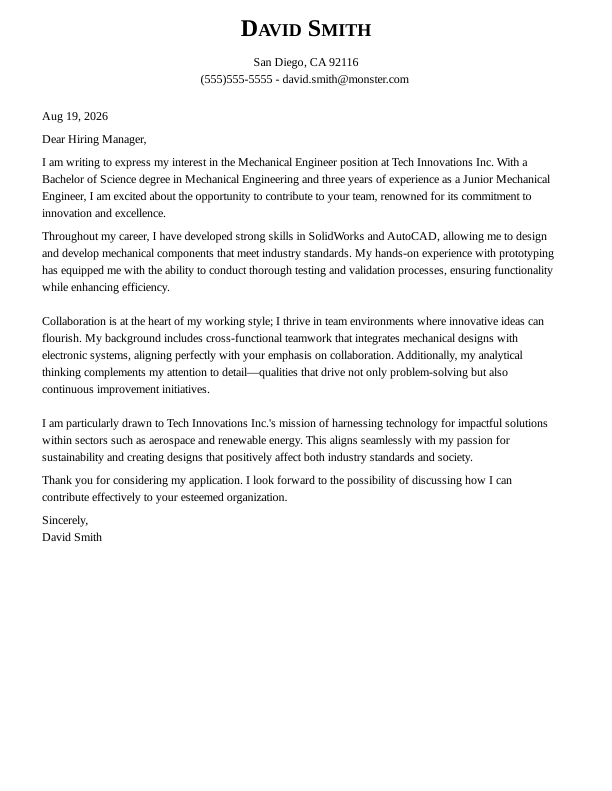
 Free
FreeMechanical Engineer Entry-Level Cover Letter
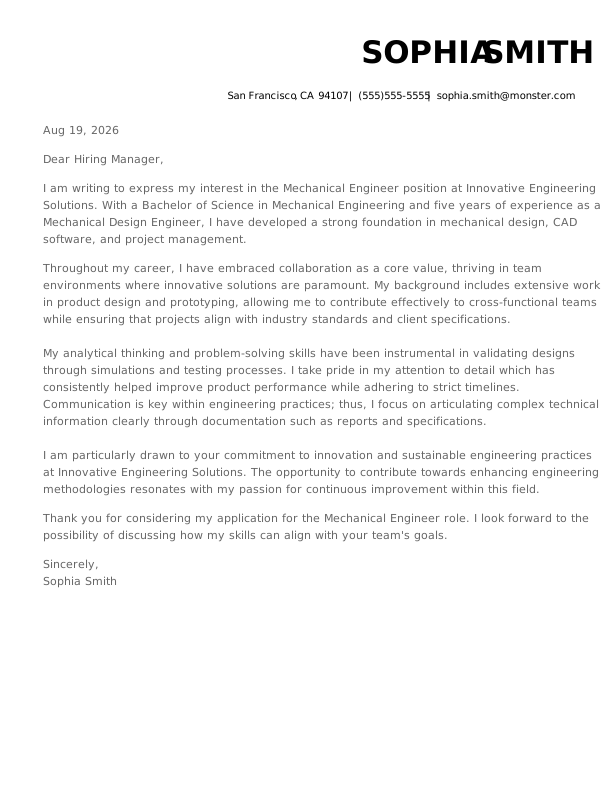
Mechanical Engineer Mid-Level Cover Letter
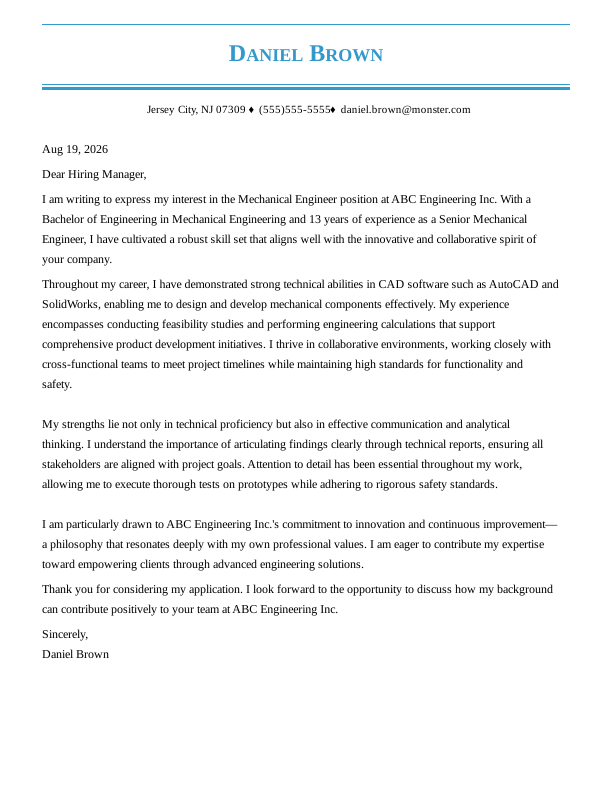
Mechanical Engineer Experienced Cover Letter
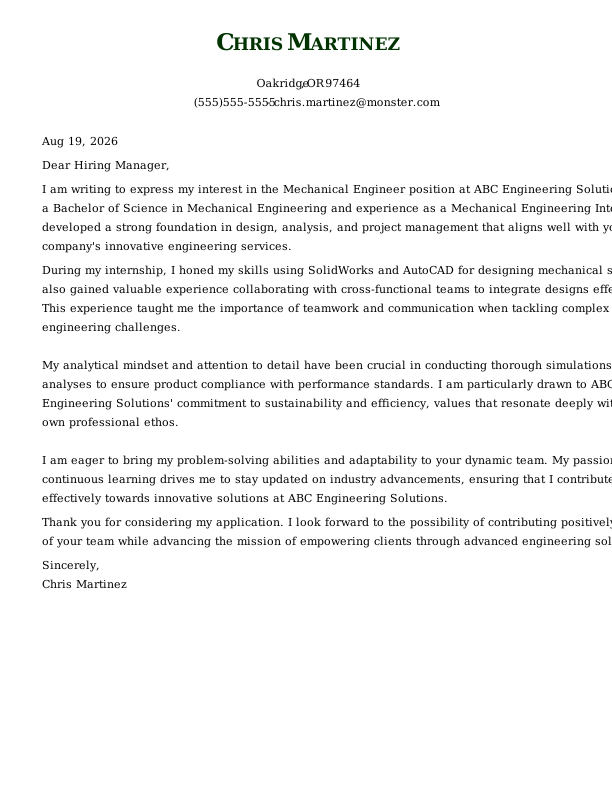
Mechanical Engineer Entry-Level Cover Letter
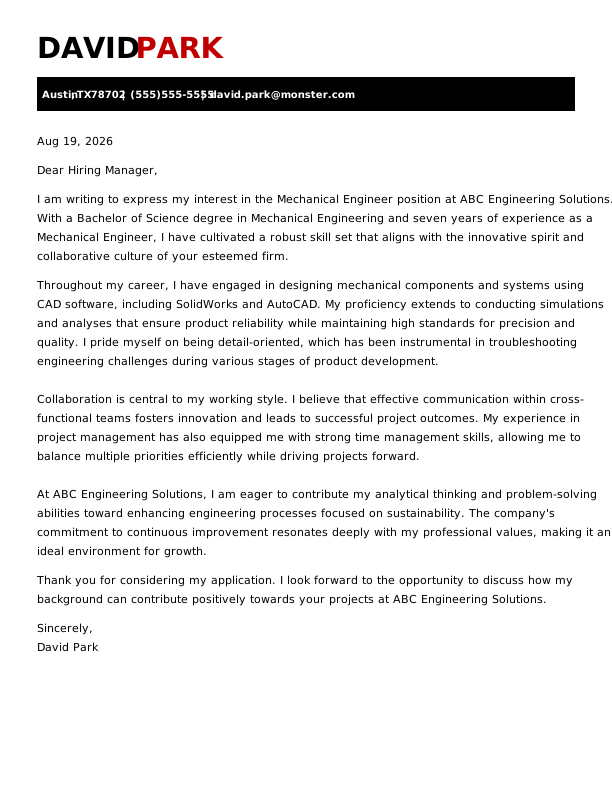
Mechanical Engineer Mid-Level Cover Letter
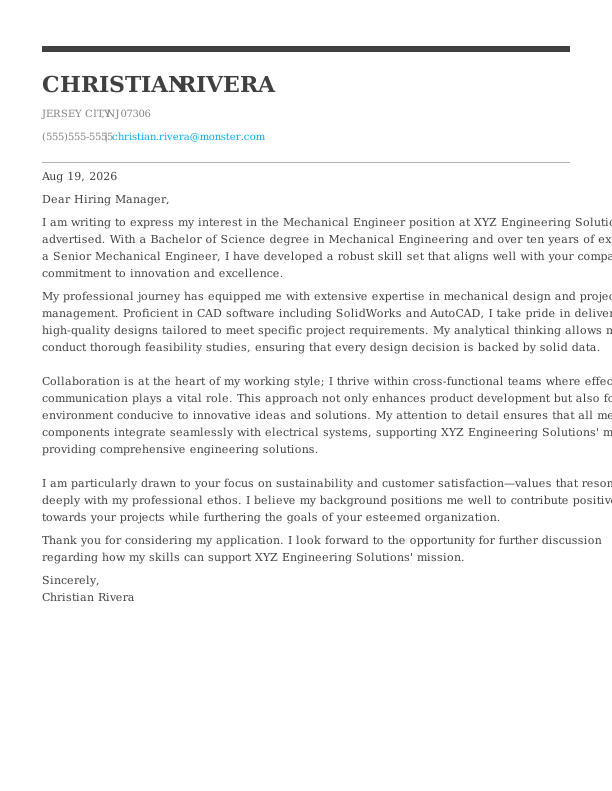
Mechanical Engineer Experienced Cover Letter
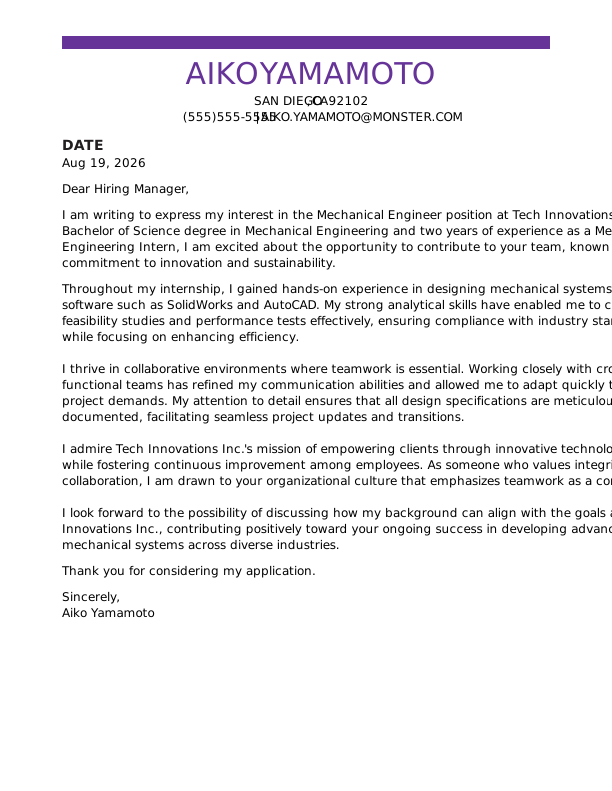
Mechanical Engineer Entry-Level Cover Letter
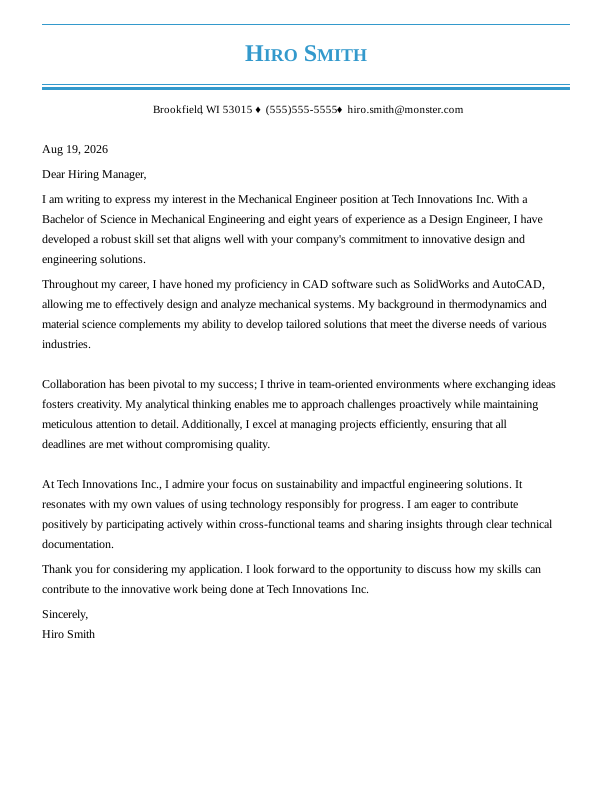
Mechanical Engineer Mid-Level Cover Letter
Browse Free Cover Letter Templates
- Account Manager
- Accounts Payable
- Administrative Assistant
- Admissions Counselor
- Artist
- Babysitter
- Barista
- Bartender
- Bookkeeper
- Brand Ambassador
- Business Analyst
- Caregiver
- Chef
- Civil Engineering
- Computer Science
- Custodian
- Customer Service
- Dental Assistant
- Electrical Engineering
- Emt
- Engineering
- Event Coordinator
- Executive Assistant
- Finance
- Financial Analyst
- Firefighter
- Flight Attendant
- Graphic Designer
- Hair Stylist
- Healthcare
- Investment Banking
- It
- Janitor
- Journalism
- Lab Technician
- Law Clerk
- Lawyer
- Librarian
- Logistics
- Manager
- Marketing Manager
- Massage Therapist
- Mechanic
- Medical Assistant
- Non Profit
- Nursing
- Office Manager
- Paralegal
- Personal Trainer
- Pharmacy Technician
- Photographer
- Physician Assistant
- Pilot
- Police Officer
- Project Manager
- Property Manager
- Receptionist
- Research Assistant
- Retail
- Sales
- Security Officer
- Social Work
- Software Engineer
- Teacher
- Teaching Assistant
- Truck Driver
- Vet Tech
- Veterinary Assistant
- Web Developer
- Welder
Cover Letter Examples for Mechanical Engineers
Mechanical engineer cover letters change by experience level, so you should tailor your examples and achievements to match entry-level, mid-career, or experienced expectations. Use the templates in this section to structure each version for the role you want next.
Entry-Level Mechanical Engineer Cover Letter
Perfect for recent graduates drafting a cover letter with no experience, this template also supports career changers moving into mechanical engineering from another field.
Mid-Career Mechanical Engineer Cover Letter
A smart choice for mechanical engineers with a few years of hands-on design experience, this template spotlights career growth and helps position you for advancement into senior engineering, leadership, or a focused specialty.
Experienced Mechanical Engineer Cover Letter
Best for mechanical engineers with 10+ years of experience, this template helps job seekers pursue senior technical leadership, advanced design roles, or engineering manager and architect-level positions.
Mechanical Engineer Cover Letter Template (Text)
Use this adaptable text template for a mechanical engineer cover letter. Copy, edit, and personalize it in your document or file.
Chris Singh
Chicago, IL 60609
(555)555-5555
chris.singh@monster.com
Aug 19, 2026
Dear Hiring Manager,
I am writing to express my interest in the mechanical engineer position at XYZ Engineering Solutions. With a bachelor of science degree in mechanical engineering and nine years of experience in the field, I am excited about the opportunity to contribute to your team, known for its commitment to innovation and sustainability.
Throughout my career, I have honed my skills in CAD software including AutoCAD and SolidWorks, allowing me to design and develop mechanical components that meet diverse client needs. My background includes conducting detailed engineering analyses and collaborating with cross-functional teams to ensure project milestones are achieved effectively. I take pride in being detail-oriented and proactive, qualities that have enabled me to troubleshoot mechanical issues efficiently throughout various stages of design and manufacturing.
At the core of my professional journey is a strong belief in teamwork. I thrive in collaborative environments where diverse perspectives drive innovation. My ability to communicate complex technical information clearly has facilitated successful partnerships with colleagues and clients alike.
Joining XYZ Engineering Solutions represents an exciting opportunity for me not only to apply my technical expertise but also to engage with a company whose values align closely with my own: fostering creativity while emphasizing environmental responsibility. I am eager to bring my analytical thinking, problem-solving abilities, and passion for mechanical design into this role.
Thank you for considering my application. I look forward to discussing how I can contribute positively as part of your team at XYZ Engineering Solutions.
Sincerely,
Chris Singh
How to Write a Mechanical Engineer Cover Letter
For a mechanical engineer, knowing how to write a cover letter means showing strong fit through clear personalization, practical storytelling about projects, and evidence of relevant skills like design, analysis, and testing.
Follow the steps below to highlight your most relevant engineering achievements and customize your letter for each target role’s requirements and tools.
1. Research & Prepare
Before you write a cover letter, research the company, the mechanical engineering role, and the hiring manager. For this job, look at what products or systems the company builds, its manufacturing approach, and any recent upgrades to reliability, safety, or quality.
Review the job posting for required tools and experience like CAD workflows, FEA or DFM knowledge, tolerance analysis, and testing. Then scan the company website for mission and engineering focus, read recent news for projects or facilities changes, and check LinkedIn profiles to learn the hiring manager’s background.
Use these details to tailor your examples and address the company’s priorities in your letter.
2. Hook the Reader
Your cover letter opening sets the tone and earns attention fast. A strong opener avoids generic language and instead shares a specific reason you fit the role, such as a project outcome, a design challenge you enjoy, or knowledge of the company’s work. It should feel personal while still pointing to relevant engineering strengths.
Try openings like:
- Referencing a recent product launch or patent from the employer that matches your experience in thermal, fluid, or structural analysis
- Leading with a brief win, such as improving yield on a mechanical assembly through tolerance reviews and FMEA updates
You can also mention an industry connection who saw your work on a prototype test plan and suggested the role.
3. Tell Your Professional Story
Your cover letter should do more than repeat your resume. It should tell a clear story and offer specific examples and measurable results that show how you improved designs, reliability, or production outcomes.
In mechanical engineering, quantify impact by citing metrics like reducing cycle time by 15%, cutting defect rates from 3% to 1%, improving FEA accuracy or test pass rates, or lowering energy use by 10%.
Mention the project context and what you changed, then connect it to the numbers so hiring managers can picture your contribution.
4. Showcase Your Skills
Match your mechanical engineering skills to the exact requirements in the job posting. Hiring managers want proof that you can apply your experience to their products, constraints, and quality targets, not just a list of tools.
For example, if the role calls for design validation, describe how you ran FEA or built test fixtures to confirm stress and thermal performance.
If it mentions manufacturing support, share an instance where you worked with production on tolerances, root cause analysis using failure data, and design updates that reduced rework.
If they request documentation, point to clear drawings and BOMs that improved build accuracy.
5. Explain Any Special Circumstances
If you have employment gaps or career changes, or you relocated, address them early in your cover letter. Share the reason briefly and truthfully, then pivot to what you gained during that time, such as new skills, refreshed focus, or stronger project experience. Keep it positive and tied to the role.
As a mechanical engineer, you can connect a gap to hands-on work like rebuilding a small prototype setup at home or completing a short course in CAD or FEA.
If you changed fields from manufacturing to design, mention how you learned tolerances and process constraints on the shop floor and now apply that knowledge to product reviews and drawings.
6. End With a Professional Goodbye
Close your cover letter by restating your interest in the mechanical engineer role and inviting next steps. Thank the reader for their time, then ask to discuss how your design, analysis, and testing experience can support their projects. If you can, reference a specific area like thermal systems or product reliability.
For example, you might say, “I welcome the opportunity to discuss how my mechanical design skills and hands-on prototyping can strengthen your engineering team.” Then, include a professional sign-off such as “Sincerely” or “Best regards.”
4 Tips for Formatting Your Cover Letter
Clear cover letter formatting creates a strong first impression and helps the hiring manager read quickly. Use consistent spacing, simple headings, and short paragraphs so your message stays professional and easy to scan.
These tips apply no matter your industry or experience level.

Keep It to One Page
Hiring managers are busy, so keep your cover letter concise and limited to one page. Target 250–400 words in three to four focused paragraphs that highlight your most relevant qualifications.

Use a Professional Font & Layout
Choose a professional font such as Arial, Calibri, Times New Roman, or Helvetica in 10–12 pt. Use 1-inch margins and keep formatting consistent with your resume for a clean, coordinated application package.

Address the Hiring Manager Directly
When you write a cover letter for a mechanical engineer role, try to find the hiring manager’s name by checking the job posting, the company website, and LinkedIn, or by calling and asking the recruiting team.
If you can’t find a specific name, address your letter to “Dear Hiring Manager” or “To the Hiring Team” and avoid “To Whom It May Concern,” since it feels outdated.

Save & Send as a PDF
Save your cover letter as a PDF to preserve formatting across devices and systems. Use a professional file name that includes your name and the words “cover letter,” such as “Taylor_Brown_cover letter.pdf.”
Top-Paying States for Mechanical Engineer Roles
Researching mechanical engineer salaries across the U.S. helps you evaluate job offers, negotiate compensation, and plan career decisions with confidence. The data below comes from the U.S. Bureau of Labor Statistics and reflects current nationwide averages for mechanical engineers.
Actual earnings can vary based on location, years of experience, relevant certifications, and specialization in areas like HVAC, thermodynamics, or robotics.
Mechanical engineers working in aerospace or semiconductor manufacturing often earn more than those in smaller firms, and specialists in design automation or advanced product development may command higher pay.
| Alabama | $106,090 |
| Alaska | $120,920 |
| Arizona | $109,580 |
| Arkansas | $84,370 |
| California | $131,130 |
| Connecticut | $112,460 |
| Delaware | $114,420 |
| District of Columbia | $136,300 |
| Florida | $101,870 |
| Georgia | $108,100 |
| Hawaii | $101,040 |
| Idaho | $108,170 |
| Illinois | $104,460 |
| Indiana | $103,430 |
| Iowa | $99,070 |
| Kansas | $94,780 |
| Kentucky | $103,340 |
| Louisiana | $117,410 |
| Maine | $104,660 |
| Maryland | $119,120 |
| Massachusetts | $120,650 |
| Michigan | $106,150 |
| Minnesota | $105,650 |
| Mississippi | $96,510 |
| Missouri | $95,250 |
| Montana | $100,100 |
| Nebraska | $90,490 |
| Nevada | $104,090 |
| New Hampshire | $109,960 |
| New Jersey | $112,560 |
| New Mexico | $135,530 |
| New York | $114,910 |
| North Carolina | $106,210 |
| North Dakota | $92,000 |
| Ohio | $97,970 |
| Oklahoma | $98,530 |
| Oregon | $107,750 |
| Pennsylvania | $103,660 |
| Rhode Island | $122,900 |
| South Carolina | $107,690 |
| South Dakota | $96,180 |
| Tennessee | $101,260 |
| Texas | $119,350 |
| Utah | $102,810 |
| Vermont | $105,090 |
| Virginia | $105,240 |
| Washington | $118,750 |
| West Virginia | $100,800 |
| Wisconsin | $97,360 |
| Wyoming | $111,180 |
| Guam | $69,230 |
| Puerto Rico | $69,040 |
Key Takeaways
- Tailor your letter to the engineering environment: Highlight relevant CAD/FEA tools, industry standards, and manufacturing constraints like DFM or tolerance limits.
- Lead with measurable metrics like reduced defect rates, shorter cycle times, or optimized component performance.
- Align header formatting and typography with your resume while keeping the message strictly under one page.
Browse Monster’s Resume Templates
Monster also has hundreds of ATS-friendly resume templates for all career levels and industries. Create a matching resume to help you land the interview.
- Aerospace Engineer
- Agricultural Engineer
- Ai Engineer
- Automation Engineer
- Bim Engineer
- Biomedical Engineering
- Chemical Engineering
- Civil Engineer
- Controls Engineer
- Design Engineer
- Electrical Engineer
- Embedded Systems Engineer
- Engineering Manager
- Engineering Project Manager
- Engineering
- Enterprise Architect
- Environmental Engineer
- Field Engineer
- Industrial Engineer
- Mechanical Engineer
- Petroleum Engineer
- Robotics Engineer
- System Engineer
- Test Engineer
Frequently Asked Questions
Last Update:
Do I really need a cover letter?
Yes, you should include a cover letter even when it’s listed as optional. For a mechanical engineer role, it lets you add context your resume cannot, like project goals, design decisions, and how you work with teams. It also signals initiative and real interest in the position.
A cover letter helps most when you need to explain a career shift, address an employment gap, or highlight why you want to join that specific company. It gives you room to show personality and genuine enthusiasm for solving real-world engineering problems.
How long should my cover letter be?
Aim to make your cover letter a single page, roughly 250–400 words. Engineering managers review dozens of technical applications, so keeping your letter concise ensures they spot your key accomplishments quickly.
Structure the letter into three or four focused paragraphs that include an opening, body paragraphs, and a closing. Keep it focused by sharing only the most relevant experience and achievements.
Should my cover letter match my resume?
Yes, your cover letter should match your mechanical engineer resume’s visual design. Use the same fonts, colors, and header style so your application package looks cohesive and intentional.
Keep the formatting consistent, but let the content complement rather than repeat your resume. Expand on key projects, explain why you want this role in mechanical engineering, and add practical context about testing results, design trade-offs, or problem solving that bullet points cannot fully show.
How do I address my cover letter if I don’t know the hiring manager’s name?
Look for the hiring manager’s name on LinkedIn or the company website, or call the main line and ask who handles mechanical engineering roles. If you still can’t find a name, address the letter to the relevant team or use a general role-based greeting.
What should I include in my cover letter header?
Your mechanical engineer cover letter header should list your full name, phone number, professional email, and city/state. Add the date and the recipient’s information below your contact details. Match this header style to your resume for consistency across your application.

Toni Frana is a Certified Professional Resume Writer (CPRW), member of the Professional Association of Resume Writers & Career Coaches, and career expert who empowers job seekers to take control of their career paths using Monster’s comprehensive job search and resume tools.
See More From Toni FranaExplore Related Career Advice







How to Write a Cover Letter for Internal Positions or Promotions (Examples & Tips)

Updated:
Apr 23, 2026
|

19 min read


Cover Letter vs Resume: What’s the Difference & Do You Need Both?

Updated:
Apr 23, 2026
|
18 min read