

Free Engineering Cover Letter Templates & Examples
Get more interviews with our professionally designed engineering cover letter templates. With these free templates, you’ll learn how to highlight your technical expertise, project achievements, and problem-solving skills to impress hiring managers.
Real-World Cover Letters That Get Results
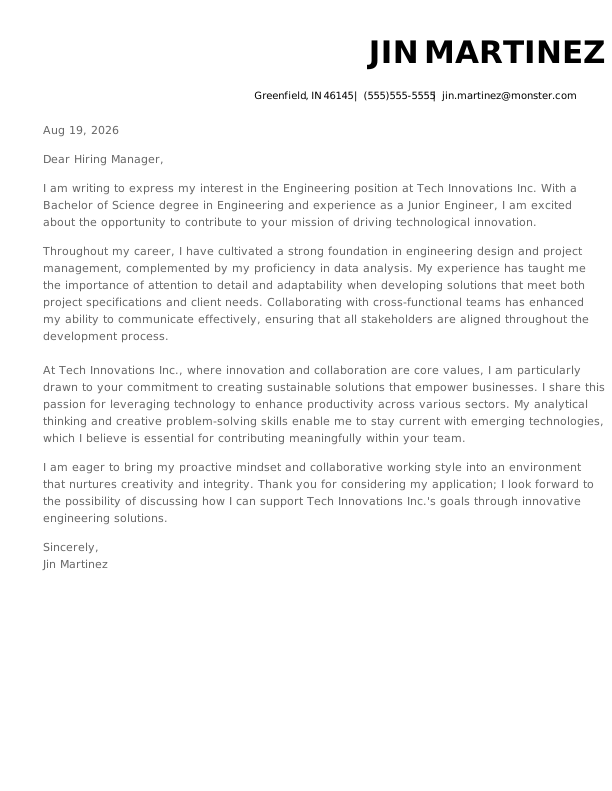
 Free
FreeEngineering Entry-Level Cover Letter
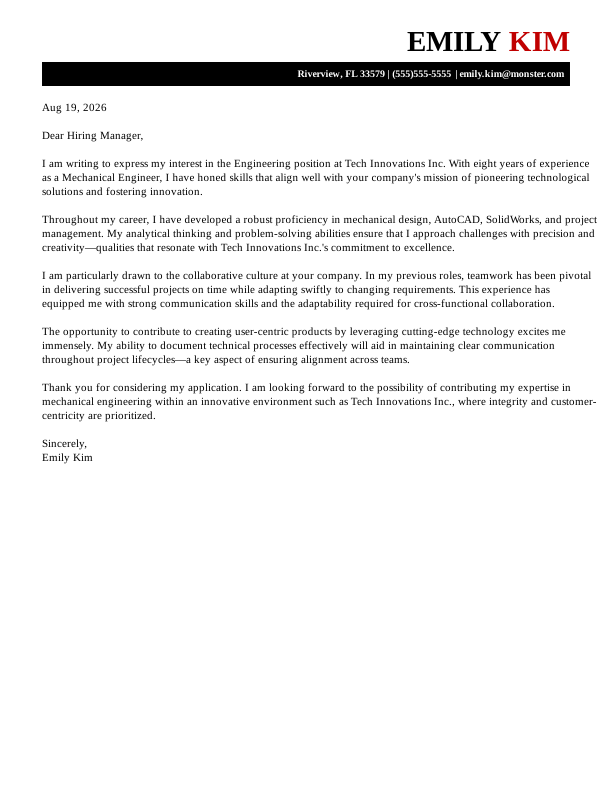
Engineering Mid-Level Cover Letter
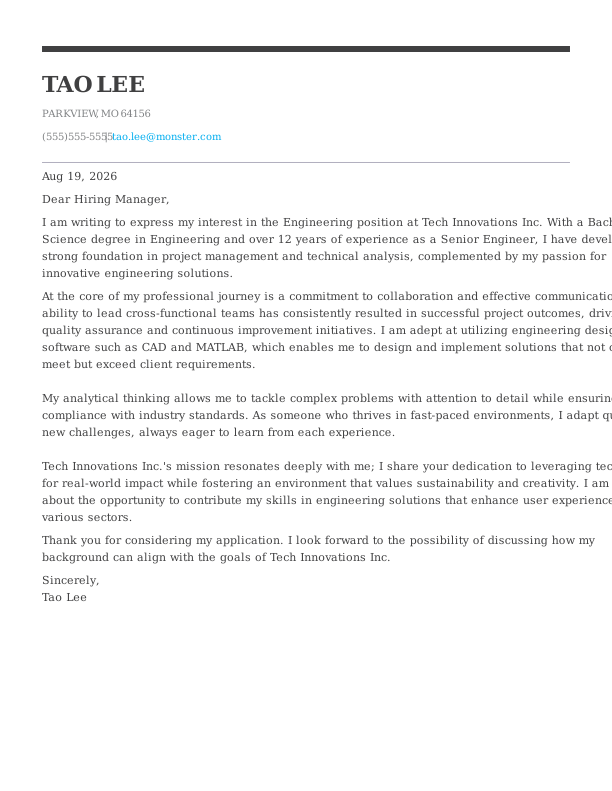
Engineering Experienced Cover Letter
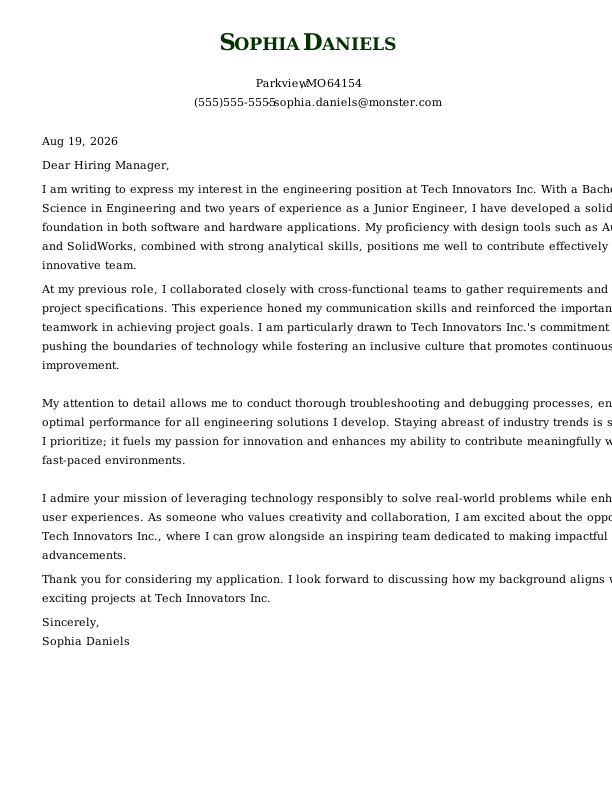
Engineering Entry-Level Cover Letter
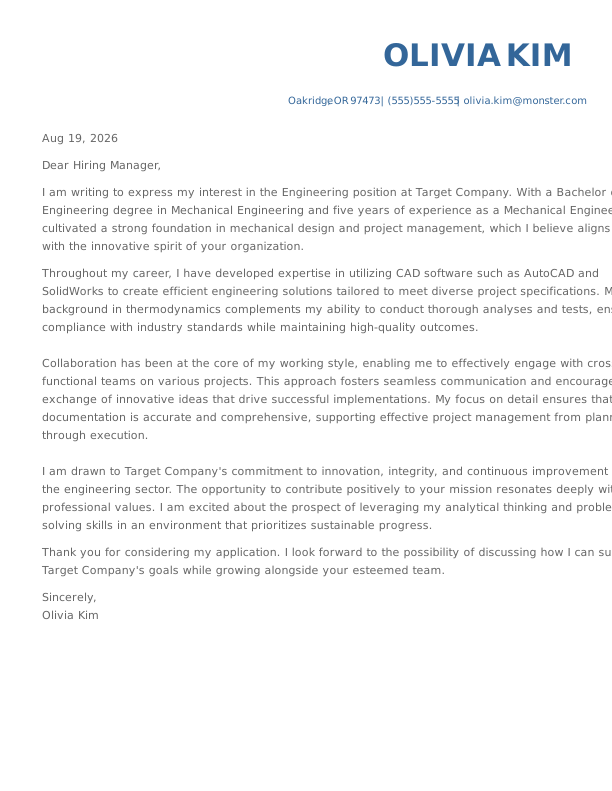
Engineering Mid-Level Cover Letter
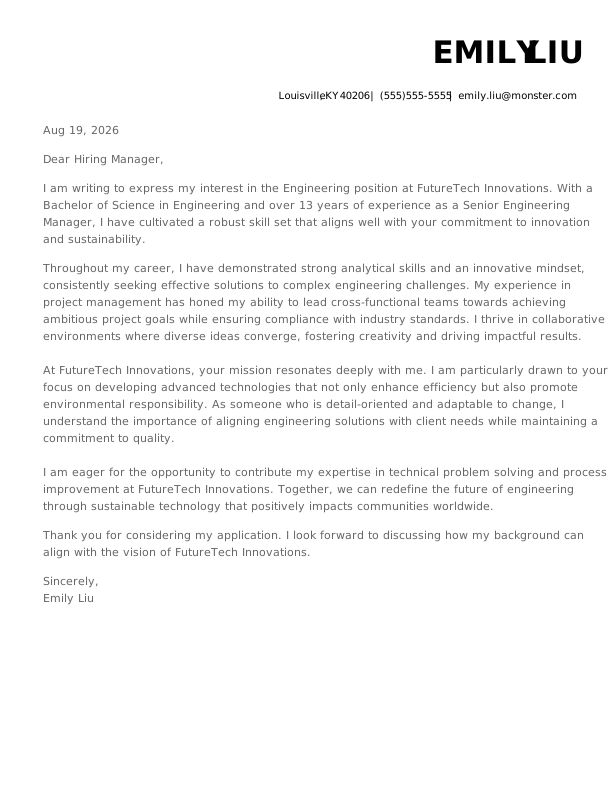
Engineering Experienced Cover Letter
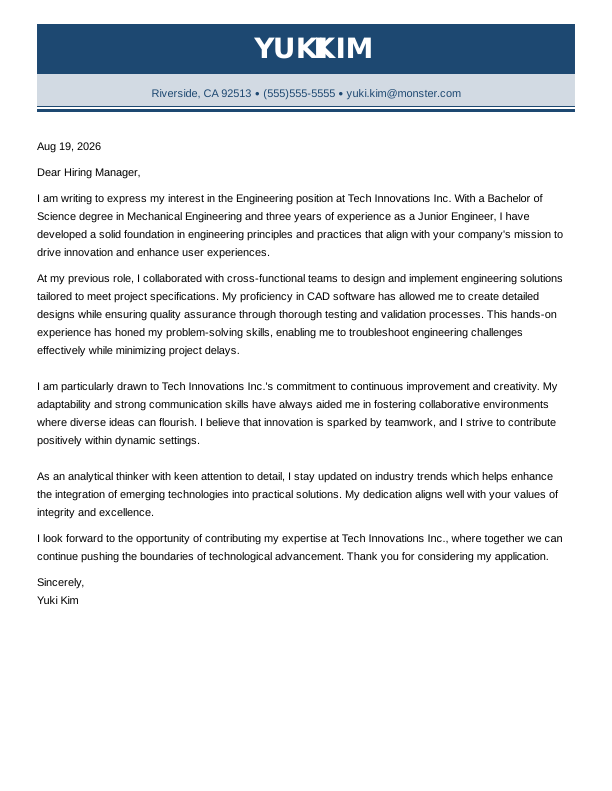
Engineering Entry-Level Cover Letter
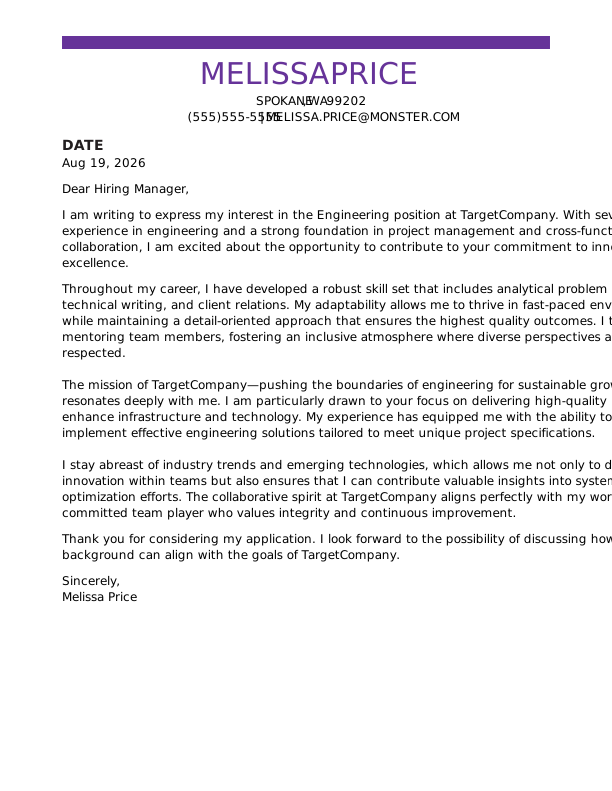
Engineering Mid-Level Cover Letter
Browse Free Cover Letter Templates
- Account Manager
- Accounts Payable
- Administrative Assistant
- Admissions Counselor
- Artist
- Babysitter
- Barista
- Bartender
- Bookkeeper
- Brand Ambassador
- Business Analyst
- Caregiver
- Chef
- Civil Engineering
- Computer Science
- Custodian
- Customer Service
- Dental Assistant
- Electrical Engineering
- Emt
- Event Coordinator
- Executive Assistant
- Finance
- Financial Analyst
- Firefighter
- Flight Attendant
- Graphic Designer
- Hair Stylist
- Healthcare
- Investment Banking
- It
- Janitor
- Journalism
- Lab Technician
- Law Clerk
- Lawyer
- Librarian
- Logistics
- Manager
- Marketing Manager
- Massage Therapist
- Mechanic
- Mechanical Engineer
- Medical Assistant
- Non Profit
- Nursing
- Office Manager
- Paralegal
- Personal Trainer
- Pharmacy Technician
- Photographer
- Physician Assistant
- Pilot
- Police Officer
- Project Manager
- Property Manager
- Receptionist
- Research Assistant
- Retail
- Sales
- Security Officer
- Social Work
- Software Engineer
- Teacher
- Teaching Assistant
- Truck Driver
- Vet Tech
- Veterinary Assistant
- Web Developer
- Welder
Cover Letter Examples for Engineering
Engineering cover letters change across career stages. Use these templates for entry-level, mid-career, and experienced roles to align your focus on projects, technical depth, and impact with what hiring teams expect at each level.
Entry-Level Engineering Cover Letter
Perfect for recent graduates starting a cover letter with no experience and career changers moving into engineering, this template helps you shape your story clearly so hiring teams see your skills and readiness for a role in engineering.
Mid-Career Engineering Cover Letter
A good fit for experienced engineering professionals, this template highlights career growth and supports a move into leadership, advanced technical roles, or deeper specialization.
Experienced Engineering Cover Letter
Best for engineering professionals with 10+ years of experience, this template helps you pursue senior leadership, technical architect, or director-level roles.
Engineering Cover Letter Template (Text)
Use an adaptable text template for an engineering cover letter to copy, edit, and personalize in your document or file.
Aya Kim
St. Louis, MO 63104
(555)555-5555
aya.kim@monster.com
Aug 19, 2026
Dear Hiring Manager,
I am writing to express my interest in the engineering position at Target Company. With a bachelor’s in mechanical engineering and six years of experience as a mechanical engineer, I am excited about the opportunity to contribute to your forward-thinking organization known for its commitment to innovation and excellence.
My background in project management and mechanical design, coupled with proficiency in CAD software such as SolidWorks and AutoCAD, has equipped me with the skills necessary to develop engineering solutions that align with client specifications while adhering to industry standards. I have a strong focus on detail, which ensures that my designs are not only functional but also safe.
Collaboration is at the heart of my working style. I thrive in team environments where open communication fosters creativity and efficiency. My ability to engage effectively with cross-functional teams has been instrumental in delivering projects on time while optimizing processes for better outcomes.
Staying updated with industry trends is a priority for me; it allows me to incorporate best practices into my work. As someone who values sustainability and innovation, I admire Target Company’s mission of empowering clients through cutting-edge engineering solutions while promoting an inclusive workplace.
I look forward to the possibility of discussing how my background can align with the goals of Target Company. Thank you for considering my application.
Sincerely,
Aya Kim
How to Write an Engineering Cover Letter
For an engineering role, knowing how to write a cover letter means proving fit through clear personalization, strong storytelling about your projects, and direct ties between your skills and measurable achievements. Use the guidance below to highlight your qualifications and customize your letter for each target position by matching your experience to the specific requirements in the job posting.
1. Research & Prepare
Before you write your cover letter, research the engineering team, product or platform, and the hiring manager’s background. This helps you align your technical strengths with real project needs like system reliability, performance goals, and tooling choices.
Review the job description line by line, then scan the company website for mission details and engineering principles. Check recent news for launches or outages, and use LinkedIn to learn what the manager has built or led. Add those specifics to your cover letter so it reads as tailored to their priorities rather than generic experience.
2. Hook the Reader
Your cover letter opening should instantly signal technical competence and domain fit. Skip generic introductory phrases and lead with a high-impact engineering accomplishment or a direct connection to the team’s current technical focus.
Start with a quantifiable engineering win, such as reducing build times or optimizing database query performance. Alternatively, mention a specific technical challenge, paper, or tool the company uses and explain how your background directly addresses that need. If you were referred by a team member, highlight your shared work on a relevant technical initiative.
3. Tell Your Professional Story
Your cover letter should go beyond repeating your resume. Use a short story with specific examples and measurable results so hiring managers can picture your impact from day one.
In engineering roles, quantify outcomes like cutting build time by 15%, reducing defect rates by 30%, or improving system uptime from 97% to 99.5%. Mention what you changed, how you collaborated with QA or product teams, and the result you delivered.
4. Showcase Your Skills
Don’t just list engineering skills. Match them to the exact requirements in the job posting, and show how you applied them in real work. When you connect your experience to the company’s goals, hiring teams can picture your impact right away.
For example, if the company asks for strong system design, describe a time you broke down a complex feature into clear modules and improved reliability through testing. If it mentions CI or code quality, share how you wrote automated checks that reduced build failures and kept releases on track. Tailor each story to one key requirement from the posting.
5. Explain Any Special Circumstances
If you have an employment gap, changed careers, or relocated, address it early and briefly in your cover letter. Share the reason in plain language, then pivot to what you gained during that time. Keep the tone honest and forward-looking so the reader sees your momentum.
For engineering roles, frame a gap as focused learning, like completing a course in system design or building a portfolio project with tests and documentation. If you changed from embedded to cloud work, connect it to concrete wins such as migrating services to containers or improving latency through profiling. For relocation, mention how it aligns with local teams or projects you want to contribute to right away.
6. End With a Professional Goodbye
Conclude by reiterating your core technical value and initiating clear next steps. Invite the team to review your portfolio, GitHub, or resume to discuss how your experience aligns with their technical roadmap.
Use a tailored line to summarize your impact, such as: “I look forward to discussing how my experience in distributed systems, performance optimization, and clean architecture can help your team scale its core platform.” End with a standard professional sign-off like “Sincerely” or “Best regards.”
4 Tips for Formatting Your Cover Letter
Use clean formatting to help your cover letter look professional and stay easy to read. Keep paragraphs short, use clear headings, and choose a simple font so the hiring manager can scan quickly. These tips apply across industries and experience levels.

Keep It to One Page
Technical recruiters scan quickly. Cap your letter at 250–400 words (three to four short paragraphs) focused strictly on your high-impact engineering projects and core technical competencies.

Use a Professional Font & Layout
Choose standard fonts like Arial, Calibri, or Helvetica in 10 to 12 pt. Use one-inch margins and align font choices with your engineering resume to keep your application package visually cohesive.

Address the Hiring Manager Directly
Identify the specific engineering manager, tech lead, or VP of engineering via LinkedIn or the job post. If unavailable, address your letter to “Dear Engineering Hiring Team” rather than outdated greetings like “To Whom It May Concern.”

Save & Send as a PDF
Save your cover letter as a PDF to preserve code snippets, bullet points, and layout consistency across applicant tracking systems (ATS) and OS platforms. Use a clean, professional file name that includes your name and role, such as Jordan_Lee_Engineering_Cover_Letter.pdf.
Top-Paying States for Engineering Roles
Knowing engineering compensation across the United States helps you evaluate job offers, negotiate pay, and make clearer career decisions. The salary data below comes from the U.S. Bureau of Labor Statistics (BLS) and reflects current national averages for engineering occupations.
Actual earnings can vary based on location, years of experience, relevant certifications, and your technical specialty. Engineers working in aerospace or semiconductor manufacturing often earn more than those in smaller firms, and specialized roles like software-focused systems engineers or reliability engineers typically command higher compensation.
| Alabama | $160,920 |
| Alaska | $161,610 |
| Arizona | $197,440 |
| Arkansas | $140,790 |
| California | $205,610 |
| Connecticut | $175,390 |
| Delaware | $174,410 |
| District of Columbia | $178,400 |
| Florida | $169,810 |
| Georgia | $159,370 |
| Hawaii | $145,340 |
| Idaho | $159,960 |
| Illinois | $161,530 |
| Indiana | $151,520 |
| Iowa | $145,620 |
| Kansas | $159,940 |
| Kentucky | $143,050 |
| Louisiana | $172,940 |
| Maine | $149,960 |
| Maryland | $169,850 |
| Massachusetts | $194,040 |
| Michigan | $160,860 |
| Minnesota | $173,730 |
| Mississippi | $135,210 |
| Missouri | $155,640 |
| Montana | $139,500 |
| Nebraska | $141,210 |
| Nevada | $157,980 |
| New Hampshire | $177,690 |
| New Jersey | $187,940 |
| New Mexico | $209,730 |
| New York | $185,520 |
| North Carolina | $166,960 |
| North Dakota | $147,470 |
| Ohio | $162,290 |
| Oklahoma | $166,660 |
| Oregon | $173,840 |
| Pennsylvania | $156,750 |
| Rhode Island | $179,710 |
| South Carolina | $164,650 |
| South Dakota | $159,900 |
| Tennessee | $156,110 |
| Texas | $184,430 |
| Utah | $156,950 |
| Vermont | $162,740 |
| Virginia | $175,950 |
| Washington | $195,150 |
| West Virginia | $152,840 |
| Wisconsin | $148,360 |
| Wyoming | $149,400 |
| Guam | $103,270 |
| Puerto Rico | $123,180 |
| Virgin Islands | $75,310 |
Key Takeaways
- Personalize each letter for the specific engineering role and company by directly referencing their product, tech stack, architecture, or current priorities.
- Open strong and back up your narrative with measurable engineering outcomes, such as performance gains, uptime improvements, reduced latency, fewer defects, or faster delivery cycles.
- Align your cover letter’s visual design with your technical resume. Use matching fonts, headers, and spacing so technical recruiters and hiring managers can scan your core qualifications quickly
Browse Monster’s Resume Templates
Monster also has hundreds of ATS-friendly resume templates for all career levels and industries. Create a matching resume to help you land the interview.
- Aerospace Engineer
- Agricultural Engineer
- Ai Engineer
- Automation Engineer
- Bim Engineer
- Biomedical Engineering
- Chemical Engineering
- Civil Engineer
- Controls Engineer
- Design Engineer
- Electrical Engineer
- Embedded Systems Engineer
- Engineering Manager
- Engineering Project Manager
- Engineering
- Enterprise Architect
- Environmental Engineer
- Field Engineer
- Industrial Engineer
- Mechanical Engineer
- Petroleum Engineer
- Robotics Engineer
- System Engineer
- Test Engineer
Frequently Asked Questions
Last Update:
Do I really need a cover letter?
Yes, you should submit a cover letter even when it is listed as optional. It allows you to provide technical context that a resume cannot, such as architectural trade-offs, project ownership, and your specific interest in the team’s engineering stack.
A cover letter is especially valuable for explaining a shift in technical focus, addressing career gaps with dedicated upskilling, or detailing why a company’s specific product or engineering challenges align with your goals. It also gives you space to demonstrate your technical communication style, problem-solving mindset, and ability to collaborate across engineering teams.
How long should my cover letter be?
An engineering cover letter should strictly fit on one page, ideally between 250 and 400 words. Engineering managers and technical recruiters review dozens of applications daily and quickly scan for technical domain fit.
Prioritize high-impact technical metrics and relevant system achievements over word count. Structure your letter into three to four concise paragraphs, each dedicated to a specific outcome—such as architectural contributions, cross-functional execution, or domain-specific problem-solving.
Should my cover letter match my resume?
Yes, your engineering cover letter should visually mirror your technical resume. Use identical fonts, margin spacing, and header layouts to present a unified, professional application package.
Make the content complement your resume rather than duplicate it. Use the narrative format to explain the technical context behind your key accomplishments—such as architectural trade-offs evaluated, system constraints managed, and cross-functional decisions that single-line resume bullet points cannot fully capture.
Can I use AI to write my cover letter?
AI tools can help you generate an initial draft, structure your technical details, and break through writer’s block. They offer a solid baseline, but your cover letter still needs to reflect your specific engineering experience.
Use AI as a starting framework, then heavily customize the draft by adding real system metrics, concrete architectural choices, and genuine interest in the team’s stack. Technical leads quickly spot generic, auto-generated prose, so ensure every paragraph highlights your actual engineering achievements and technical voice.
What should I include in my cover letter header?
Your engineering cover letter header should include your full name, phone number, professional email, location (city/state), and links to technical profiles like GitHub or LinkedIn. Below your contact details, add the date, followed by the recipient’s information, including the hiring manager or tech lead’s name, title, company, and team. Match this layout directly to your technical resume header to maintain visual consistency across your application.

Megan Dawkins is a career industry editor who empowers job seekers to take control of their career paths using Monster’s comprehensive job search and resume tools. She specializes in helping job seekers navigate the flexible job market.
See More From Megan DawkinsExplore Related Career Advice






How to Write a Cover Letter for Internal Positions or Promotions (Examples & Tips)

Updated:
Apr 23, 2026
|

19 min read


Cover Letter vs Resume: What’s the Difference & Do You Need Both?

Updated:
Apr 23, 2026
|
18 min read