

Free COO Resume Templates & Examples
A COO resume should demonstrate your ability to translate strategy into execution, manage large organizations, and drive operational excellence. Find an example below suited to executive operations roles.
Real-World Resumes That Get Results
 Free
Free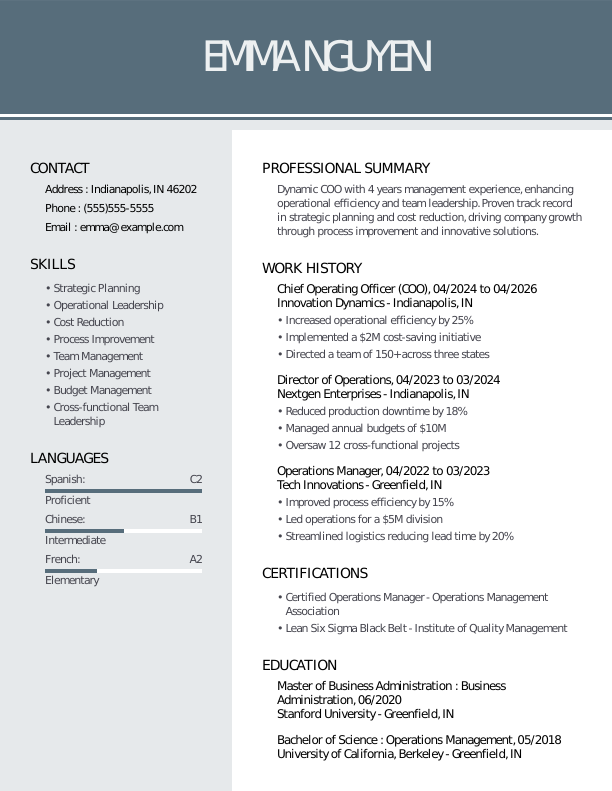
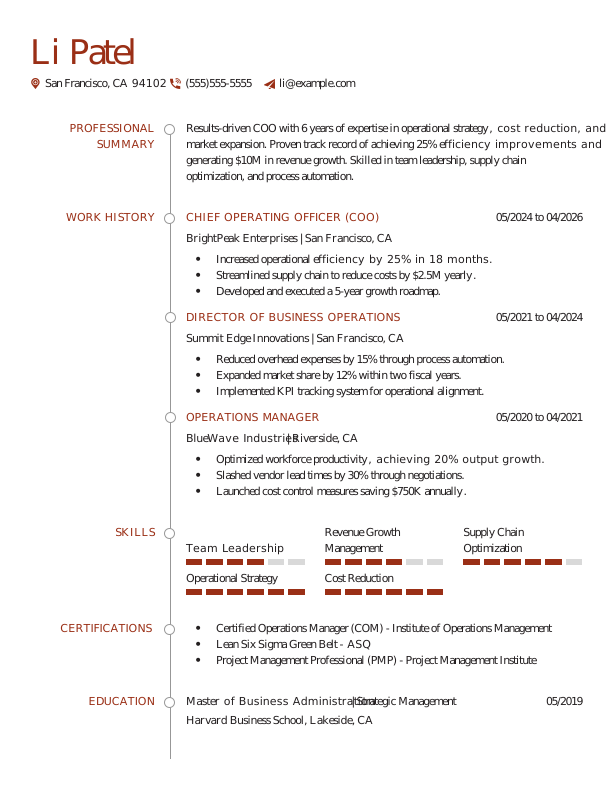
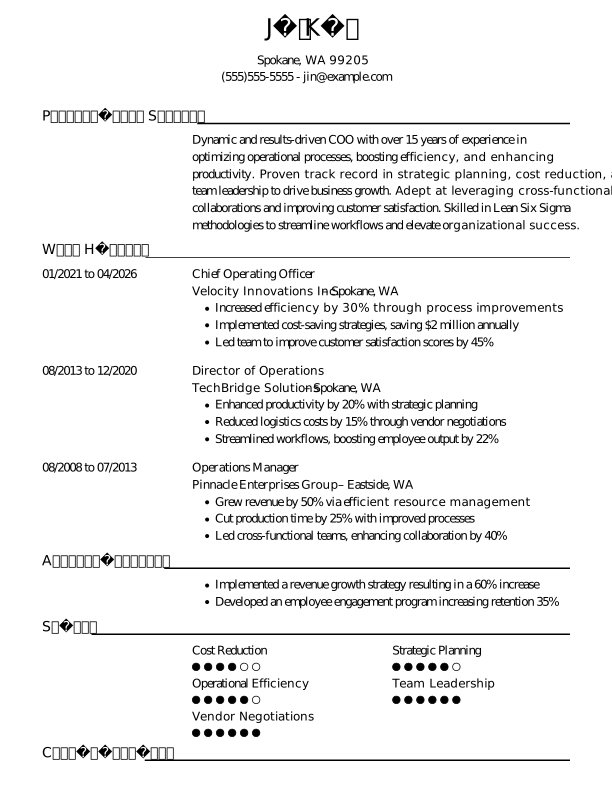
 Popular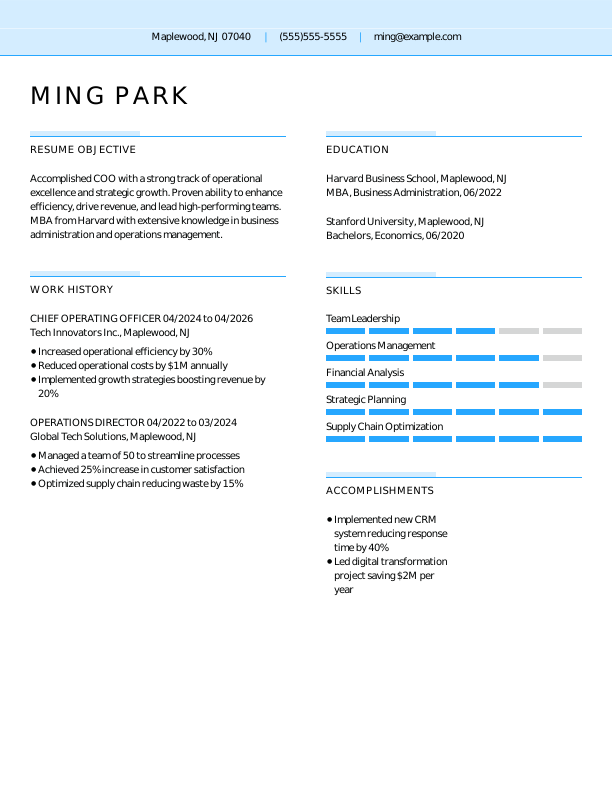
Browse Free Resume Templates
- Accounts Payable
- Adjunct Professor
- Artist
- Auto Mechanic
- Baker
- Business Development Manager
- Business
- Certified Nursing Assistant
- Classic & Traditional
- Cleaner
- College Student
- Concierge
- Construction Worker
- Corporate
- Creative & Unique
- Custodian
- Customer Service
- Dental Assistant
- Direct Support Professional
- Entry-Level
- Flight Attendant
- Hospitality & Food Service
- Front Desk Receptionist
- Healthcare
- High School
- Housekeeping
- Hvac Technician
- Hybrid
- Inventory Manager
- Logistics
- Maintenance
- Management
- Modern
- Mortgage Loan Processor
- Pet Sitter
- Phlebotomist
- Production
- Rbt
- Sales
- Security Services
- Restaurant Server
- Simple & Basic
- Social Work
- Teacher
- Technology
Resume Examples for COOs
COO resumes should reflect the scale of your operational oversight and your track record of driving efficiency. Explore our templates to find one suited to executive operations roles.
Entry-Level COO Resume
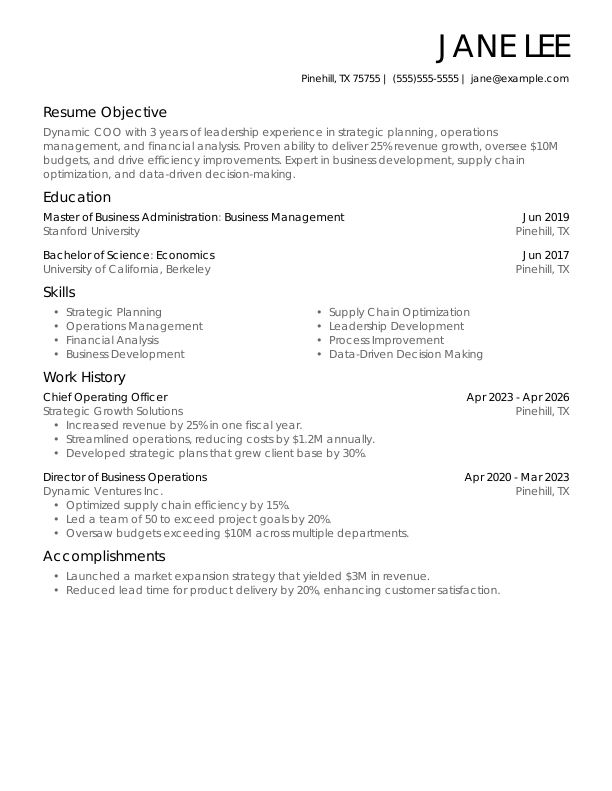
This template works well for those stepping into a COO role from a VP of Operations or director position. It helps you build a COO resume by framing your departmental leadership and process optimization results as enterprise-wide operational strategy.

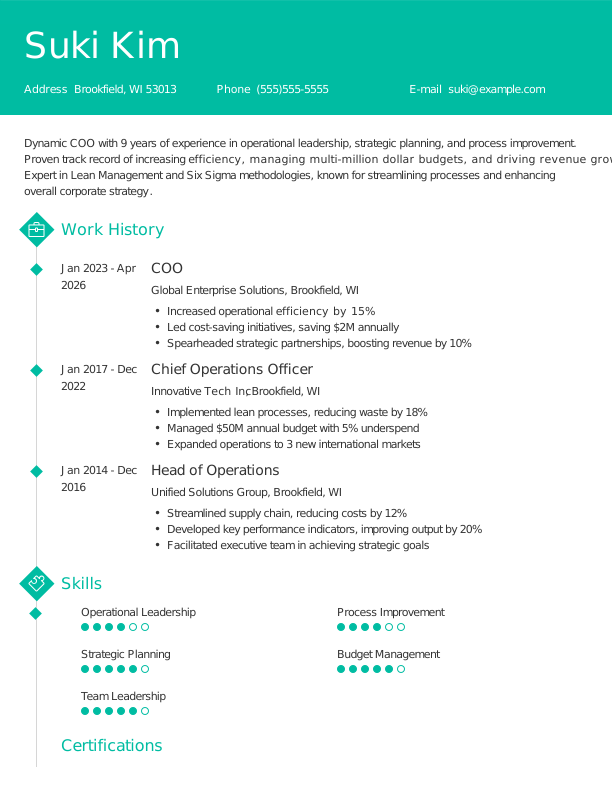
Mid-Career COO Resume
An ideal choice for mid-level professionals seeking advancement, this template showcases recent achievements and positions them for leadership roles in a competitive landscape.

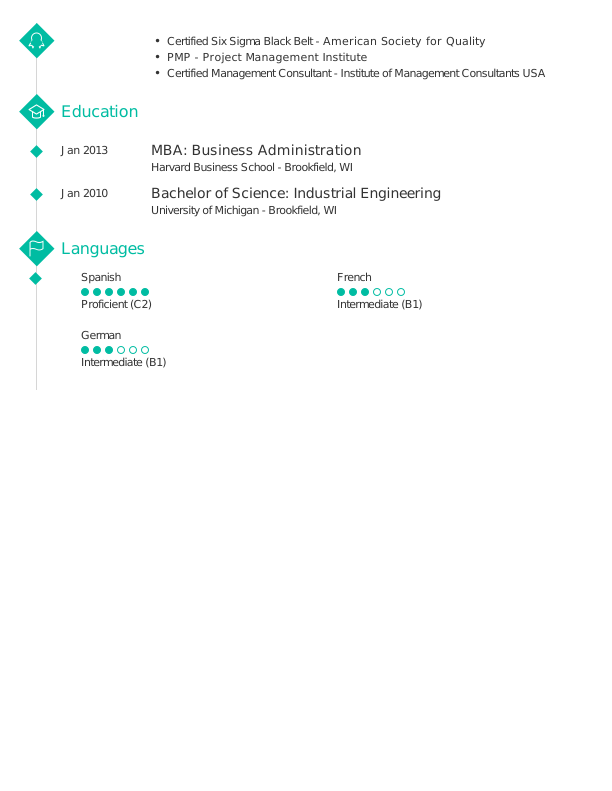
Experienced COO Resume
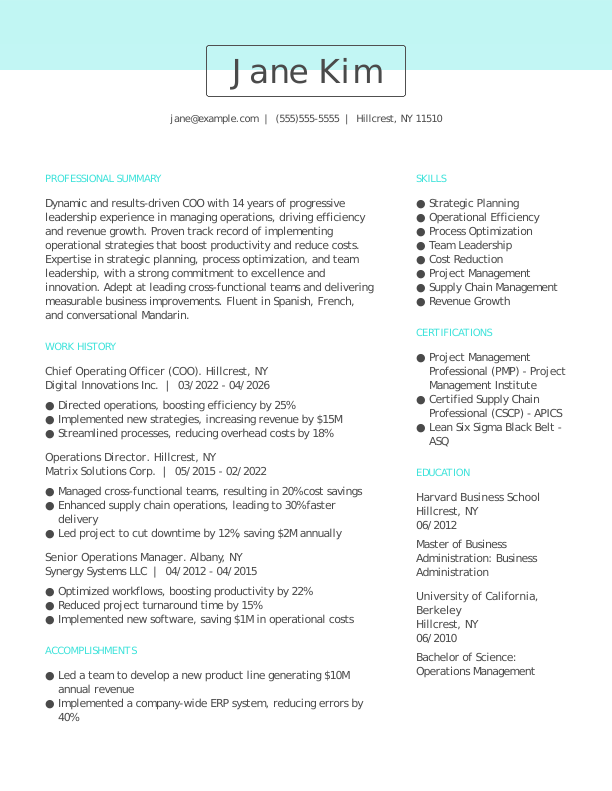
An ideal choice for executives with over 10 years of experience, this template supports professionals seeking senior leadership roles and pivotal operational positions.

COO Resume Template (Text)
The text resume below gives you a starting point for a COO application. Paste it into your document and update it with your operational scope and executive leadership results.
Michael Thompson
Greenfield, IN 46140
Professional Summary
Dynamic COO with 8 years of success in optimizing operations, achieving revenue growth, and driving strategic initiatives. Expertise in performance metrics, supply chain management, and cost optimization.
Work Experience
April 2022 – April 2026
Strategic Growth Solutions – Greenfield, IN
Chief Operating Officer (COO)
- Boosted annual revenue by 27% through strategic initiatives.
- Streamlined operations, cutting costs by 15% annually.
- Implemented new KPIs, increasing team efficiency by 20%.
April 2018 – March 2022
Global Vision Enterprises – Greenfield, IN
Director of Operations
- Expanded market reach, increasing revenue by $10M annually.
- Optimized supply chain, reducing lead times by 18%.
- Directed cross-functional teams, achieving 25% project growth.
April 2016 – March 2018
NextWave Logistics – Greenfield, IN
Operations Manager
- Reduced operational overhead by 12% annually.
- Managed $5M budget for logistics and technology upgrades.
- Enhanced customer satisfaction score by 30% year-over-year.
Education
June 2016
Stanford Graduate School of Business Greenfield, IN
Master of Business Administration (MBA) Business Administration
June 2013
University of California, Berkeley Greenfield, IN
Bachelor of Science Industrial Engineering
Certifications
- Certified Operations Executive – Institute for Operational Management
- Six Sigma Black Belt – International Association for Six Sigma Certification
Skills
- Strategic Planning
- Operational Excellence
- Leadership Development
- Change Management
- Cost Optimization
- Supply Chain Management
- Performance Metrics
- Business Strategy
How to Write a COO Resume
As a Chief Operating Officer, knowing how to write a resume means showcasing your leadership skills and operational experience with a clear format that highlights your achievements. Use the guidance below to emphasize your strengths and tailor your resume for the specific roles you’re aiming for.
1. Contact Info
Your contact information should be prominently displayed, ensuring clarity and professionalism at the top of your resume.
Include the following essential information:
- Full name
- Phone number
- Professional email address
- City and state (ZIP code is optional)
- LinkedIn profile or relevant portfolio (if applicable)
 PRO TIP
Avoid including sensitive personal information such as age, gender, or marital status on your resume unless explicitly requested by the employer.
2. Resume Profile
A resume profile is a brief section, usually 2 to 4 sentences, that highlights your key qualifications and sets the stage for hiring managers. It serves as a compelling pitch that captures their interest and encourages them to delve deeper into your resume.
Typically located at the top of your resume, the profile can be structured as either a summary or an objective. Each format has its unique purpose and focus:
- A resume summary encapsulates critical leadership experience, strategic skills, and measurable accomplishments essential for driving organizational success. This format is particularly helpful for those with a solid work history or transferable abilities who wish to highlight their impact as an accomplished COO.
- A resume objective emphasizes future aspirations and outlines the applicant’s career ambitions. It’s particularly beneficial for recent graduates, individuals switching careers, or those with limited experience in their desired field, such as coding bootcamp graduates or professionals entering marketing.
Let’s compare a resume summary and a resume objective to understand their distinct purposes:
COO resume summary example:
Dynamic Chief Operating Officer with over 6 years of experience driving operational excellence in tech startups and established corporations. Proficient in strategic planning, process optimization, and team leadership. Acknowledged for improving productivity and fostering a culture of innovation that leads to sustained business growth.
COO resume objective example:
Recent MBA graduate with a focus on operations management excited to launch a career in a dynamic corporate environment. Committed to driving efficiency and fostering teamwork while bringing analytical skills and an innovative mindset to a forward-thinking organization or startup.
3. Work Experience
The work experience on your resume forms a important foundation for showcasing your qualifications. Employers analyze this section to see how you contributed in previous roles, looking beyond mere job titles to gauge your true impact.
Your work history reflects how your unique background prepares you for the chief operating officer position, demonstrating strategic leadership and operational excellence.
The work experience section should contain:
- Job title
- Employer name and location
- Dates of employment (month/year)
- 3–5 bullet points describing your relevant responsibilities and achievements
Tailor your work experience bullet points to the job you’re targeting by using specific language relevant to the role. Start each statement with an action verb like “Implemented,” “Developed,” or “Oversaw” to create a stronger impact.
Incorporate quantifiable data whenever possible, such as percentages or dollar amounts. This approach highlights your achievements and sets you apart from other applicants, showcasing your unique contributions to previous roles.
In general, consider following the format of:
[action verb] + [responsibility] = [result/achievement]
For example:
Led a team of 15 staff members in coordinating care for over 300 patients annually, achieving a 95% adherence rate to treatment protocols and improving overall patient outcomes.
Note that you can also flip the result/achievement with the responsibility:
With these techniques in mind, your resume bullets may look something like:
- Oversaw operational efficiency in a 50-bed facility, achieving a 20% reduction in patient wait times through process improvements.
- Implemented strategic initiatives that increased departmental revenue by 15% within the first year.
- Mentored junior staff on best practices, fostering a collaborative work environment and improving team performance.
- Used data analytics tools to track key performance indicators and drive decision-making.
- Coordinated cross-functional teams to streamline operations, improving service delivery times by 25%.
4. Skills
The skills section offers a concise overview of your professional abilities, especially in operational leadership. This ATS-friendly resume design helps recruiters quickly assess your qualifications.
Skills can be grouped into three categories:
- Soft skills are interpersonal abilities that influence how well individuals collaborate in the workplace.
- Hard skills are specific, measurable abilities gained through education, training, or experience.
- Technical skills are the specific abilities required to use tools and systems in various fields.
5 Soft Skills for Your Resume or CV
- Strategic leadership
- Effective communication
- Team motivation
- Analytical decision-making
- Conflict resolution
5 Hard Skills for Your Resume or CV
- Strategic planning and execution
- Financial forecasting (NetSuite, QuickBooks)
- Supply chain optimization
- Cross-functional team leadership
- Process improvement methodologies (Six Sigma, Lean)
Generally, including a balanced mix of relevant skills that match the job requirements can demonstrate your value.
PRO TIP
If you’re a newer COO, place your skills section higher on your resume, right after your summary. For those with more experience, it’s better to position this section lower and weave your skills into the descriptions of your work history.
5. Education
Understanding how to list education on your resume is essential for showcasing your qualifications. Begin with your most recent or relevant degree, clearly stating the type of degree and the name of the institution. If you have recently graduated, consider including your graduation year, GPA (if it’s 3.5 or higher), any honors received, and relevant coursework to further highlight your academic achievements.
COO resume education section example:
Bachelor of Science, Business
University of Florida, Gainesville, FL
Graduated: 2024 | Summa Cum Laude
PRO TIP
When listing multiple degrees on your resume, ensure they are in reverse-chronological order, starting with the highest degree first, such as Master of Business Administration (MBA) followed by Bachelor of Science (BS).
6. Certifications
Certifications highlight your expertise and ensure you stay relevant in your field. While not a standard part of all resumes, this section holds significant weight for many professionals, especially when specific credentials are necessary for specialized roles like project management or compliance. Employers often look for validated skills that align with their needs, making certifications an essential addition.
Be sure to showcase any relevant certifications that bolster your application. Keeping them current and clearly formatted will make your qualifications stand out to potential employers.
COO certification examples:
- Chief Operating Officer (COO) Certification | Institute of Executive Leadership | Expires: 03/2028
- Project Management Professional (PMP) | Project Management Institute | Expires: 11/2027
- Certified Six Sigma Black Belt | ASQ | Expires: 01/2028
- Executive Leadership Certificate | Harvard Business School | Expires: 08/2027
Start Building Your Job-Winning Resume
Use Your Existing Resume
Import your current resume to transfer your information to one of our professional templates.
Create a New Resume
Start fresh with a template that catches your eye and follow the prompts to add your details.
Tailor Your Work History to Beat the ATS
Your work experience section is more than just a simple enumeration of past positions. It serves as a platform to highlight your tangible achievements and contributions within your field, showcasing specific examples that resonate with potential employers. By adopting this strategy, you not only improve your narrative but also create an ATS-friendly resume that applicant tracking systems (ATS) can scan effectively.
When preparing your work history, it’s important to align it closely with the job you want. Begin by dissecting the job description to pinpoint key phrases and skills that stand out. Focus on incorporating these repeated elements into your experience descriptions to demonstrate how you meet the employer’s expectations.
What’s a Fair COO Salary?
Researching salary data is essential for assessing job offers, negotiating pay, and planning your career trajectory. The figures presented come from the U.S. Bureau of Labor Statistics (BLS) and illustrate the latest national averages for chief operating officers.
Factors such as geographic location, years of experience, industry specialization, and educational background significantly impact actual salaries. For instance, COOs in large metropolitan areas or those within high-demand sectors like technology or finance often command higher compensation compared to their counterparts in smaller firms or less competitive industries.
| Alabama | $74,630 |
| Alaska | $68,190 |
| Arizona | $67,620 |
| Arkansas | $70,640 |
| California | $101,460 |
| Connecticut | $95,550 |
| Delaware | $72,350 |
| District of Columbia | $105,770 |
| Florida | $68,610 |
| Georgia | $79,590 |
| Hawaii | $92,690 |
| Idaho | $60,180 |
| Illinois | $78,760 |
| Indiana | $65,660 |
| Iowa | $72,630 |
| Kansas | $65,830 |
| Kentucky | $65,570 |
| Louisiana | $66,120 |
| Maine | $71,790 |
| Maryland | $95,520 |
| Massachusetts | $87,900 |
| Michigan | $79,720 |
| Minnesota | $82,350 |
| Mississippi | $64,830 |
| Missouri | $70,920 |
| Montana | $63,250 |
| Nebraska | $71,730 |
| Nevada | $71,520 |
| New Hampshire | $77,690 |
| New Jersey | $87,470 |
| New Mexico | $75,710 |
| New York | $82,270 |
| North Carolina | $66,330 |
| North Dakota | $71,730 |
| Ohio | $82,650 |
| Oklahoma | $63,330 |
| Oregon | $84,790 |
| Pennsylvania | $72,870 |
| Rhode Island | $87,950 |
| South Carolina | $66,420 |
| South Dakota | $65,670 |
| Tennessee | $69,640 |
| Texas | $71,960 |
| Utah | $61,430 |
| Vermont | $80,260 |
| Virginia | $85,310 |
| Washington | $90,770 |
| West Virginia | $68,450 |
| Wisconsin | $87,060 |
| Wyoming | $73,990 |
| Guam | $44,800 |
| Puerto Rico | $35,780 |
| Virgin Islands | $67,990 |
Key Takeaways
- Customize your resume for each job application. Use terminology from the job description to resonate with both ATS and hiring managers.
- Highlight quantifiable successes in your previous roles. Include metrics like revenue growth percentages, operational efficiency improvements, or team performance stats to differentiate yourself.
- Select a resume format that suits your experience level. Emerging leaders may prefer a functional layout while seasoned COOs typically opt for reverse-chronological formats.
More Resume & CV Examples
- Assistant Project Manager
- Associate Product Manager
- Benefits Specialist
- Business Administration
- Business Development
- Business Management
- Business Manager
- Business Operations
- Business Owner
- CEO
- Change Manager
- Chief Of Staff
- CISO
- Community Outreach Coordinator
- Corporate Trainer
- Director Of Operations
- Director
- Entrepreneur
- Executive Director
- Executive Manager
- Executive Recruiter
- Executive
- Freelance
- General Manager
- Healthcare Management
- Hr Analyst
- Hr Business Partner
- Hr Consultant
- Hr Coordinator
- Hr Director
- Hr Manager
- Hr Specialist
- Managing Director
- Onboarding Specialist
- Operations Manager
- Program Coordinator
- Program Director
- Program Manager
- Project Coordinator
- Project Manager
- Recruiter
- Recruiting Coordinator
- Recruitment Coordinator
- Regional Manager
- Risk Management
- Senior Manager
- Senior Program Manager
- Senior Project Manager
- Senior Recruiter
- Small Business Owner
- Supervisor
- Talent Acquisition Specialist
- Team Leader
- Technical Recruiter
- Training Manager
- Vice President
Cover Letters for Your Resume
Browse our library of cover letter examples to complete your application. A resume will have a better chance of getting noticed.
Frequently Asked Questions
Last Update:
What resume format should I use for my COO resume?
There are three primary resume formats to choose from when applying for a COO position. Your choice should reflect your level of experience and highlight the aspects of your career that you consider most important:
- Chronological: A chronological resume, being the most popular format, highlights your work experience by listing responsibilities and achievements in order. It’s ideal for applicants with a solid job history that reinforces or adds credibility to their qualifications. This format is perfect for showcasing consistent career progress.
- Functional: The functional resume format, often referred to as a skills-based resume, emphasizes qualifications and skills over work history. This approach is particularly beneficial for applicants who may lack direct experience in their desired field or those with gaps in employment. It allows them to prominently showcase their relevant abilities.
- Combination: The combination resume format merges elements from both chronological and functional styles, showcasing relevant skills alongside work history. By allowing professionals to emphasize their abilities while illustrating career growth, this approach is ideal for those transitioning fields or advancing in their careers.
Should I include a cover letter with my resume?
Yes, you should include a cover letter when applying for a chief operating officer position. A well-crafted cover letter allows you to articulate your strategic vision and leadership experience while providing context that may not be fully captured in your resume. It demonstrates to potential employers that you’re committed to customizing your application specifically for their organization, which can set you apart from other applicants who submit generic applications.
If you’re hesitant about writing a cover letter, there are numerous resources available to guide you through the process. You can find comprehensive advice on how to write a cover letter and explore various examples tailored for executive roles. Additionally, different formats can help highlight your unique qualifications and experiences.
To simplify the task of creating a polished document, consider using tools like a cover letter generator, which provide structured templates and tailored suggestions based on the specific role you’re applying for.
How long should a COO resume be?
For professionals with less than 10 years of experience, a one-page resume is typically sufficient to highlight relevant skills and accomplishments. Focus on presenting key achievements, educational background, and certifications that align with the role.
Conversely, job seekers in senior or specialized positions may extend their resumes to two pages, provided the content remains relevant and focused. Emphasize leadership roles, advanced training, and significant contributions while ensuring clarity and organization throughout the document.
What keywords should I include to pass applicant tracking systems (ATS)?
To ensure your resume passes ATS screenings, incorporate keywords and phrases directly from the job posting. Focus on industry-specific terms such as “supply chain management,” “operational efficiency,” or “cross-functional leadership.” These terms demonstrate that you understand the role’s requirements.
Don’t forget to highlight relevant certifications like Six Sigma, Lean Management, or Project Management Professional. Also, mention any technical tools you’re familiar with, such as SAP, Oracle, or Microsoft Dynamics. This approach shows that you possess both the qualifications and practical skills needed for the COO position.
Is it worthwhile to include internships or volunteer roles on my resume?
Absolutely, especially for those entering the field. Including internships and volunteer roles highlights relevant experience and demonstrates your commitment to learning and growth, making you a strong applicant even without extensive formal employment.

Toni Frana is a Certified Professional Resume Writer (CPRW), member of the Professional Association of Resume Writers & Career Coaches, and career expert who empowers job seekers to take control of their career paths using Monster’s comprehensive job search and resume tools.
See More From Toni Frana