
Free Case Manager Resume Templates & Examples
A case manager resume should reflect your ability to coordinate services, advocate for clients, and navigate complex systems. Choose a template below that highlights your caseload experience and outcomes.
Real-World Resumes That Get Results
 Free
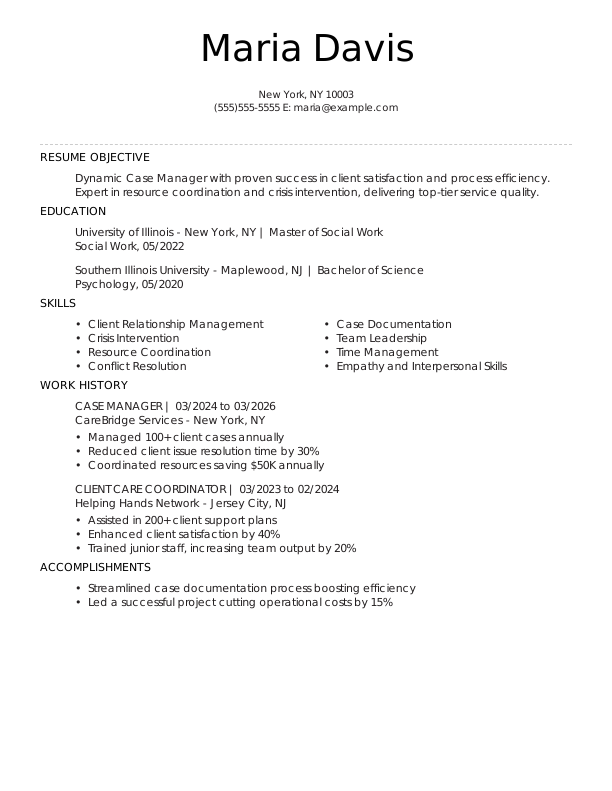
FreeCase Manager Entry-Level Resume
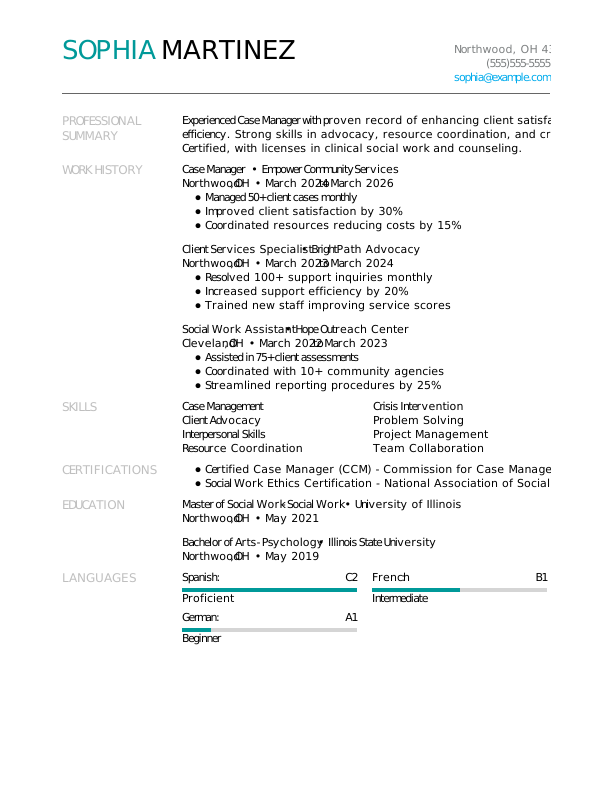
Case Manager Mid-Level Resume
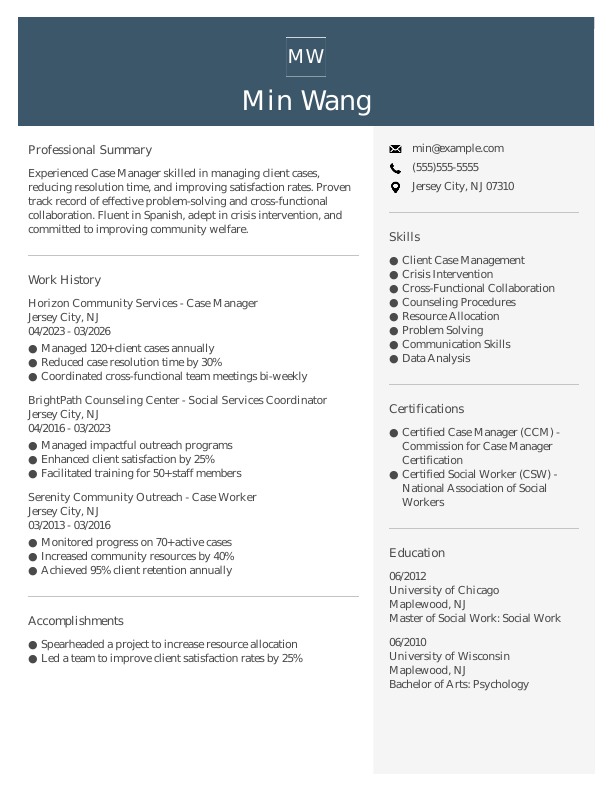
Case Manager Experienced Resume
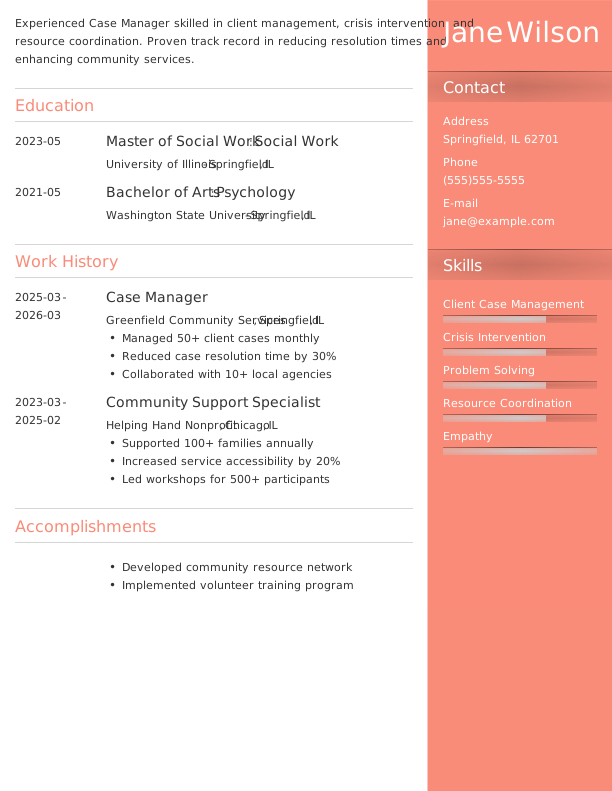
Case Manager Entry-Level Resume 1
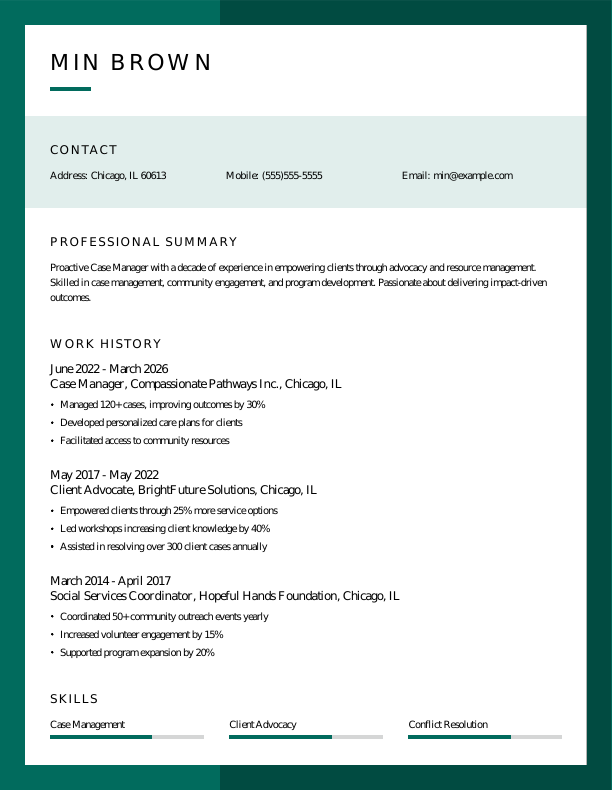

Case Manager Mid-Level Resume 1
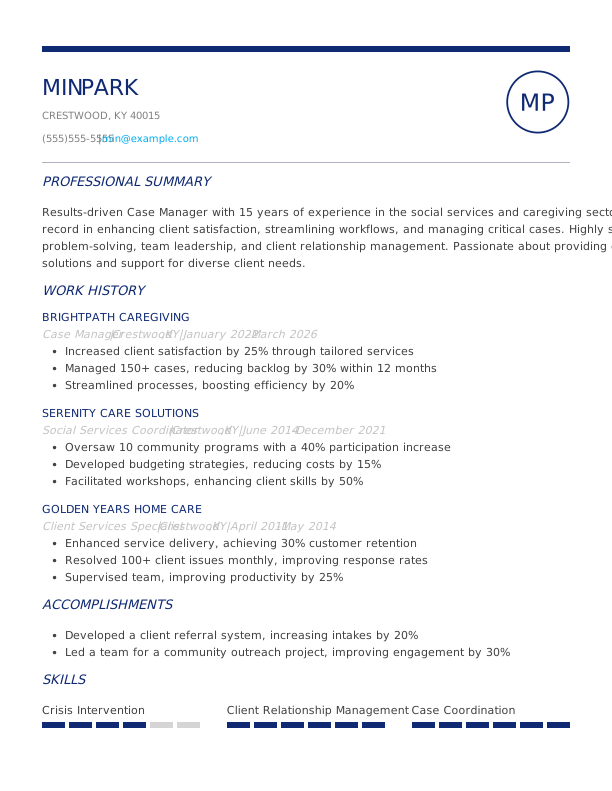

Case Manager Experienced Resume 1
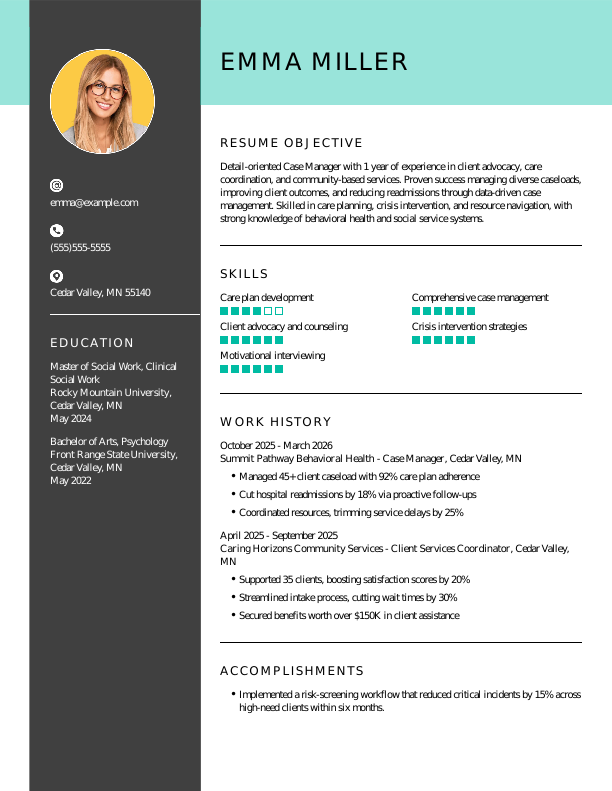

Case Manager Entry-Level Resume 2
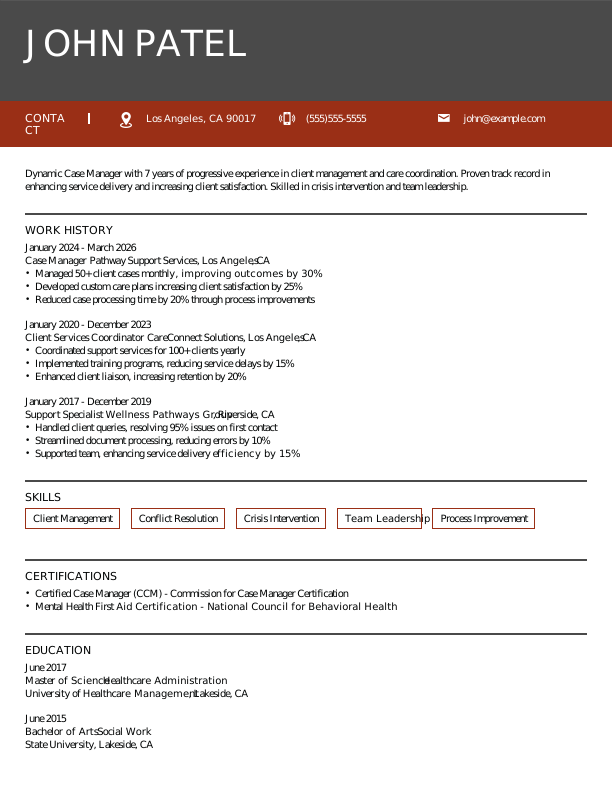

Case Manager Mid-Level Resume 2
Browse Free Resume Templates
- Accounts Payable
- Adjunct Professor
- Artist
- Auto Mechanic
- Baker
- Business Development Manager
- Business
- Certified Nursing Assistant
- Classic & Traditional
- Cleaner
- College Student
- Concierge
- Construction Worker
- Corporate
- Creative & Unique
- Custodian
- Customer Service
- Dental Assistant
- Direct Support Professional
- Entry-Level
- Flight Attendant
- Hospitality & Food Service
- Front Desk Receptionist
- Healthcare
- High School
- Housekeeping
- Hvac Technician
- Hybrid
- Inventory Manager
- Logistics
- Maintenance
- Management
- Modern
- Mortgage Loan Processor
- Pet Sitter
- Phlebotomist
- Production
- Rbt
- Sales
- Security Services
- Restaurant Server
- Simple & Basic
- Social Work
- Teacher
- Technology
Resume Examples for Case Managers
Case manager resumes should reflect the populations you have served and the systems you have navigated. Browse our templates to find one that highlights your advocacy and coordination skills.
Entry-Level Case Manager Resume
Ideal for those entering case management from a social work or counseling program, this template helps you create a case manager resume by highlighting your practicum placements, client interaction training, and any community outreach experience.

Mid-Career Case Manager Resume
A smart choice for mid-level professionals seeking advancement, this template effectively showcases recent achievements and positions applicants for specialized roles in case management.

Experienced Case Manager Resume
An ideal choice for seasoned professionals with over 10 years of experience, this template supports case managers seeking advanced roles in client advocacy and leadership within the social services sector.

Case Manager Resume Template (Text)
Below is a case manager resume in plain text that you can copy directly into your document. It is organized to highlight your caseload experience and client advocacy skills.
Chris Rodriguez
San Francisco, CA 94110
Professional Summary
Results-focused Case Manager with 6 years of experience in client assessment, care coordination, and evidence-based interventions across community and behavioral health settings. Skilled in developing individualized service plans, crisis intervention, and leveraging community resources to improve outcomes and reduce readmissions. Proven record of managing high-volume caseloads, optimizing client engagement, and driving measurable improvements in compliance, safety, and quality of care.
Work Experience
April 2023 – March 2026
Summit Pathway Behavioral Health – San Francisco, CA
Case Manager
- Managed 45+ complex cases, lifting 82% of clients to goals
- Cut readmission risk 26% via risk screening and care plans
- Secured housing aid worth $180K for high risk clients
April 2020 – March 2023
FrontRange Community Support Services – San Francisco, CA
Client Services Case Coordinator
- Oversaw 60+ client caseload, achieving 91% care compliance
- Increased resource utilization by 37% through outreach
- Shortened intake time 28% with triage and CRM updates
April 2018 – March 2020
Rocky Mountain Family Outreach Center – Riverside, CA
Social Services Caseworker
- Conducted 25+ monthly psychosocial assessments on site
- Raised safety plan adherence from 63% to 88% in 18 months
- Coordinated 40 agency partners to streamline referrals
Education
May 2016
University of Colorado Denver Denver, CO
Master of Social Work Clinical and Community Practice
May 2014
Colorado State University Fort Collins, CO
Bachelor of Arts Psychology
Certifications
- Certified Case Manager (CCM) – Commission for Case Manager Certification
- Mental Health First Aid USA – National Council for Mental Wellbeing
- Trauma-Informed Care Practitioner – Center for Trauma-Informed Practices
Skills
- Client assessment and intake
- Care planning and coordination
- Crisis intervention techniques
- Motivational interviewing
- Community resource navigation
- Electronic case management systems
- Interdisciplinary team collaboration
- Outcome tracking and reporting
How to Write a Case Manager Resume
As a case manager, knowing how to write a resume involves showcasing your relevant skills and experience while using a format that makes you stand out. Use the guidance below to emphasize your strengths and tailor your resume for the positions you’re aiming for.
1. Contact Info
Ensure your contact information is easily accessible, professional, and prominently placed at the top of your resume.
Be sure to include:
- Full name
- Phone number
- Professional email address
- City and state (ZIP code is optional)
- LinkedIn profile or relevant portfolio (if applicable)
 PRO TIP
Avoid including personal information such as your Social Security number, age, or religion on your resume unless the employer specifically requests these details.
2. Resume Profile
A resume profile is a brief introductory section, typically two to four sentences long, that highlights your key qualifications and serves as a compelling pitch to hiring managers. Its primary purpose is to capture attention and motivate employers to delve deeper into your resume.
This profile is located at the top of your resume and can be formatted as either a summary or an objective, each catering to different goals. Understanding these distinctions can improve how you present yourself:
- A resume summary showcases essential qualifications, skills, and achievements relevant to case management. This format is particularly helpful for applicants with prior work history or transferable experience who want to highlight their contributions as effective case managers.
- A resume objective showcases your future aspirations by highlighting the career goals and achievements you aim to accomplish. It’s perfect for new graduates, individuals transitioning careers, or those with limited experience, such as professionals entering healthcare.
Let’s explore the distinctions between a resume summary and a resume objective through the following examples:
Case manager resume summary example:
Dedicated case manager with over 6 years of experience in diverse healthcare settings, including rehabilitation and mental health facilities. Proficient in care coordination, resource management, and patient advocacy. Acknowledged for improving patient satisfaction and achieving successful treatment outcomes through effective communication and personalized support.
Case manager resume objective example:
Recent graduate with a bachelor’s degree in social work eager to launch a career as a case manager in a dynamic social services environment. Committed to advocating for clients and fostering community connections while bringing strong organizational skills and empathy to support individuals in need.
3. Work Experience
The work experience on your resume is important for showcasing your qualifications. Employers examine your history not just to see where you’ve worked, but to gauge the impact you’ve made in each role.
Your journey as a case manager reveals how your skills and experiences align with the demands of the position you’re pursuing.
The work experience section should contain:
- Job title
- Employer name and location
- Dates of employment (month/year)
- 3–5 bullet points describing your case management responsibilities and client advocacy achievements
Customize your experience bullet points to match the job you’re pursuing by using terminology relevant to case management. Begin each point with a strong action verb (like “Assessed,” “Coordinated,” or “Advocated”) to create a powerful statement.
Incorporate measurable data or results whenever possible. Specific achievements and numbers showcase your contributions, helping you stand out from other applicants and demonstrate your unique value to potential employers.
In general, consider following the format of:
[action verb] + [responsibility] = [result/achievement]
For example:
Coordinate care plans for an average caseload of 40 patients monthly, ensuring seamless communication between multidisciplinary teams and achieving a 92% patient compliance rate.
Note that you can also flip the result/achievement with the responsibility:
Improved patient outcomes by reducing hospital readmissions by 15% through proactive case management and individualized discharge planning.
With these techniques in mind, your resume bullets may look something like:
- Coordinated care for a caseload of 30+ patients weekly, optimizing resource allocation and improving patient outcomes by 20%.
- Facilitated interdisciplinary team meetings to improve communication and streamline patient services, reducing case resolution time by 25%.
- Developed and implemented patient education programs, increasing compliance rates with treatment plans by 15%.
- Mentored junior case managers, fostering professional development and improving overall team performance.
- Used CareManager software to track patient progress and ensure continuity of care across various service providers.
4. Skills
The skills section offers a concise overview of your professional abilities as a case manager. This part of your ATS-friendly resume allows recruiters to quickly assess your qualifications and determine if you’re a good fit for the role.
Skills can be categorized into three key areas:
- Soft skills are personal qualities that impact how case managers interact with clients and colleagues.
- Hard skills are specific, measurable abilities gained through education, training, or experience.
- Technical skills refer to the specific abilities required to use tools and technology in a given field.
5 Soft Skills for Your Resume or CV
- Empathetic communication
- Conflict resolution
- Time management
- Multidisciplinary coordination
- Critical thinking
5 Hard Skills for Your Resume or CV
- Client needs assessment
- Care plan development
- Resource coordination (CMS, Medicaid)
- Crisis intervention strategies
- Data management (Caseworthy, Apricot)
Generally, aim to showcase a well-rounded selection of relevant skills that match the job expectations.
PRO TIP
If you’re a newer case manager, consider placing your skills section higher on the resume, right after your summary. For those with more experience, it’s better to position this section lower and weave your skills into the descriptions of your work history for greater impact.
5. Education
Understanding how to list education on your resume is important for presenting your qualifications. Start with your most recent or relevant degree, clearly stating the degree type and the institution’s name.
If you’re a recent graduate, consider including your graduation year, GPA (if it’s 3.5 or higher), any honors received, and relevant coursework to further highlight your academic achievements.
Case manager resume education section example:
Master of Science in Nursing (MSN)
Johns Hopkins University, Baltimore, MD
Graduated: 2023 | Sigma Theta Tau International Honor Society
PRO TIP
When listing multiple degrees on your resume, ensure they are in reverse-chronological order, starting with the highest degree first, such as Bachelor of Science in Nursing (BSN), followed by Associate Degree in Nursing (ADN).
6. Certifications
Certifications highlight your expertise and current understanding of the field. While not always included in a standard resume, this section can be important for many case managers. Employers often seek specific credentials, particularly for specialized areas such as mental health or child welfare.
List relevant certifications on your resume that improve your qualifications. Keep them updated and formatted clearly for easy recognition by potential employers.
Case manager certification examples:
- Licensed Case Manager (LCM), New York | New York State | Expires: 03/2028
- Certified Case Manager (CCM) | Commission for Case Manager Certification | Expires: 04/2028
- Mental Health First Aid | National Council for Behavioral Health | Expires: 09/2027
- Trauma-Informed Care Training | Institute for Trauma and Growth | Expires: 11/2027
Start Building Your Job-Winning Resume
Use Your Existing Resume
Import your current resume to transfer your information to one of our professional templates.
Create a New Resume
Start fresh with a template that catches your eye and follow the prompts to add your details.
Tailor Your Work History to Beat the ATS
Your work experience section should do more than list job titles. It’s an opportunity to demonstrate your measurable contributions to clients, teams, and overall service outcomes. By showcasing this information, you can create a resume that is friendly to applicant tracking systems (ATS) and easily scannable by recruiters.
To make your work history resonate with potential employers, tailor it specifically for the job you desire using relevant keywords. Begin by carefully analyzing the job description to pinpoint important skills or qualifications. Identify any repeated terms or requirements and integrate those elements into your experience descriptions for maximum impact.
Key Takeaways
- Tailor your resume to the job description. Use the employer’s language when describing your experience and skills—it helps both ATS and human reviewers.
- Use measurable achievements to show impact. Go beyond duties, quantify your work (e.g., caseload size, client success rates, program outcomes) to stand out.
- Choose the right format for your experience level. New professionals may benefit from a functional or hybrid layout, while experienced case managers typically use reverse-chronological resumes.
Cover Letters for Your Resume
Browse our library of cover letter examples to complete your application. A resume will have a better chance of getting noticed.
- Academic
- Account Manager
- Accountant
- Accounts Payable
- Administrative Assistant
- Admissions Counselor
- Architecture
- Artist
- Assistant Principal
- Babysitter
- Barista
- Bartender
- Bookkeeper
- Brand Ambassador
- Business Analyst
- Business
- Caregiver
- Chef
- Civil Engineering
- Computer Science
- Construction
- Consulting
- Cosmetology
- Custodian
- Customer Service
- Data Analyst
- Dental Assistant
- Dental Hygienist
- Electrical Engineering
- Emt
- Engineering
- Esthetician
- Event Coordinator
- Executive Assistant
- Finance
- Financial Analyst
- Firefighter
- Flight Attendant
- Graphic Designer
- Hair Stylist
- Healthcare
- Hr Generalist
- Investment Banking
- It
- Janitor
- Journalism
- Lab Technician
- Law Clerk
- Lawyer
- Librarian
- Logistics
- Makeup Artist
- Manager
- Marketing
- Marketing Manager
- Massage Therapist
- Mechanic
- Mechanical Engineer
- Medical Assistant
- Non Profit
- Nursing
- Occupational Therapy
- Office Manager
- Paralegal
- Personal Trainer
- Pharmacist
- Pharmacy Technician
- Photographer
- Physician Assistant
- Pilot
- Police Officer
- Project Manager
- Property Manager
- Psychology
- Receptionist
- Research Assistant
- Restaurant Manager
- Retail
- Sales
- Sales Manager
- School Counselor
- Security Officer
- Social Work
- Software Engineer
- Substitute Teacher
- Teacher
- Teaching Assistant
- Truck Driver
- Vet Tech
- Veterinary Assistant
- Web Developer
- Welder
Frequently Asked Questions
Last Update:
What resume format should I use for my case manager resume?
There are three primary resume formats to consider when applying for a case manager position. Your choice should reflect your experience level and highlight the skills or achievements most relevant to the job:
- Chronological: The chronological resume is the most widely used format, highlighting your work history by outlining your responsibilities and accomplishments. This format is particularly suitable for individuals with a steady and relevant career path, as it reinforces their qualifications and adds credibility to their professional profile.
- Functional: The functional resume format, often called a skills-based resume, emphasizes your qualifications and abilities instead of concentrating on work history. This approach suits individuals without direct experience in their target field or those with employment gaps, enabling them to highlight their strengths more prominently.
- Combination: The combination resume format merges chronological and functional styles, showcasing both skills and work experience. This approach benefits professionals by allowing them to emphasize their abilities while also illustrating career growth, making it ideal for those seeking new opportunities or transitioning into different fields.
Should I include a cover letter with my resume?
Yes, you should include a cover letter with your case manager job application. A well-crafted cover letter lets you explain your motivation for the role and highlight specific experiences that may not be clear from your resume alone. It shows hiring managers that you’ve personalized your application and are genuinely interested in the position, which can set you apart from other job seekers.
If writing a cover letter feels daunting, don’t let that hold you back. There are many resources available to guide you, including articles about how to write a cover letter and cover letter examples tailored to case management roles. You can also review different cover letter formats to find one that suits your experience and style.
For an easier process, try using a cover letter generator, which offers templates and suggestions based on the job you’re applying for.
How long should a case manager resume be?
For case managers with less than 10 years of experience, a one-page resume is typically appropriate to showcase relevant skills and accomplishments. Highlight key qualifications, certifications, and relevant experiences that align with the position while maintaining clear formatting for easy navigation.
Conversely, experienced case managers in senior roles may extend their resumes to two pages if they present critical information concisely. Ensure every entry is relevant, emphasizing leadership, specialized training, and significant outcomes without including unnecessary filler language.
What keywords should I include to pass applicant tracking systems (ATS)?
To ensure your resume passes ATS screening, tailor it with keywords directly from the job description. Look for terms related to case management such as “care coordination,” “patient advocacy,” and “discharge planning.” Including these phrases will highlight your relevant experience and skills.
Don’t forget to mention any relevant certifications like CCM, CMC, or RN, along with technical tools you’re familiar with, such as CareSmart or Mediware. By strategically placing these keywords in your resume, you increase your chances of catching the attention of hiring managers while navigating through ATS filters.
Is it worth adding volunteer work or internships to my case manager resume?
Absolutely. Including volunteer work or internships highlights your commitment to the field and demonstrates practical skills gained outside traditional employment. This is especially useful for those starting their careers, as it shows relevant experience and a proactive approach to learning in case management.

Kirsten Chorpenning is a career advice writer who empowers job seekers to take control of their career paths using Monster’s comprehensive job search and resume tools. She specializes in helping job seekers find rewarding jobs in today’s dynamic work environment.
See More From Kirsten ChorpenningExplore Related Career Advice


How to Put Transferable Skills on Your Resume: 120 Skills, Examples, & Tips
Updated:
Aug 27, 2026
|
16 min read


How to Write a Functional Resume (Formatting Tips, Template, & Examples)
Updated:
Aug 7, 2026
|
17 min read


Functional vs Chronological Resume: Which Format Is Right for You?
Updated:
Aug 3, 2026
|
16 min read

100+ Resume Adjectives to Help You Write a Stronger Resume in 2026 (With Examples)
Updated:
Jul 30, 2026
|
12 min read