
Free Film Industry Internship Resume Templates & Examples
A film internship resume needs to show initiative, relevant coursework, and any on-set or production experience you have gained so far. Pick a template below that makes the most of early-career credentials.
Real-World Resumes That Get Results
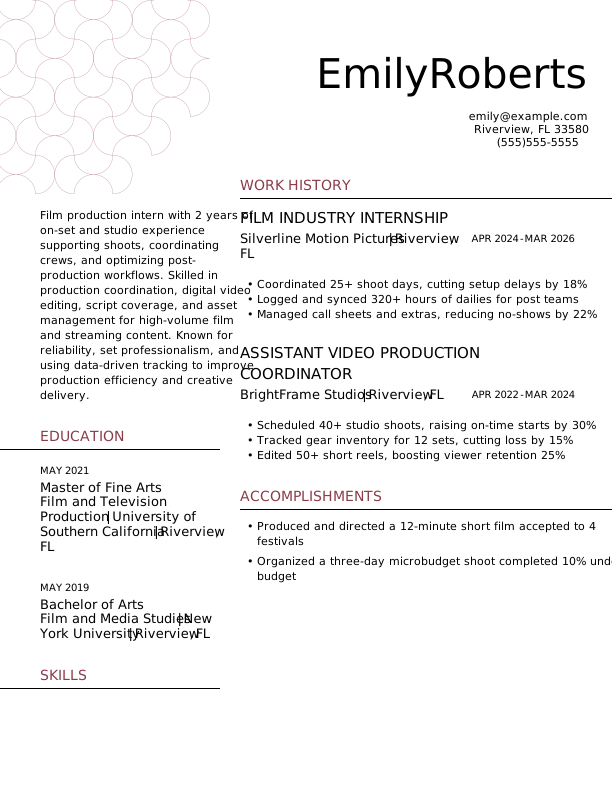
Film Industry Internship Entry-Level Resume
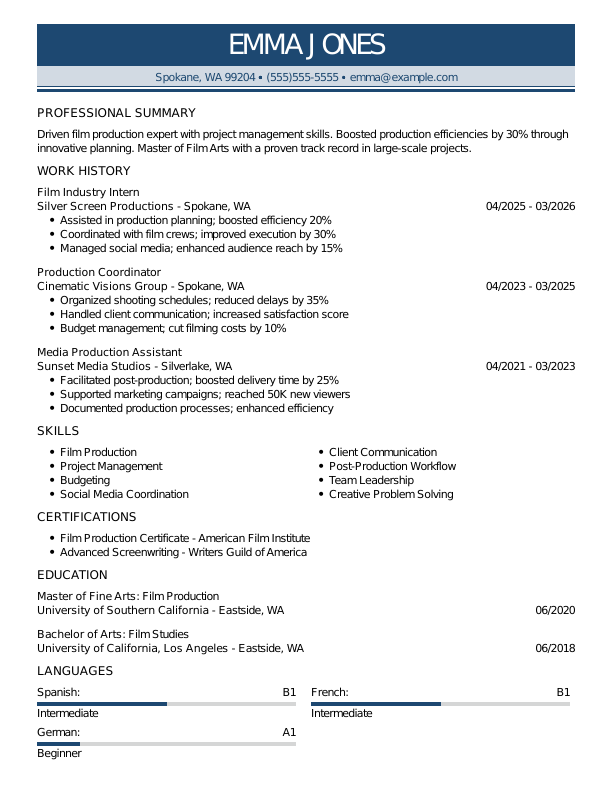
Film Industry Internship Mid-Level Resume
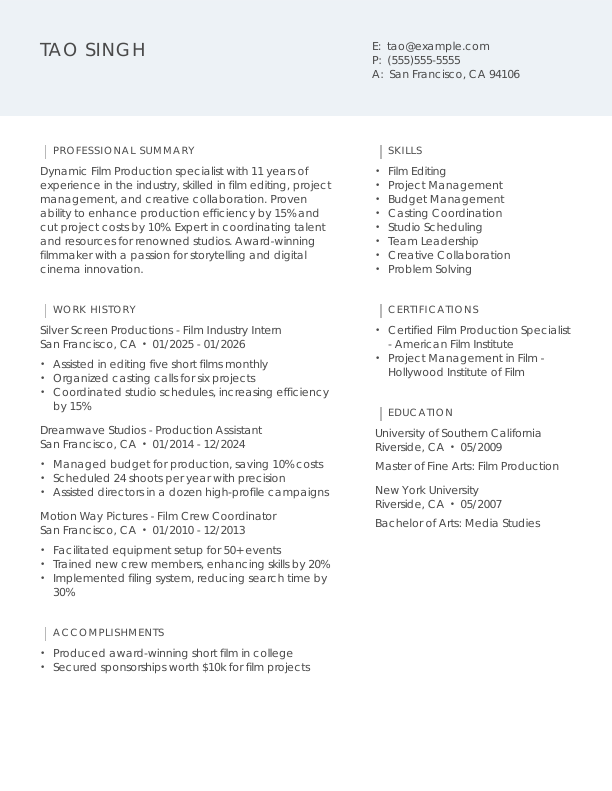
Film Industry Internship Experienced Resume
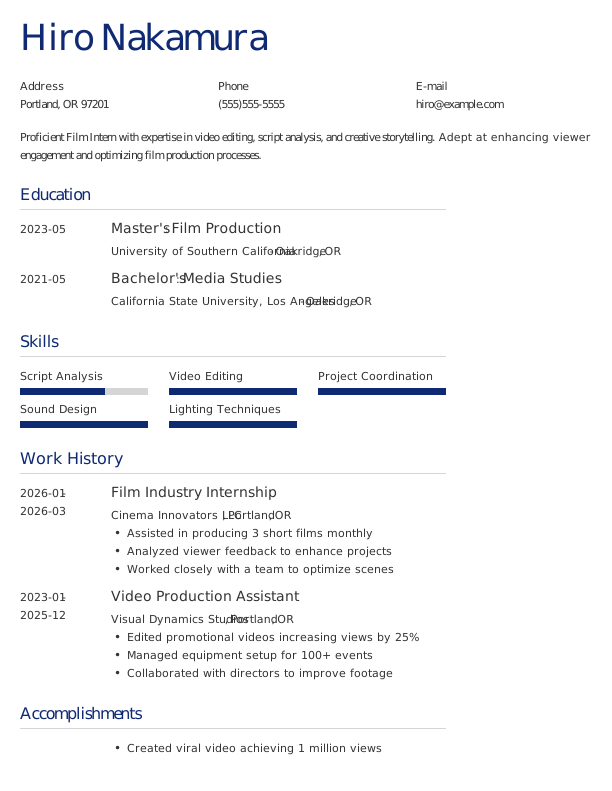
 Free
FreeFilm Industry Internship Modern Resume
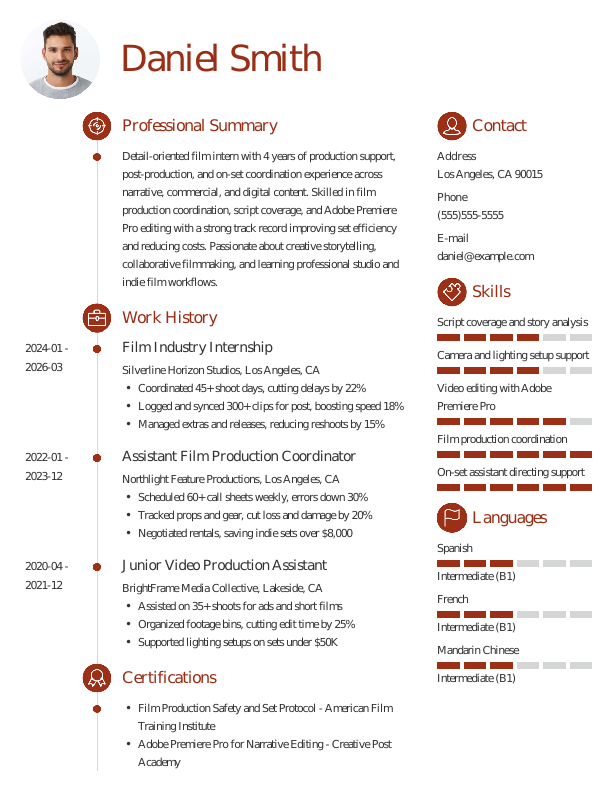
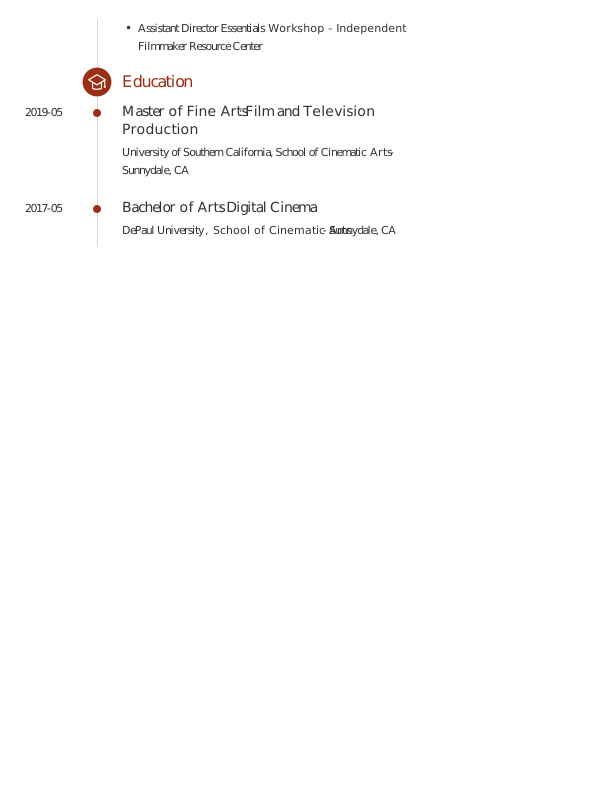
Film Industry Internship Creative Resume
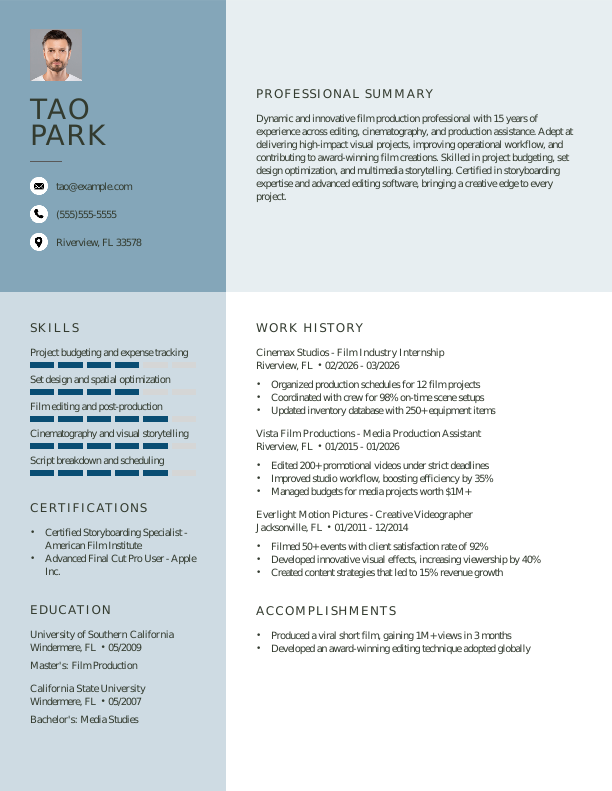
Film Industry Internship Traditional Resume
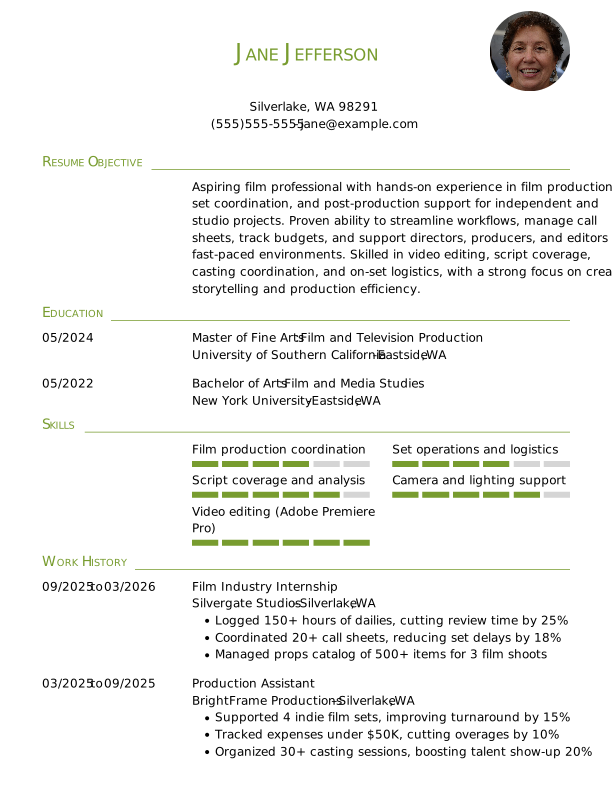
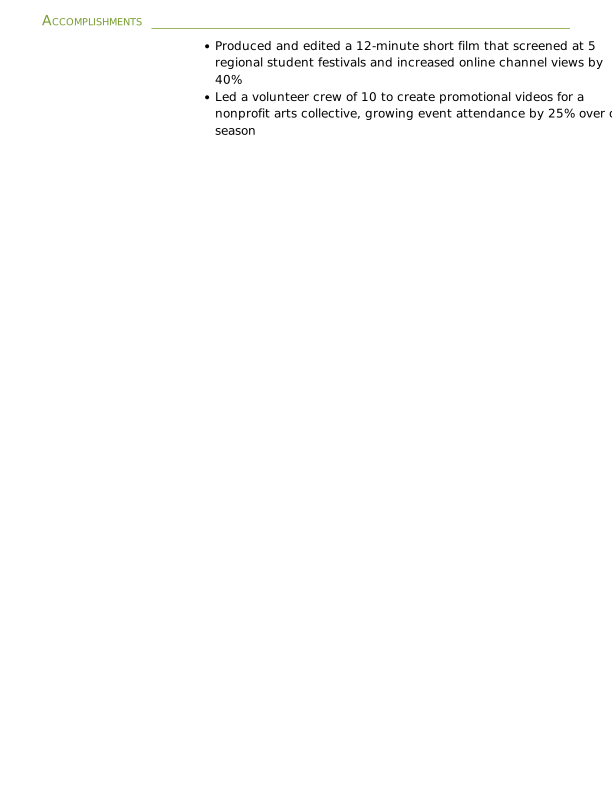
Film Industry Internship Simple CV Example
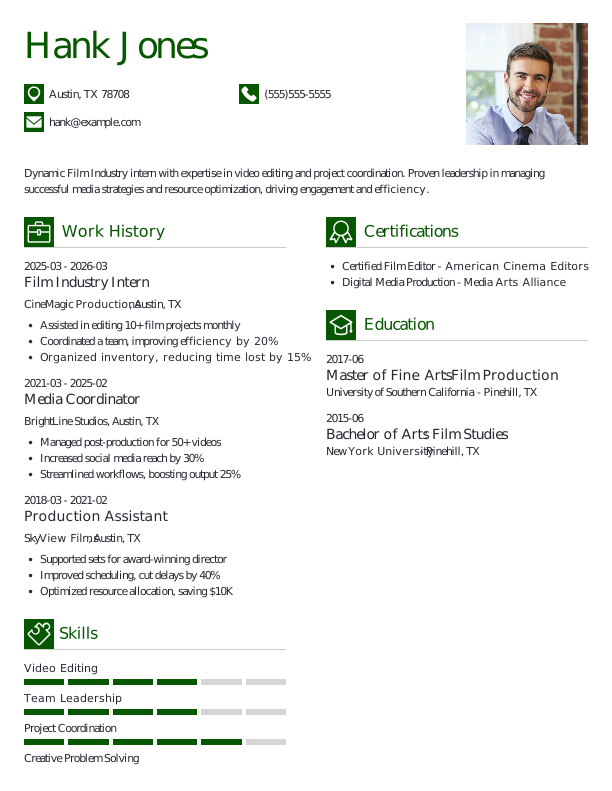
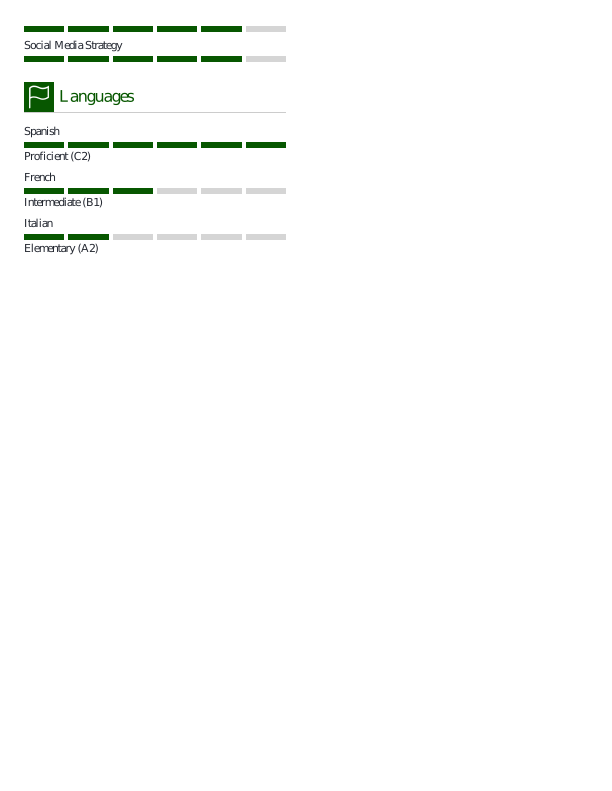
Film Industry Internship CV Format
Browse Free Resume Templates
- Accounts Payable
- Adjunct Professor
- Artist
- Auto Mechanic
- Baker
- Business Development Manager
- Business
- Certified Nursing Assistant
- Classic & Traditional
- Cleaner
- College Student
- Concierge
- Construction Worker
- Corporate
- Creative & Unique
- Custodian
- Customer Service
- Dental Assistant
- Direct Support Professional
- Entry-Level
- Flight Attendant
- Hospitality & Food Service
- Front Desk Receptionist
- Healthcare
- High School
- Housekeeping
- Hvac Technician
- Hybrid
- Inventory Manager
- Logistics
- Maintenance
- Management
- Modern
- Mortgage Loan Processor
- Pet Sitter
- Phlebotomist
- Production
- Rbt
- Sales
- Security Services
- Restaurant Server
- Simple & Basic
- Social Work
- Teacher
- Technology
Resume Examples for Film Industry Internships
Film internship resumes should adapt to the department you are targeting. Browse our templates, or build an internship resume from scratch to highlight your coursework and on-set exposure.
Entry-Level Film Industry Internship Resume
Ideal for students and recent graduates, this template helps you create a film internship resume by emphasizing your coursework, any student productions, and the departments you are most interested in working with.

Mid-Career Film Industry Internship Resume
A smart choice for mid-level film industry professionals, this template highlights recent achievements and leadership skills to support advancement into specialized or managerial roles.

Experienced Film Industry Internship Resume
An ideal fit for aspiring filmmakers, this internship opportunity is designed for students and recent graduates eager to gain hands-on experience in the film industry while contributing to meaningful projects.

Film Industry Internship Resume Template (Text)
Here is a text-based film internship resume, ready to copy and personalize. It is structured to make the most of your coursework and any production exposure.
John Martinez
Chicago, IL 60608
Professional Summary
Film production intern with 9 years in set support, post-production, and indie film workflows, specializing in editing and on-set coordination. Proven track record improving production efficiency, asset management, and viewer engagement through data-driven creative decisions. Skilled in Adobe Premiere Pro, film production coordination, and collaborative storytelling for studio and independent film environments.
Work Experience
April 2023 – March 2026
Silvergate Motion Pictures – Chicago, IL
Film Industry Internship
- Logged 250+ hours of dailies for editors each season
- Coordinated 30+ set call sheets with 98% accuracy
- Cut temp trailers boosting test interest by 18%
April 2019 – March 2023
NeonFrame Post Studios – Chicago, IL
Assistant Video Editor
- Edited 80+ short-form pieces for digital release
- Optimized workflows cutting render time by 27%
- Improved viewer retention by 22% via pacing edits
April 2017 – March 2019
Citylight Film Collective – Springfield, IL
Production Assistant
- Supported 15+ indie shoots across multiple sets
- Managed props inventory reducing loss by 35%
- Handled extras check-in for casts of up to 90
Education
May 2016
University of Southern California Springfield, IL
Master of Fine Arts Film and Television Production
May 2014
University of Texas at Austin Springfield, IL
Bachelor of Arts Radio-Television-Film
Certifications
- Adobe Certified Professional in Digital Video – Adobe Creative Cloud Certification Program
- Production Safety for Film and TV Sets – Motion Picture Safety Training Alliance
- On-Set COVID-19 Compliance Training – Entertainment Health and Safety Consortium
Skills
- Film production coordination
- Video editing (Adobe Premiere Pro)
- Post-production workflow
- Script coverage and analysis
- Cinematography and lighting
- Assistant directing and scheduling
- Digital asset management
- On-set communication and teamwork
How to Write a Film Industry Internship Resume
In the film industry, knowing how to write a resume is important for showcasing your unique skills and relevant experiences in a visually appealing format. Use the guidance below to emphasize your strengths and tailor your resume for the positions you’re aiming for.
1. Contact Info
Your contact information should be clear, professional, and prominently displayed at the top of your resume.
Be sure to include:
- Full name
- Phone number
- Professional email address
- City and state (ZIP code is optional)
- LinkedIn profile or personal portfolio (if relevant)
 PRO TIP
Skip including unnecessary personal details such as your photo, marital status, or full address on your resume unless specifically requested by the employer.
2. Resume Profile
A resume profile is a brief introduction (2–4 sentences) that highlights your key qualifications and skills. It serves as an engaging pitch to hiring managers, designed to capture their interest and prompt them to explore your resume further.
Typically located at the top of your resume, this section can take the form of either a summary or an objective, each serving different roles in showcasing your professional identity:
- A resume summary showcases your most relevant experience, skills, and accomplishments within the film industry, highlighting roles like production assistance or editing. This approach suits job seekers with relevant work history or transferable talents who want to emphasize their contributions in a competitive entertainment environment.
- A resume objective is a statement that highlights your future aspirations and the contributions you plan to bring to your career. It’s especially useful for recent film school graduates, aspiring filmmakers, or those transitioning from other creative fields who are seeking internships in the film industry.
Let’s examine examples of a resume summary and a resume objective to understand their distinct purposes:
Film industry internship resume summary example:
Dedicated film industry intern with over 6 years of experience in diverse production environments, including short films and commercials. Proficient in script analysis, video editing software, and team collaboration. Acknowledged for contributing to successful projects that improve storytelling and audience engagement.
Film industry internship resume objective example:
Recent film studies graduate excited to launch a career in the film industry within a dynamic production environment. Committed to storytelling excellence and looking to contribute strong creativity and collaboration skills to innovative film projects or production companies.
3. Work Experience
The work experience on your resume serves as an important foundation for your career. Employers look to understand not only the positions you’ve held but also the tangible impact you’ve made in those roles.
This section of your resume highlights how your unique experiences and accomplishments align with the qualifications needed for success in the film industry internship.
The work experience section should contain:
- Job title
- Employer name and location
- Dates of employment (month/year)
- 3–5 bullet points describing your role in film projects and contributions to production
When crafting your work experience bullet points, focus on using language specific to the film industry. Start each point with a strong action verb like “Produced,” “Edited,” or “Coordinated” to make an immediate impact.
Incorporate quantifiable metrics where possible to illustrate your contributions. Specific numbers or successful projects highlight your achievements and set you apart from other job seekers, showcasing the unique value you bring to potential employers.
In general, consider following the format of:
[action verb] + [responsibility] = [result/achievement]
For example:
Assisted in the production of 5 short films, contributing to all phases from script development to post-production, resulting in a 30% increase in online viewership.
Note that you can also flip the result/achievement with the responsibility:
Increased social media engagement by 40% through targeted marketing strategies during film promotions.
With these techniques in mind, your resume bullets may look something like:
- Assisted in the production of 5 short films, contributing to a team that increased project efficiency by 20%.
- Collaborated with directors and editors on storyboarding sessions, improving visual storytelling for multiple projects.
- Conducted research for character development across 3 feature-length scripts, improving narrative depth and authenticity.
- Used Final Cut Pro to edit video content, meeting deadlines consistently while maintaining high-quality standards.
- Mentored junior interns in film techniques, fostering a collaborative environment that boosted team creativity.
4. Skills
The skills section gives a concise overview of your specific abilities in the film industry. This ensures an ATS-friendly resume that lets hiring managers quickly assess your qualifications. Skills can be grouped into three categories: technical, creative, and interpersonal.
- Soft skills are interpersonal abilities that influence how individuals collaborate in the film industry.
- Hard skills are specific, quantifiable abilities gained through education, training, or experience.
- Technical skills refer to the practical abilities required to operate specialized equipment and software.
5 Soft Skills for Your Resume or CV
- Effective communication
- Team-oriented collaboration
- Project management skills
- Attention to detail
- Crisis management
5 Hard Skills for Your Resume or CV
- Script analysis and breakdown
- Camera operation (DSLR, RED)
- Editing software skill (Adobe Premiere, Final Cut Pro)
- Sound design techniques
- Production management software (Celtx, Movie Magic)
In general, include a well-rounded mix of skills that directly connect to the job requirements to showcase your potential.
PRO TIP
If you’re an entry-level film industry professional, place your skills section higher on the resume following your summary. For those with more experience, it’s best to position this section lower, weaving your skills into the narrative of your work history for a more integrated approach.
5. Education
Understanding how to list education on your resume is important for making a strong first impression. Begin with your most recent or relevant degree, clearly stating the type of degree and the institution. If you’re a recent graduate, consider including your graduation year, GPA (if it’s 3.5 or higher), any honors received, and relevant coursework to showcase your achievements and qualifications.
Film industry internship resume education section example:
Bachelor of Arts in Film Studies
New York University, New York, NY
Graduated: 2024 | Magna Cum Laude
PRO TIP
When listing multiple degrees on your resume, ensure they are presented in reverse-chronological order, starting with the most recent degree first, such as Bachelor of Arts in Film Studies followed by Associate Degree in Film Production.
6. Certifications
Certifications highlight your expertise and ensure you’re aligned with industry standards. While they may not be a standard part of every resume, including this section can significantly benefit those seeking roles in competitive fields. Employers often look for specific qualifications, especially in areas like production or post-production where technical skills are important.
Be sure to feature relevant certifications that strengthen your application. Keeping these credentials updated and clearly presented is essential for making a strong impression on potential employers.
Film industry internship certification examples:
- Film Production Assistant Certification | Film Industry Training Institute | Expires: 03/2028
- Scriptwriting Fundamentals Certificate | Screenwriters Guild | Expires: 11/2027
- Digital Cinematography Course Completion | Cinematographers Society | Expires: 01/2028
- Post-Production Editing Certification | Editing Professionals Network | Expires: 09/2027
Start Building Your Job-Winning Resume
Use Your Existing Resume
Import your current resume to transfer your information to one of our professional templates.
Create a New Resume
Start fresh with a template that catches your eye and follow the prompts to add your details.
Tailor Your Work History to Beat the ATS
Your work experience is not just a collection of roles. It’s your opportunity to demonstrate the tangible contributions you’ve made in projects, teams, and the film industry. This approach can also improve your resume’s compatibility with applicant tracking systems (ATS), ensuring it gets noticed during the hiring process.
To make your work history stand out, tailor it to align with the specific internship you’re targeting. Begin by examining the job description closely. Identify key skills or qualifications that appear frequently and incorporate those elements into your experience descriptions for maximum impact.
Key Takeaways
- Tailor your resume to the specific internship description. Use keywords from the posting to resonate with both ATS and hiring managers.
- Highlight quantifiable achievements that demonstrate your impact. For instance, mention projects you contributed to (e.g., number of scenes shot, budget managed, or festivals entered) to make your experience stand out.
- Select a format that suits your experience level. New interns may find a functional format useful, while those with more background should consider a reverse-chronological layout.
More Resume & CV Examples
- Animator
- Audio Engineer
- Cinematographer
- Entertainment
- Event Coordinator
- Event Planner
- Event Planning
- Film Director
- Film Production
- Makeup Artist
- Media Planner
- Media
- Model
- Music Producer
- Production Assistant
- Public Affairs
- Sound Designer
- Stage Manager
- Video Editor
- Videographer
- Voice Actor
Cover Letters for Your Resume
Browse our library of cover letter examples to complete your application. A resume will have a better chance of getting noticed.
Frequently Asked Questions
Last Update:
What resume format should I use for my film industry internship resume?
For those seeking an internship in the film industry, understanding the three main resume formats is important. Your choice should reflect your experience and the aspects of your background you wish to highlight:
- Chronological: The chronological resume format is the most widely used type, emphasizing your work history by highlighting roles and accomplishments. This format is particularly beneficial for applicants whose relevant job experience strengthens their qualifications and establishes credibility in the film industry or related fields.
- Functional: The functional resume, often referred to as a skills-based resume, prioritizes your qualifications and skills over your employment history. This format is especially useful for applicants who lack direct experience in the film industry or have gaps in their work history, enabling them to showcase relevant abilities instead.
- Combination: A combination resume merges chronological and functional formats, showcasing both skills and work experience. This structure is ideal for professionals aiming to highlight their competencies while demonstrating career growth. It provides job seekers with an option to present a comprehensive view of their qualifications and experiences.
Should I include a cover letter with my resume?
Yes, including a cover letter with your film industry internship application is important. A well-crafted cover letter allows you to express your enthusiasm for the role and the unique contributions you can bring to the team while highlighting experiences that may not be immediately apparent in your resume. By personalizing your application, you demonstrate to employers that you’re genuinely interested in their organization, setting you apart from other applicants.
If you’re uncertain about how to write a cover letter, many resources are available to assist you. You can find guides specifically for internships in the film industry, as well as examples showcasing different styles and formats. These resources will help you create a tailored document that aligns with your background and aspirations.
To make writing easier, consider using a cover letter generator. This tool provides templates and suggestions tailored for film industry positions, helping streamline your application process.
How long should a film industry internship resume be?
For job seekers pursuing film industry internships with less than 10 years of experience, a one-page resume is ideal to showcase relevant coursework, projects, and any practical experience. Highlight specific skills in areas like editing software, scriptwriting, or production assistance that align with the internship role.
Conversely, those with substantial experience or specialized skills can extend their resumes to two pages if the content remains concise and relevant. Focus on powerful experiences that illustrate your contributions to previous projects without unnecessary embellishment or filler language.
What keywords should I include to pass applicant tracking systems (ATS)?
To ensure your resume passes ATS screenings, incorporate keywords directly from the job description. For a film industry internship, look for terms like “production,” “storyboarding,” or “editing software.” Using these specific phrases will help demonstrate your relevance to the role.
Additionally, mention any relevant skills or tools that could improve your application. If you’re proficient in programs such as Final Cut Pro or Adobe Premiere, include those. Highlighting certifications like Digital Filmmaking or Media Production can also give you an edge, showcasing your commitment and knowledge in this competitive field.
Should I include film projects or volunteer work in my resume?
Yes, especially if you’re new to the industry. Highlighting film projects and volunteer work demonstrates your passion and practical experience, making you more appealing to potential employers who value diverse backgrounds over just formal roles.

Elizabeth Muenzen is a Certified Professional Resume Writer (CPRW) and member of the Professional Association of Resume Writers & Career Coaches who empowers job seekers to take control of their career paths using Monster’s comprehensive job search and resume tools.
See More From Elizabeth MuenzenExplore Related Career Advice


How to Put Transferable Skills on Your Resume: 120 Skills, Examples, & Tips

Updated:
Aug 27, 2026
|
16 min read


How to Write a Functional Resume (Formatting Tips, Template, & Examples)
Updated:
Aug 7, 2026
|
17 min read


Functional vs Chronological Resume: Which Format Is Right for You?
Updated:
Aug 3, 2026
|
16 min read

100+ Resume Adjectives to Help You Write a Stronger Resume in 2026 (With Examples)
Updated:
Jul 30, 2026
|
12 min read