
Free Videographer Resume Templates & Examples
A videographer resume should showcase your shooting, editing, and post-production skills alongside your equipment proficiency. Pick a template below that highlights your creative and technical range.
Real-World Resumes That Get Results
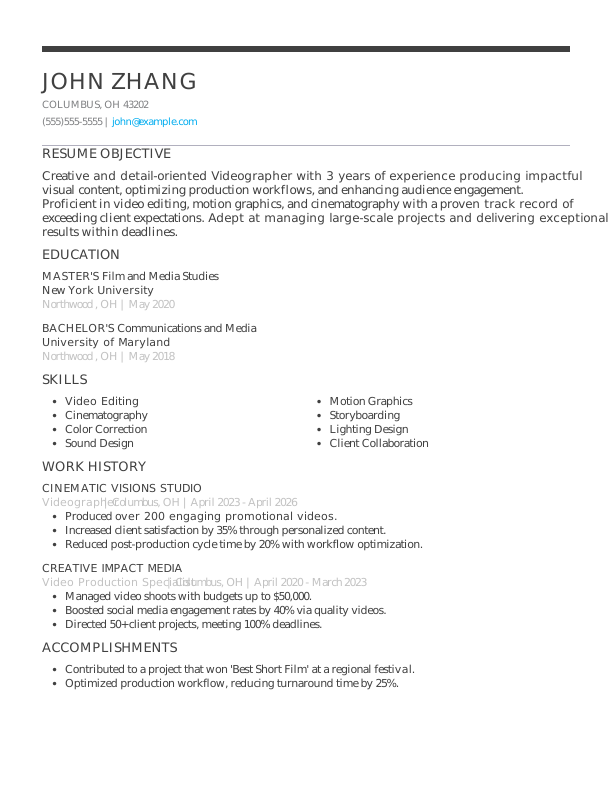
 Free
FreeVideographer Entry-Level Resume
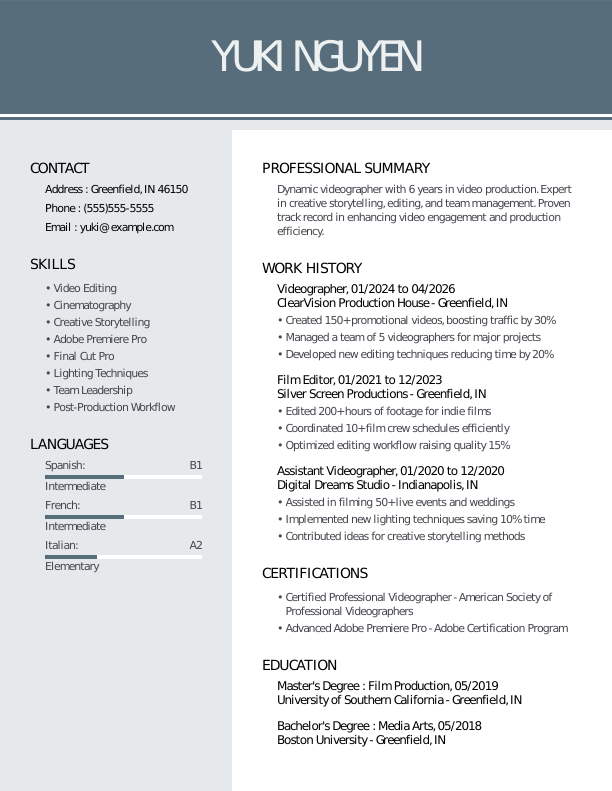
Videographer Mid-Level Resume
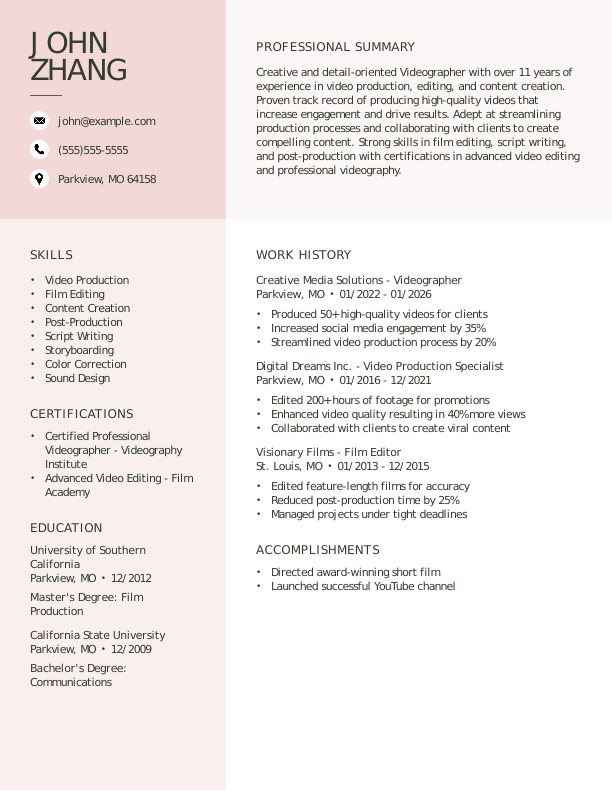
Videographer Experienced Resume
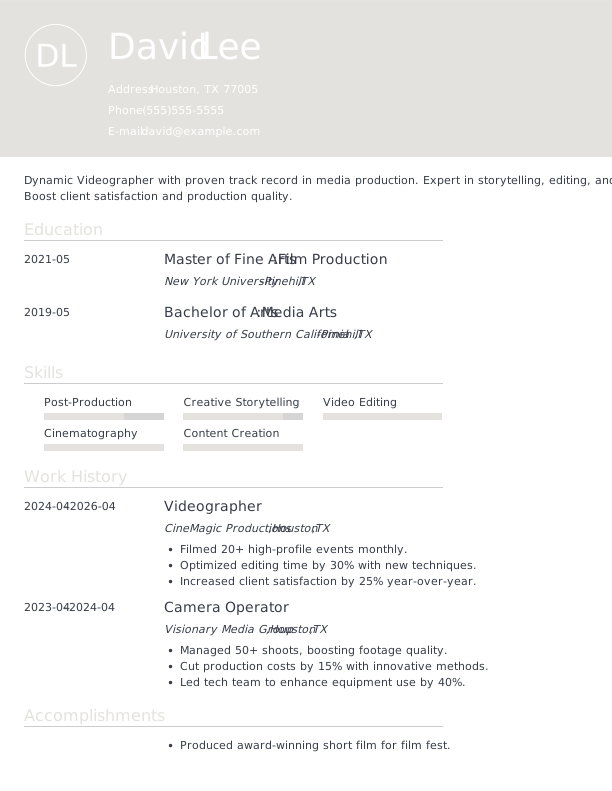
Videographer Entry-Level Resume 1
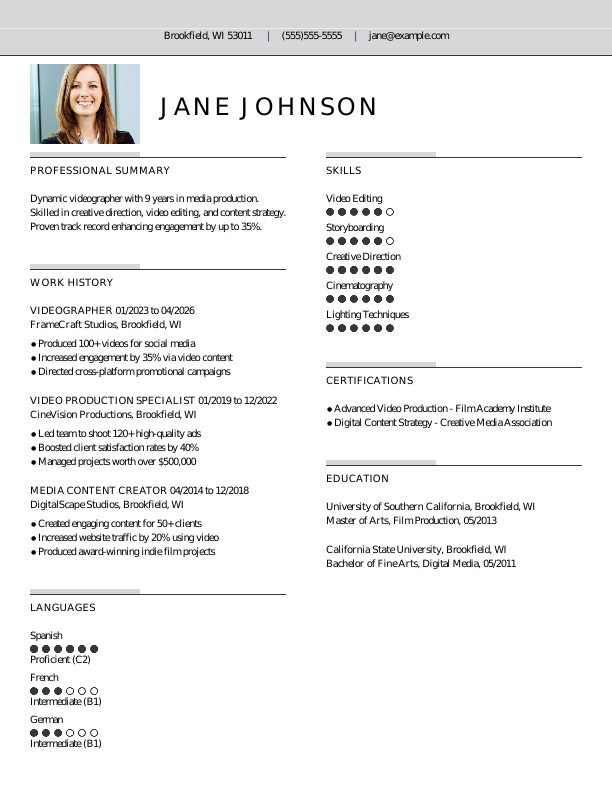
Videographer Mid-Level Resume 1
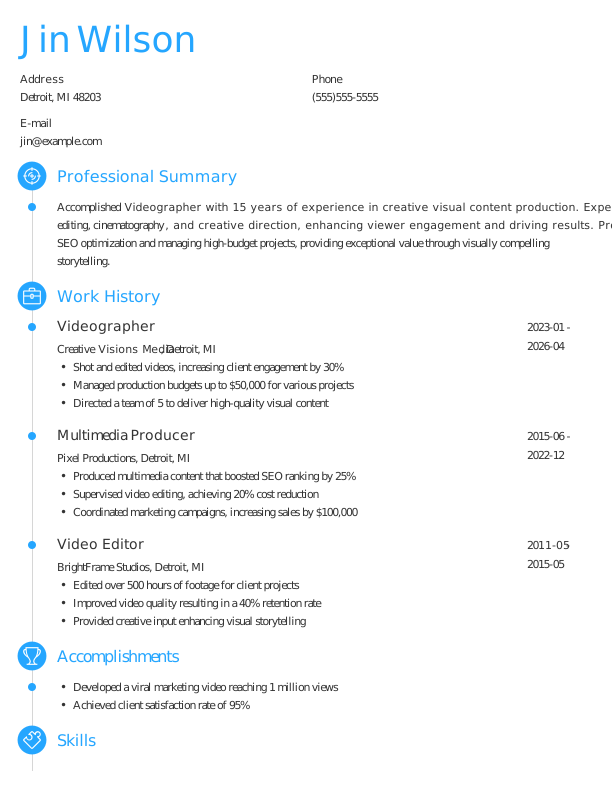

Videographer Experienced Resume 1
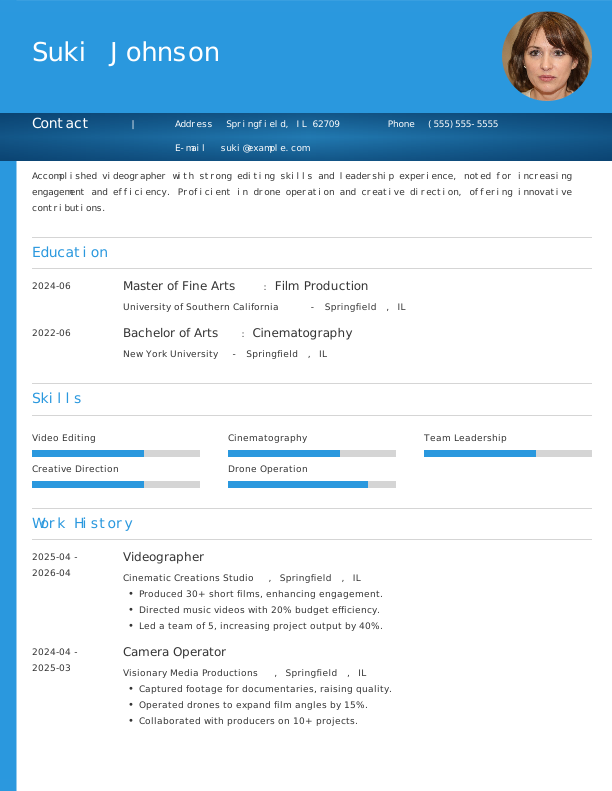

Videographer Entry-Level Resume 2
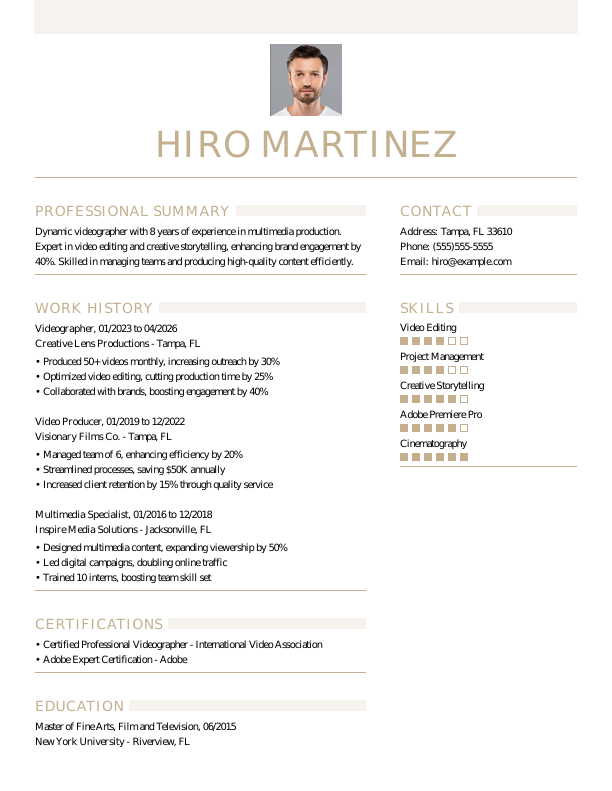

Videographer Mid-Level Resume 2
Browse Free Resume Templates
- Accounts Payable
- Adjunct Professor
- Artist
- Auto Mechanic
- Baker
- Business Development Manager
- Business
- Certified Nursing Assistant
- Classic & Traditional
- Cleaner
- College Student
- Concierge
- Construction Worker
- Corporate
- Creative & Unique
- Custodian
- Customer Service
- Dental Assistant
- Direct Support Professional
- Entry-Level
- Flight Attendant
- Hospitality & Food Service
- Front Desk Receptionist
- Healthcare
- High School
- Housekeeping
- Hvac Technician
- Hybrid
- Inventory Manager
- Logistics
- Maintenance
- Management
- Modern
- Mortgage Loan Processor
- Pet Sitter
- Phlebotomist
- Production
- Rbt
- Sales
- Security Services
- Restaurant Server
- Simple & Basic
- Social Work
- Teacher
- Technology
Resume Examples for Videographers
Videographer resumes should reflect your shooting and editing skills alongside your equipment proficiency. Browse our templates to find one that highlights your creative range.
Entry-Level Videographer Resume
If you are building a videography career from a self-taught or film school background, this template helps you create a videographer resume by focusing on your portfolio projects and editing proficiency.

Mid-Career Videographer Resume
A smart choice for mid-level videographers seeking to advance their careers, this template effectively showcases relevant experience and highlights skills essential for specialized roles in the industry.

Experienced Videographer Resume
A perfect fit for seasoned videographers with over 10 years of experience, this template supports professionals aiming for advanced roles in video production and content creation.

Videographer Resume Template (Text)
The text resume below gives you a starting point for a videographer application. Paste it into your document and update it with your shooting and editing credits. For more creative industry layouts, browse our free resume templates.
Emily Baskins
Southgate, MI 48196
Professional Summary
Dynamic videographer with 5 years in film production. Proven to boost client satisfaction by 30% via innovative strategies. Expert in video editing, project management
Work Experience
April 2024 – April 2026
Cinematic Creations – Southgate, MI
Videographer
- Produced 50+ video projects yearly
- Increased client satisfaction by 30%
- Edited videos improving turnaround time by 20%
April 2022 – March 2024
Visual Impact Studio – Detroit, MI
Video Content Producer
- Improved audience reach by 25% with new strategies
- Developed 30+ education video tutorials
- Led a team of 4 to enhance content delivery
April 2021 – March 2022
Creative Frames Productions – Detroit, MI
Film Editor
- Edited 20+ short films within budget
- Optimized editing workflow saving 15% time
- Collaborated with directors on film sequences
Education
May 2021
University of California Southgate, MI
Master of Arts Film Production
May 2019
California State University Southgate, MI
Bachelor of Arts Media Arts
Certifications
- Certified Video Producer – Professional Photographers of America
- Advanced Film Editing – National Association of Broadcasters
Skills
- Video Editing
- Cinematography
- Storyboarding
- Adobe Premiere Pro
- Final Cut Pro
- Lighting Techniques
- Audio Mixing
- Digital Media Strategy
How to Write a Videographer Resume
As a videographer, knowing how to write a resume means combining your creative skills, industry experience, and an engaging format that showcases why you’re the ideal applicant for the role. Use the guidance below to emphasize your strengths and tailor your resume to fit specific job opportunities within the field.
1. Contact Info
Your contact information should be clear, professional, and prominently displayed at the top of your resume.
Be sure to include:
- Full name
- Phone number
- Professional email address
- City and state (ZIP code is optional)
- Link to your portfolio, demo reel, or Vimeo/YouTube channel
- LinkedIn profile (recommended, particularly if it links out to your portfolio and showcases past clients or projects)
 PRO TIP
Make sure your portfolio link goes directly to a curated reel or selected works rather than a homepage with everything you’ve ever made—hiring managers spend seconds, not minutes, on a first look, so leading with your strongest 60-90 seconds of footage is far more effective than a sprawling archive.
2. Resume Profile
A resume profile is a brief introduction, typically 2 to 4 sentences long, that highlights your key qualifications and professional identity. Its primary function is to serve as an engaging pitch to hiring managers, compelling them to explore your resume further and learn more about your skills.
Positioned at the top of your resume, this profile can take the form of either a summary or an objective, each serving distinct purposes. Understanding these nuances is important for crafting a strong opening:
- A resume summary highlights your essential skills, relevant experience, and notable projects within the visual storytelling domain. This approach works well for individuals with a background in videography or related fields who want to emphasize their impact as a creative professional.
- A resume objective highlights your career aspirations and what you aim to achieve in your next role. This is particularly beneficial for recent college graduates, professionals shifting from other fields, or those with limited industry experience seeking to make a strong first impression.
Let’s explore examples of a resume summary and a resume objective to understand their distinctions.
Videographer resume summary example:
Creative videographer with over 6 years of experience in dynamic production environments, including commercial shoots and documentary filmmaking. Proficient in video editing, storytelling, and lighting techniques. Recognized for producing compelling visual narratives that engage audiences and improve brand visibility.
Videographer resume objective example:
Recent graduate with a degree in film production eager to launch a career as a videographer in a dynamic media environment. Committed to storytelling through visual art and excited to bring creativity and technical expertise to a production company or freelance opportunities.
3. Work Experience
The work experience on your resume forms an important foundation for showcasing your qualifications. Employers look beyond mere job titles and responsibilities, focusing instead on the tangible impact you’ve made in previous roles.
This section highlights how your unique background as a videographer aligns perfectly with the demands of the position you’re pursuing.
The work experience section should contain:
- Job title
- Employer name and location
- Dates of employment (month/year)
- 3–5 bullet points detailing your videography projects and creative contributions
Customize your work experience bullet points for each application by incorporating industry-specific terminology. Begin with strong action verbs like “Captured,” “Edited,” or “Produced” to convey your contributions clearly.
Incorporate numbers and metrics whenever possible, as they provide concrete evidence of your impact. Highlighting achievements with specific figures not only showcases your skills but also sets you apart from other job seekers.
In general, consider following the format of:
[action verb] + [responsibility] = [result/achievement]
For example:
Produced and edited over 50 high-quality promotional videos for healthcare events, resulting in a 30% increase in attendee engagement across various platforms.
Note that you can also flip the result/achievement with the responsibility:
Achieved a 40% boost in social media reach by implementing targeted video content strategies tailored to audience demographics.
With these techniques in mind, your resume bullets may look something like:
- Produced over 100 high-quality video projects annually, improving brand visibility and audience engagement by 25%.
- Collaborated with a team of 5 creatives to develop compelling marketing content, resulting in a 15% increase in client inquiries.
- Edited and finalized videos within tight deadlines, consistently delivering projects ahead of schedule by an average of 2 days.
- Used Adobe Premiere Pro and After Effects for video editing, streamlining workflow processes by implementing new techniques.
- Mentored junior videographers on best practices in filming and editing, fostering skill development within the team.
4. Skills
The skills section offers a concise overview of your videography expertise, highlighting your specific abilities in visual storytelling and technical skill.
Skills can be categorized into three key areas:
- Soft skills are personal qualities that influence how well videographers collaborate with clients and team members.
- Hard skills are specific, quantifiable abilities you develop through education, training, or experience.
- Technical skills are a narrower subset focused on the specific equipment and software you use to execute that craft.
5 Soft Skills for Your Resume or CV
- Visual storytelling
- Team coordination
- Client engagement skills
- Attention to detail
- Time management
5 Hard Skills for Your Resume or CV
- Video editing software skill (Adobe Premiere Pro, Final Cut Pro)
- Camera operation and maintenance
- Lighting setup techniques
- Audio recording and mixing
- Storyboarding and scripting
In general, aim to showcase a diverse array of skills that directly align with the videographer role you’re targeting.
PRO TIP
If you’re a newer videographer, consider placing your skills section higher on your resume, right after your summary. If you have more experience, it’s better to position this section lower and weave your skills throughout your work history for a stronger impact.
5. Education
Knowing how to list education on your resume is an important part of presenting yourself as a well-rounded videographer. Lead with your highest or most relevant degree, clearly stating the institution, degree type, and graduation year.
If you’re early in your career, your education section can do extra work for you—consider adding relevant coursework in cinematography, film production, or editing, along with notable student projects, film festival selections, or academic honors that demonstrate your creative range and technical foundation.
Videographer resume education section example:
Bachelor of Arts in Film Production
California State University, Northridge, Northridge, CA
Graduated: 2023 | Graduated with Honors (GPA 3.8)
PRO TIP
If your degrees come from different disciplines (say, a BFA in Film paired with an associate degree in graphic design or photography), the combination can actually work in your favor by signaling a broader visual storytelling foundation. Just make sure the degree most relevant to the role you’re targeting appears first, even if it isn’t your most recent.
6. Certifications
Certifications illustrate your skills and knowledge relevant to videography. While not a standard section in every resume, this area is essential for many professionals in creative fields. Employers often look for specific credentials, especially for roles involving advanced techniques or specialized equipment.
Highlight any relevant certifications that improve your application. Ensure they are current and formatted clearly to make a strong impression on potential employers.
Videographer certification examples:
- Videographer Certification | National Association of Broadcasters | Expires: 03/2028
- Adobe Certified Expert (ACE) | Adobe Systems | Expires: 11/2027
- Final Cut Pro X Certification | Apple Inc. | Expires: 09/2027
- Drone Pilot License | Federal Aviation Administration | Expires: 01/2028
Start Building Your Job-Winning Resume
Use Your Existing Resume
Import your current resume to transfer your information to one of our professional templates.
Create a New Resume
Start fresh with a template that catches your eye and follow the prompts to add your details.
Tailor Your Work History to Beat the ATS
Your work experience as a videographer goes beyond just listing previous roles. It’s an opportunity to highlight the tangible impact you’ve made through your creative projects, showcasing your skills in storytelling and visual communication. This detailed approach not only improves your appeal to potential employers but also contributes to a more ATS-friendly resume that can be easily scanned by applicant tracking systems (ATS).
To create a compelling work history, tailor your experiences to align with the job you want. Begin by closely examining the job description for essential keywords and responsibilities. Identify common skills or qualifications mentioned and ensure these elements are reflected clearly in your descriptions of past work experiences.
Key Takeaways
- Tailor your resume to the specific job description. Incorporate keywords from the listing to appeal to both ATS and hiring managers.
- Highlight quantifiable achievements that demonstrate your skills. Use metrics like project budgets, video views, or client satisfaction ratings (e.g., increased views by 30%, managed budgets of $10K).
- Select a resume format that suits your experience level. Beginners might opt for a functional format while seasoned videographers could use a reverse-chronological layout.
More Resume & CV Examples
- Animator
- Audio Engineer
- Cinematographer
- Entertainment
- Event Coordinator
- Event Planner
- Event Planning
- Film Director
- Film Industry Internship
- Film Production
- Makeup Artist
- Media Planner
- Media
- Model
- Music Producer
- Production Assistant
- Public Affairs
- Sound Designer
- Stage Manager
- Video Editor
- Voice Actor
Cover Letters for Your Resume
Browse our library of cover letter examples to complete your application. A resume will have a better chance of getting noticed.
Frequently Asked Questions
Last Update:
What resume format should I use for my videographer resume?
There are three main resume formats to consider when applying for a videographer position. Your choice should reflect your experience level and the aspects of your work you wish to highlight:
- Chronological: The chronological resume format is the most widely used style, emphasizing your work history by outlining your responsibilities and achievements. It’s ideal for applicants with a consistent job background that reinforces their qualifications and adds credibility to their experience, making it a strong choice for many applicants.
- Functional: The functional resume, also known as a skills-based resume, emphasizes a summary of qualifications and an extensive skills section rather than work history. This approach benefits job seekers who lack relevant experience in the videography field or have significant employment gaps. It highlights your capabilities instead of focusing on past job titles.
- Combination: The combination resume format merges chronological and functional styles, showcasing both skills and work experience. This approach benefits professionals by allowing them to highlight their abilities while also detailing their career progression, making it ideal for those transitioning into new fields or advancing in their careers.
Should I include a cover letter with my resume?
Yes, you should include a cover letter with your videographer job application if you have the opportunity. A well-crafted cover letter not only highlights your passion for visual storytelling but also allows you to showcase specific projects and experiences that may not be fully represented in your resume. It demonstrates to potential employers that you’ve made the effort to tailor your application, helping you stand out from job seekers who choose to omit this key component.
If you’re hesitant about writing a cover letter, there are plenty of resources available to guide you. You can find detailed articles on how to write a cover letter, along with examples specifically designed for creative roles like videography. Exploring various formats will help you select one that best showcases your skills and creativity while addressing the unique requirements of each position.
To make the process easier, consider using a cover letter generator, which provides templates and suggestions tailored to videography applications and helps streamline your writing process.
How long should a videographer resume be?
For videographers with less than 10 years of experience, a one-page resume should suffice to showcase relevant projects, skills, and technical proficiencies. Highlight key achievements and notable collaborations without unnecessary embellishments to create a strong first impression.
In contrast, seasoned videographers or those in specialized roles may extend their resumes to two pages if they include relevant information. Focus on showcasing diverse experiences, awards, and advanced techniques while ensuring clarity and relevance throughout the document to maintain engagement.
What keywords should I include to pass applicant tracking systems (ATS)?
To improve your resume for an ATS, focus on incorporating keywords and phrases from the job posting. For a videographer position, look for terms like “camera operation,” “video editing,” and “storyboarding.” Using these specific phrases can help you stand out in the screening process.
Additionally, highlight any relevant certifications such as Adobe Certified Expert or Final Cut Pro Certification, along with technical tools you’re familiar with like Premiere Pro or After Effects. These details showcase your qualifications and align your skills with what employers are seeking.
Is it worth including freelance projects on my resume?
Yes, particularly if you’re starting out. Including freelance projects demonstrates your practical skills and creativity in videography, giving potential employers insight into your unique style and abilities even if you lack formal employment in the industry.

Vicki Salemi is a nationally recognized career expert who helps professionals navigate the hiring landscape and find the right fit on Monster. With over 15 years of experience in corporate recruiting and HR, she offers expert guidance on job search strategies, interview preparation, and career development to help candidates land their next role.
See More From Vicki SalemiExplore Related Career Advice


How to Put Transferable Skills on Your Resume: 120 Skills, Examples, & Tips

Updated:
Aug 27, 2026
|

16 min read


How to Write a Functional Resume (Formatting Tips, Template, & Examples)
Updated:
Aug 7, 2026
|
17 min read


Functional vs Chronological Resume: Which Format Is Right for You?
Updated:
Aug 3, 2026
|
16 min read

100+ Resume Adjectives to Help You Write a Stronger Resume in 2026 (With Examples)
Updated:
Jul 30, 2026
|
12 min read