

Free Photographer Resume Templates & Examples
A photographer resume should showcase your technical skills, creative vision, and client or editorial credits. Pick a template below that complements your portfolio, then follow our guide for tips on presenting creative careers.
Real-World Resumes That Get Results
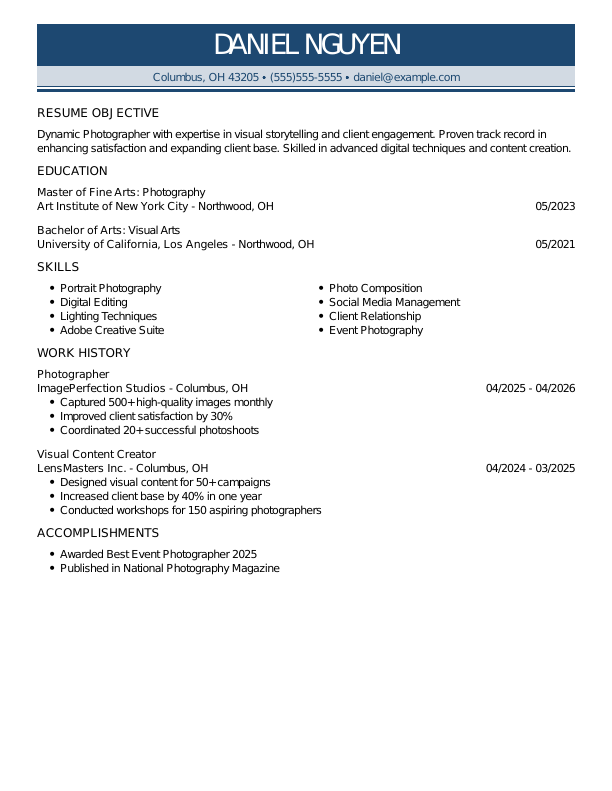
 Free
FreePhotographer Entry-Level Resume
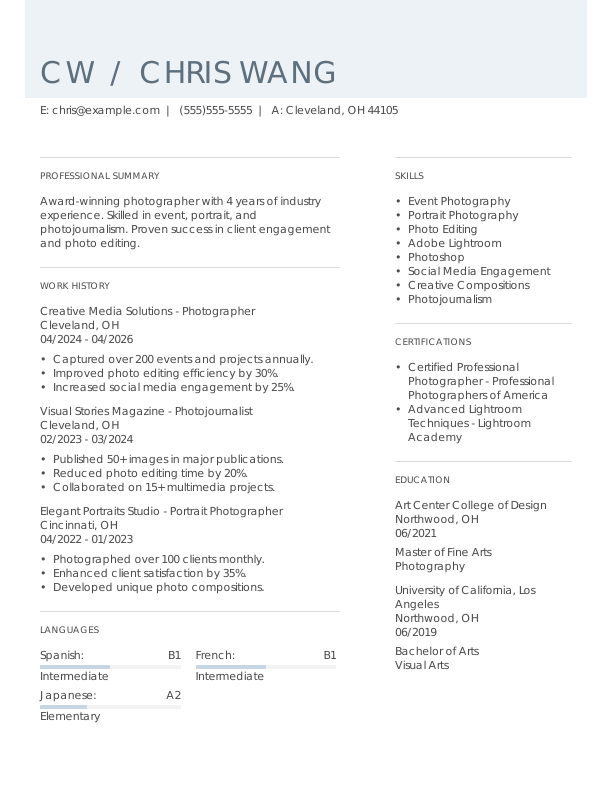
Photographer Mid-Level Resume
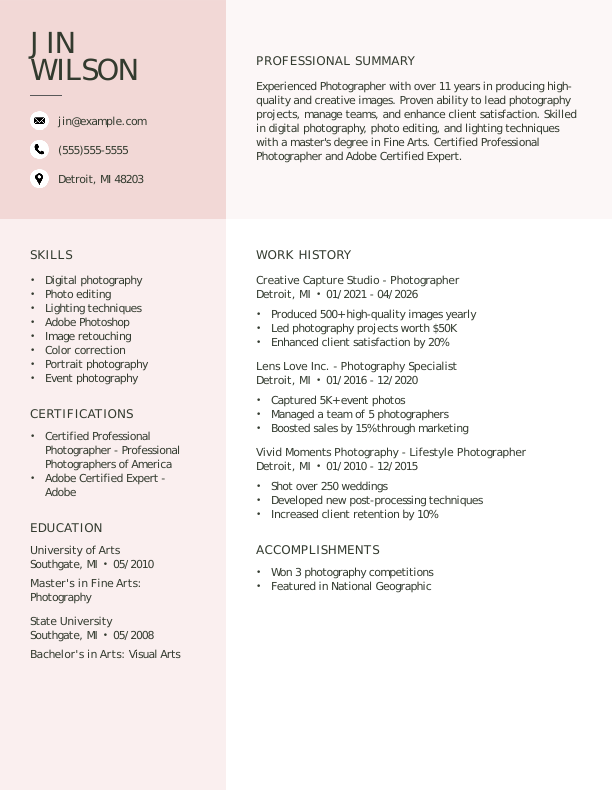
Photographer Experienced Resume
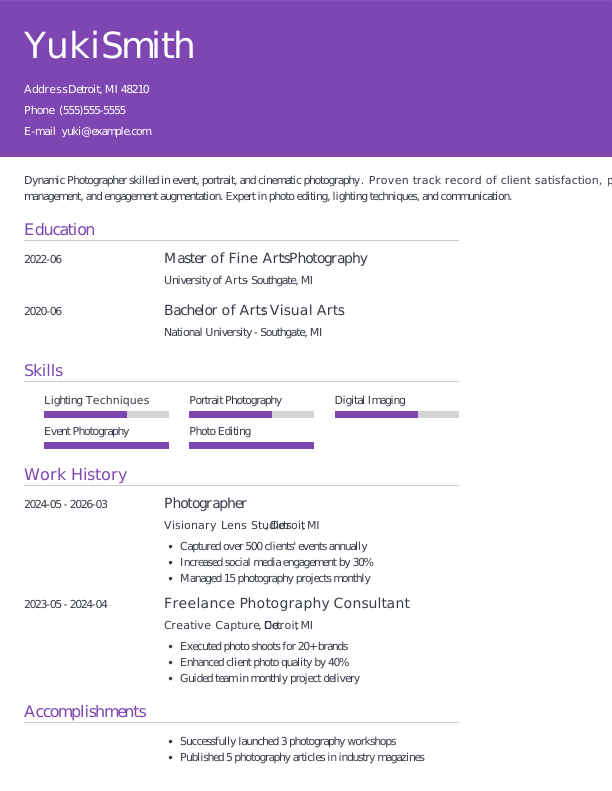
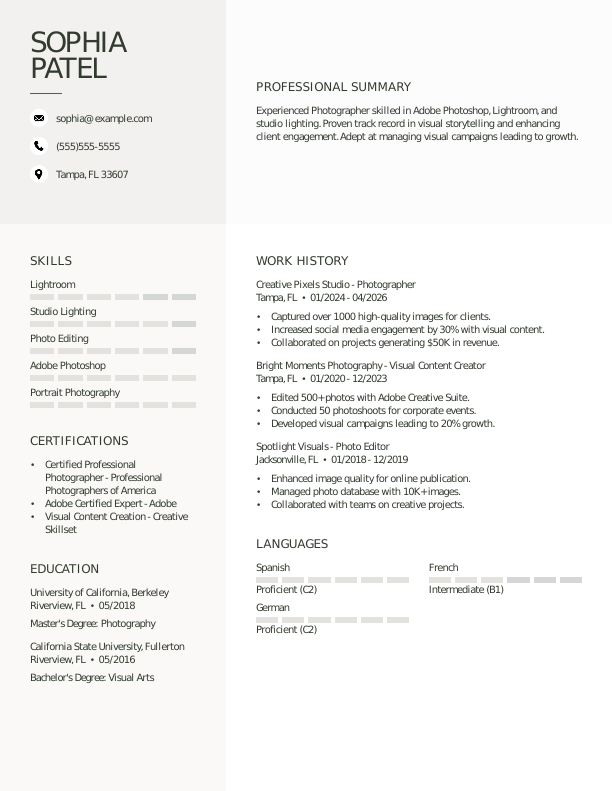
Photographer Entry-Level Resume 1
 Popular
Photographer Mid-Level Resume 1
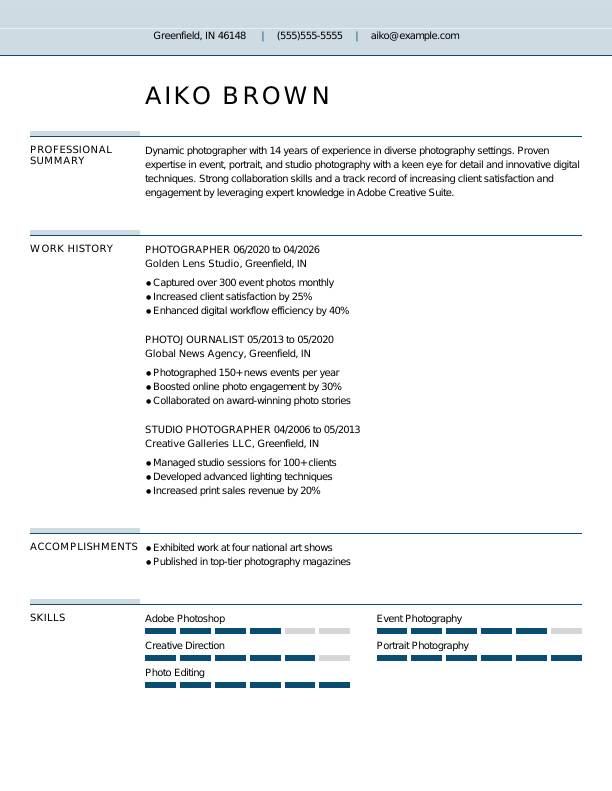
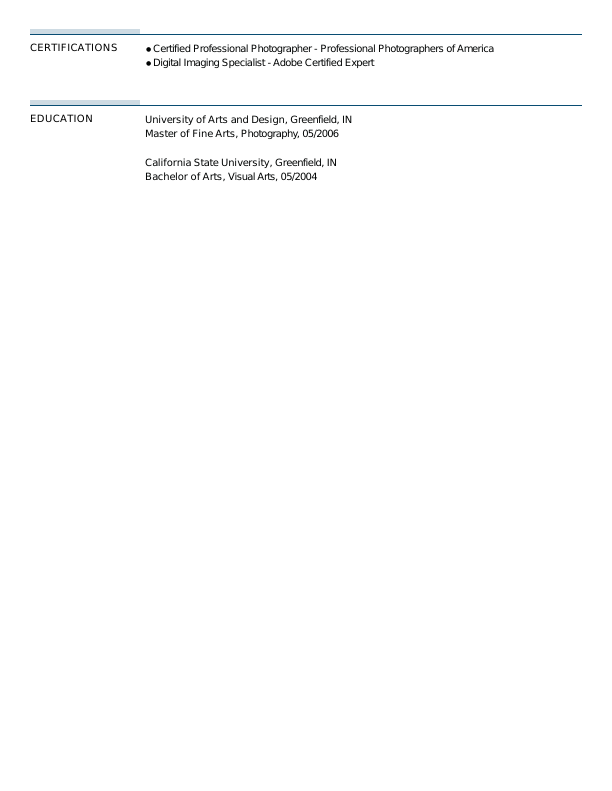
Photographer Experienced Resume 1
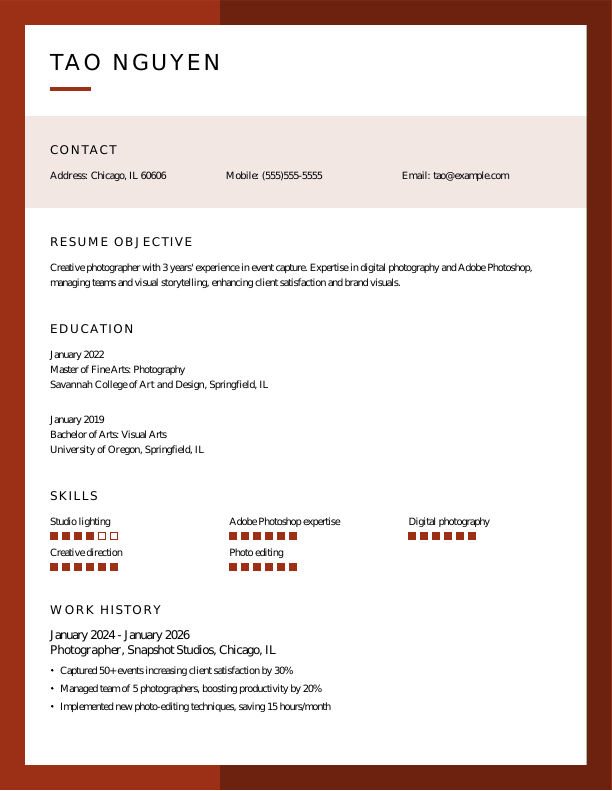
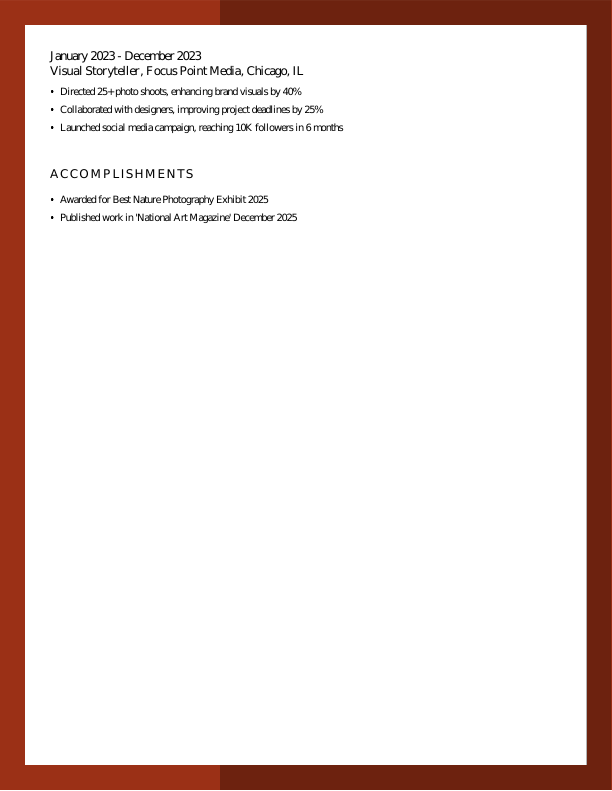
Photographer Entry-Level Resume 2
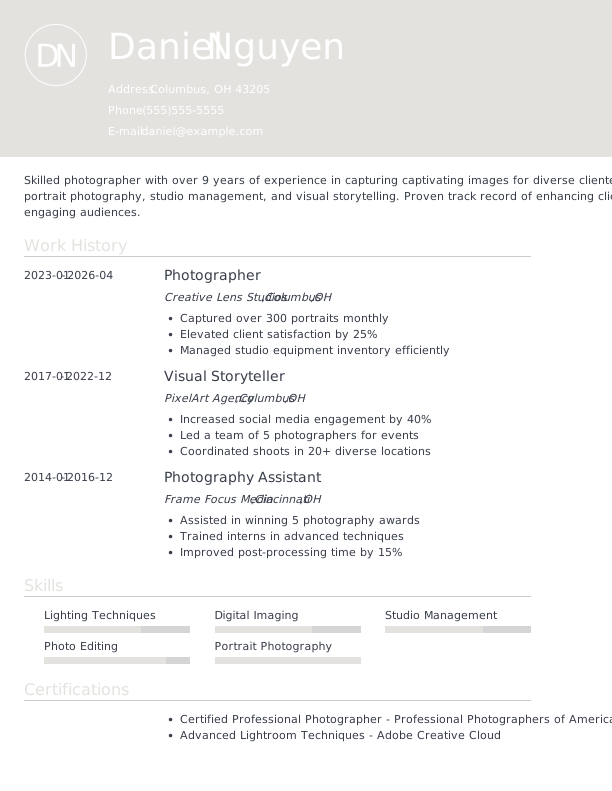
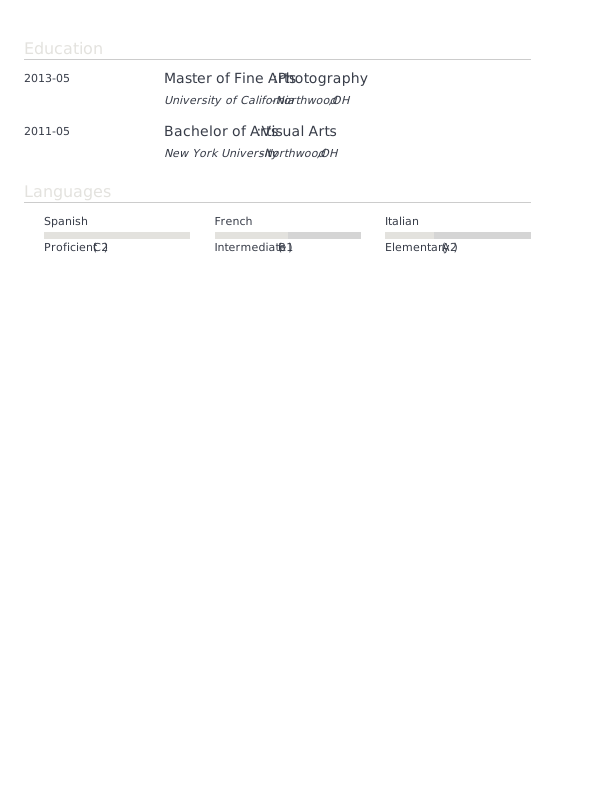
Photographer Mid-Level Resume 2
Browse Free Resume Templates
- Accounts Payable
- Adjunct Professor
- Artist
- Auto Mechanic
- Baker
- Business Development Manager
- Business
- Certified Nursing Assistant
- Classic & Traditional
- Cleaner
- College Student
- Concierge
- Construction Worker
- Corporate
- Creative & Unique
- Custodian
- Customer Service
- Dental Assistant
- Direct Support Professional
- Entry-Level
- Flight Attendant
- Hospitality & Food Service
- Front Desk Receptionist
- Healthcare
- High School
- Housekeeping
- Hvac Technician
- Hybrid
- Inventory Manager
- Logistics
- Maintenance
- Management
- Modern
- Mortgage Loan Processor
- Pet Sitter
- Phlebotomist
- Production
- Rbt
- Sales
- Security Services
- Restaurant Server
- Simple & Basic
- Social Work
- Teacher
- Technology
Resume Examples for Photographers
Photographer resumes should reflect your creative vision and the types of shoots you specialize in. Browse our templates for each experience level, or try our Resume Builder to create a customized application from scratch.
Entry-Level Photographer Resume
If you are building a photography career from a self-taught or school background, this template helps you create a photographer resume by focusing on your portfolio projects, equipment proficiency, and any freelance or event work.

Mid-Career Photographer Resume
An ideal choice for mid-level photographers seeking to elevate their careers, this template effectively showcases recent accomplishments and prepares them for specialized roles or leadership positions.

Experienced Photographer Resume
An ideal choice for seasoned photographers with over 10 years of experience, this template supports job seekers seeking senior-level roles in creative and leadership positions.

Photographer Resume Template (Text)
The text resume below gives you a starting point for a photographer application. Paste it into your document and update it with your shooting specialties and client portfolio.
Donna Bryant
Parkview, MO 65702
Professional Summary
Proactive photographer with 5+ years in visual arts. Expert in innovative photo techniques, capturing compelling content to enhance media projects.
Work Experience
May 2023 – April 2026
Vision Media Group – Parkview, MO
Photographer
- Captured over 500 event photos annually.
- Increased client satisfaction by 20%.
- Collaborated on high-profile media projects.
May 2021 – April 2023
Creative Capture Co. – Florissant, MO
Visual Content Creator
- Enhanced social media engagement by 30%.
- Produced content for top local brands.
- Implemented cutting-edge photo editing techniques.
May 2020 – April 2021
Focus Frame Studio – St. Charles, MO
Image Specialist
- Managed image repository with 10K files.
- Reduced storage costs by 15%.
- Optimized workflows for swift delivery.
Education
May 2020
Pratt Institute New York, NY
Master of Fine Arts
May 2018
Parsons School of Design New York, NY
Bachelor of Arts Photography
Certifications
- Certified Professional Photographer – PPA (Professional Photographers of America)
- Digital Imaging Specialist – Adobe Systems
Skills
- Portrait Photography
- Event Photography
- Photo Editing
- Digital Imaging
- Adobe Photoshop
- Client Relations
- Lighting Techniques
- Social Media Content
How to Write a Photographer Resume
As a photographer, learning how to write a resume involves showcasing your creative skills, relevant experience, and an appealing format that reflects your unique style. Use the guidance below to highlight your strengths and tailor your resume for the positions you want to pursue.
1. Contact Info
Your contact information should be prominently displayed at the top of your resume, ensuring clarity and professionalism.
Be sure to include:
- Full name
- Phone number
- Professional email address
- City and state (ZIP code is optional)
- LinkedIn profile or personal portfolio (if relevant)
 PRO TIP
Skip including unnecessary personal details like your Social Security number, age, or photographs unless explicitly requested by the employer.
2. Resume Profile
A resume profile is a brief introduction that typically consists of two to four sentences. It serves as a compelling pitch for hiring managers, highlighting your key qualifications and encouraging them to explore your resume further.
Positioned at the top of your resume, the profile can be formatted as either a summary or an objective. Each format has its own specific purpose in showcasing your strengths and career goals:
- A resume summary highlights relevant skills, artistic vision, and notable accomplishments in the photography industry. This format is especially beneficial for individuals with prior experience or transferable abilities aiming to showcase their impact as a creative photographer.
- A resume objective highlights your aspirations and outlines the career goals you wish to pursue. It’s particularly useful for recent graduates, individuals shifting careers, or those with little experience.
Let’s examine the differences between a resume summary and a resume objective in the following examples:
Photographer resume summary example:
Creative photographer with over 6 years of experience in diverse settings, including commercial shoots and portrait sessions. Proficient in lighting techniques, image editing software, and client relationship management. Commended for capturing compelling visuals that improve brand identity and drive customer engagement.
Photographer resume objective example:
Recent graduate with a Bachelor of Arts in Photography, excited to launch a career in creative visual storytelling within a dynamic agency environment. Committed to capturing authentic moments and contributing strong artistic vision and technical skills to improve branding projects for clients.
3. Work Experience
The work experience on your resume serves as a key foundation for your candidacy. Employers not only assess your job titles and responsibilities but also the unique contributions you’ve made throughout your career.
This section of your CV shows how your background and achievements in photography qualify you for the roles you aspire to.
The work experience section should contain:
- Job title
- Employer name and location
- Dates of employment (month/year)
- 3–5 bullet points detailing photography projects and client outcomes
To craft compelling work experience bullet points, focus on aligning your content with the job description by using language specific to photography (think “Captured,” “Edited,” “Exhibited”). Begin each statement with a strong action verb to grab attention and convey your contributions.
Incorporate quantifiable metrics in your descriptions. By highlighting specific achievements and numbers—like “increased client engagement by 30%” or “completed 50+ projects”—you effectively showcase your value and set yourself apart from other job seekers.
In general, consider following the format of:
[action verb] + [responsibility] = [result/achievement]
For example:
Captured and edited over 500 high-resolution images for diverse clients, resulting in a 95% repeat client rate and increased engagement on social media platforms.
Note that you can also flip the result/achievement with the responsibility:
Increased client portfolio by 40% within one year through strategic marketing and exceptional photography services.
With these techniques in mind, your resume bullets may look something like:
- Captured over 300 stunning images for various events, improving client portfolios and increasing referrals by 25%.
- Collaborated with creative teams to produce high-quality promotional content, resulting in a 40% boost in social media engagement.
- Mentored aspiring photographers through workshops, fostering skills development and community growth.
- Used Adobe Creative Suite to edit and retouch images, maintaining a consistent brand aesthetic.
- Delivered timely photo sets for clients within tight deadlines, ensuring satisfaction and repeat business.
4. Skills
Your skills section provides a concise overview of your professional photography abilities. This approach ensures an ATS-friendly resume, enabling hiring managers to quickly assess your qualifications.
Skills can be categorized into three key areas:
- Soft skills are personal attributes that influence how photographers interact and collaborate with clients and teams.
- Hard skills are specific, measurable abilities gained through education, training, or practical experience.
- Technical skills refer to the practical abilities required to operate specific tools and technologies.
5 Soft Skills for Your Resume or CV
- Artistic vision
- Attention to detail
- Effective communication
- Time management skills
- Client-focused approach
5 Hard Skills for Your Resume or CV
- Photo editing software (Adobe Lightroom, Photoshop)
- Digital asset management
- Studio lighting techniques
- Color correction and grading
- Composition and framing
In general, aim to include a well-rounded selection of skills that closely match the job requirements.
PRO TIP
If you’re a newer photographer, consider placing your skills section right after your summary for better visibility. If you have more experience, it’s best to position this section lower on the resume while weaving your skills into your work history for a cohesive presentation.
5. Education
Understanding how to list education on your resume is important for showcasing your qualifications. Start with your most recent or relevant degree, making sure to include the degree type and institution name.
If you’re a recent graduate, you might want to add your graduation year, GPA (if it’s 3.5 or above), any honors received, or coursework that highlights your skills and knowledge in photography.
Photographer resume education section example:
Bachelor of Fine Arts in Photography
Rhode Island School of Design, Providence, RI
Graduated: 2024 | Summa Cum Laude
PRO TIP
When listing multiple degrees on your resume, always present them in reverse-chronological order, starting with the highest degree first, such as Bachelor of Fine Arts in Photography (BFA), followed by Associate Degree in Photography (ADP).
6. Certifications
Certifications highlight your qualifications and current expertise in photography. While not always included in a standard resume, this section can be important for photographers aiming to stand out. Clients often seek specific credentials for specialized areas, such as portrait photography or commercial work.
Be sure to showcase relevant certifications that bolster your application and demonstrate your commitment to the craft. Keeping these credentials updated and clearly formatted is essential for making a strong impression on potential clients or employers.
Photographer certification examples:
- Certified Professional Photographer (CPP) | Professional Photographers of America | Expires: 01/2028
- Adobe Certified Expert (ACE) in Photoshop | Adobe | Expires: 11/2027
- Drone Pilot Certification | Federal Aviation Administration | Expires: 03/2028
- Photography Lighting Techniques Certification | The Photography Institute | Expires: 09/2027
Start Building Your Job-Winning Resume
Use Your Existing Resume
Import your current resume to transfer your information to one of our professional templates.
Create a New Resume
Start fresh with a template that catches your eye and follow the prompts to add your details.
Tailor Your Work History to Beat the ATS
Your work experience is more than just listing past roles. It’s an opportunity to showcase your achievements and the impact you’ve made, such as capturing breathtaking images or managing complex shoots. This approach not only highlights your strengths but also helps create an ATS-friendly resume that applicant tracking systems (ATS) can easily scan.
To tailor your work history effectively, align it with the role you’re targeting by using relevant keywords. Begin by thoroughly analyzing the job description, paying attention to recurring skills or requirements, and then incorporate those elements into your experience descriptions.
What’s a Fair Photographer Salary?
Researching salary information is essential for assessing job opportunities, negotiating pay, and shaping your career path. The data below comes from the U.S. Bureau of Labor Statistics (BLS) and presents the most recent nationwide averages for photographers.
It’s best to recognize that factors like location, experience, certifications, and specialization can significantly affect actual earnings. Photographers focusing on commercial projects or working in high-demand areas such as fashion may earn more than those specializing in portrait photography or operating in smaller markets.
| Alabama | $43,360 |
| Alaska | $42,250 |
| Arizona | $49,190 |
| Arkansas | $36,690 |
| California | $76,230 |
| Connecticut | $55,270 |
| Delaware | $50,540 |
| District of Columbia | $99,690 |
| Florida | $55,520 |
| Georgia | $51,100 |
| Hawaii | $55,760 |
| Idaho | $45,470 |
| Illinois | $41,260 |
| Indiana | $41,450 |
| Iowa | $40,120 |
| Kansas | $39,030 |
| Kentucky | $42,160 |
| Louisiana | $54,800 |
| Maine | $50,820 |
| Maryland | $55,250 |
| Massachusetts | $68,190 |
| Minnesota | $58,910 |
| Mississippi | $44,690 |
| Missouri | $48,380 |
| Montana | $51,400 |
| Nebraska | $46,580 |
| Nevada | $42,450 |
| New Hampshire | $52,480 |
| New Jersey | $60,280 |
| New Mexico | $59,560 |
| New York | $69,860 |
| North Carolina | $51,200 |
| North Dakota | $41,470 |
| Ohio | $39,900 |
| Oklahoma | $40,570 |
| Oregon | $69,100 |
| Pennsylvania | $49,800 |
| Rhode Island | $51,770 |
| South Carolina | $39,700 |
| South Dakota | $39,420 |
| Tennessee | $42,040 |
| Texas | $40,210 |
| Utah | $51,740 |
| Virginia | $53,030 |
| Washington | $52,210 |
| West Virginia | $36,040 |
| Wisconsin | $49,940 |
| Wyoming | $45,220 |
| Puerto Rico | $36,060 |
Key Takeaways
- Tailor your resume to the job description. Use specific terms from the posting to describe your experience—this aids both ATS and human reviewers.
- Highlight measurable achievements. Quantify your work with examples like the number of events covered, client satisfaction rates, or awards received to set yourself apart.
- Select the appropriate format based on your experience. New photographers might consider a functional layout, while established professionals often opt for reverse-chronological resumes.
More Resume & CV Examples
- Assistant Editor
- Content Creator
- Content Writer
- Copywriter
- Creative Director
- Editing
- Freelance Writer
- Journalist
- Medical Writer
- Proofreader
- Screenwriter
- Technical Writer
- Translator
- Ux Writer
- Writer
Cover Letters for Your Resume
Browse our library of cover letter examples to complete your application. A resume will have a better chance of getting noticed.
Frequently Asked Questions
Last Update:
What resume format should I use for my photographer resume?
There are three main resume formats to consider when applying for a photographer position. Your choice should align with your experience level and the specific skills or projects you want to highlight:
- Chronological: The chronological resume format is the most widely used type, emphasizing your work history by outlining your responsibilities and achievements in reverse order. This structure benefits job seekers with a relevant job background that reinforces their qualifications, making it easier for employers to assess experience and expertise.
- Functional: The functional resume, commonly known as a skills-based resume, emphasizes your qualifications and includes an extensive skills section. This format minimizes the focus on work history, which is beneficial for job seekers who may not have relevant experience or who have gaps in their employment background.
- Combination: A combination resume merges elements from both chronological and functional formats, showcasing relevant skills alongside work experience. This format is ideal for professionals aiming to highlight their abilities and career growth, making it easier to showcase a diverse skill set while illustrating job progression.
Should I include a cover letter with my resume?
Yes, you should include a cover letter with your photography job application. A well-crafted cover letter allows you to express your artistic vision and explain how your skills align with the needs of the client or employer, while also showcasing projects that may not be fully represented in your portfolio. This personalized touch indicates to potential employers that you’re genuinely interested in the opportunity and willing to put in the effort to stand out.
If you’re worried about writing a cover letter, there are many resources available to guide you. You can find articles detailing how to write a cover letter specifically for photographers, along with examples that illustrate various styles and approaches. Additionally, exploring different formats will help you choose one that best highlights your unique talents and experiences.
To simplify the writing process, consider using a cover letter generator, which provides templates and suggestions tailored for photography applications.
How long should a photographer resume be?
For photographers with less than 10 years of experience, a one-page resume is typically adequate to showcase skills and portfolio highlights. Focus on key projects, relevant photography techniques, and any professional training or certifications that improve your qualifications.
Photographers in senior or specialized roles may extend their resumes to two pages if the content remains relevant and powerful. Prioritize showcasing significant achievements, notable exhibitions, and client testimonials without unnecessary embellishments or filler language. Clarity should always take precedence over length in your presentation.
What keywords should I include to pass applicant tracking systems (ATS)?
To successfully navigate ATS, focus on incorporating keywords and phrases from the job posting directly into your resume. This includes specific terms relevant to photography, such as “portrait photography,” “event coverage,” or “photo editing.” Highlighting these skills will help ensure your resume stands out in the screening process.
Additionally, mention any certifications you hold, like Certified Professional Photographer or Adobe Certified Expert. If you’re proficient with technical tools like Adobe Lightroom or Capture One, include these details as well. This specificity showcases your qualifications and makes your application more compelling to potential employers.
Should I include nontraditional projects or freelance work on my photography resume?
Yes, especially if you’re building your portfolio. Including nontraditional projects showcases your creativity and adaptability in various environments, which can attract potential clients even if you lack extensive formal experience.

Toni Frana is a Certified Professional Resume Writer (CPRW), member of the Professional Association of Resume Writers & Career Coaches, and career expert who empowers job seekers to take control of their career paths using Monster’s comprehensive job search and resume tools.
See More From Toni Frana