Free Journalist Resume Templates & Examples
A journalist resume should showcase your reporting skills, publication credits, and ability to work across beats and deadlines. Find a template below that presents your editorial background clearly.
Real-World Resumes That Get Results
 Free
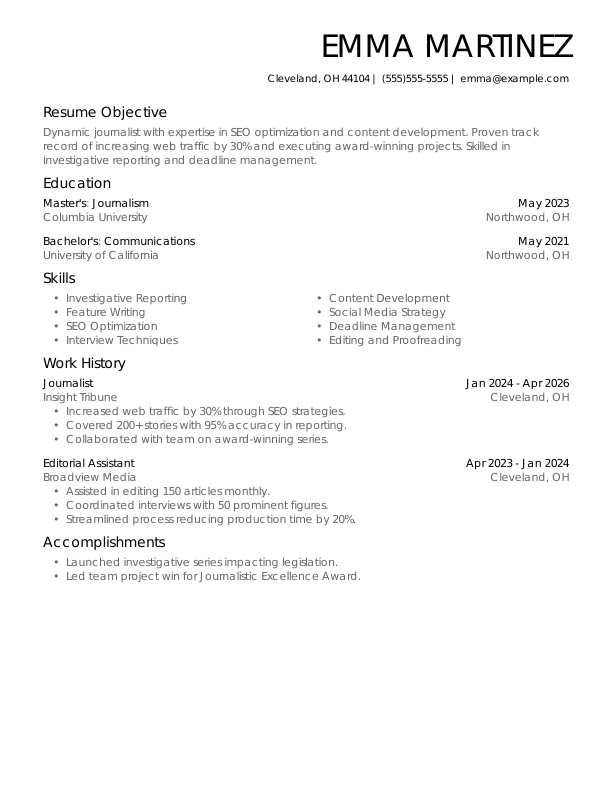
FreeJournalist Entry-Level Resume
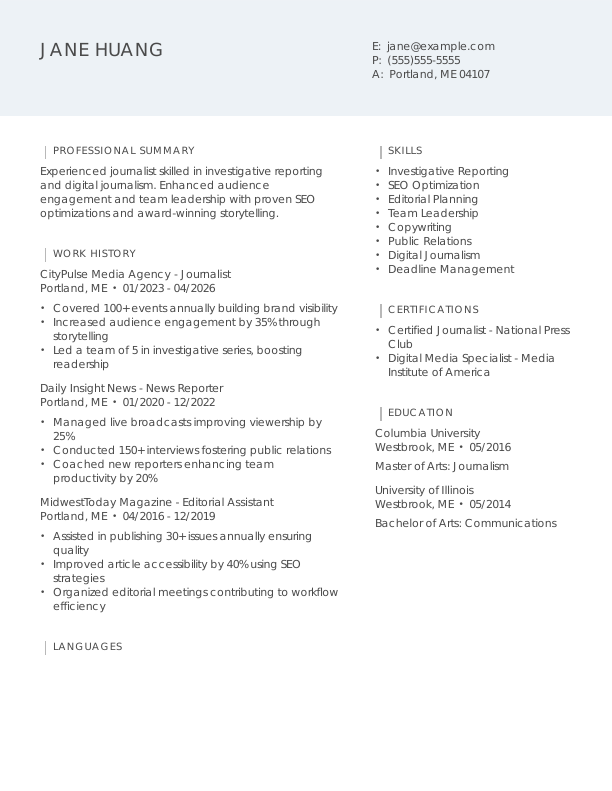
Journalist Mid-Level Resume
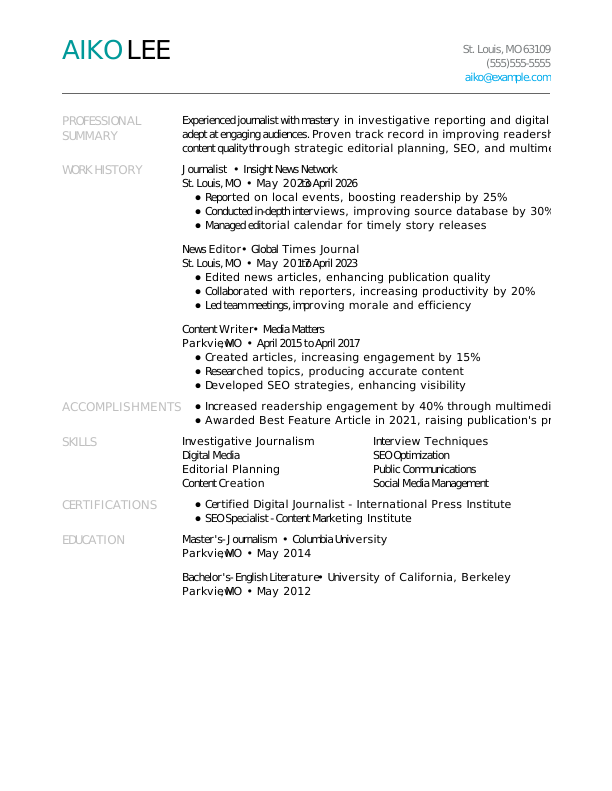
Journalist Experienced Resume
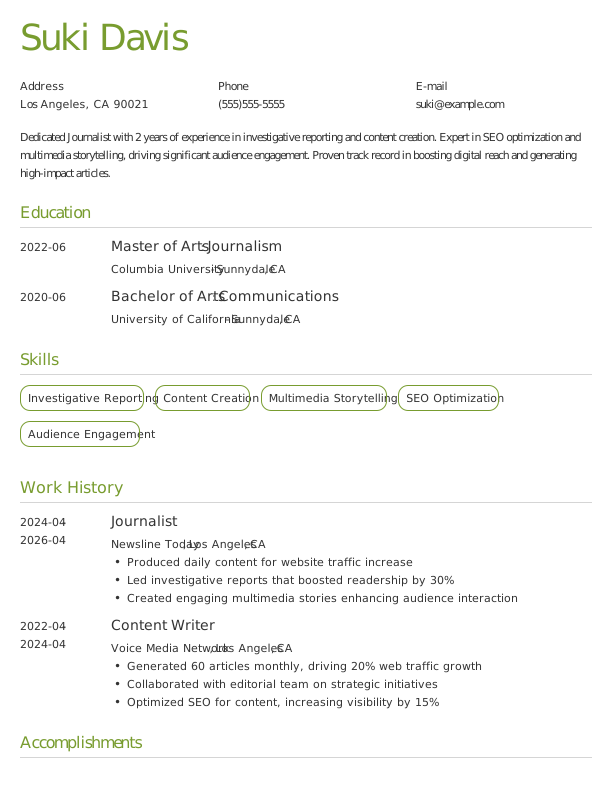
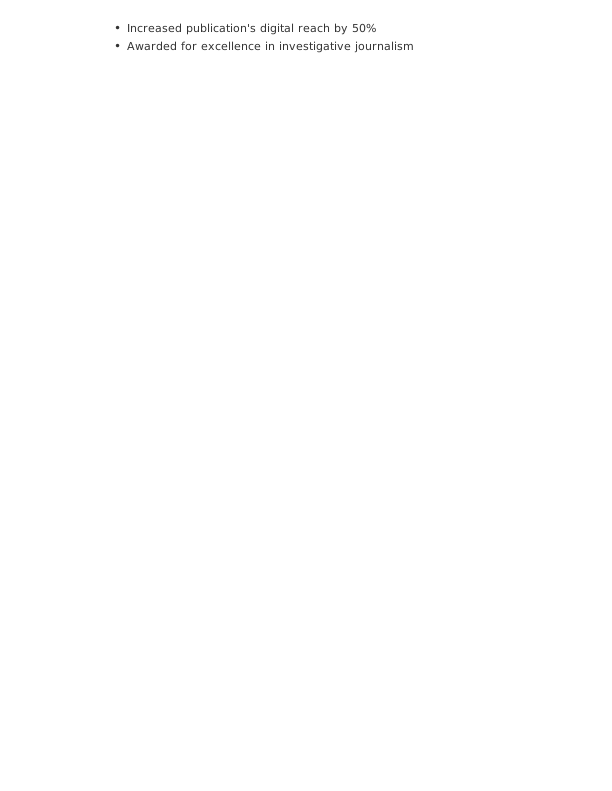
Journalist Entry-Level Resume 1
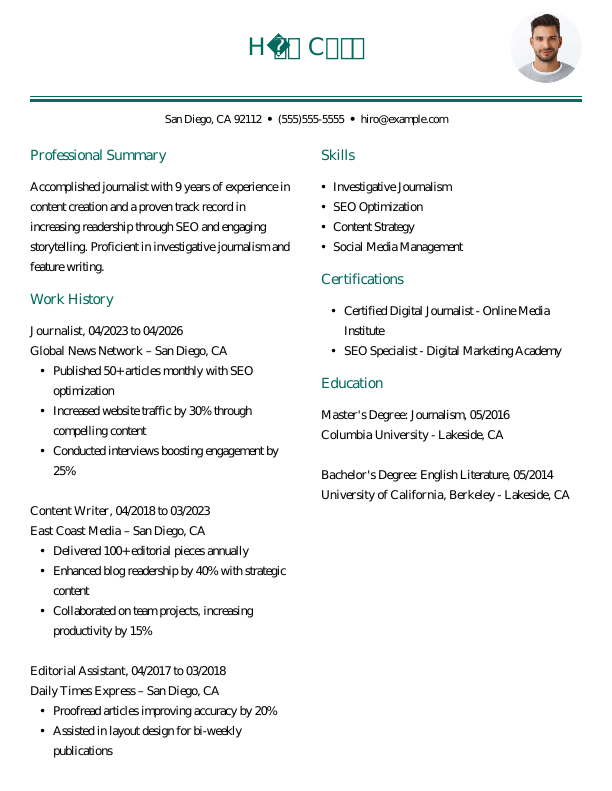

Journalist Mid-Level Resume 1
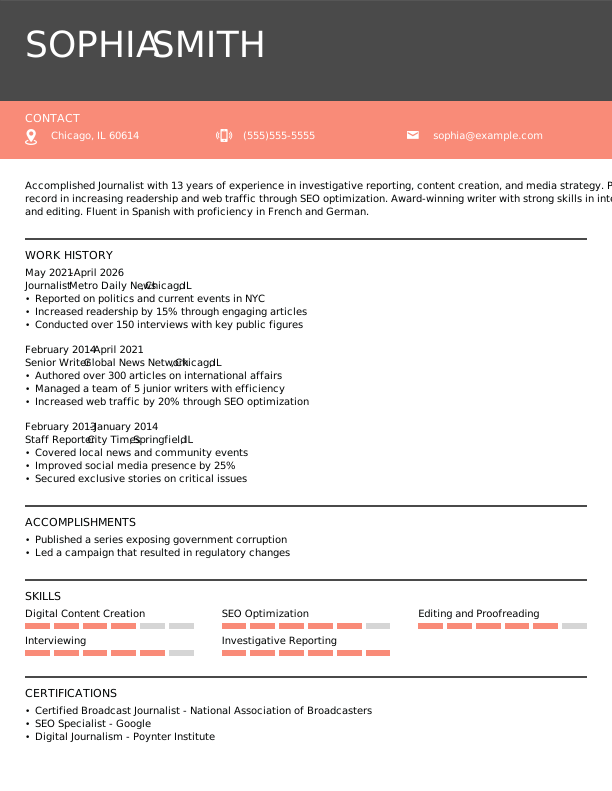

Journalist Experienced Resume 1
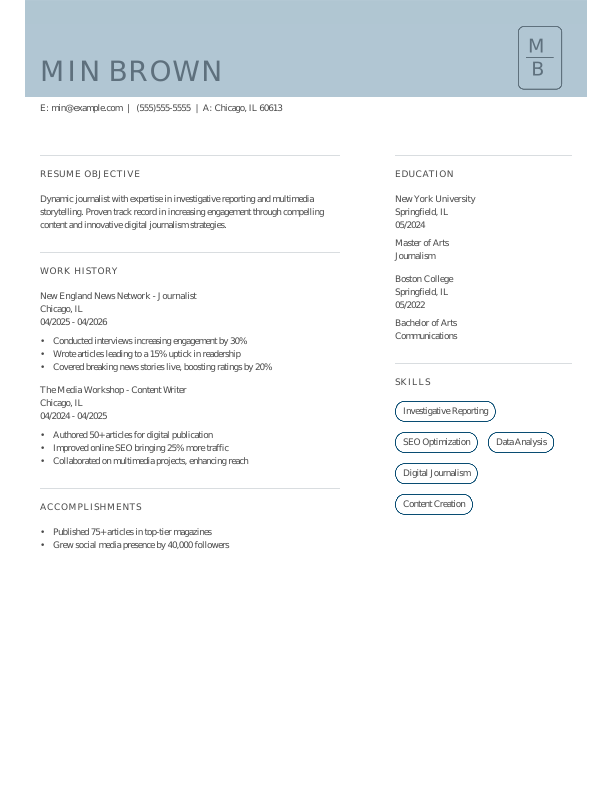
Journalist Entry-Level Resume 2
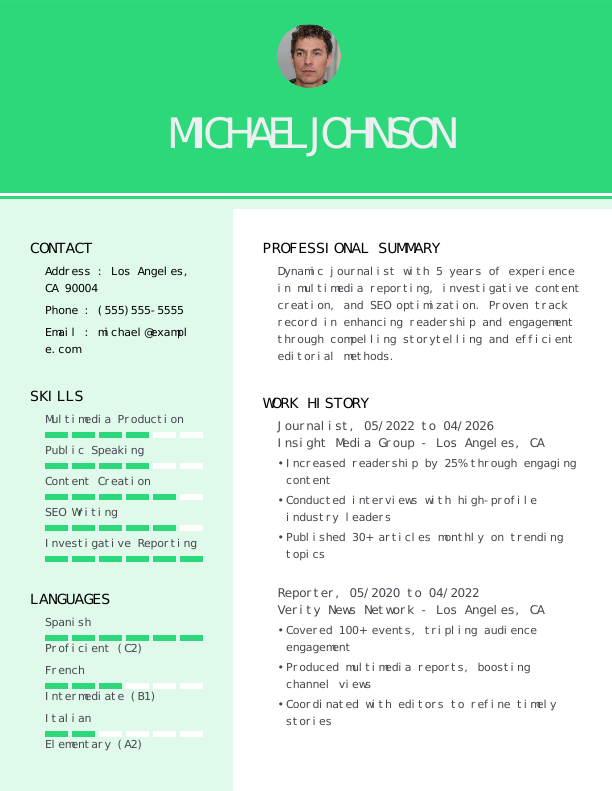

Journalist Mid-Level Resume 2
Browse Free Resume Templates
- Accounts Payable
- Adjunct Professor
- Artist
- Auto Mechanic
- Baker
- Business Development Manager
- Business
- Certified Nursing Assistant
- Classic & Traditional
- Cleaner
- College Student
- Concierge
- Construction Worker
- Corporate
- Creative & Unique
- Custodian
- Customer Service
- Dental Assistant
- Direct Support Professional
- Entry-Level
- Flight Attendant
- Hospitality & Food Service
- Front Desk Receptionist
- Healthcare
- High School
- Housekeeping
- Hvac Technician
- Hybrid
- Inventory Manager
- Logistics
- Maintenance
- Management
- Modern
- Mortgage Loan Processor
- Pet Sitter
- Phlebotomist
- Production
- Rbt
- Sales
- Security Services
- Restaurant Server
- Simple & Basic
- Social Work
- Teacher
- Technology
Resume Examples for Journalists
Journalist resumes should reflect your beats, publication credits, and reporting range. Explore our templates, or create a media resume tailored to your editorial background.
Entry-Level Journalist Resume
If you are entering journalism with limited bylines, this template helps you write a journalist resume by leading with your reporting coursework, student publication work, and any freelance contributions.

Mid-Career Journalist Resume
A smart choice for mid-level journalists seeking advancement, this template emphasizes recent achievements and positions them effectively for specialized roles or leadership opportunities.
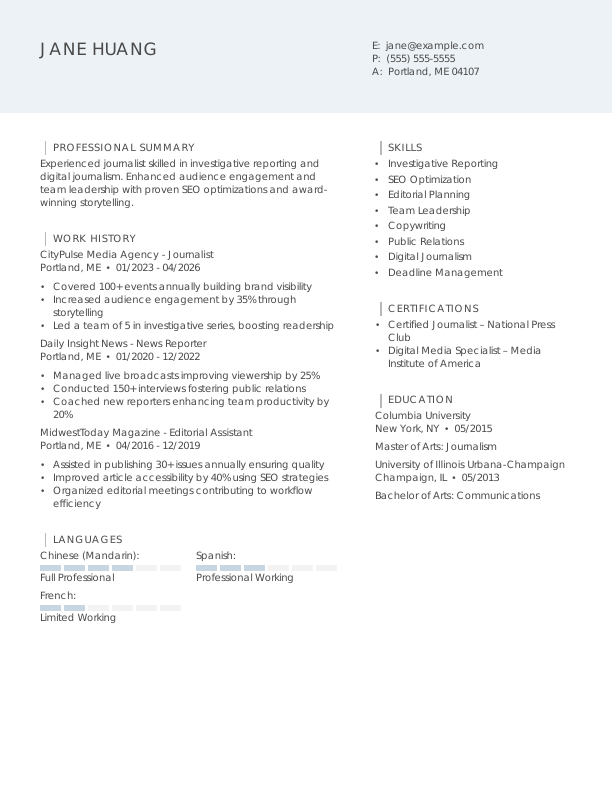
Experienced Journalist Resume
An ideal choice for journalists with over 10 years of experience, this template supports professionals seeking senior roles in editorial leadership or specialized reporting positions.

Journalist Resume Template (Text)
The text resume below gives you a starting point for a journalist application. Paste it into your document and update it with your beats and publication credits.
Jin Park
Spokane, WA 99201
Professional Summary
Dynamic Journalist with 8 years at top media outlets, expert in investigative reporting. Proven record in boosting audience engagement and leading story generation.
Work Experience
February 2024 – April 2026
Insight Media Group – Spokane, WA
Journalist
- Generated 50% more leads through investigative reporting
- Authored 120+ articles on politics and global events
- Interviewed 200+ notable figures, improving readership
January 2021 – January 2024
Global News Agency – Spokane, WA
News Correspondent
- Boosted audience engagement by 35% with video stories
- Covered international summits, increasing subscriptions
- Broke exclusive stories, recognized by press peers
February 2018 – December 2020
Daily Chronicle – Spokane, WA
Content Writer
- Drafted 15 analytical pieces monthly on current trends
- Increased web traffic by 25% with strategic content
- Collaborated with editor, enhancing publication quality
Education
May 2017
Columbia University New York, NY
Master’s in Journalism Journalism
June 2015
University of California Oakland, CA
Bachelor of Arts Communications
Certifications
- Certified Journalist – American Press Institute
- Digital Reporting Badge – National Journalism Foundation
Skills
- Investigative Reporting
- Content Creation
- Multimedia Journalism
- SEO Optimization
- Public Speaking
- Interviewing Skills
- Social Media Strategy
- Editing and Proofreading
How to Write a Journalist Resume
As a journalist, knowing how to write a resume involves showcasing your skills and experience, and using a format that sells you as the ideal applicant for media roles. Use the guidance below to emphasize your unique strengths and tailor your resume specifically for the positions you’re aiming to secure in journalism.
1. Contact Info
Your contact information should be prominently displayed at the top of your resume, ensuring it’s both clear and professional.
Be sure to include:
- Full name
- Phone number
- Professional email address
- City and state (ZIP code is optional)
- LinkedIn profile or personal portfolio (if relevant)
 PRO TIP
Skip including unnecessary personal details such as your age, marital status, or social media profiles unless the employer explicitly requests them.
2. Resume Profile
A resume profile is a brief introductory paragraph consisting of two to four sentences that highlights your skills and qualifications. It serves as an engaging pitch to hiring managers, designed to capture their interest and motivate them to explore your resume further.
Typically located at the top of your resume, the profile can be presented as either a summary or an objective, each serving distinct purposes. Understanding these differences will help you choose the best format for your goals:
- A resume summary highlights essential qualifications, relevant skills, and significant accomplishments related to the field of journalism. This approach works well for individuals with prior work experience or transferable skills looking to emphasize their impact as a journalist.
- A resume objective clearly outlines your career aspirations and what you aim to accomplish in your next role. This section is particularly beneficial for recent graduates, those pivoting careers, or individuals with limited experience, such as professionals transitioning into journalism.
Here’s a brief comparison of a resume summary and a resume objective to highlight their differences:
Journalist resume summary example:
Dedicated journalist with over 6 years of experience in dynamic newsrooms and online media outlets. Proficient in investigative reporting, multimedia storytelling, and audience engagement strategies. Acknowledged for producing compelling content that informs and captivates readers while adhering to strict deadlines and ethical standards.
Journalist resume objective example:
Recent journalism graduate excited to launch a career in dynamic media environments. Committed to uncovering the truth and fostering informed communities, ready to contribute strong writing abilities and critical thinking skills to a news organization or digital platform.
3. Work Experience
The work experience on your resume serves as an important foundation for showcasing your qualifications. Employers analyze your past roles to gain insight into the impact you’ve made, beyond just the job titles you’ve held.
This part of your resume illustrates how your unique background aligns with the demands and expectations of the journalist position you seek.
The work experience section should contain:
- Job title
- Employer name and location
- Dates of employment (month/year)
- 3–5 bullet points detailing your reporting duties and compelling stories
When crafting your work experience bullet points, tailor your content to the job description using industry-specific terminology. Begin each statement with a strong action verb—consider options like “Investigated,” “Reported,” and “Edited” to improve the impact.
Incorporate quantifiable metrics whenever possible, such as percentages or numbers of articles published. Demonstrating achievements with specific data showcases your value and sets you apart from other job seekers.
In general, consider following the format of:
[action verb] + [responsibility] = [result/achievement]
For example:
Conducted in-depth interviews and research for over 15 investigative stories annually, resulting in a 30% increase in readership and engagement across multiple platforms.
Note that you can also flip the result/achievement with the responsibility:
Achieved a 25% rise in article shares through targeted social media strategies, improving audience reach and visibility.
With these techniques in mind, your resume bullets may look something like:
- Conducted in-depth research on local issues, producing 15+ articles monthly that increased readership engagement by 25%.
- Collaborated with editors and photographers to develop compelling narratives, improving story impact across multiple platforms.
- Mentored junior reporters, providing guidance on investigative techniques and improving team productivity by 20%.
- Used social media analytics tools to track audience growth, resulting in a 30% increase in follower count over six months.
- Attended press conferences and community events, ensuring accurate reporting and timely publication of critical stories.
4. Skills
The skills section offers a concise overview of your journalistic abilities, showcasing essential competencies relevant to the field. An ATS-friendly resume format ensures hiring managers can assess your qualifications and fit for the role quickly.
Skills can be categorized into three key areas:
- Soft skills are interpersonal abilities that influence how journalists interact with sources and colleagues.
- Hard skills are specific, quantifiable abilities acquired through education, training, or experience.
- Technical skills encompass the specific abilities required to use various tools and technologies in a profession.
5 Soft Skills for Your Resume or CV
- Effective communication
- Problem-solving
- Critical thinking skills
- Deadline management
- Team collaboration
5 Hard Skills for Your Resume or CV
- Research and fact-checking
- Interview techniques
- Data analysis (SPSS, Excel)
- Multimedia storytelling
- Social media management (Twitter, Instagram)
In general, aim to include a well-rounded selection of skills that directly correspond to the job description.
PRO TIP
If you’re a newer journalist, consider placing your skills section higher on your resume, right after your summary. If you have more experience, it’s better to position this section lower and weave your skills into your work history for a more cohesive presentation.
5. Education
Understanding how to list education on your resume is essential for showcasing your qualifications clearly. Start with your most recent or relevant degree, including both the degree type and the name of the institution.
If you’re a recent graduate, consider adding details like your graduation year, GPA (if it’s 3.5 or higher), any honors received, and relevant coursework to strengthen your application.
Journalist resume education section example:
Bachelor of Arts in Journalism
Columbia University, New York, NY
Graduated: 2023 | Cum Laude
PRO TIP
When listing your degrees on a resume, always order them in reverse-chronological format, starting with the highest degree first, such as Bachelor of Arts in Journalism (BA), followed by Associate Degree in Journalism (ADJ).
6. Certifications
Certifications are essential as they highlight your qualifications and demonstrate your current knowledge in journalism. While not always included in a traditional resume, this section can be important for many professionals in the field. Employers often seek specific credentials, particularly for specialized reporting roles such as investigative journalism or sports reporting.
Make sure to showcase relevant certifications that bolster your candidacy. Keep them current and present them in a clear format to improve visibility and impact.
Journalist certification examples:
- Journalism Ethics Certification | Society of Professional Journalists | Expires: 01/2028
- Multimedia Reporting Certificate | Online News Association | Expires: 03/2028
- Data Journalism Training | BBC Academy | Expires: 11/2027
- Advanced Writing Skills for Journalists | Poynter Institute | Expires: 08/2027
Start Building Your Job-Winning Resume
Use Your Existing Resume
Import your current resume to transfer your information to one of our professional templates.
Create a New Resume
Start fresh with a template that catches your eye and follow the prompts to add your details.
Tailor Your Work History to Beat the ATS
Your work experience is not just a list of titles. It’s an opportunity to showcase the tangible contributions you’ve made in your field through specific examples. By doing this, you create a more ATS-friendly resume that applicant tracking systems (ATS) can easily scan.
To make your work history stand out, tailor it to align with the job you seek by incorporating relevant keywords from the description. Begin by thoroughly analyzing the job listing for repeated skills and qualifications. Ensure that these key elements are reflected clearly in your experience descriptions to improve your chances of getting noticed.
What’s a Fair Journalist Salary?
Researching salary data is essential for evaluating job offers, negotiating better pay, and making informed career decisions. The figures provided are sourced from the U.S. Bureau of Labor Statistics (BLS) and represent the latest nationwide averages for journalists.
Factors such as location, experience, and specialization can significantly impact actual earnings. Journalists in major metropolitan areas or those specializing in investigative reporting tend to earn higher salaries compared to those working in smaller markets or covering general news assignments.
| Alabama | $50,540 |
| Alaska | $51,820 |
| Arizona | $60,780 |
| Arkansas | $37,180 |
| California | $119,420 |
| Connecticut | $106,490 |
| Delaware | $69,400 |
| District of Columbia | $171,300 |
| Florida | $66,190 |
| Georgia | $89,690 |
| Hawaii | $67,730 |
| Idaho | $50,170 |
| Illinois | $84,460 |
| Indiana | $58,730 |
| Iowa | $42,730 |
| Kansas | $44,390 |
| Kentucky | $42,690 |
| Louisiana | $72,790 |
| Maine | $54,830 |
| Maryland | $73,230 |
| Massachusetts | $78,210 |
| Michigan | $76,330 |
| Minnesota | $46,870 |
| Mississippi | $51,950 |
| Missouri | $49,840 |
| Montana | $43,990 |
| Nebraska | $46,950 |
| Nevada | $81,990 |
| New Hampshire | $55,030 |
| New Jersey | $77,100 |
| New Mexico | $63,270 |
| New York | $293,430 |
| North Carolina | $63,030 |
| North Dakota | $53,410 |
| Ohio | $49,920 |
| Oklahoma | $59,810 |
| Oregon | $68,830 |
| Rhode Island | $72,300 |
| South Carolina | $50,380 |
| South Dakota | $42,710 |
| Tennessee | $77,030 |
| Texas | $71,380 |
| Utah | $70,600 |
| Vermont | $52,360 |
| Virginia | $74,500 |
| Washington | $72,580 |
| West Virginia | $36,200 |
| Wisconsin | $63,460 |
| Wyoming | $47,760 |
| Puerto Rico | $50,370 |
Key Takeaways
- Customize your resume for each job application. Use keywords from the job listing to resonate with both ATS and hiring managers.
- Highlight quantifiable results in your work. Instead of listing tasks, include metrics (e.g., articles published, audience reach, engagement rates) to demonstrate your impact.
- Select a format that reflects your career stage. Entry-level journalists might use a combination or functional format, while seasoned professionals often opt for a chronological layout.
More Resume & CV Examples
- Assistant Editor
- Content Creator
- Content Writer
- Copywriter
- Creative Director
- Editing
- Freelance Writer
- Medical Writer
- Photographer
- Proofreader
- Screenwriter
- Technical Writer
- Translator
- Ux Writer
- Writer
Cover Letters for Your Resume
Browse our library of cover letter examples to complete your application. A resume will have a better chance of getting noticed.
Frequently Asked Questions
Last Update:
What resume format should I use for my journalist resume?
There are three main resume formats to consider when applying for a journalist position. Your choice will depend on your experience level and the specific skills or achievements you want to highlight:
- Chronological: The chronological resume format is the most commonly used type, emphasizing your work history by detailing your roles and accomplishments. This structure is particularly beneficial for job seekers with a relevant job background, as it reinforces their qualifications and adds credibility to their professional journey.
- Functional: The functional resume, often referred to as a skills-based resume, highlights your qualifications and a detailed skills section instead of focusing on work history. This format is particularly helpful for individuals lacking direct experience in the field or those with gaps in their employment history.
- Combination: A combination resume mixes chronological and functional formats, showcasing both skills and work history. This approach is ideal for professionals aiming to highlight their qualifications while illustrating their career growth, which makes it easier to attract attention from potential employers.
Should I include a cover letter with my resume?
Yes, you should include a cover letter with your journalism job application. A well-crafted cover letter provides an opportunity to convey your enthusiasm for the role and the publication while highlighting relevant writing experiences that may not be fully captured in your resume. It demonstrates to employers that you have invested time in personalizing your application, which can distinguish you from other job seekers who skip this important step.
If you’re hesitant about writing a cover letter, there are ample resources available to assist you. You can find guides on how to write a cover letter specifically for journalism positions, as well as examples that illustrate different styles and formats suitable for the industry. Using these tools can help streamline your writing process and ensure your unique voice shines through.
For added convenience, consider using a cover letter generator to quickly create an engaging document by providing templates and tailored suggestions based on the specifics of your journalism application.
How long should a journalist resume be?
For journalists with less than 10 years of experience, a one-page resume is usually adequate to showcase relevant writing samples, internships, and skills. Emphasize your adaptability in various formats—print, digital, or broadcast—and highlight key stories or projects that demonstrate your capabilities.
Conversely, seasoned journalists or those with specialized expertise may extend their resumes to two pages if the information remains relevant and well-organized. Focus on major accomplishments, awards, and significant contributions while ensuring clarity and relevance throughout the document.
What keywords should I include to pass applicant tracking systems (ATS)?
To successfully pass ATS screening, your resume should include keywords and phrases directly from the job posting. Look for terms like “reporting,” “investigative journalism,” or “digital media” to tailor your application specifically to the role. These targeted keywords help demonstrate that you’re a strong fit for the position.
Additionally, don’t forget to highlight any relevant skills or certifications, such as multimedia storytelling, data journalism, or skill in tools like Adobe Creative Suite and WordPress. Showcasing these qualifications will improve your chances of catching the employer’s attention and landing an interview.
Should I include freelance writing or blogging on my resume?
Yes, especially if you’re starting your journalism career. Including freelance work demonstrates your ability to generate content independently and showcases your versatility in topics, which can set you apart when formal positions are scarce.

Elizabeth Muenzen is a Certified Professional Resume Writer (CPRW) and member of the Professional Association of Resume Writers & Career Coaches who empowers job seekers to take control of their career paths using Monster’s comprehensive job search and resume tools.
See More From Elizabeth MuenzenExplore Related Career Advice


How to Put Transferable Skills on Your Resume: 120 Skills, Examples, & Tips

Updated:
Aug 27, 2026
|

16 min read


How to Write a Functional Resume (Formatting Tips, Template, & Examples)
Updated:
Aug 7, 2026
|
17 min read

Functional vs Chronological Resume: Which Format Is Right for You?
Updated:
Aug 3, 2026
|
16 min read
100+ Resume Adjectives to Help You Write a Stronger Resume in 2026 (With Examples)
Updated:
Jul 30, 2026
|
12 min read