Free Student Athlete Resume Templates & Examples
Turn your athletic and academic achievements into a compelling resume. Our free student-athlete resume templates and expert writing tips make it easy to create a polished resume that stands out to employers.
Real-World Resumes That Get Results
 Free
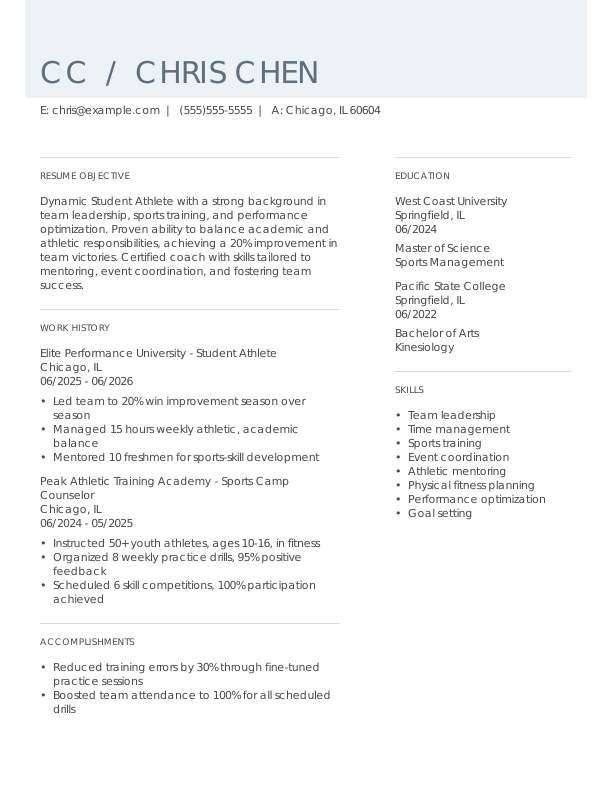
FreeStudent Athlete Entry-Level Resume
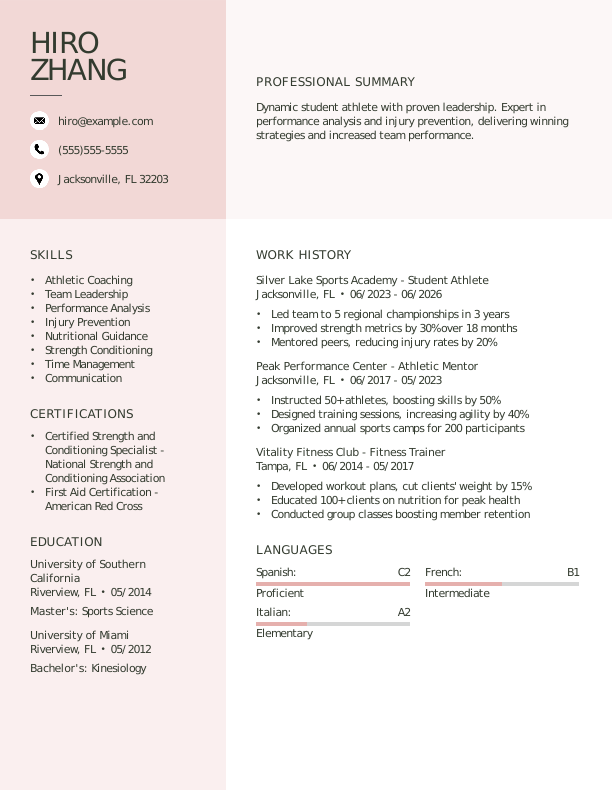
Student Athlete Mid-Level Resume
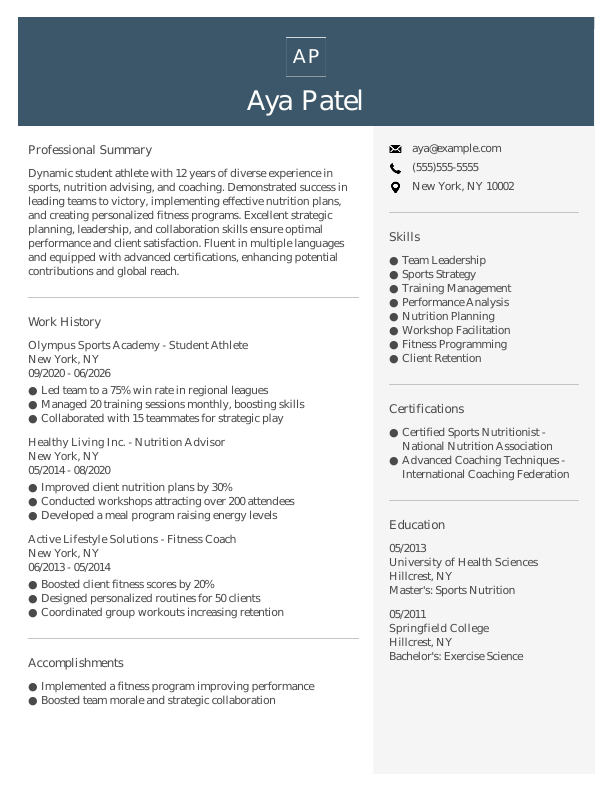
Student Athlete Experienced Resume
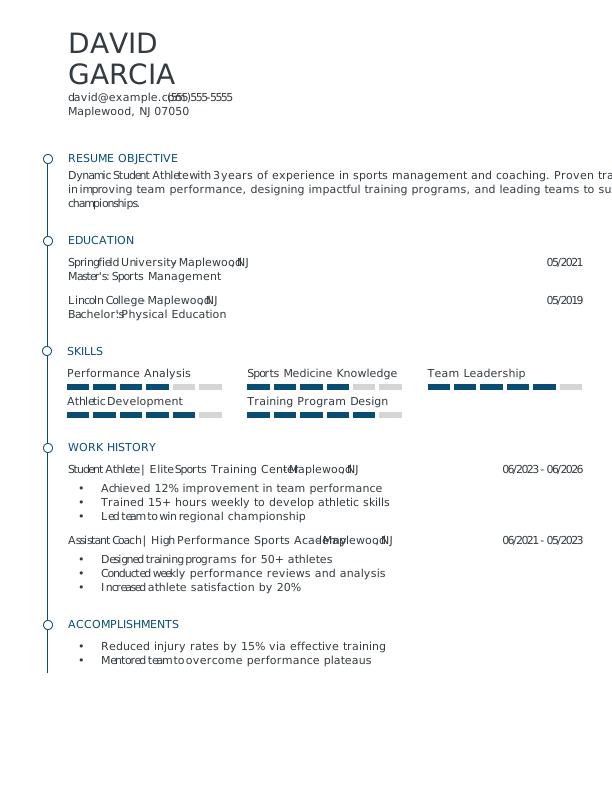
Student Athlete Modern Resume
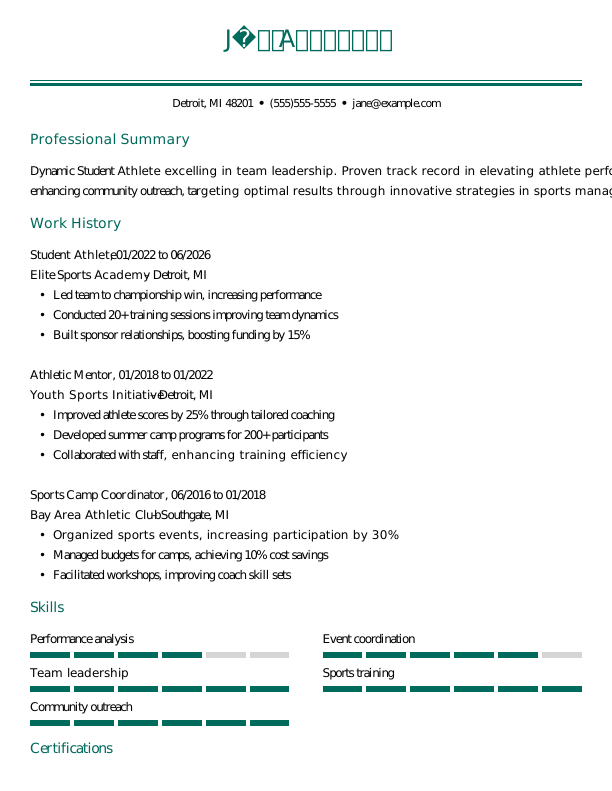

Student Athlete Creative Resume
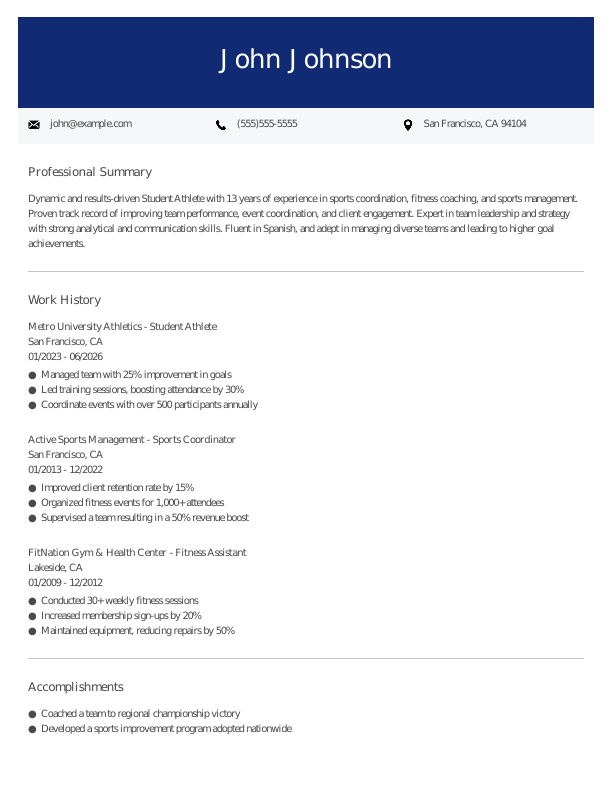

Student Athlete Traditional Resume
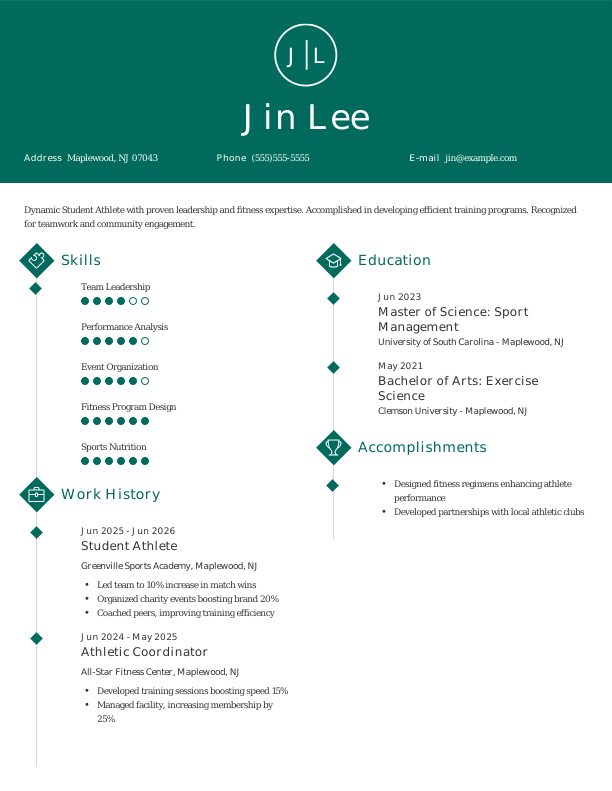

Student Athlete Simple CV Example

Student Athlete CV Format
Browse Free Resume Templates
- Accounts Payable
- Adjunct Professor
- Artist
- Auto Mechanic
- Baker
- Business Development Manager
- Business
- Certified Nursing Assistant
- Classic & Traditional
- Cleaner
- College Student
- Concierge
- Construction Worker
- Corporate
- Creative & Unique
- Custodian
- Customer Service
- Dental Assistant
- Direct Support Professional
- Entry-Level
- Flight Attendant
- Hospitality & Food Service
- Front Desk Receptionist
- Healthcare
- High School
- Housekeeping
- Hvac Technician
- Hybrid
- Inventory Manager
- Logistics
- Maintenance
- Management
- Modern
- Mortgage Loan Processor
- Pet Sitter
- Phlebotomist
- Production
- Rbt
- Sales
- Security Services
- Restaurant Server
- Simple & Basic
- Social Work
- Teacher
- Technology
Resume Examples for Student Athletes
A student-athlete resume will vary depending on your experience, athletic accomplishments, and career goals. Explore resume examples for every stage of your academic and athletic journey, then use our Resume Builder to create one tailored to your experience.
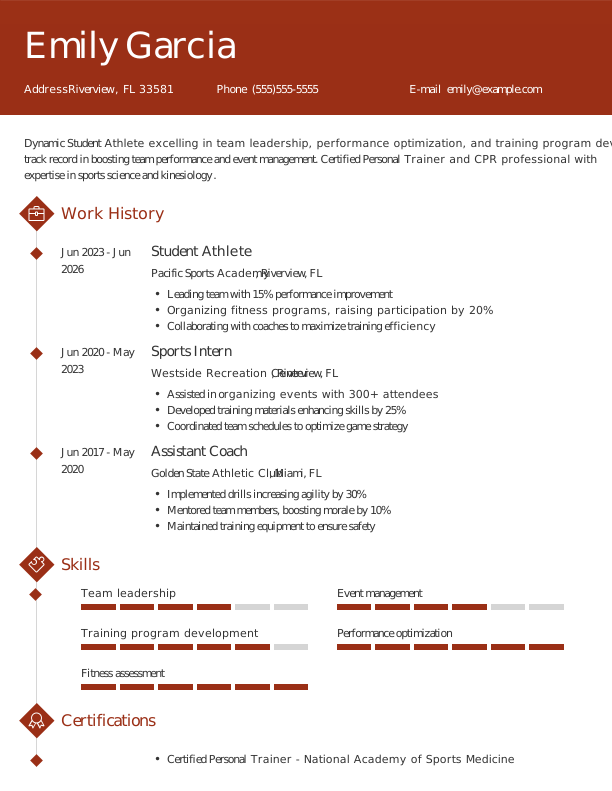
Assistant Coach Resume
Whether you’re transitioning from competing to coaching or applying for your first assistant coach position, this resume example demonstrates how to showcase your athletic background, leadership skills, and coaching potential.
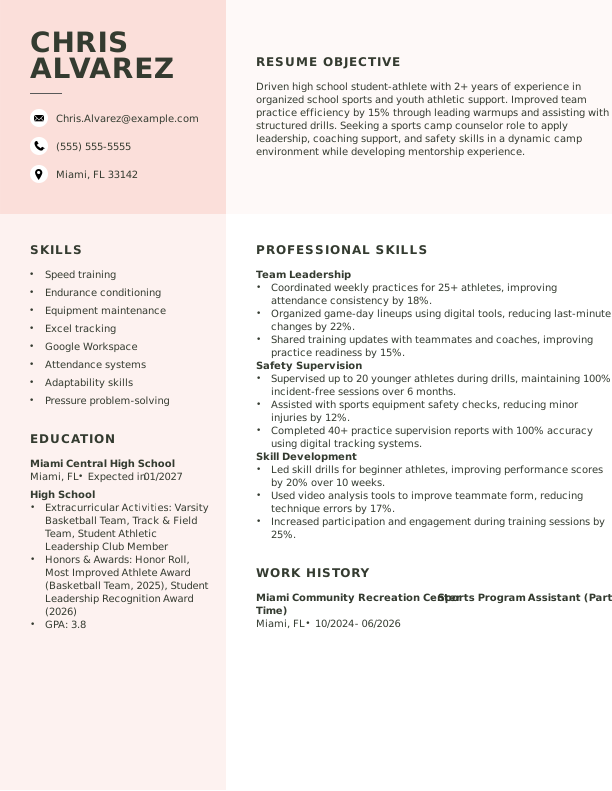
Sports Camp Counselor Resume
Designed for student-athletes seeking camp counselor roles, this resume example emphasizes coaching experience, teamwork, responsibility, and a commitment to creating a positive environment for campers.
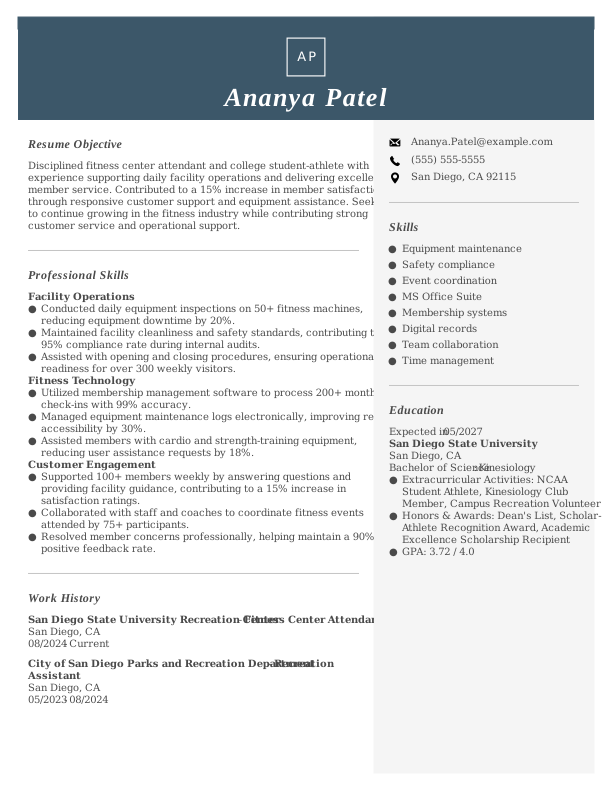
Fitness Center Attendant Resume
Perfect for student-athletes pursuing fitness and recreation roles, this resume example highlights customer service, equipment knowledge, teamwork, and a commitment to maintaining a safe and welcoming fitness environment.
Student Athlete Resume Template (Text)
Use this editable resume template for a student-athlete position to copy, paste, and modify it in your document. You can use our free resume templates for professional designs tailored to your target role.
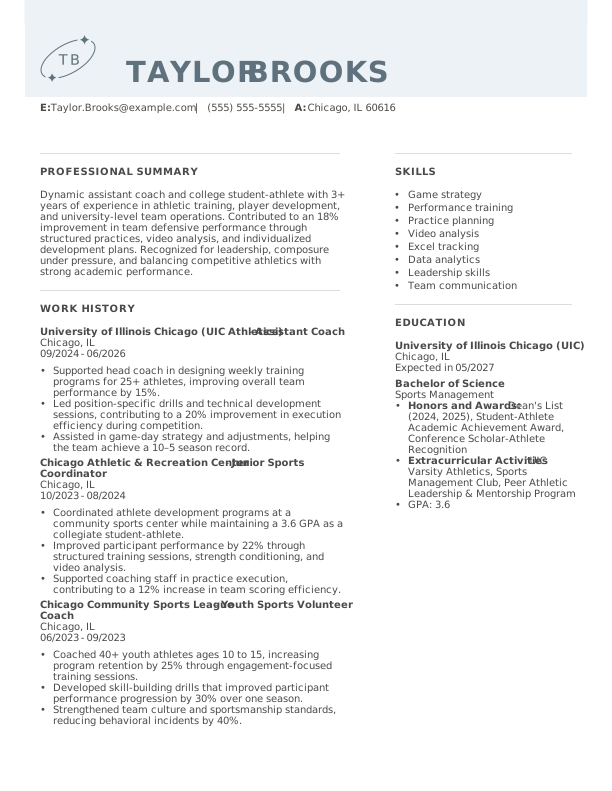
Taylor Brooks
Chicago, IL 60616
(555) 555-5555
Taylor.Brooks@example.com
Professional Summary
Dynamic assistant coach and college student-athlete with 3+ years of experience in athletic training, player development, and university-level team operations. Contributed to an 18% improvement in team defensive performance through structured practices, video analysis, and individualized development plans. Recognized for leadership, composure under pressure, and balancing competitive athletics with strong academic performance.
Work History
September 2024 – June 2026
University of Illinois Chicago (UIC Athletics) – Chicago, IL
Assistant Coach
- Supported head coach in designing weekly training programs for 25+ athletes, improving overall team performance by 15%.
- Led position-specific drills and technical development sessions, contributing to a 20% improvement in execution efficiency during competition.
- Assisted in game-day strategy and adjustments, helping the team achieve a 10–5 season record.
October 2023 – August 2024
Chicago Athletic & Recreation Center – Chicago, IL
Junior Sports Coordinator
- Coordinated athlete development programs at a community sports center while maintaining a 3.6 GPA as a collegiate student-athlete.
- Improved participant performance by 22% through structured training sessions, strength conditioning, and video analysis.
- Supported coaching staff in practice execution, contributing to a 12% increase in team scoring efficiency.
June 2023 – September 2023
Chicago Community Sports League – Chicago, IL
Youth Sports Volunteer Coach
- Coached 40+ youth athletes ages 10 to 15, increasing program retention by 25% through engagement-focused training sessions.
- Developed skill-building drills that improved participant performance progression by 30% over one season.
- Strengthened team culture and sportsmanship standards, reducing behavioral incidents by 40%.
Skills
- Game strategy
- Performance training
- Practice planning
- Video analysis
- Excel tracking
- Data analytics
- Leadership skills
- Team communication
Education
Expected in May 2027
University of Illinois Chicago (UIC), Chicago, IL
Bachelor of Science in Sports Management
- Honors and Awards: Dean’s List (2024, 2025), Student-Athlete Academic Achievement Award, Conference Scholar-Athlete Recognition
- Extracurricular Activities: UIC Varsity Athletics, Sports Management Club, Peer Athletic Leadership & Mentorship Program
- GPA: 3.6
How to Write a Student Athlete Resume
As a student-athlete, understanding how to write a resume involves showcasing your athletic experience and academic achievements. Use the guidance below to emphasize your skills and tailor your resume for the opportunities you’re pursuing.
1. Contact Info
Your contact information should be clear, professional, and easy to find at the top of your resume.
Make sure to include:
- Full name
- Phone number
- Professional email address
- City and state (zip code is optional)
- LinkedIn profile or personal portfolio (if relevant)
 PRO TIP
Avoid including personal information such as age, gender, or social media profiles on your resume unless the employer specifically requests those details.
2. Resume Profile
A resume profile is a brief introductory section, typically two to four sentences long. It serves as a compelling pitch to hiring managers, summarizing your key qualifications and encouraging them to continue reading your resume.
Your profile can be formatted as either a summary or an objective, each serving distinct purposes:
- A resume summary emphasizes your key experiences, skills, and achievements that align with the job. This format is particularly beneficial for individuals with relevant work history or transferable skills.
- A resume objective emphasizes your aspirations and career goals, showcasing what you aim to accomplish in your professional journey. It’s especially useful for recent graduates, individuals shifting careers, or those with minimal experience.
Let’s take a look at an example of each to see how a resume summary and a resume objective differ:
Student-athlete resume summary example:
Dedicated student-athlete with 6+ years of experience balancing rigorous academic responsibilities and competitive sports. Proficient in teamwork, time management, and leadership skills. Recognized for achieving athletic excellence while maintaining high academic standards, demonstrating resilience and commitment to personal growth.
Student-athlete resume objective example:
Recent graduate with a bachelor’s degree in Sports Management, excited to launch a career within athletic administration. Committed to promoting student engagement and wellness while bringing strong leadership abilities and teamwork skills to a collegiate sports program or athletic organization.
3. Work Experience
The work experience section on your resume demonstrates how you’ve applied your skills in real-world settings.
For student-athletes, this can include part-time jobs, internships, volunteer work, campus employment, or athletic experience that highlights transferable skills such as leadership, teamwork, discipline, and time management.
Employers look beyond job titles—they want to see how you’ve contributed, solved problems, and achieved results. Your athletic background can reinforce your ability to balance multiple responsibilities, perform under pressure, and work toward long-term goals.
Include the following for each position:
- Job title
- Employer name and location
- Dates of employment (month/year)
- Three to five bullet points highlighting your responsibilities and accomplishments
Tailor each entry to the role you’re applying for by emphasizing the experiences and skills most relevant to the position. Begin each bullet point with a strong action verb, such as “led,” “coordinated,” “trained,” or “mentored,” to communicate your contributions.
Whenever possible, quantify your achievements with specific results. For example, mention the number of athletes you coached, the size of an event you organized, or measurable accomplishments such as awards, personal records, or leadership roles. Numbers help employers understand your impact.
In general, consider following the format of:
[action verb] + [responsibility] = [result/achievement]
For example:
Competed in 15+ collegiate athletic events per season while maintaining a GPA of 3.5 or higher, demonstrating strong time management and dedication.
Note that you can also flip the result/achievement with the responsibility:
Achieved a 20% increase in team performance metrics through rigorous training programs and strategic teamwork initiatives.
With these techniques in mind, your resume bullets may look something like:
- Competed as a member of the varsity team, contributing to a 15% increase in overall team performance during the season.
- Maintained a GPA of 3.5 while balancing rigorous training and competition schedules.
- Collaborated with coaches and teammates to develop strategies, improving team cohesion and communication.
- Served as a mentor for younger athletes, providing guidance on time management and sportsmanship.
- Used sports analytics software to assess performance metrics and track improvement over the season.
4. Skills
The skills section gives hiring managers a quick snapshot of the qualifications you bring to the role. As a student-athlete, it’s an opportunity to showcase the strengths you’ve developed through academics, athletics, work, and extracurricular activities. Include a mix of skills that align with the job description and demonstrate your ability to succeed in a professional environment.
Your skills generally fall into three categories:
- Soft skills are personal attributes that influence how you work with others and handle challenges.
- Hard skills are job-related abilities learned through education, training, or experience.
- Technical skills are specialized tools, technologies, or systems used in a particular field.
5 Soft Skills for Your Resume
- Teamwork and collaboration
- Time management skills
- Leadership under pressure
- Effective communication
- Goal-oriented mindset
5 Hard Skills for Your Resume
- Time management
- Strength training techniques
- Nutritional planning (meal prep apps)
- Injury prevention strategies
- Teamwork and leadership skills
Aim for a balanced mix of soft, hard, and technical skills that reflects your experience and matches the position you’re applying for. Tailoring this section to each job can help demonstrate that you have the qualifications employers are seeking.
PRO TIP
If you’re an early-career student-athlete with limited work experience, consider placing your skills section near the top of your resume. This helps highlight your strengths and transferable abilities right away.
5. Education
Understanding how to list education on your resume helps employers quickly identify your academic background and qualifications.
Start with your most recent or relevant degree, including the degree type, major or field of study, and institution name.
If you’re a current student or recent graduate, consider including your expected or completed graduation date, GPA (if it’s 3.5 or higher), academic honors, relevant coursework, or projects that demonstrate your knowledge and skills.
For student-athletes, you can also highlight academic achievements that show your ability to balance rigorous coursework with athletic commitments.
Student-athlete resume education section example:
Bachelor of Science in Kinesiology
University of Florida, Gainesville, FL
Expected Graduation: May 2027
GPA: 3.8/4.0
Dean’s List: Fall 2024 – Spring 2026
Relevant Coursework: Exercise Physiology, Sports Psychology, Nutrition, Strength and Conditioning
PRO TIP
If you’ve earned multiple degrees, list them in reverse-chronological order, starting with your most recent degree. Include the degree type, major or field of study, institution name, and graduation date for each.
6. Certifications
Listing certifications on your resume can strengthen your application by showcasing specialized knowledge, training, and qualifications—especially when you have limited professional experience.
While not required for every resume, a certifications section can be valuable when employers look for specific credentials or industry-related skills.
For student-athletes, relevant certifications may include coaching credentials, CPR and first aid certification, strength and conditioning certifications, fitness training credentials, or other qualifications related to your career goals.
Include only certifications that support the position you’re applying for, and make sure each credential is current. List the certification name, issuing organization, and date earned or expiration date (if applicable) in a clear, consistent format to help employers quickly understand your qualifications.
Student-athlete certification examples:
- NCAA Eligibility Certification | National Collegiate Athletic Association | Expires: 06/2028
- CPR and First Aid Certification | American Red Cross | Expires: 09/2027
- Sports Nutrition Certification | International Sports Sciences Association | Expires: 02/2028
- Leadership in Sports Management Certificate | University of Sport Management | Expires: 11/2027
Start Building Your Job-Winning Resume
Use Your Existing Resume
Import your current resume to transfer your information to one of our professional templates.
Create a New Resume
Start fresh with a template that catches your eye and follow the prompts to add your details.
Tailor Your Work History to Beat the ATS
Your work history plays an important role in helping your resume pass applicant tracking systems (ATS) and reach hiring managers. Instead of simply listing responsibilities, tailor each experience entry to match the requirements of the role by using relevant keywords, skills, and language from the job description.
Start by reviewing the job posting and identifying important terms related to qualifications, skills, and responsibilities. Look for repeated keywords or phrases, such as leadership, project management, customer service, or teamwork, and incorporate them naturally into your work experience section.
For student-athletes, this may include highlighting transferable skills developed through athletics, such as collaboration, discipline, goal-setting, adaptability, and performing under pressure. Use specific examples to show how you’ve applied these skills in academic, athletic, volunteer, or professional settings.
Key Takeaways
- Customize your resume for each opportunity. Use language from the job posting to connect your skills and experiences with what employers are seeking.
- Highlight accomplishments with quantifiable results. Instead of listing tasks, include metrics that demonstrate success (e.g., points scored, team rankings, awards received).
- Select an appropriate format based on your experience. Students might opt for a functional layout, while seasoned athletes could prefer a chronological approach.
More Resume & CV Examples
- Athlete
- Athletic Director
- Athletic Trainer
- Athletic Training
- Basketball Coach
- Coach
- Fitness Instructor
- Fitness
- Football Coach
- Grad School
- Harvard
- History
- Internship
- MBA
- Nursing Student
- Personal Trainer
- Pilates Instructor
- Research Associate
- Scholarship
- Soccer Coach
- Sports Management
- Sports
- Summer Job
- Teen
- Yoga Instructor
Cover Letters for Your Resume
Browse our library of cover letter examples to complete your application. A resume will have a better chance of getting noticed.
- Academic
- Account Manager
- Accountant
- Accounts Payable
- Administrative Assistant
- Admissions Counselor
- Architecture
- Artist
- Assistant Principal
- Babysitter
- Barista
- Bartender
- Bookkeeper
- Brand Ambassador
- Business Analyst
- Business
- Caregiver
- Chef
- Civil Engineering
- Computer Science
- Construction
- Consulting
- Cosmetology
- Custodian
- Customer Service
- Data Analyst
- Dental Assistant
- Dental Hygienist
- Electrical Engineering
- Emt
- Engineering
- Esthetician
- Event Coordinator
- Executive Assistant
- Finance
- Financial Analyst
- Firefighter
- Flight Attendant
- Graphic Designer
- Hair Stylist
- Healthcare
- Hr Generalist
- Investment Banking
- It
- Janitor
- Journalism
- Lab Technician
- Law Clerk
- Lawyer
- Librarian
- Logistics
- Makeup Artist
- Manager
- Marketing
- Marketing Manager
- Massage Therapist
- Mechanic
- Mechanical Engineer
- Medical Assistant
- Non Profit
- Nursing
- Occupational Therapy
- Office Manager
- Paralegal
- Personal Trainer
- Pharmacist
- Pharmacy Technician
- Photographer
- Physician Assistant
- Pilot
- Police Officer
- Project Manager
- Property Manager
- Psychology
- Receptionist
- Research Assistant
- Restaurant Manager
- Retail
- Sales
- Sales Manager
- School Counselor
- Security Officer
- Social Work
- Software Engineer
- Substitute Teacher
- Teacher
- Teaching Assistant
- Truck Driver
- Vet Tech
- Veterinary Assistant
- Web Developer
- Welder
Frequently Asked Questions
Last Update:
What format should I use for my student-athlete resume?
There are three primary resume formats available for student-athletes. The best choice depends on your level of experience and what you want to highlight:
- Chronological: The most popular format, a chronological resume emphasizes your work experience by detailing responsibilities and achievements in reverse order. This format is particularly effective for applicants with relevant experience that reinforces their qualifications and showcases their dedication as a student-athlete.
- Functional: Also known as a skills-based resume, the functional resume emphasizes a summary of qualifications and includes an expanded skills section to showcase your relevant abilities. This format minimizes focus on work history, which makes it beneficial for job seekers without direct experience or those balancing academics and athletics.
- Combination: A combination resume integrates chronological and functional elements, showcasing relevant skills alongside work experience. This format is beneficial for student-athletes, as it allows them to highlight their athletic achievements and teamwork abilities while also demonstrating their academic progression and leadership roles in various contexts.
Should I include a cover letter with my resume?
Yes, student-athletes should include a cover letter when applying for a position. While your resume highlights your qualifications and experience, a cover letter allows you to explain how your athletic background has prepared you for the role. It allows you to showcase transferable skills such as leadership, teamwork, discipline, communication, and the ability to perform under pressure.
A strong cover letter can also help connect your experiences as an athlete to your career goals. Use it to highlight meaningful accomplishments, describe how you’ve contributed to a team, and explain how the skills you developed through competition, training, and balancing academics can benefit the employer.
If writing a cover letter feels challenging, resources such as cover letter guides, examples, and templates can help you organize your ideas and create a compelling message. You can also use a cover letter generator to help structure your draft and tailor your content to the specific position you’re pursuing.
How long should a student-athlete’s resume be?
A student-athlete resume should typically be one page, especially for current students, recent graduates, and those with limited professional experience. A concise, focused resume makes it easier for employers to quickly identify your relevant skills, athletic achievements, education, and transferable experience.
If you have extensive experience, multiple relevant roles, or significant athletic accomplishments, a two-page resume may be appropriate. However, every section should add value and support your career goals.
What keywords should I include to pass ATS?
To improve your chances of passing ATS, include keywords that match the skills, qualifications, and responsibilities listed in the job description.
For student-athletes, relevant keywords may include transferable skills such as “leadership,” “teamwork,” “communication,” “time management,” “adaptability,” “goal setting,” “problem-solving,” and “performance improvement.” Depending on the position, you may also include role-specific terms related to “coaching,” “fitness,” “sports management,” “event coordination,” “customer service,” or “team operations.”
Review each job posting carefully and identify repeated skills, required qualifications, and industry-specific phrases. Then incorporate those keywords naturally into your summary, skills section, and experience descriptions.

Elizabeth Muenzen is a Certified Professional Resume Writer (CPRW) and member of the Professional Association of Resume Writers & Career Coaches who empowers job seekers to take control of their career paths using Monster’s comprehensive job search and resume tools.
See More From Elizabeth MuenzenExplore Related Career Advice


How to Put Transferable Skills on Your Resume: 120 Skills, Examples, & Tips

Updated:
Aug 27, 2026
|

16 min read


How to Write a Functional Resume (Formatting Tips, Template, & Examples)
Updated:
Aug 7, 2026
|
17 min read

Functional vs Chronological Resume: Which Format Is Right for You?
Updated:
Aug 3, 2026
|
16 min read
100+ Resume Adjectives to Help You Write a Stronger Resume in 2026 (With Examples)
Updated:
Jul 30, 2026
|
12 min read