
Free Network Administrator Resume Templates & Examples
Uptime, security, and efficient network performance depend on skilled administration. These free network administrator resume and CV examples help you document your infrastructure management and incident response capabilities.
Real-World Resumes That Get Results
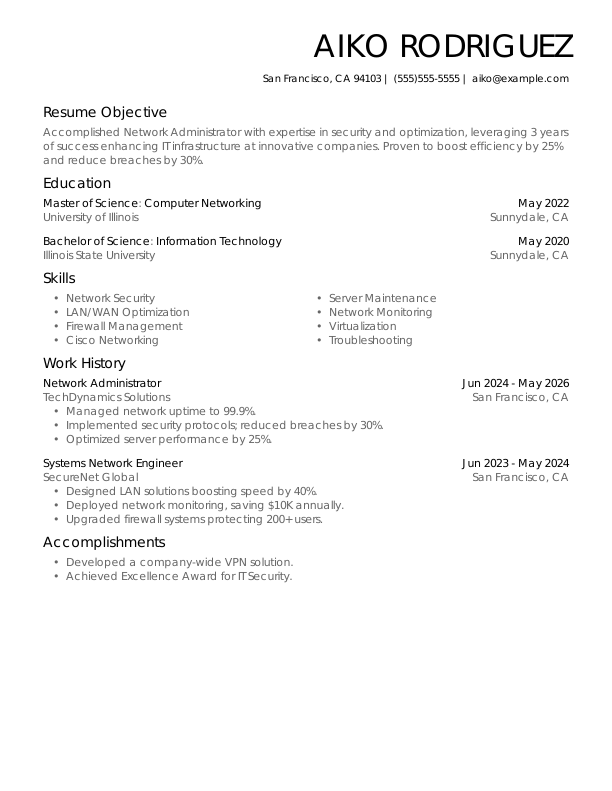
Network Administrator Entry-Level Resume
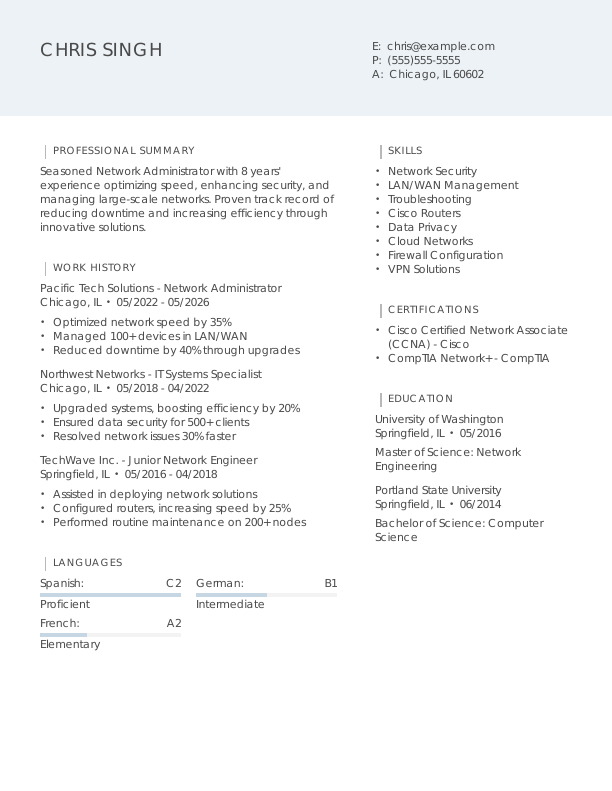
Network Administrator Mid-Level Resume
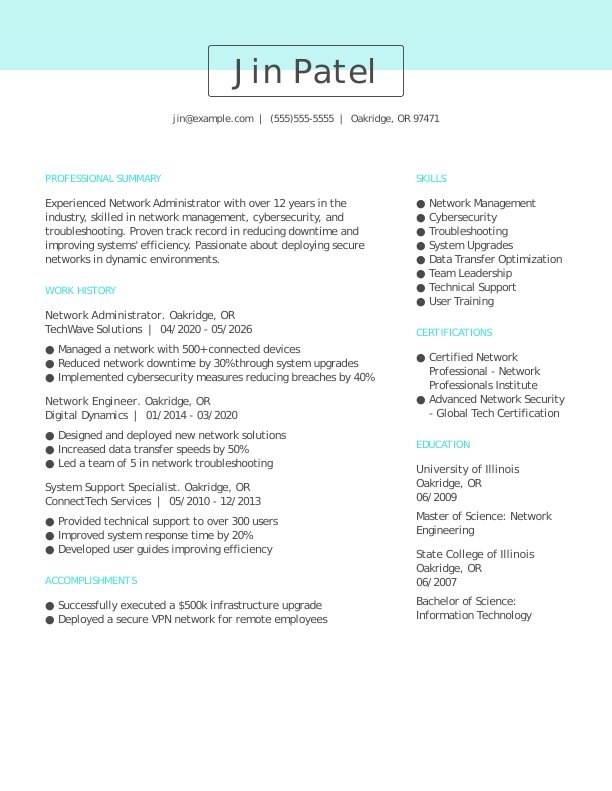
Network Administrator Experienced Resume
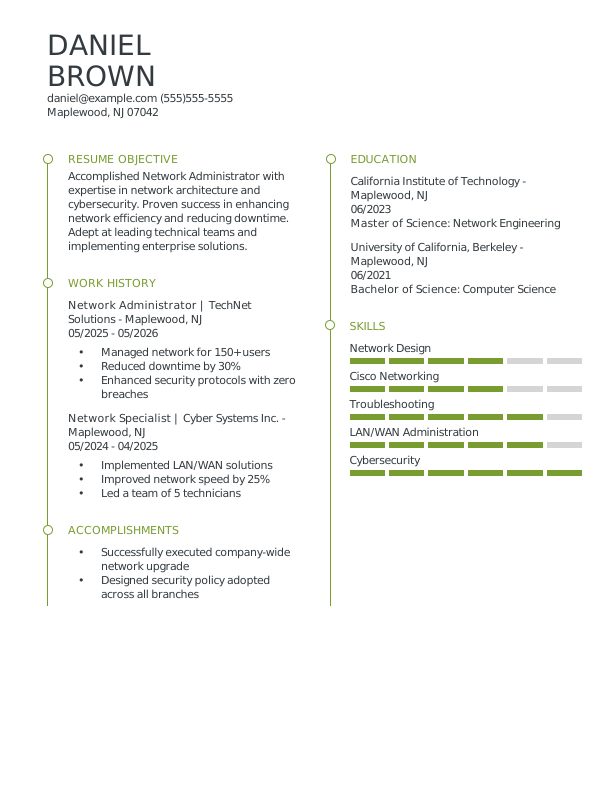
 Free
FreeNetwork Administrator Modern Resume
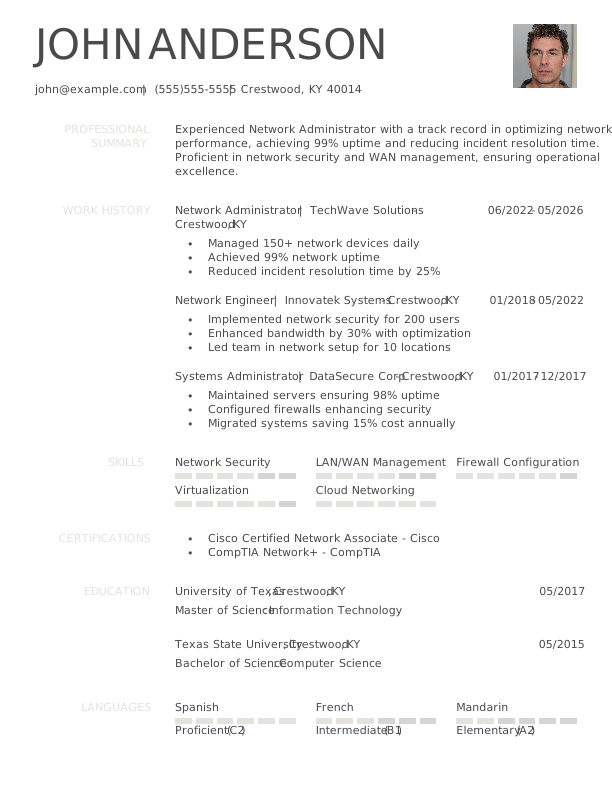
Network Administrator Creative Resume
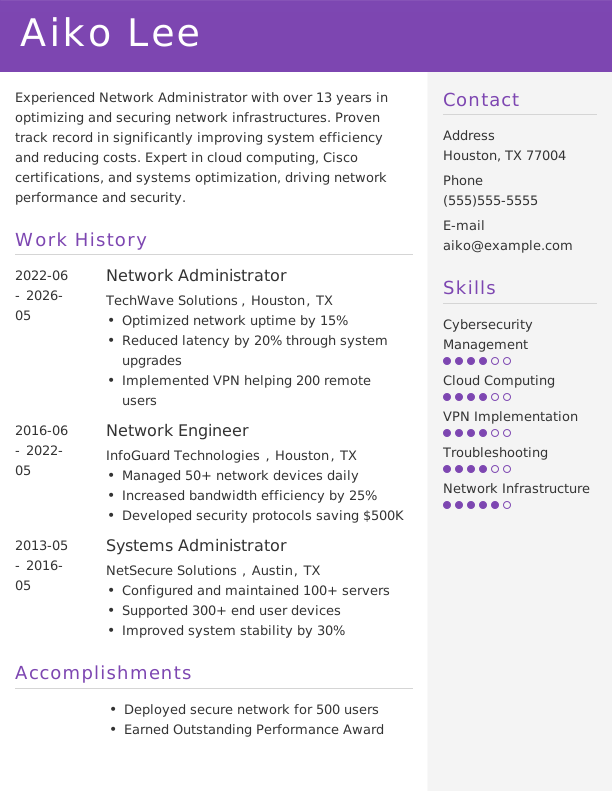
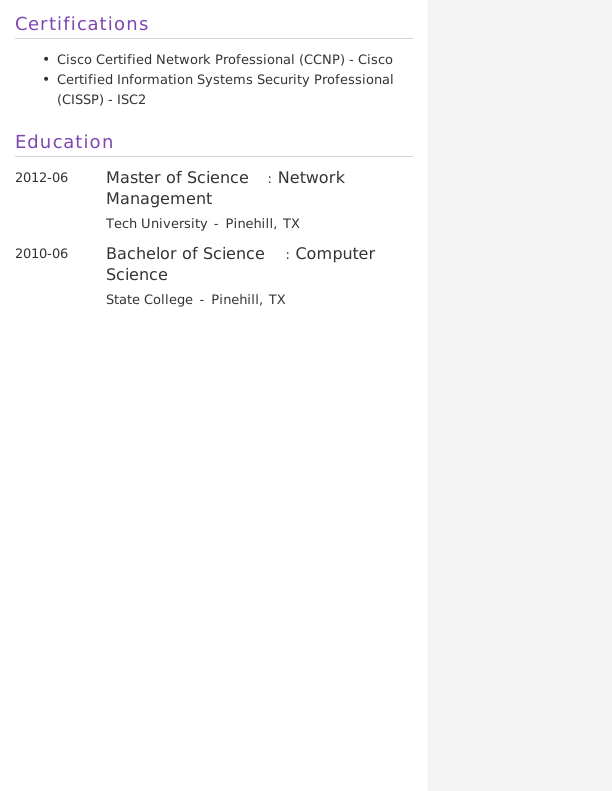
Network Administrator Traditional Resume
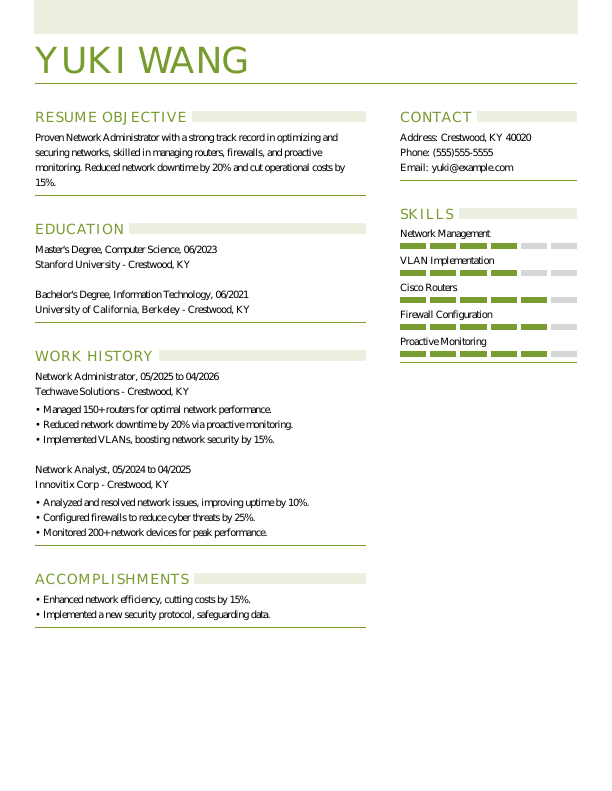
Network Administrator Simple CV Example
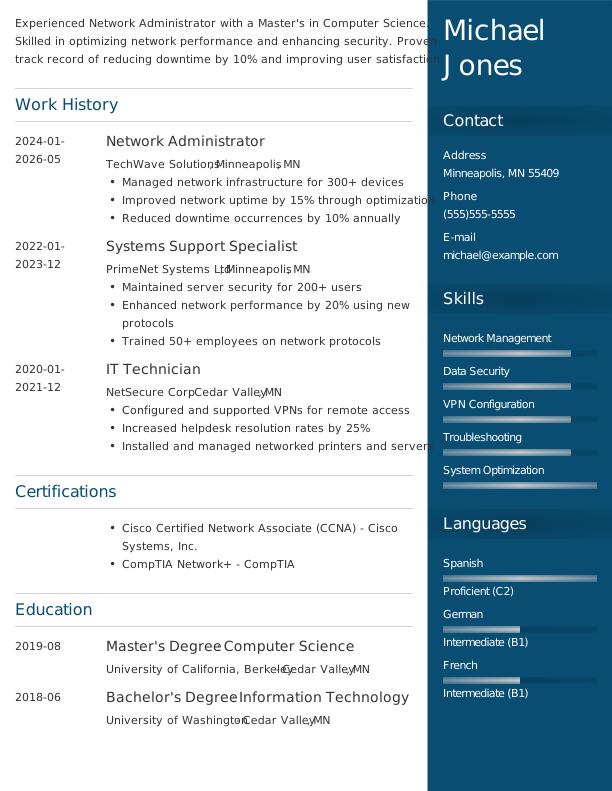
Network Administrator CV Format
Browse Free Resume Templates
- Accounts Payable
- Adjunct Professor
- Artist
- Auto Mechanic
- Baker
- Business Development Manager
- Business
- Certified Nursing Assistant
- Classic & Traditional
- Cleaner
- College Student
- Concierge
- Construction Worker
- Corporate
- Creative & Unique
- Custodian
- Customer Service
- Dental Assistant
- Direct Support Professional
- Entry-Level
- Flight Attendant
- Hospitality & Food Service
- Front Desk Receptionist
- Healthcare
- High School
- Housekeeping
- Hvac Technician
- Hybrid
- Inventory Manager
- Logistics
- Maintenance
- Management
- Modern
- Mortgage Loan Processor
- Pet Sitter
- Phlebotomist
- Production
- Rbt
- Sales
- Security Services
- Restaurant Server
- Simple & Basic
- Social Work
- Teacher
- Technology
Resume Examples for Network Administrators
A network administrator resume or CV varies significantly based on your experience level. Discover what to emphasize at each stage and use our Resume Builder to create a tailored document that reflects your skills and achievements.
Entry-Level Network Administrator Resume
Ideal for recent graduates crafting a resume with no experience, this template is also suitable for those transitioning into network administration from different fields.

Mid-Career Network Administrator Resume
A good fit for network administrators with several years of experience, this template highlights recent achievements and supports progression into advanced or specialized roles.

Experienced Network Administrator Resume
An ideal choice for network administrators with over 10 years of experience, this template supports professionals pursuing senior-level positions or leadership roles in the IT sector.

Network Administrator Resume Template (Text)
Use this customizable resume format of a network administrator resume to copy, edit, and personalize directly in your document.
Tao Nguyen
Chicago, IL 60606
Professional Summary
Experienced Network Administrator with 5+ years optimizing IT systems. Proven record improving network uptime by 30% and reducing latency through innovative designs. Skilled in LAN/WAN infrastructure, security protocols, and disaster recovery planning.
Work Experience
January 2023 – May 2026
TechWave Solutions – Chicago, IL
Network Administrator
- Managed over 150 network devices, improving uptime by 15%
- Reduced network downtime by 30% through proactive maintenance
- Implemented firewall policies, enhancing security compliance by 20%
January 2020 – December 2022
Innovatech Systems – Chicago, IL
IT Systems Engineer
- Designed LAN infrastructure, increasing throughput by 25%
- Upgraded server systems, reducing latency by 18%
- Built a VPN solution used by 120+ remote workers
January 2018 – December 2019
ConnectPro Solutions – Springfield, IL
Network Support Specialist
- Diagnosed 250+ connectivity issues accurately per year
- Configured routers and switches, reducing setup errors by 10%
- Trained staff on network protocols, improving productivity by 12%
Education
May 2017
University of Texas at Austin Austin, TX
Master’s Information Systems
May 2015
Texas State University San Marcos, TX
Bachelor’s Computer Science
Certifications
- Cisco Certified Network Professional (CCNP) – Cisco Systems
- CompTIA Network+ – CompTIA
- Azure Network Engineer Associate – Microsoft
Skills
- Network Infrastructure Design
- Firewall Configuration
- LAN/WAN Optimization
- Virtual Private Networks (VPN)
- Network Security Protocols
- Cloud Network Management
- Performance Monitoring Tools
- Disaster Recovery Planning
How to Write a Network Administrator Resume
As a network administrator, understanding how to write a resume means mixing your technical skills and experience with a clear format that highlights your qualifications. Use the guidance below to emphasize your strengths and tailor your resume for the specific roles you want to pursue.
1. Contact Info
Your contact information should be clear, professional, and easy to find at the top of your resume.
Make sure to include:
- Full name
- Phone number
- Professional email address
- City and state (ZIP code is optional)
- LinkedIn profile or personal portfolio (if relevant)
 PRO TIP
Avoid including sensitive personal information such as your Social Security number, birth date, or any details that do not relate to your professional qualifications.
2. Resume Profile
A resume profile is a brief introductory section, typically two to four sentences long, designed to summarize your key qualifications and career highlights. This section serves as a compelling pitch to hiring managers, capturing their attention and prompting them to explore your resume further.
Positioned at the top of your resume, the profile can take the form of either a summary or an objective. Each option serves distinct purposes in presenting your professional narrative:
- A resume summary highlights key skills, relevant experience, and notable achievements to craft a compelling narrative for potential employers. This format is particularly beneficial for those with established work histories or transferable skills aiming to showcase their contributions, especially in network administration.
- A resume objective highlights your career aspirations and what you hope to accomplish in the future. It’s particularly useful for recent graduates, career changers, or individuals with limited experience, like tech bootcamp alumni or those moving into IT roles.
Let’s take a look at an example of each to see how a resume summary and a resume objective differ:
Network administrator resume summary example:
Dedicated network administrator with over 6 years of experience managing complex IT infrastructures in corporate environments. Proficient in network security, troubleshooting, and system optimization. Acknowledged for improving network performance and ensuring seamless connectivity across diverse teams and projects.
Network administrator resume objective example:
Recent graduate with a degree in network administration eager to launch a career in a dynamic IT environment. Committed to maintaining robust network security and improving system performance, ready to contribute analytical skills and a proactive approach at a tech company or managed service provider.
3. Work Experience
The work experience on your resume is a key selling point. Employers assess your job history to understand not only where you’ve worked but also the impact you’ve had in those roles.
Your background in managing networks and troubleshooting issues shows how your expertise qualifies you for the network administrator position.
The work experience section should contain:
- Job title
- Employer name and location
- Dates of employment (month/year)
- 3–5 bullet points describing your relevant responsibilities and achievements
Tailor your content to reflect the specific network administrator role you’re targeting. Start each bullet point with an action verb (like “Configured,” “Troubleshot,” “Secured”) to strengthen your statements and showcase your contributions.
Incorporate quantifiable information or metrics whenever possible. Specific numbers, such as uptime percentages or network performance improvements, provide clear evidence of your achievements and help set you apart from other applicants.
In general, consider following the format of:
[action verb] + [responsibility] = [result/achievement]
For example:
Managed and optimized network infrastructure for 500+ users, ensuring 99.8% uptime while implementing security protocols to protect sensitive data.
Note that you can also flip the result/achievement with the responsibility:
Achieved a 30% reduction in network latency through hardware upgrades and configuration improvements.
With these techniques in mind, your resume bullets may look something like:
- Configured and maintained network systems for over 500 users, improving connectivity reliability by 25%.
- Monitored network performance and resolved issues within a 30-minute response time, reducing downtime by 15%.
- Collaborated with IT teams to implement security protocols, resulting in a 40% decrease in security breaches.
- Provided training sessions for staff on network best practices, improving overall user compliance.
- Used Cisco tools to optimize routing processes and improve data flow efficiency.
4. Skills
The skills section provides a concise overview of the professional abilities relevant to network administrators. This allows hiring managers to quickly assess qualifications and identify suitable job seekers.
Skills can be grouped into three categories:
- Soft skills are personal qualities that influence how well network administrators collaborate with team members and clients.
- Hard skills are specific, measurable abilities gained through education, training, or experience.
- Technical skills are the practical abilities required to operate specific technologies and systems.
5 Soft Skills for Your Resume or CV
- Risk assessment and mitigation
- Analytical problem-solving
- Cross-functional communication
- Prioritization
- Team collaboration
5 Hard Skills for Your Resume or CV
- Network configuration (Cisco, Juniper)
- Firewall management (Palo Alto, Fortinet)
- VPN setup and troubleshooting
- Active Directory management
- System monitoring and performance tuning (Nagios, Zabbix)
In general, you want to include a balanced mix of relevant skills that align with the job requirements to demonstrate your professional capabilities.
PRO TIP
If you’re a newer network administrator, consider placing your skills section higher on the resume, right after your summary. If you have more experience, it’s better to position this section lower, mixing your skills into the descriptions of your previous roles.
5. Education
Understanding how to list education on your resume is important for showcasing your qualifications clearly. Start with your most recent or relevant degree, making sure to include the degree type and the name of the institution.
If you’re a recent graduate, consider adding your graduation year, GPA (if it’s 3.5 or above), any honors received, and relevant coursework to improve your application.
Network administrator resume education section example:
Bachelor of Science in Computer Networking
California State University, Fullerton, Fullerton, CA
Graduated: 2024 | Graduated with Honors
PRO TIP
If you’re advancing from an Associate Degree in Network Administration to a Bachelor of Science in Information Technology, or have earned another relevant degree, list them both in reverse-chronological order.
6. Certifications
Including certifications on your resume can help bridge the gap between your educational background and practical skills, especially when hands-on experience is limited. This section may not always appear in traditional resumes, but is essential for many professionals. Employers often look for specific credentials tailored to specialized roles, such as cybersecurity certifications for network security positions or Cisco certifications for networking jobs.
Make sure to focus only on relevant certifications and credentials that strengthen your qualifications for the position you’re pursuing. Keeping them updated and formatted clearly can strengthen your resume and make it more readable.
Network administrator certification examples:
- Cisco Certified Network Associate (CCNA) | Cisco | Expires: 01/2028
- CompTIA Network+ | CompTIA | Expires: 11/2027
- Microsoft Certified: Azure Administrator Associate | Microsoft | Expires: 03/2028
- Certified Information Systems Security Professional (CISSP) | ISC² | Expires: 09/2027
Start Building Your Job-Winning Resume
Use Your Existing Resume
Import your current resume to transfer your information to one of our professional templates.
Create a New Resume
Start fresh with a template that catches your eye and follow the prompts to add your details.
Tailor Your Work History to Beat the ATS
Your work experience is more than a list of job titles. It’s an opportunity to illustrate the measurable impact you’ve had on network performance, security, and team efficiency. This strategy contributes to creating an ATS-friendly resume that applicant tracking systems (ATS) can easily scan.
To create a compelling work history, tailor it to the specific network administrator role you’re applying for by using relevant keywords. Start by analyzing the job description thoroughly. Identify repeated skills, technologies, or responsibilities mentioned and incorporate those elements into your descriptions wherever applicable.
Key Takeaways
- Tailor your resume to the job description. Use specific language from the posting to highlight your relevant experience and skills for both ATS and hiring managers.
- Use quantifiable achievements to demonstrate your impact. Include metrics that matter (e.g., network uptime percentages, project completion timelines, user support statistics) to differentiate yourself.
- Choose a suitable format based on your experience level. New professionals might prefer a functional or combination layout, while seasoned administrators often opt for reverse-chronological resumes.
More Resume & CV Examples
- Agile Project Manager
- Ai Consultant
- Ai Product Manager
- Android Developer
- Aws Devops Engineer
- Blockchain Developer
- Chief Information Officer
- Cloud Engineer
- Computer Engineering
- Computer Programmer
- Computer
- Computer Science Internship
- Computer Science
- Computer Technician
- CTO
- Cyber Security
- Cybersecurity Analyst
- Data Center Technician
- Database Administrator
- Devops Engineer
- Devops
- Digital Project Manager
- Embedded Software Engineer
- Epic Analyst
- Front-end Developer
- Full Stack Developer
- Game Developer
- Gis
- Health Informatics
- Healthcare It
- Implementation Specialist
- Information Security Analyst
- Ios Developer
- It Help Desk
- It Manager
- It Project Manager
- IT
- It Support
- It Support Specialist
- It Technician
- Java Developer
- Machine Learning
- Network Engineer
- Penetration Tester
- Power Bi Developer
- Product Management
- Product Owner
- Project Engineer
- Prompt Engineer
- Python Developer
- React Developer
- React Native Developer
- Release Manager
- Rpa Developer
- Salesforce Administrator
- Salesforce Developer
- Scrum Master
- SDET
- Security Engineer
- Service Desk Analyst
- Servicenow Developer
- Soc Analyst
- Software Developer
- Software Engineer
- Software Tester
- Solution Architect
- Sql Developer
- Systems Administrator
- Technical Program Manager
- Technical Project Manager
- Technical Support Specialist
- Ux Designer
- Ux Researcher
- Web Developer
- IT Developer
Cover Letters for Your Resume
Browse our library of cover letter examples to complete your application. A resume will have a better chance of getting noticed.
Frequently Asked Questions
Last Update:
What resume format should I use for my network administrator resume?
There are three primary resume formats to choose from when applying for a network administrator position. Your selection should reflect your level of experience and highlight the aspects of your career that you want to showcase:
- Chronological: The most popular format, a chronological resume emphasizes your work experience by detailing responsibilities and achievements in reverse order. This format is particularly suitable for job seekers with a relevant job history that reinforces their qualifications and showcases their growth in the field of network administration.
- Functional: Also known as a skills-based resume, the functional resume emphasizes a qualifications summary and an expanded skills section to showcase your abilities. This format minimizes focus on work history, making it beneficial for job seekers lacking relevant experience or those with significant employment gaps.
- Combination: A combination resume integrates elements from chronological and functional formats, emphasizing both skills and work experience. This structure benefits network administrators by allowing them to showcase their technical expertise alongside career progression, making it ideal for those advancing within the IT field or seeking new opportunities.
Should I include a cover letter with my resume?
Yes, you should include a cover letter with your network administrator job application. A well-crafted cover letter improves your resume by providing context about your technical skills and experiences, showcasing how they align with the company’s needs. It allows you to convey your enthusiasm for the role and demonstrate that you have researched the organization, giving you an advantage over applicants who submit only a resume.
If you’re feeling uncertain about crafting a cover letter, don’t worry. There are numerous resources available to guide you through the process, including helpful articles on how to write a cover letter and various examples tailored specifically for tech roles. You can also find different formats that suit your style and experience level, making it easier to create a personalized document.
To make things even simpler, consider using tools like a cover letter generator, which can help you quickly put together a professional cover letter by offering structured templates and tailored suggestions based on your job application.
What keywords should I include to pass applicant tracking systems (ATS)?
To ensure your resume passes ATS screenings, focus on incorporating keywords and phrases directly from the job posting. Use terms like “network security,” “firewall management,” or “server administration” that are specific to the network administrator role. This will increase your chances of being noticed by hiring managers.
Additionally, highlight any relevant certifications such as CompTIA Network+, Cisco Certified Network Associate (CCNA), or Microsoft Certified: Azure Administrator Associate. Mentioning technical tools you’re proficient in, like Cisco routers, Windows Server, or Linux systems, can also demonstrate your suitability for the position and improve your visibility in ATS searches.
Should I include personal IT projects or volunteer network setups?
Yes, especially if you’re new to the field. Including personal IT projects or volunteer experiences demonstrates your technical skills and problem-solving capabilities in real-world scenarios, making your resume stand out when formal network administration roles are limited.

Kirsten Chorpenning is a career advice writer who empowers job seekers to take control of their career paths using Monster’s comprehensive job search and resume tools. She specializes in helping job seekers find rewarding jobs in today’s dynamic work environment.
See More From Kirsten ChorpenningExplore Related Career Advice


How to Put Transferable Skills on Your Resume: 120 Skills, Examples, & Tips
Updated:
Aug 27, 2026
|
16 min read


How to Write a Functional Resume (Formatting Tips, Template, & Examples)
Updated:
Aug 7, 2026
|
17 min read


Functional vs Chronological Resume: Which Format Is Right for You?
Updated:
Aug 3, 2026
|
16 min read

100+ Resume Adjectives to Help You Write a Stronger Resume in 2026 (With Examples)
Updated:
Jul 30, 2026
|
12 min read