
Free Proofreader Resume Templates & Examples
A proofreader resume should highlight your attention to detail, knowledge of style guides, and experience across different content types. Find a template below that presents your editorial precision clearly.
Real-World Resumes That Get Results
 Free
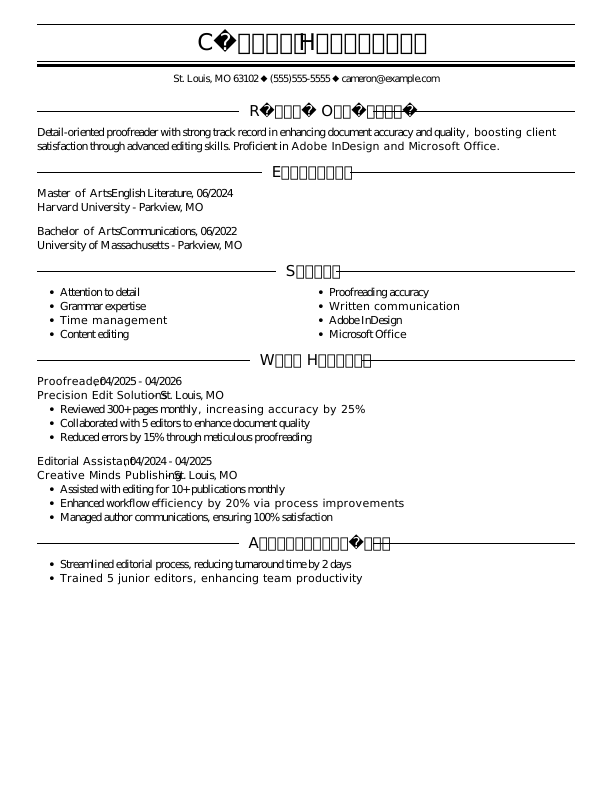
FreeProofreader Entry-Level Resume
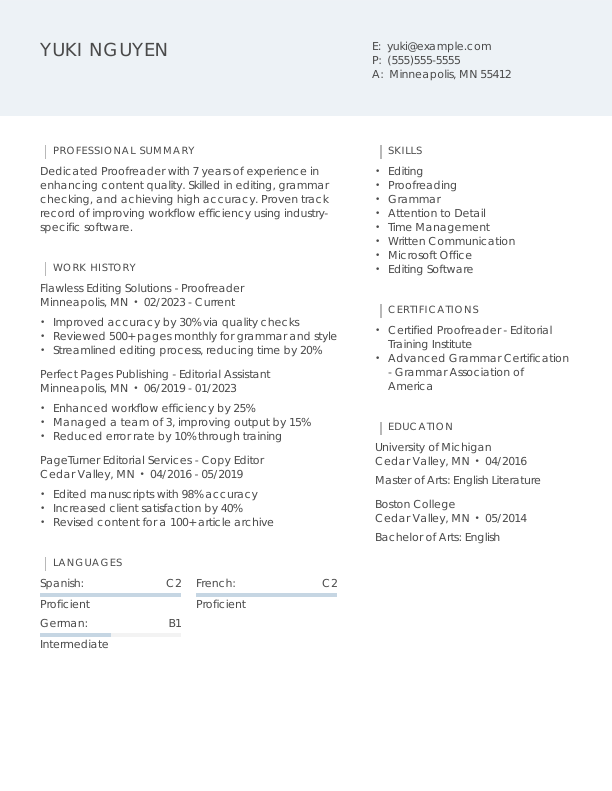
Proofreader Mid-Level Resume
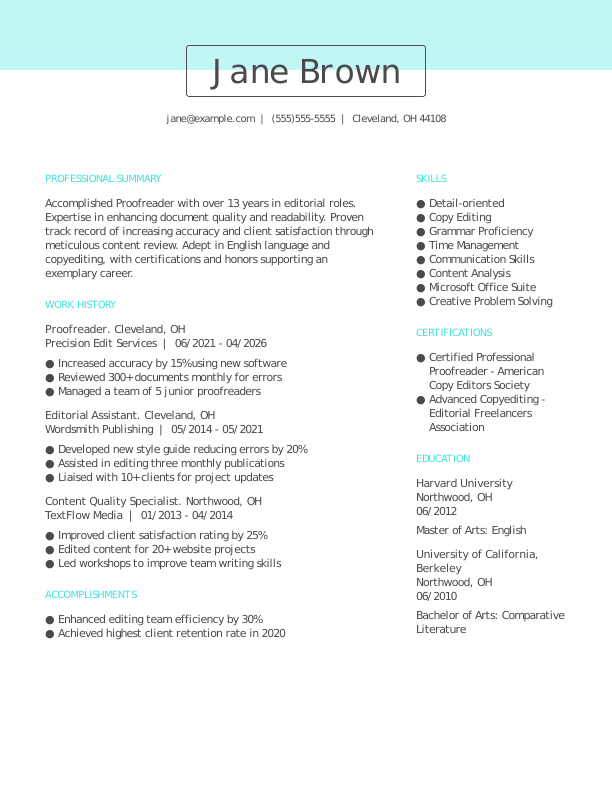
Proofreader Experienced Resume
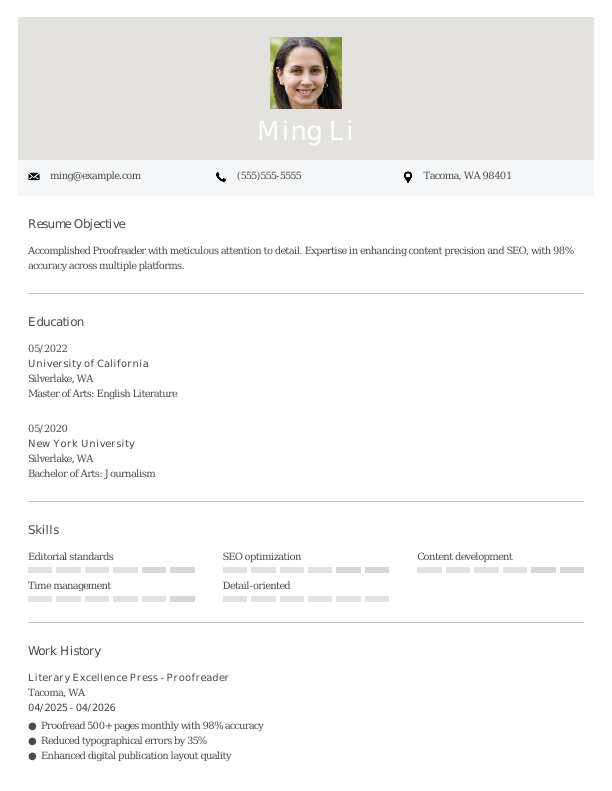
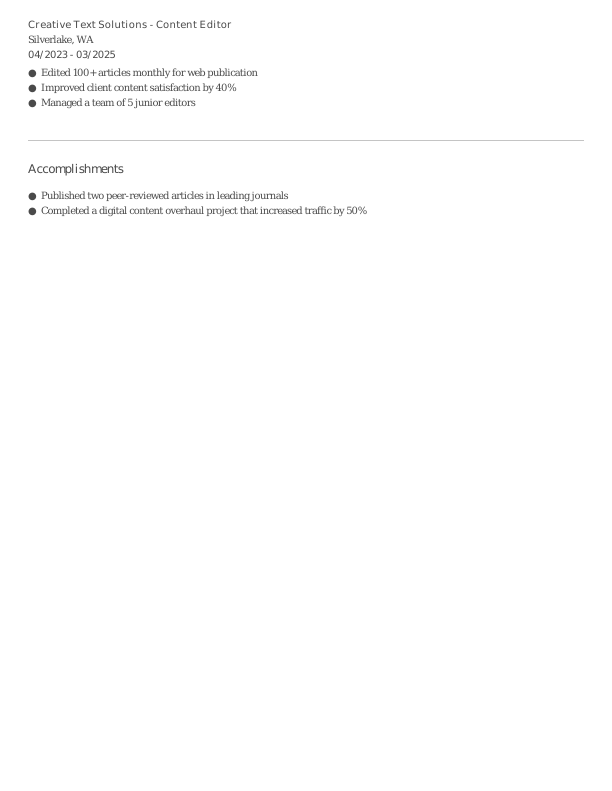
Proofreader Entry-Level Resume 1
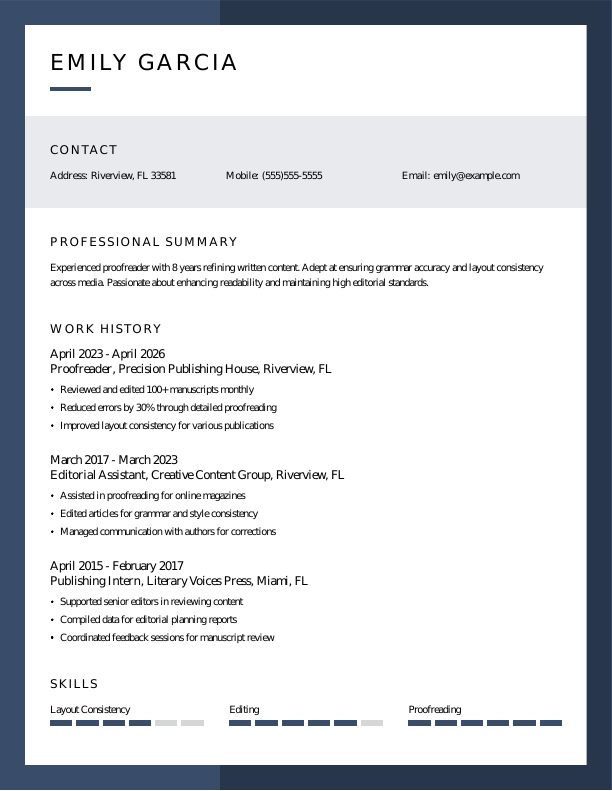

Proofreader Mid-Level Resume 1
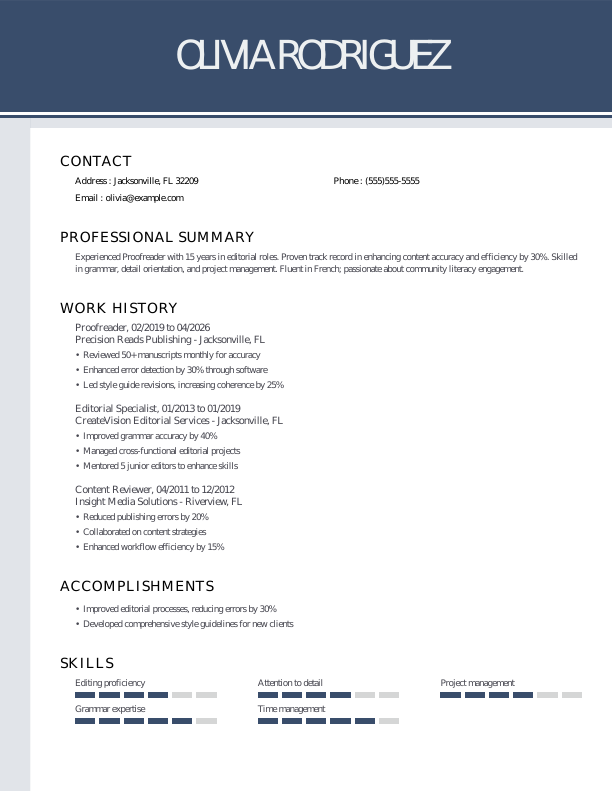

Proofreader Experienced Resume 1
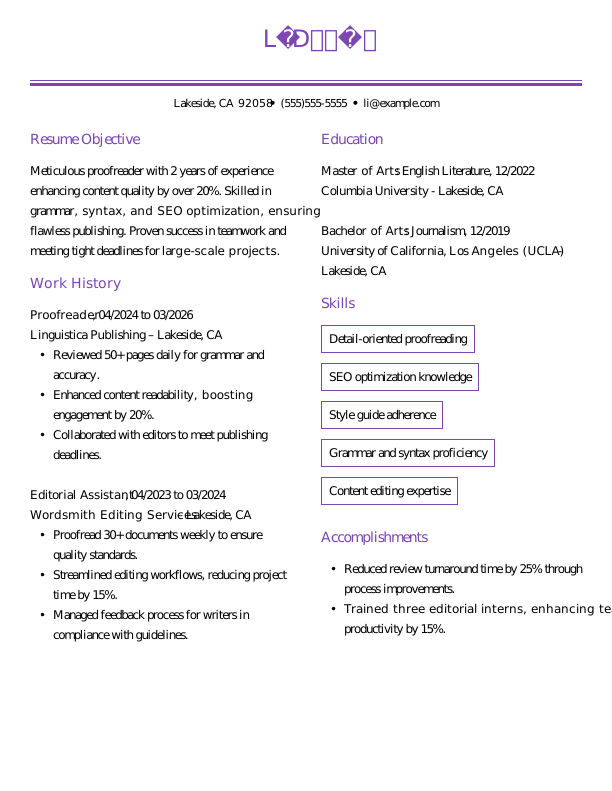
Proofreader Entry-Level Resume 2
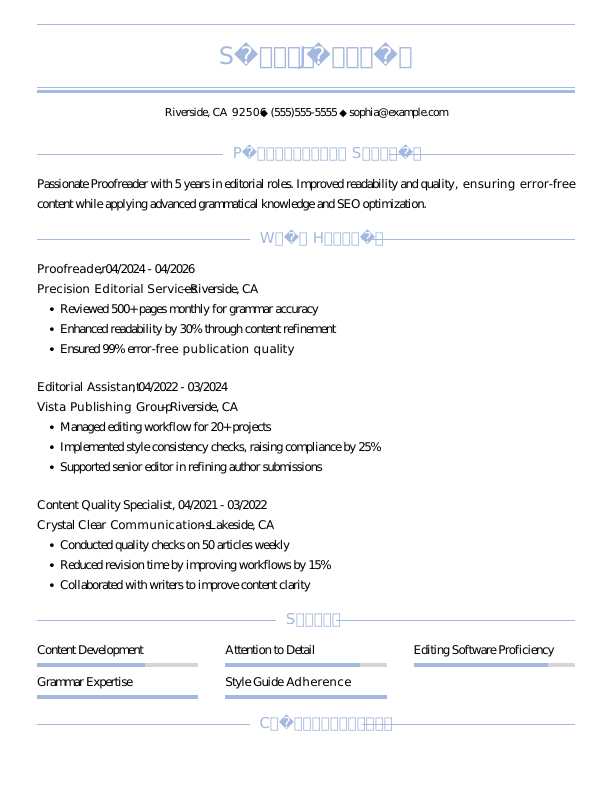

Proofreader Mid-Level Resume 2
Browse Free Resume Templates
- Accounts Payable
- Adjunct Professor
- Artist
- Auto Mechanic
- Baker
- Business Development Manager
- Business
- Certified Nursing Assistant
- Classic & Traditional
- Cleaner
- College Student
- Concierge
- Construction Worker
- Corporate
- Creative & Unique
- Custodian
- Customer Service
- Dental Assistant
- Direct Support Professional
- Entry-Level
- Flight Attendant
- Hospitality & Food Service
- Front Desk Receptionist
- Healthcare
- High School
- Housekeeping
- Hvac Technician
- Hybrid
- Inventory Manager
- Logistics
- Maintenance
- Management
- Modern
- Mortgage Loan Processor
- Pet Sitter
- Phlebotomist
- Production
- Rbt
- Sales
- Security Services
- Restaurant Server
- Simple & Basic
- Social Work
- Teacher
- Technology
Resume Examples for Proofreaders
Proofreader resumes should reflect the style guides you work with and the content types you have edited. Explore our templates to find one that highlights your editorial precision.
Entry-Level Proofreader Resume
If you are entering proofreading from an English or communications background, this template helps you create a proofreader resume by emphasizing your grammar skills, style guide familiarity, and any editing coursework or freelance work.

Mid-Career Proofreader Resume
A smart choice for experienced proofreaders seeking advancement, this template effectively showcases recent achievements and positions them for specialized editing roles or leadership opportunities.

Experienced Proofreader Resume
An ideal choice for seasoned proofreaders with over 10 years of experience, this template caters to professionals seeking advanced opportunities in editorial management and quality assurance.

Proofreader Resume Template (Text)
The text resume below gives you a starting point for a proofreader application. Paste it into your document and update it with your style guide expertise. For more editorial and writing formats, explore our library of resume templates.
David Park
Austin, TX 78702
Professional Summary
Experienced proofreader optimizing content clarity with nine years in publishing. Proven track record of improving editorial processes and exceeding deadlines, utilizing advanced editing tools and grammar mastery.
Work Experience
May 2024 – April 2026
Precision Editing Services – Austin, TX
Proofreader
- Reviewed 100+ manuscripts monthly for errors
- Enhanced document clarity by 30% using software
- Met 95% of deadlines ahead of schedule
May 2020 – April 2024
Golden Quill Publishing – Austin, TX
Editorial Assistant
- Managed proofreading for 50+ publications
- Improved workflow efficiency by 20%
- Coordinated 5 editing teams for projects
May 2017 – April 2020
InkWell Media Group – Dallas, TX
Content Reviewer
- Reviewed content accuracy for 200+ articles
- Cut content errors by 25% annually
- Led workshops improving editor skills
Education
May 2017
University of California, Berkeley Pinehill, TX
Master of Arts English Literature
May 2015
University of Washington Pinehill, TX
Bachelor of Arts Communication
Certifications
- Proofreading Professional Certification – National Association of Independent Writers and Editors
- Advanced Copyediting Certificate – Editor’s Guild Institute
Skills
- Detail-oriented editing
- Grammar mastery
- AP Style expertise
- Content clarity enhancement
- Time management
- Client communication
- Microsoft Word proficiency
- Adobe InDesign
How to Write a Proofreader Resume
As a proofreader, understanding how to write a resume means showcasing your attention to detail and relevant experience in a clear format that reflects your capabilities. Use the guidance below to highlight your strengths and tailor your resume for the specific positions you’re aiming for.
1. Contact Info
Your contact information should be prominently displayed at the top of your resume, ensuring clarity and professionalism.
Include the following essential information:
- Full name (and relevant certifications)
- Phone number
- Professional email address
- City and state (ZIP code is optional)
- LinkedIn profile or field-specific portfolio (if applicable)
 PRO TIP
Avoid listing irrelevant personal information such as age, religion, or political affiliation on your resume unless specifically requested by employers.
2. Resume Profile
A resume profile is a brief introduction, typically 2 to 4 sentences long, that highlights your key skills and qualifications. It serves as a compelling pitch aimed at attracting the attention of hiring managers, motivating them to delve deeper into your resume.
This profile is positioned at the top of your resume and can be presented as either a summary or an objective. Each option has its own distinct purpose:
- A resume summary showcases critical editing skills, attention to detail, and relevant accomplishments within written communication. This format is particularly helpful for professionals with prior experience or transferable abilities aiming to highlight their contributions as a careful proofreader.
- A resume objective emphasizes your aspirations and the specific career goals you aim to achieve. It’s particularly useful for recent graduates, coding bootcamp participants, or professionals transitioning into new fields like marketing or design, as it highlights their future potential.
Let’s explore the differences between a resume summary and a resume objective through the following examples:
Proofreader resume summary example:
Careful proofreader with over 6 years of experience in diverse publishing environments, including academic journals and corporate communications. Proficient in grammar, style consistency, and attention to detail. Acknowledged for improving document clarity and contributing to error-free publications that exceed client expectations.
Proofreader resume objective example:
Detail-oriented recent graduate with a degree in English, eager to launch a career as a proofreader in a dynamic publishing environment. Committed to accuracy and clarity while contributing strong analytical skills and an eye for detail to improve editorial quality at a leading media company.
3. Work Experience
The work experience on your resume serves as a critical foundation for your job application. Employers assess not only the roles you’ve held but also the contributions you’ve made throughout your career.
Your history showcases how your unique background and skills align with the qualifications needed for the proofreader position, highlighting your attention to detail and commitment to excellence.
The work experience section should contain:
- Job title
- Employer name and location
- Dates of employment (month/year)
- 3–5 bullet points detailing editing tasks and quality control achievements
Tailor your work experience bullet points to align with the job you’re pursuing by using language specific to the proofreading field. Begin each statement with action verbs like “Corrected,” “Reviewed,” or “Edited” to create a more powerful impact.
Incorporate quantifiable data or metrics wherever possible. Showing specific numbers related to your achievements, such as error reduction percentages or projects completed on time, highlights your value and sets you apart from other applicants.
In general, consider following the format of:
[action verb] + [responsibility] = [result/achievement]
For example:
Review and edit 100+ documents monthly, ensuring adherence to style guidelines and achieving a 99% accuracy rate in grammar and punctuation.
Note that you can also flip the result/achievement with the responsibility:
Improved document clarity by 30%, leading to improved reader comprehension through careful editing processes.
With these techniques in mind, your resume bullets may look something like:
- Reviewed and corrected over 500 documents for grammar and clarity, improving overall quality and reducing errors by 20%.
- Collaborated with authors to revise manuscripts, ensuring adherence to publication standards and improving acceptance rates by 15%.
- Mentored junior proofreaders on best practices in editing, fostering a cohesive team environment.
- Used Grammarly and Adobe Acrobat for efficient proofreading workflows, increasing productivity by 30%.
- Conducted quality checks on final proofs before print, ensuring timely delivery for press deadlines.
4. Skills
The skills section provides a concise overview of your proofreading abilities, showcasing your attention to detail and linguistic skill. This section is designed as an ATS-friendly resume, allowing hiring managers to quickly assess your qualifications at a glance.
Skills can be grouped into three categories:
- Soft skills are personal qualities that influence how well proofreaders collaborate with others.
- Hard skills are specific, measurable abilities gained through education, training, or experience.
- Technical skills are the specific competencies required to use tools and software related to a job.
5 Soft Skills for Your Resume or CV
- Attention to detail
- Effective communication
- Time management skills
- Critical thinking
- Constructive feedback
5 Hard Skills for Your Resume or CV
- Grammar and punctuation expertise
- Content editing (Microsoft Word, Google Docs)
- Fact-checking methodologies
- Style guide adherence (APA, MLA)
- Digital proofreading tools (Grammarly, ProWritingAid)
Overall, aim to showcase a well-rounded selection of skills that directly correspond to the job requirements.
PRO TIP
If you’re a newer proofreader, consider placing your skills section right after your summary to highlight your abilities. For those with more experience, it’s better to position this section lower on the resume and weave your skills into the descriptions of your work history.
5. Education
Understanding how to list education on your resume is important for presenting your qualifications clearly. Start with your most recent or relevant degree, making sure to include the type of degree and the institution’s name. If you’ve recently graduated, think about adding details like your graduation year, GPA (if it’s 3.5 or higher), honors received, or relevant coursework to improve your profile.
Proofreader resume education section example:
Associate Degree in English
Community College of Philadelphia, Philadelphia, PA
Graduated: 2023 | Graduated with Distinction
PRO TIP
When listing multiple degrees on your resume, ensure to arrange them in reverse-chronological order, starting with the highest degree first, such as Bachelor of Arts (BA) followed by Associate Degree (AD).
6. Certifications
Certifications highlight your expertise and ensure you’re knowledgeable about the latest industry standards. While not a traditional resume staple, this section can significantly improve your profile, especially in fields like IT or healthcare where specific qualifications are often mandatory for specialized positions. Employers frequently seek out specific credentials that align with their needs, making this section invaluable.
List relevant certifications and licenses that bolster your application. Remember to keep them updated and present them clearly to make a strong impression on potential employers.
Proofreader certification examples:
- Proofreading Certification | American Proofreaders Association | Expires: 11/2027
- Editing for Clarity Certificate | Editing Skills Institute | Expires: 02/2028
- Professional Proofreader License | National Association of Professional Editors | Expires: 04/2028
- Advanced Grammar Certification | Grammar Excellence Academy | Expires: 09/2027
Start Building Your Job-Winning Resume
Use Your Existing Resume
Import your current resume to transfer your information to one of our professional templates.
Create a New Resume
Start fresh with a template that catches your eye and follow the prompts to add your details.
Tailor Your Work History to Beat the ATS
Your work experience should reflect more than just previous positions. It provides a valuable chance to highlight your contributions and the specific results you’ve achieved in your field. This approach not only showcases your skills but also improves the ATS-friendliness of your resume, allowing applicant tracking systems (ATS) to easily scan for relevant qualifications.
To create an effective work history, customize it for the role you’re targeting by incorporating industry-specific keywords. Begin by carefully examining the job description for key skills and qualifications that are emphasized. Identify any recurring themes or requirements and ensure those elements are mirrored in your experience narratives.
What’s a Fair Proofreader Salary?
Researching salary information is essential for assessing job offers, negotiating pay, and making informed career decisions. The data presented comes from the U.S. Bureau of Labor Statistics (BLS) and highlights the latest nationwide averages for proofreaders.
It’s best to recognize that factors such as geographical location, years of experience, certifications, and areas of expertise can significantly affect actual salaries. For example, proofreaders working in publishing or specialized industries may earn higher wages compared to those in general content editing roles or freelance positions.
| California | $63,720 |
| District of Columbia | $63,020 |
| Florida | $44,970 |
| Georgia | $45,740 |
| Illinois | $48,520 |
| Indiana | $41,090 |
| Iowa | $44,080 |
| Kansas | $45,240 |
| Kentucky | $49,690 |
| Maryland | $55,550 |
| Massachusetts | $60,070 |
| Michigan | $48,610 |
| Minnesota | $50,690 |
| Missouri | $48,470 |
| Nebraska | $50,280 |
| New Jersey | $59,810 |
| New York | $60,830 |
| North Carolina | $50,560 |
| Ohio | $51,070 |
| Oregon | $40,670 |
| Pennsylvania | $47,540 |
| South Carolina | $41,450 |
| Texas | $49,510 |
| Virginia | $49,910 |
| Washington | $60,070 |
| Wisconsin | $43,480 |
Key Takeaways
- Customize your resume for each job application. Use the employer’s terminology when detailing your skills and experience to appeal to both ATS and hiring managers.
- Incorporate quantifiable results to highlight your contributions. Describe your impact with specific metrics (e.g., error reduction percentages, projects completed on time, or client satisfaction ratings).
- Select a suitable format based on your background. Entry-level applicants might consider a functional layout, while seasoned proofreaders often opt for a reverse-chronological format.
More Resume & CV Examples
- Assistant Editor
- Content Creator
- Content Writer
- Copywriter
- Creative Director
- Editing
- Freelance Writer
- Journalist
- Medical Writer
- Photographer
- Screenwriter
- Technical Writer
- Translator
- Ux Writer
- Writer
Cover Letters for Your Resume
Browse our library of cover letter examples to complete your application. A resume will have a better chance of getting noticed.
Frequently Asked Questions
Last Update:
What resume format should I use for my proofreader resume?
There are three main resume formats to choose from when applying for a proofreading position. The best format depends on your experience level and the aspects of your background you wish to highlight:
- Chronological: The chronological resume is the most commonly used format, emphasizing your work experience along with detailed descriptions of your responsibilities and achievements. This structure is particularly beneficial for job seekers with a relevant job history because it reinforces their qualifications and adds credibility to their application.
- Functional: The functional resume, also known as a skills-based resume, highlights qualifications and includes an expanded skills section. This format helps job seekers showcase relevant abilities while placing less focus on work history. It’s especially helpful for individuals who lack direct experience in the field or have employment gaps.
- Combination: The combination resume format mixes chronological and functional styles, highlighting both skills and work history. This approach is beneficial for professionals by focusing on their abilities while demonstrating career growth, making it ideal for those changing fields or aiming to highlight their diverse experiences.
Should I include a cover letter with my resume?
Yes, you should include a cover letter with your application for a proofreading position. A well-crafted cover letter improves your resume by allowing you to articulate your passion for language and detail while also highlighting specific experiences that showcase your proofreading skills. This personal touch shows potential employers that you’ve invested time into tailoring your application, which can set you apart from those who submit generic applications.
If you’re hesitant about writing a cover letter, there are many resources available to assist you. You can find guides on how to write a cover letter, along with examples tailored specifically for roles in proofreading. Additionally, exploring various formats will help you select one that best presents your qualifications and experience in the field.
For those looking to simplify the writing process, using a cover letter generator can be beneficial as it provides structured templates and suggestions suitable for proofreading applications.
How long should a proofreader resume be?
For proofreaders with less than 10 years of experience, a one-page resume is typically adequate to showcase relevant skills and qualifications. Highlight core competencies, such as attention to detail and familiarity with style guides, along with any certifications or educational background.
Conversely, seasoned proofreaders in specialized roles may extend their resumes to two pages if the information remains relevant and well-organized. Ensure that each entry is purposeful, illustrating your expertise without unnecessary elaboration or filler language.
What keywords should I include to pass applicant tracking systems (ATS)?
When crafting your resume, focus on incorporating keywords and phrases directly from the job posting. This may include specific terms like proofreading, editing, or attention to detail that are essential for a proofreader role. Tailoring your resume in this way can significantly increase your chances of passing ATS filters.
Don’t forget to highlight any relevant certifications such as Certified Proofreader or Technical Writer, along with tools you’re proficient in like Grammarly or Adobe Acrobat. These elements demonstrate not only your qualifications but also your commitment to the profession, making you stand out in a competitive job market.
Is it helpful to include freelance projects or volunteer work on my resume?
Yes, especially if you lack extensive formal experience. Highlighting freelance projects or volunteer work demonstrates your skills and commitment to the field, making your application more attractive to potential employers.

Kirsten Chorpenning is a career advice writer who empowers job seekers to take control of their career paths using Monster’s comprehensive job search and resume tools. She specializes in helping job seekers find rewarding jobs in today’s dynamic work environment.
See More From Kirsten ChorpenningExplore Related Career Advice


How to Put Transferable Skills on Your Resume: 120 Skills, Examples, & Tips
Updated:
Aug 27, 2026
|

16 min read


How to Write a Functional Resume (Formatting Tips, Template, & Examples)
Updated:
Aug 7, 2026
|
17 min read


Functional vs Chronological Resume: Which Format Is Right for You?
Updated:
Aug 3, 2026
|
16 min read
100+ Resume Adjectives to Help You Write a Stronger Resume in 2026 (With Examples)
Updated:
Jul 30, 2026
|
12 min read