
Free Real Estate Attorney Resume Templates & Examples
Elevate your chances of landing interviews with expertly designed real estate attorney resume templates. These free resume templates come with valuable writing tips that will guide you in crafting a standout resume or CV that truly showcases your qualifications to employers.
Real-World Resumes That Get Results
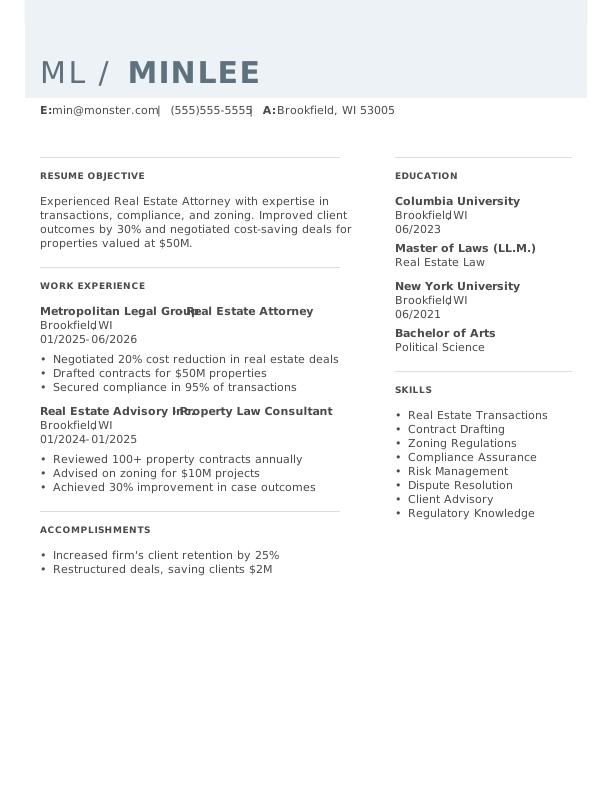
 Free
FreeReal Estate Attorney Entry-Level Resume
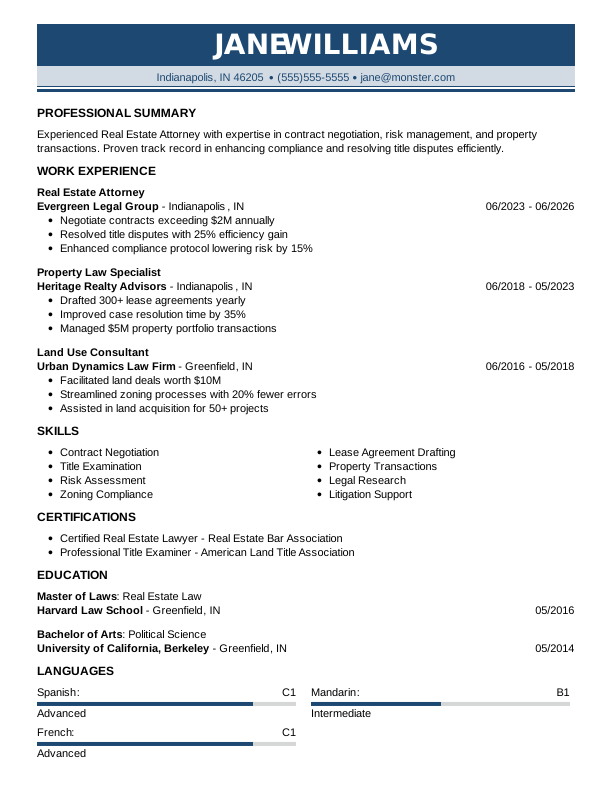
Real Estate Attorney Mid-Level Resume
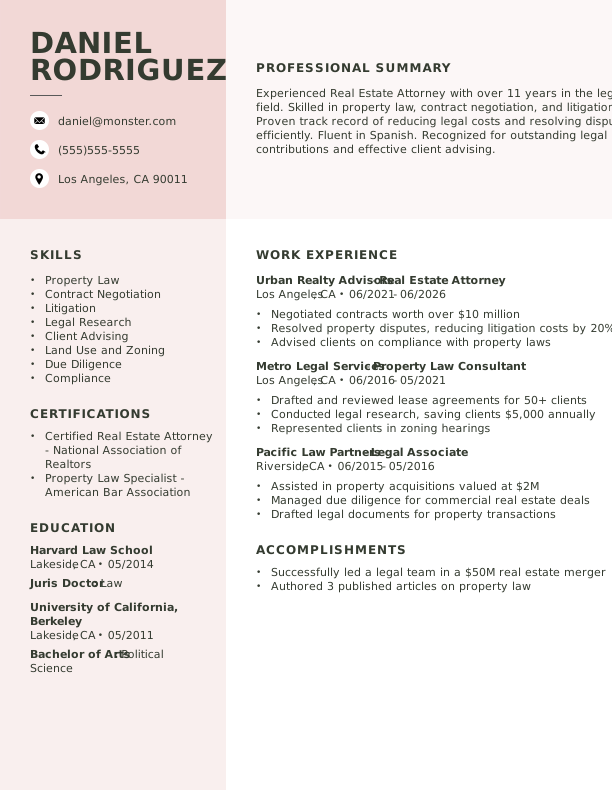
Real Estate Attorney Experienced Resume
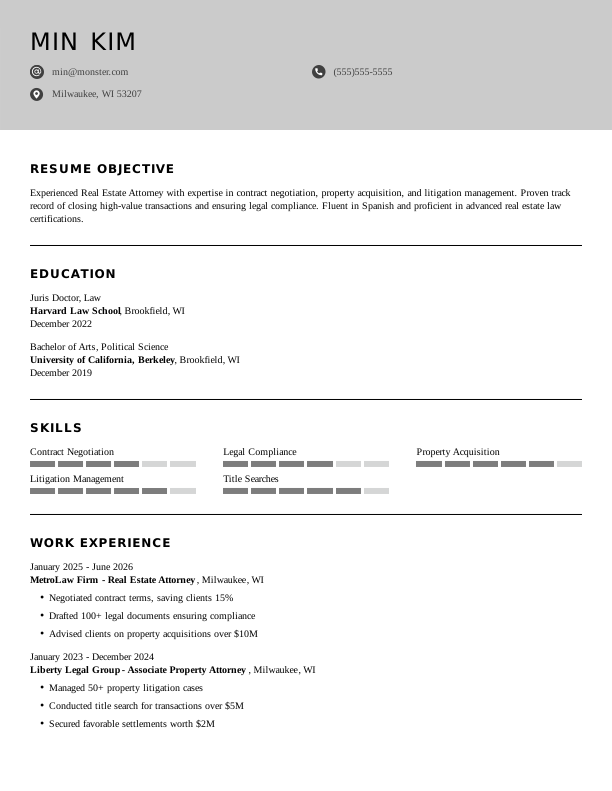

Real Estate Attorney Modern Resume
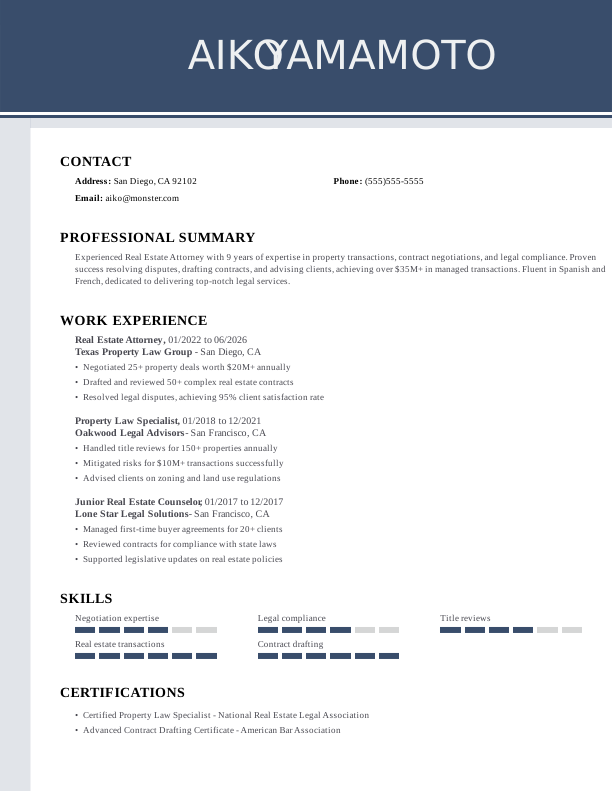

Real Estate Attorney Creative Resume
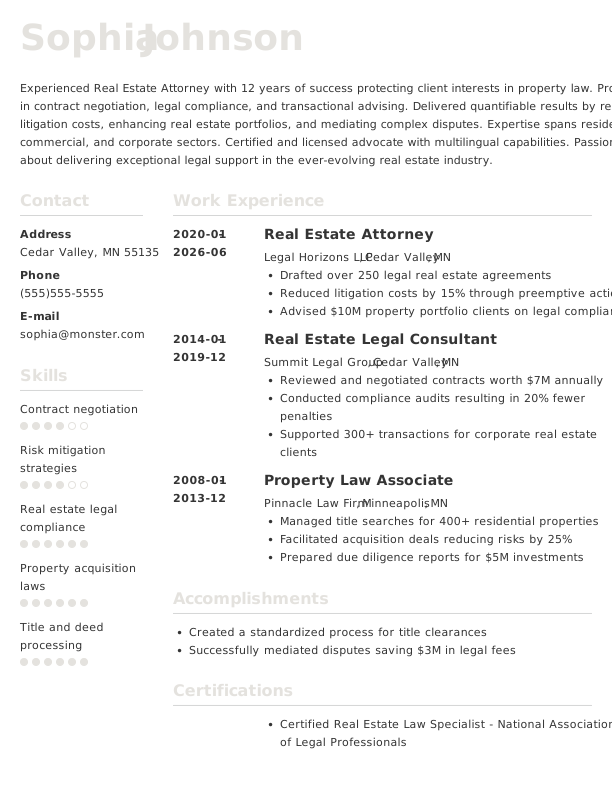

Real Estate Attorney Traditional Resume
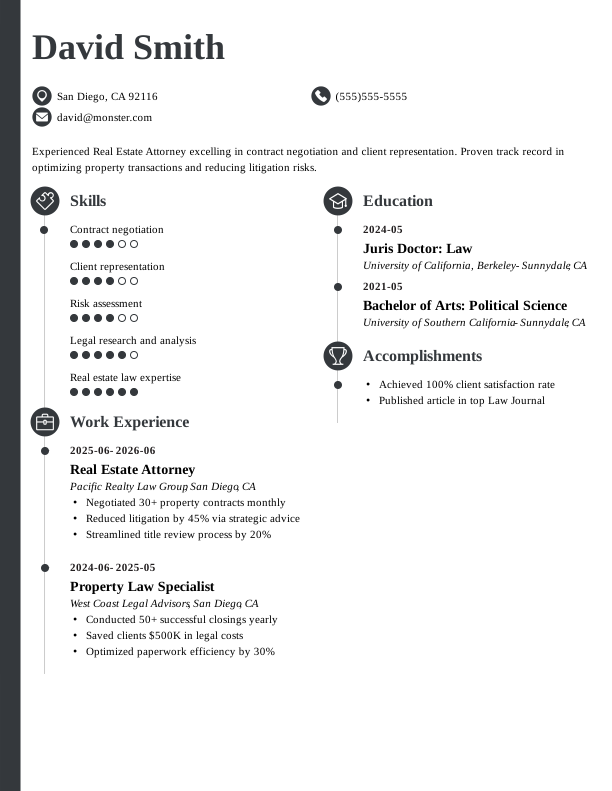
Real Estate Attorney Simple CV Example
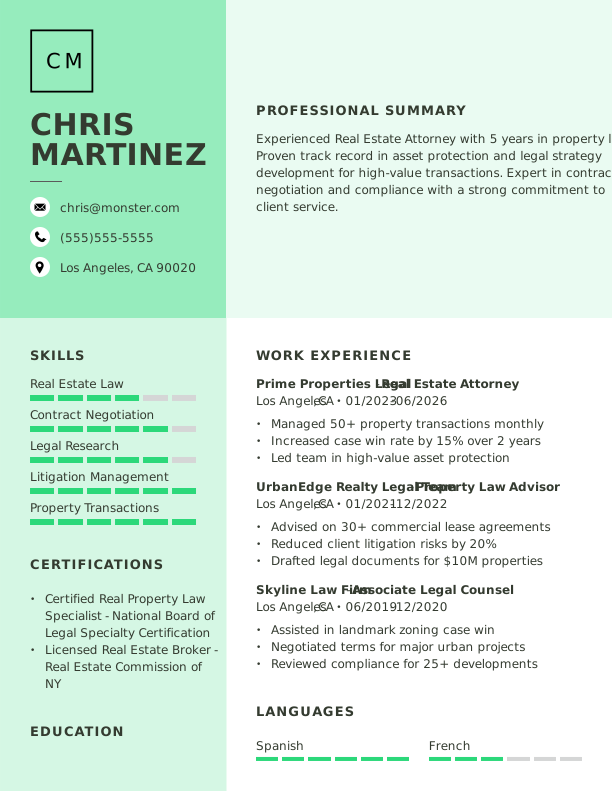

Real Estate Attorney CV Format
Browse Free Resume Templates
- Accounts Payable
- Adjunct Professor
- Artist
- Auto Mechanic
- Baker
- Business Development Manager
- Business
- Certified Nursing Assistant
- Classic & Traditional
- Cleaner
- College Student
- Concierge
- Construction Worker
- Corporate
- Creative & Unique
- Custodian
- Customer Service
- Dental Assistant
- Direct Support Professional
- Entry-Level
- Flight Attendant
- Hospitality & Food Service
- Front Desk Receptionist
- Healthcare
- High School
- Housekeeping
- Hvac Technician
- Hybrid
- Inventory Manager
- Logistics
- Maintenance
- Management
- Modern
- Mortgage Loan Processor
- Pet Sitter
- Phlebotomist
- Production
- Rbt
- Sales
- Security Services
- Restaurant Server
- Simple & Basic
- Social Work
- Teacher
- Technology
Resume Examples for Real Estate Attorneys
A real estate attorney’s resume or CV varies significantly based on experience level. Explore templates suited for entry-level, mid-career, and experienced professionals, and use our Resume Builder to create your own tailored document.
Entry-Level Real Estate Attorney Resume
Ideal for recent law graduates needing assistance with a resume with no experience, this template also serves those making a career shift into real estate law from different legal fields.
Mid-Career Real Estate Attorney Resume
A good fit for real estate attorneys with several years of experience, this template highlights recent legal achievements and positions applicants for advancement into more specialized roles.
Experienced Real Estate Attorney Resume
An ideal choice for seasoned real estate attorneys with over a decade of experience, this template showcases job seekers aiming for senior roles or specialized legal positions in property law.
Real Estate Attorney Resume Template (Text)
Use this customizable text format of a real estate attorney resume to copy, modify, and adapt directly in your document.
Amanda Turner
Miami, FL 33139
Professional Summary
Seasoned Real Estate Attorney with expertise in contract negotiation, legal documentation, and dispute resolution. Proven track record of increasing revenue and client satisfaction through strategic advisory and litigation support.
Work Experience
June 2024 – June 2026
GreenStone Legal Group – Miami, FL
Real Estate Attorney
- Negotiated contracts, increasing revenue 20%
- Resolved disputes, saving clients $500k
- Drafted legal documentation with 95% accuracy
June 2022 – May 2024
Oakridge Law Firm – Hollywood, FL
Property Law Associate
- Conducted title searches, reducing errors 15%
- Advised clients on regulatory compliance
- Facilitated client transactions over $3M
June 2020 – May 2022
Capital Edge Attorneys – Hialeah, FL
Junior Legal Advisor
- Assisted in litigation cases with 80% success
- Prepared detailed case briefs for senior review
- Monitored legal compliance, improving 25%
Education
May 2019
University of California, Berkeley Berkeley, CA
Juris Doctor Law
May 2016
University of Southern California Los Angeles, CA
Bachelor of Arts Political Science
Certifications
- Certified Real Estate Law Specialist – California Bar Association
- Advanced Contract Law Certification – National Legal Education Board
Skills
- Contract Negotiation
- Legal Documentation
- Regulatory Compliance
- Title Examination
- Litigation Support
- Real Estate Transactions
- Client Advisory
- Dispute Resolution
How to Write a Real Estate Attorney Resume
As a real estate attorney, understanding how to write a resume involves showcasing your legal expertise, negotiation skills, and relevant experience in property law. Use the guidance below to emphasize your strengths and tailor your resume for the specific roles you’re aiming for.
1. Contact Info
Your contact information should be clear, professional, and easy to find at the top of your resume.
Make sure to include:
- Full name
- Phone number
- Professional email address
- City and state (ZIP code is optional)
- LinkedIn profile or personal portfolio (if relevant)
 PRO TIP
Avoid including sensitive personal information such as your Social Security number, age, or photos on your resume unless the employer specifically requests these details.
2. Resume Profile
A resume profile is a brief introduction (two to four sentences) that highlights your key qualifications and sets the stage for your candidacy. It serves as an engaging pitch to hiring managers, aiming to spark their interest and motivate them to explore your application further.
Typically located at the top of your resume, this section can be presented as either a summary or an objective. Each format has its distinct purpose, catering to different job-seeking strategies:
- A resume summary highlights key legal expertise, relevant case handling experience, and notable achievements in the field of property law. It serves as an effective format for individuals with established work history or transferable skills who aim to showcase their contributions as a real estate attorney.
- A resume objective focuses on your future aspirations and highlights what you aim to accomplish in your career. It’s especially helpful for recent law school graduates, professionals transitioning into real estate, or individuals with limited relevant experience who want to make a strong first impression.
Let’s take a look at an example of each to see how a resume summary and a resume objective can differ:
Real estate attorney resume summary example:
Dedicated real estate attorney with over 6 years of experience in residential and commercial property transactions. Proficient in contract negotiation, title examination, and dispute resolution. Acknowledged for providing exceptional legal counsel and facilitating smooth closings, contributing to client satisfaction and successful outcomes.
Real estate attorney resume objective example:
Recent law school graduate and licensed attorney eager to embark on a career in real estate law within a dynamic legal firm. Committed to ethical practices and looking to contribute strong negotiation skills and attention to detail to a reputable real estate practice or law firm.
3. Work Experience
The work experience on your resume is critical in showcasing your legal expertise. Employers assess your professional journey to understand the tangible impact you’ve had, beyond just the positions you held.
Your legal accomplishments highlight how your background aligns with the demands of a real estate attorney role.
The work experience section should contain:
- Job title
- Employer name and location
- Dates of employment (month/year)
- 3–5 bullet points describing your relevant responsibilities and achievements
Tailor your content to reflect the specific duties and responsibilities of a real estate attorney. Start each bullet point with an action verb (like “Drafted,” “Negotiated,” “Closed”) to create a compelling statement that highlights your legal expertise.
Incorporate quantifiable information and metrics whenever possible. Specific numbers, such as transaction values or successful case outcomes, illustrate your impact and help set you apart from other applicants in the competitive legal field.
In general, consider following the format of:
[action verb] + [responsibility] = [result/achievement]
For example:
Negotiated and executed over 50 real estate transactions annually, resulting in a 20% increase in client satisfaction ratings.
Note that you can also flip the result/achievement with the responsibility:
Achieved a 15% reduction in closing times through streamlined documentation processes and improved client communication.
With these techniques in mind, your resume bullets may look something like:
- Reviewed and negotiated over 50 commercial lease agreements, ensuring compliance with local regulations and reducing client liabilities by 20%.
- Advised clients on property transactions totaling million, facilitating smooth closings and minimizing legal risks.
- Collaborated with real estate agents and financial institutions to streamline the homebuying process for clients.
- Mentored junior attorneys on real estate law practices, improving their drafting skills and knowledge of regulatory requirements.
- Used legal research tools to prepare briefs that supported successful litigation outcomes in property disputes.
4. Skills
The skills section provides a concise overview of your abilities as a real estate attorney, highlighting expertise in property law and transactions. This summary allows hiring managers to quickly assess your qualifications for the role.
Skills can be categorized into three distinct groups:
- Soft skills are personal qualities that influence how real estate attorneys interact with clients and colleagues.
- Hard skills are specific, measurable abilities gained through education, training, or experience.
- Technical skills refer to the specific knowledge and abilities required to perform tasks in a particular field.
5 Soft Skills for Your Resume or CV
- Negotiation strategies
- Effective communication
- Analytical thinking
- Client advocacy
- Attention to detail
5 Hard Skills for Your Resume or CV
- Contract negotiation
- Title search and analysis
- Real estate law compliance
- Property transaction management
- Zoning and land use regulations
In general, aim to showcase a diverse range of relevant skills that align with the job requirements to demonstrate your full professional value.
PRO TIP
If you’re a newer real estate attorney, consider placing your skills section higher on your resume, right after your summary. If you have more experience, it’s better to position this section lower and weave most of your skills into your work history for a cohesive narrative.
5. Education
Understanding how to list education on your resume is important for showcasing your qualifications. Begin with your most recent or relevant degree, clearly stating the degree type and school name.
If you’re a recent graduate, consider including your graduation year, GPA (if it’s 3.5 or higher), any honors received, or relevant coursework to strengthen your application.
Real estate attorney resume education section example:
Juris Doctor (JD)
Harvard Law School, Cambridge, MA
Graduated: 2023 | Cum Laude
PRO TIP
If you’re progressing from an Associate Degree in Paralegal Studies to a Juris Doctor (JD), or have earned another relevant degree, list both in reverse-chronological order on your resume.
6. Certifications
Listing certifications on your resume highlights your qualifications and helps compensate for any limited experience in the real estate field. While this section may not always be standard on a traditional resume, it proves invaluable for most real estate attorneys. Employers often seek specific credentials, such as bar memberships or specialized real estate law certifications, when hiring for particular roles.
Include only those certifications that are directly relevant to your candidacy. Keep your credentials up to date and clearly formatted for easy reference.
Real estate attorney certification examples:
- Real Estate Attorney License, New York #987654 | New York State Bar Association | Expires: 12/2028
- Certified Commercial Investment Member (CCIM) | CCIM Institute | Expires: 05/2027
- Real Estate Negotiation Expert (RENE) | National Association of Realtors | Expires: 06/2028
- Accredited Buyer’s Representative (ABR) | National Association of Realtors | Expires: 10/2027
Start Building Your Job-Winning Resume
Use Your Existing Resume
Import your current resume to transfer your information to one of our professional templates.
Create a New Resume
Start fresh with a template that catches your eye and follow the prompts to add your details.
Tailor Your Work History to Beat the ATS
Your work experience is more than a list of job titles. It’s an opportunity to showcase the measurable impact you’ve had on real estate transactions, negotiations, and client outcomes. This strategy can also lead to a more ATS-friendly resume that applicant tracking systems (ATS) can easily scan.
To create an effective work history, tailor it to the specific legal position you’re applying for by incorporating relevant keywords and phrases. Begin with a thorough analysis of the job description. Identify repeated skills, areas of law, or client types mentioned, and ensure those elements are reflected in your experience descriptions where appropriate.
Key Takeaways
- Tailor your resume to the job description. Use specific terminology from the listing to resonate with both ATS and hiring managers.
- Highlight quantifiable achievements to demonstrate your impact. Include metrics relevant to real estate (e.g., successful closings, negotiation percentages, or client satisfaction ratings).
- Select a resume format that aligns with your experience level. New attorneys may prefer a functional layout, while seasoned professionals often opt for a reverse-chronological format.
More Resume & CV Examples
- Associate Attorney
- Attorney
- Case Manager
- Compliance Manager
- Compliance Officer
- Contract Specialist
- General Counsel
- In House Counsel
- Law Clerk
- Law School
- Lawyer
- Legal Assistant
- Legal Intern
- Legal
- Legal Secretary
- Litigation Paralegal
- Notary
- Paralegal
- Personal Injury Paralegal
- Regulatory Affairs
Cover Letters for Your Resume
Browse our library of cover letter examples to complete your application. A resume will have a better chance of getting noticed.
Frequently Asked Questions
Last Update:
What resume format should I use for my real estate attorney resume?
There are three main resume formats to consider when applying for a real estate attorney position. Your choice will depend on your experience level and the aspects of your background you wish to highlight:
- Chronological: The most popular format, a chronological resume highlights your work experience as a real estate attorney, detailing your responsibilities and achievements. This makes it an excellent choice for applicants with a consistent job history that reinforces their qualifications and demonstrates their expertise in the field.
- Functional: Also known as a skills-based resume, the functional resume focuses on a summary of qualifications and an expanded skills section to showcase your relevant abilities. By minimizing emphasis on work history, this approach is helpful for job seekers lacking experience in real estate or those with gaps in employment.
- Combination: A combination resume integrates chronological and functional formats, featuring a skills section along with detailed work experience. This approach allows real estate attorneys to emphasize their legal expertise while also showcasing their career advancements and relevant achievements in the field.
Should I include a cover letter with my resume?
Yes, you should include a cover letter with your real estate attorney job application. A tailored cover letter improves your resume by allowing you to share your passion for real estate law and outline specific experiences that demonstrate your qualifications. It shows hiring managers that you’re genuinely interested in the position and have taken the time to personalize your application.
If you’re feeling hesitant about writing a cover letter, remember there are many resources available to guide you. Websites offer tips on how to write a cover letter, along with examples that can inspire your own writing. Additionally, exploring different formats can help you present your background and skills in the best possible light.
To make the process easier, consider using a cover letter generator, which can provide templates and suggestions tailored to the legal field so you can create a polished document quickly.
What keywords should I include to pass applicant tracking systems (ATS)?
To ensure your resume passes ATS screening, incorporate keywords and phrases directly from the job listing. For a real estate attorney position, look for terms like “contract negotiation,” “real estate transactions,” and “property law.” These specific terms will help demonstrate that you possess the skills required for the role.
Additionally, highlight any relevant certifications you received, along with technical tools you’re familiar with, like document management systems or legal research databases. By customizing your resume this way, you can improve your chances of being noticed by hiring managers who rely on ATS to filter job seekers.
Should I include internships or volunteer legal work?
Yes, especially if you’re a recent law graduate. Including internships and volunteer experiences demonstrates your understanding of real estate law and practical skills, helping you stand out when you lack extensive formal attorney roles on your resume.

Kirsten Chorpenning is a career advice writer who empowers job seekers to take control of their career paths using Monster’s comprehensive job search and resume tools. She specializes in helping job seekers find rewarding jobs in today’s dynamic work environment.
See More From Kirsten ChorpenningExplore Related Career Advice


How to Put Transferable Skills on Your Resume: 120 Skills, Examples, & Tips
Updated:
Aug 27, 2026
|

16 min read


How to Write a Functional Resume (Formatting Tips, Template, & Examples)
Updated:
Aug 7, 2026
|
17 min read


Functional vs Chronological Resume: Which Format Is Right for You?
Updated:
Aug 3, 2026
|
16 min read

100+ Resume Adjectives to Help You Write a Stronger Resume in 2026 (With Examples)
Updated:
Jul 30, 2026
|
12 min read