

Free Paralegal Cover Letter Templates & Examples
Boost your interview odds with our professionally designed paralegal cover letter templates. These free cover letter templates include clear writing tips and guidance to help you highlight your qualifications, demonstrate key legal support skills, and stand out to law firms and hiring managers.
Real-World Cover Letters That Get Results
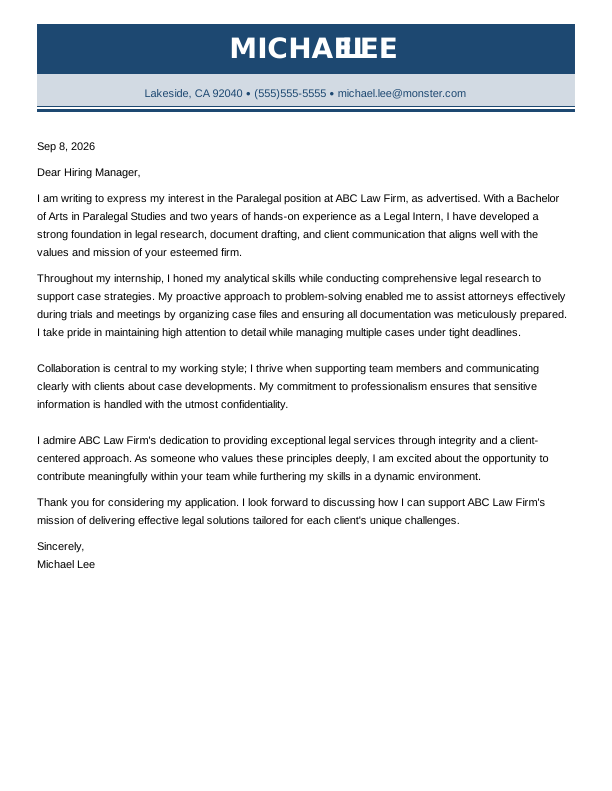
 Free
FreeParalegal Entry-Level Cover Letter
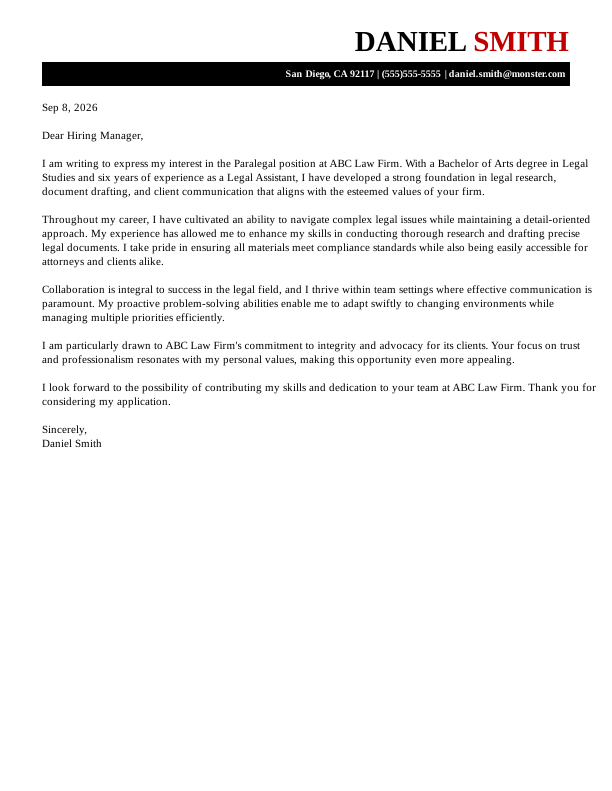
Paralegal Mid-Level Cover Letter
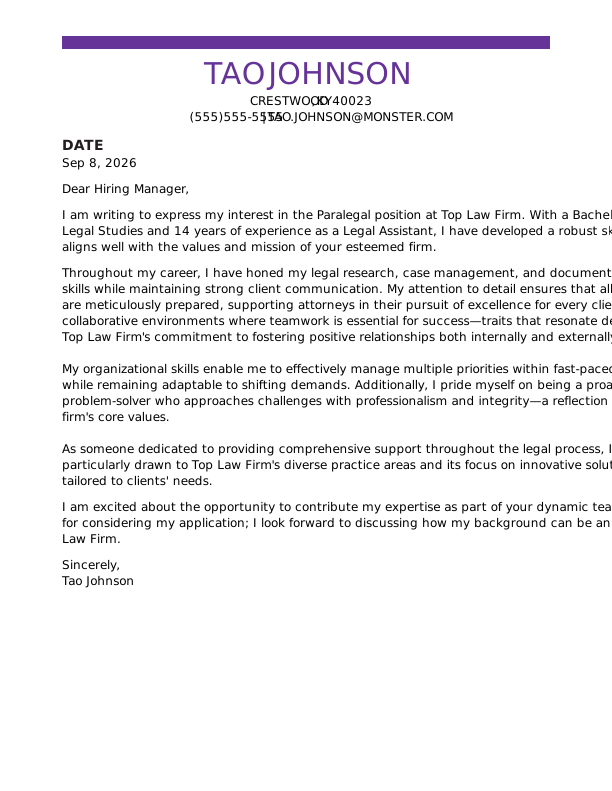
Paralegal Experienced Cover Letter
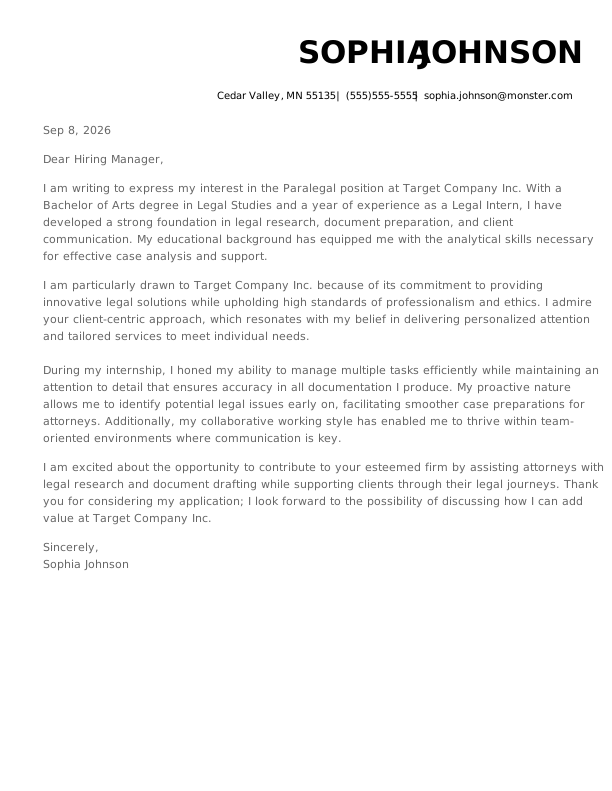
Paralegal Entry-Level Cover Letter
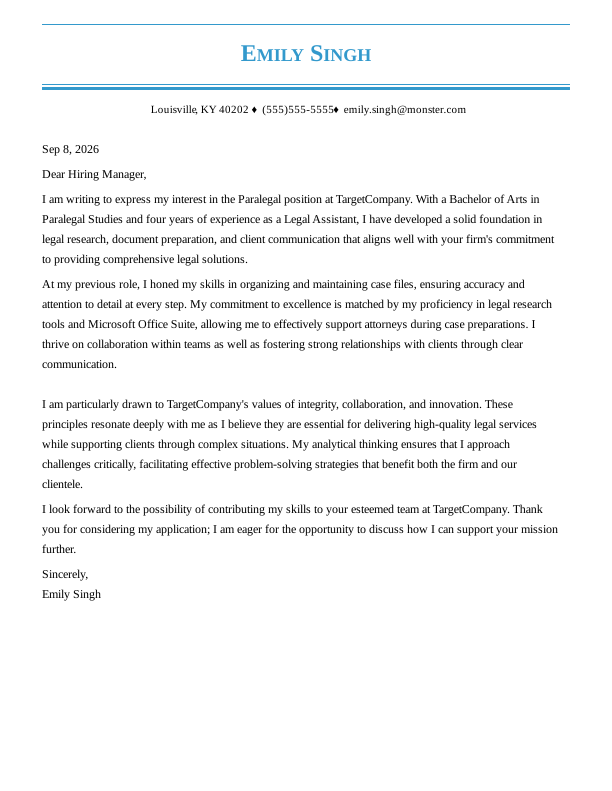
Paralegal Mid-Level Cover Letter
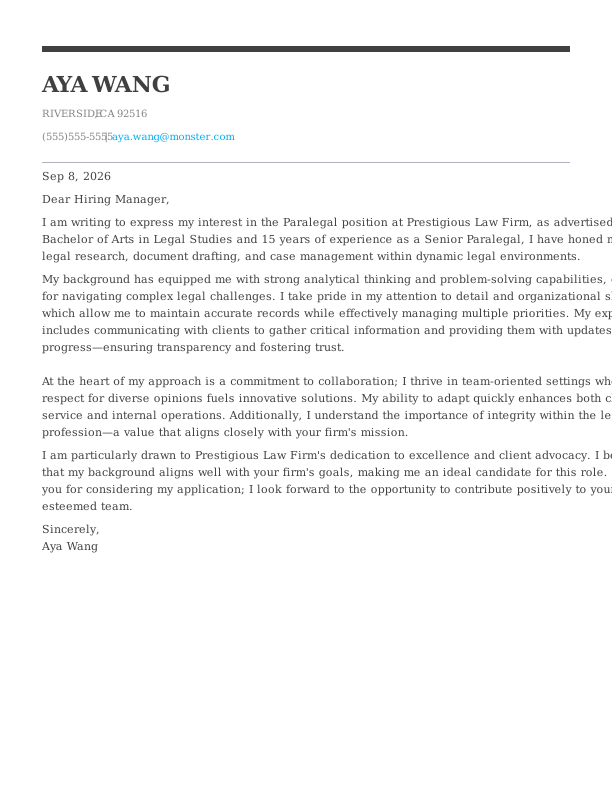
Paralegal Experienced Cover Letter
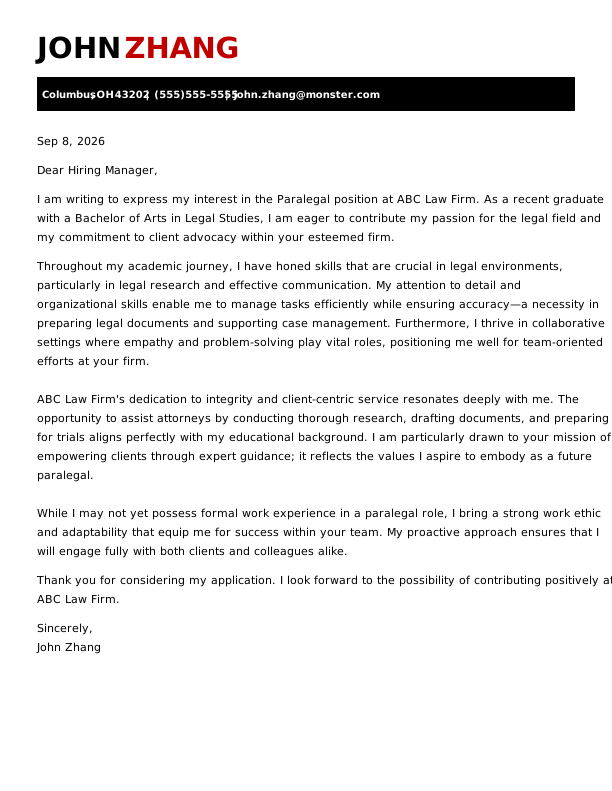
Paralegal Entry-Level Cover Letter
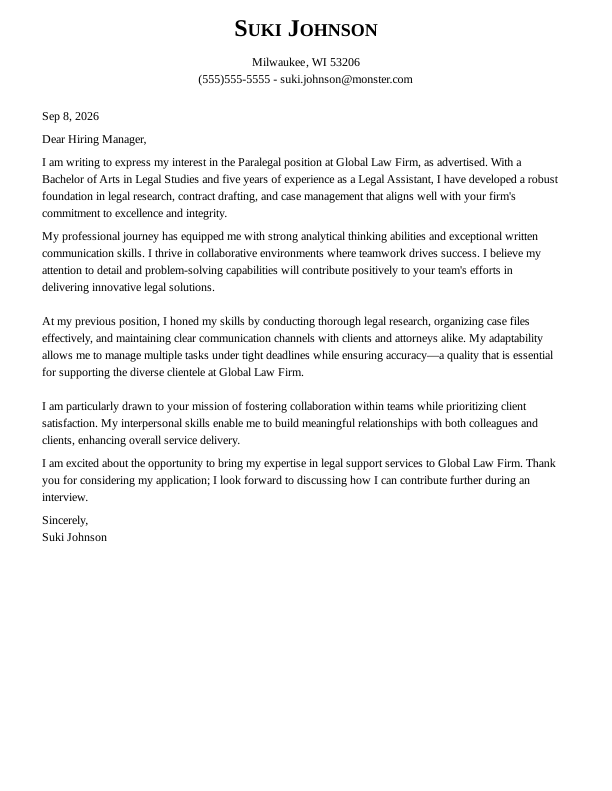
Paralegal Mid-Level Cover Letter
Browse Free Cover Letter Templates
- Account Manager
- Accounts Payable
- Administrative Assistant
- Admissions Counselor
- Artist
- Babysitter
- Barista
- Bartender
- Bookkeeper
- Brand Ambassador
- Business Analyst
- Caregiver
- Chef
- Civil Engineering
- Computer Science
- Custodian
- Customer Service
- Dental Assistant
- Electrical Engineering
- Emt
- Engineering
- Event Coordinator
- Executive Assistant
- Finance
- Financial Analyst
- Firefighter
- Flight Attendant
- Graphic Designer
- Hair Stylist
- Healthcare
- Investment Banking
- It
- Janitor
- Journalism
- Lab Technician
- Law Clerk
- Lawyer
- Librarian
- Logistics
- Manager
- Marketing Manager
- Massage Therapist
- Mechanic
- Mechanical Engineer
- Medical Assistant
- Non Profit
- Nursing
- Office Manager
- Personal Trainer
- Pharmacy Technician
- Photographer
- Physician Assistant
- Pilot
- Police Officer
- Project Manager
- Property Manager
- Receptionist
- Research Assistant
- Retail
- Sales
- Security Officer
- Social Work
- Software Engineer
- Teacher
- Teaching Assistant
- Truck Driver
- Vet Tech
- Veterinary Assistant
- Web Developer
- Welder
Cover Letter Examples for Paralegals
Paralegal cover letters evolve across career stages, highlighting different levels of legal research, document drafting, and case file management. Use these templates to align your cite-checking, discovery preparation, and litigation support skills with your current career stage.
Entry-Level Paralegal Cover Letter
Perfect for recent graduates writing a cover letter with no experience, this template also supports career changers moving into paralegal work from other fields.
Mid-Career Paralegal Cover Letter
A good fit for paralegals and legal assistants with a few years of experience, this template helps highlight career growth and supports advancement into specialized case work or team leadership.
Experienced Paralegal Cover Letter
Best for paralegals with 10+ years of experience, this template helps applicants pursue senior case support and leadership roles.
Paralegal Cover Letter Template (Text)
Use this editable text version of a paralegal cover letter to copy, paste, and customize directly in your document.
Brooke James
Cincinnati, OH 45201
(555)555-5555
brooke.james@monster.com
Sep 8, 2026
Dear Hiring Manager,
I am writing to express my interest in the paralegal position at Global Law Firm. With a Bachelor of Arts in Paralegal Studies and seven years of experience as a legal assistant, I have developed a strong foundation in legal research, documentation preparation, and case management that I believe aligns well with the values and mission of your esteemed firm.
Throughout my career, I have honed my ability to prepare comprehensive legal documents and conduct thorough research while maintaining an unwavering attention to detail. My strong analytical skills enable me to navigate complex information effectively, ensuring compliance with court rules and facilitating smooth case progression. As an effective communicator, I prioritize building positive relationships with clients and colleagues alike—values that resonate deeply with Global Law Firm’s commitment to client-first solutions.
I thrive in collaborative environments where diverse perspectives are valued. My adaptability allows me to manage multiple tasks efficiently without compromising quality or deadlines. Furthermore, my proactive approach ensures that I contribute meaningfully both independently and as part of a team.
I am particularly drawn to Global Law Firm’s focus on integrity and excellence in service delivery across various sectors. I am excited about the opportunity to support your attorneys through diligent case preparation, trial support logistics, and maintaining organized case files for optimal workflow.
Thank you for considering my application. I look forward to the possibility of contributing positively to your team at Global Law Firm.
Sincerely,
Brooke James
How to Write a Paralegal Cover Letter
Writing a strong paralegal cover letter means pairing your legal training with clear storytelling that demonstrates your ability to conduct legal research, draft pleadings, and manage matter dockets under attorney supervision. Follow the steps below to highlight your qualifications and customize your letter for each target law firm, corporate legal department, or public agency.
1. Research & Prepare
Before you write your cover letter, research the firm, its primary practice areas (such as civil litigation, corporate compliance, intellectual property, or family law), and its active case types. Learning how an organization executes document review, trial prep, and court filings helps you connect your legal support background directly to its operational standards.
Review the job description for required legal software (such as LexisNexis, Westlaw, Relativity, or Clio) and state certification credentials. Check the firm website, attorney bios, and recent press updates to understand its practice focus, then review LinkedIn profiles of managing partners or paralegal directors to align your background with their priorities.
2. Hook the Reader
Your cover letter opening sets the tone for what follows. A strong opener grabs the hiring attorney or recruitment manager’s attention by demonstrating genuine knowledge of the firm, your legal specialization, and what you bring to the practice group on day one.
Try referencing a recent trial win, practice expansion, or notable matter handled by the firm and connecting it to your legal support experience. You can also open with a specific metric, such as how you reduced document review timelines or managed a high-volume trial binder rollout, or highlight a direct recommendation from a senior partner who can vouch for your cite-checking accuracy and trial support skills.
3. Tell Your Professional Story
Your cover letter should do more than restate your resume bullet points. Use the main body to share a concise example that illustrates how you organize discovery productions, draft initial motion responses, and maintain matter management systems under strict filing deadlines.
Quantify your legal support accomplishments wherever possible. Mention specific metrics such as reducing document review turnarounds by 25%, organizing trial exhibits that cut file retrieval delays significantly, or tracking court dockets to maintain a 100% on-time filing record. Highlight how your thorough preparation protected case integrity.
4. Showcase Your Skills
Matching your technical paralegal skills to the exact requirements in a job posting helps attorneys picture you supporting their caseload on day one. Connecting your legal research software proficiency and drafting habits to what the practice group needs shows your readiness to handle active dockets.
For example, if the role emphasizes litigation support, describe how you compiled deposition summaries, drafted discovery responses, and organized trial exhibit binders. If the posting stresses transactional or corporate law, share how you drafted board resolutions, managed entity filings, and conducted due diligence document reviews.
5. Explain Any Special Circumstances
If you have an employment gap, are attempting to transition into paralegal work from another career field, or recently relocated, address it early and briefly. Share the reason directly, then pivot to what you have gained or are building, such as paralegal certification coursework, legal research software mastery, or updated court rules training.
For instance, you can mention how a break spent completing paralegal studies or independent Westlaw certification sharpened your cite-checking, Bluebook formatting, and statutory analysis skills. When attempting a career shift into paralegal work, explain how your prior background—such as healthcare, real estate, or corporate administration—strengthens your document organization, client communication, and attention to detail. If you have relocated, mention your review of local court rules, e-filing portals, and immediate availability.
6. End With a Professional Goodbye
Close your cover letter by reaffirming your interest in the position, thanking the selection team for its time, and inviting a conversation about how your legal support background fits the team’s practice requirements. Keep the tone concise, confident, and focused on research accuracy and docket reliability.
Wrap up with a clear statement, such as: “I welcome the opportunity to discuss how my research, document drafting, and case management experience can support your legal team.” Then, end with a professional sign-off like “Sincerely” or “Best regards.”
4 Tips for Formatting Your Cover Letter
Use clear spacing, simple headings, and consistent fonts to format your cover letter. Proper formatting keeps your document professional and easy to read. These tips apply whether you are stepping into your first entry-level paralegal role or bring years of senior litigation support experience.

Keep It to One Page
Managing partners and legal hiring managers review many applications, so keep your cover letter to a single page. Target 250 to 400 words across three to four focused paragraphs to share your most relevant legal support skills and achievements.

Use a Professional Font & Layout
Choose a clear font such as Arial, Calibri, Times New Roman, or Helvetica in 10 to 12 pt with one-inch margins. Keeping formatting consistent with your resume creates a clean, cohesive application package that is easy to scan.

Address the Hiring Manager Directly
Try to find the name of the managing partner, paralegal manager, or legal administrator by reviewing the job posting, firm directory, or LinkedIn. If you cannot find a specific name, address your letter to “Dear Hiring Manager” or “To the Legal Team,” avoiding outdated phrasing like “To Whom It May Concern.”

Save & Send as a PDF
Save your cover letter as a PDF to preserve your layout across different operating systems and devices. Use a professional file name that includes your name and the words “cover letter,” such as “Brooke_James_cover_letter.pdf.”
Top-Paying States for Paralegal Roles
Knowing what paralegals earn across the country helps you evaluate job offers, negotiate fair compensation, and make confident career decisions. The salary data below comes from the U.S. Bureau of Labor Statistics and reflects current national averages for paralegals.
Your actual pay can vary based on location, years of experience, certifications like a paralegal credential, and legal specialization. Paralegals in large law firms or corporate legal departments often earn more than those in small practices, and roles focused on litigation support, intellectual property, or real estate tend to be higher-paying.
| Alabama | $49,800 |
| Alaska | $66,560 |
| Arizona | $66,150 |
| Arkansas | $62,540 |
| California | $76,920 |
| Connecticut | $67,230 |
| Delaware | $66,460 |
| District of Columbia | $96,200 |
| Florida | $61,150 |
| Georgia | $62,400 |
| Hawaii | $64,210 |
| Idaho | $54,380 |
| Illinois | $68,960 |
| Indiana | $60,220 |
| Iowa | $56,060 |
| Kansas | $54,310 |
| Kentucky | $54,460 |
| Louisiana | $52,380 |
| Maine | $58,450 |
| Maryland | $69,520 |
| Massachusetts | $78,540 |
| Michigan | $65,430 |
| Minnesota | $71,560 |
| Mississippi | $46,310 |
| Missouri | $60,260 |
| Montana | $56,870 |
| Nebraska | $62,850 |
| Nevada | $59,740 |
| New Hampshire | $63,910 |
| New Jersey | $69,010 |
| New Mexico | $58,620 |
| New York | $74,580 |
| North Carolina | $56,810 |
| North Dakota | $59,800 |
| Ohio | $61,000 |
| Oklahoma | $54,950 |
| Oregon | $70,210 |
| Pennsylvania | $65,920 |
| Rhode Island | $57,330 |
| South Carolina | $51,550 |
| South Dakota | $59,790 |
| Tennessee | $57,360 |
| Texas | $62,650 |
| Utah | $60,240 |
| Vermont | $62,360 |
| Virginia | $66,570 |
| Washington | $83,930 |
| West Virginia | $56,540 |
| Wisconsin | $60,450 |
| Wyoming | $54,320 |
| Guam | $49,280 |
| Puerto Rico | $49,090 |
| Virgin Islands | $53,160 |
Key Takeaways
- Tailor each letter to the specific law firm, legal department, and practice area. Reference its active matter focus, filing demands, or client base so reviewers quickly recognize your fit.
- Lead with a compelling opener and support it with concrete achievements. Include measurable details like review turnarounds reduced, exhibit volumes managed, filing accuracy rates, or discovery files processed.
- Keep formatting clean and consistent with your resume. Use identical fonts, header styles, and line spacing so legal evaluation teams can scan key credentials effortlessly.
Browse Monster’s Resume Templates
Monster also has hundreds of ATS-friendly resume templates for all career levels and industries. Create a matching resume to help you land the interview.
Frequently Asked Questions
Last Update:
Do I really need a cover letter?
Yes, including a cover letter adds valuable context that your resume cannot fully capture, demonstrating written legal communication abilities, research focus, and genuine alignment with the firm’s practice goals.
A cover letter is especially valuable when explaining an employment gap, transitioning into legal support from another field, or applying to a firm with specialized practice requirements. It provides space to convey your analytical mindset and commitment to work accuracy.
How long should my cover letter be?
A paralegal cover letter should fit on a single page, ideally between 250 and 400 words. Managing attorneys spend limited time reviewing each submission, making conciseness essential.
Focus on quality over length by selecting your most relevant research software proficiencies, case management accomplishments, and drafting experience. Organize your text into three to four well-structured paragraphs to keep your key qualifications scannable.
Should my cover letter match my resume?
Yes, your cover letter should match your paralegal resume. Use the same fonts, colors, and header style so your application package looks cohesive and intentional.
Keep the formatting consistent while using the text to tell a deeper story. For a paralegal role, expand on your legal support background by adding context your resume cannot show, such as strategies used to handle complex discovery, trial preparation workflows, and why you want to support this specific firm’s practice.
Can I use AI to write my cover letter?
AI tools like a cover letter generator can help you draft a paralegal cover letter, find a clear structure, and break through writer’s block. Still, personalization matters most because your case experience, research habits, and courtroom support work need to sound like you.
Use AI as a starting point, then edit heavily with your own examples and specific details about the firm or role. Hiring managers often notice generic AI language, so make sure your final version reflects genuine interest and a distinct voice.
Should I mention salary expectations in my cover letter as a paralegal?
Only include salary expectations if the job posting specifically asks for them. If you must share numbers, research local rates and provide a flexible range, such as “Salary: $X–$Y, negotiable based on experience.” Keep it brief and avoid adding extra details.

Elizabeth Muenzen is a Certified Professional Resume Writer (CPRW) and member of the Professional Association of Resume Writers & Career Coaches who empowers job seekers to take control of their career paths using Monster’s comprehensive job search and resume tools.
See More From Elizabeth MuenzenExplore Related Career Advice






How to Write a Cover Letter for Internal Positions or Promotions (Examples & Tips)

Updated:
Apr 23, 2026
|

19 min read


Cover Letter vs Resume: What’s the Difference & Do You Need Both?
Updated:
Apr 23, 2026
|
18 min read