
Free Professor Resume Templates & Examples
A professor resume should reflect your teaching record, research publications, and departmental service. Find a template below suited to academic hiring expectations, then review our writing tips to fine-tune your approach.
Real-World Resumes That Get Results
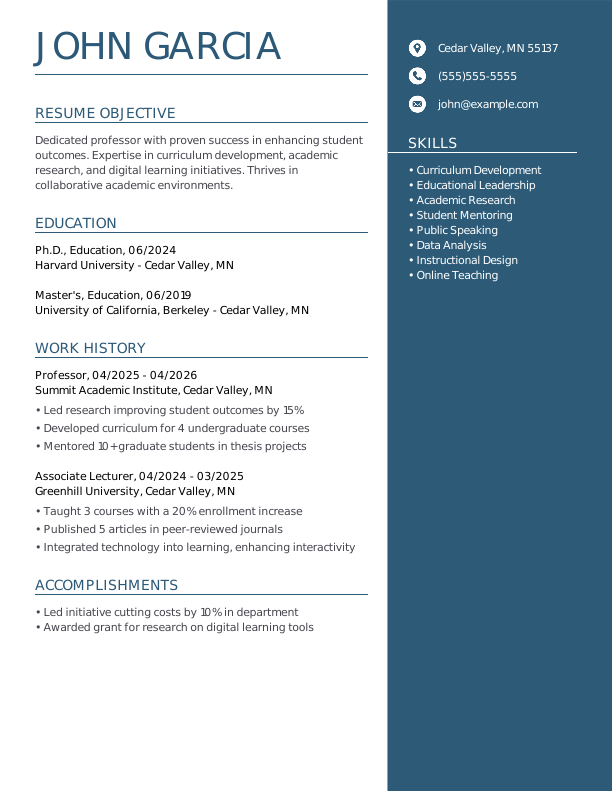
 Free
FreeProfessor Entry-Level Resume
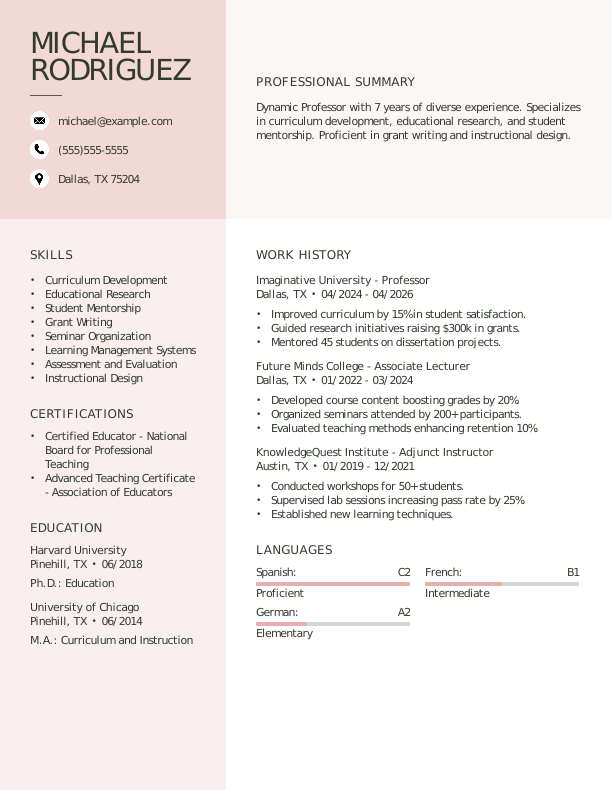
Professor Mid-Level Resume
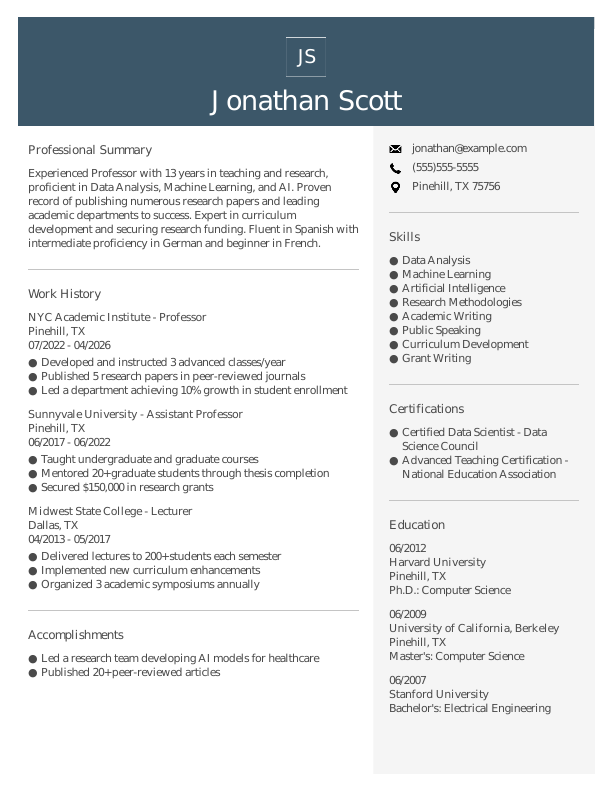
Professor Experienced Resume
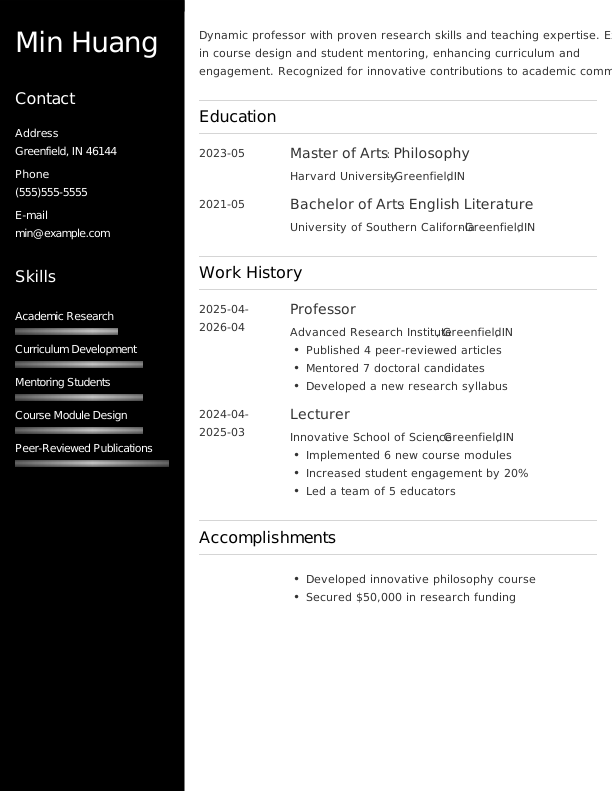
Professor Entry-Level Resume 1
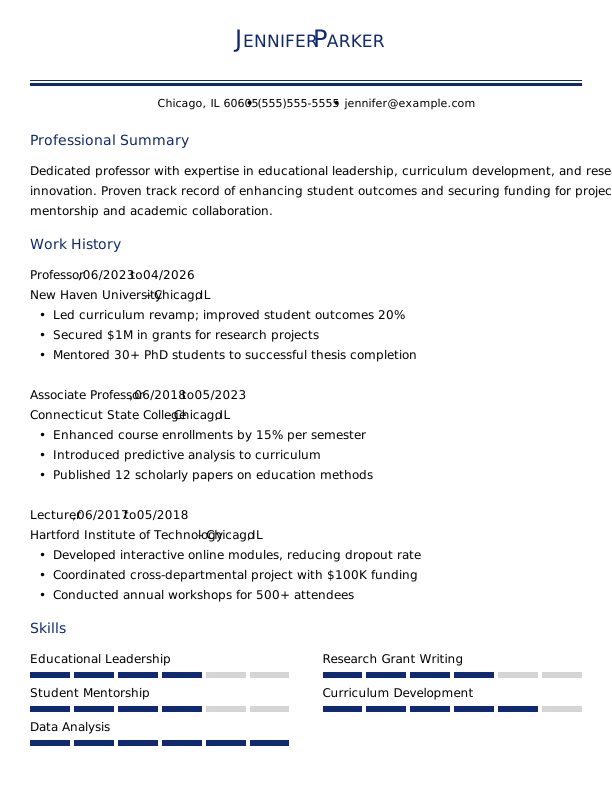

Professor Mid-Level Resume 1
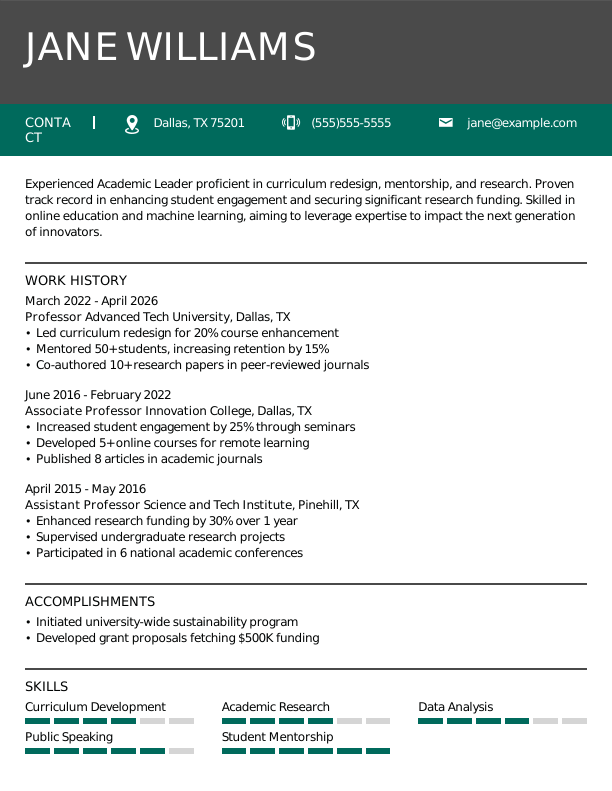

Professor Experienced Resume 1
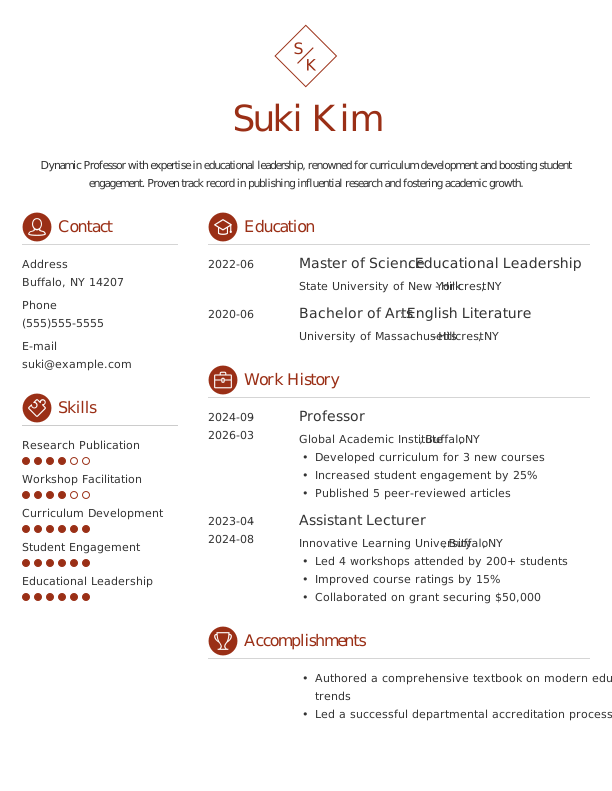
Professor Entry-Level Resume 2
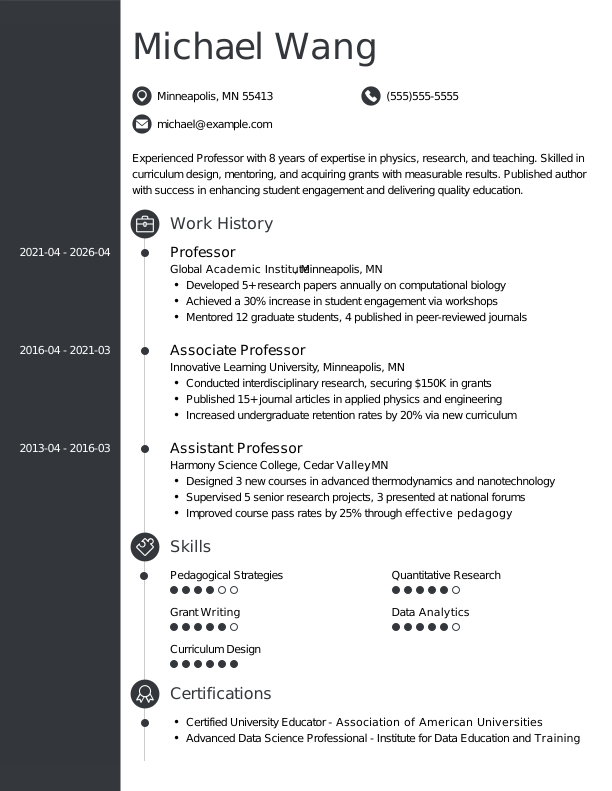

Professor Mid-Level Resume 2
Browse Free Resume Templates
- Accounts Payable
- Adjunct Professor
- Artist
- Auto Mechanic
- Baker
- Business Development Manager
- Business
- Certified Nursing Assistant
- Classic & Traditional
- Cleaner
- College Student
- Concierge
- Construction Worker
- Corporate
- Creative & Unique
- Custodian
- Customer Service
- Dental Assistant
- Direct Support Professional
- Entry-Level
- Flight Attendant
- Hospitality & Food Service
- Front Desk Receptionist
- Healthcare
- High School
- Housekeeping
- Hvac Technician
- Inventory Manager
- Logistics
- Maintenance
- Management
- Modern
- Mortgage Loan Processor
- Pet Sitter
- Phlebotomist
- Production
- Rbt
- Restaurant Server
- Sales
- Security Services
- Simple & Basic
- Social Work
- Teacher
- Technology
Resume Examples for Professors
Professor resumes should reflect your publication record, teaching evaluations, and departmental service. Explore our templates to find one suited to academic hiring conventions.
Entry-Level Professor Resume
If you are entering academia from a doctoral program, this template helps you write a professor resume by leading with your dissertation research, any teaching assistantships, conference presentations, and publications.

Mid-Career Professor Resume
An excellent choice for mid-level educators seeking advancement, this template effectively showcases experience while emphasizing recent achievements and specialized skills.

Experienced Professor Resume
An ideal choice for seasoned educators with over a decade of experience, this template supports professors aiming for leadership positions in academia or advanced research roles.

Professor Resume Template (Text)
Here is a text-based professor resume, ready to copy and personalize. The format organizes your publication record, teaching evaluations, and departmental service.
Yuki Martinez
Indianapolis, IN 46209
Professional Summary
Accomplished professor with proven expertise in education development increases. Promoted extraordinary student engagement and mentorship across diversified academic settings. Recognized for innovative teaching strategies and scholarly achievements.
Work Experience
April 2025 – April 2026
Innovative Teaching Academy – Indianapolis, IN
Professor
- Developed curricula increasing student engagement 20%
- Published 5 scholarly articles in peer-reviewed journals
- Mentored 15 graduate students, leading to 2 award winners
April 2023 – March 2025
Global Education Institute – Indianapolis, IN
Lecturer
- Conducted workshops, improving course satisfaction by 30%
- Designed online resources, increasing class enrollment 50%
- Advised 20 undergraduate projects, resulting in awards
April 2021 – March 2023
KnowledgeHub University – Greenfield, IN
Instructor
- Led field trips, enhancing experiential learning by 40%
- Facilitated workshops, teaching 150+ students effectively
- Coordinated academic competitions, achieving high turnout
Education
May 2021
Yale University New Haven, CT
Master of Arts Education
May 2019
University of Connecticut Storrs, CT
Bachelor of Arts English Literature
Certifications
- Certified Online Instructor – National Education Association
- Advanced Pedagogy – American Federation of Teachers
- Scholarly Publishing – Association of College and University Educators
Skills
- Curriculum Development
- Student Engagement Strategies
- Research Publication
- Student Mentorship
- Online Teaching Platforms
- Workshop Delivery
- Academic Advising
- Experiential Learning
How to Write a Professor Resume
As a professor, knowing how to write a resume involves showcasing your teaching experience, research contributions, and academic achievements in a clear format. Use the guidance below to emphasize your qualifications and tailor your resume for the specific institutions or positions you’re applying for.
1. Contact Info
Ensure your contact information is clear, professional, and prominently placed at the top of your resume.
Include the following essential information:
- Full name with academic titles if relevant
- Phone number
- Professional email address
- City and state (ZIP code is optional)
- LinkedIn profile or academic portfolio (if applicable)
 PRO TIP
Skip including personal details such as your Social Security number, religious affiliation, or photos unless specifically requested by the employer.
2. Resume Profile
A resume profile is a brief introductory section, typically spanning two to four sentences, that outlines your key qualifications and experiences. It serves as a compelling pitch to hiring managers, aiming to capture their interest and motivate them to delve deeper into your resume.
This profile is strategically placed at the top of your resume and can take the form of either a summary or an objective, each serving distinct purposes. Understanding these differences can improve your presentation:
- A resume summary highlights critical qualifications, teaching experience, and research accomplishments relevant to academia. This format is especially useful for individuals with a robust work history or transferable skills who aim to emphasize their influence as a knowledgeable professor.
- A resume objective highlights your career aspirations and what you hope to accomplish in your next role. It’s particularly useful for new graduates, individuals shifting careers, or those with limited experience, like professionals moving into education.
Let’s examine the differences between a resume summary and a resume objective through the following examples:
Professor resume summary example:
Dedicated professor with over 6 years of experience in higher education, specializing in curriculum development and student engagement. Proficient in innovative teaching methods, academic research, and mentorship. Acknowledged for fostering a collaborative learning environment and improving student success rates through tailored instructional strategies.
Professor resume objective example:
Recent PhD graduate in education excited to launch a teaching career in an inclusive academic setting. Committed to fostering a love of learning while bringing strong organizational skills and a collaborative spirit to a progressive school or university environment.
3. Work Experience
The work experience on your resume is an important foundation for your application. Employers examine this section to assess how you’ve contributed in previous roles and the value you bring beyond basic job titles.
This part of your resume highlights how your achievements and experiences prepare you for the role of a professor, emphasizing your commitment to education and research.
The work experience section should contain:
- Job title
- Employer name and location
- Dates of employment (month/year)
- 3–5 bullet points highlighting your teaching responsibilities and academic contributions
To stand out, customize your bullet points using terminology relevant to academia. Begin with strong action verbs like “Published,” “Presented,” or “Supervised” to convey your contributions clearly.
Use quantifiable achievements whenever possible. Specific metrics, such as the number of papers published or students mentored, highlight your impact and help set you apart from other applicants.
In general, consider following the format of:
[action verb] + [responsibility] = [result/achievement]
For example:
Conducted over 15 undergraduate lectures each semester, fostering critical thinking and engagement among 200+ students, leading to a 95% course completion rate.
Note that you can also flip the result/achievement with the responsibility:
Achieved a 20% increase in student retention rates through innovative curriculum development and personalized mentoring strategies.
With these techniques in mind, your resume bullets may look something like:
- Delivered engaging lectures to over 100 undergraduate students per semester, improving course completion rates by 20%.
- Mentored graduate students in research projects, resulting in three published papers in peer-reviewed journals.
- Implemented innovative teaching techniques that increased student participation and satisfaction scores by 15%.
- Collaborated with faculty to design a new curriculum for the nursing program, improving accreditation outcomes.
- Used online learning platforms to facilitate hybrid courses, accommodating diverse learning styles and increasing accessibility.
4. Skills
The skills section provides a concise overview of your professional abilities as a professor, highlighting your expertise in academia. This ATS-friendly resume format allows hiring managers to quickly assess your qualifications and fit for the role.
Skills can be categorized into three key areas:
- Soft skills are interpersonal abilities that influence how well professors engage with students and colleagues.
- Hard skills are specific, quantifiable abilities gained through education, training, or experience.
- Technical skills refer to the specialized knowledge and abilities required to perform specific tasks within a profession.
5 Soft Skills for Your Resume or CV
- Effective communication skills
- Mentoring and coaching
- Research and analysis
- Conflict resolution strategies
- Collaborative teamwork
5 Hard Skills for Your Resume or CV
- Curriculum development
- Research methodology (qualitative, quantitative)
- Student assessment and evaluation
- Academic writing and publishing
- Online teaching platforms (Canvas, Blackboard)
In general, aim to showcase a well-rounded selection of skills that directly correspond with the job expectations. For additional examples tailored to your field, please explore more specific skills listed further down the page.
PRO TIP
If you’re a newer professor, consider placing your skills section right after your summary for better visibility. If you have more experience, it’s advisable to move this section lower and incorporate relevant skills into your teaching history.
5. Education
Understanding how to list education on your resume is important for showcasing your qualifications. Begin with your most recent or relevant degree, clearly indicating the type of degree and the institution attended.
If you’re a recent graduate, consider adding optional details such as your graduation year, GPA (if it’s 3.5 or higher), honors received, or notable coursework that relates to the position.
Professor resume education section example:
Doctor of Philosophy in Clinical Psychology (PhD)
Stanford University, Stanford, CA
Conferred: 2018 | Dissertation: Neural Correlates of Cognitive Behavioral Therapy in Adolescents
PRO TIP
When listing multiple degrees on your resume, be sure to arrange them in reverse-chronological order, starting with your highest degree, such as Doctor of Philosophy (PhD), followed by Master of Arts (MA).
6. Certifications
Certifications are essential as they validate your expertise and demonstrate that you’re knowledgeable about current trends in your field. While they may not always fit into a standard resume format, this section holds significant value for many professionals. Employers often seek specific credentials for specialized positions, such as teaching licenses for educators or certification in advanced research methods for academic roles.
List certifications on your resume that improve your application. Ensure these credentials are up to date and presented clearly on your resume.
Professor certification examples:
- PhD in Educational Leadership | University of Education | Expires: 05/2028
- Certified Online Instructor (COI) | Online Learning Consortium | Expires: 12/2027
- Teaching English as a Second Language (TESOL) | TESOL International Association | Expires: 04/2028
- Advanced Teaching Certificate | National Board for Professional Teaching Standards | Expires: 11/2027
Start Building Your Job-Winning Resume
Use Your Existing Resume
Import your current resume to transfer your information to one of our professional templates.
Create a New Resume
Start fresh with a template that catches your eye and follow the prompts to add your details.
Tailor Your Work History to Beat the ATS
Your work experience goes beyond just listing job titles. It’s an opportunity to demonstrate the tangible impact you’ve made in your field, showcasing specific achievements that highlight your expertise. This approach not only improves your resume but also ensures it’s ATS-friendly, allowing applicant tracking systems (ATS) to easily scan it.
To create a compelling work history, tailor your descriptions to align with the role you’re targeting by incorporating relevant keywords from the job description. Begin by evaluating the requirements outlined in the posting and take note of any frequently mentioned skills or qualifications. By integrating these elements into your experience section, you can effectively reflect what employers are seeking.
Key Takeaways
- Tailor your resume to the job description. Use specific terminology from the posting to connect with both ATS and hiring committees.
- Highlight quantifiable achievements. Illustrate your impact with metrics relevant to academia (e.g., publications, grant funding amounts, student success rates) to differentiate yourself.
- Select an appropriate format for your career stage. Early-career academics may prefer a functional layout, while seasoned professionals typically opt for reverse-chronological resumes.
More Resume & CV Examples
- Academic
- Admissions Counselor
- Higher Ed
- Instructional Designer
- Lab Assistant
- Marine Biologist
- Mentor
- Research Scientist
Frequently Asked Questions
Last Update:
What resume format should I use for my professor resume?
When preparing your resume for a professor position, you can choose from three primary formats. The best option depends on your academic background and the aspects of your experience you wish to highlight:
- Chronological: The chronological resume format is the most widely used style, highlighting your work history with a clear outline of responsibilities and accomplishments. This structure works well for applicants with a solid and relevant job background, as it reinforces their qualifications while adding credibility to their application.
- Functional: The functional resume, often called a skills-based resume, prioritizes a summary of qualifications and a detailed skills section over chronological work history. This format is particularly beneficial for applicants lacking direct experience or those with gaps in their employment, allowing them to highlight relevant abilities.
- Combination: A combination resume merges chronological and functional formats, showcasing both skills and work history. This format highlights capabilities alongside career growth, making it ideal for professionals transitioning into new fields or advancing in their current paths.
Should I include a cover letter with my resume?
Yes, you should include a cover letter with your application for a professor position. A well-crafted cover letter improves your resume by allowing you to articulate your teaching philosophy, research interests, and how they align with the institution’s goals. It shows hiring committees that you’re genuinely interested in contributing to their academic community rather than submitting a generic application.
If you’re unsure about writing one, there are plenty of resources available to assist you. You can find guides on how to write a cover letter specifically for academia, along with examples that illustrate successful approaches in various disciplines. Exploring different formats will help you choose one that best reflects your qualifications and experiences.
To make the process easier, consider using a cover letter generator, which provides templates and tailored suggestions that can help streamline your writing experience for academic applications.
How long should a professor resume be?
For academics with less than 10 years of experience, a one-page resume is typically adequate to summarize key qualifications and teaching experiences. Highlight specific courses taught, research contributions, and relevant certifications that showcase your expertise in the field.
Conversely, professors in senior or specialized roles may extend their resumes to two pages if they maintain focus on significant achievements and contributions. Emphasize leadership in curriculum development or published works while ensuring all information is directly relevant to the academic position sought.
What keywords should I include to pass applicant tracking systems (ATS)?
To pass ATS screenings, it’s essential to incorporate keywords directly from the job posting. Focus on including specific terms that reflect the responsibilities of a professor, such as “curriculum development,” “student assessment,” and “research methodologies.” These phrases resonate with ATS algorithms and help demonstrate your fit for the role.
Additionally, highlight any relevant certifications like teaching credentials or specialized training in your field. Mention technical tools you’re proficient in, such as learning management systems or statistical software. This targeted approach will improve your chances of getting noticed by hiring committees and securing an interview.
Is it important to list teaching assistantships or guest lectures on my CV?
Yes, including teaching assistantships highlights your engagement in academia and showcases your ability to communicate complex concepts. This is particularly valuable for those with limited formal faculty roles, as it demonstrates your commitment to education and your readiness for a full professor position.

Toni Frana is a Certified Professional Resume Writer (CPRW), member of the Professional Association of Resume Writers & Career Coaches, and career expert who empowers job seekers to take control of their career paths using Monster’s comprehensive job search and resume tools.
See More From Toni FranaExplore Related Career Advice

How to Write a Functional Resume (Formatting Tips, Template, & Examples)

Updated:
Aug 7, 2026
|

17 min read


Functional vs Chronological Resume: Which Format Is Right for You?
Updated:
Aug 3, 2026
|
15 min read

100+ Resume Adjectives to Help You Write a Stronger Resume in 2026 (With Examples)
Updated:
Jul 30, 2026
|
12 min read




How to Explain Employment Gaps: Examples for Resumes, Interviews, & More
Updated:
Jul 17, 2026
|
20 min read