
Free Dog Sitter Resume Templates & Examples
Reliability, pet knowledge, and a genuine love for animals go a long way in this role. These free dog sitter resume and CV examples help you convey your client communication, scheduling flexibility, and animal care experience.
Real-World Resumes That Get Results

 Free
Free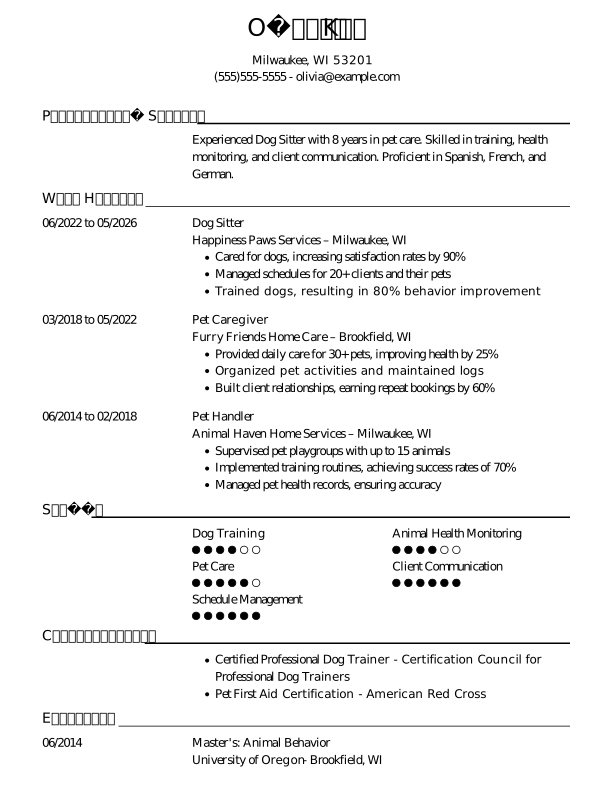

Browse Free Resume Templates
- Accounts Payable
- Adjunct Professor
- Artist
- Auto Mechanic
- Baker
- Business Development Manager
- Business
- Certified Nursing Assistant
- Classic & Traditional
- Cleaner
- College Student
- Concierge
- Construction Worker
- Corporate
- Creative & Unique
- Custodian
- Customer Service
- Dental Assistant
- Direct Support Professional
- Entry-Level
- Flight Attendant
- Hospitality & Food Service
- Front Desk Receptionist
- Healthcare
- High School
- Housekeeping
- Hvac Technician
- Hybrid
- Inventory Manager
- Logistics
- Maintenance
- Management
- Modern
- Mortgage Loan Processor
- Pet Sitter
- Phlebotomist
- Production
- Rbt
- Sales
- Security Services
- Restaurant Server
- Simple & Basic
- Social Work
- Teacher
- Technology
Resume Examples for Dog Sitters
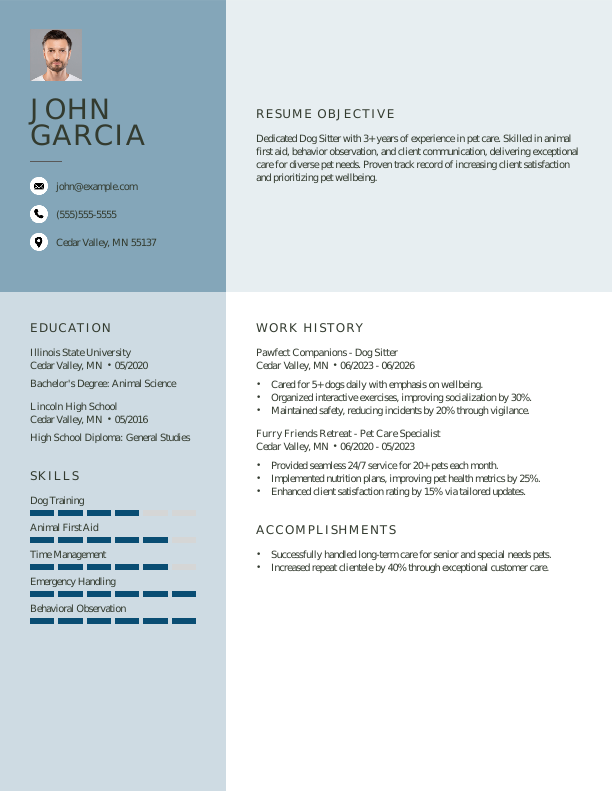
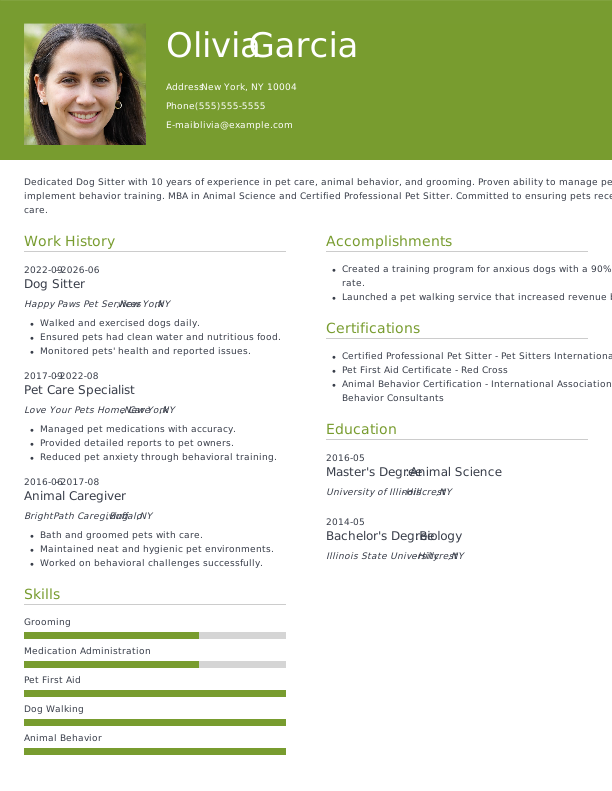
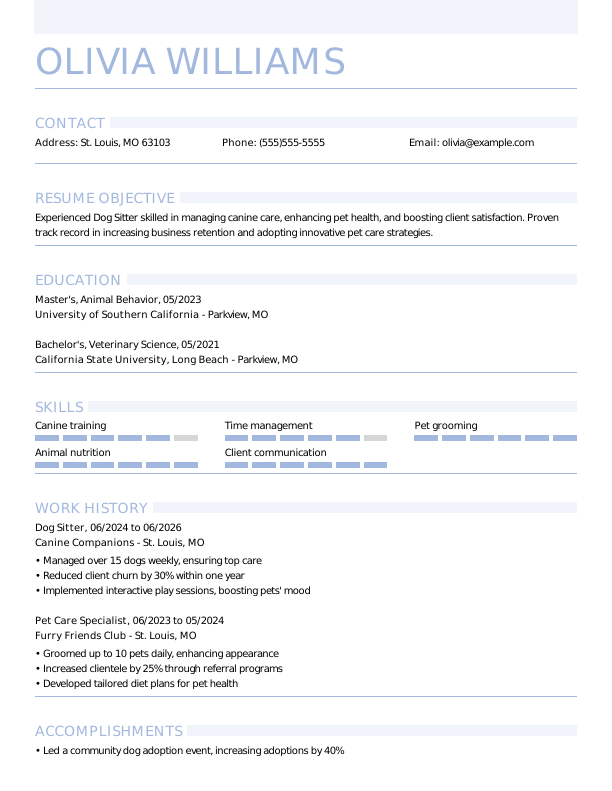
Dog sitter resumes and CVs differ based on experience levels, from those just starting out to seasoned professionals. Explore what to include at each stage to craft your own document.
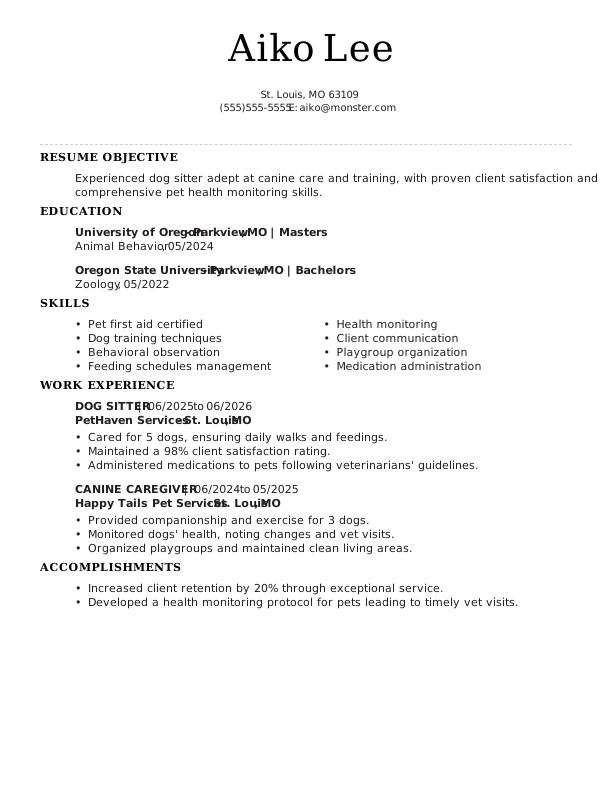
Entry-Level Dog Sitter Resume
Ideal for recent graduates, this resume with no experience template is also beneficial for career changers stepping into dog sitting from other professions.
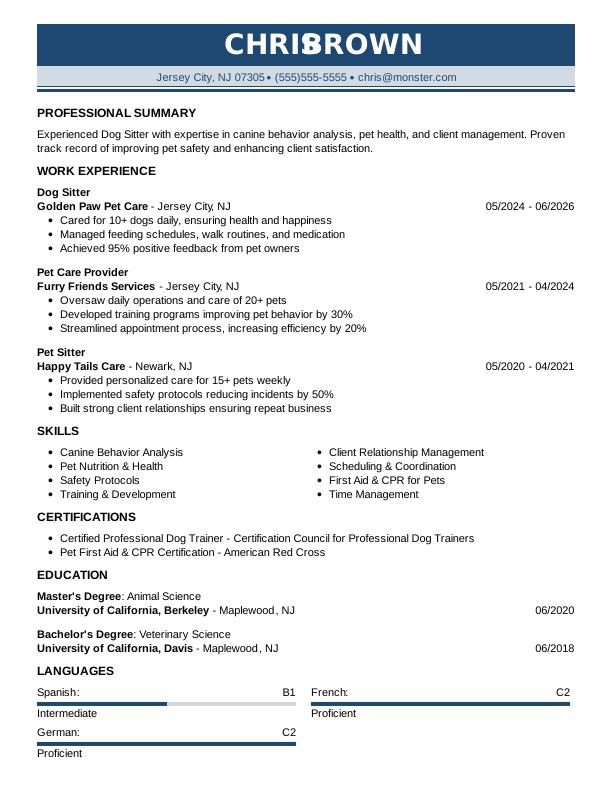
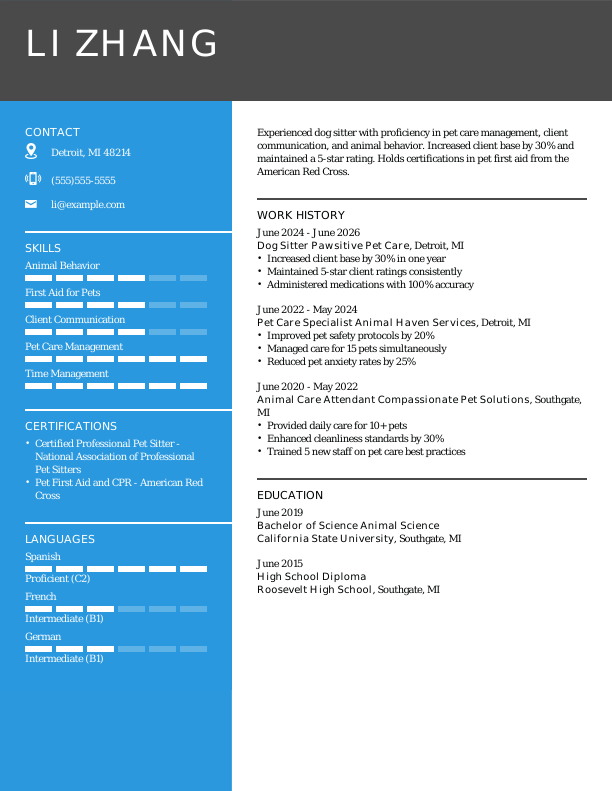
Mid-Career Dog Sitter Resume
A good fit for dog sitters with several years of experience, this template highlights recent pet care achievements and supports advancement into more specialized or independent roles.
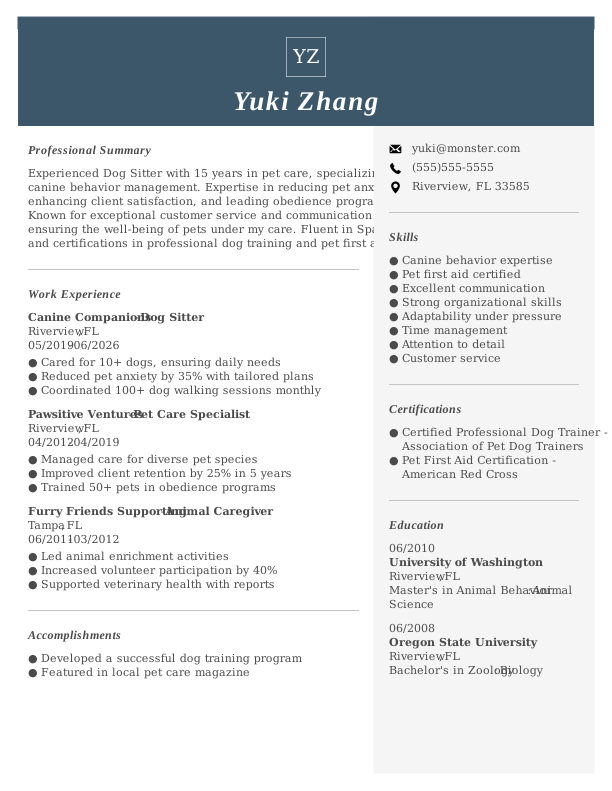
Experienced Dog Sitter Resume
An ideal choice for dog care professionals with over 10 years of experience, this template highlights applicants seeking advanced roles in pet services and animal behavior management.
Dog Sitter Resume Template (Text)
Use this customizable text template for a dog sitter position to easily copy, paste, and personalize it within your document.
Chris Wang
Indianapolis, IN 46207
Professional Summary
Dedicated Dog Sitter with 5 years of progressive experience in pet care. Skilled in behavior assessment, stress-free handling, and client retention. Consistently ensuring top-notch safety and satisfaction for pets and owners alike.
Work Experience
June 2023 – June 2026
Pawfect Companions – Indianapolis, IN
Dog Sitter
Cared for 10+ dogs with varying needs weekly.
Ensured a 98% customer satisfaction rate via top-quality care.
Managed client bookings, increasing clientele by 20% in 2024.
March 2020 – May 2023
TailWag Retreat – Indianapolis, IN
Pet Care Specialist
Maintained cleanliness and safety for 30+ pets daily.
Developed exercise routines, enhancing energy levels by 15%.
Led events driving 12% increase in customer engagement.
February 2018 – February 2020
Happy Paws Haven – Greenfield, IN
Animal Caregiver
Provided personalized care for 8 frequent clients’ pets.
Reduced stress behaviors in animals by 25% via positive reinforcement.
Received 95% positive feedback for professional pet handling.
Education
May 2016
University of Texas Greenfield, IN
Master’s Degree Animal Behavior and Welfare
May 2014
Texas State University Greenfield, IN
Bachelor’s Degree Biology
Certifications
- Certified Professional Dog Trainer (CPDT) – Certification Council for Professional Dog Trainers
- Pet First Aid and CPR – American Red Cross
- Animal Care Specialist Certification – International Association of Canine Professionals
Skills
- Dog behavior assessment
- Animal first aid
- Conflict management
- Scheduling and time management
- Safe pet transportation
- Client relationship building
- Attention to detail
- Stress-free animal handling
How to Write a Dog Sitter Resume
As a dog sitter, knowing how to write a resume means showcasing your relevant skills, animal experience, and an appealing format that attracts potential clients. Use the guidance below to emphasize your strengths and tailor your resume for the specific pet care positions you’re pursuing.
1. Contact Info
Your contact information should be clear, professional, and easy to find at the top of your resume.
Make sure to include:
- Full name
- Phone number
- Professional email address
- City and state (ZIP code is optional)
- LinkedIn profile or personal portfolio (if relevant)
 PRO TIP
Skip including personal details such as your Social Security number, full address, or age on your resume unless the employer specifically requests them.
2. Resume Profile
A resume profile is a brief introductory section, typically consisting of two to four sentences, that highlights your identity and key qualifications. It serves as a compelling pitch to hiring managers, designed to grab their attention and prompt them to explore your resume further.
This profile is positioned at the top of your resume, often presented as either a summary or an objective statement. Each format has its unique purpose and function:
- A resume summary emphasizes your relevant experiences, skills, and achievements in caring for dogs. This approach works best for individuals with previous pet care experience or transferable skills who wish to highlight their contributions as a dedicated dog sitter.
- A resume objective highlights your career aspirations and the goals you aim to achieve. It’s particularly beneficial for new graduates, individuals changing careers, or those with limited experience, such as dog training enthusiasts or pet care professionals transitioning into dog sitting.
Let’s take a look at an example of each to see how a resume summary and a resume objective differ:
Dog sitter resume summary example:
Dedicated dog sitter with over 6 years of experience providing exceptional care in both private homes and pet boarding facilities. Proficient in canine behavior management, medication administration, and effective communication with pet owners. Acknowledged for ensuring the safety and happiness of pets while fostering trust and reliability.
Dog sitter resume objective example:
Recent graduate with a degree in Animal Behavior excited to begin a career as a dog sitter in a nurturing and pet-friendly environment. Committed to providing exceptional care and companionship, bringing strong organizational skills and a genuine love for animals to local pet owners or dog care services.
3. Work Experience
The work experience on your resume is an important selling point. Employers assess your history to understand not just the positions you’ve held, but the positive impact you’ve made on the pets in your care.
Your background in dog sitting showcases your ability to provide attentive and reliable pet care, making you a strong applicant for this role.
The work experience section should contain:
- Job title
- Employer name and location
- Dates of employment (month/year)
- 3–5 bullet points describing your relevant responsibilities and achievements
Tailor your content to reflect the specific responsibilities of a dog sitter. Start each bullet point with an action verb (like “Walked,” “Fed,” “Supervised”) to create a strong impression and showcase your dedication to pet care.
Incorporate quantifiable information whenever possible. Specific numbers, such as the number of dogs cared for or hours spent walking, illustrate your experience and demonstrate your reliability, helping you stand out in a competitive market.
In general, consider following the format of:
[action verb] + [responsibility] = [result/achievement]
For example:
Cared for and walked 5+ dogs daily, ensuring proper exercise and nutrition, resulting in a 100% satisfaction rate from pet owners.
Note that you can also flip the result/achievement with the responsibility:
Achieved a 30% increase in repeat clients through effective communication and personalized care routines.
With these techniques in mind, your resume bullets may look something like:
- Provided care for 15+ dogs weekly, ensuring each received personalized attention and exercise.
- Administered medications and special diets to dogs with health conditions, improving their well-being.
- Communicated regularly with pet owners to update them on their dog’s behavior and health during stays.
- Used pet tracking software to log daily activities and maintain detailed care records.
- Trained new dog sitters in best practices for animal care and safety protocols.
4. Skills
The skills section offers a concise overview of your abilities as a dog sitter. This clarity allows hiring managers to quickly evaluate your qualifications for caring for pets. Skills can be categorized into three distinct groups:
- Soft skills are essential personal qualities that determine how well a dog sitter interacts with pets and their owners.
- Hard skills are specific, measurable abilities gained through education, training, or hands-on experience.
- Technical skills are the practical abilities required to perform specific tasks in a job.
5 Soft Skills for Your Resume or CV
- Attention to detail
- Effective communication
- Time management skills
- Empathy towards animals
- Patience and understanding
5 Hard Skills for Your Resume or CV
- Pet care and supervision
- Dog training techniques (positive reinforcement)
- Health monitoring (weight, diet)
- Emergency first aid for pets
- Scheduling and managing pet appointments
In general, aim to include a diverse range of relevant skills that align with the job requirements to showcase your capabilities as a dog sitter.
PRO TIP
If you’re a newer dog sitter, consider placing your skills section higher on your resume, right after your summary. For those with more experience, it’s appropriate to move this section lower and weave your skills throughout your work history.
5. Education
Understanding how to showcase your experience as a dog sitter can significantly improve your appeal to potential clients.
Begin by listing your most relevant pet care experiences, including any certifications or training you’ve completed.
If you’re just starting out, consider mentioning any volunteer work with animals or personal pet ownership to highlight your familiarity and passion for caring for dogs.
Dog sitter resume education section example:
High School Diploma
Pawtucket High School, Pawtucket, RI
Graduated: 2022 | Honor Roll (3 years)
PRO TIP
If you progressed from an Associate Degree in Animal Care to a Bachelor of Science in Veterinary Technology, or obtained another relevant certification, list both in reverse-chronological order on your resume.
6. Certifications
Listing certifications on your resume can improve your appeal when you have limited experience as a dog sitter. While this section is not always included in traditional resumes, it holds significant value for professionals in pet care.
Many clients seek specific qualifications, especially for specialized services like training or caring for elderly pets.
Include only relevant certifications that bolster your candidacy and demonstrate your skills. Keeping these credentials up to date and listed clearly is essential to making a positive impression on potential clients.
Dog sitter certification examples:
- Pet First Aid and CPR Certification | American Red Cross | Expires: 04/2028
- Dog Behavior and Training Certification | Certification Council for Professional Dog Trainers | Expires: 08/2027
- Canine Nutrition Course Completion Certificate | Pet Nutrition Alliance | Expires: 12/2027
- Animal Care and Management Certification | National Association of Professional Pet Sitters | Expires: 06/2028
Start Building Your Job-Winning Resume
Use Your Existing Resume
Import your current resume to transfer your information to one of our professional templates.
Create a New Resume
Start fresh with a template that catches your eye and follow the prompts to add your details.
Tailor Your Work History to Beat the ATS
Your work experience is more than a list of job titles. It’s an opportunity to show the measurable impact you’ve had on pet care, safety, and client satisfaction. This approach also contributes to an ATS-friendly resume that applicant tracking systems (ATS) can easily scan.
To build a strong work history, tailor it to the specific dog sitting role you’re applying for by using relevant keywords and phrases. Start by analyzing the job description thoroughly. Identify repeated skills or requirements related to pet care, communication, or reliability, and aim to reflect those elements in your experience descriptions whenever possible.
Key Takeaways
- Tailor your resume to the job description. Use specific terms from the posting to describe your skills and experiences for both ATS and human reviewers.
- Highlight measurable achievements. Quantify your experience with metrics such as the number of dogs cared for, client satisfaction ratings, or repeat bookings to make an impact.
- Select the right format based on your experience level. New sitters might prefer a functional layout, while those with extensive experience should opt for a reverse-chronological format.
More Resume & CV Examples
- Animal Care
- Call Center Representative
- Customer Experience Manager
- Customer Service Coordinator
- Customer Service Manager
- Customer Service Representative
- Customer Service Specialist
- Customer Service Supervisor
- Customer Support
- Dog Walker
- Personal Shopper
- Remote Customer Service
- Retail Customer Service
- Retail Manager
- Retail
- Retail Sales Associate
- Salon Receptionist
- Service Advisor
- Service Manager
- Store Manager
- Travel Agent
- Travel Consultant
- Veterinarian
- Veterinary Assistant
- Veterinary Receptionist
- Veterinary Technician
- Work From Home
Cover Letters for Your Resume
Browse our library of cover letter examples to complete your application. A resume will have a better chance of getting noticed.
Frequently Asked Questions
Last Update:
What resume format should I use for my dog sitter resume?
There are three main resume formats to consider when applying for a dog sitter position. Your choice should reflect your experience level and highlight the skills or attributes you wish to showcase:
- Chronological: The most popular format, a chronological resume emphasizes your work experience by detailing responsibilities and achievements in reverse order. This format is ideal for job seekers with relevant job history that reinforces their qualifications and demonstrates their consistent commitment to dog sitting or similar roles.
- Functional: Also known as a skills-based resume, the functional resume emphasizes a summary of qualifications and an expanded skills section to highlight your pet care abilities. This format minimizes focus on work history, making it beneficial for job seekers without relevant experience or those entering the pet care industry.
- Combination: A combination resume integrates elements from both chronological and functional formats, showcasing a skills section alongside relevant work experience. This structure allows dog sitters to emphasize their pet care abilities and highlight their career growth, making it suitable for those seeking new opportunities in animal care.
Should I include a cover letter with my resume?
Yes, you should include a cover letter with your dog sitter application. A well-crafted cover letter allows you to express your passion for animal care and share experiences that may not be highlighted in your resume. It demonstrates to pet owners that you’ve taken the time to personalize your application, which can set you apart from others who may submit a generic application.
If you’re feeling unsure about how to write a cover letter, there are numerous resources available. You can find guides on crafting a compelling introduction, look at examples specific to pet care roles, and explore different formats that suit your style and experience level. These tools can provide clarity and direction as you craft your introduction.
For those looking for an easy way to create their cover letter, using a cover letter generator can simplify the process by offering templates and suggestions tailored to dog-sitting positions.
How long should a dog sitter’s resume be?
For dog sitters with less than 10 years of experience, a one-page resume is ideal. Focus on highlighting relevant experiences, such as pet care, training certifications, and key skills that showcase your ability to manage pets safely and happily. Keep it concise and engaging to grab the attention of potential clients.
If you have extensive experience or specialized training in areas such as veterinary care or dog behavior, a two-page resume may be appropriate. Ensure that each detail remains relevant and supports your qualifications, without unnecessary filler.
What keywords should I include to pass applicant tracking systems (ATS)?
To improve your chances of passing the ATS, focus on incorporating keywords and phrases from the job posting into your resume. Look for specific terms such as “dog care,” “walking schedules,” or “pet behavior” that directly relate to the dog-sitter role.
Additionally, mention any relevant certifications such as Pet First Aid, Animal CPR, or professional training in pet grooming. Highlighting tools you’re familiar with, such as scheduling apps or pet-tracking devices, demonstrates your readiness for the position. This targeted approach helps ensure that your resume rises to the top in ATS screenings.

Toni Frana is a Certified Professional Resume Writer (CPRW), member of the Professional Association of Resume Writers & Career Coaches, and career expert who empowers job seekers to take control of their career paths using Monster’s comprehensive job search and resume tools.
See More From Toni FranaExplore Related Career Advice


How to Put Transferable Skills on Your Resume: 120 Skills, Examples, & Tips

Updated:
Aug 27, 2026
|
16 min read


How to Write a Functional Resume (Formatting Tips, Template, & Examples)
Updated:
Aug 7, 2026
|
17 min read


Functional vs Chronological Resume: Which Format Is Right for You?
Updated:
Aug 3, 2026
|
16 min read

100+ Resume Adjectives to Help You Write a Stronger Resume in 2026 (With Examples)
Updated:
Jul 30, 2026
|
12 min read