
Free Owner Operator Resume Templates & Examples
Create a professional owner-operator resume with customizable templates, practical writing tips, and examples. Highlight your driving experience, routes, equipment, safety record, business management skills, and other qualifications to clearly show employers and clients what you can bring to the job.
Real-World Resumes That Get Results
 Free
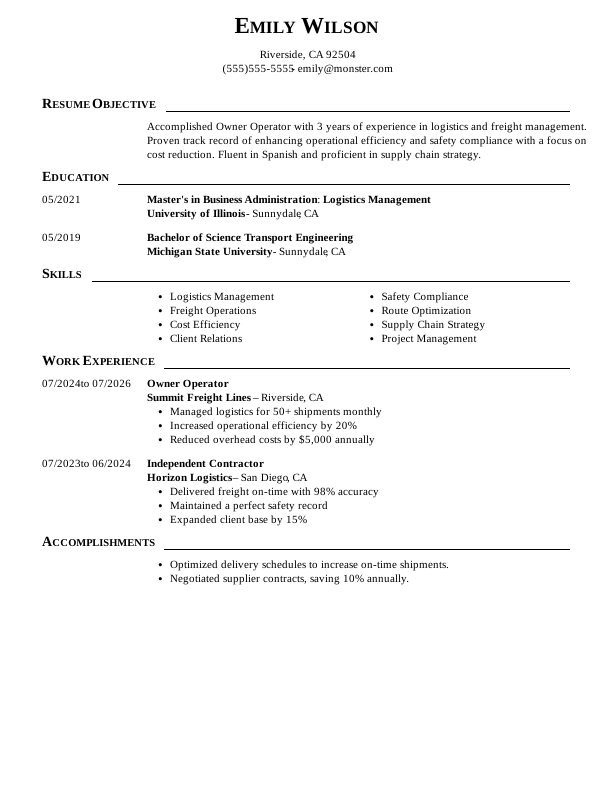
FreeOwner Operator Entry-Level Resume
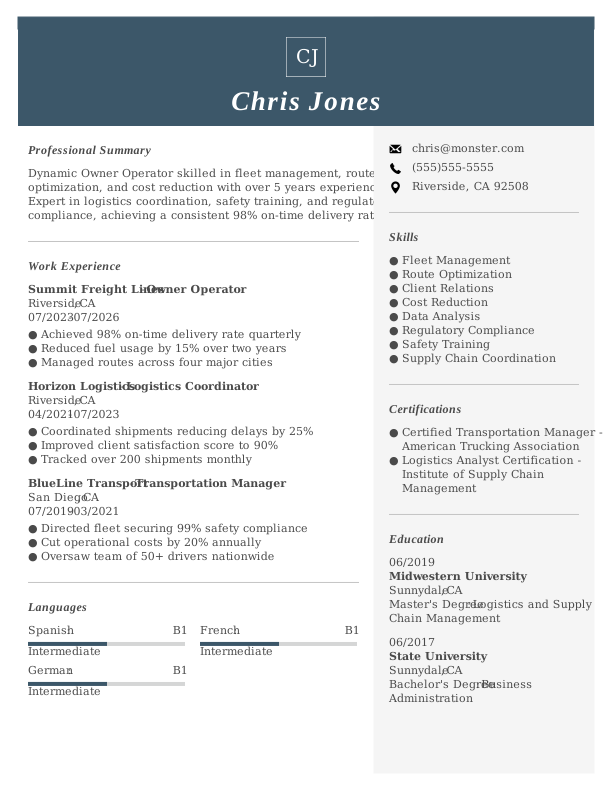
Owner Operator Mid-Level Resume
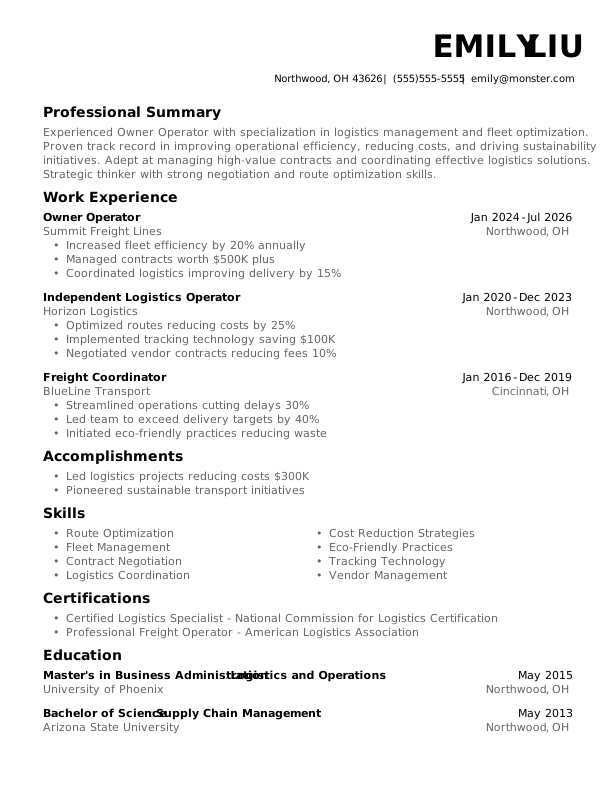
Owner Operator Experienced Resume
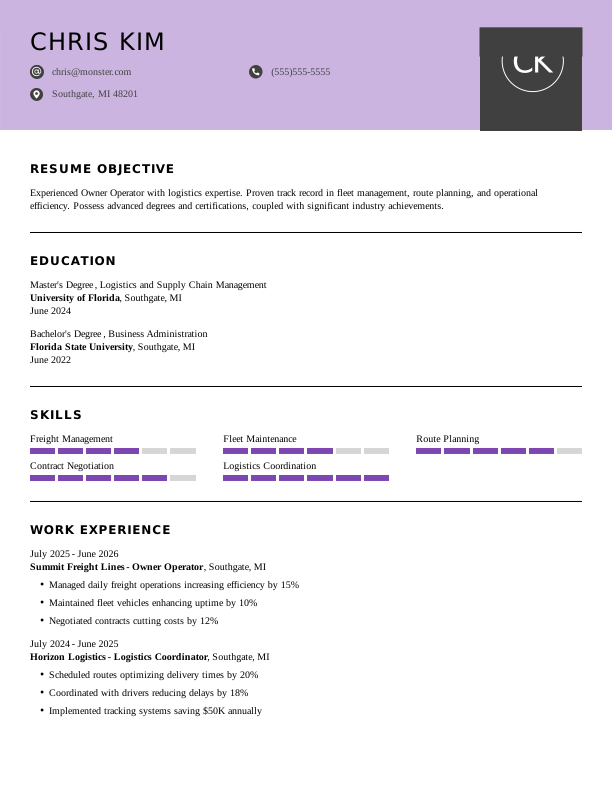

Owner Operator Modern Resume
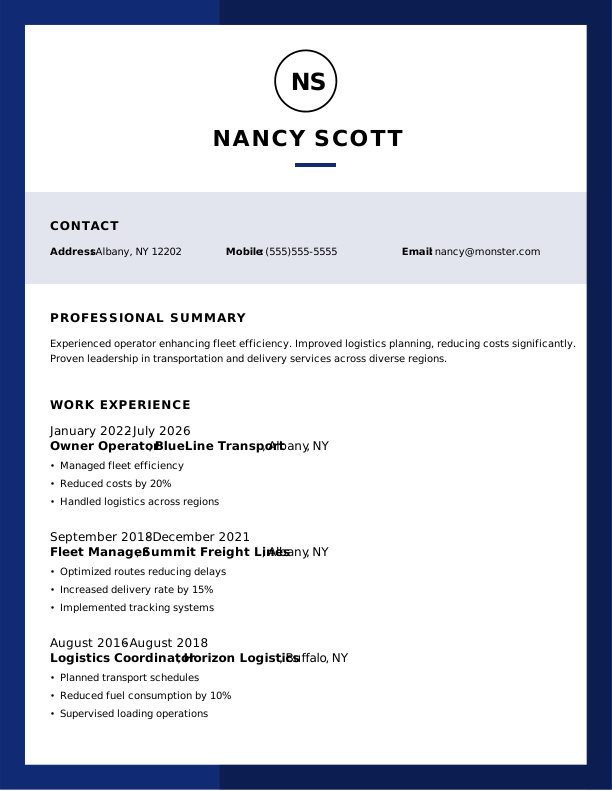

Owner Operator Creative Resume
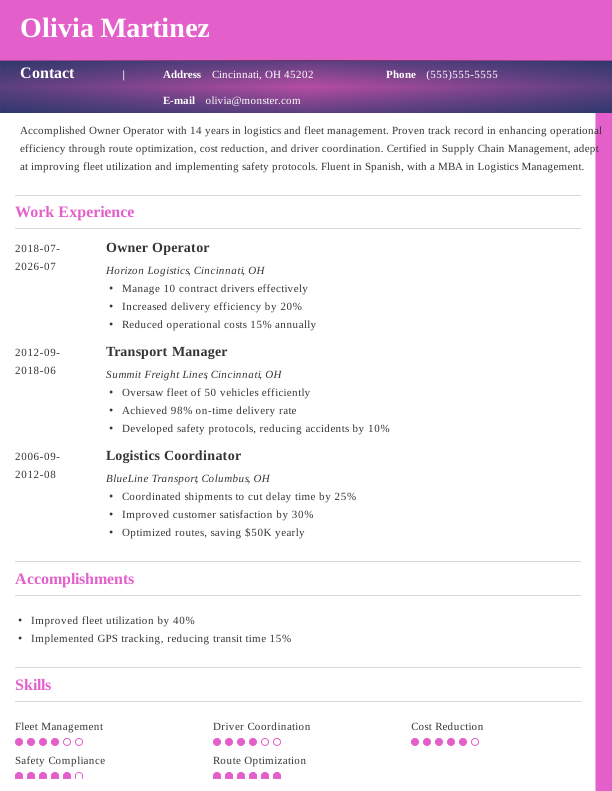

Owner Operator Traditional Resume
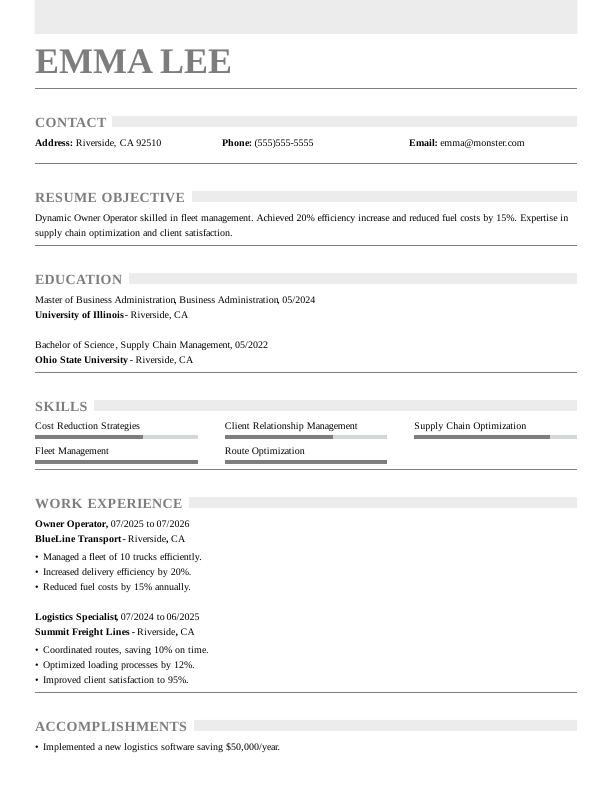

Owner Operator Simple CV Example
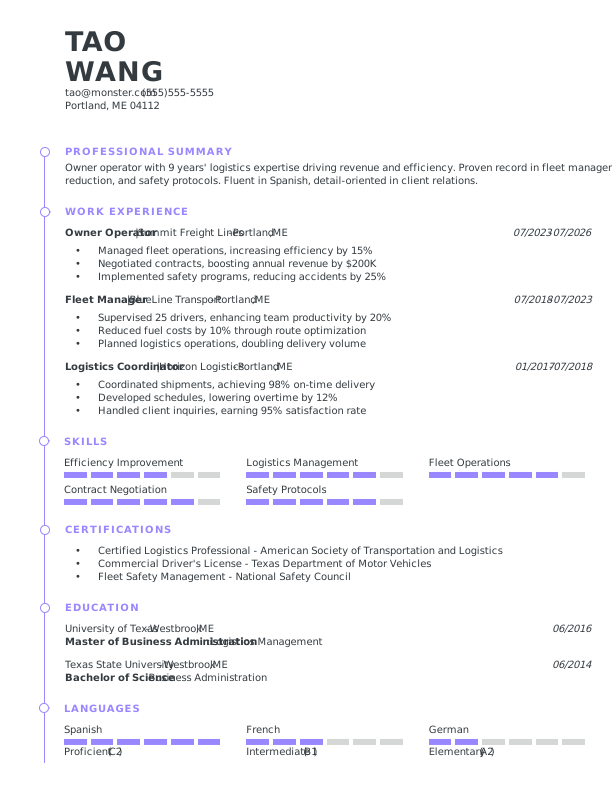
Owner Operator CV Format
Browse Free Resume Templates
- Accounts Payable
- Adjunct Professor
- Artist
- Auto Mechanic
- Baker
- Business Development Manager
- Business
- Certified Nursing Assistant
- Classic & Traditional
- Cleaner
- College Student
- Concierge
- Construction Worker
- Corporate
- Creative & Unique
- Custodian
- Customer Service
- Dental Assistant
- Direct Support Professional
- Entry-Level
- Flight Attendant
- Hospitality & Food Service
- Front Desk Receptionist
- Healthcare
- High School
- Housekeeping
- Hvac Technician
- Hybrid
- Inventory Manager
- Logistics
- Maintenance
- Management
- Modern
- Mortgage Loan Processor
- Pet Sitter
- Phlebotomist
- Production
- Rbt
- Sales
- Security Services
- Restaurant Server
- Simple & Basic
- Social Work
- Teacher
- Technology
Resume Examples for Owner Operators
Owner-operator resumes should highlight both your driving experience and the business responsibilities that come with running your own operation. Explore what to include based on your experience, equipment, and the type of work you’re targeting, then use our Resume Builder to create a tailored resume that highlights your skills, experience, and qualifications.
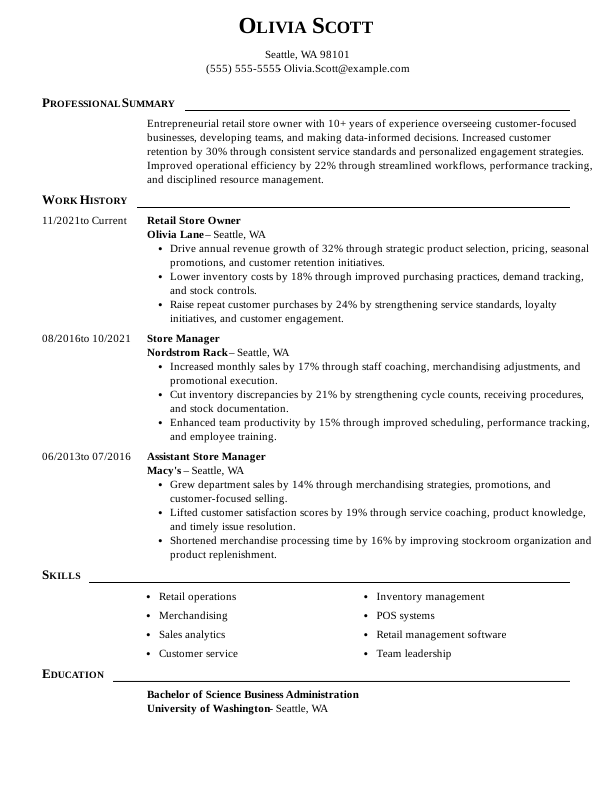
Retail Store Owner Operator Resume
A good fit for retail store owner-operators, this template highlights experience managing daily store operations, inventory, employees, sales, and customer service.
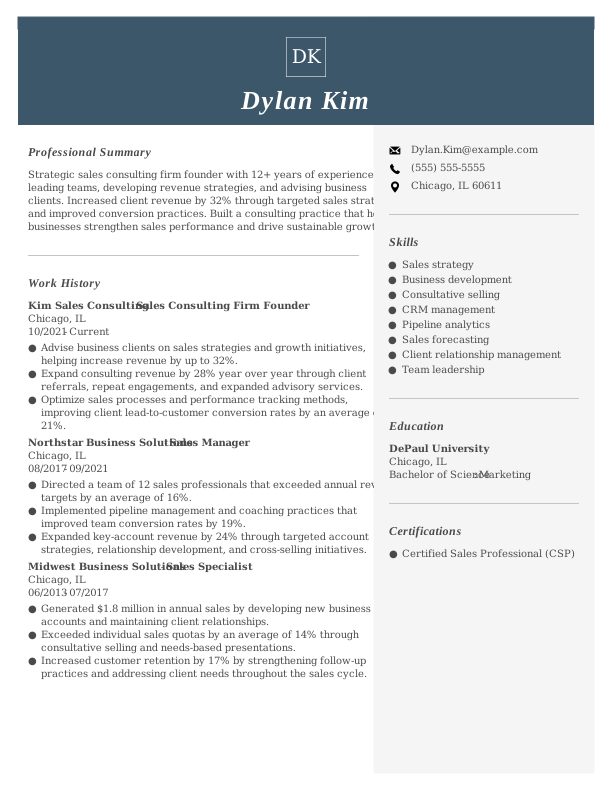
Sales Consulting Firm Founder Resume
A good fit for sales consulting firm founders, this template highlights experience building client relationships, developing sales strategies, leading consulting engagements, and growing a business. It can also help showcase revenue growth, business development, team leadership, and measurable client results when pursuing executive, consulting, or sales leadership roles.
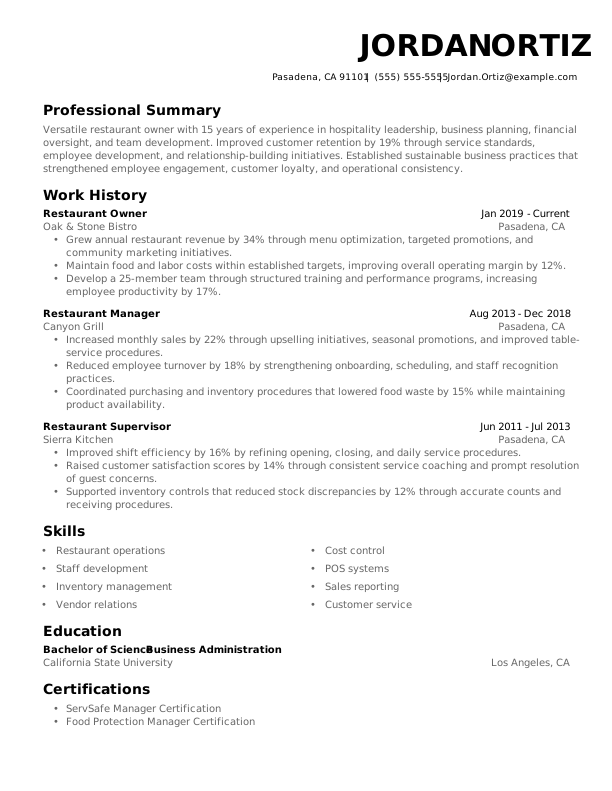
Restaurant Owner Resume
A good fit for restaurant owners, this template highlights experience managing daily operations, staff, inventory, vendors, finances, and customer service.
Owner-Operator Resume Template (Text)
Use this customizable text format for an owner-operator resume, and copy, modify, and adjust it directly in your document.
Yuki Kim
Louisville, KY 40211
Professional Summary
Business owner with 6+ years of experience managing retail operations, employees, inventory, customer service, and business finances. Skilled in overseeing daily operations, managing vendor relationships, controlling costs, and improving sales. Hands-on leader experienced in managing all aspects of a small business and building strong relationships with customers and suppliers.
Work Experience
Kim’s Home & Market — Louisville, KY
Owner / Operator | July 2022 – July 2026
- Owned and operated a retail store serving 500+ customers weekly, overseeing sales, inventory, staffing, purchasing, and daily operations.
- Increased annual sales by 22% by expanding product offerings, improving merchandising, and introducing targeted promotions.
- Managed a team of 8 employees, negotiated with 20+ vendors, and oversaw expenses, payroll, inventory, and other business operations.
Horizon Retail Group — Louisville, KY
Store Manager | July 2020 – June 2022
- Managed daily operations for a high-volume retail location, including staffing, sales, inventory, customer service, and merchandising.
- Supervised a team of 12 employees and created schedules to maintain coverage during peak business hours.
- Increased monthly sales by 15% through improved product placement, promotional planning, and staff sales training.
BlueLine Retail — Louisville, KY
Assistant Store Manager | July 2018 – June 2020
- Supported daily store operations, including employee scheduling, inventory management, customer service, and opening and closing procedures.
- Trained new employees on customer service, point-of-sale procedures, store policies, and loss prevention.
- Assisted with merchandising, vendor deliveries, inventory transfers, and customer concerns to support smooth store operations.
Education
Master of Business Administration
University of Louisville | May 2018
Bachelor of Science in Business Administration
University of Kentucky | May 2016
Certifications
- Certified Retail Management Professional | National Retail Federation
- Lean Six Sigma Green Belt | International Association for Six Sigma Certification
Skills
- Retail Operations
- Business Management
- Staff Hiring and Training
- Inventory Management
- Vendor Relations
- Sales and Merchandising
- Customer Service
- Budget Management
- Purchasing and Cost Control
- Employee Scheduling
- Point-of-Sale Systems
- Business Development
How to Write an Owner-Operator Resume
As an owner-operator, knowing how to write a resume means showcasing your unique skills and extensive experience while using a format that attracts potential clients. Use the guidance below to emphasize your strengths and tailor your resume for the opportunities you’re pursuing.
1. Contact Info
Your contact information should be clear, professional, and easy to find at the top of your resume.
Make sure to include:
- Full name
- Phone number
- Professional email address
- City and state (ZIP code is optional)
- LinkedIn profile or personal portfolio (if relevant)
 PRO TIP
Avoid including personal details like your Social Security number, religious affiliations, or photographs unless the employer specifically requests this information.
2. Resume Profile
A resume profile is a brief introductory section, typically two to four sentences long, designed to summarize your key qualifications and experiences. It serves as a compelling pitch aimed at hiring managers, capturing their attention and motivating them to explore the rest of your resume.
This profile is usually positioned at the top of your resume and can take the form of either a summary or an objective. Each format has distinct purposes that cater to different job-seeking strategies:
- A resume summary highlights your relevant experience, skills, and achievements by focusing on what sets you apart as a strong job seeker. This approach is ideal for individuals with prior work history or transferable skills looking to show their impact as an owner-operator.
- A resume objective presents a forward-looking view that highlights your career aspirations and what you aim to achieve. It’s particularly beneficial for recent graduates, individuals transitioning careers, or those with limited experience, such as coding bootcamp alumni or professionals moving into sales.
Let’s take a look at an example of each to see how a resume summary and a resume objective differ:
Owner-operator resume summary example:
Dedicated owner-operator with over 6 years of experience managing successful transportation businesses. Proficient in logistics management, fleet maintenance, and customer relations. Acknowledged for maximizing operational efficiency and delivering exceptional service that drives client satisfaction and business growth.
Owner-operator resume objective example:
Recent graduate with a degree in business management eager to launch a career as an owner-operator in the logistics industry. Committed to delivering exceptional customer service and leveraging strong organizational skills to improve operational efficiency at a growing transportation company.
3. Work Experience
The work experience on your resume is an important selling point. Employers assess your job history to understand not only where you’ve operated but also the tangible impact you’ve made in each role.
Your background as an owner-operator highlights your entrepreneurial skills and ability to manage complex logistics, showcasing how well-suited you’re for the position.
The work experience section should contain:
- Job title
- Employer name and location
- Dates of employment (month/year)
- Three to five bullet points describing your relevant responsibilities and achievements
Tailor your content to reflect the specific responsibilities and achievements relevant to being an owner-operator. Start each bullet point with a strong action verb (like “Managed,” “Oversaw,” “Executed”) to emphasize your contributions.
Incorporate quantifiable information or metrics whenever possible. Providing specific figures, such as revenue growth or cost reductions, illustrates your effectiveness and distinguishes you from other job seekers in the job market.
In general, consider following the format of:
[action verb] + [responsibility] = [result/achievement]
For example:
Managed daily operations of a logistics business, achieving a 25% increase in on-time deliveries while overseeing a fleet of 10 vehicles.
Note that you can also flip the result/achievement with the responsibility:
Achieved a 15% reduction in operational costs through strategic route planning and fuel efficiency initiatives.
With these techniques in mind, your resume bullets may look something like:
- Managed daily operations of a trucking business, increasing revenue by 25% within the first year.
- Negotiated contracts with suppliers and clients, achieving a cost reduction of 15% on average.
- Implemented logistics software to optimize route planning, reducing delivery times by 20%.
- Trained new drivers on safety protocols and operational procedures, improving overall team performance.
- Collaborated with maintenance teams to ensure fleet reliability, decreasing vehicle downtime by 30%.
4. Skills
The skills section provides a concise overview of professional abilities tailored for owner-operators. This allows hiring managers to quickly assess qualifications and determine fit for the role.
Skills can be categorized into three groups:
- Soft skills are personal attributes that influence how well owner-operators collaborate and interact with others.
- Hard skills are specific, measurable abilities gained through education, training, or hands-on experience.
- Technical skills are the practical abilities needed to operate specialized equipment and software.
5 Soft Skills for Your Resume
- Effective communication
- Strong leadership skills
- Strategic planning abilities
- Team motivation techniques
- Customer-focused mindset
5 Hard Skills for Your Resume
- Fleet management software (Teletrac, Omnicomm)
- Vehicle maintenance scheduling
- Route optimization techniques
- Regulatory compliance knowledge
- Logistics tracking systems (Transporeon, Project44)
In general, focus on showcasing a diverse range of relevant skills that align with the job requirements to demonstrate your overall value.
PRO TIP
If you’re a newer owner-operator, consider placing your skills section higher on your resume right after your summary. If you have more experience, it’s better to position this section lower and weave your skills throughout your work history for a cohesive presentation.
5. Education
Understanding how to list education on your resume is important for showcasing your skills and achievements as an owner-operator.
Begin with your most recent or relevant role, clearly stating the business name and your position.
If you’re new to the field, include details such as the year you started, any special accolades, or noteworthy projects that highlight your capabilities.
Owner-operator resume education section example:
High School Diploma
Springfield High School, Springfield, IL
Graduated: 2020 | Graduated with Honors
PRO TIP
If you’re progressing from an Associate Degree in Business to a Bachelor of Business Administration (BBA), or have earned another relevant degree, include both in reverse-chronological order.
6. Certifications
Listing certifications on your resume can demonstrate relevant skills and professional development, particularly when a credential supports the type of business you operate or the role you’re pursuing.
Certifications aren’t required for every owner-operator position, but credentials in areas such as business management, project management, bookkeeping, or industry-specific skills can strengthen your resume.
Focus on certifications that are relevant to your experience and the type of business or role you’re targeting.
List the certification name, issuing organization, and expiration date when applicable. If you have several years of business ownership experience, prioritize credentials that add relevant expertise rather than listing every course or training program you’ve completed.
Owner-operator certification examples:
- Project Management Professional (PMP) | Project Management Institute | Earned: 2025
- Certified Small Business Manager (CSBM) | Institute of Certified Small Business Managers | Earned: 2024
- QuickBooks Online Certified | Intuit | Earned: 2025
- Lean Six Sigma Green Belt | International Association for Six Sigma Certification | Earned: 2024
Start Building Your Job-Winning Resume
Use Your Existing Resume
Import your current resume to transfer your information to one of our professional templates.
Create a New Resume
Start fresh with a template that catches your eye and follow the prompts to add your details.
Tailor Your Work History to Beat the ATS
Your work experience is more than a list of job titles. It’s an opportunity to illustrate the measurable impact you’ve made on operations, customer satisfaction, and overall business success. This approach also leads to an ATS-friendly resume that applicant tracking systems (ATS) can easily scan.
To create an effective work history, tailor it to the specific role you’re applying for by using relevant keywords and industry terminology. Begin by analyzing the job description in detail. Identify frequently mentioned skills or competencies and ensure those elements are reflected in your experience descriptions whenever possible.
Key Takeaways
- Tailor your resume to match the job description. Use specific terms from the listing to resonate with ATS and hiring managers.
- Highlight quantifiable achievements to demonstrate success. Include metrics relevant to your role (e.g., revenue growth percentages, delivery efficiency rates, customer satisfaction scores) to make an impact.
- Select a resume format that fits your experience level. New owner operators might choose a functional layout, while seasoned professionals often prefer reverse-chronological formats.
More Resume & CV Examples
- Assistant Project Manager
- Associate Product Manager
- Automotive
- Aviation
- Benefits Specialist
- Bus Driver
- Business Administration
- Business Development
- Business Management
- Business Manager
- Business Operations
- Business Owner
- Cdl Driver
- CEO
- Change Manager
- Chief Of Staff
- CISO
- Community Outreach Coordinator
- Company Driver
- COO
- Corporate Trainer
- Courier
- Delivery Driver
- Director Of Operations
- Director
- Driver
- Drone Pilot
- Dump Truck Driver
- Entrepreneur
- Executive Director
- Executive Manager
- Executive Recruiter
- Executive
- Food Delivery Driver
- Freelance
- General Manager
- Healthcare Management
- Hr Analyst
- Hr Business Partner
- Hr Consultant
- Hr Coordinator
- Hr Director
- Hr Manager
- Hr Specialist
- Managing Director
- Mechanic
- Onboarding Specialist
- Operations Manager
- Personal Driver
- Pilot
- Program Coordinator
- Program Director
- Program Manager
- Project Coordinator
- Project Manager
- Ramp Agent
- Recruiter
- Recruiting Coordinator
- Recruitment Coordinator
- Regional Manager
- Risk Management
- School Bus Driver
- Senior Manager
- Senior Program Manager
- Senior Project Manager
- Senior Recruiter
- Small Business Owner
- Supervisor
- Talent Acquisition Specialist
- Taxi Driver
- Team Leader
- Technical Recruiter
- Training Manager
- Transportation
- Truck Driver
- Uber Driver
- Vice President
Cover Letters for Your Resume
Browse our library of cover letter examples to complete your application. A resume will have a better chance of getting noticed.
Frequently Asked Questions
Last Update:
What resume format should I use for my owner operator resume?
When preparing a resume as an owner operator, you have three primary formats to choose from. Your selection should reflect your experience level and highlight the aspects of your career that matter most to potential clients or employers:
- Chronological: The most popular format, a chronological resume centers on your work experience, highlighting your responsibilities and achievements. This approach is especially suitable for applicants with a consistent job history as an owner operator, reinforcing their qualifications and showcasing their growth in the industry.
- Functional: Also known as a skills-based resume, the functional resume emphasizes a qualifications summary and an expanded skills section to showcase your abilities. Minimizing focus on work history, this format is beneficial for applicants without relevant experience or those facing employment gaps.
- Combination: A combination resume integrates chronological and functional formats, emphasizing both skills and work experience. By showcasing operational abilities alongside business growth, this layout benefits owner operators, making it ideal for those expanding into new markets or improving their entrepreneurial ventures.
Should I include a cover letter with my resume?
Yes, you should include a cover letter when applying for a position as an owner operator. A compelling cover letter not only allows you to express your enthusiasm for the role but also gives you a chance to showcase your unique skills and experiences that may not be evident in your resume. This personalized approach can set you apart from other applicants who might overlook this important element of their application.
If you’re feeling uncertain about crafting your cover letter, don’t worry—there are numerous resources available to assist you. You can find guides on how to write a cover letter tailored for owner operators, along with various examples that cater to specific needs within the industry. Exploring different formats will also help you determine which style best represents your qualifications and personality.
To make the process easier, consider using tools like a cover letter generator that can help structure your thoughts and provide suggestions based on the job description, ensuring that your application stands out while saving you time.
How long should a owner operator resume be?
For most owner-operators, a one-page resume is enough to highlight relevant business experience, management skills, accomplishments, and qualifications. Focus on your most recent and relevant experience, especially responsibilities related to running a business, managing employees, serving customers, controlling costs, or overseeing daily operations.
A two-page resume can make sense for owner-operators with extensive business experience, multiple ventures, or a long history of relevant leadership roles. If you use a second page, make sure each section adds useful information about your business experience, industry knowledge, or qualifications rather than including unrelated details simply to fill space.
What keywords should I include to pass ATS?
To improve your resume’s alignment with ATS requirements, use keywords and phrases from the job description that accurately reflect your experience.
For owner-operator roles, relevant terms may include “business operations,” “staff management,” “inventory management,” “vendor relations,” “budget management,” “customer service,” “sales,” or “business development,” depending on the position you’re targeting.
Also include relevant software, certifications, and industry-specific skills when they appear in the job posting and match your background. Tailoring your keywords to each position helps show how your experience aligns with the employer’s requirements while keeping your resume accurate and relevant.

Kirsten Chorpenning is a career advice writer who empowers job seekers to take control of their career paths using Monster’s comprehensive job search and resume tools. She specializes in helping job seekers find rewarding jobs in today’s dynamic work environment.
See More From Kirsten ChorpenningExplore Related Career Advice


How to Put Transferable Skills on Your Resume: 120 Skills, Examples, & Tips
Updated:
Aug 27, 2026
|

16 min read


How to Write a Functional Resume (Formatting Tips, Template, & Examples)
Updated:
Aug 7, 2026
|
17 min read


Functional vs Chronological Resume: Which Format Is Right for You?
Updated:
Aug 3, 2026
|
16 min read

100+ Resume Adjectives to Help You Write a Stronger Resume in 2026 (With Examples)
Updated:
Jul 30, 2026
|
12 min read