

Free Pilot Cover Letter Templates & Examples
Boost your interview chances with our professionally designed pilot cover letter templates. These free cover letter templates include writing tips and guidance to help you craft a standout letter that highlights your flight experience, safety mindset, and readiness for the role.
Real-World Cover Letters That Get Results
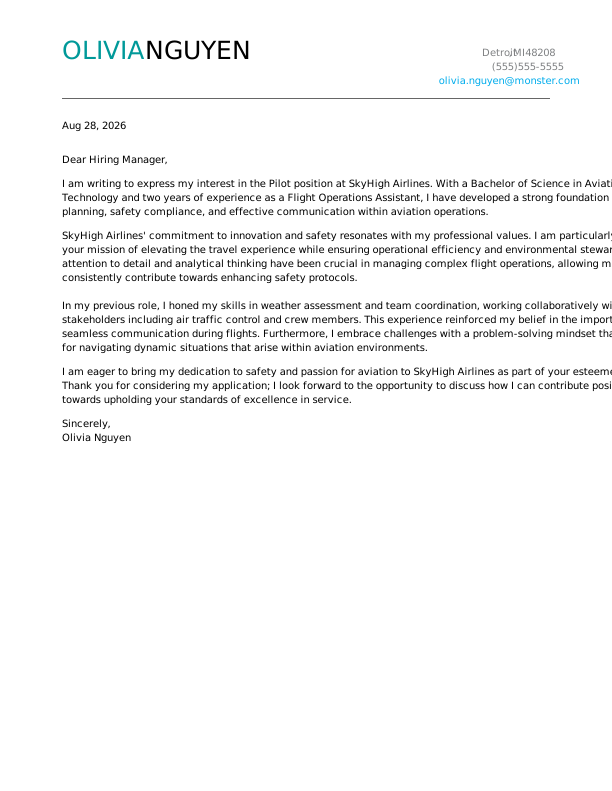
 Free
FreePilot Entry-Level Cover Letter
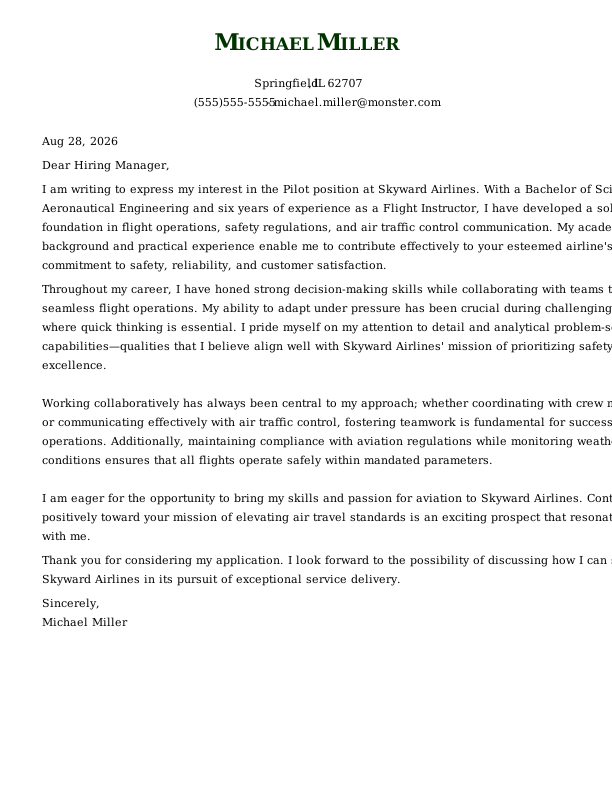
Pilot Mid-Level Cover Letter
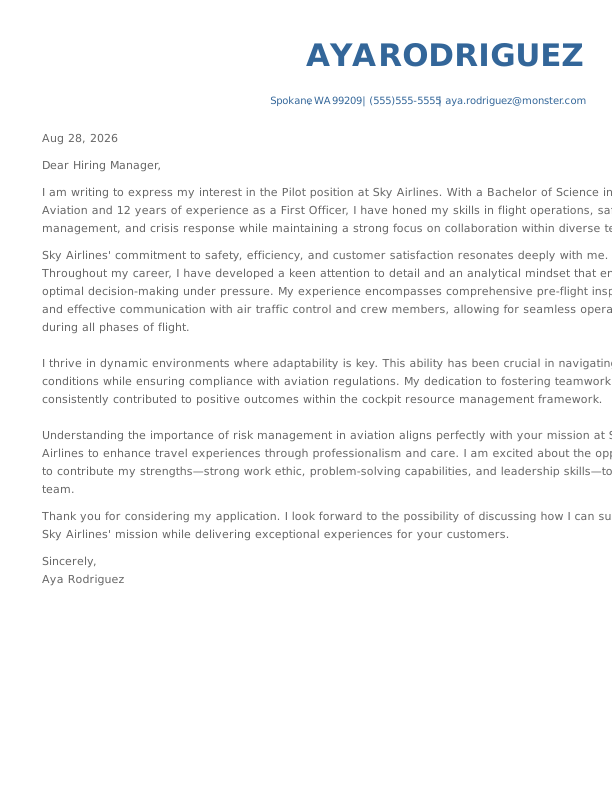
Pilot Experienced Cover Letter
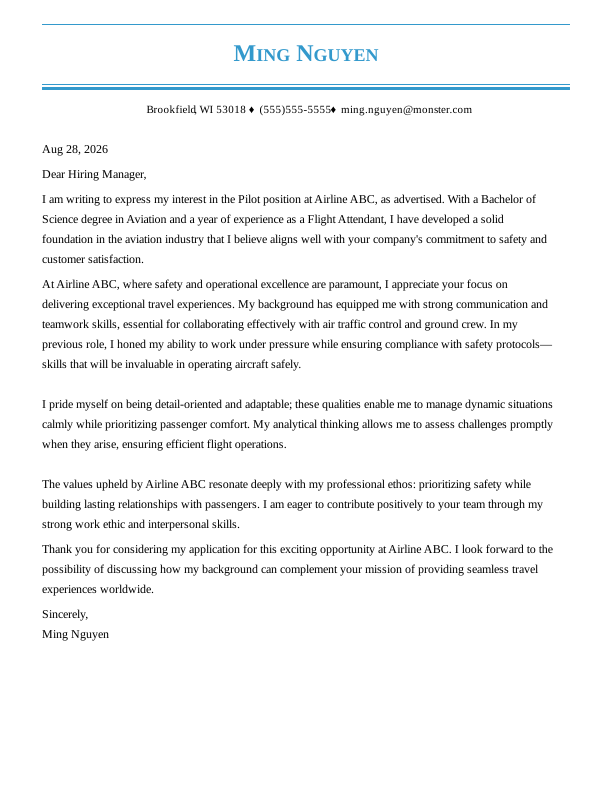
Pilot Entry-Level Cover Letter
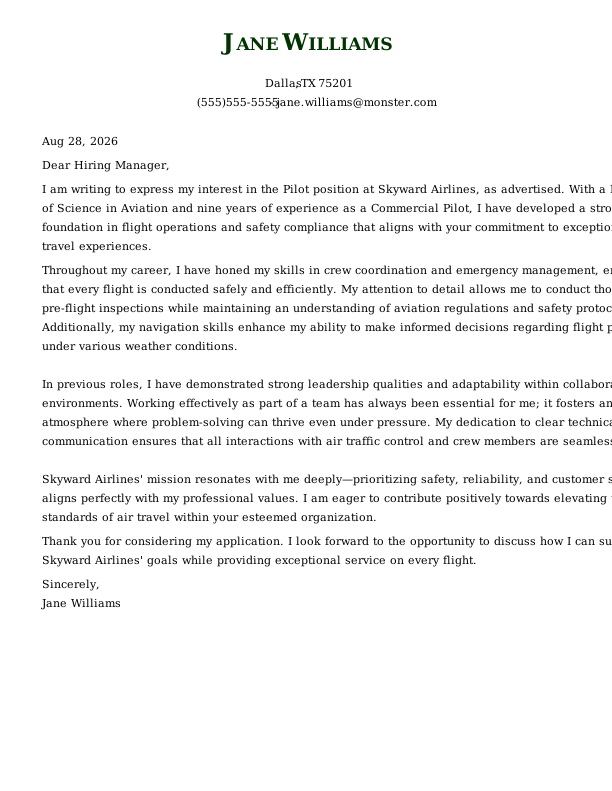
Pilot Mid-Level Cover Letter
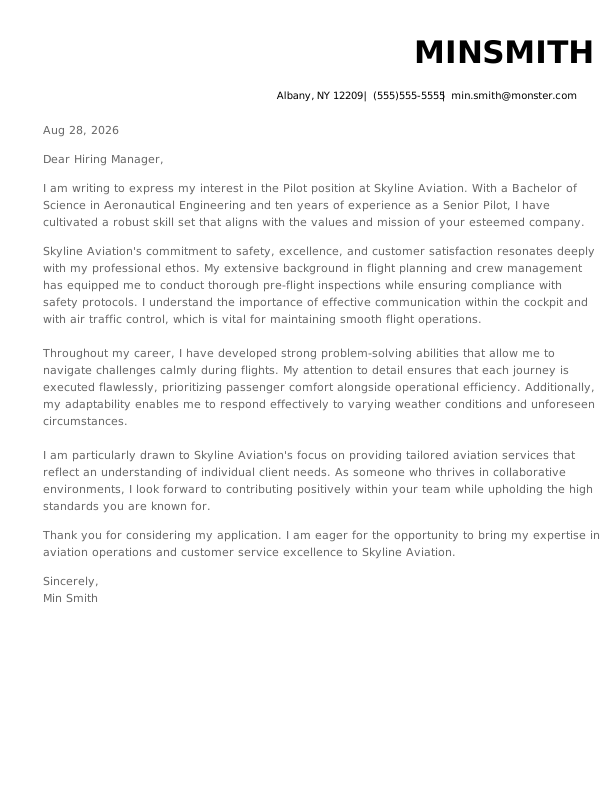
Pilot Experienced Cover Letter
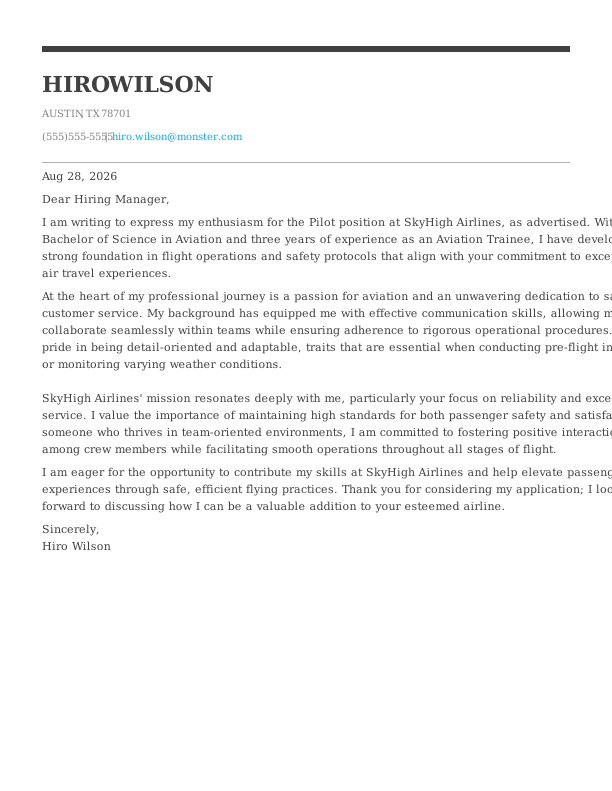
Pilot Entry-Level Cover Letter
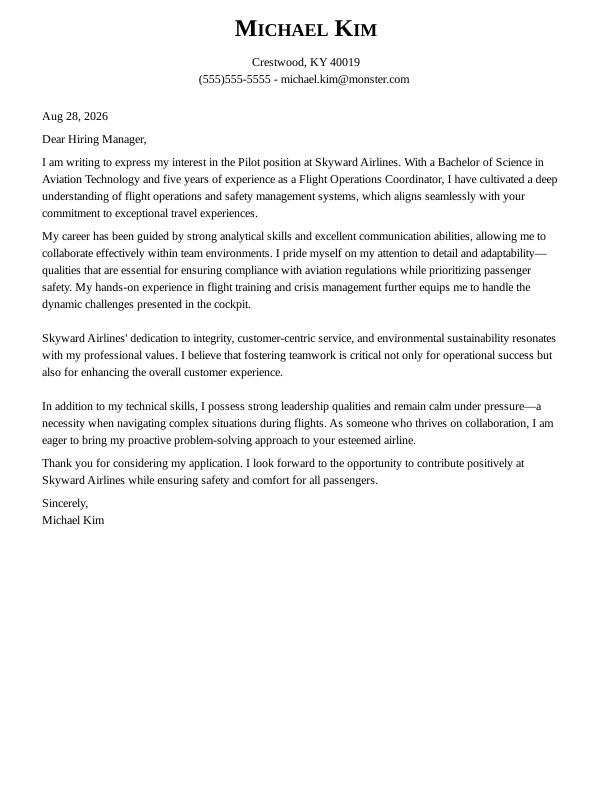
Pilot Mid-Level Cover Letter
Browse Free Cover Letter Templates
- Account Manager
- Accounts Payable
- Administrative Assistant
- Admissions Counselor
- Artist
- Babysitter
- Barista
- Bartender
- Bookkeeper
- Brand Ambassador
- Business Analyst
- Caregiver
- Chef
- Civil Engineering
- Computer Science
- Custodian
- Customer Service
- Dental Assistant
- Electrical Engineering
- Emt
- Engineering
- Event Coordinator
- Executive Assistant
- Finance
- Financial Analyst
- Firefighter
- Flight Attendant
- Graphic Designer
- Hair Stylist
- Healthcare
- Investment Banking
- It
- Janitor
- Journalism
- Lab Technician
- Law Clerk
- Lawyer
- Librarian
- Logistics
- Manager
- Marketing Manager
- Massage Therapist
- Mechanic
- Mechanical Engineer
- Medical Assistant
- Non Profit
- Nursing
- Office Manager
- Paralegal
- Personal Trainer
- Pharmacy Technician
- Photographer
- Physician Assistant
- Police Officer
- Project Manager
- Property Manager
- Receptionist
- Research Assistant
- Retail
- Sales
- Security Officer
- Social Work
- Software Engineer
- Teacher
- Teaching Assistant
- Truck Driver
- Vet Tech
- Veterinary Assistant
- Web Developer
- Welder
Cover Letter Examples for Pilots
Pilot cover letters change by experience level, so you should tailor each draft to entry-level, mid-career, or experienced roles. Use the templates in this section to highlight the right flight hours, certifications, and safety record for each stage.
Entry-Level Pilot Cover Letter
Perfect for recent graduates tackling a cover letter with no experience, this template also supports career changers moving into piloting from other fields.
Mid-Career Pilot Cover Letter
A good fit for flight instructors and other experienced pilot applicants, this template highlights career growth and supports advancement into airline operations, mentorship, or specialized roles.
Experienced Pilot Cover Letter
Best for pilots with 10+ years of experience, this template helps applicants pursue captain or senior command roles and advanced safety leadership positions.
Pilot Cover Letter Template (Text)
Use this adaptable text template for a pilot cover letter to copy, edit, and personalize in your document or file.
Olivia Davis
Parkview, MO 64164
(555)555-5555
olivia.davis@monster.com
Aug 28, 2026
Dear Hiring Manager,
I am writing to express my interest in the pilot position at Airways Inc. With a Bachelor of Science in Aviation Management and four years of experience as a commercial pilot, I have developed a robust skill set that aligns well with your company’s commitment to safety, integrity, and operational excellence.
In my previous role, I honed my abilities in flight navigation and crew resource management while ensuring compliance with all safety regulations. My experience has equipped me with strong analytical skills and exceptional attention to detail—qualities essential for conducting thorough pre-flight inspections and assessing weather conditions. Moreover, I pride myself on effective communication with air traffic control and crew members to maintain smooth operations throughout each flight.
Adaptability is another strength I bring to the table; I thrive in dynamic environments where quick decision-making is paramount. My proven problem-solving skills enable me to remain calm under pressure, ensuring passenger safety during any potential inflight emergencies.
I appreciate Airways Inc.’s focus on innovation and customer service within the aviation industry. Your mission resonates deeply with my professional values, particularly the dedication to delivering exceptional travel experiences while prioritizing safety for passengers and crew alike.
I am enthusiastic about the opportunity to contribute positively as part of your team at Airways Inc., fostering collaboration within an environment that emphasizes professionalism. Thank you for considering my application; I look forward to discussing how my background can support your esteemed company’s goals.
Sincerely,
Olivia Davis
How to Write a Pilot Cover Letter
Writing a strong pilot cover letter means proving your readiness for the cockpit through personalized operational details, clear flight experience, and concrete achievements. Highlight key logbook qualifications like total flight hours, relevant type ratings, safety records, and specific route expertise to match what the operator needs. Use the guidance below to tailor your letter for each target airline or charter company by connecting your hands-on flying experience directly to its operational standards and fleet requirements.
1. Research & Prepare
Before you write your cover letter, research the airline’s fleet, primary route network, and flight operations team. Pilots fly under vastly different conditions depending on the carrier, so showing that you understand an operator’s environment, aircraft types, and safety culture immediately sets you apart.
Review the job posting for key requirements like flight hours, type ratings, and medical certifications. Check the airline’s recent news for fleet expansions or new hub launches, and scan LinkedIn to see who manages flight operations or pilot recruitment. Use what you find to personalize your opening and connect your logbook hours and training directly to the company’s current operational needs.
2. Hook the Reader
Your opening paragraph sets the tone for your entire cover letter. A strong opener grabs the chief pilot or recruiter’s attention by demonstrating genuine knowledge of the airline, your total flight experience, and what you bring to the cockpit on day one.
Try mentioning a recent fleet expansion, new hub, or safety initiative from the carrier and connect it to your own operational background. You can also open with a specific instance where you handled a complex in-flight situation calmly while maintaining strong crew resource management, or highlight a direct referral from a captain or flight instructor who can vouch for your professionalism and discipline.
3. Tell Your Professional Story
Your cover letter should do more than just list your logbook totals. Use the main body to share a concise example that illustrates how you make safety-focused decisions and manage crew resources under real flight conditions.
Quantify your operational track record wherever possible. Mention specific metrics such as a 98% on-time arrival rate, zero reportable safety incidents, or route planning adjustments that reduced fuel burn by 3%. You can also highlight leadership wins, like mentoring first officers through checkrides or improving passenger satisfaction scores from 4.2 to 4.7 through clear, calm cabin communications.
4. Showcase Your Skills
Matching your flying skills to the exact requirements in a job posting helps recruiters and chief pilots visualize you in the cockpit on day one. Connecting your specific ratings and technical knowledge to what the operator needs shows how you manage flight safety, crew coordination, and daily schedules under changing conditions.
For example, if the role emphasizes strong crew resource management, describe a time you led pre-flight briefings, managed workload during abnormal procedures, and used standard callouts to maintain situational awareness. If the posting mentions flight planning or dispatch coordination, share how you reviewed weather reports and NOTAMs, calculated fuel burn and alternates, and adjusted flight plans to ensure safe and efficient operations.
5. Explain Any Special Circumstances
If you have an employment gap, a career shift, or a recent relocation, address it early and briefly. Share the reason directly, then pivot to what you gained during that time, such as updated ratings, time spent staying current in the simulator, or skills built while transitioning between operations.
For a pilot, you can note a break used for recurrent training, ATP completion, or advanced simulator sessions to show a continued focus on flight proficiency. If you moved from charter flying to commercial airlines, explain how adapting to different operational environments strengthened your standardized procedural discipline and crew resource management. If relocation brought you to a new region, mention your familiarity with local airspace and weather patterns and how you plan to stay flight-ready for your assigned base.
6. End With a Professional Goodbye
Close your cover letter by reaffirming your interest in the position, thanking the hiring team for their time, and inviting a conversation about how your background fits the company’s flight operations. Keep the tone concise, confident, and focused on safety and crew alignment.
Wrap up with a strong final statement, such as: “I welcome the opportunity to discuss how my approach to preflight planning, crew resource management, and safe operations can support your airline’s mission.” Then, end with a professional sign-off like “Sincerely” or “Best regards.”
4 Tips for Formatting Your Cover Letter
Use clear spacing, simple headings, and consistent fonts to format your cover letter. Proper formatting keeps your message professional and easy to read. These tips apply whether you have thousands of flight hours or are just starting out.

Keep It to One Page
Hiring managers are busy, and they appreciate concise cover letters that fit on one page. Target 250 to 400 words across three to four concise paragraphs to highlight your flight hours, type ratings, and core operational strengths.

Use a Professional Font & Layout
Choose a clear font such as Arial, Calibri, or Times New Roman in 10 to 12 pt with one-inch margins. Standard formatting ensures your document reads easily, keeping the focus entirely on your flying qualifications.

Save & Send as a PDF
Save your document as a PDF to preserve your layout across different operating systems. Use a clear file name that includes your name and the position, such as “Alex_Taylor_Pilot_Cover_Letter.pdf.”

Address the Hiring Manager Directly
Address your letter directly to the chief pilot, director of flight operations, or pilot recruitment lead whenever possible. Check the job listing, airline website, or LinkedIn to find their name. If it is unavailable, use “Dear Flight Operations Hiring Team” instead of outdated greetings like “To Whom It May Concern.”
Top-Paying States for Pilot Roles
Researching pilot pay across the United States helps you benchmark job offers, negotiate fair compensation, and plan career decisions about routes and employers. The salary data below comes from the U.S. Bureau of Labor Statistics (BLS) and reflects current national averages for pilots.
Your actual earnings can vary by location, total flight experience, certifications, aircraft type, and specialization such as cargo versus passenger service. Pilots who work for major airlines or in regional carriers serving high-cost markets often earn more than those flying smaller operators, and roles commanding larger aircraft typically pay at higher levels.
| Alabama | $145,930 |
| Alaska | $222,280 |
| Arizona | $209,750 |
| Arkansas | $158,600 |
| California | $321,460 |
| Connecticut | $250,950 |
| Delaware | $164,410 |
| Florida | $265,890 |
| Georgia | $357,390 |
| Hawaii | $104,310 |
| Idaho | $124,710 |
| Illinois | $296,570 |
| Indiana | $188,780 |
| Iowa | $158,090 |
| Kansas | $134,580 |
| Kentucky | $413,070 |
| Louisiana | $136,170 |
| Maine | $232,070 |
| Maryland | $139,340 |
| Massachusetts | $148,470 |
| Michigan | $307,070 |
| Minnesota | $188,580 |
| Mississippi | $129,030 |
| Missouri | $166,950 |
| Montana | $108,940 |
| Nebraska | $144,090 |
| Nevada | $191,900 |
| New Hampshire | $126,910 |
| New Jersey | $229,820 |
| New Mexico | $165,500 |
| New York | $290,170 |
| North Carolina | $149,350 |
| North Dakota | $132,640 |
| Ohio | $277,580 |
| Oklahoma | $137,120 |
| Oregon | $264,300 |
| Pennsylvania | $207,920 |
| Rhode Island | $124,860 |
| South Carolina | $163,870 |
| South Dakota | $89,990 |
| Tennessee | $133,850 |
| Texas | $261,260 |
| Utah | $160,530 |
| Vermont | $120,070 |
| Virginia | $279,820 |
| Washington | $382,350 |
| West Virginia | $108,810 |
| Wisconsin | $123,400 |
| Wyoming | $154,970 |
| Guam | $76,500 |
| Puerto Rico | $78,200 |
Key Takeaways
- Tailor each letter to the specific airline or operator. Mention route networks, aircraft types, and fleet safety priorities that match their current operations so chief pilots immediately see the fit.
- Lead with a clear opening and back it up with concrete flight metrics. Include total hours, on-time arrivals, incident-free records, or checkride milestones to prove operational reliability.
- Keep your layout clean and consistent with your resume. Use standard fonts, crisp spacing, and a clean single-page format so flight operations teams can scan your credentials quickly.
Browse Monster’s Resume Templates
Monster also has hundreds of ATS-friendly resume templates for all career levels and industries. Create a matching resume to help you land the interview.
Frequently Asked Questions
Last Update:
Do I really need a cover letter?
Yes, you should include a cover letter even when it’s marked optional. It gives hiring teams context your resume cannot provide and signals initiative and genuine interest in the pilot role.
A cover letter matters most when you’re changing careers, have an employment gap, or want to fly for a specific airline or operator. It also lets you show personality, enthusiasm for safety, and strong communication skills.
How long should my cover letter be?
A pilot cover letter should stay one page maximum, typically 250–400 words, since hiring managers spend limited time on each application. Keep your message easy to scan and focused on the role you want.
Choose quality over quantity by including only the most relevant experience and achievements. Use three to four concise paragraphs with a clear purpose so your key points stand out without filler.
Should my cover letter match my resume?
Yes, your cover letter should match your pilot resume’s visual design. Use the same fonts, colors, and header style so your application package looks cohesive and intentional.
Keep the formatting consistent while using the text to tell a deeper story. For a pilot role, expand on your flight experience by adding context your resume cannot show, such as route familiarity, safety decisions during irregular operations, and why you want to fly for this specific airline or operator.
Should a pilot mention salary expectations in a cover letter?
Only include salary expectations if the airline or recruiter asks for them. If they request it, share a researched range for your role and experience, and note that you’re open to discussion based on overall benefits and scheduling.
How do I write a cover letter for an internal pilot position?
When writing a cover letter for an internal job, highlight your experience with the airline’s routes, procedures, and safety culture. Mention specific contributions from your current role, such as training support or incident debriefs, and explain how the new position supports your growth while strengthening operations. Follow the same formal application steps and submit all required materials.

Vicki Salemi is a nationally recognized career expert who helps professionals navigate the hiring landscape and find the right fit on Monster. With over 15 years of experience in corporate recruiting and HR, she offers expert guidance on job search strategies, interview preparation, and career development to help candidates land their next role.
See More From Vicki SalemiExplore Related Career Advice







How to Write a Cover Letter for Internal Positions or Promotions (Examples & Tips)

Updated:
Apr 23, 2026
|

19 min read


Cover Letter vs Resume: What’s the Difference & Do You Need Both?

Updated:
Apr 23, 2026
|
18 min read