
Free Managing Director Resume Templates & Examples
Land your next leadership role with expertly crafted managing director resume templates that boost interview opportunities. Use these free resume templates, along with our writing advice, to create a standout resume or CV that impresses potential employers.
Real-World Resumes That Get Results
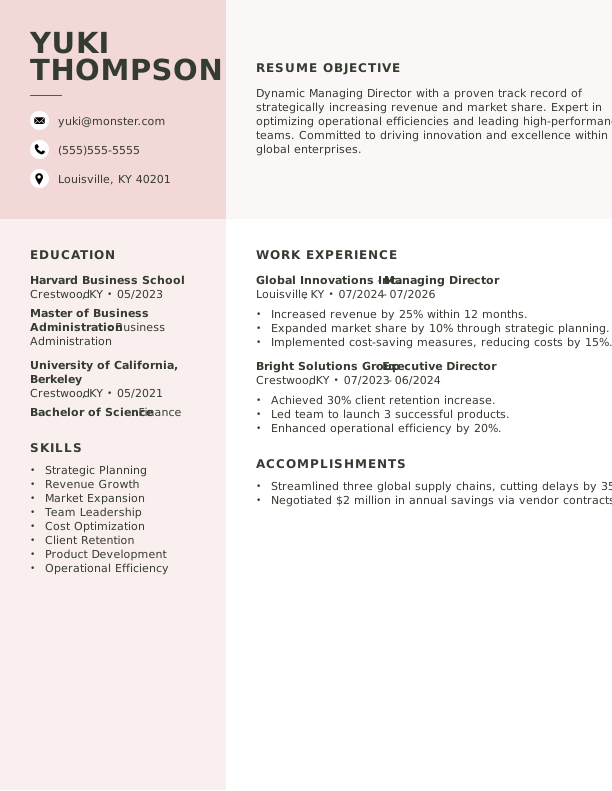
 Free
FreeManaging Director Entry-Level Resume
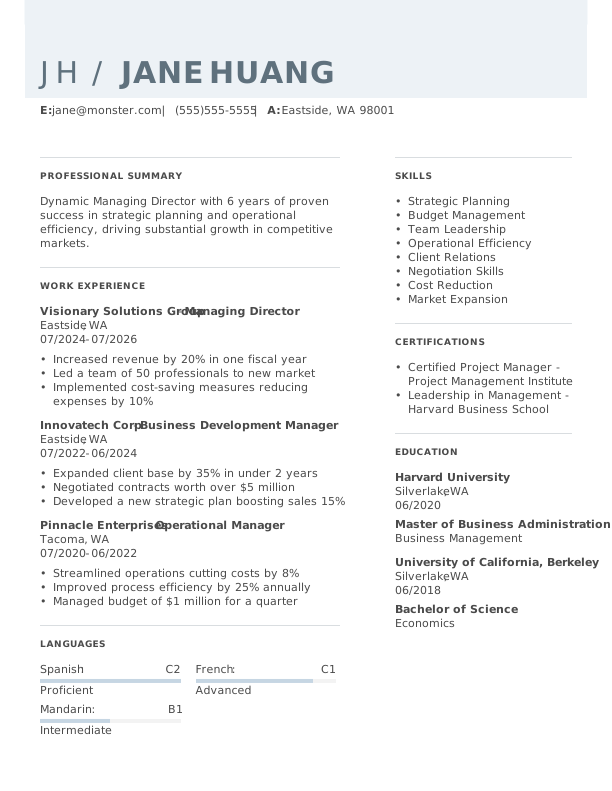
Managing Director Mid-Level Resume
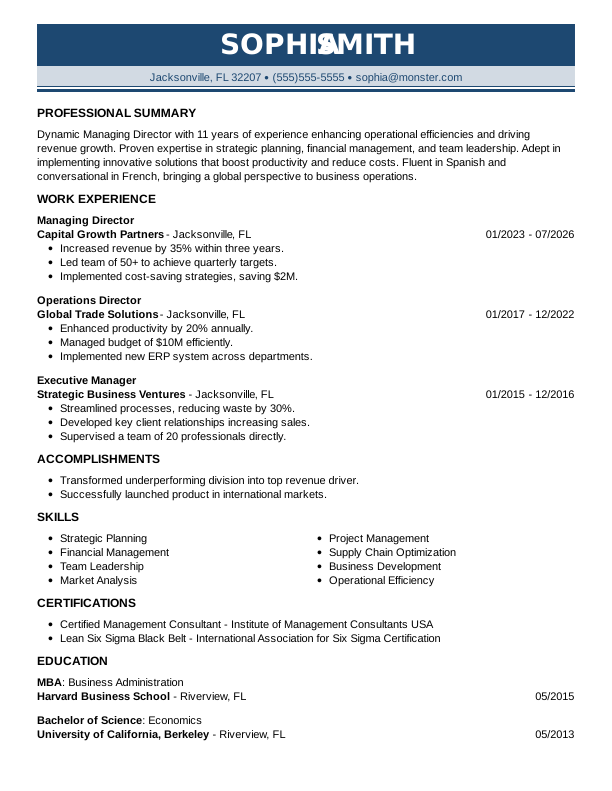
Managing Director Experienced Resume
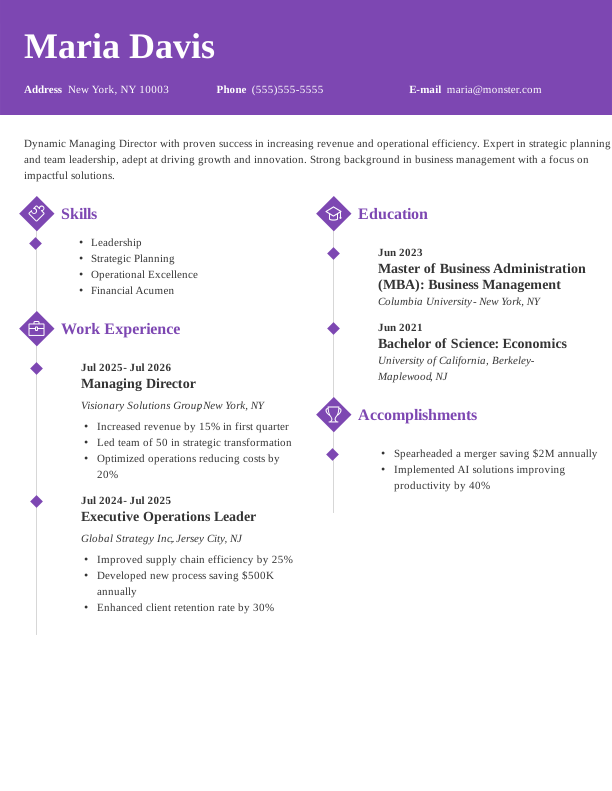
Managing Director Modern Resume
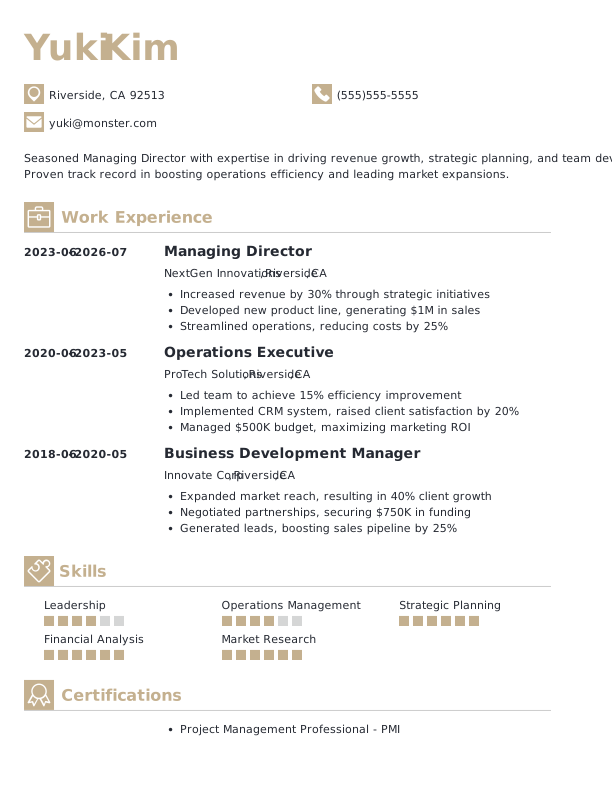

Managing Director Creative Resume
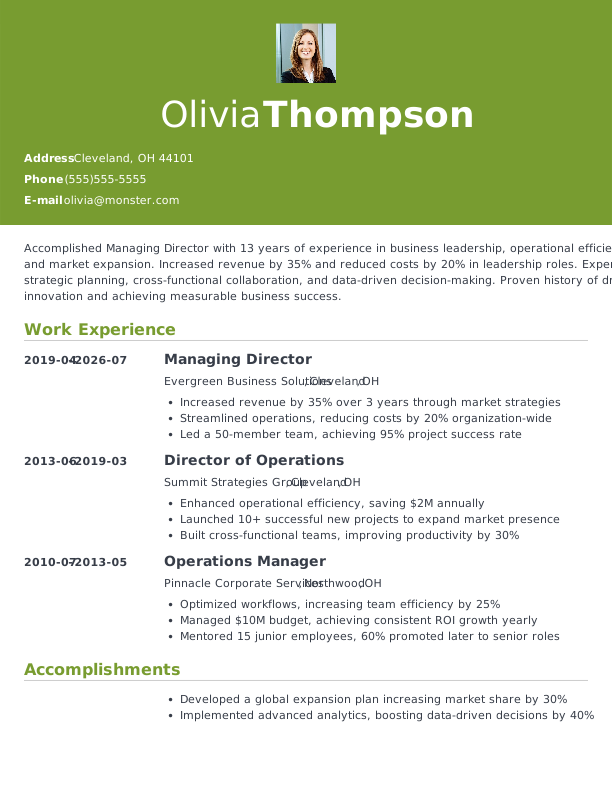

Managing Director Traditional Resume
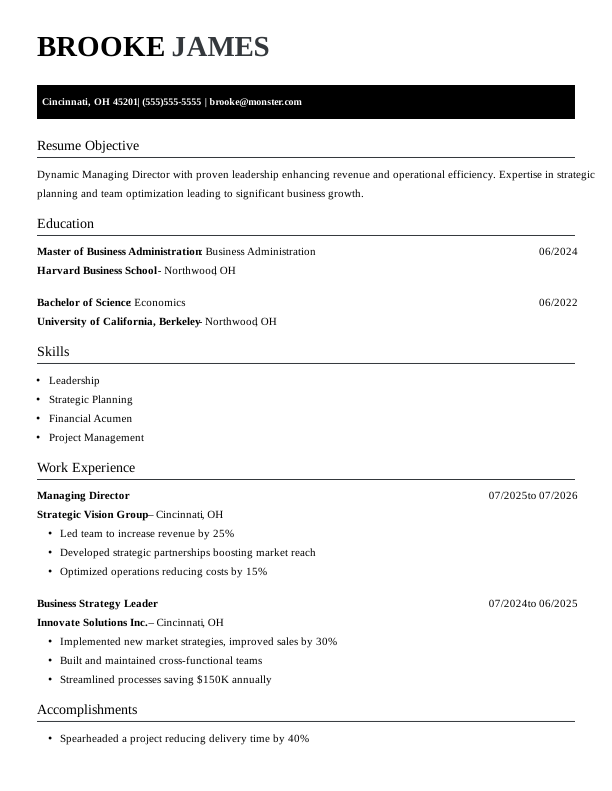

Managing Director Simple CV Example
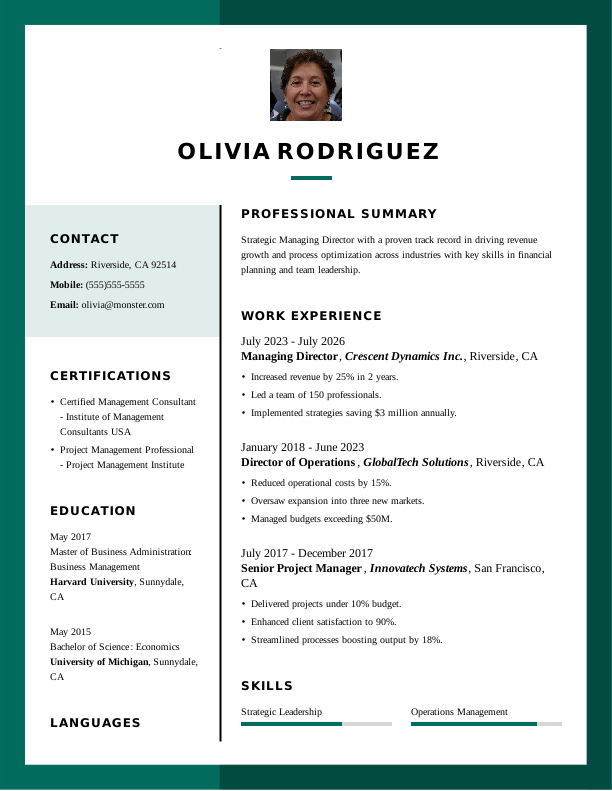

Managing Director CV Format
Browse Free Resume Templates
- Accounts Payable
- Adjunct Professor
- Artist
- Auto Mechanic
- Baker
- Business Development Manager
- Business
- Certified Nursing Assistant
- Classic & Traditional
- Cleaner
- College Student
- Concierge
- Construction Worker
- Corporate
- Creative & Unique
- Custodian
- Customer Service
- Dental Assistant
- Direct Support Professional
- Entry-Level
- Flight Attendant
- Hospitality & Food Service
- Front Desk Receptionist
- Healthcare
- High School
- Housekeeping
- Hvac Technician
- Hybrid
- Inventory Manager
- Logistics
- Maintenance
- Management
- Modern
- Mortgage Loan Processor
- Pet Sitter
- Phlebotomist
- Production
- Rbt
- Sales
- Security Services
- Restaurant Server
- Simple & Basic
- Social Work
- Teacher
- Technology
Resume Examples for Managing Directors
A managing director’s resume or CV can vary significantly depending on your experience level. To explore what to include at each stage of your career, use our Resume Builder to create a tailored document that reflects your professional journey.
Entry-Level Managing Director Resume
Ideal for recent graduates looking to craft a resume with no experience, this template is also beneficial for those transitioning into managing director roles from different industries.
Mid-Career Managing Director Resume
A smart choice for managing directors with a few years of experience, this template highlights key achievements and supports progression into higher leadership or specialized roles.
Experienced Managing Director Resume
An ideal choice for seasoned professionals with over a decade of experience, this template supports job seekers seeking senior leadership roles and strong management positions.
Managing Director Resume Template (Text)
Use this customizable text template for a managing director position to copy, edit, and personalize directly in your document or file.
Jane Brown
Cleveland, OH 44108
Professional Summary
Dynamic Managing Director with 5+ years leading strategic growth. Proven track record in financial planning, team leadership, and operational efficiency, driving substantial revenue gains and market expansions.
Work Experience
July 2024 – July 2026
Global Innovations Inc. – Cleveland, OH
Managing Director
- Increased revenue by 20% yearly.
- Led a team of 150+ professionals.
- Improved operational efficiency by 35%.
July 2022 – June 2024
Visionary Solutions Ltd. – Cleveland, OH
Chief Operations Officer
- Reduced costs by $500K annually.
- Enhanced supply chain efficiency by 40%.
- Oversaw expansions to three new markets.
July 2021 – June 2022
Innovation Hub Partners – Northwood, OH
Director of Strategic Initiatives
- Implemented 10 key growth strategies.
- Boosted team productivity by 25%.
- Managed a $2 million project budget.
Education
June 2020
Harvard Business School Boston, MA
Master of Business Administration Business Management
June 2018
Stanford University Stanford, CA
Bachelor of Science Economics
Certifications
- Certified Management Executive – Global Leadership Institute
- Project Management Professional – Project Management Institute
Skills
- Strategic Planning
- Financial Management
- Team Leadership
- Operational Optimization
- Revenue Growth Strategies
- Market Analysis
- Risk Management
- Decision Making
How to Write a Managing Director Resume
As a managing director, showcasing your leadership skills and relevant experience in a clear format is essential to writing a resume that captures why you’re the ideal job seeker. Use the guidance below to emphasize your strengths and tailor your resume for the positions you’re pursuing.
1. Contact Info
Your contact information should be clear, professional, and easy to find at the top of your resume.
Make sure to include:
- Full name
- Phone number
- Professional email address
- City and state (ZIP code is optional)
- LinkedIn profile or personal portfolio (if relevant)
 PRO TIP
Skip including unnecessary personal details like your age, gender, or religious affiliation on your resume unless the employer specifically requests them.
2. Resume Profile
A resume profile is a brief introductory section, typically consisting of two to four sentences, that highlights your key qualifications and talents. This segment serves as a compelling pitch to hiring managers, aiming to grab their attention and motivate them to explore your resume in greater detail.
Positioned at the top of your resume, the profile can be formatted as either a summary or an objective. Each option has distinct purposes that cater to different job-seeking strategies:
- A resume summary highlights your most relevant achievements, skills, and experiences suited for leadership roles. This format is especially helpful for individuals with a solid work history or transferable expertise who want to showcase their significant contributions as a managing director.
- A resume objective highlights your career aspirations and what you aim to accomplish in your next role. It’s particularly beneficial for recent graduates, individuals shifting careers, or those with limited experience, such as professionals moving into a new field.
Let’s take a look at an example of each to see how a resume summary and a resume objective differ:
Managing director resume summary example:
Strategic managing director with over 6 years of experience leading high-performing teams in dynamic corporate environments. Proficient in strategic planning, operational efficiency, and stakeholder engagement. Acknowledged for driving organizational growth and fostering a culture of innovation that improves performance and delivers results.
Managing director resume objective example:
Recent MBA graduate with a focus on strategic management eager to begin a leadership role in a dynamic corporate environment. Committed to fostering innovation and collaboration while bringing strong analytical skills and a results-driven mindset to a forward-thinking organization or startup.
3. Work Experience
The work experience on your resume is an important element that showcases your leadership capabilities. Employers assess your job history to understand not only where you’ve held positions but also the tangible impact you’ve made in those roles.
Your background illustrates how your strategic management experience qualifies you for the managing director position.
The work experience section should contain:
- Job title
- Employer name and location
- Dates of employment (month/year)
- 3–5 bullet points describing your relevant responsibilities and achievements
Tailor your content to the managing director role by using industry-specific language that reflects leadership and strategic oversight. Start each bullet point with an action verb (like “Directed,” “Oversaw,” “Implemented”) to create a strong impression of your responsibilities.
Incorporate quantifiable information or metrics wherever possible. Specific numbers and achievements highlight your impact and demonstrate value, helping you stand out in a competitive job market.
In general, consider following the format of:
[action verb] + [responsibility] = [result/achievement]
For example:
Oversaw operations for a portfolio of 15+ projects, achieving a 25% increase in overall profitability through strategic resource allocation and process improvements.
Note that you can also flip the result/achievement with the responsibility:
Delivered a 30% growth in annual revenue by implementing innovative business strategies and improving client relationships.
With these techniques in mind, your resume bullets may look something like:
- Developed strategic initiatives that increased annual revenue by 25% across multiple business units.
- Oversaw a team of 50+ employees, improving operational efficiency and reducing turnover rates by 15%.
- Implemented performance metrics that improved project delivery timelines by 20%.
- Mentored senior management on leadership strategies, fostering a culture of collaboration and innovation.
- Used financial modeling tools to evaluate business opportunities and inform executive decision-making.
4. Skills
The skills section provides a concise overview of the professional abilities relevant to a managing director. This allows hiring managers to quickly assess your qualifications and fit for the role.
Skills can be categorized into three groups:
- Soft skills are fundamental traits that shape a managing director’s ability to collaborate with their team and stakeholders.
- Hard skills are specific, quantifiable abilities gained through education, training, or hands-on experience.
- Technical skills encompass the specific knowledge and abilities required to perform tasks in a particular field.
5 Soft Skills for Your Resume or CV
- Strategic decision-making
- Team leadership skills
- Effective communication
- Results-driven mindset
- Cross-functional collaboration
5 Hard Skills for Your Resume or CV
- Strategic planning and execution
- Financial forecasting (Excel, SAP)
- Risk management frameworks
- Leadership development programs
- Stakeholder engagement strategies
In general, aim to present a diverse range of relevant skills that align with the job requirements to demonstrate your overall professional value.
PRO TIP
If you’re a newer managing director, consider placing your skills section near the top of your resume, just after your summary. For those with more experience, it’s better to position this section lower on the page and weave your skills into the descriptions of your past roles.
5. Education
Understanding how to list education on your resume is essential to showcasing your qualifications. Start with your most recent or relevant degree, clearly stating the type of degree and the institution.
If you’ve recently graduated, you might include your graduation year, GPA (if it’s 3.5 or above), any honors received, and relevant coursework to highlight your academic achievements.
Managing director resume education section example:
Master of Business Administration (MBA)
Harvard Business School, Boston, MA
Graduated: 2023 | Graduated with Distinction
PRO TIP
If you’re transitioning from an Associate Degree in Business Administration to a Bachelor of Business Management, or have earned another relevant degree, list them both in reverse-chronological order.
6. Certifications
Listing certifications on your resume highlights your qualifications and can help mitigate limited experience in a competitive job market. While this section may not be standard on every resume, it holds significant value for many professionals. Employers often seek specific credentials for specialized roles, such as project management or financial analysis, to ensure applicants meet industry standards.
Focus on including only the most relevant certifications that improve your application and align with the job requirements. Remember to keep these credentials up to date and present them in a clear format for easy reference.
Managing director certification examples:
- Certified Business Manager (CBM) | Institute of Certified Professional Managers | Expires: 01/2028
- Project Management Professional (PMP) | Project Management Institute | Expires: 06/2027
- Chartered Management Institute Level 7 Diploma | Chartered Management Institute | Expires: 09/2028
- Lean Six Sigma Black Belt Certification | American Society for Quality | Expires: 12/2027
Start Building Your Job-Winning Resume
Use Your Existing Resume
Import your current resume to transfer your information to one of our professional templates.
Create a New Resume
Start fresh with a template that catches your eye and follow the prompts to add your details.
Tailor Your Work History to Beat the ATS
Your work experience goes beyond just listing job titles. It’s a chance to showcase the measurable impact you’ve had in driving business success and leading teams. By using this approach, you can create an ATS-friendly resume that applicant tracking systems (ATS) can easily scan.
To improve your work history, tailor it to the specific managing director role you’re targeting by incorporating relevant keywords and industry terminology. Start by thoroughly analyzing the job description. Identify commonly mentioned skills, leadership qualities, or strategic initiatives, and reflect those elements in your experience descriptions when applicable.
Key Takeaways
- Customize your resume for the specific job listing. Use terminology from the job description to resonate with both ATS and hiring managers.
- Highlight quantifiable successes to demonstrate your leadership impact. Include metrics like revenue growth, team performance percentages, or project completions (e.g., increased sales by 20%).
- Select a resume format that suits your career stage. Senior job seekers might prefer a reverse-chronological format, while those transitioning into management roles could use a functional layout.
More Resume & CV Examples
- Assistant Project Manager
- Associate Product Manager
- Benefits Specialist
- Business Administration
- Business Development
- Business Management
- Business Manager
- Business Operations
- Business Owner
- CEO
- Change Manager
- Chief Of Staff
- CISO
- Community Outreach Coordinator
- COO
- Corporate Trainer
- Director Of Operations
- Director
- Entrepreneur
- Executive Director
- Executive Manager
- Executive Recruiter
- Executive
- Freelance
- General Manager
- Healthcare Management
- Hr Analyst
- Hr Business Partner
- Hr Consultant
- Hr Coordinator
- Hr Director
- Hr Manager
- Hr Specialist
- Onboarding Specialist
- Operations Manager
- Program Coordinator
- Program Director
- Program Manager
- Project Coordinator
- Project Manager
- Recruiter
- Recruiting Coordinator
- Recruitment Coordinator
- Regional Manager
- Risk Management
- Senior Manager
- Senior Program Manager
- Senior Project Manager
- Senior Recruiter
- Small Business Owner
- Supervisor
- Talent Acquisition Specialist
- Team Leader
- Technical Recruiter
- Training Manager
- Vice President
Cover Letters for Your Resume
Browse our library of cover letter examples to complete your application. A resume will have a better chance of getting noticed.
Frequently Asked Questions
Last Update:
What resume format should I use for my managing director resume?
There are three primary resume formats to consider when applying for a managing director position. Your choice will depend on your experience level and the key skills you wish to highlight:
- Chronological: The most popular format, a chronological resume emphasizes your work experience by detailing responsibilities and achievements. This format is particularly effective for applicants with a consistent and relevant job history that reinforces their qualifications and demonstrates their professional growth in leadership roles.
- Functional: Also known as a skills-based resume, the functional resume emphasizes a summary of qualifications and an expanded skills section to showcase your relevant abilities. Consequently, it minimizes focus on work history, making it beneficial for applicants lacking relevant experience or those facing employment gaps.
- Combination: A combination resume integrates chronological and functional components, offering equal focus on skills and work history. This format benefits managing directors by allowing them to showcase leadership abilities alongside their career milestones, making it suitable for those aiming to emphasize both expertise and progression.
Should I include a cover letter with my resume?
Yes, you should include a cover letter with your managing director application to improve your resume. A well-crafted cover letter allows you to express your enthusiasm for the role and demonstrate how your leadership experience aligns with the company’s goals. It gives hiring managers insight into your personality and vision, setting you apart from applicants who might overlook this important component.
If you’re feeling uncertain about writing a cover letter, there are numerous resources available to guide you. You can find tips on how to write a cover letter, explore various examples tailored for executive positions, and review different formats that suit your unique background and style. These tools can help clarify what employers look for in job seekers at the director level.
Using tools like a cover letter generator can simplify this process by offering structured suggestions based on your specific job application needs.
How long should a managing director resume be?
For professionals with less than 10 years of experience, aim for a one-page resume. This concise format allows you to present your qualifications and achievements clearly without overwhelming potential employers. Focus on key skills, education, and relevant roles that highlight your capabilities.
If you have 10 years or more of experience, a two-page resume can be appropriate. Ensure that each section remains focused on significant accomplishments and specialized knowledge. Prioritize clarity to showcase your expertise while avoiding unnecessary embellishments that do not add value.
Should I include volunteer leadership roles or community projects?
Yes, you should include volunteer leadership roles or community projects, especially if you’re early in your career. Highlighting these experiences demonstrates your ability to lead and manage teams, which is important for a managing director position, particularly when you have limited formal management roles on your resume.

Elizabeth Muenzen is a Certified Professional Resume Writer (CPRW) and member of the Professional Association of Resume Writers & Career Coaches who empowers job seekers to take control of their career paths using Monster’s comprehensive job search and resume tools.
See More From Elizabeth MuenzenExplore Related Career Advice


How to Put Transferable Skills on Your Resume: 120 Skills, Examples, & Tips

Updated:
Aug 27, 2026
|

16 min read


How to Write a Functional Resume (Formatting Tips, Template, & Examples)
Updated:
Aug 7, 2026
|
17 min read


Functional vs Chronological Resume: Which Format Is Right for You?
Updated:
Aug 3, 2026
|
16 min read
100+ Resume Adjectives to Help You Write a Stronger Resume in 2026 (With Examples)
Updated:
Jul 30, 2026
|
12 min read