
Free Property Manager Resume Templates & Examples
A property manager resume should highlight your portfolio size, tenant management skills, and knowledge of local housing regulations. Pick a template below that reflects your management scope.
Real-World Resumes That Get Results
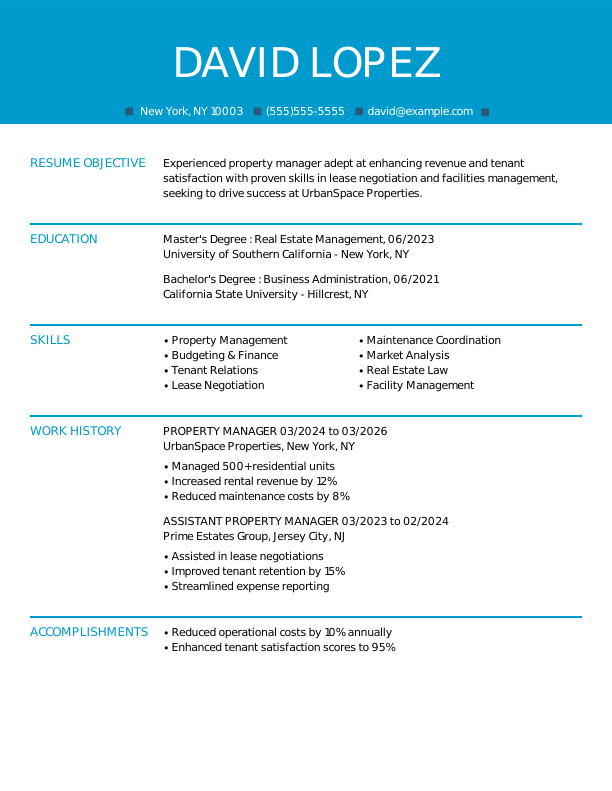
Property Manager Entry-Level Resume
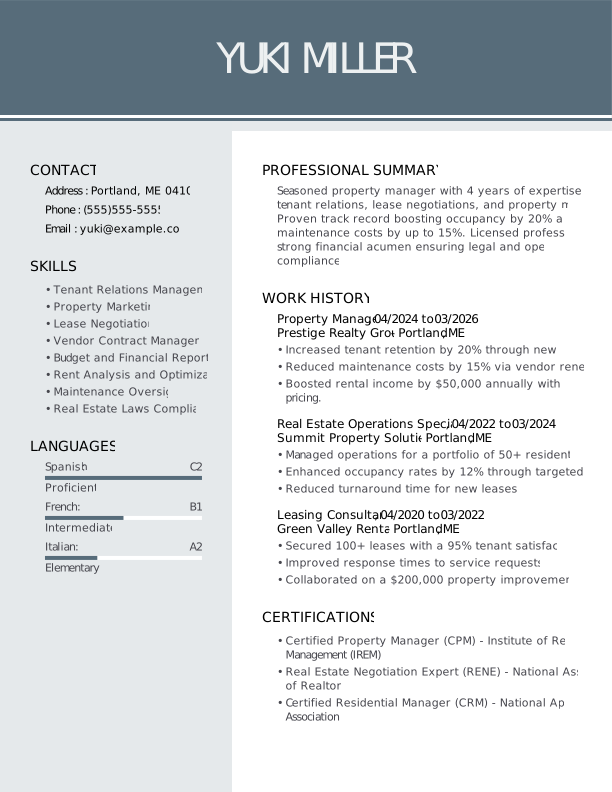
Property Manager Mid-Level Resume
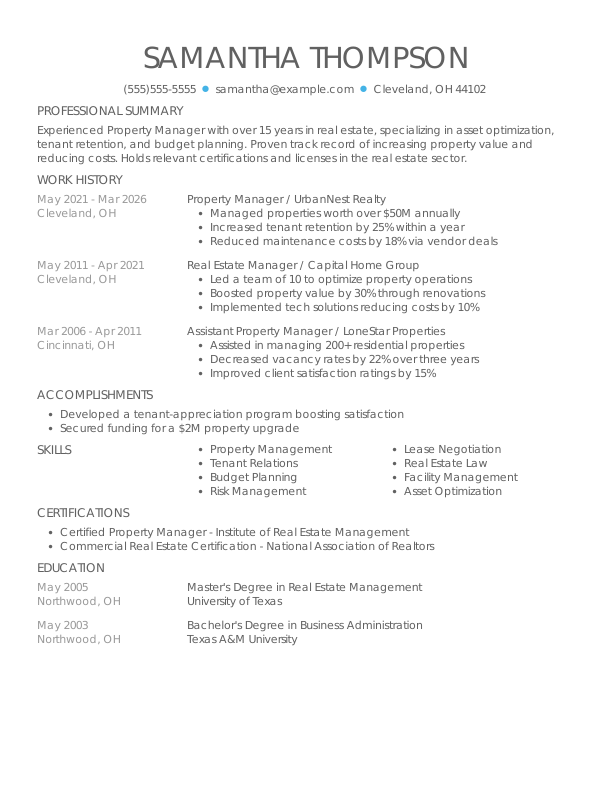
Property Manager Experienced Resume
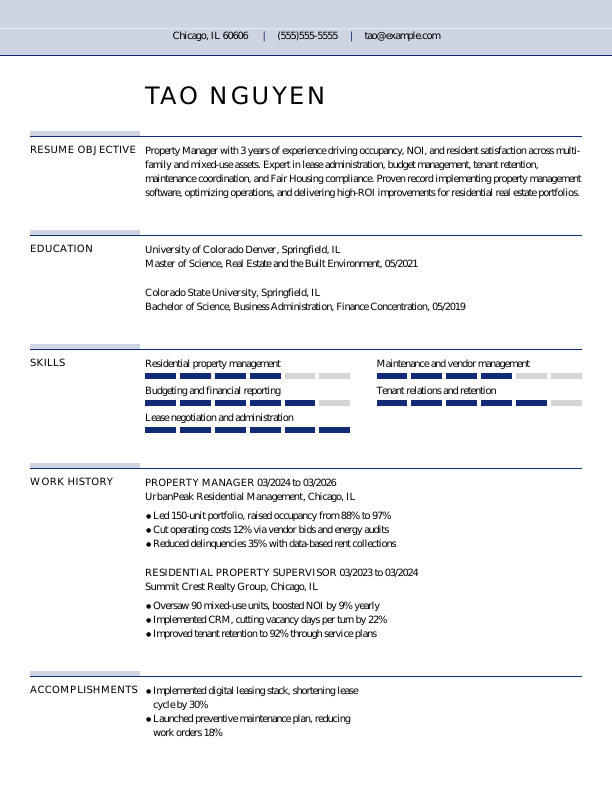
 Free
FreeProperty Manager Modern Resume
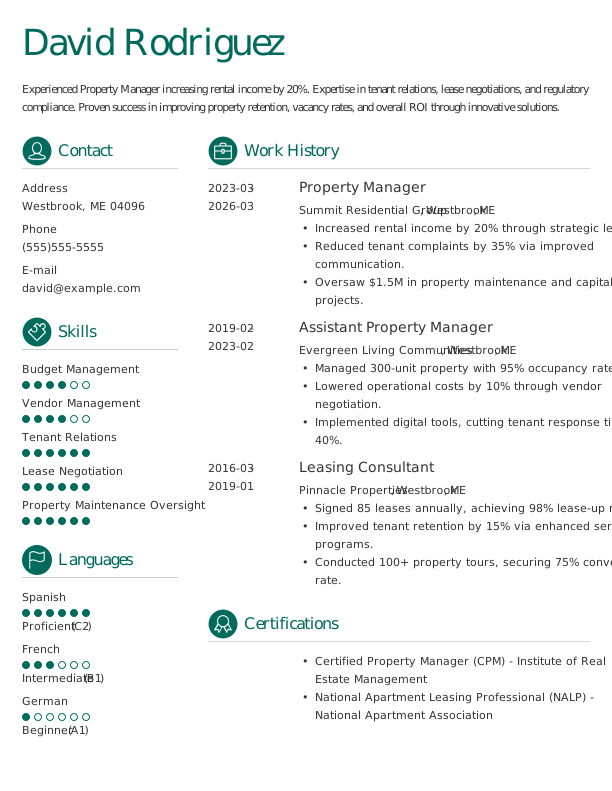
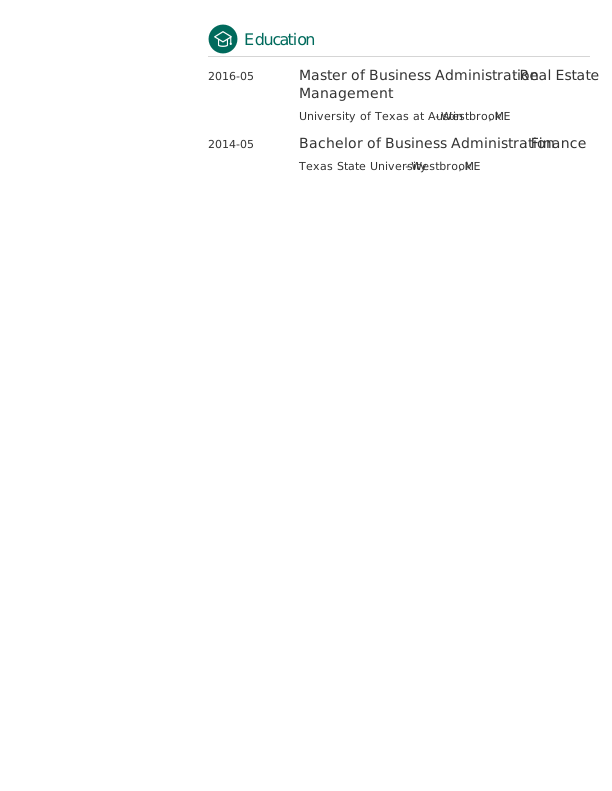
Property Manager Creative Resume
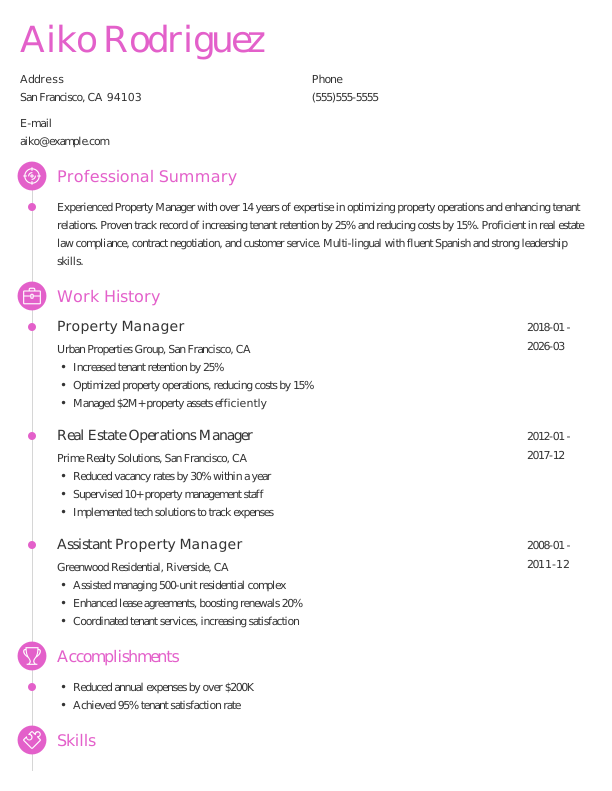
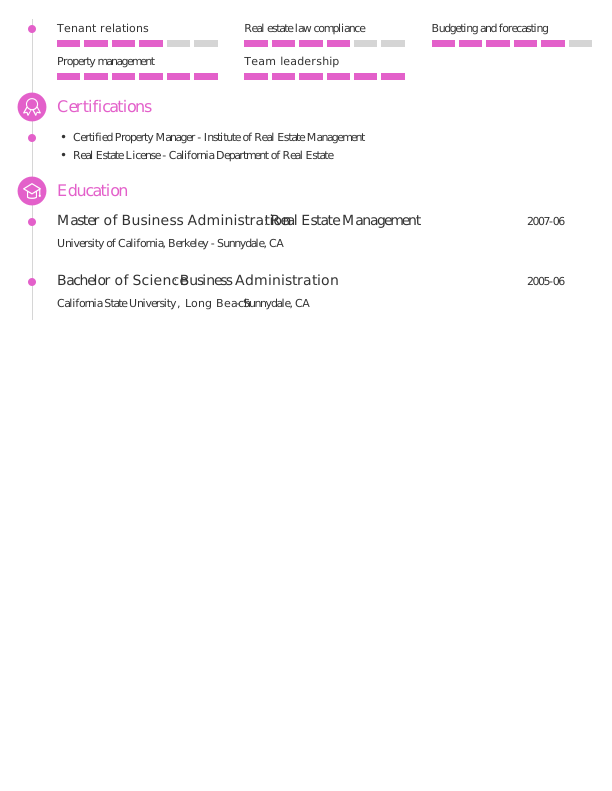
Property Manager Traditional Resume
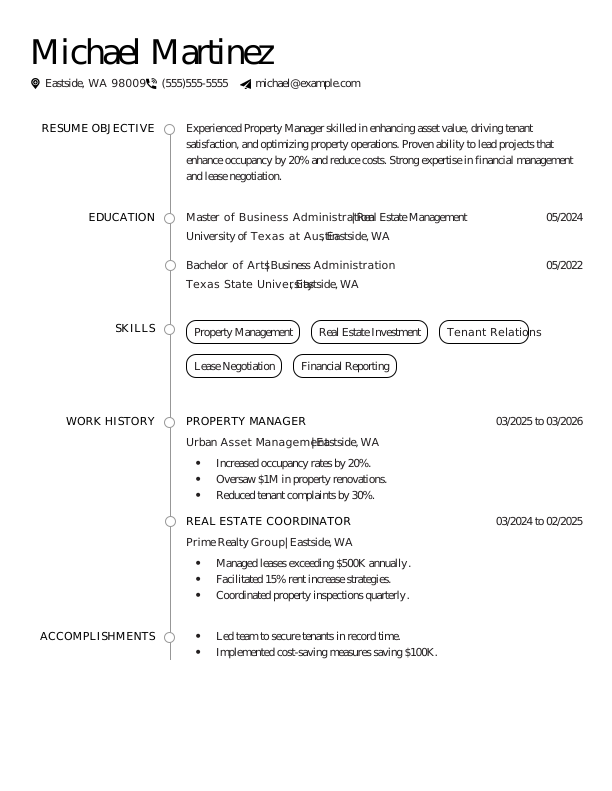
Property Manager Simple CV Example
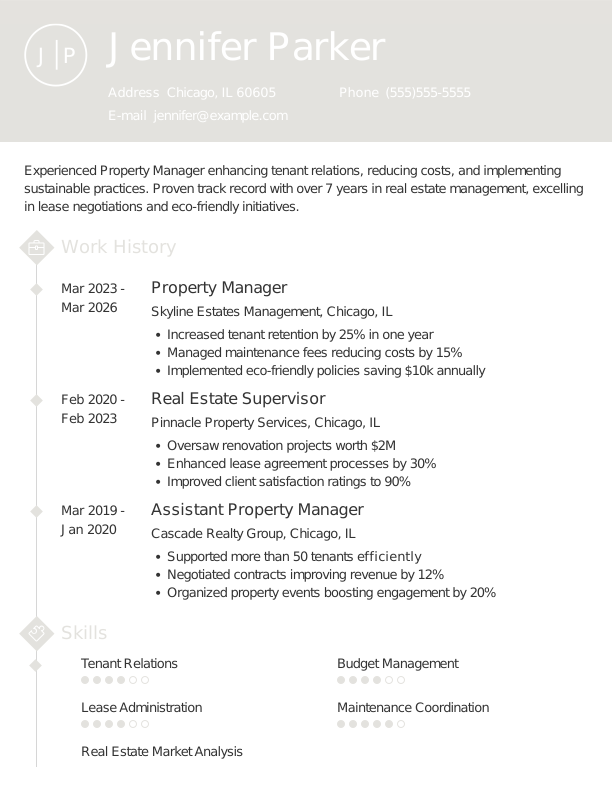
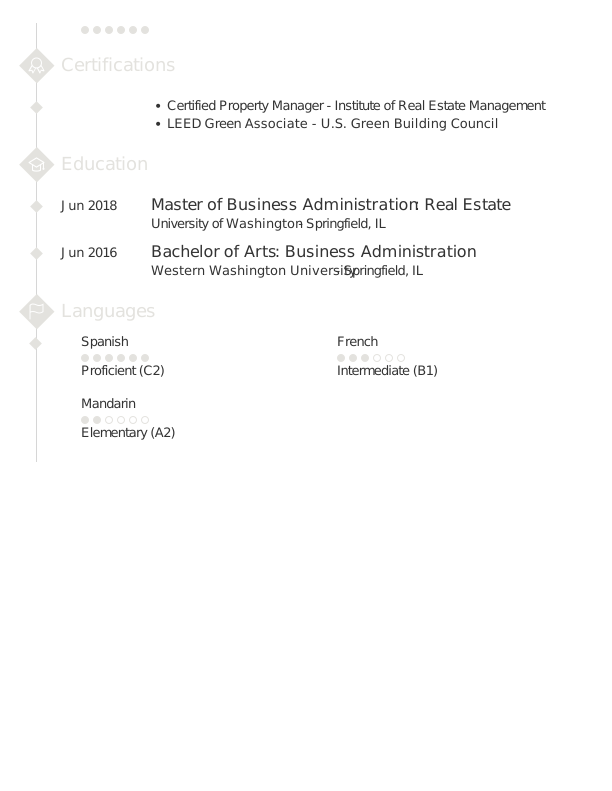
Property Manager CV Format
Browse Free Resume Templates
- Accounts Payable
- Adjunct Professor
- Artist
- Auto Mechanic
- Baker
- Business Development Manager
- Business
- Certified Nursing Assistant
- Classic & Traditional
- Cleaner
- College Student
- Concierge
- Construction Worker
- Corporate
- Creative & Unique
- Custodian
- Customer Service
- Dental Assistant
- Direct Support Professional
- Entry-Level
- Flight Attendant
- Hospitality & Food Service
- Front Desk Receptionist
- Healthcare
- High School
- Housekeeping
- Hvac Technician
- Hybrid
- Inventory Manager
- Logistics
- Maintenance
- Management
- Modern
- Mortgage Loan Processor
- Pet Sitter
- Phlebotomist
- Production
- Rbt
- Sales
- Security Services
- Restaurant Server
- Simple & Basic
- Social Work
- Teacher
- Technology
Resume Examples for Property Managers
Property manager resumes should reflect the size of your portfolio and your knowledge of local regulations. Explore our templates to find one that conveys your management scope.
Entry-Level Property Manager Resume
If you are stepping into property management from an assistant or leasing role, this template helps you create a property manager resume by emphasizing your tenant relations skills, maintenance coordination contributions, and any regulatory knowledge.

Mid-Career Property Manager Resume
A smart choice for mid-level property managers seeking advancement, this template effectively showcases recent accomplishments and positions you for specialized roles in property management.
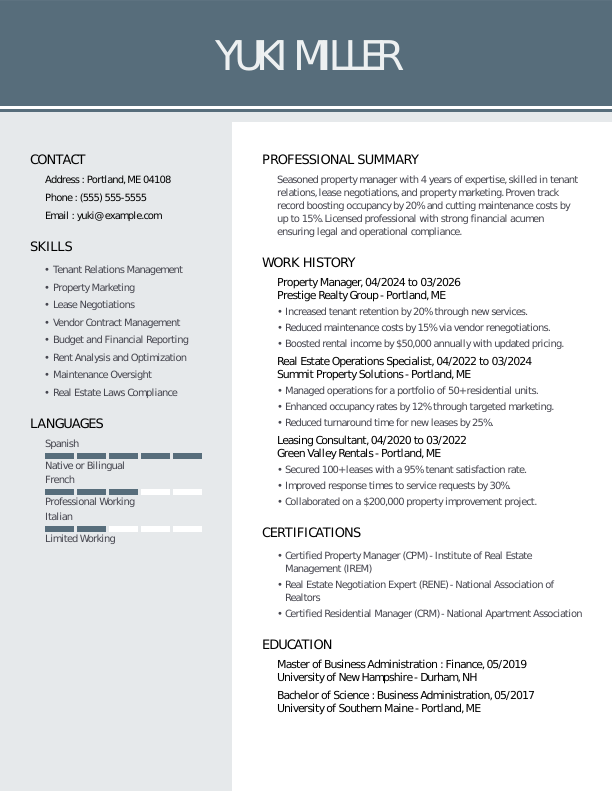
Experienced Property Manager Resume
An ideal choice for seasoned property managers with over 10 years of experience, this template highlights applicants seeking senior-level roles in real estate management and leadership positions.

Property Manager Resume Template (Text)
Below is a property manager resume in plain text that you can copy and personalize. It is structured to reflect your portfolio scope and regulatory knowledge.
Tao Kim
Tampa, FL 33605
Professional Summary
Results-driven property manager with 6 years of multifamily and residential portfolio experience, specializing in occupancy growth, tenant retention, and asset value optimization. Proven track record driving rent collection, reducing operating expenses, and enhancing resident satisfaction through data-driven leasing strategies and proactive maintenance planning. Adept with Yardi and AppFolio, Fair Housing compliance, vendor management, and KPI-focused property operations for high-performing real estate assets.
Work Experience
March 2023 – March 2026
Summit Crest Residential Group – Tampa, FL
Property Manager
- Managed 160 units, sustaining 97% average occupancy rate
- Cut operating costs 14% via vendor bids and energy audits
- Raised online ratings from 3.4 to 4.6 stars in 18 months
March 2020 – March 2023
HighPoint Urban Living – Tampa, FL
Multifamily Community Supervisor
- Oversaw 120 units, increased renewals by 22% annually
- Boosted rent collection to 99% within first 9 months
- Reduced delinquency from 8% to 2.5% through workflows
March 2018 – February 2020
FrontRange Realty & Management – Jacksonville, FL
Residential Portfolio Coordinator
- Supported 85 doors, cutting vacant days by 19%
- Negotiated vendor contracts, saving $18K annually
- Improved work order SLA to 92% within 48 hours
Education
May 2017
University of Colorado Denver Denver, CO
Master of Science Real Estate and the Built Environment
May 2015
Colorado State University Fort Collins, CO
Bachelor of Science Business Administration, Real Estate Concentration
Certifications
- Certified Property Manager (CPM) – Institute of Real Estate Management (IREM)
- Certified Apartment Manager (CAM) – National Apartment Association Education Institute
- Fair Housing and ADA Compliance Specialist – National Fair Housing Training Academy
Skills
- Property management operations
- Lease administration and compliance
- Tenant relations and retention
- Budgeting and financial reporting
- Maintenance and vendor management
- Fair Housing and landlord–tenant law
- Rent collection and delinquency control
- Yardi and AppFolio property software
How to Write a Property Manager Resume
As a property manager, showcasing your skills in tenant relations and property maintenance requires understanding how to write a resume. Highlight relevant experience and use an appealing format. Use the guidance below to emphasize your strengths and tailor your resume for specific positions you’re pursuing.
1. Contact Info
Your contact information should be prominently displayed at the top of your resume, ensuring clarity and professionalism.
Be sure to include:
- Full name
- Phone number
- Professional email address
- City and state (ZIP code is optional)
- LinkedIn profile or personal portfolio (if relevant)
 PRO TIP
Avoid including unnecessary personal details such as your age, religion, or social media profiles unless the employer specifically requests this information.
2. Resume Profile
A resume profile is a brief introduction, typically two to four sentences, that highlights your key qualifications and skills. Its primary function is to serve as an engaging pitch to hiring managers, enticing them to delve deeper into your resume and learn more about what you bring to the table.
Positioned at the top of your resume, this profile can take the form of either a summary or an objective statement, each serving distinct purposes. Understanding these differences is important for crafting a compelling introduction:
- A resume summary showcases essential qualifications, skills, and achievements relevant to property management. This format is particularly beneficial for job seekers with prior experience or transferable skills who aim to highlight their contributions as an effective property manager.
- A resume objective outlines your career aspirations and what you aim to achieve in your next role. It’s particularly beneficial for recent graduates, individuals shifting careers, or those with limited experience entering the property management field.
Let’s explore the distinctions between a resume summary and a resume objective in the examples that follow:
Property manager resume summary example:
Proactive property manager with over 6 years of experience in residential and commercial real estate. Expert in tenant relations, property maintenance, and lease negotiation. Commended for improving resident satisfaction and optimizing property performance through effective management strategies.
Property manager resume objective example:
Recent graduate with a degree in property management excited to launch a career in a dynamic real estate environment. Committed to fostering strong tenant relationships and improving operational efficiency, eager to contribute organizational skills and attention to detail within a progressive property management firm.
3. Work Experience
Presenting work experience on your resume is a key asset in your job application. Employers examine the details to evaluate not only your previous roles but also the influence you’ve had within those teams and projects.
Your professional journey highlights how your skills and achievements are suited to excel as a property manager.
The work experience section should contain:
- Job title
- Employer name and location
- Dates of employment (month/year)
- 3–5 bullet points detailing property management tasks and tenant relations achievements
Focus your bullet points on skills and responsibilities that align with property management, using industry terms like “negotiated,” “inspected,” or “coordinated” to start each statement. Begin each point with a strong action verb to clearly show your role and impact.
Include metrics such as occupancy rates, budget sizes, or maintenance turnaround times whenever possible. Concrete numbers and results highlight your contributions and make your experience stand out to employers in this competitive field.
In general, consider following the format of:
[action verb] + [responsibility] = [result/achievement]
For example:
Managed a portfolio of 150+ rental units, achieving an occupancy rate of 95% through effective tenant relations and prompt maintenance response.
Note that you can also flip the result/achievement with the responsibility:
Increased tenant retention by 20% within one year by implementing comprehensive satisfaction surveys and addressing concerns swiftly.
With these techniques in mind, your resume bullets may look something like:
- Managed a portfolio of 150+ rental units, achieving a 95% occupancy rate and increasing overall revenue by 20%.
- Coordinated maintenance requests and prioritized urgent repairs for 30+ tenants monthly, improving tenant satisfaction by 15%.
- Trained new property management staff on leasing processes and customer service protocols, improving team efficiency.
- Used property management software to streamline leasing documentation and track tenant communications.
- Conducted regular property inspections, identifying issues proactively and reducing maintenance costs by 10%.
4. Skills
The skills section provides a concise overview of your capabilities as a property manager, showcasing relevant expertise. It’s designed to be an ATS-friendly resume format that allows recruiters to assess your qualifications quickly.
Skills can be categorized into three key areas:
- Soft skills are personal qualities that influence how property managers interact with tenants and stakeholders.
- Hard skills are specific, measurable abilities gained through education, training, or hands-on experience.
- Technical skills are the practical abilities required to manage specific tools and software in a field.
5 Soft Skills for Your Resume or CV
- Conflict resolution strategies
- Vendor and relationship management
- Adaptability and stress management
- Collaborative leadership
- Detail-oriented organization
5 Hard Skills for Your Resume or CV
- Property maintenance and repairs
- Tenant screening and leasing
- Budget management (Yardi, AppFolio)
- Legal compliance (fair housing laws)
- Vendor negotiation and management
In general, include a well-rounded mix of relevant skills that match the job requirements to showcase your value.
PRO TIP
If you’re a newer property manager, consider placing your skills section right after your summary for better visibility. For those with more experience, it’s advisable to position this section lower on the resume, incorporating relevant skills within your work history for a smoother narrative.
5. Education
Understanding how to list education on your resume is important for showcasing your qualifications. Begin with your most recent or relevant degree, clearly stating the type of degree and the institution’s name.
If you have recently graduated, include your graduation year, GPA (if it’s 3.5 or above), any honors received, and relevant coursework to give a fuller picture of your academic achievements.
Property manager resume education section example:
Bachelor of Arts in Property Management
University of Southern California, Los Angeles, CA
Graduated: 2024 | Summa Cum Laude
PRO TIP
When listing multiple degrees on your resume, always display them in reverse-chronological order, starting with the highest degree first, such as Bachelor of Arts in Property Management, followed by Associate Degree in Real Estate.
6. Certifications
Certifications highlight your expertise and ensure you’re well-versed in the latest industry standards. While they may not always fit into a traditional resume format, this section is important for many property management professionals. Employers often seek specific certifications for roles like leasing agents or community managers to ensure job seekers meet necessary qualifications.
Highlight relevant certifications that bolster your application and emphasize any specialized training you have received. Keeping these credentials updated and clearly presented on your resume will strengthen your professional profile.
Property manager certification examples:
- Certified Property Manager (CPM) | Institute of Real Estate Management | Expires: 03/2028
- Real Estate Broker License | State Real Estate Commission | Expires: 12/2028
- Fair Housing Certification | National Apartment Association | Expires: 11/2027
- Lead-Based Paint Renovation Certification | Environmental Protection Agency | Expires: 07/2027
Start Building Your Job-Winning Resume
Use Your Existing Resume
Import your current resume to transfer your information to one of our professional templates.
Create a New Resume
Start fresh with a template that catches your eye and follow the prompts to add your details.
Tailor Your Work History to Beat the ATS
Your work experience is not just a series of job titles. It provides you with the perfect opportunity to demonstrate your tangible contributions and achievements in property management. By highlighting specific examples, you can create a resume that is more compatible with applicant tracking systems (ATS), allowing for easier scanning by potential employers.
To optimize your work history for a particular role, tailor it using relevant industry keywords. Begin by closely examining the job description to understand what skills and qualifications are emphasized. Focus on identifying frequently mentioned competencies or requirements and ensure these elements are reflected in your experience summaries.
Key Takeaways
- Tailor your resume to the job description. Incorporate specific language from the listing to resonate with both ATS and hiring managers.
- Highlight quantifiable achievements to demonstrate your impact. Use metrics relevant to property management (e.g., occupancy rates, budget adherence, tenant satisfaction scores) to differentiate yourself.
- Select a resume format that suits your experience level. Newcomers might opt for a functional layout, while seasoned property managers typically favor a reverse-chronological format.
More Resume & CV Examples
- Assistant Property Manager
- Building Maintenance
- Facilities Management
- Facility Manager
- Gardener
- Groundskeeper
- House Cleaning
- House Manager
- Housekeeping Manager
- Janitor
- Landscaping
- Leasing Agent
- Pest Control
- Resident Assistant
Cover Letters for Your Resume
Browse our library of cover letter examples to complete your application. A resume will have a better chance of getting noticed.
Frequently Asked Questions
Last Update:
What resume format should I use for my property manager resume?
There are three main resume formats to consider when applying for a property manager position. Your choice should reflect your experience level and highlight the skills or achievements you wish to emphasize:
- Chronological: The chronological resume format is the most widely used, emphasizing your work history by outlining your responsibilities and achievements in reverse order. This structure is ideal for job seekers with a consistent and relevant background, as it reinforces their qualifications and adds credibility to their professional narrative.
- Functional: The functional resume, commonly known as a skills-based resume, highlights a summary of qualifications and an extensive skills section rather than focusing on chronological work history. This format is especially helpful for individuals who might not have relevant experience or possess notable gaps in their employment timeline.
- Combination: The combination resume mixes chronological and functional formats, showcasing both skills and work history. This approach benefits professionals by emphasizing their competencies while illustrating their career growth. It’s ideal for those transitioning fields or seeking to highlight diverse experiences alongside relevant abilities.
Should I include a cover letter with my resume?
Yes, you should include a cover letter with your application for a property manager position. A well-crafted cover letter improves your resume by allowing you to articulate your specific interest in the role and the company, while also highlighting relevant skills and experiences that may not be immediately apparent on your resume. This personal touch can help differentiate you from other job seekers who might submit a generic application.
If you’re feeling hesitant about writing a cover letter, there are many resources available to assist you. You can find guides on how to write a cover letter specifically for property management roles, as well as numerous examples that showcase effective approaches. Additionally, exploring various cover letter formats can help streamline your writing process and ensure that you’re presenting yourself in the best light.
For an easy solution to creating a polished document, consider using a cover letter generator, which provides structured templates and tailored suggestions based on the specific requirements of property management applications.
How long should a property manager resume be?
For property managers with less than 10 years of experience, a one-page resume is typically ideal to showcase relevant skills and achievements. Focus on highlighting your property management experience, certifications (like CPM or CAM), and key responsibilities in previous roles to demonstrate your capabilities.
Conversely, those in senior or specialized positions may extend their resumes to two pages if the information remains relevant and succinct. Ensure that every entry adds value, emphasizing leadership accomplishments and industry knowledge while avoiding unnecessary filler language.
What keywords should I include to pass applicant tracking systems (ATS)?
To improve your chances of getting noticed by ATS, tailor your resume with keywords from the job posting. Look for terms like “tenant relations,” “lease administration,” or “property maintenance” that reflect the responsibilities of a property manager.
Don’t forget to include relevant certifications, such as Certified Property Manager, and technical tools you’re skilled in, like Yardi or AppFolio. This will demonstrate that you have the necessary qualifications and experience for the role, helping you stand out during the screening process.
Should I include volunteer work or short-term projects on my property management resume?
Yes, including volunteer work or short-term projects is beneficial, especially if you’re just starting out. These experiences demonstrate your commitment to the field and provide valuable skills that can set you apart from others who may not have direct property management roles.

Kirsten Chorpenning is a career advice writer who empowers job seekers to take control of their career paths using Monster’s comprehensive job search and resume tools. She specializes in helping job seekers find rewarding jobs in today’s dynamic work environment.
See More From Kirsten ChorpenningExplore Related Career Advice


How to Put Transferable Skills on Your Resume: 120 Skills, Examples, & Tips
Updated:
Aug 27, 2026
|
16 min read


How to Write a Functional Resume (Formatting Tips, Template, & Examples)
Updated:
Aug 7, 2026
|
17 min read


Functional vs Chronological Resume: Which Format Is Right for You?
Updated:
Aug 3, 2026
|
16 min read

100+ Resume Adjectives to Help You Write a Stronger Resume in 2026 (With Examples)
Updated:
Jul 30, 2026
|
12 min read