
Free Respiratory Therapist Resume Templates & Examples
A respiratory therapist resume should highlight your ventilator management skills, patient assessment abilities, and relevant certifications. Browse the templates below to find one that presents your clinical background clearly.
Real-World Resumes That Get Results
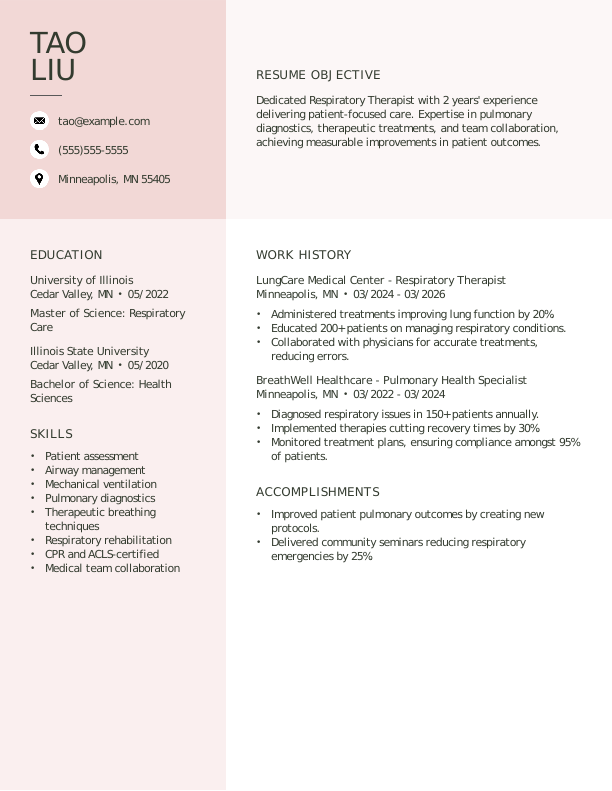
 Free
FreeRespiratory Therapist Entry-Level Resume
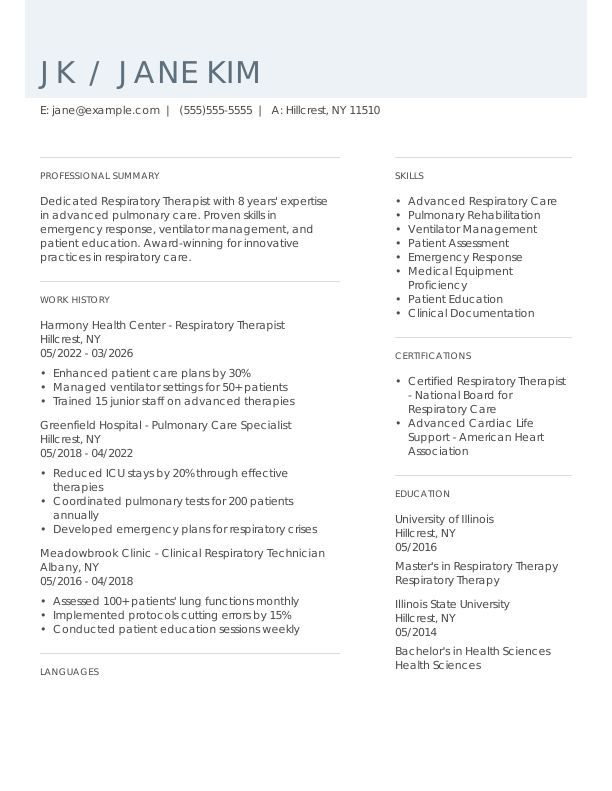
Respiratory Therapist Mid-Level Resume
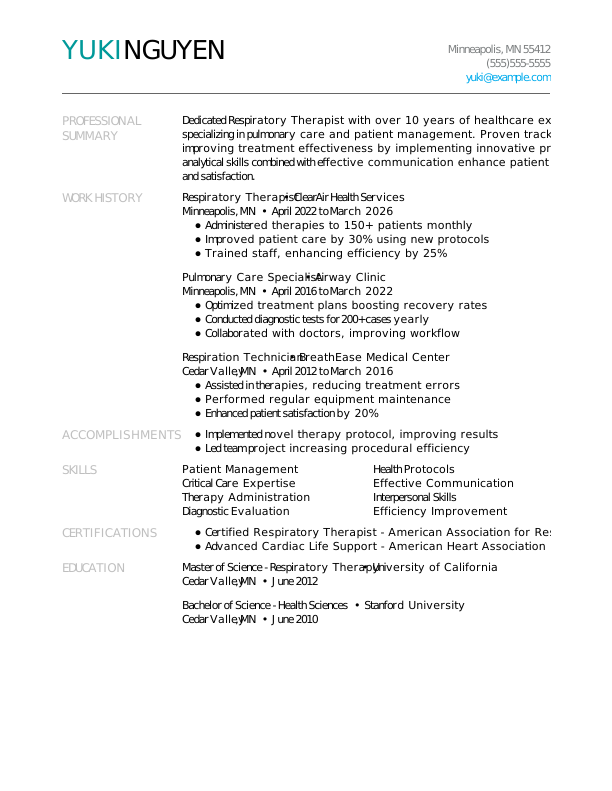
Respiratory Therapist Experienced Resume
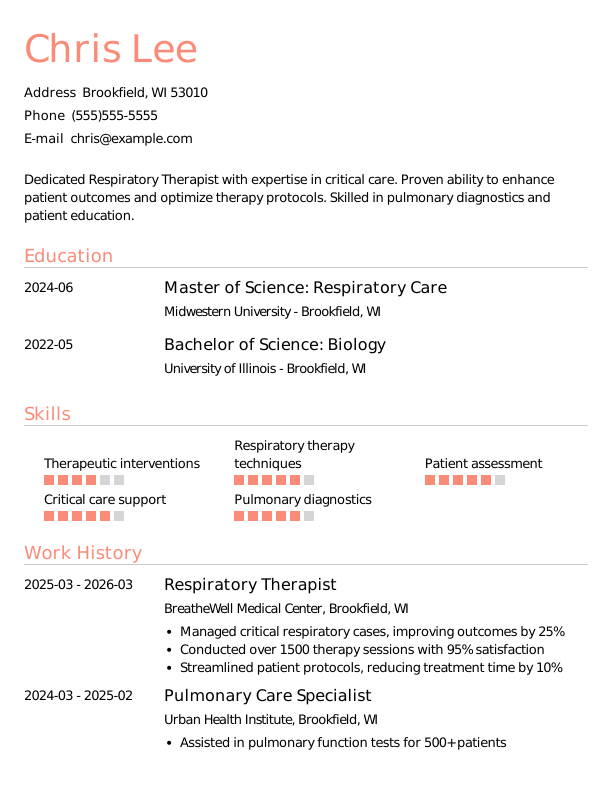
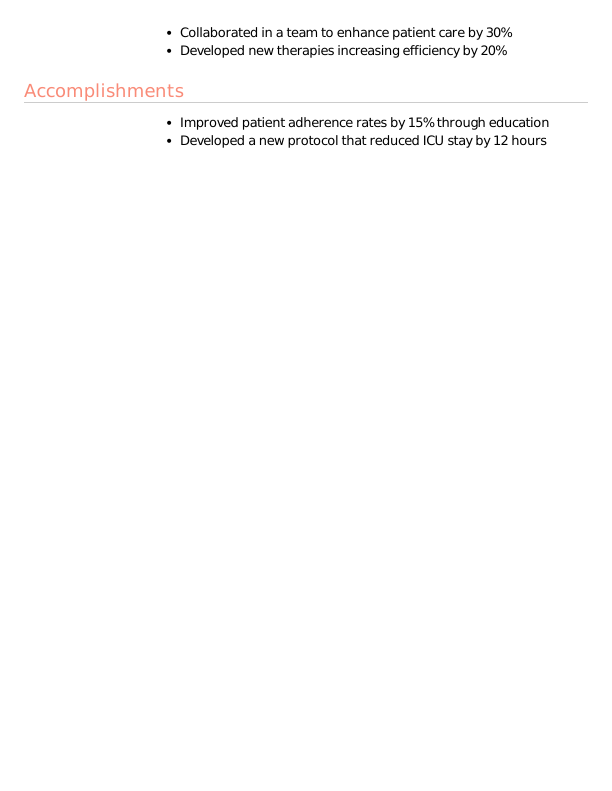
Respiratory Therapist Entry-Level Resume 1
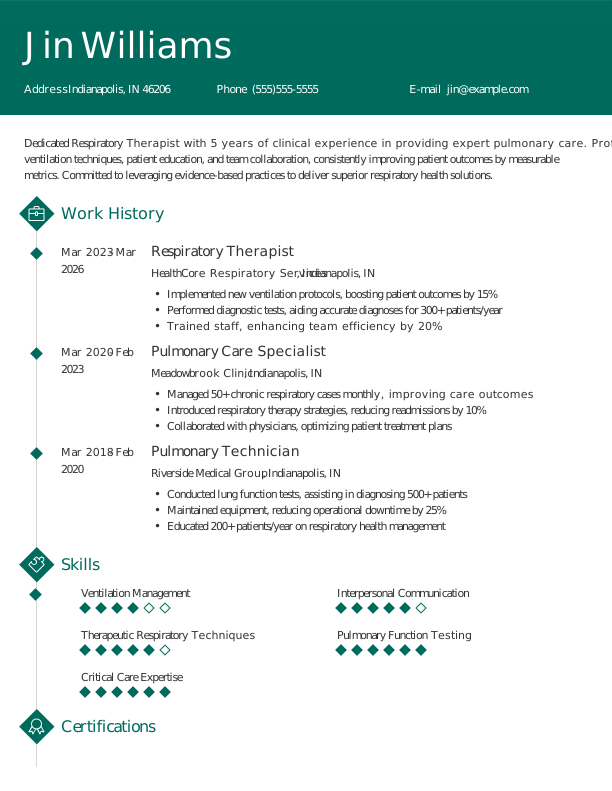

Respiratory Therapist Mid-Level Resume 1
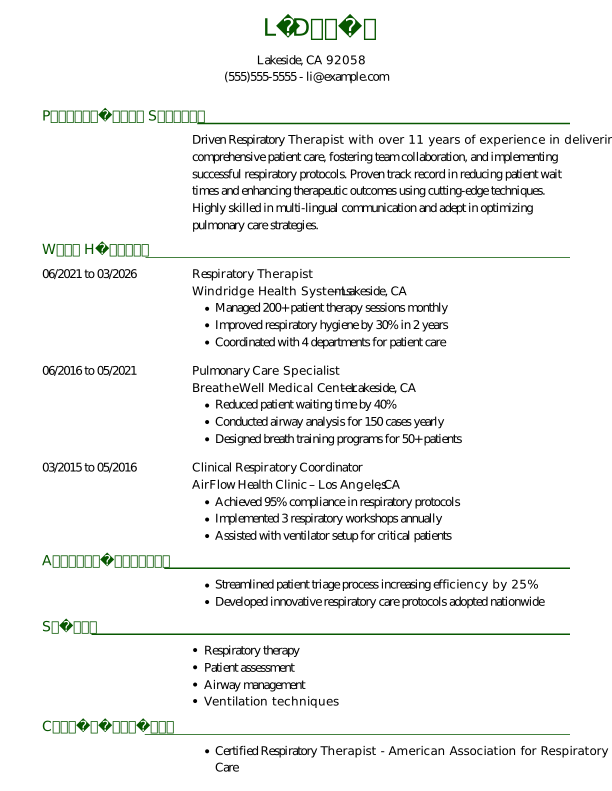

Respiratory Therapist Experienced Resume 1
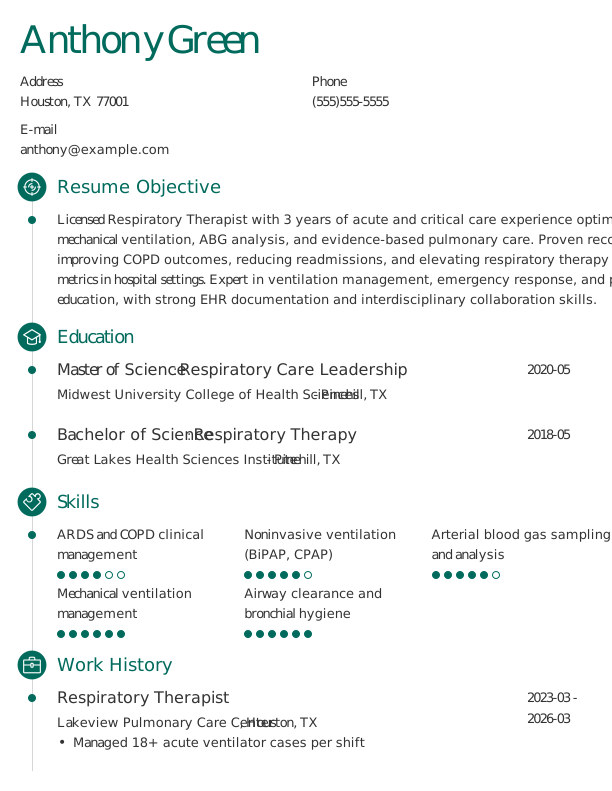

Respiratory Therapist Entry-Level Resume 2
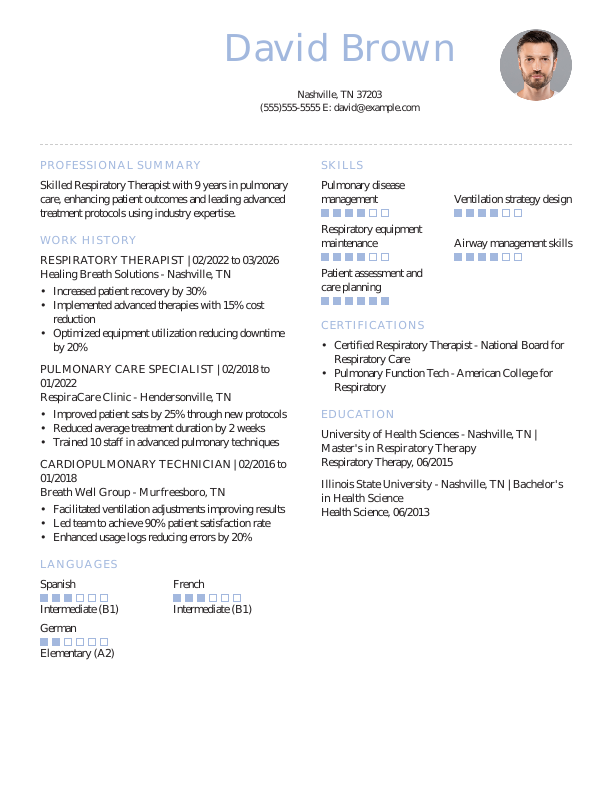
Respiratory Therapist Mid-Level Resume 2
Browse Free Resume Templates
- Accounts Payable
- Adjunct Professor
- Artist
- Auto Mechanic
- Baker
- Business Development Manager
- Business
- Certified Nursing Assistant
- Classic & Traditional
- Cleaner
- College Student
- Concierge
- Construction Worker
- Corporate
- Creative & Unique
- Custodian
- Customer Service
- Dental Assistant
- Direct Support Professional
- Entry-Level
- Flight Attendant
- Hospitality & Food Service
- Front Desk Receptionist
- Healthcare
- High School
- Housekeeping
- Hvac Technician
- Hybrid
- Inventory Manager
- Logistics
- Maintenance
- Management
- Modern
- Mortgage Loan Processor
- Pet Sitter
- Phlebotomist
- Production
- Rbt
- Sales
- Security Services
- Restaurant Server
- Simple & Basic
- Social Work
- Teacher
- Technology
Resume Examples for Respiratory Therapists
RT resumes should be tailored to your clinical specialties and ventilator management experience. Browse our templates to find one that presents your credentials clearly.
Entry-Level Respiratory Therapist Resume
Great for newly licensed RTs, this template simplifies creating a respiratory therapist resume by focusing on your clinical rotations, ventilator management training, and any patient care experience.

Mid-Career Respiratory Therapist Resume
An ideal choice for seasoned respiratory therapists, this template effectively showcases advanced skills and achievements, positioning professionals for leadership roles or specialization in pulmonary care domains.

Experienced Respiratory Therapist Resume
An ideal choice for respiratory therapists with over 10 years of experience, this template supports professionals seeking leadership roles or advanced clinical positions in pulmonary care.

Respiratory Therapist Resume Template (Text)
Here is a ready-to-use text version of a respiratory therapist resume. Copy it into your document and tailor it with your ventilator management skills and clinical certifications.
Sandra Ward
Louisville, KY 40202
Professional Summary
Licensed Respiratory Therapist with 4 years in acute and critical care, skilled in mechanical ventilation, ABG analysis, and pulmonary diagnostics. Proven record reducing readmissions, improving weaning outcomes, and driving evidence-based respiratory protocols. Collaborative clinician focused on patient-centered care, safety, and high-reliability respiratory therapy practice.
Work Experience
April 2024 – March 2026
Mountain View Pulmonary Center – Louisville, KY
Respiratory Therapist
- Managed ventilator care for 18+ ICU patients daily
- Cut COPD readmissions by 19% via care protocols
- Improved RT order accuracy by 23% with EMR audits
January 2023 – March 2024
Rocky Ridge Medical Center – Shively, KY
Pulmonary Care Specialist
- Performed 35+ daily treatments for acute patients
- Boosted patient education scores by 27% HCAHPS
- Reduced nebulizer waste costs by 14% annually
April 2022 – December 2022
High Plains Regional Hospital – St. Matthews, KY
Cardiopulmonary Technician
- Conducted 120+ PFTs monthly with ATS standards
- Decreased STAT response times by 21% in ED
- Maintained 99% equipment uptime via PM checks
Education
May 2021
University of Colorado Anschutz Medical Campus Aurora, CO
Master of Science Respiratory Care Leadership
May 2019
Metropolitan State University of Denver Denver, CO
Bachelor of Science Respiratory Therapy
Certifications
- Registered Respiratory Therapist (RRT) – National Board for Respiratory Care
- Neonatal Pediatric Specialist (NPS) – National Board for Respiratory Care
- Advanced Cardiac Life Support (ACLS) – American Heart Association
Skills
- Mechanical ventilation management
- Arterial blood gas (ABG) analysis
- Pulmonary function testing (PFT)
- Noninvasive ventilation BiPAP/CPAP
- Airway clearance and bronchodilator therapy
- Electronic medical records (Epic, Cerner)
- Patient and family respiratory education
- ACLS and BLS emergency response
How to Write a Respiratory Therapist Resume
As a respiratory therapist, knowing how to write a resume involves showcasing your clinical skills, relevant experience, and a clear format that stands out to employers. Use the guidance below to highlight your strengths and tailor your resume for the positions you’re aiming for.
1. Contact Info
Your contact information should be easily accessible, polished, and prominently displayed at the top of your resume.
Be sure to include:
- Full name
- Phone number
- Professional email address
- City and state (ZIP code is optional)
- LinkedIn profile or relevant professional portfolio
 PRO TIP
Avoid including sensitive personal information like your Social Security number, birth date, or photographs on your resume unless explicitly requested by the employer.
2. Resume Profile
A resume profile is a brief section (two to four sentences) that encapsulates your identity and key skills. It serves as an enticing introduction to hiring managers, sparking their interest in your qualifications and motivating them to explore your resume further.
Typically located at the top of your resume, this profile can take the form of either a summary or an objective, each with its unique focus. Understanding these distinctions will help you choose the best approach for your job search:
- A resume summary showcases critical experience, skills, and achievements relevant to the respiratory care field. This format is particularly beneficial for job seekers with a history in clinical practice or transferable skills who aim to highlight their contributions as effective respiratory therapists.
- A resume objective highlights your future career goals and what you aim to accomplish as a respiratory therapist. It’s ideal for recent nursing grads, professionals switching to respiratory care, or those with limited hands-on experience in the field.
Let’s examine examples of a resume summary and a resume objective to understand their distinct purposes:
Respiratory therapist resume summary example:
Dedicated respiratory therapist with over 6 years of experience in critical care and rehabilitation settings. Proficient in ventilator management, patient assessments, and multidisciplinary collaboration. Commended for improving patient recovery rates through effective treatment plans and exceptional patient education.
Respiratory therapist resume objective example:
Recent graduate with an associate degree in respiratory therapy, eager to launch a career in a dynamic healthcare environment. Committed to providing exceptional patient care and looking to apply strong analytical skills and a compassionate approach in hospitals or rehabilitation centers.
3. Work Experience
The work experience on your resume is an important foundation. Employers assess not only job titles but also the tangible impact applicants have made in their previous roles.
This history showcases how your skills and experiences as a respiratory therapist align perfectly with the requirements of the position you’re pursuing.
The work experience section should contain:
- Job title
- Employer name and location
- Dates of employment (month/year)
- 3–5 bullet points describing your respiratory care responsibilities and patient outcomes
To create strong work experience bullet points, tailor your content to the specific job by incorporating relevant industry terminology. Start each statement with strong action verbs such as “Assisted,” “Administered,” or “Educated” to improve engagement.
Incorporate quantifiable metrics whenever possible to showcase your achievements. Specific numbers demonstrate your contributions and set you apart from other job seekers, illustrating the value you bring to potential employers.
In general, consider following the format of:
[action verb] + [responsibility] = [result/achievement]
For example:
Conduct comprehensive pulmonary assessments for over 20 patients daily in an intensive care unit, ensuring a 95% compliance rate with prescribed therapy protocols.
Note that you can also flip the result/achievement with the responsibility:
Improved patient oxygenation levels by 15% within two weeks through targeted respiratory interventions.
With these techniques in mind, your resume bullets may look something like:
- Administered respiratory therapies and monitored patient responses for a caseload of 25 patients daily, improving overall lung function by 20%.
- Collaborated with a multidisciplinary team to develop individualized care plans for 15+ patients per week, improving clinical outcomes significantly.
- Trained and mentored new therapists on equipment usage and best practices, leading to a 30% reduction in procedural errors.
- Used the Meditech EMR system to document patient assessments and progress efficiently.
- Conducted educational workshops for staff on advanced respiratory techniques, increasing department knowledge base.
4. Skills
The skills section provides a concise overview of your abilities as a respiratory therapist, highlighting critical competencies that play an essential role in patient care. By focusing on ATS-friendly resume elements, this section ensures compatibility with applicant tracking systems and helps hiring managers quickly evaluate your qualifications.
Skills can be grouped into three categories:
- Soft skills are personal qualities that influence how well respiratory therapists interact with patients and colleagues.
- Hard skills are specific, quantifiable abilities acquired through education, training, or experience.
- Technical skills are the specific abilities required to operate specialized equipment and software in a profession.
5 Soft Skills for Your Resume or CV
- Effective communication
- Teamwork and collaboration
- Patient-centered care
- Critical thinking skills
- Emotional intelligence
5 Hard Skills for Your Resume or CV
- Airway management techniques
- Ventilator operation (Puritan Bennett, Hamilton)
- Pulmonary function testing
- Patient education and counseling
- Clinical research protocols
Generally, include a balanced mix of relevant skills that directly reflect the job requirements to showcase your value.
PRO TIP
If you’re a newer respiratory therapist, consider placing your skills section higher on the resume right after your summary. If you have more experience, it’s best to position this section lower and weave your skills throughout your work history for a cohesive presentation.
5. Education
Understanding how to list education on your resume is important for showcasing your qualifications. Begin with your most recent or relevant degree, clearly stating the type of degree and the institution’s name.
If you’re a recent graduate, consider including details like your graduation year, GPA (especially if it’s 3.5 or higher), any honors received, or relevant coursework that highlights your expertise in respiratory therapy.
Respiratory therapist resume education section example:
Associate of Applied Science in Respiratory Therapy
Southern Illinois University, Carbondale, IL
Graduated: 2023 | Graduated with Honors (GPA 3.8)
PRO TIP
When listing multiple degrees on your resume, ensure they are presented in reverse-chronological order, starting with the highest degree first, such as Bachelor of Science in Respiratory Therapy (BSRT), followed by Associate Degree in Respiratory Therapy (ADRT).
6. Certifications
Certifications highlight your expertise and knowledge in respiratory therapy. While not always included in a traditional resume, this section is important for many professionals in the field. Employers often seek specific credentials for specialized roles, such as those in critical care or sleep medicine.
Be sure to showcase relevant certifications that improve your qualifications. Keeping these updated and clearly formatted will ensure you present yourself as a strong job seeker.
Respiratory therapist certification examples:
- Respiratory Care Practitioner License, New Jersey | New Jersey | Expires: 12/2028
- Basic Life Support (BLS) | American Heart Association | Expires: 05/2028
- Advanced Cardiovascular Life Support (ACLS) | American Heart Association | Expires: 06/2028
- Pediatric Advanced Life Support (PALS) | American Heart Association | Expires: 09/2027
Start Building Your Job-Winning Resume
Use Your Existing Resume
Import your current resume to transfer your information to one of our professional templates.
Create a New Resume
Start fresh with a template that catches your eye and follow the prompts to add your details.
Tailor Your Work History to Beat the ATS
Crafting your work experience goes beyond listing job titles. It’s an opportunity to highlight the tangible effects you’ve had in patient care, team collaboration, and respiratory therapy outcomes. This strategic approach also results in an ATS-friendly resume that applicant tracking systems (ATS) can scan efficiently.
Tailor your work history to fit the specific role by integrating relevant keywords. Begin by thoroughly examining the job description for recurring skills or qualifications. Reflect these elements in your experience descriptions to align with what employers are seeking.
What’s a Fair Respiratory Therapist Salary?
Researching salary information is essential for assessing job offers, negotiating pay, and making informed career decisions. The following data comes from the U.S. Bureau of Labor Statistics (BLS) and presents the latest national averages for respiratory therapists.
Several factors can affect actual salaries, such as location, years of experience, certifications, and areas of specialization. For example, respiratory therapists working in hospitals often earn more than those in outpatient care settings, and specialized roles like neonatal or pediatric therapy tend to command higher compensation rates.
| Alabama | $65,500 |
| Alaska | $93,670 |
| Arizona | $76,990 |
| Arkansas | $67,790 |
| California | $106,790 |
| Connecticut | $88,770 |
| Delaware | $89,890 |
| District of Columbia | $102,460 |
| Florida | $81,310 |
| Georgia | $85,890 |
| Hawaii | $94,220 |
| Idaho | $73,890 |
| Illinois | $81,810 |
| Indiana | $75,510 |
| Iowa | $71,460 |
| Kansas | $73,300 |
| Kentucky | $67,650 |
| Louisiana | $73,100 |
| Maine | $77,720 |
| Maryland | $88,600 |
| Massachusetts | $95,120 |
| Michigan | $75,230 |
| Minnesota | $90,030 |
| Mississippi | $70,410 |
| Missouri | $74,120 |
| Montana | $78,540 |
| Nebraska | $75,000 |
| Nevada | $85,160 |
| New Hampshire | $84,750 |
| New Jersey | $97,110 |
| New Mexico | $70,780 |
| New York | $105,740 |
| North Carolina | $76,710 |
| North Dakota | $81,610 |
| Ohio | $78,380 |
| Oklahoma | $75,230 |
| Oregon | $94,160 |
| Pennsylvania | $76,170 |
| Rhode Island | $84,490 |
| South Carolina | $73,720 |
| South Dakota | $64,000 |
| Tennessee | $68,820 |
| Texas | $78,150 |
| Utah | $81,840 |
| Vermont | $75,950 |
| Virginia | $82,480 |
| Washington | $96,050 |
| West Virginia | $68,440 |
| Wisconsin | $82,530 |
| Wyoming | $73,390 |
| Puerto Rico | $31,090 |
Key Takeaways
- Tailor your resume to the job description. Use the employer’s language when detailing your experience and skills to assist both ATS and human reviewers.
- Highlight measurable achievements to demonstrate impact. Quantify your work (e.g., patient outcomes, compliance rates, therapy sessions managed) to stand out.
- Select a suitable format based on your experience level. Recent graduates may prefer a functional or combination layout, while seasoned therapists typically opt for reverse-chronological resumes.
More Resume & CV Examples
- Chiropractor
- Doctor
- Epidemiologist
- Esthetician
- Home Health Aide
- Mental Health Counselor
- Optometrist
- Pediatrician
- Physician Assistant
- Physician
- Psychiatrist
- Radiation Therapist
Cover Letters for Your Resume
Browse our library of cover letter examples to complete your application. A resume will have a better chance of getting noticed.
Frequently Asked Questions
Last Update:
What resume format should I use for my respiratory therapist resume?
There are three main resume formats for respiratory therapist positions. Your choice should reflect your experience level and the aspects of your career you wish to highlight:
- Chronological: The chronological resume format is the most widely used type, emphasizing your work experience along with detailed responsibilities and achievements. It’s particularly useful for job seekers with a relevant job history that reinforces their qualifications and adds credibility to their application. This structure allows employers to easily trace career progression.
- Functional: The functional resume, also called a skills-based resume, highlights your qualifications and detailed skills rather than work history. This format suits respiratory therapists who lack direct experience or have gaps in employment because it focuses on abilities relevant to the job instead of timelines.
- Combination: The combination resume format merges the chronological and functional styles, showcasing both skills and work history. This approach allows professionals to emphasize their competencies alongside career advancements, making it ideal for those transitioning into new fields or highlighting significant achievements in their careers.
Should I include a cover letter with my resume?
Yes, you should include a cover letter with your respiratory therapist job application. A well-crafted cover letter allows you to articulate your enthusiasm for the role and the organization while highlighting key experiences that may not be immediately evident in your resume. It demonstrates to potential employers that you’ve taken the initiative to personalize your application, which can help you stand out from other applicants who might skip this important step.
If you’re hesitant about creating one, there are many resources available to guide you through the process. You can find detailed articles on how to write a cover letter specifically for respiratory therapy, along with examples that showcase different styles and formats. This will enable you to select an approach that best fits your qualifications and experiences.
To make writing easier, consider using a cover letter generator, which can assist in creating a professional document by providing templates and tailored suggestions based on your desired position.
How long should a respiratory therapist resume be?
For respiratory therapists with less than 10 years of experience, a one-page resume is ideal to highlight essential skills, certifications (e.g., BLS, ACLS), and relevant clinical experiences. Prioritize clarity and organization in your document to ensure key qualifications stand out.
However, those in senior or specialized positions may extend their resumes to two pages if the content remains focused on significant achievements and advanced competencies. Strive for conciseness while clearly showcasing leadership roles and specialized training without unnecessary embellishments.
What keywords should I include to pass applicant tracking systems (ATS)?
To ensure your resume passes ATS screenings, carefully integrate keywords from the job posting. Look for specific terms like “ventilator management,” “pulmonary function testing,” or “patient assessments.” By including these phrases, you demonstrate that you understand the role and its requirements.
Don’t forget to highlight any relevant certifications, such as BLS, ACLS, and NRP, along with technical tools you’re familiar with, like Meditech or Philips Respironics. This not only improves your qualifications but also aligns your skills with the expectations of potential employers in the respiratory care field.
Is it important to include volunteer work or internships on my resume?
Yes, especially if you’re starting out in respiratory therapy. Including volunteer experiences demonstrates your commitment to the field and shows that you have applied your skills in real-world situations, which can be important when full-time positions are limited.

Elizabeth Muenzen is a Certified Professional Resume Writer (CPRW) and member of the Professional Association of Resume Writers & Career Coaches who empowers job seekers to take control of their career paths using Monster’s comprehensive job search and resume tools.
See More From Elizabeth MuenzenExplore Related Career Advice


How to Put Transferable Skills on Your Resume: 120 Skills, Examples, & Tips

Updated:
Aug 27, 2026
|

16 min read


How to Write a Functional Resume (Formatting Tips, Template, & Examples)
Updated:
Aug 7, 2026
|
17 min read


Functional vs Chronological Resume: Which Format Is Right for You?
Updated:
Aug 3, 2026
|
16 min read

100+ Resume Adjectives to Help You Write a Stronger Resume in 2026 (With Examples)
Updated:
Jul 30, 2026
|
12 min read