
Free Tutor Resume Templates & Examples
A tutor resume should demonstrate your subject expertise, teaching methods, and ability to adapt to different learning styles. Find a template below that presents your educational background effectively.
Real-World Resumes That Get Results
 Free
Free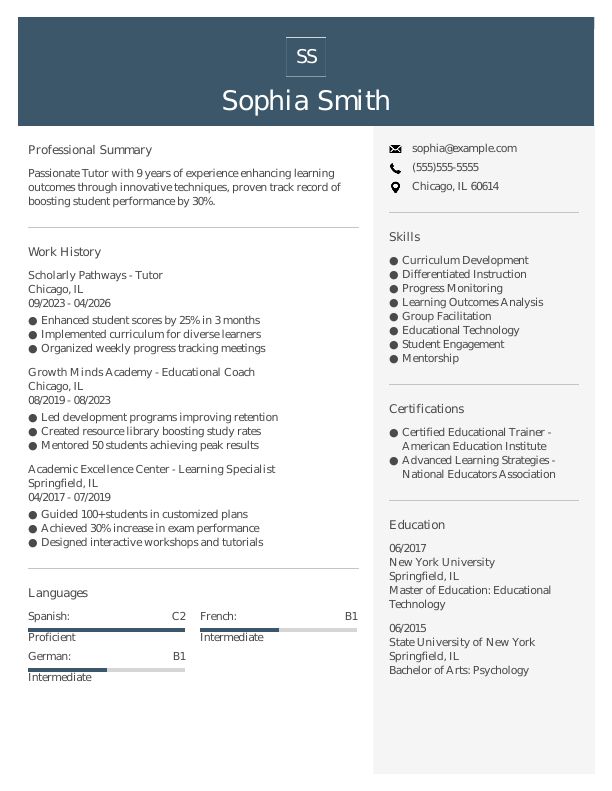
Browse Free Resume Templates
- Accounts Payable
- Adjunct Professor
- Artist
- Auto Mechanic
- Baker
- Business Development Manager
- Business
- Certified Nursing Assistant
- Classic & Traditional
- Cleaner
- College Student
- Concierge
- Construction Worker
- Corporate
- Creative & Unique
- Custodian
- Customer Service
- Dental Assistant
- Direct Support Professional
- Entry-Level
- Flight Attendant
- Hospitality & Food Service
- Front Desk Receptionist
- Healthcare
- High School
- Housekeeping
- Hvac Technician
- Hybrid
- Inventory Manager
- Logistics
- Maintenance
- Management
- Modern
- Mortgage Loan Processor
- Pet Sitter
- Phlebotomist
- Production
- Rbt
- Sales
- Security Services
- Restaurant Server
- Simple & Basic
- Social Work
- Teacher
- Technology
Resume Examples for Tutors
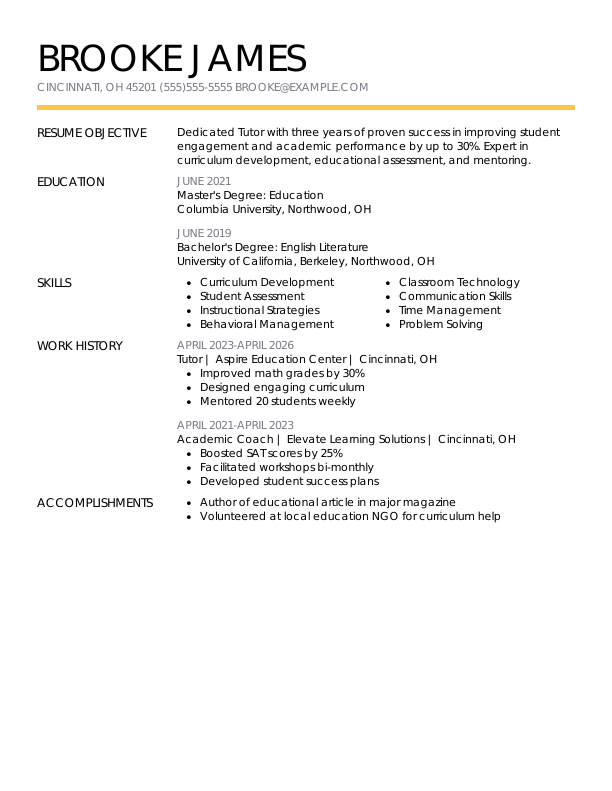
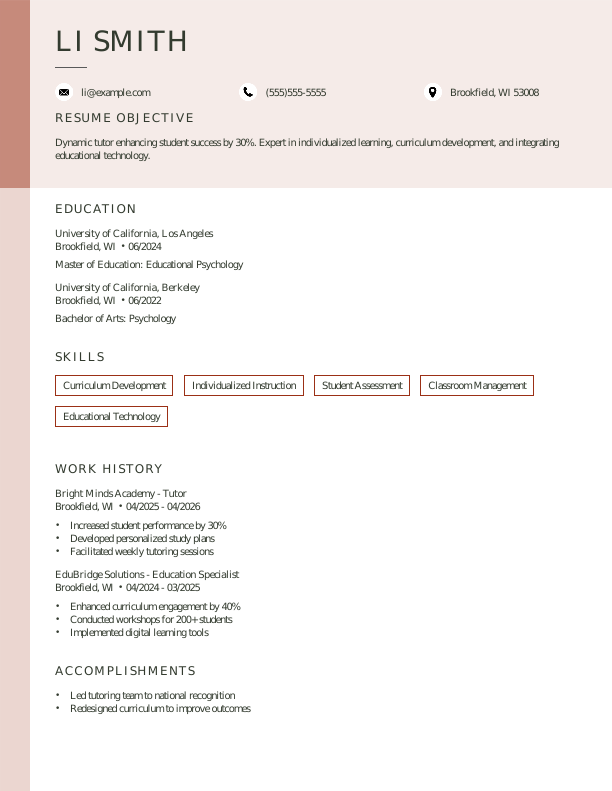
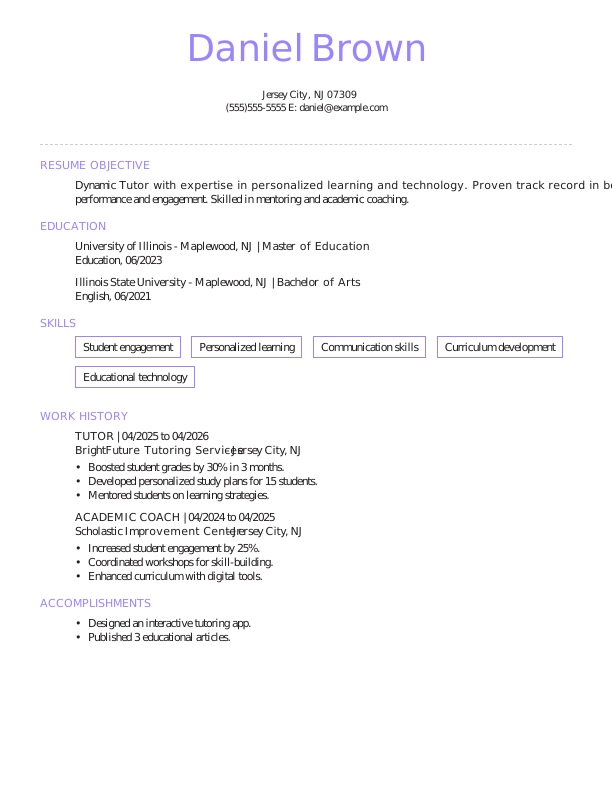
Tutor resumes should reflect the subjects you teach and the learning outcomes you have delivered. Explore our templates to find one that presents your educational background effectively.
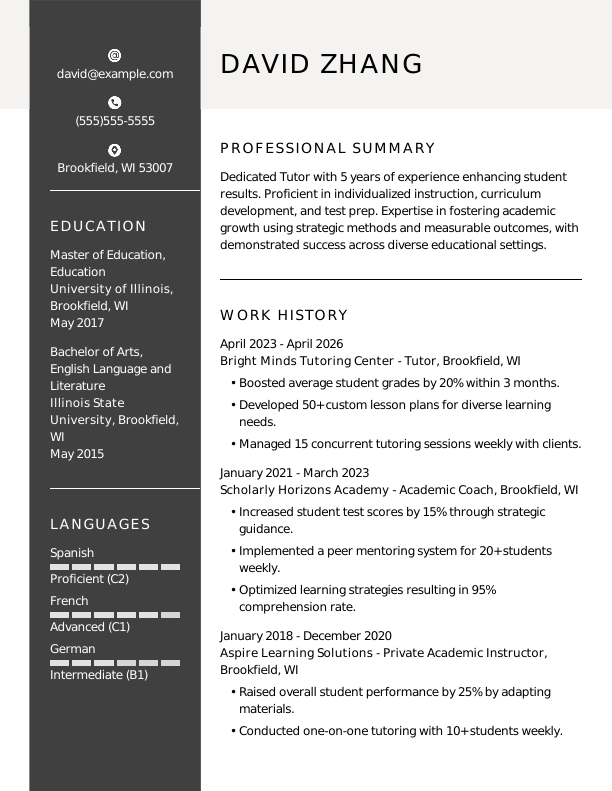
Entry-Level Tutor Resume
If you are starting out as a tutor, this template helps you write a tutor resume without formal teaching experience by emphasizing your subject expertise, academic performance, and any peer mentoring you have done.

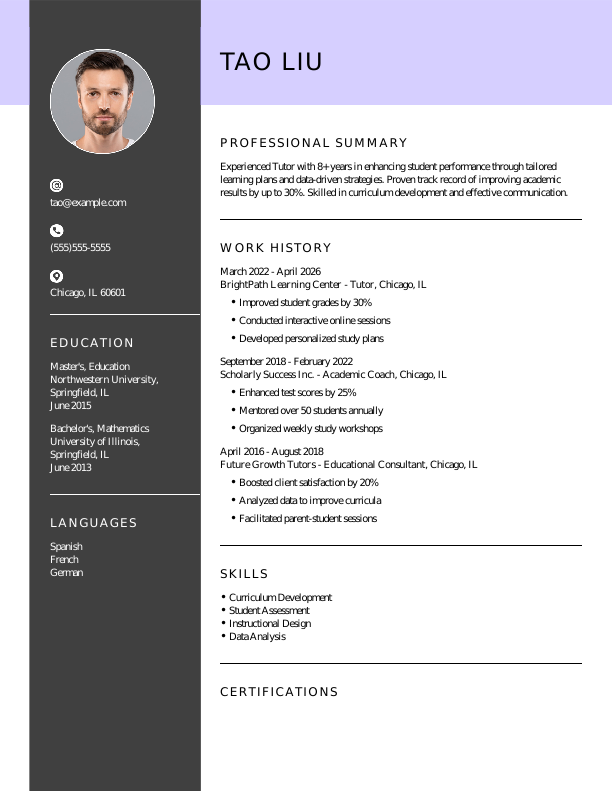
Mid-Career Tutor Resume
An ideal choice for educators with substantial experience, this template effectively showcases recent achievements and supports advancement into specialized instructional roles or leadership positions.

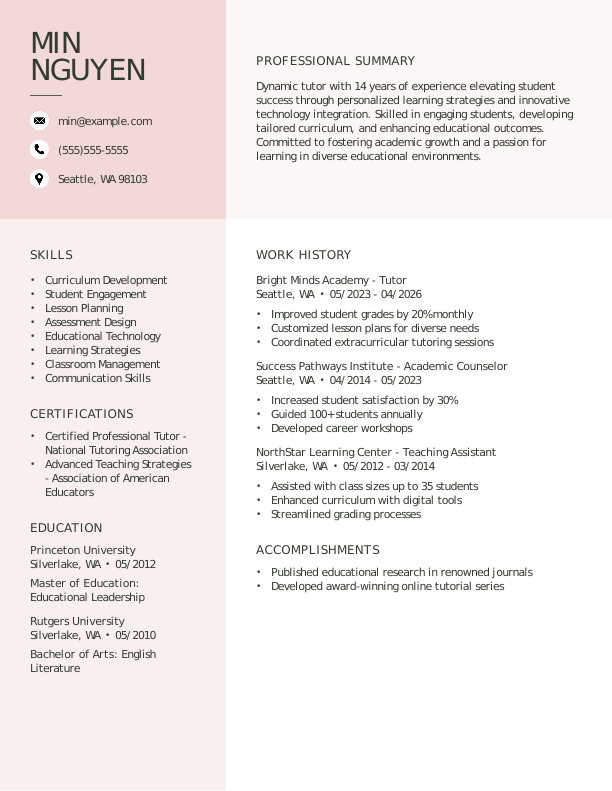
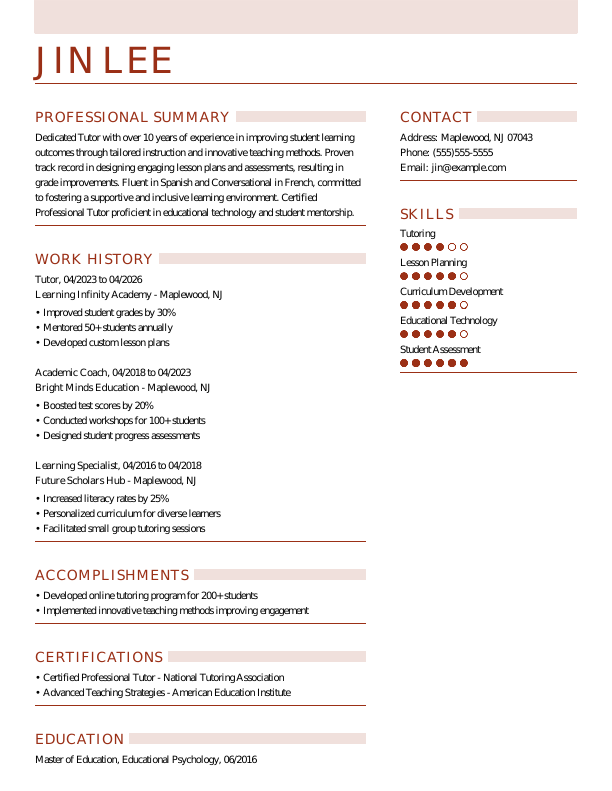
Experienced Tutor Resume
An ideal choice for educators with over 10 years of experience, this template supports professionals seeking advanced tutoring roles or positions in educational leadership.

Tutor Resume Template (Text)
Here is a ready-to-use text version of a tutor resume. Copy it and fill in your subject expertise and student outcome results.
Aiko Johnson
Tampa, FL 33604
Professional Summary
Dynamic Tutor with 6 years of experience boosting student success. Expert in personalized learning, task preparation, and curriculum innovation. Achieved notable improvements in student outcomes and satisfaction rates.
Work Experience
May 2022 – April 2026
Knowledge Edge Academy – Tampa, FL
Tutor
- Increased student test scores by 20% on average.
- Developed custom lesson plans for 25+ students.
- Conducted 500+ hours of one-on-one tutoring sessions.
May 2019 – April 2022
Bright Horizons Learning Center – Tampa, FL
Academic Coach
- Mentored 50+ students, improving performance by 15%.
- Organized workshops benefiting over 200 participants.
- Implemented new curriculum strategies for better outcomes.
May 2016 – April 2019
Summit Academic Solutions – Tampa, FL
Educational Consultant
- Designed customized learning plans for 30+ clients.
- Raised student engagement rates by 25%.
- Provided guidance for achieving academic milestones.
Education
June 2016
Stanford University Stanford, CA
Master of Arts Education
June 2014
University of California, Berkeley Berkeley, CA
Bachelor of Arts English Literature
Certifications
- Certified Academic Tutor – National Tutoring Association
- Advanced Teaching Methodologies – Global Educators Institute
- Curriculum Design Specialist – Education Strategies Alliance
Skills
- Personalized Learning Strategies
- Curriculum Development
- Academic Mentoring
- Classroom Technology Integration
- Test Preparation Techniques
- Student Progress Assessment
- Group Workshop Facilitation
- Individualized Student Coaching
How to Write a Tutor Resume
As a tutor, understanding how to write a resume is essential for showcasing your teaching skills and relevant experiences in a clear format that attracts potential clients or employers. Use the guidance below to emphasize your strengths and tailor your resume for the specific tutoring positions you’re applying for.
1. Contact Info
Your contact details should be prominently displayed at the top of your resume, ensuring clarity and professionalism.
Be sure to include:
- Full name
- Phone number
- Professional email address
- City and state (ZIP code is optional)
- LinkedIn profile or relevant portfolio (if applicable)
 PRO TIP
Avoid including unnecessary personal details on your resume, such as age, gender, or religious affiliation, unless explicitly requested by potential employers.
2. Resume Profile
A resume profile is a brief introduction, ideally two to four sentences long, that highlights your key qualifications and sets the stage for your application. It serves as a compelling pitch to hiring managers, designed to grab their attention and motivate them to explore your resume in greater detail.
Typically located at the top of your resume, the profile can be structured as either a summary or an objective. Each has its own distinct purpose and approach:
- A resume summary highlights essential qualifications, teaching skills, and significant achievements relevant to educational support roles. This format is particularly beneficial for individuals with prior tutoring experience or transferable abilities who are seeking to illustrate their effectiveness as a dedicated tutor.
- A resume objective highlights your future aspirations and outlines what you aim to achieve in your career. This section is particularly helpful for recent graduates, individuals switching careers, or those with limited experience, such as professionals pursuing opportunities in education.
Let’s explore examples of a resume summary and a resume objective to understand their distinct purposes:
Tutor resume summary example:
Dedicated tutor with over 6 years of experience in one-on-one and group educational settings, specializing in mathematics and language arts. Proficient in personalized lesson planning, student engagement techniques, and progress tracking. Recognized for fostering a supportive learning environment that boosts student confidence and academic performance.
Tutor resume objective example:
Recent education in mathematics and a strong foundation in teaching principles poised to launch a career as a tutor in an engaging learning environment. Committed to fostering critical thinking and creativity while contributing effective communication skills and adaptability to after-school programs or private tutoring settings.
3. Work Experience
The work experience on your resume is important in showcasing your qualifications. Employers examine your history to gauge not just where you’ve been, but how you’ve contributed to each role.
This information illustrates how your experiences align with the specific demands of the tutor position you’re seeking.
The work experience section should contain:
- Job title
- Employer name and location
- Dates of employment (month/year)
- 3–5 bullet points detailing your tutoring methods and student success stories
Customize your work experience to mirror the job description by using relevant terminology from the field. Begin each bullet point with a strong action verb, such as “Tutored,” “Facilitated,” or “Assessed,” to convey your contributions effectively.
Incorporate measurable results wherever possible. Highlighting specific achievements, like improving student grades by 20% or increasing engagement in sessions, showcases your impact and sets you apart from other applicants.
In general, consider following the format of:
[action verb] + [responsibility] = [result/achievement]
For example:
Conducted weekly tutoring sessions for 15 students, resulting in an average grade improvement of 20% across all subjects over a semester.
Note that you can also flip the result/achievement with the responsibility:
Facilitated a 25% increase in student engagement by implementing interactive learning techniques tailored to individual learning styles.
With these techniques in mind, your resume bullets may look something like:
- Tutored over 30 students weekly in mathematics and science, boosting their grades by an average of 20%.
- Developed personalized study plans for struggling learners, resulting in a 25% increase in test scores.
- Collaborated with teachers to align tutoring sessions with classroom curriculum, improving student understanding.
- Used online platforms such as Zoom and Google Classroom to conduct engaging virtual lessons.
- Mentored new tutors in effective teaching strategies, improving overall session quality and student satisfaction.
4. Skills
The skills section provides a concise overview of your tutoring abilities, showcasing your expertise in educational support. Using an ATS-friendly resume format ensures hiring managers can quickly assess your qualifications.
Skills can be categorized into three key areas:
- Soft skills are personal qualities that influence how tutors interact with students and colleagues.
- Hard skills are specific, measurable abilities gained through education, training, or hands-on experience.
- Technical skills refer to the specific abilities required to use tools and technology relevant to a profession.
5 Soft Skills for Your Resume or CV
- Effective communication
- Patience and empathy
- Adaptable teaching methods
- Collaborative teamwork
- Active listening skills
5 Hard Skills for Your Resume or CV
- Curriculum development
- Assessment strategies (rubrics, quizzes)
- Learning management systems (Canvas, Blackboard)
- Student engagement techniques
- Feedback and evaluation methods
Overall, highlighting a balanced mix of skills that match the job requirements can demonstrate your qualifications effectively.
PRO TIP
If you’re a newer tutor, consider placing your skills section higher on the resume, right after your summary. If you’re an experienced tutor, it’s better to position this section lower, weaving your skills into your work history for a cohesive presentation of your expertise.
5. Education
Understanding how to list education on your resume is essential for showcasing your qualifications. Begin with your most recent or relevant degree, clearly stating the degree type and the name of the institution.
For those who have recently graduated, consider including your graduation year, GPA if it’s 3.5 or higher, any honors received, and relevant coursework to improve your profile.
Tutor resume education section example:
Bachelor of Arts in Mathematics
University of Washington, Seattle, WA
Graduated: 2023 | Graduated with High Honors
PRO TIP
When listing multiple degrees on your resume, prioritize reverse-chronological order by placing your highest qualification first, such as Bachelor of Arts in Mathematics, followed by Associate Degree in Education.
6. Certifications
Certifications are a clear indicator of your qualifications and knowledge in your field. While they may not always fit into a conventional resume format, they hold significant value for many professionals. Specific roles often demand credentials, such as teaching certificates for educators.
Be sure to highlight relevant certifications that bolster your application. Keeping these credentials up to date and well-organized is important for making a strong impression on potential employers.
Tutor certification examples:
- Certified Tutor License, New York | New York State Education Department | Expires: 12/2028
- Advanced Teaching Strategies Certification | National Tutoring Association | Expires: 11/2027
- Child Development Associate (CDA) | Council for Professional Recognition | Expires: 10/2027
- Online Tutoring Certification | International Tutor Training Program Certification | Expires: 01/2028
Start Building Your Job-Winning Resume
Use Your Existing Resume
Import your current resume to transfer your information to one of our professional templates.
Create a New Resume
Start fresh with a template that catches your eye and follow the prompts to add your details.
Tailor Your Work History to Beat the ATS
Your work experience section is not just a collection of job titles. It’s an opportunity to highlight the tangible contributions you’ve made, showcasing your impact on students’ learning and outcomes. This method can also improve your resume’s compatibility with applicant tracking systems (ATS), ensuring it gets noticed.
To create a compelling work history, tailor it to fit the specific role you’re pursuing by incorporating relevant keywords. Begin by closely examining the job description for any recurring skills or qualifications mentioned. Then, incorporate those elements into your experience descriptions to make them resonate with potential employers.
What’s a Fair Tutor Salary?
Researching salary data is essential for evaluating job offers, negotiating pay, and making informed career decisions. The figures below come from the U.S. Bureau of Labor Statistics (BLS) and represent the most current nationwide averages for tutors.
Factors such as location, experience, educational background, and subject specialization can significantly impact actual earnings. For example, tutors specializing in advanced subjects like math or science may command higher rates than those teaching elementary-level topics or working in less populated areas.
| Alabama | $34,930 |
| Alaska | $43,540 |
| Arizona | $49,030 |
| Arkansas | $44,770 |
| California | $49,750 |
| Connecticut | $60,060 |
| Delaware | $35,460 |
| Florida | $46,990 |
| Georgia | $45,040 |
| Hawaii | $39,220 |
| Idaho | $37,300 |
| Illinois | $40,550 |
| Indiana | $48,210 |
| Iowa | $43,570 |
| Kansas | $36,770 |
| Kentucky | $34,960 |
| Louisiana | $35,010 |
| Maine | $54,770 |
| Maryland | $53,010 |
| Massachusetts | $60,940 |
| Michigan | $42,390 |
| Minnesota | $43,460 |
| Mississippi | $54,640 |
| Missouri | $38,630 |
| Montana | $42,520 |
| Nebraska | $44,520 |
| Nevada | $34,340 |
| New Hampshire | $52,600 |
| New Jersey | $49,530 |
| New Mexico | $41,540 |
| New York | $60,120 |
| North Carolina | $44,670 |
| North Dakota | $42,590 |
| Ohio | $48,510 |
| Oklahoma | $35,400 |
| Oregon | $52,170 |
| Pennsylvania | $45,780 |
| Rhode Island | $65,580 |
| South Carolina | $42,090 |
| South Dakota | $37,940 |
| Tennessee | $46,640 |
| Texas | $35,140 |
| Utah | $40,020 |
| Vermont | $53,870 |
| Virginia | $55,330 |
| Washington | $43,820 |
| West Virginia | $45,990 |
| Wisconsin | $43,520 |
| Wyoming | $68,690 |
Key Takeaways
- Customize your resume for each tutoring position. Incorporate keywords from the job listing to resonate with both applicant tracking systems and hiring managers.
- Highlight quantifiable outcomes to showcase your effectiveness. Use metrics like student improvement percentages or successful exam pass rates (e.g., 90% of students improved their grades).
- Select a suitable format based on your experience level. New tutors might prefer a functional layout that emphasizes skills, while seasoned educators often opt for a chronological format.
More Resume & CV Examples
- Academic Advisor
- Librarian
- Library Assistant
- Math Tutor
- Paraprofessional
- Research Assistant
- Research Technician
- School Counselor
- Teacher Aide
Cover Letters for Your Resume
Browse our library of cover letter examples to complete your application. A resume will have a better chance of getting noticed.
Frequently Asked Questions
Last Update:
What resume format should I use for my tutor resume?
When creating a resume for a tutor position, consider the three main formats available. Your choice should align with your experience level and what you aim to highlight in your application:
- Chronological: A chronological resume is the most popular format, emphasizing your work experience and showcasing your responsibilities and achievements. This format is perfect for applicants with consistent job histories that reinforce or add credibility to their qualifications, making it an effective choice for those seeking roles aligned with their career path.
- Functional: The functional resume, often referred to as a skills-based resume, emphasizes your qualifications and includes an extensive skills section. This format reduces focus on work history, making it suitable for individuals with limited relevant experience or significant employment gaps.
- Combination: A combination resume merges chronological and functional formats, emphasizing both skills and work history. This format is ideal for professionals who wish to showcase their abilities alongside career advancements, making it easier to demonstrate relevant expertise and growth in their field.
Should I include a cover letter with my resume?
Yes, you should include a cover letter with your application for a tutoring position. A well-crafted cover letter improves your resume by giving you the opportunity to convey your enthusiasm for teaching and your unique qualifications, allowing potential employers to see how you can contribute to their educational goals. It demonstrates that you have taken the time to personalize your application, which can help distinguish you from other applicants who may only submit a standard resume.
If you’re uncertain about writing a cover letter, there are numerous resources at your disposal. You can find guides on how to write a cover letter, as well as examples specifically designed for tutoring roles that illustrate different approaches. Exploring various formats will also assist you in choosing one that best showcases your skills and experiences relevant to tutoring.
To make the writing process easier, consider using a cover letter generator, which provides templates and suggestions tailored for tutoring positions, helping streamline your application process.
How long should a tutor resume be?
For tutors with less than 10 years of experience, a one-page resume is generally sufficient to highlight qualifications and teaching expertise. Focus on relevant educational achievements, certifications, and specific tutoring skills that demonstrate your ability to improve student learning.
Conversely, those in senior or specialized tutoring roles may expand their resumes to two pages if the content remains relevant and targeted. Ensure that all information presented supports your professional narrative, showcasing advanced methodologies or leadership experiences without superfluous details.
What keywords should I include to pass applicant tracking systems (ATS)?
To improve your resume and improve your chances of passing ATS, incorporate keywords and phrases directly from the job posting. For tutoring positions, terms like “curriculum development,” “student engagement,” or “learning assessments” are essential. Highlight any relevant certifications, such as Teaching Credential or Subject Matter Expert designation, as well as specific educational tools you’re familiar with, like Google Classroom or Zoom.
Using these specific terms will help ensure that your qualifications match what hiring managers are looking for. Tailoring your resume in this way shows you understand the requirements of the role and can meet them effectively.
Is it useful to list volunteer experience for tutoring roles?
Yes, especially if you’re new to the field. Including volunteer experience demonstrates your ability to convey complex concepts and your commitment to education, making you a more appealing applicant even without extensive formal positions.

Toni Frana is a Certified Professional Resume Writer (CPRW), member of the Professional Association of Resume Writers & Career Coaches, and career expert who empowers job seekers to take control of their career paths using Monster’s comprehensive job search and resume tools.
See More From Toni FranaExplore Related Career Advice


How to Put Transferable Skills on Your Resume: 120 Skills, Examples, & Tips

Updated:
Aug 27, 2026
|
16 min read


How to Write a Functional Resume (Formatting Tips, Template, & Examples)
Updated:
Aug 7, 2026
|
17 min read


Functional vs Chronological Resume: Which Format Is Right for You?
Updated:
Aug 3, 2026
|
16 min read

100+ Resume Adjectives to Help You Write a Stronger Resume in 2026 (With Examples)
Updated:
Jul 30, 2026
|
12 min read