Free Archivist Resume Templates & Examples
Preserving records and institutional memory is meticulous work, and your resume should reflect that care. These free archivist resume and CV examples help you present your cataloging systems and collection management expertise.
Real-World Resumes That Get Results
 Free
Free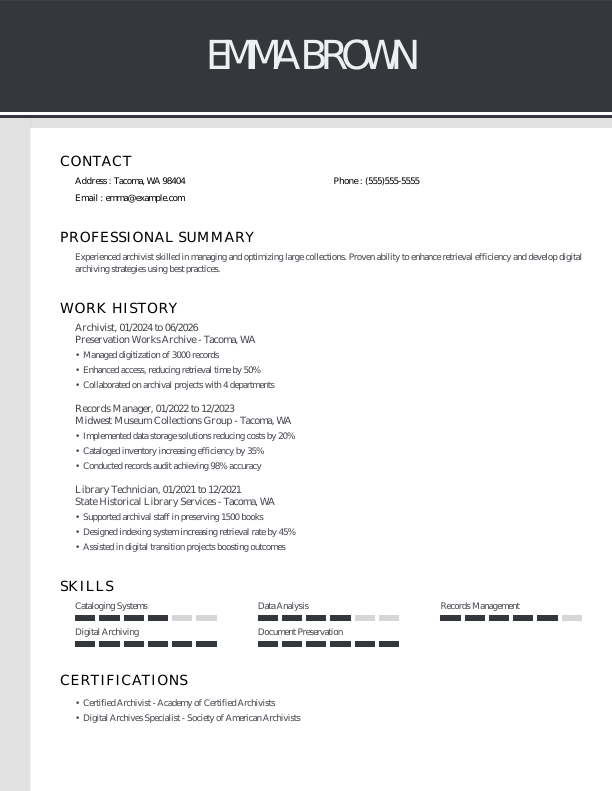
Browse Free Resume Templates
- Accounts Payable
- Adjunct Professor
- Artist
- Auto Mechanic
- Baker
- Business Development Manager
- Business
- Certified Nursing Assistant
- Classic & Traditional
- Cleaner
- College Student
- Concierge
- Construction Worker
- Corporate
- Creative & Unique
- Custodian
- Customer Service
- Dental Assistant
- Direct Support Professional
- Entry-Level
- Flight Attendant
- Hospitality & Food Service
- Front Desk Receptionist
- Healthcare
- High School
- Housekeeping
- Hvac Technician
- Hybrid
- Inventory Manager
- Logistics
- Maintenance
- Management
- Modern
- Mortgage Loan Processor
- Pet Sitter
- Phlebotomist
- Production
- Rbt
- Sales
- Security Services
- Restaurant Server
- Simple & Basic
- Social Work
- Teacher
- Technology
Resume Examples for Archivists
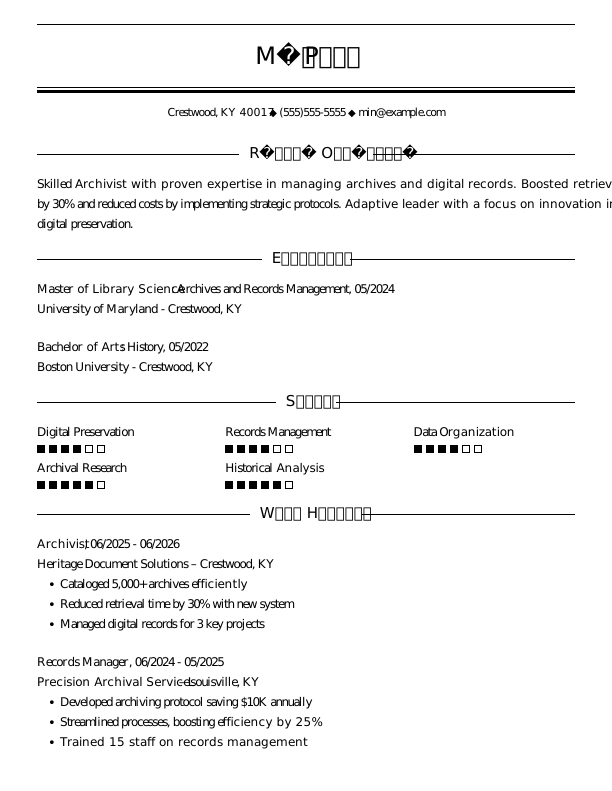
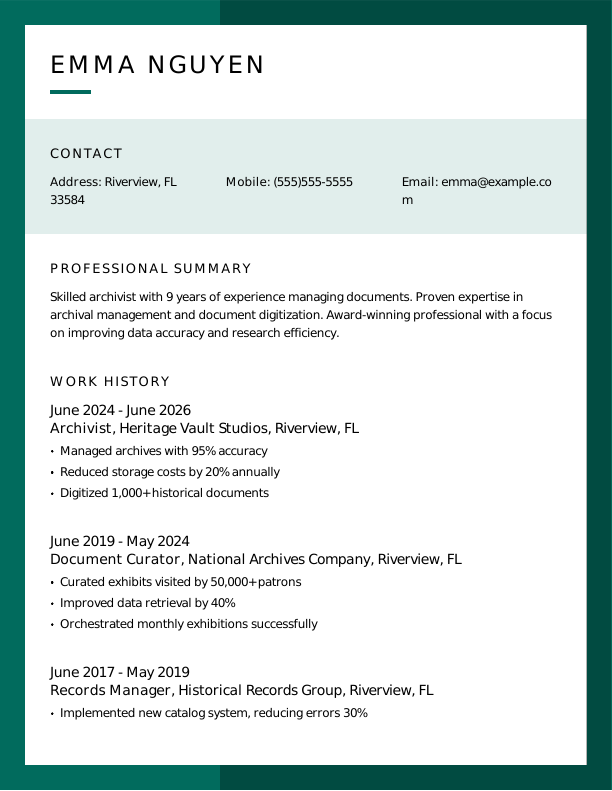
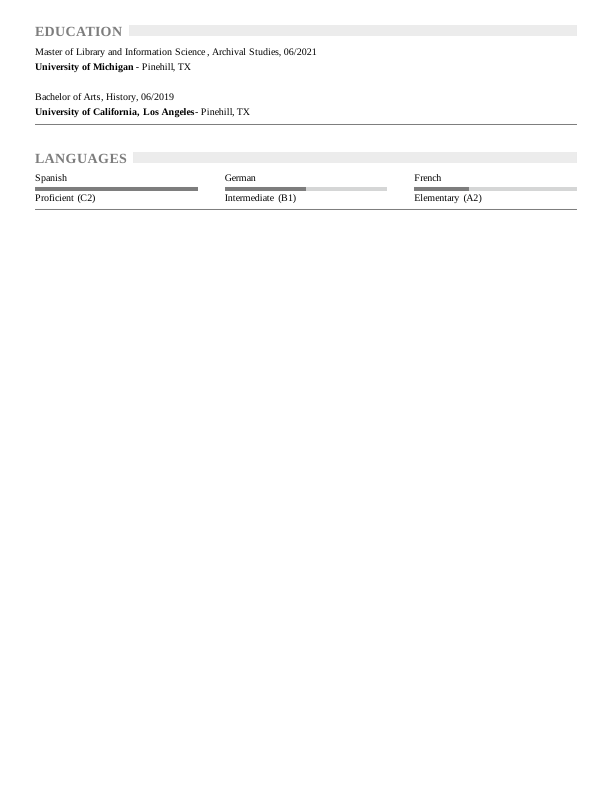
An archivist’s resume or CV varies significantly based on experience level. Explore tailored templates for entry-level, mid-career, and experienced professionals, and use our Resume Builder to create a resume that aligns with your background.
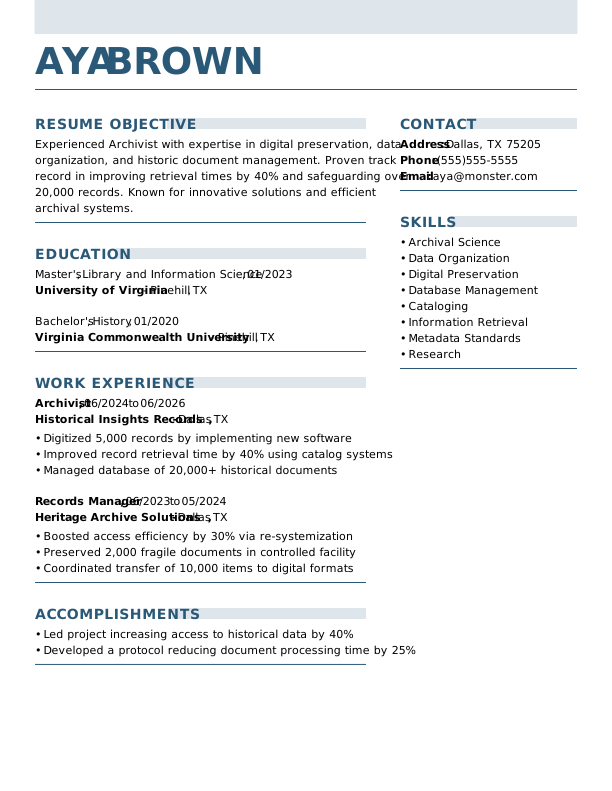
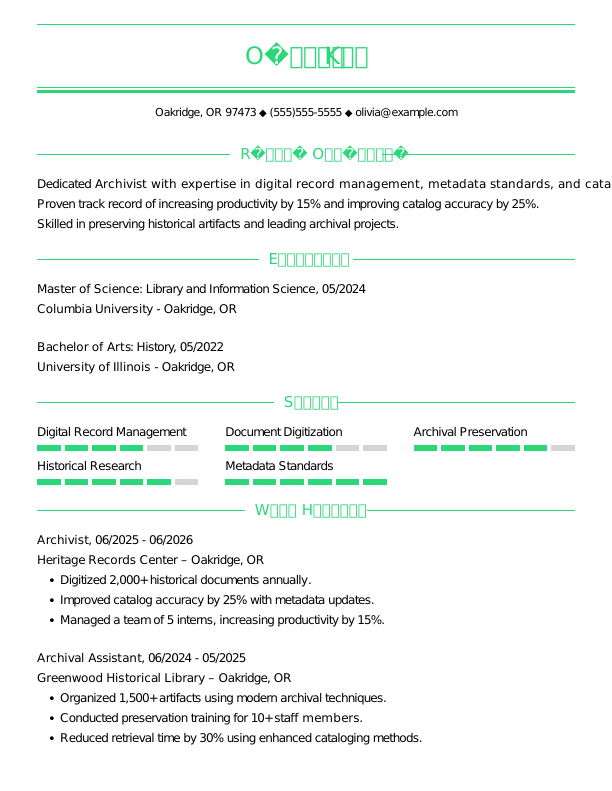
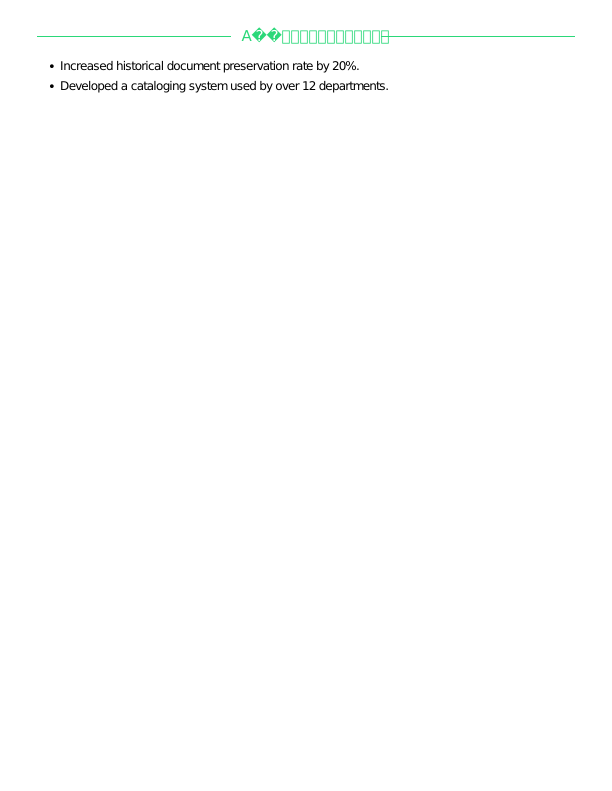
Entry-Level Archivist Resume
Ideal for recent graduates needing help writing a resume for the first time, this template is also suitable for those transitioning into archivist roles from other fields.
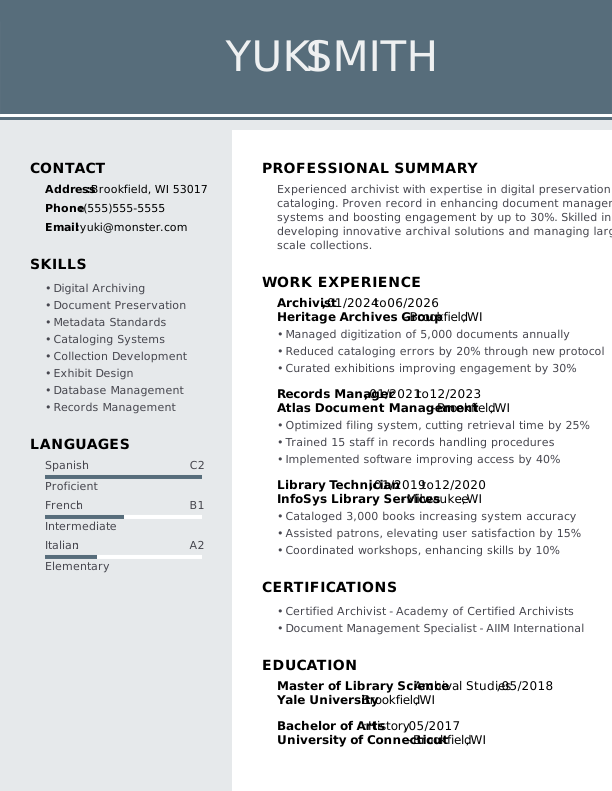
Mid-Career Archivist Resume
A good fit for archivists with several years of experience, this template highlights recent accomplishments and supports progression into specialized or leadership roles.
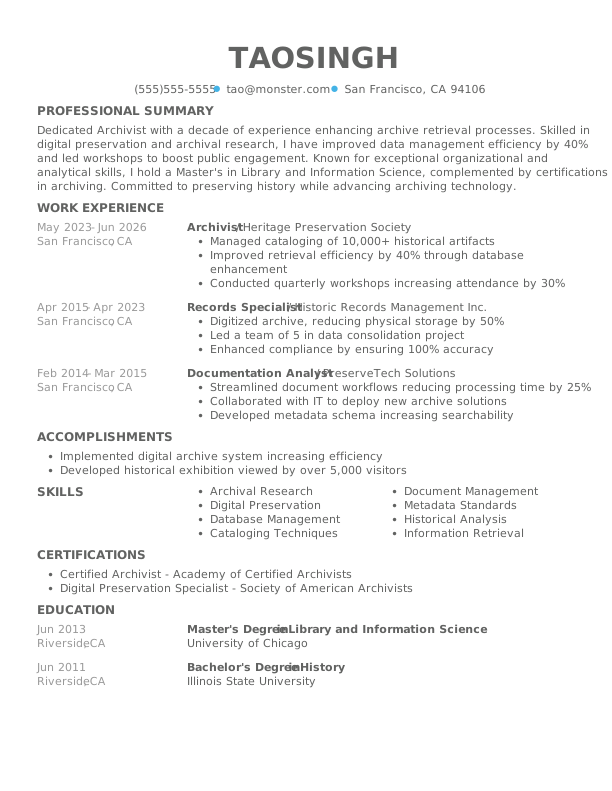
Experienced Archivist Resume
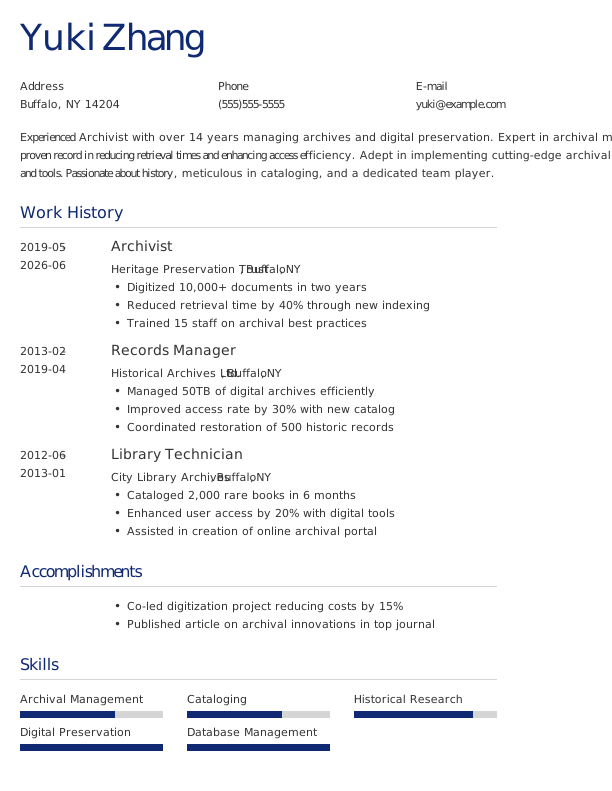
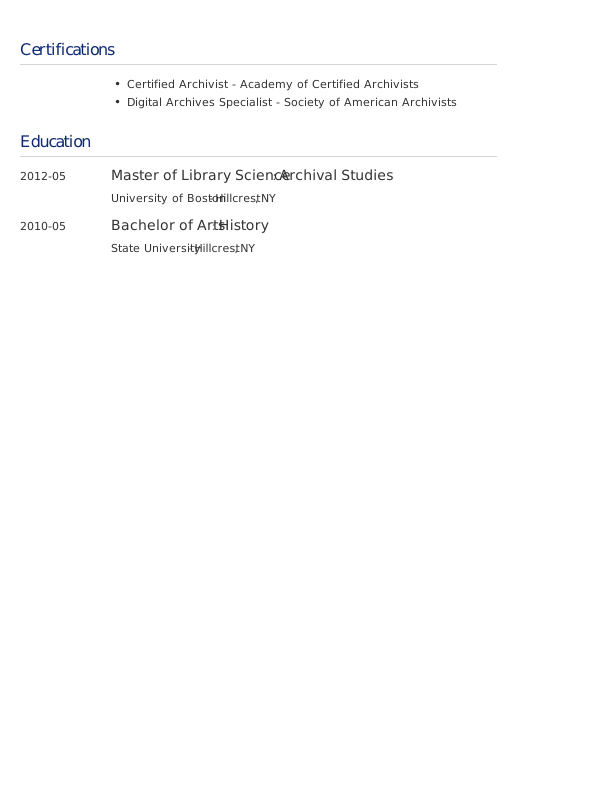
An ideal choice for archivists with over 10 years of experience, this template supports professionals seeking leadership roles in archival management or advanced preservation projects.
Archivist Resume Template (Text)
Take this editable text version of an archivist resume to copy, modify, and personalize directly in your document.
John Huang
Chicago, IL 60617
Professional Summary
Seasoned archivist with a decade of experience optimizing digital archiving and preservation processes. Proven track record of managing vast collections and implementing innovative solutions, enhancing accessibility and efficiency by up to 30%.
Work Experience
May 2023 – June 2026
Heritage Archives LLC – Chicago, IL
Archivist
- Managed 15k historical records annually
- Streamlined digital archival processes, boosting efficiency by 20%
- Oversaw $50k archival budget effectively
May 2018 – April 2023
Legacy Documentation Services – Chicago, IL
Records Manager
- Reduced record retrieval times by 30%
- Implemented new digital filing system
- Trained 5 staff on archival standards
June 2017 – April 2018
ArchiveGuard Inc. – Chicago, IL
Document Preservation Specialist
- Enhanced document lifespan by 40%
- Catalogued 10k+ documents efficiently
- Conducted workshops for 100+ archivists
Education
May 2016
University of Michigan Ann Arbor, MI
Master of Library and Information Science Archival Studies
May 2014
University of Illinois Champaign, IL
Bachelor of Arts History
Certifications
- Certified Archivist – Academy of Certified Archivists
- Digital Archives Specialist – Society of American Archivists
Skills
- Digital archiving
- Data management
- Cataloging systems
- Record preservation
- Metadata creation
- Database management
- Archival research
- Document digitization
How to Write an Archivist Resume
As an archivist, learning how to write a resume involves showcasing your organizational skills and relevant experience while using a clear format that appeals to potential employers. Use the guidance below to emphasize your strengths and tailor your resume for the positions you’re pursuing.
1. Contact Info
Your contact information should be clear, professional, and easy to find at the top of your resume.
Make sure to include:
- Full name
- Phone number
- Professional email address
- City and state (ZIP code is optional)
- LinkedIn profile or personal portfolio (if relevant)
 PRO TIP
Avoid including personal details such as your Social Security number, age, or marital status on your resume unless the employer specifically requests them.
2. Resume Profile
A resume profile is a brief introductory section, typically two to four sentences long, that outlines your identity and key qualifications. It serves as a compelling pitch to hiring managers, designed to capture their interest and motivate them to explore the rest of your resume.
This profile is prominently located at the top of your resume and can take the form of either a summary or an objective, each serving unique purposes. Understanding these differences will help you create a more tailored application:
- A resume summary highlights your key achievements, skills, and relevant experience compellingly. This format is especially useful for job seekers with established backgrounds or transferable skills aiming to showcase their contributions in the field of archiving.
- A resume objective highlights your career goals and details what you hope to achieve in your next position. This section is especially helpful for recent graduates, professionals transitioning careers, or individuals starting out with limited experience, including history majors or library science students.
Let’s take a look at an example of each to see how a resume summary and a resume objective differ:
Archivist resume summary example:
Careful archivist with over 6 years of experience in managing extensive collections within academic and cultural institutions. Proficient in digital archiving, preservation techniques, and metadata standards. Acknowledged for improving accessibility to historical resources and fostering community engagement through innovative outreach programs.
Archivist resume objective example:
Recent graduate with a master’s in archival studies, excited to embark on a career in a dynamic archival organization. Committed to preserving cultural heritage and eager to contribute strong organizational skills and attention to detail in a museum or library setting.
3. Work Experience
The work experience on your resume is an important selling point. Employers examine your job history to see not just your roles, but the significant contributions you’ve made in archiving and preserving valuable information.
Your background showcases how your skills in organization and data management qualify you for the archivist position.
The work experience section should contain:
- Job title
- Employer name and location
- Dates of employment (month/year)
- 3–5 bullet points describing your relevant responsibilities and achievements
Tailor your content to reflect the specific archivist role you’re applying for. Start each bullet point with an action verb (like “Cataloged,” “Preserved,” “Digitized”) to create a strong impact and highlight your contributions.
Incorporate quantifiable data whenever possible. Specific numbers, such as the volume of materials processed or percentage increases in accessibility, illustrate your effectiveness and help set you apart from other applicants.
In general, consider following the format of:
[action verb] + [responsibility] = [result/achievement]
For example:
Cataloged and preserved over 5,000 historical documents, ensuring proper archival standards and increasing accessibility by 30% through digitization efforts.
Note that you can also flip the result/achievement with the responsibility:
Increased public engagement by 25% through the implementation of community outreach programs focused on local history preservation.
With these techniques in mind, your resume bullets may look something like:
- Cataloged and digitized over 5,000 historical documents, increasing accessibility by 40%.
- Conducted outreach programs that engaged 300+ community members in archival research activities.
- Mentored interns in archival best practices, improving their skills and improving project outcomes.
- Used Archival Management Software to streamline document retrieval processes.
- Collaborated with researchers to curate specialized collections, resulting in a 25% increase in usage of archive materials.
4. Skills
This skills section provides a concise overview of professional abilities relevant to the archivist role. It assists hiring managers in quickly assessing qualifications and fit for the position.
Skills can be categorized into three distinct groups:
- Soft skills are personal qualities that influence how archivists collaborate with others.
- Hard skills are specific, quantifiable abilities gained through education, training, or experience.
- Technical skills are the practical abilities required to operate specialized tools and technologies.
5 Soft Skills for Your Resume or CV
- Attention to detail
- Strong organizational skills
- Effective communication
- Research skill
- Team collaboration
5 Hard Skills for Your Resume or CV
- Digital archiving techniques
- Metadata creation (Dublin Core, MODS)
- Database management (Access, SQL)
- Preservation methods (cold storage, climate control)
- Content management systems (ArchivesSpace, Omeka)
In general, aim to present a diverse array of relevant skills that align with the job requirements to showcase your comprehensive abilities.
PRO TIP
If you’re a newer archivist, consider positioning your skills section right after your summary to highlight your abilities. If you have more experience, it’s better to place this section lower, weaving your skills into the description of your work history for a more cohesive narrative.
5. Education
Understanding how to list education on your resume is important for presenting your qualifications clearly. Begin with your most recent or relevant degree, including the type of degree and the institution’s name.
If you’re a recent graduate, consider adding your graduation year, GPA (if it’s 3.5 or above), any honors received, and coursework that relates to the position you seek.
Archivist resume education section example:
Master of Arts in History (MA)
University of California, Berkeley, Berkeley, CA
Graduated: 2024 | Graduate with Distinction
PRO TIP
If you’re advancing from an Associate Degree in Library Science to a Bachelor of Arts in History, or have obtained another relevant degree, include both in reverse-chronological order.
6. Certifications
Listing certifications on your resume highlights your qualifications and helps mitigate any gaps in experience. While this section may not be standard for all resumes, it’s particularly useful for most archivists. Employers in fields such as historical preservation or special collections often seek specific credentials to ensure job seekers meet the demands of specialized roles.
Be sure to include only those certifications that are relevant to your position and improve your application. Keeping these credentials current and clearly formatted will make a positive impression on potential employers.
Archivist certification examples:
- Certified Archivist (CA) | Academy of Certified Archivists | Expires: 12/2028
- Digital Archives Specialist (DAS) | Society of American Archivists | Expires: 05/2027
- Archival Management Certificate | University of Wisconsin-Milwaukee | Expires: 06/2028
- Preservation Administration Certificate | Society of American Archivists | Expires: 10/2027
Start Building Your Job-Winning Resume
Use Your Existing Resume
Import your current resume to transfer your information to one of our professional templates.
Create a New Resume
Start fresh with a template that catches your eye and follow the prompts to add your details.
Tailor Your Work History to Beat the ATS
Your work experience is more than a list of job titles. It’s an opportunity to showcase the measurable impact you’ve had on preserving, organizing, and providing access to historical records and materials. This approach also helps craft an ATS-friendly resume that applicant tracking systems (ATS) can easily scan.
To create an effective work history, tailor your descriptions to the archivist position you’re targeting by incorporating relevant keywords. Begin by carefully analyzing the job description for key skills and qualifications. Identify repeated terms or requirements and reflect those elements in your experience descriptions where applicable.
What’s a Fair Archivist Salary?
Understanding archivist salaries across the nation assists you in assessing job offers, negotiating fair compensation, and making informed career choices. The data below is sourced from the U.S. Bureau of Labor Statistics (BLS) and reflects the most recent nationwide averages for archivists.
Keep in mind that factors like geographic location, years of experience, certifications, and area of specialization can significantly affect your actual salary. Archivists in large metropolitan areas or prestigious institutions often earn more than those in smaller towns or less renowned organizations, while specialized roles focusing on digital archiving or preservation may also command higher pay.
| Alabama | $63,170 |
| Arizona | $55,530 |
| Arkansas | $63,700 |
| California | $69,140 |
| Connecticut | $57,180 |
| Delaware | $52,430 |
| District of Columbia | $92,270 |
| Florida | $50,370 |
| Georgia | $61,550 |
| Illinois | $71,770 |
| Indiana | $57,940 |
| Kansas | $56,690 |
| Kentucky | $45,280 |
| Louisiana | $42,460 |
| Maine | $54,710 |
| Maryland | $85,580 |
| Massachusetts | $75,040 |
| Michigan | $60,720 |
| Minnesota | $65,220 |
| Missouri | $59,260 |
| Nevada | $62,180 |
| New Hampshire | $66,990 |
| New Jersey | $71,720 |
| New Mexico | $84,640 |
| New York | $76,640 |
| North Carolina | $57,460 |
| Ohio | $55,890 |
| Oklahoma | $53,980 |
| Oregon | $61,830 |
| Pennsylvania | $59,850 |
| Rhode Island | $73,480 |
| South Carolina | $51,000 |
| Tennessee | $51,370 |
| Texas | $60,800 |
| Utah | $53,000 |
| Virginia | $73,990 |
| Washington | $72,330 |
| Wisconsin | $60,740 |
| Puerto Rico | $38,730 |
Key Takeaways
- Customize your resume for each job application. Use keywords from the job description to align with both ATS and hiring managers.
- Highlight quantifiable accomplishments relevant to archiving (e.g., number of collections managed, percentage of items digitized, cost savings achieved) to demonstrate your effectiveness.
- Select a format that suits your career stage. Recent graduates might opt for a functional format, while seasoned archivists typically choose a reverse-chronological layout.
More Resume & CV Examples
- Academic Advisor
- Administrative Assistant
- Administrative Coordinator
- Administrative
- Assistant
- Category Manager
- Clerical
- Clerk
- Clinical Research Assistant
- Data Entry
- Executive Assistant
- Hr Assistant
- Hr Generalist
- Human Resources
- Interpreter
- Librarian
- Library Assistant
- Math Tutor
- Office Administrator
- Office Assistant
- Office Coordinator
- Paraprofessional
- Personal Assistant
- Project Assistant
- Real Estate Assistant
- Receptionist
- Research Assistant
- Research Technician
- Scheduler
- Scheduling Coordinator
- School Counselor
- Secretary
- Teacher Aide
- Tutor
- Virtual Assistant
Cover Letters for Your Resume
Browse our library of cover letter examples to complete your application. A resume will have a better chance of getting noticed.
Frequently Asked Questions
Last Update:
What resume format should I use for my archivist resume?
There are three main resume formats to consider when applying for archivist positions. Your selection should reflect your experience level and the specific skills or accomplishments you wish to highlight:
- Chronological: The most popular format, a chronological resume highlights your work experience by detailing responsibilities and achievements in reverse order. This makes it an excellent choice for job seekers with a consistent and relevant job history that reinforces their qualifications and showcases their expertise as an archivist.
- Functional: Also known as a skills-based resume, the functional format focuses on a summary of qualifications and an expanded skills section to showcase your archival expertise. By minimizing emphasis on work history, it’s beneficial for job seekers without relevant experience or those transitioning into the field.
- Combination: A combination resume integrates elements from both chronological and functional formats, showcasing skills alongside work experience. This structure benefits archivists by allowing them to emphasize their expertise in information management while also demonstrating their career advancements and relevant project contributions.
Should I include a cover letter with my resume?
Yes, you should include a cover letter with your archivist job application. A strong cover letter provides an opportunity to express your passion for preserving history and detail how your unique skills complement your resume. It allows you to connect personally with the hiring organization, showing them that you have invested time in crafting your application.
If you’re feeling hesitant about writing a cover letter, don’t worry. There are numerous resources to guide you, including comprehensive guides on how to write a cover letter, various examples tailored for archivists, and different formats that can suit your style and experience level. These tools can help simplify the process and make it more approachable.
To make things easier, consider using a cover letter generator as a quick way to create a professional document tailored to the archivist role. Such tools offer templates and suggestions based on your specific job application needs.
How long should an archivist resume be?
For professionals with less than 10 years of experience, a one-page resume is typically sufficient to capture relevant skills and experiences. Focus on including educational background, key internships, and essential competencies that demonstrate your qualifications for the role.
In contrast, those in senior or specialized positions may require two pages to adequately showcase their expertise. Ensure that all content remains relevant and directly related to the position you’re applying for, avoiding unnecessary details that do not improve your profile.
What keywords should I include to pass applicant tracking systems (ATS)?
To improve your resume for ATS, focus on integrating keywords and phrases directly from the job description. Use terms like archival management, digital preservation, or metadata standards to align your skills with what employers are seeking. Highlight relevant certifications, such as Certified Archivist or Digital Archives Specialist, that can set you apart from other job seekers.
Additionally, mention specific technical tools you’re familiar with, such as ArchivesSpace or DSpace. This not only showcases your qualifications but also ensures your resume is optimized for ATS screening by mirroring the language used in the job posting.

Toni Frana is a Certified Professional Resume Writer (CPRW), member of the Professional Association of Resume Writers & Career Coaches, and career expert who empowers job seekers to take control of their career paths using Monster’s comprehensive job search and resume tools.
See More From Toni FranaExplore Related Career Advice


How to Put Transferable Skills on Your Resume: 120 Skills, Examples, & Tips

Updated:
Aug 27, 2026
|
16 min read


How to Write a Functional Resume (Formatting Tips, Template, & Examples)
Updated:
Aug 7, 2026
|
17 min read

Functional vs Chronological Resume: Which Format Is Right for You?
Updated:
Aug 3, 2026
|
16 min read
100+ Resume Adjectives to Help You Write a Stronger Resume in 2026 (With Examples)
Updated:
Jul 30, 2026
|
12 min read