

Free Data Entry Cover Letter Templates & Examples
A strong data entry cover letter highlights your attention to detail, accuracy, and efficiency when handling high-volume information. Our free cover letter examples and step-by-step advice help you build a clear, targeted application that shows hiring managers you can manage records reliably.
Real-World Cover Letters That Get Results
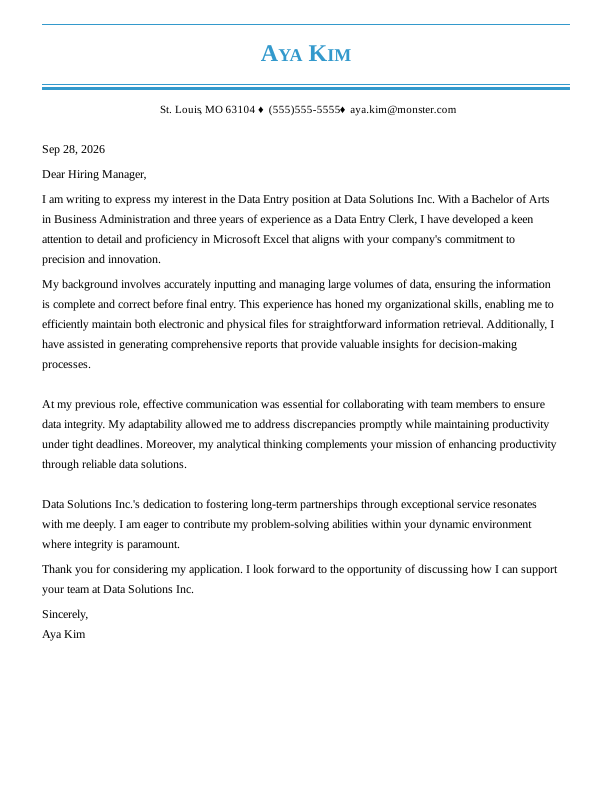
 Free
FreeData Entry Entry-Level Cover Letter
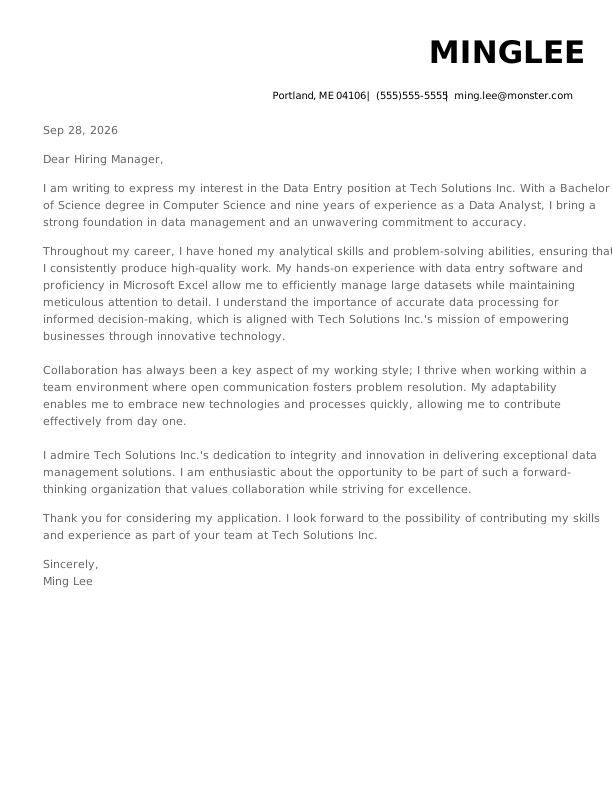
Data Entry Mid-Level Cover Letter
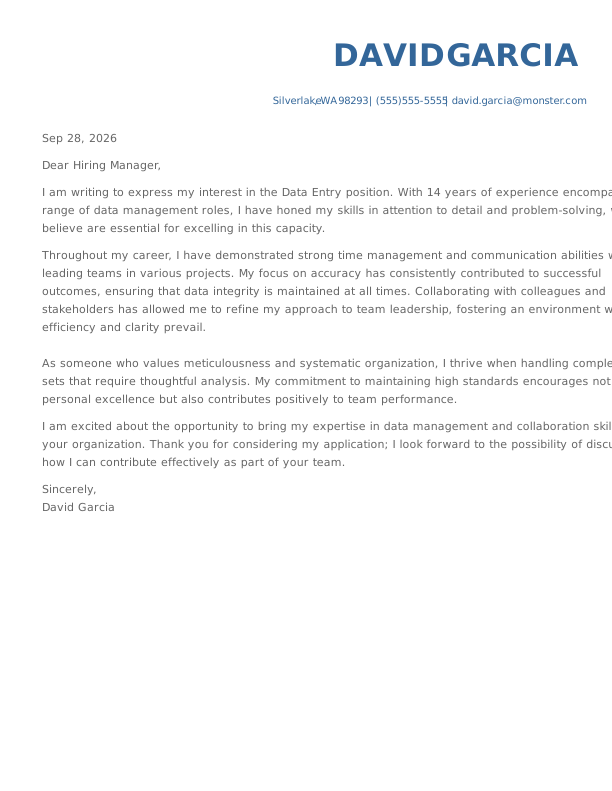
Data Entry Experienced Cover Letter
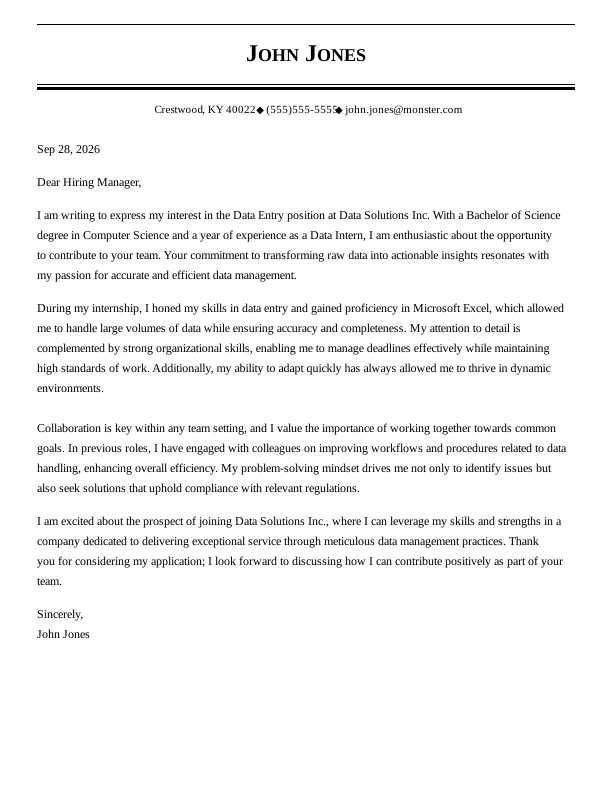
Data Entry Entry-Level Cover Letter
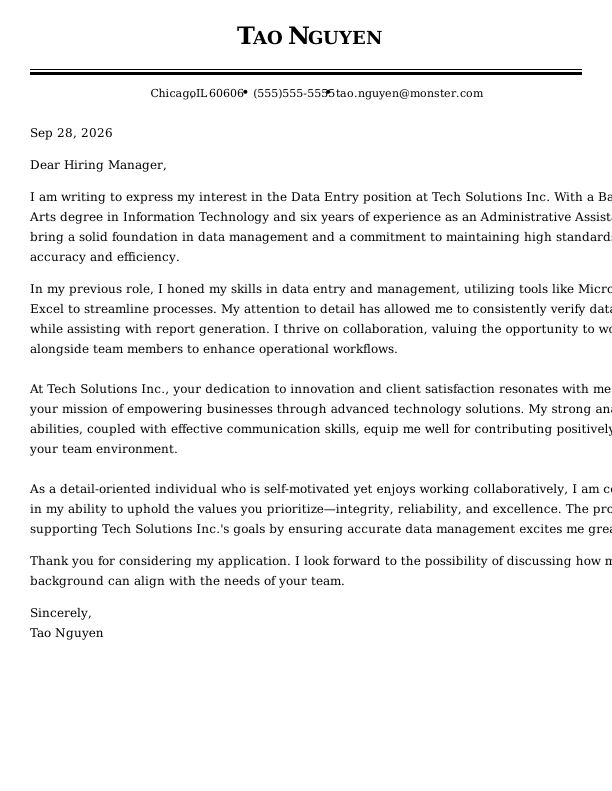
Data Entry Mid-Level Cover Letter
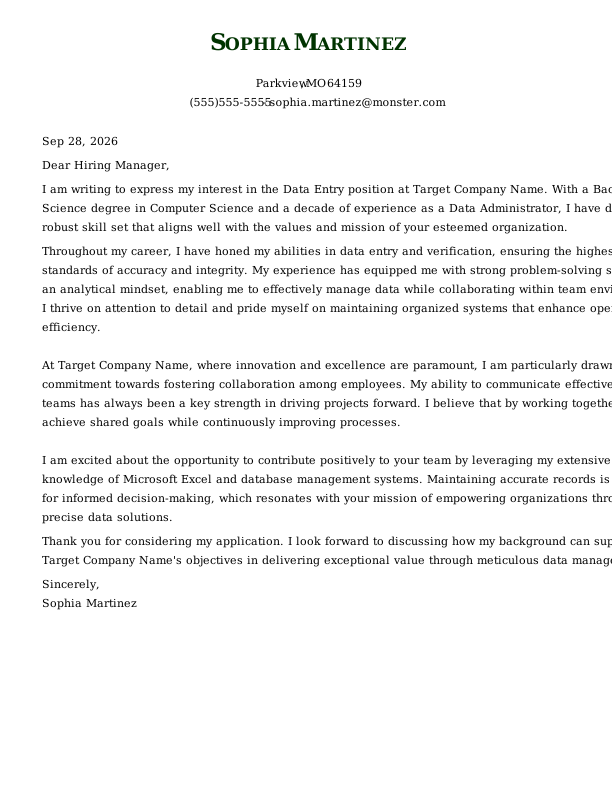
Data Entry Experienced Cover Letter
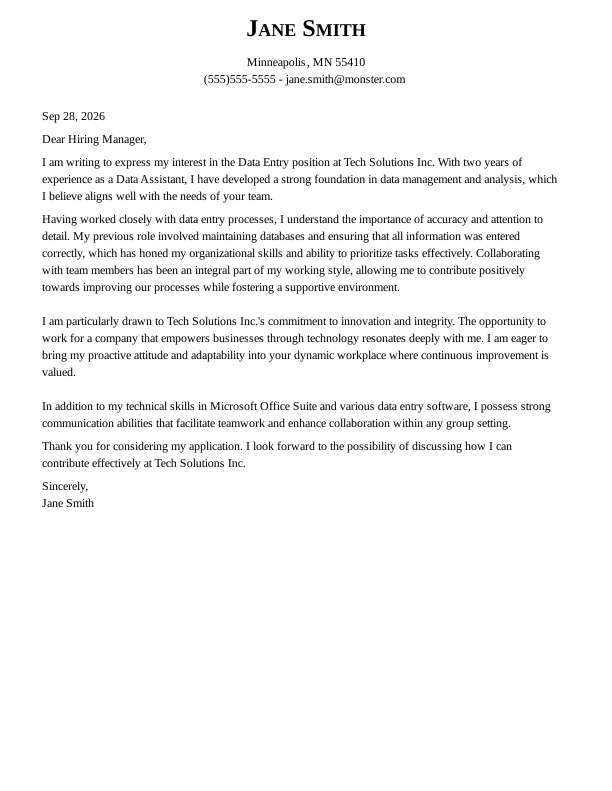
Data Entry Entry-Level Cover Letter
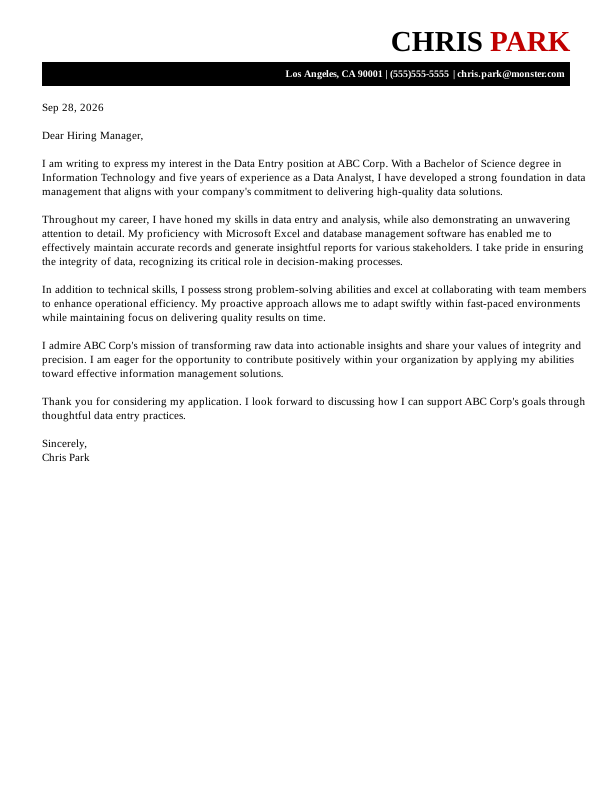
Data Entry Mid-Level Cover Letter
Browse Free Cover Letter Templates
- Academic
- Account Manager
- Accountant
- Accounts Payable
- Administrative Assistant
- Admissions Counselor
- Architecture
- Artist
- Assistant Principal
- Babysitter
- Barista
- Bartender
- Bookkeeper
- Brand Ambassador
- Business Analyst
- Business
- Caregiver
- Chef
- Civil Engineering
- Computer Science
- Construction
- Consulting
- Copywriter
- Cosmetology
- Custodian
- Customer Service
- Customer Service Representative
- Data Analyst
- Dental Assistant
- Dental Hygienist
- Digital Marketing
- Electrical Engineering
- Emt
- Engineering
- Esthetician
- Event Coordinator
- Executive Assistant
- Finance
- Financial Analyst
- Firefighter
- Flight Attendant
- Graphic Designer
- Hair Stylist
- Healthcare
- Hr Generalist
- Investment Banking
- It
- Janitor
- Journalism
- Lab Technician
- Law Clerk
- Lawyer
- Librarian
- Logistics
- Makeup Artist
- Manager
- Marketing Coordinator
- Marketing
- Marketing Manager
- Massage Therapist
- Mechanic
- Mechanical Engineer
- Medical Assistant
- Non Profit
- Nursing
- Occupational Therapy
- Office Assistant
- Office Manager
- Operations Manager
- Paralegal
- Personal Trainer
- Pharmacist
- Pharmacy Technician
- Photographer
- Physician Assistant
- Pilot
- Police Officer
- Program Manager
- Project Manager
- Property Manager
- Psychology
- Receptionist
- Research Assistant
- Restaurant Manager
- Retail
- Sales
- Sales Manager
- School Counselor
- Security Officer
- Social Work
- Software Engineer
- Special Education Teacher
- Substitute Teacher
- Teacher
- Teaching Assistant
- Truck Driver
- Vet Tech
- Veterinary Assistant
- Web Developer
Cover Letter Examples for Data Entry
Cover letter requirements evolve as a data entry career progresses, shifting from training details to accuracy and workflow ownership. Choose the template that matches your experience level so you can spotlight the right skills, certifications, or measurable results, such as error rates or turnaround times.
Entry-Level Data Entry Cover Letter
Designed for recent graduates and career changers writing a cover letter with no experience, this template helps you highlight your education, communication strengths, and foundational proficiency in Microsoft Excel.
Mid-Career Data Entry Cover Letter
Tailored for data professionals with several years of experience, this template emphasizes analytical skills, hands-on experience with data entry software, and proficient management of large datasets.
Experienced Data Entry Cover Letter
Ideal for seasoned data management professionals, this template highlights team leadership, systematic organization, time management, and a long-standing commitment to data integrity.
Data Entry Cover Letter Template (Text)
Use this adaptable text template of a data entry cover letter to copy, paste, and personalize in your document or file.
Min Johnson
San Francisco, CA 94109
(555)555-5555
min.johnson@monster.com
Sep 28, 2026
Dear Hiring Manager,
I am writing to express my interest in the data entry position at Tech Solutions Inc. With a Bachelor of Science in Information Technology and seven years of experience as a data entry specialist, I am excited about the opportunity to contribute to your innovative team.
Throughout my career, I have honed my skills in data entry and database management, emphasizing accuracy and attention to detail. My strong analytical thinking allows me to approach challenges methodically while ensuring that data integrity is maintained at all times. I pride myself on being adaptable and open-minded, which has enabled me to embrace new technologies and improve processes effectively within collaborative environments.
As someone who values teamwork and communication, I enjoy working with colleagues to streamline data entry processes and identify areas for improvement. This collaborative spirit aligns well with Tech Solutions Inc.’s commitment to fostering a culture of continuous improvement. I believe that my problem-solving abilities paired with excellent time management skills make me a strong fit for your organization’s goal of enhancing operational efficiencies.
I am particularly drawn to Tech Solutions Inc.’s dedication to customer satisfaction through innovative technology solutions. The prospect of contributing towards impactful projects excites me, as I’m passionate about making significant contributions that drive success.
Thank you for considering my application. I look forward to the possibility of discussing how my background can align with the needs of your team at Tech Solutions Inc.
Sincerely,
Min Johnson
How to Write a Data Entry Cover Letter
Writing an effective data entry cover letter means showing how your accuracy and software proficiency ensure reliable records. Hiring managers look for candidates who minimize errors while keeping pace with daily targets. Use the step-by-step framework below to present your experience clearly and effectively.
1. Research & Prepare
Before typing your cover letter, research the tools, software, and compliance standards the target organization uses. Tailoring your application to its specific workflow shows that you understand its operational needs.
Focus your preparation on these key sources:
- The job posting: Identify the required software stack, such as specific CRM or ERP systems, alongside expectations for typing speed and field accuracy.
- Compliance and privacy statements: Review public documents to see how the organization handles sensitive information and maintains data governance.
- Hiring posts and company updates: Check for references to ongoing digitization efforts, backlog clearing projects, or high-volume processing goals.
2. Hook the Reader
Capture the hiring manager’s interest in your first paragraph by sharing a concrete accomplishment rather than a generic statement. Avoid opening with routine lines like “I am applying for the data entry position.” Instead, lead with a clear metric or system outcome.
Consider these strong examples:
- Accuracy-first metrics: “I maintained 99.8% field-level accuracy while keying over 1,500 records weekly in Salesforce CRM using validation rules and double-entry checks.”
- Workflow and tooling: “I streamlined document intake by tagging batches in SharePoint and reconciling entries against an ERP export, cutting rework from 6% to 2% in one quarter.”
- Process discipline: “Following a QA audit with our data lead, I adopted standardized CSV templates and logged updates in Jira to ensure full audit traceability.”
3. Tell Your Professional Story
While your resume outlines past job titles, your cover letter explains how you maintained speed and accuracy in daily operations. Specific numbers prove your efficiency and help the reader understand your actual volume capacity.
Format your achievements with clear metrics like these:
- Reduced data entry errors by 22% after implementing a two-step verification checklist for incoming invoices and purchase orders.
- Processed an average of 1,000 records weekly while maintaining 99.6% field-level accuracy across customer account updates.
- Cut document processing time by 30 minutes per batch by standardizing file-naming conventions and automating repetitive lookups in Excel.
4. Showcase Your Skills
Avoid generic claims like “detail-oriented” by describing specific moments where you caught discrepancies or improved a process. Demonstrating practical problem-solving gives hiring managers confidence in your work.
Consider framing your capabilities using these real-world scenarios:
- Accuracy checks: Detail how you compared re-entered fields from scanned forms side by side against original documents to catch transposed dates before final submission.
- Data tools: Describe how you used spreadsheet formulas to flag out-of-range values and corrected underlying records at the source.
- Communication: Explain how you reached out directly to requesters with specific questions when incoming forms lacked required fields, ensuring clean entries on the first attempt.
5. Explain Any Special Circumstances
If you have an employment gap, a career change, or a recent relocation, address it briefly in one or two sentences. Providing clear context keeps the reader focused on your current data management capabilities.
Use these examples as a guide:
- “During a nine-month caregiving gap, I maintained my typing speed and technical accuracy through weekly practice in Microsoft Excel and Google Sheets.”
- “I am pivoting into data entry from a retail background, having recently completed coursework in spreadsheet management, data cleaning, and CSV file formatting.”
- “Following my relocation to Austin, I updated my remote workspace setup and refreshed my knowledge of Salesforce Data Cloud templates.”
6. End With a Professional Goodbye
Conclude your cover letter with a direct, polite call to action that encourages the hiring manager to get in touch. Keep your closing concise, avoiding overused lines like “I look forward to hearing from you.”
Offer a practical topic for an interview discussion, such as how you can help maintain accurate records while meeting daily input targets. Add a brief thank-you, and close with a standard sign-off like “Sincerely” or “Best regards.”
4 Tips for Formatting Your Cover Letter
In data entry hiring, how you present your information is just as important as the data itself. Clean formatting ensures a hiring manager can quickly locate your key systems experience, quality achievements, and typing volume during a fast initial review, whether you are entering the field or moving into a supervisory role.

Keep It to One Page
Limit your cover letter to one page, aiming for 250 to 400 words across three or four short paragraphs. A concise layout allows the reader to quickly review your typing accuracy, system experience, and main achievements.

Use a Professional Font & Layout
Select standard, highly legible fonts like Arial, Calibri, Georgia, or Times New Roman at 10 to 12 points. Maintain one-inch margins and use consistent formatting across your documents to project meticulous attention to detail.

Match Your Header to Your Resume
Use the exact same name, contact details, and typography styling on your cover letter as you do on your resume. This visual alignment creates a polished, cohesive application package that is easy to identify.

Save & Send as a PDF
Export your cover letter as a PDF file to ensure your formatting stays intact across different screens and applicant tracking systems. Save the file with a clear, professional name like Firstname_Lastname_Cover_Letter.pdf.
Top-Paying States for Data Entry Roles
Knowing what data entry professionals earn helps you evaluate job offers, plan your career progression, and negotiate pay with confidence. Compensation varies based on location, experience, and employer type, such as healthcare facilities versus corporate operations, where specialized skills like data validation or systems management can boost earning potential beyond standard job titles.
Reviewing data from the U.S. Bureau of Labor Statistics (BLS) provides a helpful baseline for understanding these nationwide salary trends before you make a decision.
| Alabama | $35,050 |
| Alaska | $45,230 |
| Arizona | $44,070 |
| Arkansas | $36,760 |
| California | $47,210 |
| Connecticut | $47,480 |
| Delaware | $39,050 |
| District of Columbia | $57,560 |
| Florida | $39,620 |
| Georgia | $40,840 |
| Idaho | $39,530 |
| Illinois | $42,050 |
| Indiana | $40,770 |
| Iowa | $41,770 |
| Kansas | $37,720 |
| Kentucky | $36,430 |
| Louisiana | $38,910 |
| Maine | $45,290 |
| Maryland | $39,970 |
| Massachusetts | $47,200 |
| Michigan | $39,750 |
| Minnesota | $43,400 |
| Mississippi | $36,090 |
| Missouri | $43,380 |
| Montana | $41,310 |
| Nebraska | $36,390 |
| Nevada | $40,760 |
| New Hampshire | $42,380 |
| New Jersey | $44,850 |
| New Mexico | $43,440 |
| New York | $45,770 |
| North Carolina | $39,720 |
| Ohio | $41,120 |
| Oklahoma | $36,520 |
| Oregon | $47,230 |
| Pennsylvania | $41,760 |
| Rhode Island | $46,990 |
| South Carolina | $38,170 |
| South Dakota | $37,390 |
| Tennessee | $40,780 |
| Texas | $38,980 |
| Utah | $45,060 |
| Vermont | $43,580 |
| Virginia | $41,430 |
| Washington | $47,350 |
| West Virginia | $36,830 |
| Wisconsin | $41,620 |
| Wyoming | $45,030 |
| Guam | $27,770 |
| Puerto Rico | $27,620 |
| Virgin Islands | $34,750 |
Key Takeaways
- Demonstrate your commitment to data integrity by sharing an example where you identified source document errors and prevented recurring discrepancies.
- Include clear performance indicators such as typing speed in words per minute, field accuracy percentages, or hourly record throughput.
- Tailor your highlights to the organization’s focus, whether that means high-volume processing, legal audit readiness, or ecommerce inventory management.
Browse Monster’s Resume Templates
Monster also has hundreds of ATS-friendly resume templates for all career levels and industries. Create a matching resume to help you land the interview.
- Administrative Assistant
- Administrative Coordinator
- Administrative
- Archivist
- Assistant
- Category Manager
- Clerical
- Clerk
- Clinical Research Assistant
- Data Entry
- Executive Assistant
- Front Desk Receptionist
- Hr Assistant
- Hr Generalist
- Human Resources
- Interpreter
- Office Administrator
- Office Assistant
- Office Coordinator
- Personal Assistant
- Project Assistant
- Real Estate Assistant
- Receptionist
- Scheduler
- Scheduling Coordinator
- Secretary
- Virtual Assistant
Frequently Asked Questions
Last Update:
Do I really need a cover letter?
Including a cover letter gives you an advantage because it explains your approach to accuracy, speed, and error prevention in ways a resume cannot. It also demonstrates initiative and allows you to outline relevant context if you are making a career transition or returning from an employment gap.
How long should my cover letter be?
A data entry cover letter should remain one page maximum, targeting 250 to 400 words across three or four concise paragraphs. Focusing on key achievements and specific system experience keeps the letter scannable and impactful.
Should my cover letter match my resume?
Your cover letter should match your resume’s header, font choices, and general layout to create a unified appearance. The text should expand on key accuracy accomplishments or workflow experiences rather than simply repeating resume bullet points.
What should I include in my cover letter header?
Include your full name, phone number, email address, and location (city and state), followed by the date and recipient details. Adding the recipient’s name, title, and facility details makes the letter feel direct and well-researched.
How do I write a cover letter for an internal position?
When writing a cover letter for an internal job, focus on your familiarity with internal documentation standards, daily workflow handoffs, and unit protocols. Mention specific internal milestones, such as clearing backlogs or reducing rework, and note your intention to complete all formal application requirements.

Vicki Salemi is a nationally recognized career expert who helps professionals navigate the hiring landscape and find the right fit on Monster. With over 15 years of experience in corporate recruiting and HR, she offers expert guidance on job search strategies, interview preparation, and career development to help candidates land their next role.
See More From Vicki SalemiExplore Related Career Advice






How to Write a Cover Letter for Internal Positions or Promotions (Examples & Tips)

Updated:
Apr 23, 2026
|
19 min read


Cover Letter vs Resume: What’s the Difference & Do You Need Both?

Updated:
Apr 23, 2026
|
18 min read