

Free Executive Assistant Cover Letter Templates & Examples
Boost your interview odds with our professionally designed executive assistant cover letter templates. Free and fully customizable, these templates include expert tips to help you highlight administrative mastery, executive support skills, and strategic value to hiring managers.
Real-World Cover Letters That Get Results
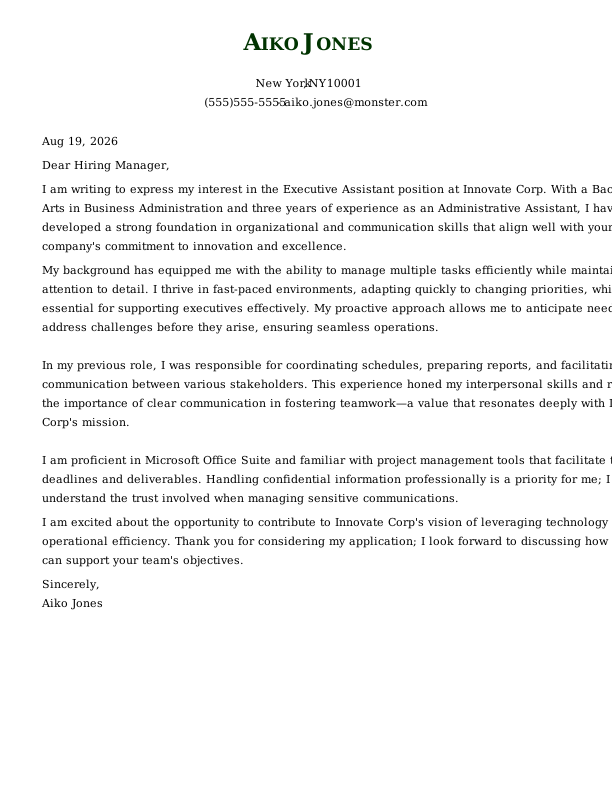
 Free
FreeExecutive Assistant Entry-Level Cover Letter
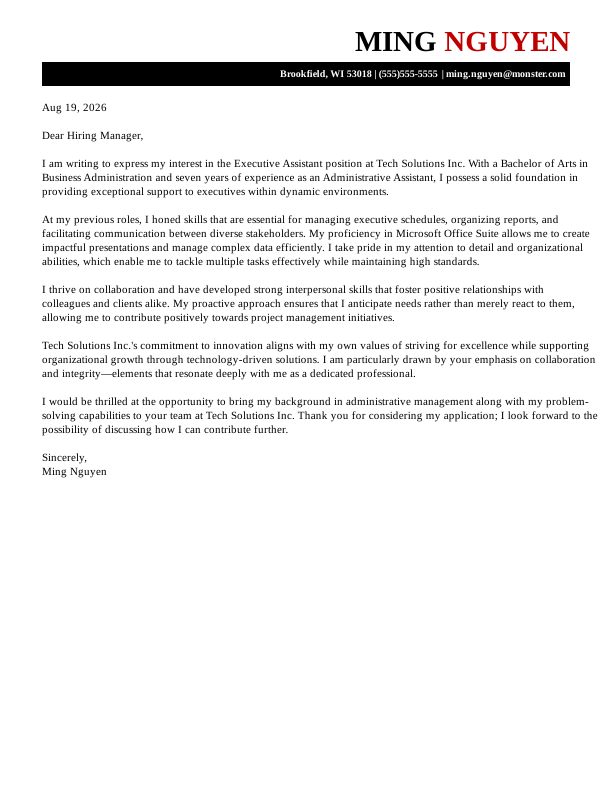
Executive Assistant Mid-Level Cover Letter
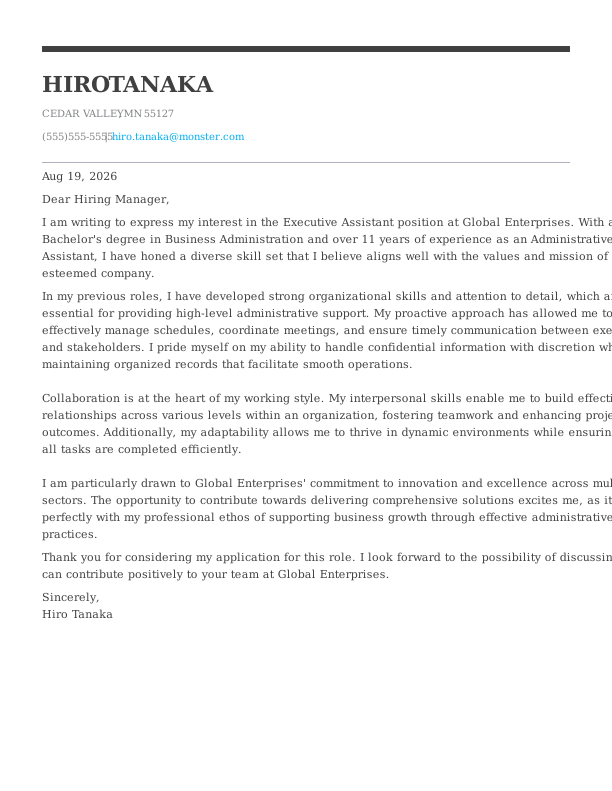
Executive Assistant Experienced Cover Letter
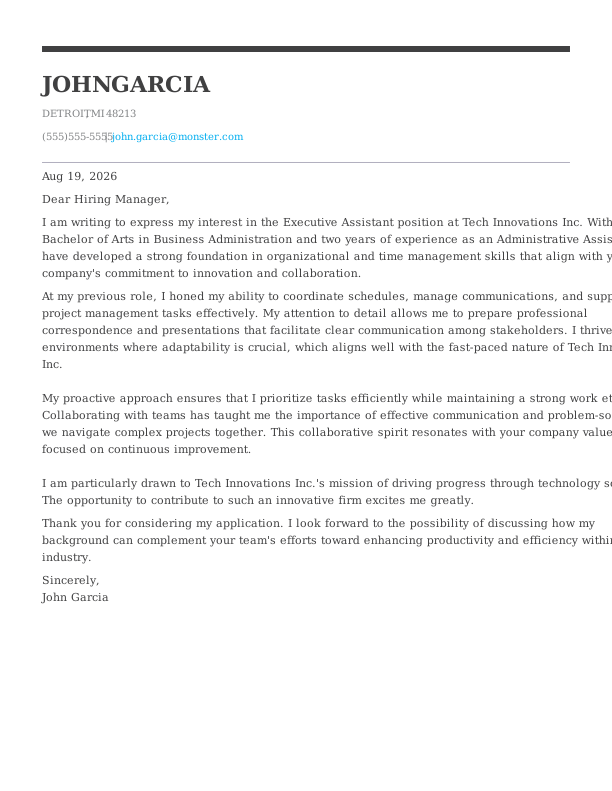
Executive Assistant Entry-Level Cover Letter
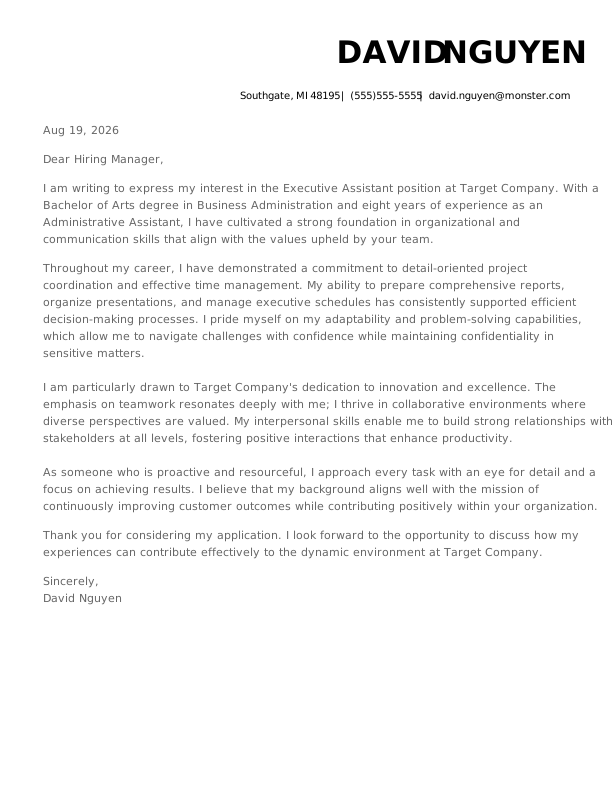
Executive Assistant Mid-Level Cover Letter
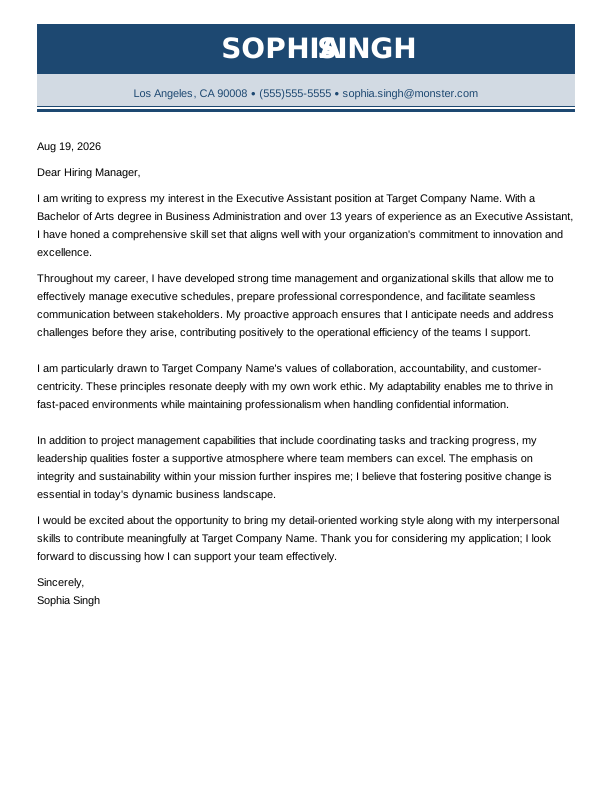
Executive Assistant Experienced Cover Letter
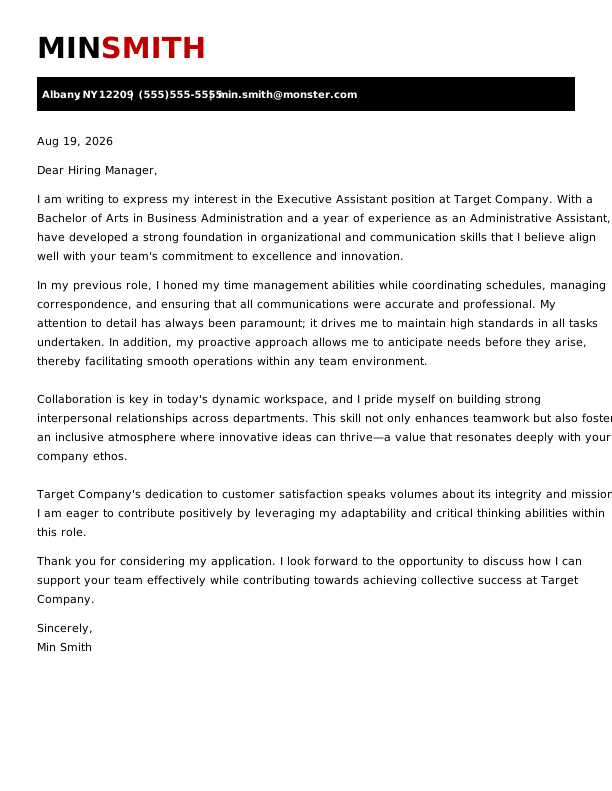
Executive Assistant Entry-Level Cover Letter
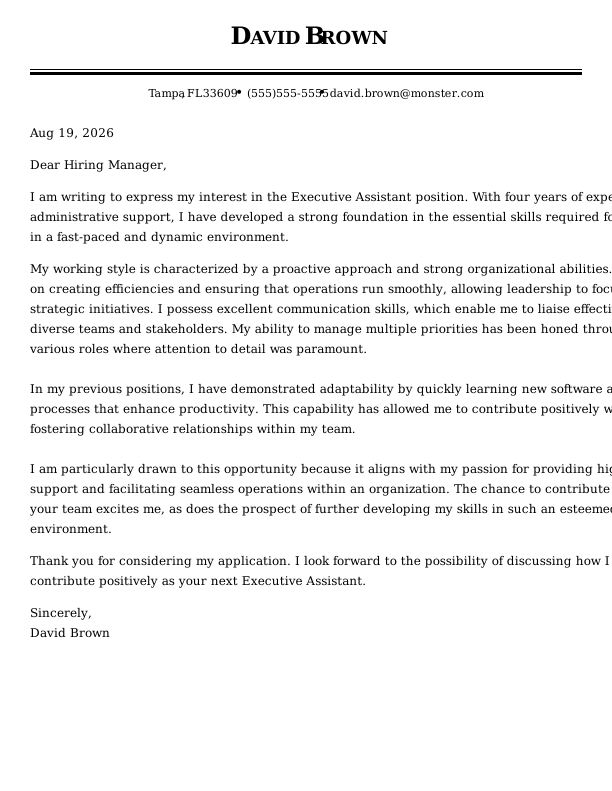
Executive Assistant Mid-Level Cover Letter
Browse Free Cover Letter Templates
- Account Manager
- Accounts Payable
- Administrative Assistant
- Admissions Counselor
- Artist
- Babysitter
- Barista
- Bartender
- Bookkeeper
- Brand Ambassador
- Business Analyst
- Caregiver
- Chef
- Civil Engineering
- Computer Science
- Custodian
- Customer Service
- Dental Assistant
- Electrical Engineering
- Emt
- Engineering
- Event Coordinator
- Finance
- Financial Analyst
- Firefighter
- Flight Attendant
- Graphic Designer
- Hair Stylist
- Healthcare
- Investment Banking
- It
- Janitor
- Journalism
- Lab Technician
- Law Clerk
- Lawyer
- Librarian
- Logistics
- Manager
- Marketing Manager
- Massage Therapist
- Mechanic
- Mechanical Engineer
- Medical Assistant
- Non Profit
- Nursing
- Office Manager
- Paralegal
- Personal Trainer
- Pharmacy Technician
- Photographer
- Physician Assistant
- Pilot
- Police Officer
- Project Manager
- Property Manager
- Receptionist
- Research Assistant
- Retail
- Sales
- Security Officer
- Social Work
- Software Engineer
- Teacher
- Teaching Assistant
- Truck Driver
- Vet Tech
- Veterinary Assistant
- Web Developer
- Welder
Cover Letter Examples for Executive Assistants
An executive assistant cover letter changes by career stage, so entry-level and experienced job seekers should highlight different proof of fit. Use templates for entry-level, mid-career, and experienced roles to match your experience, skills, and accomplishments to the job.
Entry-Level Executive Assistant Cover Letter
Perfect for recent graduates starting a cover letter with no experience, this template also supports career changers transitioning into an executive assistant role from other backgrounds.
Mid-Career Executive Assistant Cover Letter
A good fit for experienced administrative professionals aiming to grow into executive-level support, this template helps highlight advanced calendar, communication, and project coordination skills while positioning you for higher-responsibility assistant or leadership-track roles.
Experienced Executive Assistant Cover Letter
Best for executive assistants with 10+ years of experience, this template helps job seekers pursue senior support and office leadership roles while guiding them toward advanced, high-stakes administrative work.
Executive Assistant Cover Letter Template (Text)
Use this editable text cover letter template for an executive assistant role. Copy, paste, and customize it in your document or file.
Yuki Smith
Brookfield, WI 53017
(555)555-5555
yuki.smith@monster.com
Aug 19, 2026
Dear Hiring Manager,
I am writing to express my interest in the executive assistant position at ABC Corporation. With a Bachelor of Arts degree in Business Administration and five years of experience as an administrative assistant, I have developed a strong foundation in providing high-level support while maintaining a detail-oriented approach.
Throughout my career, I have honed my skills in time management and effective communication, which are essential for coordinating executive schedules and ensuring seamless interactions between stakeholders. My proficiency with the Microsoft Office Suite allows me to prepare well-organized documents and presentations that contribute to informed decision-making processes.
I pride myself on being adaptable and proactive, qualities that enable me to thrive in fast-paced environments. My strong organizational skills empower me to manage competing priorities efficiently while maintaining confidentiality with sensitive information. I believe these attributes align well with the values of integrity, innovation, and collaboration upheld by ABC Corporation.
As someone who is detail-oriented and dedicated to fostering positive relationships within teams, I am excited about the opportunity to contribute strategically as part of your organization. I am particularly impressed by ABC Corporation’s commitment to delivering innovative solutions that drive excellence across various sectors.
Thank you for considering my application. I look forward to the possibility of discussing how my background can be an asset to your team at ABC Corporation.
Sincerely,
Yuki Smith
How to Write an Executive Assistant Cover Letter
Writing an impactful executive assistant cover letter requires crisp storytelling, tailored personalization, and concrete proof of core competencies like calendar management and strategic scheduling. To stand out, match your top qualifications to the target role, highlight past administrative wins with measurable results, and customize your messaging for the specific executive and organization.
1. Research & Prepare
Before you write your executive assistant cover letter, research the company, the role, and the hiring manager so you can match your support style to their needs. Look for details on leadership priorities, office workflows, and communication expectations, since these shape how you manage calendars, meetings, travel, and follow-up.
Review the job description line by line. Then read the company website and any recent news, and check LinkedIn profiles for the hiring manager and key executives. Use what you learn to reference specific initiatives and working styles in your letter so it feels personal rather than generic.
2. Hook the Reader
A compelling cover letter opening sets an executive tone and commands attention instantly. The most effective hooks demonstrate business acumen, align with organizational goals, and highlight how you support high-level leadership. Open by referencing a recent company milestone, showcasing a high-impact win—like managing complex travel and shifting priorities—or mentioning a mutual executive referral to establish immediate trust.
3. Tell Your Professional Story
Your cover letter should elevate your resume, not repeat it. Use concise narrative examples to demonstrate how you partner with C-suite leaders, navigate competing priorities, and drive operational momentum. Highlighting concrete, metrics-driven wins allows executive hiring managers to visualize your immediate impact.
For maximum effect, showcase measurable achievements—such as reducing meeting prep time by 30% through streamlined agendas, cutting calendar reschedules by 15%, or designing travel and expense workflows that saved leadership 5+ hours weekly. Always specify the scope of leaders you supported and the tangible organizational outcomes you delivered.
4. Showcase Your Skills
Hiring managers want proof, not a skill list. Match your executive assistant experience to the role’s priorities by showing how you handled the same kinds of calendars, communication, and follow-through mentioned in the posting.
For example, if the company seeks calendar and travel coordination, describe arranging complex itineraries across time zones and keeping meetings on track with clear agendas. If it mentions inbox triage or document prep, share how you turned emails into action items for executives and prepared briefing materials or reports with accurate details. For EHR or compliance workflows at healthcare firms, note your familiarity with HIPAA-aware handling of sensitive information.
5. Explain Any Special Circumstances
If you have employment gaps, changed careers, or relocated, address it early in your cover letter. Mention the reason in a sentence or two and then pivot to what you gained, such as new skills, stability, or renewed focus.
For an executive assistant role, frame a gap as time spent organizing priorities at home while strengthening calendar management and vendor follow-through. If you moved from administration to executive support, note how you learned confidentiality, meeting prep, and stakeholder communication. After relocating, highlight your readiness to start immediately and your familiarity with the company’s time zone needs.
6. End With a Professional Goodbye
Close your cover letter by restating your interest in the executive assistant role and highlighting what you bring to their day-to-day. Invite the reader to discuss how you handle schedules, calendar coordination, and confidential communication, and thank them for their time.
End with a call to action such as “I welcome the opportunity to discuss how to close a cover letter so my support experience can help your executive team stay organized and focused.” Use sign-offs like “Sincerely,” or “Best regards.”
4 Tips for Formatting Your Cover Letter
A clear, well-formatted cover letter helps hiring managers read your message quickly. Use consistent spacing, a clean font, and short paragraphs to keep the letter professional and easy to read. These tips apply whether you have experience or you’re starting out.

Keep It to One Page
Executives and hiring teams operate on tight schedules. Cap your letter at one page (250–400 words) across three to four focused paragraphs that highlight your highest-impact support wins.

Use a Professional Font & Layout
Opt for a clean font (such as Arial, Calibri, or Georgia) at 10–12 pt with standard one-inch margins. Align your typography and header style with your resume to present a unified, high-end application package.

Address the Hiring Manager Directly
Demonstrate resourcefulness by researching the specific hiring manager or chief of staff via the job post, company website, or LinkedIn. Direct your letter to them personally, or default to “Dear Executive Support Hiring Team” rather than outdated greetings like “To Whom It May Concern.”

Save & Send as a PDF
Export your document as a PDF to preserve exact margins and typography across systems. Name the file professionally using plain text (e.g., Alex_Patel_Executive_Assistant_Cover_Letter.pdf) to show operational precision.
Key Takeaways
- Customize every letter to reflect the specific leadership style, operations, and business priorities of the executive team you plan to support.
- Hook the reader immediately with quantified achievements—such as cutting calendar reschedules, optimizing travel budgets, or freeing up strategic hours for leadership.
- Keep your design, typography, and file naming clean and identical to your resume package to prove your attention to detail from line one.
Browse Monster’s Resume Templates
Monster also has hundreds of ATS-friendly resume templates for all career levels and industries. Create a matching resume to help you land the interview.
- Administrative Assistant
- Administrative Coordinator
- Administrative
- Archivist
- Category Manager
- Clerical
- Clerk
- Clinical Research Assistant
- Data Entry
- Executive Assistant
- Front Desk Receptionist
- Hr Assistant
- Hr Generalist
- Human Resources
- Interpreter
- Office Administrator
- Office Assistant
- Office Coordinator
- Personal Assistant
- Project Assistant
- Real Estate Assistant
- Receptionist
- Scheduling Coordinator
- Secretary
- Virtual Assistant
- Work
Frequently Asked Questions
Last Update:
Do I really need a cover letter?
Yes, you should include a cover letter even when it’s listed as optional. It lets you add context that your resume cannot capture and it signals initiative and real interest in the executive assistant role.
A cover letter helps most when you need to explain a career shift, an employment gap, or why you want to support that specific organization. You can also show your personality, attention to detail, and enthusiasm for keeping leaders organized and moving.
How long should my cover letter be?
Cover letters should stay one page maximum and typically run 250–400 words, since hiring managers review each application with limited time. Keep your writing direct so it earns attention fast. Focus on quality over quantity by sharing only the most relevant experience and achievements. Aim for three to four concise paragraphs that each serve a clear purpose.
Should my cover letter match my resume?
Yes, your executive assistant cover letter should match your resume’s design. Use the same fonts, colors, and header style so your application package looks cohesive and intentional.
Keep the formatting consistent, but let the content complement your resume rather than repeat it. Expand on key support work such as calendar management, executive communication, travel coordination, and meeting prep by adding context for high-stakes deadlines and stakeholder needs that bullet points cannot fully show.
How do I address my cover letter if I don’t know the hiring manager’s name?
Look up the hiring manager’s name on LinkedIn, the company website, or by calling the front desk and asking who oversees executive assistant hires. If you cannot find a specific person, address the letter to the relevant team or role owner.
Use “Dear Hiring Manager” or “Dear Executive Support Team,” based on how the company describes the group in job posts. Avoid outdated phrases like “To Whom It May Concern,” and skip casual greetings like “Hi.” Also, avoid trying to guess a name.
Should an executive assistant mention salary expectations in a cover letter?
Mention salary expectations only if the job posting asks for them. If you must include it, share a range from your research and note flexibility, such as “Salary expectations: $X–$Y, open to discussion based on role scope.” Keep the tone brief and tie it to your interest in the position.

Toni Frana is a Certified Professional Resume Writer (CPRW), member of the Professional Association of Resume Writers & Career Coaches, and career expert who empowers job seekers to take control of their career paths using Monster’s comprehensive job search and resume tools.
See More From Toni FranaExplore Related Career Advice







How to Write a Cover Letter for Internal Positions or Promotions (Examples & Tips)

Updated:
Apr 23, 2026
|

19 min read


Cover Letter vs Resume: What’s the Difference & Do You Need Both?

Updated:
Apr 23, 2026
|
18 min read