

Free Office Assistant Cover Letter Templates & Examples
A strong office assistant cover letter shows you can handle front desk communication and keep schedules organized with accuracy and professionalism. Our free cover letter templates and step-by-step guidance help you craft an application that spotlights your admin support strengths so hiring managers quickly see the value you bring.
Real-World Cover Letters That Get Results
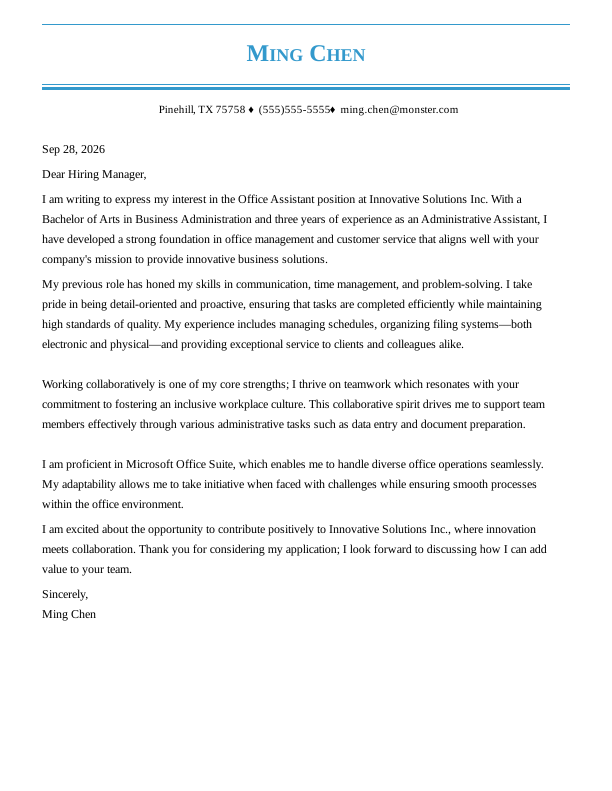
 Free
FreeOffice Assistant Entry-Level Cover Letter
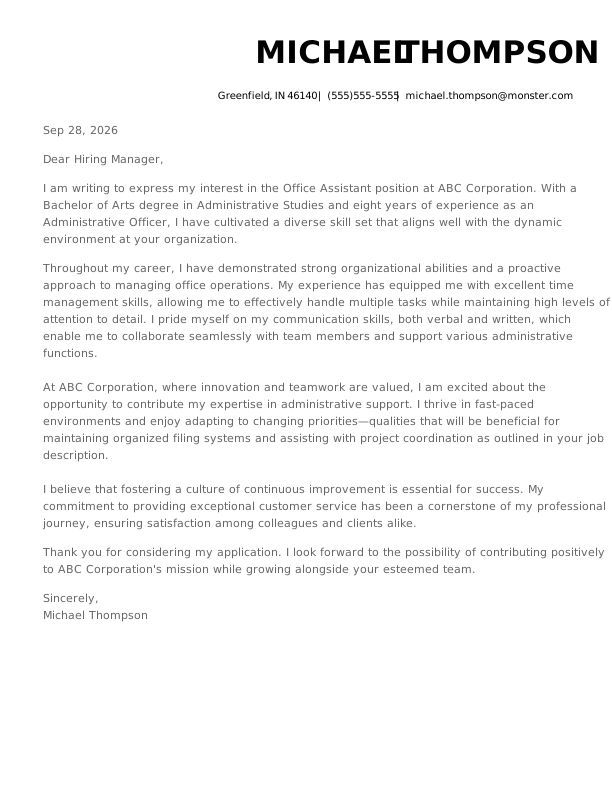
Office Assistant Mid-Level Cover Letter
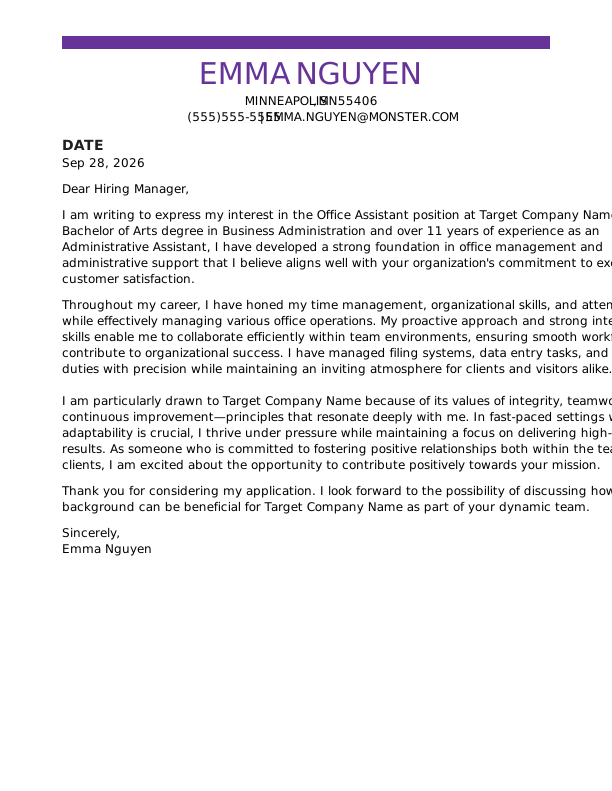
Office Assistant Experienced Cover Letter
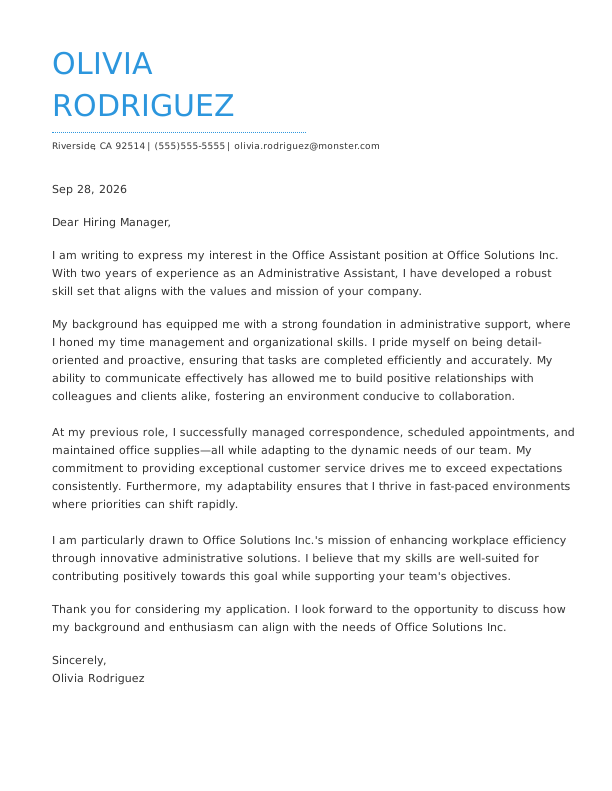
Office Assistant Entry-Level Cover Letter
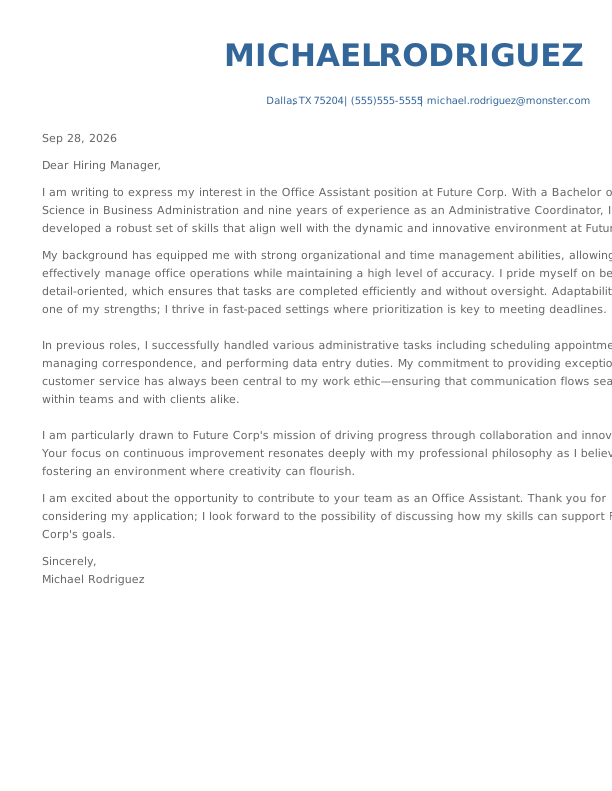
Office Assistant Mid-Level Cover Letter
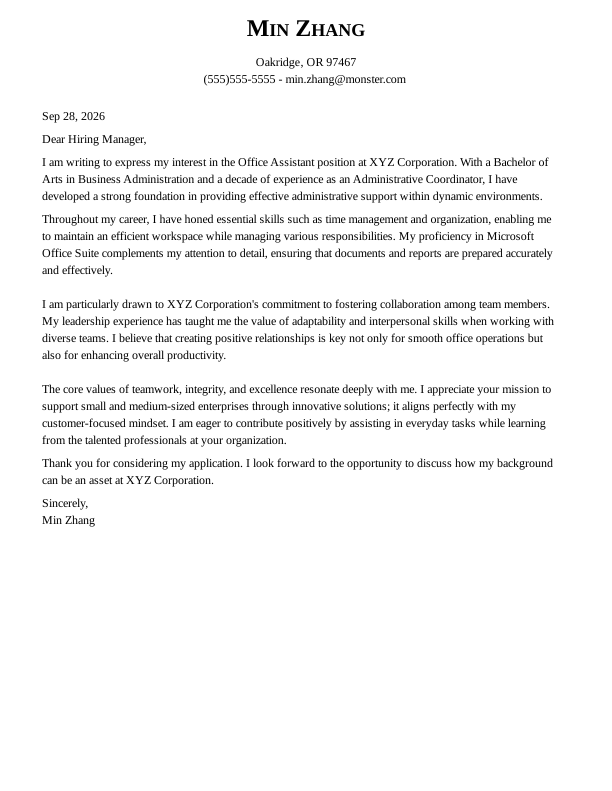
Office Assistant Experienced Cover Letter
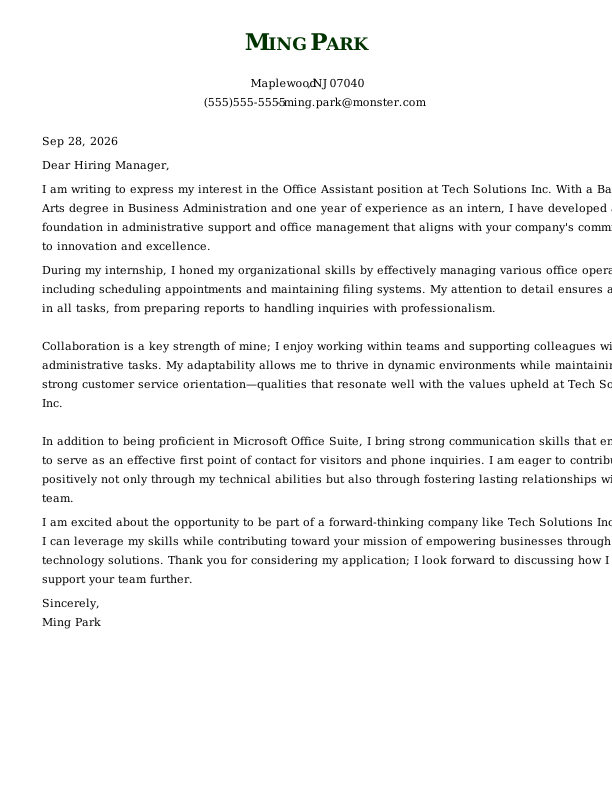
Office Assistant Entry-Level Cover Letter
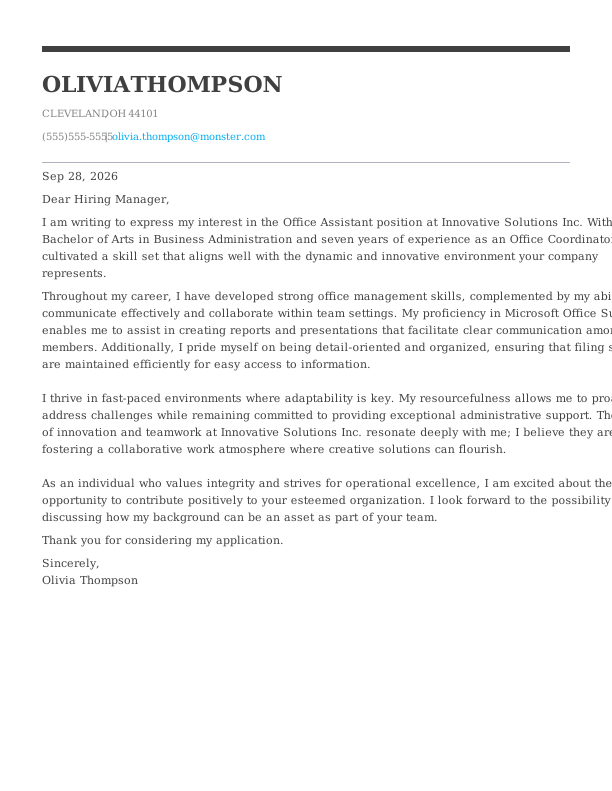
Office Assistant Mid-Level Cover Letter
Browse Free Cover Letter Templates
- Academic
- Account Manager
- Accountant
- Accounts Payable
- Administrative Assistant
- Admissions Counselor
- Architecture
- Artist
- Assistant Principal
- Babysitter
- Barista
- Bartender
- Bookkeeper
- Brand Ambassador
- Business Analyst
- Business
- Caregiver
- Chef
- Civil Engineering
- Computer Science
- Construction
- Consulting
- Copywriter
- Cosmetology
- Custodian
- Customer Service
- Customer Service Representative
- Data Analyst
- Data Entry
- Dental Assistant
- Dental Hygienist
- Digital Marketing
- Electrical Engineering
- Emt
- Engineering
- Esthetician
- Event Coordinator
- Executive Assistant
- Finance
- Financial Analyst
- Firefighter
- Flight Attendant
- Graphic Designer
- Hair Stylist
- Healthcare
- Hr Generalist
- Investment Banking
- It
- Janitor
- Journalism
- Lab Technician
- Law Clerk
- Lawyer
- Librarian
- Logistics
- Makeup Artist
- Manager
- Marketing Coordinator
- Marketing
- Marketing Manager
- Massage Therapist
- Mechanic
- Mechanical Engineer
- Medical Assistant
- Non Profit
- Nursing
- Occupational Therapy
- Office Manager
- Operations Manager
- Paralegal
- Personal Trainer
- Pharmacist
- Pharmacy Technician
- Photographer
- Physician Assistant
- Pilot
- Police Officer
- Program Manager
- Project Manager
- Property Manager
- Psychology
- Receptionist
- Research Assistant
- Restaurant Manager
- Retail
- Sales
- Sales Manager
- School Counselor
- Security Officer
- Social Work
- Software Engineer
- Special Education Teacher
- Substitute Teacher
- Teacher
- Teaching Assistant
- Truck Driver
- Vet Tech
- Veterinary Assistant
- Web Developer
Cover Letter Examples for Office Assistants
Cover letter expectations change as an office assistant advances from entry-level support to roles with more ownership. Choose the template that matches your career stage so you can spotlight the right skills, training, and accomplishments, such as scheduling, records handling, or customer-facing coordination.
Entry-Level Office Assistant Cover Letter
Designed for recent graduates and career changers transitioning into office assistant roles, this template supports a cover letter with no experience while keeping your tone confident.
Mid-Career Office Assistant Cover Letter
Designed for mid-level office assistants with a few years of experience, this template highlights growing ownership in front-desk coordination, schedule management, and peer mentoring.
Experienced Office Assistant Cover Letter
Designed for seasoned office assistants, this template highlights senior-level strengths: streamlining cross-functional workflows, mastering schedules, and owning end-to-end office operations.
Office Assistant Cover Letter Template (Text)
Copy this office assistant cover letter template into your document, then customize it with your own experience and background information.
Nancy Scott
Albany, NY 12202
(555)555-5555
nancy.scott@monster.com
Sep 28, 2026
Dear Hiring Manager,
I am writing to express my interest in the office assistant position at ABC Company. With a Bachelor of Arts in Business Administration and four years of experience as an administrative assistant, I have developed a comprehensive skill set that aligns well with your organization’s commitment to exceptional service and operational efficiency.
In my previous role, I honed my abilities in calendar management, document management, and customer service. My attention to detail and strong organizational skills enabled me to effectively manage office communications while ensuring that all administrative tasks were performed with accuracy. I thrive in collaborative environments where teamwork is essential for success, which resonates with ABC Company’s values.
Adaptability is one of my core strengths; I possess the ability to navigate challenges proactively while maintaining a positive attitude. My problem-solving skills have often been key in streamlining processes, enhancing workplace productivity through efficient scheduling and data entry practices.
I am particularly impressed by ABC Company’s focus on nurturing employee well-being alongside client growth. This mission inspires me as I believe that investing in people leads to greater innovation and teamwork. I am excited about the opportunity to contribute toward an organization that prioritizes both client satisfaction and employee development.
Thank you for considering my application. I look forward to the possibility of discussing how my background can support the goals of ABC Company.
Sincerely,
Nancy Scott
How to Write an Office Assistant Cover Letter
Writing a strong cover letter comes down to showing, not telling. Instead of just listing your skills, anchor your letter in real-world examples of how you handle scheduling, organize documents, and manage daily communications. Use the steps below to turn your personal work experience into clear, tailored language for the specific office assistant role you want.
1. Research & Prepare
Before writing a single word, take a close look at how the company operates on a daily basis. Every office faces different bottlenecks—some struggle with packed calendars, while others are buried in compliance paperwork or client intake. Figure out its specific priorities so you can frame your skills as the exact solution it needs.
Use these quick research targets to gather actionable details for your letter:
- Examine the job post: Identify the specific scheduling software, document platforms, or ticketing systems the office relies on.
- Explore the employer’s public presence: Look at the company website or social pages to pick up on its customer service style and core values.
- Check local standards: Research any regional or industry-specific paperwork regulations that apply to the role.
2. Hook the Reader
Skip the standard “I am writing to apply for…” opening—hiring managers see that dozens of times a day. Instead, grab their attention immediately with a snapshot of your past impact, using concrete metrics like response times or error reduction to prove you can hit the ground running.
Depending on the primary focus of the job, your opening line might look like one of these examples:
- Calendar accuracy: “By refining our shared Outlook rules and re-confirming rooms 24 hours ahead of time, I cut scheduling conflicts across our department by 30%.”
- Systems and document control: “I took charge of our paper-to-digital intake system using SharePoint, which completely eliminated missing file follow-ups during supervisor audits.”
- Front desk throughput: “During peak hours, I welcomed up to 45 visitors per shift while maintaining a 10-minute turnaround on Zendesk support tickets.”
3. Tell Your Professional Story
Your resume covers what you did, but your cover letter explains how you kept operations running under pressure. Specific numbers help a manager paint a clear mental picture of your workload; handling “60 calls a day” instantly communicates far more capability than saying you offer “reliable support.”
Consider how these bullet points translate routine duties into compelling accomplishments:
- Handled 65 incoming calls and appointment requests daily while maintaining a 95% on-time booking rate.
- Standardized data entry checks prior to manager sign-off, cutting invoice processing errors by 22% over three months.
- Arranged travel logistics and agendas for 12 monthly meetings, saving roughly 30 minutes of setup time per event.
4. Showcase Your Skills
Focus on real moments from your daily work rather than using generic buzzwords like “detail-oriented” or “multitasker.” Describing a specific time you solved a problem or managed competing priorities demonstrates your value far better than a self-proclaimed trait.
Here is how you can transform basic requirements into memorable mini-stories:
- Calendar coordination: “Every morning, I cross-checked my manager’s schedule, reserved meeting spaces, and proactively resolved overlapping invites before conflicts arose.”
- Document handling: “When clients dropped off last-minute paperwork, I processed, scanned, and saved the files to SharePoint right away using our standard naming system.”
- Front desk communication: “Whenever guests appeared lost, I promptly greeted them, identified their needs, and personally escorted them to the right office.”
5. Explain Any Special Circumstances
If you have an employment gap, are changing careers, or recently relocated, address it openly in one or two straightforward sentences. Focusing on your current availability, ongoing skill-building, and software proficiency reassures hiring managers that your background is fresh and ready for day one.
You can adapt these conversational examples to frame your transition positively:
- Handling a gap: “During a six-month caregiving break, I kept my administrative skills sharp by handling weekly data entry and scheduling for a local non-profit.”
- Making a career pivot: “Transitioning from retail management into administrative support, I have built practical experience tracking tasks in Excel and managing customer inquiries through Zendesk.”
- Relocating: “Since moving to Phoenix last fall, I have worked remotely while managing team calendars and virtual communications in Microsoft Teams.”
6. End With a Professional Goodbye
Wrap up your letter with a confident, concise closing that proposes a logical next step. Avoid passive phrases like “I look forward to hearing from you,” which offer little reason to reach out. Instead, suggest a specific discussion topic—for example: “I’d love the chance to share how I keep front-desk operations running smoothly during busy peak hours.” Follow that with a brief sentence thanking them for their time, and sign off cleanly with “Sincerely.”
4 Tips for Formatting Your Cover Letter
Hiring managers usually skim office assistant cover letters in under a minute. Clear, clean formatting ensures your scheduling and administrative skills stand out immediately, whether you’re applying for a front-desk receptionist role or moving into an administrative coordinator position.

Keep It to One Page
Office managers scan cover letters between calls and walk-ins, so keep yours concise. Aim for 250–400 words across three or four short paragraphs. Highlight your calendar management skills, key software proficiency like Excel or Outlook, and at least one concrete win regarding your accuracy or response times.

Address the Hiring Manager Directly
Try to find the office manager’s or recruiter’s name on the job posting, staff directory, or LinkedIn. If you can’t find a specific contact, “Dear Hiring Manager” or “To the Hiring Team” works great. Avoid “To Whom It May Concern,” as it feels overly formal and outdated.

Use Bullet Points for Key Achievements
Use three or four bullet points to feature measurable administrative wins, such as high scheduling accuracy, fast document turnaround, or quick phone response rates. Bullets break up the text, making your biggest achievements easy to spot in seconds.

Save & Send as a PDF
Always export your cover letter as a PDF so your layout, fonts, and spacing remain intact across different devices. Use a clean, simple file name like Firstname_Lastname_Cover_Letter.pdf to keep things professional for the hiring team.
Key Takeaways
- Choose a cover letter template that matches your career stage, leading with relevant education and enthusiasm if you’re entry-level or showcasing workflow ownership and leadership if you’re experienced.
- Hook the hiring manager with specific metrics like phone calls handled, scheduling accuracy, or error reduction to demonstrate how efficiently you manage daily office tasks.
- Tailor your experience to the specific tools and bottlenecks of the office, while using bullet points and a clean PDF format so your top achievements are easy to scan.
Browse Monster’s Resume Templates
Monster also has hundreds of ATS-friendly resume templates for all career levels and industries. Create a matching resume to help you land the interview.
- Administrative Assistant
- Administrative Coordinator
- Administrative
- Archivist
- Assistant
- Category Manager
- Clerical
- Clerk
- Clinical Research Assistant
- Data Entry
- Executive Assistant
- Front Desk Receptionist
- Hr Assistant
- Hr Generalist
- Human Resources
- Interpreter
- Office Administrator
- Office Assistant
- Office Coordinator
- Personal Assistant
- Project Assistant
- Real Estate Assistant
- Receptionist
- Scheduler
- Scheduling Coordinator
- Secretary
- Virtual Assistant
Frequently Asked Questions
Last Update:
Do I really need a cover letter?
Yes. Even if optional, a cover letter is essential for an office assistant role. While your resume lists your background, a cover letter demonstrates your communication skills, enthusiasm, and attention to detail in action. It allows you to explain how your daily organization, scheduling, and software skills directly solve an office’s specific needs—giving you a clear competitive edge over applicants who skip it.
How long should my cover letter be?
Your cover letter should be strictly one page, ideal between 250 and 400 words split across three to four short paragraphs. Hiring managers scan applications quickly between daily tasks, so keeping your text concise ensures your key qualifications stand out immediately. Focus on your most impressive administrative wins, relevant software skills, and core scheduling accomplishments without overwhelming the reader with unnecessary fluff.
Should my cover letter match my resume?
Yes. Your cover letter should visually match your resume by using the same header, fonts, and styling to create a polished, professional package. However, the content should complement your resume rather than repeat it. Use your cover letter to add context to key achievements, highlight specific administrative wins, and explain why your background makes you the perfect fit for that specific office environment.
How do I address my cover letter if I don’t know the hiring manager’s name?
Start by checking the job posting, company directory, or LinkedIn to find the hiring manager’s or recruiter’s name. If a quick search yields nothing, use a warm, professional greeting like “Dear Hiring Manager” or “Dear Office Selection Team.” Avoid outdated phrases like “To Whom It May Concern,” as modern employers prefer a greeting that sounds direct, polite, and attentive.
How do I write a cover letter for an internal position?
When writing a cover letter for an internal office assistant job, highlight your familiarity with the company’s daily operations, internal systems, and team dynamics. Instead of treating it like an outside application, emphasize your proven track record within the organization, such as recent administrative improvements or cross-department support. Express clear enthusiasm for growing internally, mention your current manager’s support if applicable, and maintain a professional tone throughout the letter.

Toni Frana is a Certified Professional Resume Writer (CPRW), member of the Professional Association of Resume Writers & Career Coaches, and career expert who empowers job seekers to take control of their career paths using Monster’s comprehensive job search and resume tools.
See More From Toni FranaExplore Related Career Advice






How to Write a Cover Letter for Internal Positions or Promotions (Examples & Tips)

Updated:
Apr 23, 2026
|
19 min read


Cover Letter vs Resume: What’s the Difference & Do You Need Both?

Updated:
Apr 23, 2026
|
18 min read